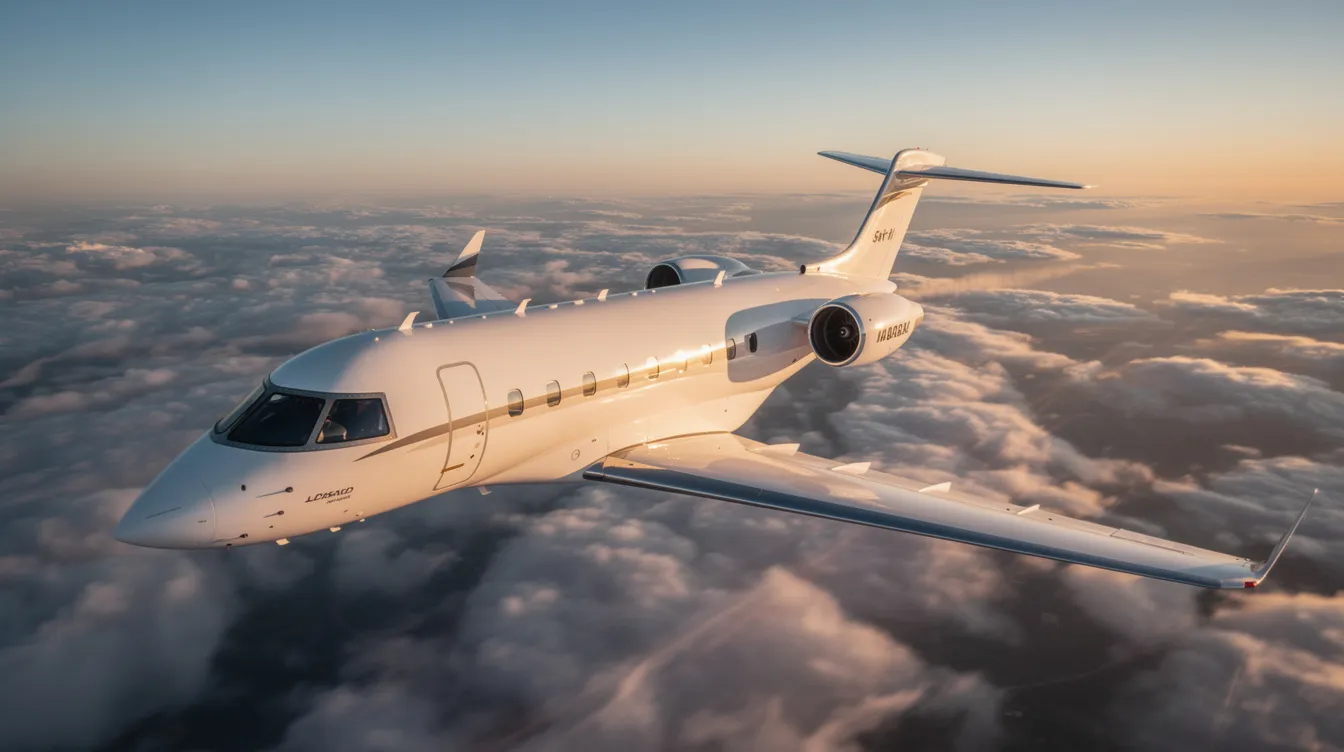
Crossing the Atlantic by private aircraft represents more than luxury—it’s a strategic advantage that transforms how business executives and discerning travelers approach long-haul flights between North America and Europe. Transatlantic private jet travel offers unmatched convenience, privacy, and time efficiency, allowing passengers to bypass long security lines, fly on their own schedules, and access more limited, closer airports. While commercial flights require early arrivals, hub connections, and rigid schedules, booking a charter flight for transatlantic journeys offers unmatched flexibility and operational benefits, delivering door-to-door savings of 3-4 hours per trip through direct access to secondary airports and dedicated private terminals that bypass conventional bottlenecks.
Unlike commercial airlines restricted to major hubs, private jets can access over 3,000 airports across Europe, landing closer to final destinations and significantly reducing overall travel time. BlackJet members can book high-demand transatlantic routes like New York–London, Miami–Paris, or Los Angeles–Rome in minutes via our digital platform, backed by Jet Card guarantees, ensuring aircraft availability across cabin classes. Travelers can fly private for greater convenience, luxury, and efficiency compared to commercial options, enjoying a seamless and personalized experience.
Key transatlantic stats at a glance:
Typical flight time NYC–London: 6–7 hours on heavy jets
Nonstop range threshold: 3,500–4,000 nautical miles minimum
One-way charter cost band: $120,000–$250,000 on heavy/ultra long-range jets
Time savings vs commercial: 3–4 hours door-to-door
Every BlackJet transatlantic mission operates under our core pillars: ARGUS/Wyvern-rated operators for safety, carbon-neutral flights via verified offsets, and 24/7 real-time operations oversight from departure to final destination.
Why a Transatlantic Private Jet Is a Strategic Advantage
Consider a business executive flying from New York to London. Departing Manhattan at 18:00, they arrive at Teterboro’s FBO, complete minimal formalities, and achieve wheels-up by 18:45. After a 6.5-hour cruise, they land at London Luton around 06:30 local time, clear customs and immigration procedures in 15 minutes through the private terminal, and reach a Mayfair office by 08:00—refreshed and ready to perform.
Compare this to commercial first class from JFK to Heathrow: a 3-hour pre-flight check-in and security process pushes wheels-up to 20:00. An 8-hour flight, followed by 90-minute immigration queues and baggage claim, extends arrival to approximately 10:00. That’s 3+ hours of lost productivity and significantly more fatigue.
Private aviation unlocks access to over 14,000 airports globally versus commercial airlines’ limited few hundred, enabling bespoke routes like White Plains to Geneva or Van Nuys to Farnborough without connections. By avoiding hub airports and early arrival requirements, travelers consistently save 3-4 hours on each transatlantic journey.
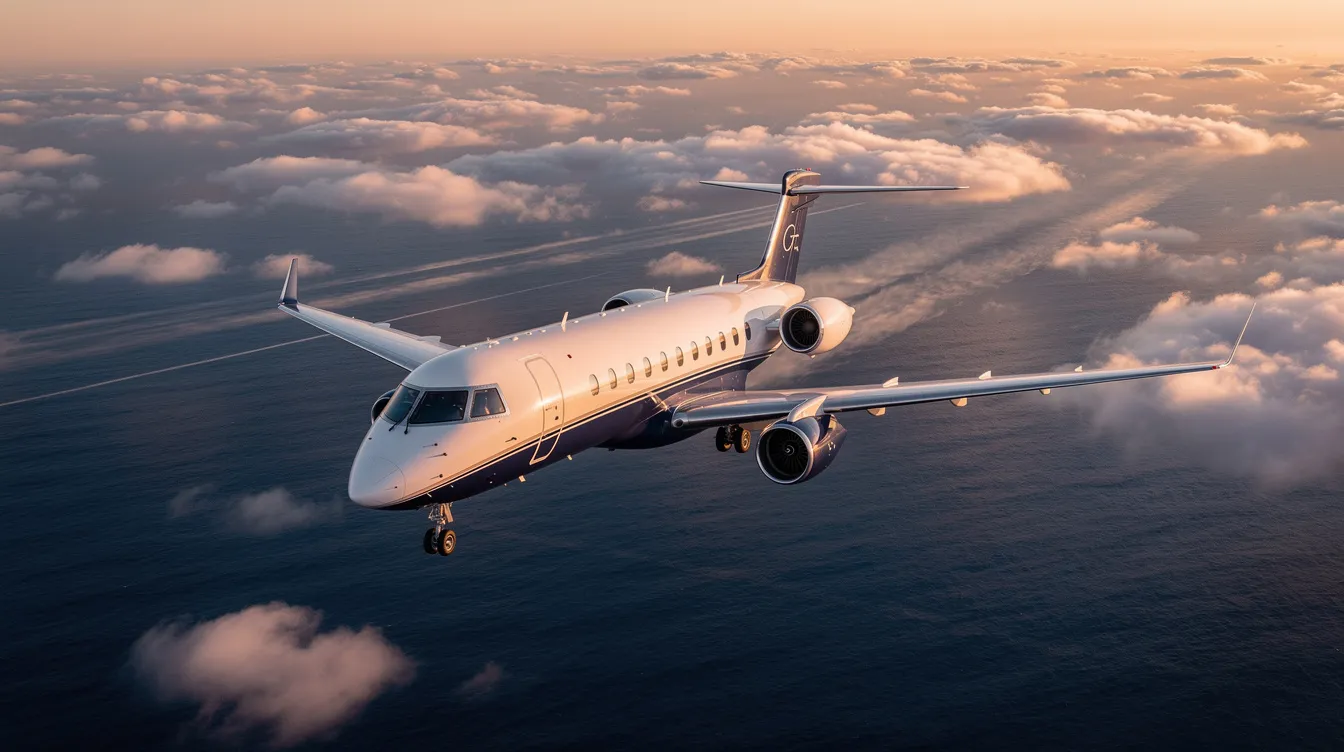
Private jets often fly at higher altitudes, above most weather-related turbulence, which leads to smoother flights. Heavy jets pump 100% fresh air and maintain lower cabin altitudes (5,000–6,000 ft), reducing dehydration, ear pressure, and jet lag. This, combined with personalized cabin service and pet-friendly travel options, enhances the overall experience. Selecting smaller airports closer to final destinations further reduces ground travel time, though some may have limited operating hours or runway lengths, factors BlackJet expertly manages.
Confidentiality matters equally. With encrypted Ka-band Wi-Fi, soundproofed cabins, and no adjacent passengers, executives conduct board-level meetings or sensitive calls mid-flight—impossible on commercial flights regardless of cabin class.
BlackJet Jet Card members lock in predictable hourly rates and guaranteed access, transforming transatlantic private jet travel from an operational headache into a controllable business asset that complements our broader premium private jet card programs.
Which Private Jets Can Cross the Atlantic?
Understanding flight range requirements is essential for planning any transatlantic private flight. The minimum practical nonstop range for East Coast US to Western Europe sits around 3,500 nautical miles, with 4,000+ nautical miles recommended for weather margins, alternate airports, and regulatory reserves.
Private aircraft capable of crossing the Atlantic fall into three primary categories:
Super midsize jets (3,200–4,000+ nm range): Handle shorter transatlantic routes like Boston–Shannon nonstop, though longer or winter routes may require a tech stop
Heavy jets (4,000–6,700 nm range): Provide reliable nonstop capability for most US East Coast–Europe missions
Ultra long range jets (6,450–7,700+ nm range): Dominate the segment with performance margins for any conditions
BlackJet’s Jet Card provides access across multiple cabin classes, from super midsize jets for smaller teams to ultra-long range platforms for nonstop coast-to-coast-plus-Atlantic missions, aligning aircraft selection with the full spectrum of types of private jets available on the market.
Some smaller aircraft, like very light jets or certain turboprops, can technically cross via Iceland and Greenland routing, but understanding private jet sizes and categories highlights why BlackJet focuses members on safer, more comfortable twin-engine aircraft certified for extended overwater operations—prioritizing both safety margins and passenger experience.
Ultra-Long-Range Jets for Nonstop Atlantic Crossings
For travelers who demand nonstop transatlantic capability regardless of season or jet streams, an ultra-long-range jet is a premium, high-capacity aircraft specifically designed for nonstop transatlantic travel, offering advanced range capabilities and luxury features such as spacious cabins, state-of-the-art technology, and superior comfort. Ultra-long-range jets represent the gold standard.
Gulfstream G650ER: With a range of approximately 7,500 nautical miles at Mach 0.85, this flagship seats 16-19 passengers in a low-cabin-altitude interior (4,100 feet) that dramatically reduces jet lag. Its configuration includes a lounge, dining area, private stateroom, full galley, and crew rest—enabling NYC–Dubai nonstop or LA–London arrivals where passengers step off ready for a 9 a.m. meeting.
Bombardier Global 7500: Pushing 7,700 nautical miles, the Global Express family’s flagship features four distinct living zones (club, conference, dining, principal suite) and Mach 0.925 cruise capability. It’s proven on ultra-long routes, including NYC–Hong Kong.
Dassault Falcon 8X: Offering 6,450 nautical miles range with 12-16 seats, this aircraft delivers exceptional quietness and fuel efficiency via supercritical wing design—ideal for Miami–Paris transatlantic crossings of 8-9 hours.
For most US–Europe routes, these long-range jets operate comfortably nonstop even during winter headwinds. BlackJet prioritizes recent builds from leading OEMs with modern avionics, satellite communications, and enhanced pressurization to combat fatigue during extended flights.
Heavy and Super Midsize Jets with Atlantic Capability
Heavy jets bridge capability and cost-efficiency for transatlantic private jet flights. The Gulfstream G450/G550 (4,350/6,750 nm respectively) accommodate 14-19 passengers in spacious cabins with divans. The Bombardier Global 6000 delivers a 6,000 nautical miles range with industry-leading cabin quietness. The Challenger 650 provides 4,000 nautical miles and efficient operations for routes like Teterboro to Paris Le Bourget.
Real-world example: A Challenger 650 flying TEB to LBG (approximately 3,625 nautical miles) operates nonstop under favorable tailwind conditions, though flight planning always accounts for NBAA reserves (200 nm plus 45 minutes holding) and potential diversions.
Super midsize jets, including the Gulfstream G280 (3,600 nm), Challenger 350/3500 (3,200–4,000 nm), and Embraer Praetor 600 (4,018 nm) accommodate 8-10 passengers and suit routes like NYC–Dublin or Boston–Shannon. For longer routes or winter operations when headwinds can reduce effective range by 500+ nautical miles, these aircraft may require a tech stop at Gander, Keflavík, or Shannon—still delivering 2-3 hours savings versus commercial aviation.
BlackJet advisors match each mission to the appropriate aircraft type, balancing nonstop capability, operational costs, runway length requirements, and onboard workspace needs for your specific transatlantic itinerary, applying the same rigor used when evaluating a comprehensive private jet price list and access options.
Popular Transatlantic Routes and Flight Times
Typical North America–Europe private jet crossings require 6-11 hours, depending on city pair, seasonal winds, and route and aircraft type selection. Here’s what to expect on heavy and ultra-long-range platforms:
Route | Approximate Flight Time |
|---|
New York (TEB) – London (LTN) | 6–7 hours |
Miami (OPF) – Paris (LBG) | 8–9 hours |
Los Ángeles (VNY) – London (LTN) | 10–11 hours |
Toronto (YYZ) – Geneva (LSGG) | 7–8 hours |
Jet streams significantly impact flight length. Westbound legs (Europe to US) typically run 30-60 minutes longer than eastbound due to prevailing headwinds exceeding 100 knots, while eastbound transatlantic flights often benefit from 50+ knot tailwinds.
Secondary airports enhance the private flight experience considerably. London Luton and Farnborough bypass Heathrow’s notorious slot constraints and congestion. Paris Le Bourget eliminates CDG chaos. Geneva provides direct Alps access without Zurich diversions.
Concrete scenario: A BlackJet member departs Manhattan at 18:00, arrives at Teterboro’s FBO, achieves wheels-up by 18:45 after minimal formalities, lands at London Luton around 06:30 local time, clears the dedicated private terminal in approximately 15 minutes, and reaches a Mayfair office by 08:00—well before commercial first-class passengers clear Heathrow immigration.
How Much Does a Transatlantic Private Jet Cost?
Transparent pricing matters when evaluating transatlantic private jet charter options. Charter flight pricing for transatlantic journeys offers customized and transparent cost structures, with typical one-way North America–Western Europe charter flights on heavy or ultra-long-range jets running $120,000–$250,000+, depending on aircraft type, season, and routing complexity.
Cost components include:
Flight hour rates: Heavy jets suitable for transatlantic flights cost approximately $8,000-$10,000 per flight hour
Aircraft positioning (repositioning empty aircraft to departure airport): $20,000+
Handling, overflight permits, and landing fees: $10,000–$20,000
Winter de-icing: approximately $5,000
Crew expenses and per diem
Potential fuel surcharges during price volatility
Ancillary fees such as specialized catering and Wi-Fi
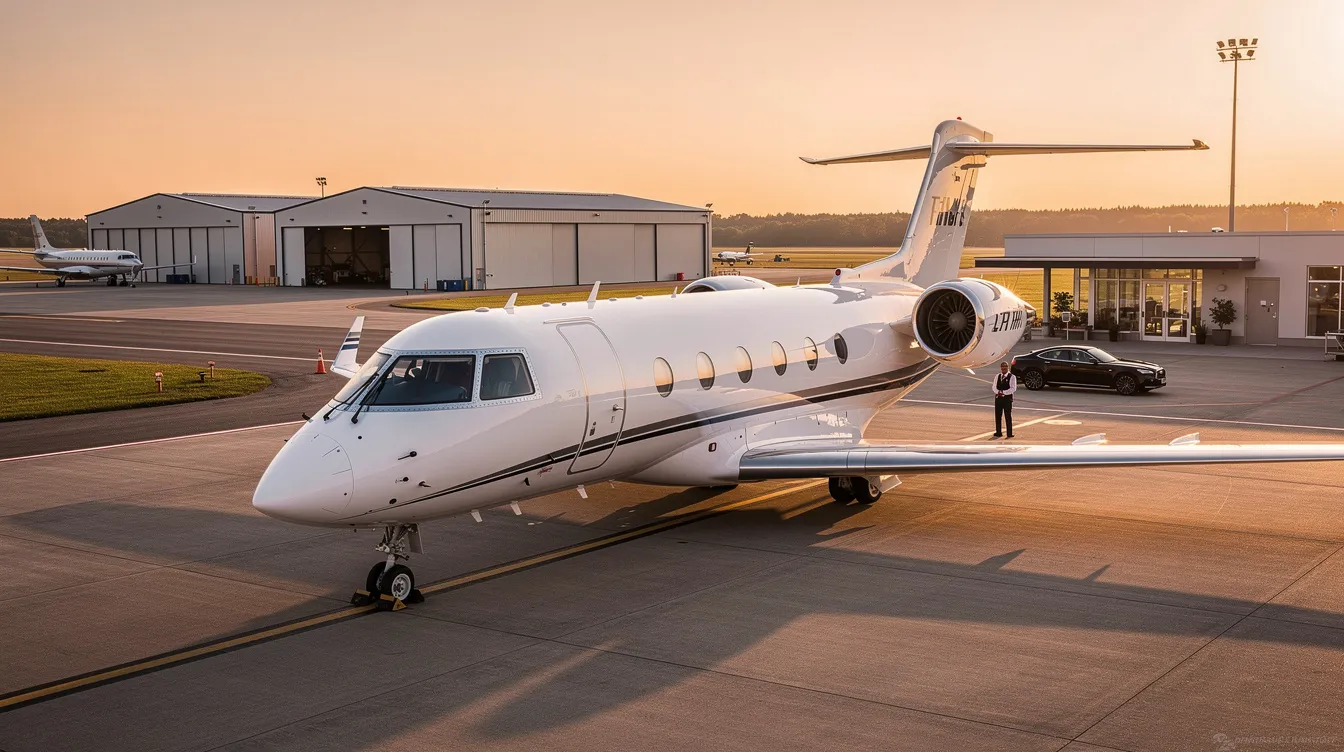
The total cost of a private jet flight includes not only the hourly rate but also additional fees such as fuel surcharges, landing fees, crew expenses, and applicable taxes, which can add 20–40% on top of the base rate.
Ad-hoc charter prices fluctuate with demand—peak summer and holiday periods can spike 20-50% above baseline.
Example calculation: New York–London one-way on a heavy jet at approximately $10,000–$11,000 per flight hour over 7 hours, plus fees and additional charges, totals roughly $100,000–$120,000. Split among 8-10 passengers, per-person cost reaches $10,000–$15,000—comparable to commercial first-class round-trip pricing but with vastly greater flexibility and time savings, consistent with broader benchmarks on how much it costs to rent a private jet.
Secondary savings often go unrecognized: eliminated hotel nights during layovers, fewer wasted hours, and the ability to conduct full workdays on both sides of the Atlantic. When calculating total trip costs against executive time value, the mathematics frequently favor private aircraft.
How BlackJet Jet Cards Optimize Transatlantic Spend
BlackJet Jet Cards structure prepaid blocks of 25+ or 50+ flight hours across multiple cabin classes, with fixed transatlantic hourly rates on approved aircraft and zero long-term ownership commitments or $40M+ buy-in requirements.
Key Jet Card advantages for transatlantic travelers:
Rate lock: Members secure predictable rates for peak periods (summer Mediterranean, year-end holidays), avoiding last-minute pricing spikes common in on-demand charter
Guaranteed availability: Aircraft access when you need it, even during high-demand windows
No surprise surcharges: Standard missions include handling, permits, and baseline crew expenses
Jet cards require an upfront deposit, typically $50,000 or more, in exchange for fixed hourly pricing, guaranteed aircraft availability, and simplified booking processes, as outlined in our broader guide to jet card costs and membership pricing.
Scenario: A client flying 4-6 round-trip transatlantic missions annually (New York–London, Miami–Geneva pattern) budgets $500,000–$800,000 predictably with a 50-hour Jet Card versus volatile per-trip charter quotes that fluctuate with market conditions, mirroring the value dynamics explored in our 50-hour jet card cost guide.
For corporate users, Jet Cards deliver financial simplicity: one upfront commitment, centralized reporting across all flights, and standardized terms—invaluable for CFOs and travel managers overseeing international operations.
Empty leg flights, which occur when an aircraft must return to its base without passengers, can be booked at discounts of 25-75% off standard charter rates, making them a cost-effective option for flexible travelers and one of several methods for buying a seat on a private jet.
Planning and Executing a Safe Atlantic Crossing
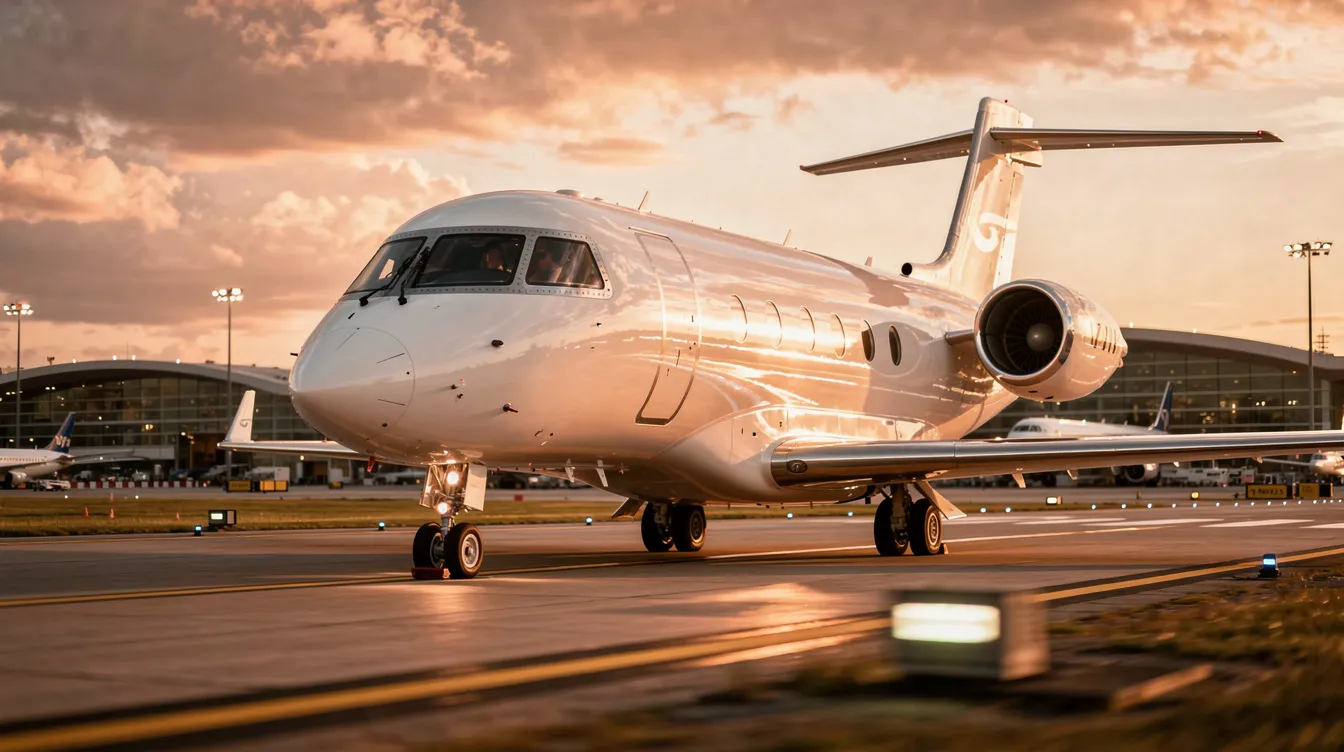
Transatlantic crossings involve operational complexity beyond domestic private jet flights: overwater certification requirements, oceanic operational procedures, dynamic North Atlantic Tracks (NATs), ETOPS/EDTO considerations for twin-engine aircraft, and multi-state overflight permits.
Booking a private jet charter safely involves verifying the operator's credentials, the aircraft's safety rating, and ensuring the quote is complete and itemized.
BlackJet exclusively partners with operators demonstrating robust international experience and recognized safety credentials for oceanic missions—ARGUS Platinum, Wyvern Wingman, and IS-BAO Stage 3 ratings serve as minimum thresholds.
Planning timelines for peak-season transatlantic private jet travel span 2-3 months, encompassing slot requests at busy European business airports, permit applications across multiple jurisdictions, fuel planning accounting for reserves and diversions, crew duty-time management, and alternate airports pre-selected on both sides of the ocean—whether your mission originates in New York, Geneva, or emerging hubs like Karachi private jet charters.
Private jet travel may require careful planning regarding international regulations, fuel stops, and aircraft range due to high operational costs. Private jet flights involve significant "red tape" related to permits and documentation, which reputable operators handle on behalf of travelers.
International flights necessitate navigating complex customs, immigration, and airspace regulations. Documentation such as valid passports and visas, is mandatory for all passengers and crew on international flights.
Operators must demonstrate compliance with international safety protocols, such as those established by the International Civil Aviation Organization (ICAO), ensuring standardized operations across multiple jurisdictions.
Transatlantic private jets are equipped with survival gear, life rafts, and receive rigorous crew training in overwater emergency protocols to ensure passenger safety during flights, standards that also underpin large-cabin options when selecting the best private jet for 20 passengers.
Booking a transatlantic private jet requires selecting a heavy or long-range jet capable of the distance and prioritizing safety audits.
Flight Planning, Routes, and Permits
Daily route selection for transatlantic crossings follows North Atlantic Tracks—dynamically assigned by Gander and Shanwick air traffic control centers based on jet streams, traffic density, and weather conditions. Dispatchers and crews balance fuel burn efficiency against ride quality, selecting tracks that optimize both.
Key permits and clearances include:
Overflight permissions: Canada, Ireland, UK, France, Spain, Portugal, depending on routing
Oceanic clearances from Gander/Shanwick centers
Airport slots at capacity-constrained European business airports
Customs pre-clearance documentation
For smaller aircraft or weather-sensitive missions, routing may incorporate stops at Keflavík (BIKF), Reykjavik, or Shannon (EINN) to ensure safe alternates and fuel margins. BlackJet’s 24/7 operations support team monitors each transatlantic flight in real time, enabling dynamic rerouting when storms or congestion arise mid-crossing.
Safety Standards and Oceanic Equipment
Transatlantic crossings mandate specific emergency equipment and systems: long-range navigation, HF radio or SATCOM for mid-Atlantic communications where ground-based coverage doesn’t exist, life rafts, life vests, and redundancy in critical aircraft systems.
ETOPS/EDTO principles govern twin-engine operations over water, requiring aircraft to remain within specified diversion times (typically 180-240 minutes) from suitable alternates. BlackJet’s partner operators deploy only aircraft meeting or exceeding these requirements for oceanic missions.
Third-party safety ratings (ARGUS, Wyvern, IS-BAO) and strict maintenance cycles form core operator selection criteria. Beyond aircraft condition, BlackJet emphasizes experienced crews: type-rated captains and first officers with specific training in oceanic procedures, fatigue management protocols, and winter operations. In the event of engine failure or other contingencies, crews maintain current qualification for diversion to alternates like Shannon, Keflavík, or Gander.
Industry statistics indicate private aviation maintains strong safety records—0.06 accidents per million departures—when operators maintain rigorous standards.
Onboard Experience: Working, Resting, and Arriving Ready
A 6-10 hour Atlantic crossing represents either lost time or—on a properly configured private jet—a fully functional moving office, dining room, and bedroom. The distinction determines whether you arrive at your final destination fatigued or performing at full capacity, and similar comfort considerations apply when evaluating 12-seater private jet options for transatlantic or regional missions.
Typical cabin configurations on heavy and ultra-long-range jets:
Forward club seating accommodating meetings and work sessions
Mid-cabin conference/dining table for 4-8 passengers
Aft lounge/bedroom with fully flat berths for genuine rest
Full galley supporting Michelin-inspired catering
Some flagships offer shower facilities for freshening before arrival
Connectivity enables modern workflows: high-speed Ka/Ku-band Wi-Fi supporting video calls, secure VPN connections, and streaming. Cabin management systems control lighting, temperature, and entertainment through intuitive interfaces.
Catering customization ranges from tasting menus on night flights to lighter, health-focused options timed to combat jet lag. Dietary requirements—vegan, kosher, gluten-free—receive full accommodation with advance notice.
Newer platforms like the G650ER and Global 7500 feature lower cabin altitudes (4,100 feet versus commercial’s 6,000-8,000 feet), reducing dehydration and fatigue by 20-30% through reduced effective altitude exposure—performance traits that scale up to large-group solutions like the best private jet for 50 passengers.
Sample Itinerary: New York to London with BlackJet
A BlackJet member books via the app in under two minutes, selecting a Gulfstream G550 under their Jet Card for a Sunday evening departure from Teterboro.
Pre-departure: Arriving at the FBO 20-30 minutes before wheels-up, luggage is loaded and passports verified while passengers enjoy a quiet lounge and pre-flight espresso. Ground transportation coordinates departure timing.
In-flight: Shortly after takeoff, Wi-Fi enables a brief video call updating London colleagues. Dinner service begins at the four-seat conference table—personalized service with menu selections confirmed 24 hours prior. Approximately three hours into the flight, seats convert to lie-flat beds for genuine sleep.
Arrival: Touchdown at London Luton around sunrise. Expedited customs and immigration procedures at the dedicated private terminal require 10-15 minutes. A pre-arranged car transfer delivers the member to central London—ready for a 9 a.m. meeting, having slept, worked, and dined in privacy.
Sustainability and Carbon-Neutral Transatlantic Flights
Long-range private jets carry meaningful carbon footprints, particularly on transatlantic legs. Sophisticated travelers increasingly factor sustainability into aviation decisions—and BlackJet responds directly.
BlackJet ensures every flight is carbon neutral, including US–Europe crossings, at no additional cost to members. The process works transparently:
Calculate actual fuel burn for each mission
Convert to CO₂ equivalent (tCO₂e)
Invest in Gold Standard or Verified Carbon Standard projects (reforestation, renewable energy)
Where available, BlackJet coordinates sustainable aviation fuel (SAF) uplift at major hubs including Teterboro, Van Nuys, and Paris Le Bourget. SAF blends of 10-20% reduce lifecycle emissions by up to 75% compared to conventional jet fuel.
Future-oriented strategies include a preference for newer, fuel-efficient aircraft (Global 7500 delivers 25% better fuel economy than previous generation) and right-sizing aircraft to passenger counts. EU SAF mandates requiring 6% by 2027 signal industry direction and intersect with broader efforts to make the cheapest private jet options more sustainable over their lifecycle.
Eco-conscious members can consolidate trips, choose appropriately sized aircraft, avoiding excess aircraft weight, and leverage BlackJet advisors to select operators demonstrating strong sustainability practices.
Choosing the Right Transatlantic Private Jet with BlackJet
Selecting the right private jet depends on four primary variables:
Factor | Consideration |
|---|
Trip length | City pair distance, seasonal headwinds affecting range |
Passenger count | 4 executives vs 12 family members require different platforms |
Luggage | Ski gear, golf bags, and extended wardrobes impact cargo requirements |
Configuration | Conference priority vs sleeping berths vs dedicated bedroom |
Example pairings:
4-executive team, New York–Zurich: Bombardier Challenger 3500 or light heavy jet
12-person family, Miami–Nice: Global 6000 or VIP airliners configuration, or for ownership-minded travelers, exploring premium UK private jets for sale with similar cabin capabilities
Solo executive, Boston–London: Super midsize with fuel stop or heavy jet nonstop
BlackJet advisors analyze route profiles, seasonal weather trends, and member preferences to recommend aircraft categories matching Jet Card terms, often starting with our flagship BlackJet 25+ Hour Jet Card. The BlackJet app displays real-time availability, seat maps, and flight range specifications—while human experts refine recommendations for complex itineraries.
For executives and discerning travelers who fly privately across the Atlantic regularly, a BlackJet Jet Card transforms transatlantic travel from unpredictable expense to controllable strategic asset, delivering many of the advantages outlined in our overview of the best jet cards for frequent flyers.
Explore how BlackJet Jet Card options can reshape your transatlantic journey—with predictable costs, carbon-neutral operations, and guaranteed access to the world’s finest private aircraft, whether you prefer the flexibility of a 25-hour jet card program, the scale of a 100-hour jet card commitment, or simply want to compare jet card pricing structures in detail.
FAQs: Transatlantic Private Jet with BlackJet
What is the minimum range needed to fly nonstop from the US to Europe?
The minimum practical nonstop range for East Coast US to Western Europe is approximately 3,500–4,000 nautical miles. This accounts for actual routing (longer than great-circle distance), weather diversions, and mandatory fuel reserves. Long-range private jets and ultra-long-range platforms exceed this threshold comfortably.
Can a light jet or turboprop cross the Atlantic?
Technically, yes—via multiple fuel stops through Iceland and Greenland. However, BlackJet does not recommend this approach for transatlantic crossings. Smaller aircraft compromise comfort, speed, and safety margins on extended overwater legs. We focus members on multi-engine jets certified for extended overwater operations.
How far in advance should I book a transatlantic private jet?
For peak seasons (summer Mediterranean, winter holidays), corporate travelers should secure transatlantic private flights 2-3 months in advance to guarantee preferred aircraft and routing. BlackJet Jet Card members benefit from guaranteed availability that often accommodates shorter notice through our operator network.
How does BlackJet ensure safety on over-water flights?
BlackJet partners exclusively with operators holding ARGUS Platinum, Wyvern Wingman, or IS-BAO Stage 3 ratings. Aircraft meet ETOPS/EDTO certification for oceanic operations, carry required emergency equipment including life rafts and SATCOM, and are flown by crews specifically trained in oceanic procedures and fatigue management.
Are pets allowed on transatlantic private jets?
Yes. Most heavy and ultra-long range jets accommodate pets in the main cabin with you—no cargo hold separation required. Pressurized and climate-controlled cabins ensure comfort throughout the transatlantic journey. Advance notice allows coordination of any specific requirements.
Conclusion: Elevate Your Transatlantic Travel with BlackJet
Crossing the Atlantic Ocean by private jet is not merely a mode of transport—it is a strategic investment in time, comfort, and safety for today’s discerning traveler. BlackJet’s premium Jet Card programs provide seamless access to a fleet of certified, carbon-neutral private jets equipped to deliver a smooth and enjoyable journey across the Atlantic. With guaranteed aircraft availability, expert operational support, and a commitment to sustainability, BlackJet transforms transatlantic private jet travel into a refined, efficient experience tailored to your unique needs.
Discover how BlackJet can elevate your international travel by visiting www.blackjet.com. Whether for business or leisure, unlock unparalleled convenience, privacy, and personalized service on every transatlantic flight, ensuring you arrive refreshed and ready to perform at your best. Join BlackJet today and experience the future of private aviation across the Atlantic Ocean.


 Sign up with google
 Sign up with Apple