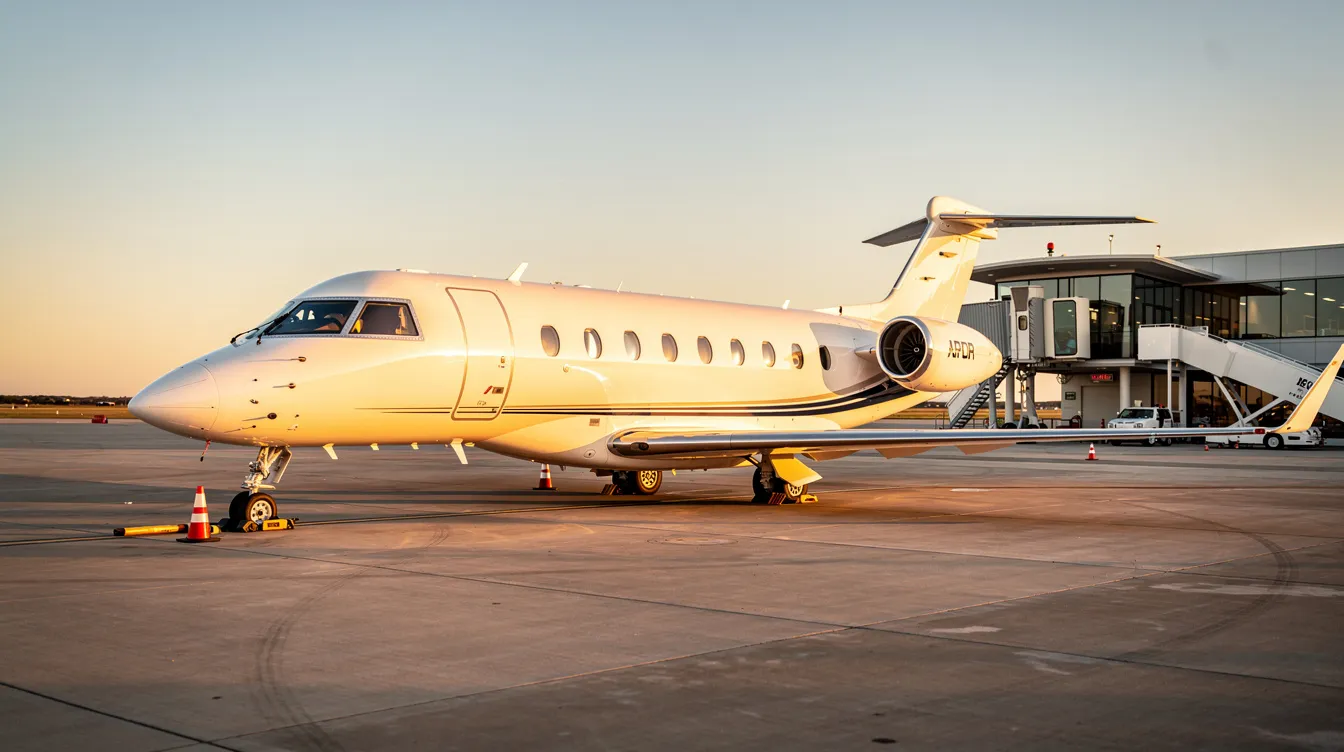
The word private traces back to the Latin privatus, meaning "set apart" or "belonging to oneself." As both an adjective and a noun, its definition has evolved, but the core sense remains: something separate, personal, and not intended for public use. In 2026, that meaning perfectly captures how elite travelers approach aviation. This article is your guide to understanding how private jet owners actually fly, who they are, and why the smartest among them have stopped buying aircraft altogether.
Why Private Jet Owners Matter in 2026
Private jet ownership is often viewed as a strategic tool for maximizing executive time-not merely a display of power or wealth. High-net-worth individuals and corporations now treat private aviation as infrastructure, much like the private sector treats logistics or data systems. Private jets provide total control over travel schedules for owners, and that control translates directly into productivity and competitive advantage.
Consider concrete routes. A New York–Miami trip via commercial airlines takes 5–7 hours when you factor in airport arrival, TSA lines, boarding, flight time, baggage, and ground transfers. Flying private from Teterboro to Opa-Locka cuts that to roughly 3–4.5 hours. Los Angeles to Aspen or London to Nice yields similar or greater savings. Private jets can operate from thousands of airports not served by commercial airlines, eliminating the detour through congested hubs. Private jets provide enhanced productivity by reducing time spent in airports, and for an executive travel schedule packed with quarterly board meetings and client obligations, those reclaimed hours compound fast.
Here is what surprises most people: the majority of "private jet owners" today do not use a fully owned aircraft. Many rely on jet cards and membership models rather than tying up capital in a depreciating private property. This article uses American English spelling and conventions throughout-travelers, customization, carbon-neutral flights-and all examples reflect current 2026 data.
Real-world examples of who owns or controls access to private jets include CEOs of leading technology firms, serial founders, family offices managing generational wealth, private equity principals, and professional athletes. Their motivations cluster around privacy, schedule control, and security. These are private persons who guard their private lives with the same rigor they apply to investment decisions.
Key Takeaways for Private Jet Owners in 2026
Private jet ownership today is less about owning aircraft and more about owning time, flexibility, and privacy through jet cards and membership programs.
High-net-worth individuals and corporations use private jets strategically to maximize productivity and control schedules, saving hours compared to commercial flights.
Full ownership carries significant financial, operational, and regulatory responsibilities, often making jet cards or fractional ownership more practical for many travelers.
Jet cards like BlackJet’s offer prepaid access with multi-cabin flexibility, safety certification, real-time support, and carbon-neutral flights—delivering an owner-grade experience without asset risk.
Environmental responsibility is a growing priority; offset programs and sustainable aviation fuels are now integral to modern private aviation strategies.
Technology and mobile platforms enable seamless 24/7 booking, real-time updates, and secure, confidential travel management for discerning users.
Understanding costs, tax implications, and maintenance demands is essential for anyone considering private jet ownership or access.
BlackJet redefines private jet ownership by combining luxury, safety, sustainability, and convenience into a flexible, capital-light model tailored for today’s elite traveler.
Who Actually Owns Private Jets as Private Property? (Individuals vs Corporations)
Understanding who actually owns private jets requires separating the individual person from the corporate entity-and recognizing that many particular persons involved in private aviation never hold title to an aircraft at all.
Net worth thresholds for individual ownership: A private person looking to own a light jet outright in 2026 typically needs a net worth of $50–70 million in liquid assets. Midsize and super-midsize owners trend toward $100–150 million. For large-cabin fleets-think intercontinental capability-owners often exceed $250 million, and roughly 35% of private jet owners are worth more than $500 million. These figures help explain why a private citizen with "only" $20–30 million in assets typically gravitates toward cards or fractional shares instead, and why many evaluate 10-million-dollar private jet options before deciding on the right mix of ownership and access.
Individual vs corporate structures: Aircraft registered as private property to a person or family trust sit alongside corporate fleets held by LLCs, Fortune 500 companies, and private equity firms. In the private sector, companies use jets to move senior leadership across regions with minimal downtime, and billionaire owners increasingly weigh billionaire private jet price trends in 2026 when choosing between personal fleets and more flexible access models. Those holding public office rarely own jets personally but may use government aircraft. Meanwhile, a group of investors in a family office might co-own through a holding company for liability and tax efficiency.
Popular owner aircraft: The Cessna Citation CJ4 appeals to owner-pilots; the Embraer Phenom 300E is a favorite among high-net-worth entrepreneurs for its efficient cost profile. At the top, the Gulfstream G650ER and Bombardier Global 7500 serve global corporations and billionaires, with acquisition prices of $60–80 million new, placing them among the largest private jets for sale in the market.
How owners actually fly: Many private jet owners hire management companies to handle operational logistics. Chartering options can offset some operating costs for private jet owners by generating revenue when the aircraft sits idle. Others skip formal ownership entirely, opting for jet card access programs like BlackJet.
Registration and privacy: U.S. jets carry FAA-registered N-numbers and are often held in Delaware or Nevada LLCs to protect the owner's identity and limit liability, keeping their name out of public records like a quiet layer of confidential protection.
Full Ownership vs Fractional Ownership vs Jet Cards
The decision between owning, sharing, or subscribing to private aviation has never been more consequential. Here is how each model works, with 2026 cost examples.
Ownership Model | Description | Typical Costs (2026) | Advantages | Considerations |
|---|
Full Ownership | Buying and operating a private jet outright | $40–70 million purchase; $1–6 million/year operating costs | Total control, asset ownership, privacy | High capital, management responsibility, depreciation risk |
Fractional Ownership | Shared ownership with equity share and hourly usage | Equity share varies; monthly fees + hourly rates | Lower capital outlay, access to specific aircraft | Limited flexibility, shared scheduling, and regulatory complexity |
Jet Cards | Prepaid access to private jets without ownership | Entry-level $100k+ for 25-50 hours | Flexibility, no asset risk, multi-cabin access | No equity, contractual access, availability dependent on provider |
Full ownership: Buying a 2018 Gulfstream G500 costs roughly $40–50 million. Annual operating costs-crew, hangar, insurance, maintenance, fuel-run $3–5 million for 200–300 flight hours. Annual operating expenses for private jets can exceed $1 million, even for light jets. Owning a private jet is akin to managing a business due to the associated responsibilities, and depreciation impacts private jet ownership value over time.
Fractional ownership: Buying a 1/8 share of a super mid-size jet means upfront equity, monthly management fees, and occupied hourly rates. Typical commitments are 50–100 hours per year. Fractional ownership operations may be regulated by FAA Part 91 or Part 135, depending on the structure. Multiple parties share the asset, with costs belonging proportionally to each, and understanding fractional jet ownership depreciation is critical for evaluating the long-term economics.
Jet cards: Programs like BlackJet's 25-hour and 50-hour Jet Cards provide prepaid access to private jets. Jet card programs typically offer 25-hour or 50-hour options, with entry points in the low-to-mid six figures; a detailed guide to jet card cost and pricing helps many buyers benchmark these numbers. Jet cards allow flexibility without owning a jet-no aircraft on your balance sheet, no depreciation risk, no hangar lease.
Scenario comparison: A private person flying between New York and Dallas 20 times per year (40 legs) in a midsize cabin faces vastly different costs. On-demand charter with repositioning and additional fees might exceed $400,000 annually. A fractional share locks up capital and restricts you to one aircraft type. A BlackJet card covers the same missions with predictable, all-inclusive pricing-crew, fuel, landing fees bundled, and fits squarely within modern jet card pricing structures that trade capital expenditure for transparent hourly rates.
Cabin flexibility: Jet cards let you switch class trip by trip-light for a quick hop, super mid-size for coast-to-coast, large cabin for international. Very light jets have a maximum takeoff weight of 10,010 lb and suit short missions. Light jets typically accommodate 6–8 passengers over 1,953 nmi. Super mid-size jets can carry 10–11 passengers over 3,420 nmi. Large jets typically accommodate 12–19 passengers over 6,500 nmi, reflecting the main types of private jets for every traveler. Ownership ties you to one type.
"Private a jet" vs "private a membership": The concept is simple. The word private, pertaining to rank, historically described an army private soldier-someone in the two lowest ranks with limited independent authority. Funny as it may sound, the analogy is apt: owning a jet puts you at the lowest ranks of flexibility when markets shift. In 2026, more travelers "private a card" (join a program intended for repeat access) instead of buying metal, comparing the best jet cards for frequent flyers to find guaranteed availability and clear pricing. This is the first time in the industry's history that membership has outpaced new individual aircraft orders for the definition of "private jet access."
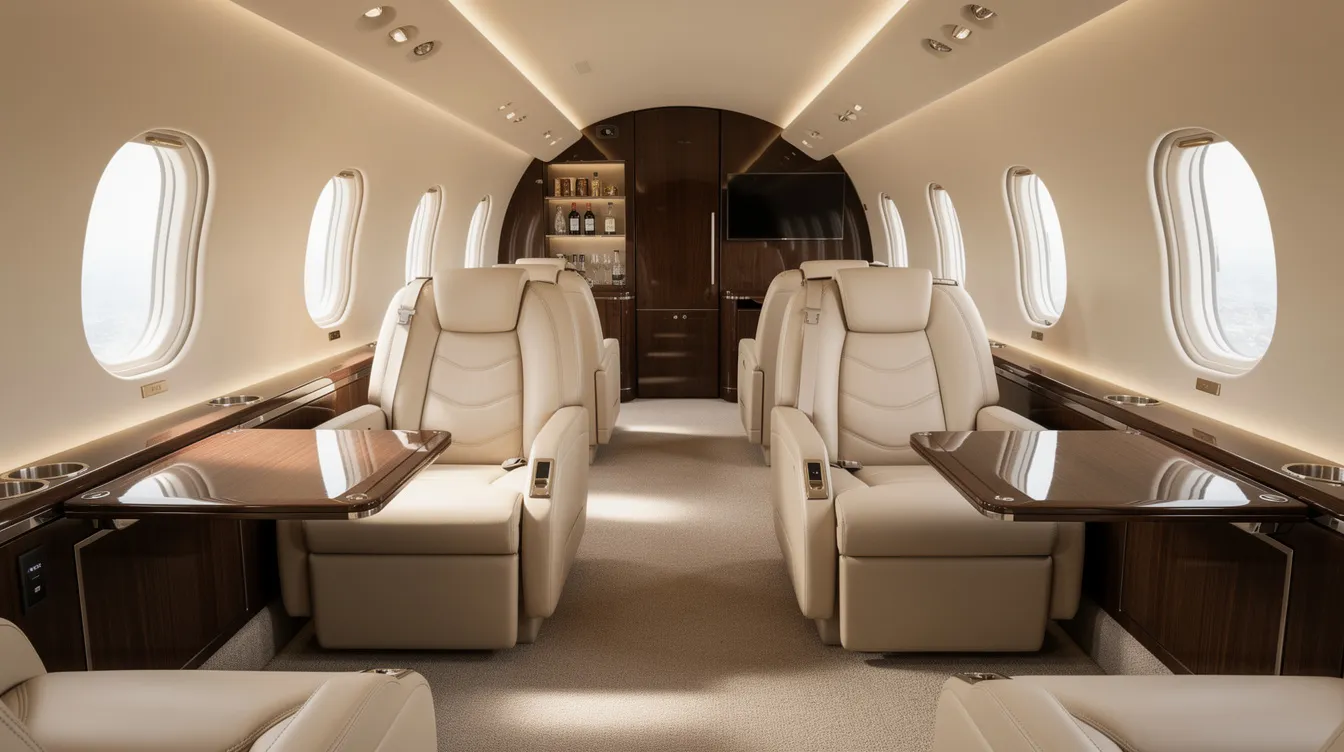
The Lifestyle and Responsibilities of a Private Person Jet Owner
Picture this: it is 5:45 AM on a Tuesday, and a founder based in Scottsdale needs to be in Manhattan by noon for a board meeting. She's already reviewed briefs in a quiet room at home before her children leave for private school. Her management company dispatched a crew the night before, and the aircraft is fueled and positioned at a nearby FBO. She boards without a single line, takes a call from her client on an encrypted line in the cabin-a private environment for confidential business meetings-and lands at Teterboro with time to spare for a visit to the office.
That is the upside. Now consider what it took to make that flight happen behind the scenes-the employment of pilots, dispatchers, and maintenance technicians, the ongoing costs of keeping a multi-million-dollar asset flight-ready.
Scheduling realities: Traditional owners work with aircraft management, dispatch teams, and crew scheduling. BlackJet's premium private jet card programs, by contrast, let members use a digital booking app to request a flight in minutes-no phone trees, no coordination with a flight department.
Maintenance and compliance: Aircraft management is essential for compliance with FAA regulations. Responsibilities tied to private property ownership include maintenance checks every 200–400 hours, annual inspections, and engine programs like JSSI or Rolls-Royce CorporateCare. Regular inspections and maintenance are necessary to maintain aircraft airworthiness, supporting the broader reality that private jets are extremely safe when operated within rigorous maintenance and training standards. Aircraft require mandatory inspections based on hourly or calendar schedules.
Crew management: Managing flight crews is a requirement for private jet ownership. Owners must hire and retain captains and first officers, fund recurrent simulator sessions, and cover employment costs year-round. A management company can help reduce the owner's day-to-day workload by bundling crew, scheduling, and training under one service umbrella.
BlackJet contrast: Members enjoy the same cabin room, privacy, and lifestyle choices for jet owners-flexibility and privacy-but outsource the ownership burdens. With the BlackJet 25+ Hour Jet Card, there are no surprise maintenance bills, no hangar leases, and no resale risk when models depreciate. Liability management through proper insurance is handled by the operator, not the member.
Privacy practices: Discrete FBO terminal access, NDAs for crew and employees, tail-number masking programs, and secure ground transfers keep itineraries secret. These measures protect any very private person who wants to keep their movements out of public life.
Safety and Certification: How Responsible Owners Fly
Wealth and risk management go hand in hand. Responsible private jet owners treat safety with the same discipline they apply to portfolio management-no shortcuts, no informal arrangements.
Regulatory framework: The FAA separates private use (Part 91) from charter operations (Part 135). Part 91 applies to non-commercial flights with fewer oversight requirements; Part 135 demands stricter pilot qualifications, crew rest rules, drug and alcohol programs, and continuous maintenance surveillance. Owners must ensure compliance with local and international aviation regulations. Many owners place aircraft on Part 135 certificates to meet higher standards, even for personal use, because the added government oversight controlled by official regulatory bodies delivers measurably better safety outcomes. Private aviation companies often provide safety certifications aligned with these frameworks.
Industry benchmarks: Organizations like ARG/US (Platinum rating) and Wyvern (Wingman designation) set independent third-party standards. IS-BAO Stage 2 and Stage 3 certifications address safety management systems. Sophisticated owners and their advisors insist on these accreditations, and so do leading jet card programs.
Due diligence: Every private person or family office should perform checks that would make a private detective proud: operator track record, pilot hours on type, maintenance history, and SMS documentation. Jet card programs ensure safety certification for flights, removing the burden from the individual. Regular maintenance and compliance are crucial for aircraft safety standards.
BlackJet's position: BlackJet only partners with operators meeting top-tier safety and certification standards, effectively giving members "owner-grade" safety on every flight. Private jets must comply with FAA regulations, and BlackJet's vetting process ensures every operator in its network does.
Example scenario: A BlackJet Jet Card member books a late-notice super mid-size flight from Teterboro to Van Nuys. Before confirmation, the system verifies the operator's Part 135 certificate, confirms ARG/US Platinum or Wyvern Wingman status, checks pilot hours on type, and reviews maintenance records. The member sees a confirmed itinerary; the safety infrastructure operates behind the scenes without a single extra step required.

Environmental Impact and the New Expectations of Jet Owners' Private Life
Since 2022, public scrutiny of private jet owners has intensified. Flight-tracking projects inspired by Jack Sweeney's work-amplified across Twitter, YouTube, and mainstream media-have made the movements of high-profile aircraft visible to anyone with a browser. Those holding public office and celebrities alike have faced pointed questions about their environmental footprint, and that pressure now extends to every person who flies privately.
Concrete emissions: A large-cabin private jet performing a New York–Los Angeles round trip emits approximately 15–20 metric tons of CO₂. Private jets generate thousands of tons of CO₂ emissions annually across the global fleet of roughly 23,000 private jets. Traveling in private jets leaves a disproportionate carbon footprint compared to commercial alternatives. Some individuals travel over 350,000 km annually by private jet, compounding the impact. Private jet travel can leave a disproportionate carbon footprint that stakeholders increasingly talk about publicly.
Reducing impact: Options to develop a credible environmental strategy include investing in newer fuel-efficient aircraft like the Embraer Praetor 600 or Dassault Falcon 10X, adopting sustainable aviation fuel (SAF) blends, optimizing routing, and purchasing verified carbon offsets. These steps deprive critics of easy targets and demonstrate genuine commitment.
BlackJet's stance: Every BlackJet flight is carbon-neutral via audited offset programs at no additional effort or cost to members, allowing them to match or exceed the sustainability posture of many full owners without managing offset procurement themselves.
Reputation management: Modern private jet owners should openly communicate their environmental strategy with stakeholders. In the past, silence was acceptable; in 2026, it is not. A clear, state–control–level transparency around emissions reporting protects both reputation and relationships.
Using Data and Technology: How Modern Jet "Owners" Travel
Technology has collapsed the gap between owning an aircraft and accessing one. The difference is no longer about the experience-it is about who manages the complexity.
Traditional vs digital: Full owners rely on flight departments and dispatch software. BlackJet members use a mobile booking platform that enables 24/7 access to jet services with real-time pricing, aircraft options, and ETA updates, one of several strategies for those looking to fly private more affordably without compromising on convenience. Users can book private jets instantly via mobile apps. Users can book flights 24/7 with digital tools.
Practical benefits: Instant routing changes-diverting from London to Geneva due to a meeting shift-automated catering requests, and integrated ground transport scheduling. Mobile platforms provide real-time flight support for travelers, and mobile booking enhances convenience for frequent travelers. Real-time flight support enhances the private travel experience for jet owners. Jet cards include real-time support for travelers at every stage.
Ownership of time: Jet cards function as "ownership of time" rather than ownership of metal. Hours are stored as a digital balance accessible via app or concierge, ready to deploy worldwide, whether you choose a 25, 50, or 100-hour jet card structure. This model makes private jet access free from the constraints of physical asset management.
Data security: Secure payment channels and encrypted communication protect the private parts of the operation-itineraries, payment details, and personal information. For users who want to keep travel patterns confidential, these protections are non-negotiable.
Costs in 2026: What It Really Takes to Be a Private Jet Owner
This section provides an approximate 2026 cost snapshot, not a comprehensive pricing guide. Private jet ownership requires intensive financial planning, and the numbers below illustrate why.
Light jet ownership: A Citation CJ3+ costs $9–11 million (used or new), comparable to many 15-million-dollar private jet configurations once you factor in customization and options. Annual fixed and variable costs for ~200 hours run approximately $1–1.5 million, including crew, maintenance, insurance, hangar, and fuel. High operational costs are associated with private jet ownership at every level. Private jets often represent a significant financial commitment beyond the purchase price.
Large-cabin ownership: A G650ER acquisition runs $60–70 million. Annual costs reach $4–6 million for 200–300 hours. Business airliners can be the most expensive type of private jet, with some configurations exceeding even these figures.
BlackJet Jet Cards: Prepaid access starting in the low six figures-compare that to eight-figure capital commitments. All operating costs (crew, fuel, landing fees) are bundled, with no additional fees beyond the published price per hour, and they sit at the more flexible end of the modern private jet price list of ownership and access options.
Tax considerations: Owners can potentially achieve tax efficiencies through private jet ownership via bonus depreciation rules and business-vs-personal use allocations, but private jet owners must navigate complex tax implications associated with ownership. Tax planning and record keeping are essential for justifying tax deductions. For others exploring the cheapest private jet options and entry-level aircraft, the real savings often come from choosing the right access model rather than chasing tax breaks. Frequent flyers typically find full ownership more economically justifiable only above 200–300 hours annually.
Hidden costs: Cabin refurbishments every 7–10 years, avionics upgrades for new regulations, and market risk at resale when newer models launch. These factors make the price of ownership for even the most expensive private jets unpredictable in ways that jet cards eliminate entirely.
Capital-light alternative: BlackJet positions itself as the way to secure private jet access comparable to an owner's experience-without taking on asset risk or multi-million-dollar annual budgets. Executive travel may leverage private jets for increased efficiency, and jet cards make that leverage accessible without ownership.
Frequently Asked Questions About Private Jet Owners and Jet Cards (American English)
Below are the questions we hear most from prospective members and current owners evaluating their options.
Do I need to be a nine-figure net worth private person to benefit from private jet access? No. Jet cards open private aviation to individuals well below billionaire status. High-net-worth individuals often use private jets as a time-saving tool, and a 25-hour card makes that accessible to anyone who flies privately several times per year. Full aircraft ownership typically requires higher net worth and predictable high usage.
Is a jet card the same as owning a jet? No. Ownership means you hold title to a depreciating asset with full legal and safety responsibilities. Owners must manage significant legal and safety responsibilities. A jet card is a service contract guaranteeing access to aircraft hours-no equity, no balance-sheet impact, whether you are comparing NetJets, BlackJet, or another provider using a detailed NetJets jet card cost breakdown as a benchmark.
Can I treat my jet card as private property for collateral or resale? Jet cards are contracts, not tangible assets. They are generally non-transferable and non-collateralizable, separate from any asset class a client or advisor would categorize as property.
How does BlackJet ensure safety and pilot qualifications compared to having my own flight department? By partnering exclusively with operators holding ARG/US Platinum, Wyvern Wingman, or equivalent certifications, and by verifying pilot hours, recurrent training, and maintenance records before every flight.
What about sustainability-how are BlackJet flights carbon neutral? Every flight is offset through audited carbon programs at no extra cost. When available, SAF blends are incorporated. Newer, fuel-efficient aircraft in the operator network further reduce per-flight emissions.
Can I upgrade cabin class or change aircraft type mid-year? Absolutely. Unlike ownership, which ties you to one aircraft, BlackJet members can select light, midsize, super mid, or large cabin on any given trip-adapting to the mission rather than being constrained by what sits in your hangar.
How BlackJet Reimagines What It Means to Be a Private Jet Owner
The word private, whether used as a noun describing rank or an adjective pertaining to personal independence, has always meant something set apart for a particular purpose. In 2026, being a "private jet owner" no longer requires owning an aircraft. It means owning your freedom and time.
BlackJet's Jet Card model delivers predictable pricing, multi-cabin flexibility, 24/7 concierge and digital booking, a safety-first operator network, and automatic carbon-neutral flights. Lifestyle choices for jet owners include flexibility and privacy—and BlackJet provides both without the burden of metal on your books.
Consider a CEO based in Chicago using a 50-hour BlackJet card in 2026: quarterly trips to Europe on a large-cabin jet, bi-weekly U.S. city hops on a super mid, and family vacations to the Caribbean on a light jet with her children—all without ever signing a hangar lease, managing a single employee, or worrying about resale value.
Discover how BlackJet can give you the advantages of private jet ownership —without owning a jet.


 Sign up with google
 Sign up with Apple