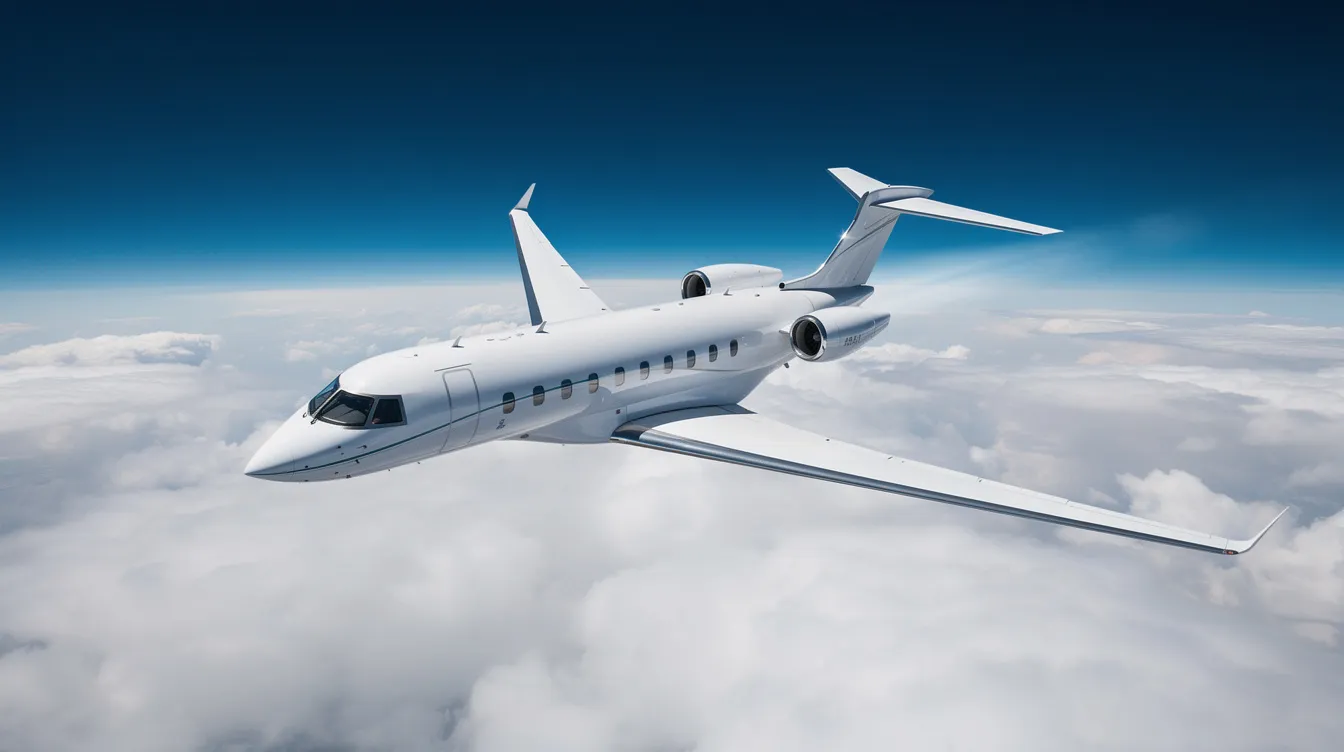
Introduction: Why Private Jet MPG Matters for Serious Travelers
In 2026, with Jet A prices ranging from $6 to $9 per gallon at U.S. FBOs, fuel has become one of the largest single line items in private aviation. For frequent business flyers, corporate travel decision-makers, and high-net-worth leisure travelers who fly privately multiple times a year, understanding private jet MPG isn't an academic exercise—it’s a strategic imperative that directly shapes trip costs, aircraft selection, route planning, and environmental responsibility.
Private jet MPG typically falls around 0.7 to 4.0 statute miles per gallon depending on the aircraft class. Very light and light jets often deliver the best fuel efficiency on shorter routes at roughly 2 to 3 MPG. The average fuel economy for a private jet ranges from 2 to 5 miles per gallon under typical conditions.
Compare that to a modern commercial airliner averaging roughly 67 available seat miles per gallon, and the gap becomes obvious on a per-passenger basis. But that comparison misses what makes private aviation valuable in the first place: direct routing to smaller airports, elimination of layovers, and total schedule control that can compress a twelve-hour commercial itinerary into four hours door-to-door.
Fuel efficiency in private aviation is measured in gallons per hour (GPH), which indicates how many gallons of fuel a jet burns each hour in flight. Nautical miles per gallon (NMPG) is another metric for evaluating jet efficiency, representing the number of nautical miles traveled per gallon of fuel. These metrics provide a more precise understanding of fuel use than the familiar car-style MPG.
Private jet efficiency typically ranges from 0.5 to 6.0 NMPG based on aircraft size and engine count. The most useful comparison is by jet class, mission length, occupancy, and operating profile. That is why this guide breaks down fuel-efficiency metrics, MPG by aircraft category, real-world fuel-burn examples, comparisons with commercial airlines and other transport modes, the operating factors that change fuel economy, and how sustainable aviation fuel and smarter aircraft selection can reduce environmental impact.
BlackJet operates as a carbon-neutral Jet Card and membership provider, matching jet class and routing to each mission so that members achieve the best real-world fuel efficiency and cost per mile—without sacrificing safety, comfort, or flexibility. Rather than chasing a single MPG number, the goal is optimizing every gallon across your entire travel pattern.
How Do You Actually Calculate Private Jet MPG?
Calculating MPG for a jet involves dividing the distance traveled by the total fuel consumed—including taxi, climb, cruise, and descent. Unlike a car idling at a traffic light, a private jet burns the most fuel during takeoff and ascent phases. This means short flights are less efficient overall, and the math shifts depending on how much of the trip is spent at cruising altitude.
Here’s how to calculate private jet MPG:
Measure the total distance flown (in statute or nautical miles).
Record the total gallons of fuel consumed for the entire trip (including taxi, climb, cruise, and descent).
Divide the distance by the total gallons used to get the aircraft’s miles per gallon (MPG) or nautical miles per gallon (NMPG).
Two metrics matter most:
Aircraft miles per gallon (MPG): Gives you the overall efficiency of the airframe on a given route.
Passenger-miles per gallon: Divides that figure by the number of people on board, reflecting the per-seat reality. More passengers improve this metric significantly.
Fuel efficiency in private aviation is measured in gallons per hour (GPH), which indicates how many gallons of fuel a jet burns each hour in flight. Nautical miles per gallon (NMPG) is another metric for evaluating jet efficiency, representing the number of nautical miles traveled per gallon of fuel.
Here are three concrete examples:
Light jet, New York to Miami (~1,090 statute miles): Burning approximately 175 GPH at a cruise speed near 495 mph, a 2.5-hour flight consumes roughly 440 gallons. Aircraft MPG: about 2.5. With four passengers, that's approximately 10 passenger-miles per gallon.
Super-midsize jet, Los Angeles to Chicago (~1,750 miles): At 300 GPH and 450 mph cruise speed, a 3.9-hour sector burns around 1,170 gallons. Aircraft MPG: roughly 1.5. With eight passengers aboard, passenger MPG climbs to about 12.
Heavy jet, New York to London (~3,500 miles): At 450 GPH and 500 mph, a 7-hour crossing consumes roughly 3,150 gallons. Aircraft MPG: approximately 1.1. Fill the cabin with 12 to 15 passengers, and you reach 13 to 17 passenger-miles per gallon.
BlackJet's flight planning tools model GPH, cruise speed, weight, and winds for each leg rather than relying on brochure figures. This allows for computing expected private jet fuel usage per statute or nautical mile, then translating that into cost per mile and emissions per passenger.
Private Jet Fuel Efficiency by Jet Class
Private jet fuel consumption varies dramatically by jet class and mission profile. The table below shows average fuel consumption rates by category. A very light jet sipping 90 GPH on a regional hop and an ultra-long-range jet burning 520 GPH across an ocean are solving fundamentally different problems—and their MPG figures reflect that.
Jet Class | Typical GPH (Cruise) | Approximate MPG (Statute) |
|---|
Very Light Jet | 90–150 | 2.5–4.0 |
Light Jet | 160–260 | 1.8–3.0 |
Midsize Jet | 220–350 | 1.2–2.0 |
Super-Midsize | 280–360 | 1.0–1.8 |
Heavy Jet | 340–500 | 0.8–1.5 |
Ultra Long Range | 450–520+ | 0.7–1.3 |
Aircraft size impacts fuel burn, with larger planes typically requiring more fuel, and those differences also drive operating costs across aircraft size and type, but the trade-offs involve cruise speed, cabin volume, range capability, and aerodynamic efficiency. A larger cabin adds drag and weight, reducing miles per gallon in cruise—but if you fill those seats, the per-passenger economics shift in favor of larger jets on longer routes
BlackJet's Jet Card members can choose among multiple cabin classes on a trip-by-trip basis, right-sizing fuel usage and cost rather than defaulting to one aircraft type for every mission. The broader premium private jet cards & Jet Card programs offering outlines how this flexibility works in practice.
Light Jets and Very Light Jets: The MPG Sweet Spot
Light jets and very light jets consistently deliver the best private jet MPG on short to medium routes. Their lower aircraft weight, compact airframes, and fuel-efficient engines translate into fewer gallons burned per mile. When you fill the cabin with four to six passengers, the per-seat numbers become genuinely competitive.
Specific models illustrate the range:
Embraer Phenom 100: Consumes just 77 gallons per hour, ranking it among the most fuel-efficient jets available for regional flights.
Embraer Phenom 300: Approximately 150 GPH, with the speed and range to handle routes up to 1,800 nautical miles.
Cessna Citation CJ4: Burns roughly 180–200 GPH, offering a strong balance of cabin space and fuel economy.
HondaJet Elite: Near 120–130 GPH, this very light jet is ideal for two- to three-passenger trips under 1,200 miles.
Very light jets usually burn 70 to 150 gallons per hour, while light jets consume approximately 120–260 gallons per hour. On routes like Boston to Washington, DC (~400 miles) or Los Angeles to Las Vegas (~260 miles), these aircraft achieve 2 to 3 statute miles per gallon. With four passengers aboard, that’s 8 to 12 passenger-miles per gallon.
Many BlackJet members default to light jets for frequent regional trips where fuel efficiency and total trip time balance best. Over a dozen round-trips per year, the cumulative savings in fuel burn and hourly rates versus using a midsize jet or larger are substantial. This is especially true when you focus on the cheapest private aircraft and budget-friendly options that still meet your comfort and range needs.
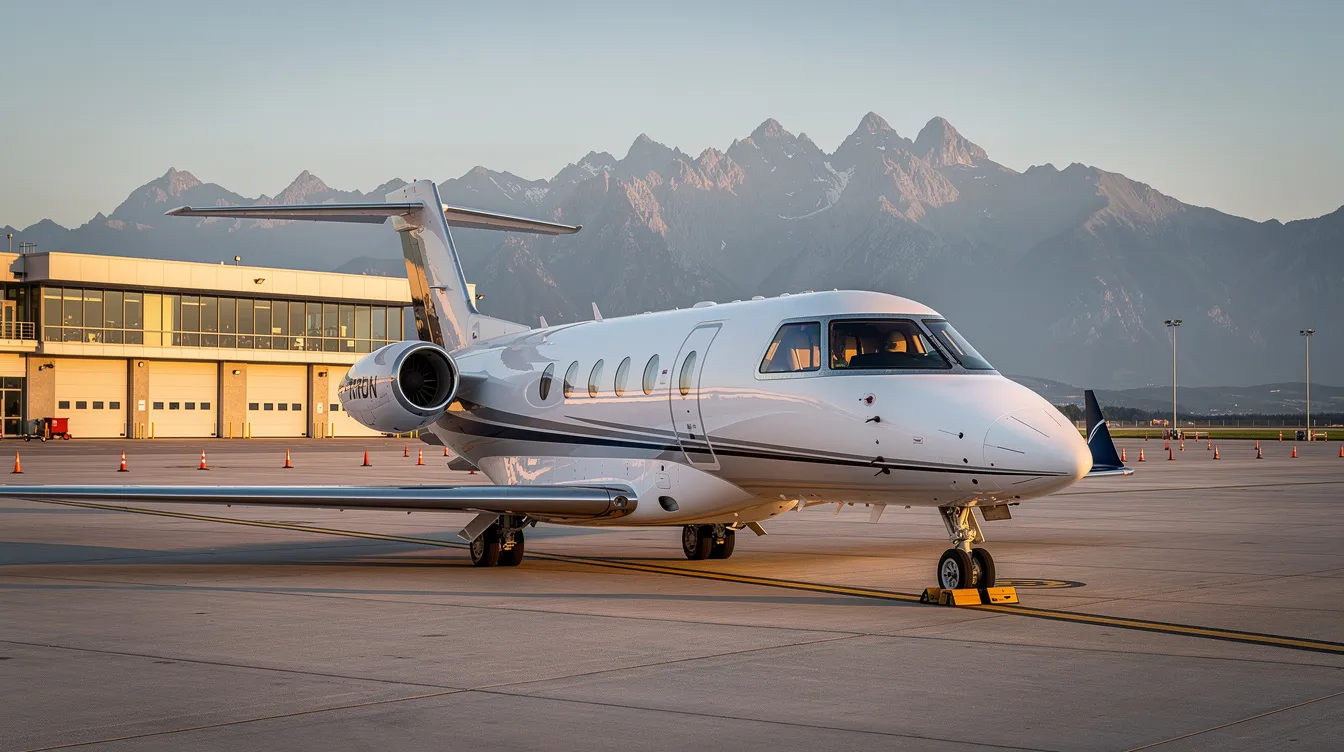
Midsize and Super-Midsize Jets: Balancing Range, Comfort, and Fuel Efficiency
Midsize and super-midsize jets trade slightly higher fuel consumption for meaningfully greater range, cabin volume, and baggage capacity. For groups of five to ten travelers, these medium jets often represent the fuel-efficient sweet spot when measured per passenger on medium-haul flights.
Key aircraft and their profiles:
Citation XLS+: ~250 GPH cruise, ~440 knots, stand-up cabin for up to 9 passengers
Hawker 800XP: ~260 GPH, proven workhorse for transcontinental domestic flights
Challenger 350: ~300 GPH, super-midsize with 3,200 nm range and a flat-floor cabin
Embraer Praetor 500: ~280 GPH, one of the more fuel-efficient private jet options in its class
On a New York to Miami route (~1,090 miles), a super-midsize jet burning 300 GPH at 480 mph completes the flight in roughly 2.5 to 3 hours, consuming 750 to 900 gallons. Aircraft MPG lands near 1.4 to 1.5. With eight passengers, that climbs to approximately 11 to 12 passenger-miles per gallon.
On longer sectors like Dallas to San Francisco (~1,350 miles), midsize jets typically use 220–350 gallons per hour, with total trip fuel reaching 1,400 to 1,750 gallons—yielding aircraft MPG around 0.8 to 1.0.
BlackJet often recommends this class for 5- to 10-passenger corporate trips where the cost per seat, cabin productivity, and nonstop range justify the slightly higher fuel consumption per gallon. A midsize jet eliminates fuel stops and positioning legs that would otherwise add both time and gallons to the total mission. Larger teams can step up to the best private jet for 20 passengers when group size and mission profile demand heavy-jet capacity.
Heavy and Ultra Long Range Jets: Efficiency Over Oceans and Continents
Heavy and ultra long range jets carry the highest hourly fuel burn in private aviation, but they can be surprisingly efficient per seat per mile when cabins are full, and sectors are long.
Consider these flagships:
Gulfstream G650ER: ~400–450 GPH cruise, range exceeding 7,500 nm, seating up to 19
Bombardier Global 7500: A Bombardier Global 7500 burns approximately 528 gallons per hour, but its 7,700 nm range means fewer refueling stops on ultra-long-range itineraries
Dassault Falcon 7X/8X: ~385 GPH average, with exceptional short-field performance and tri-engine reliability
Heavy jets can use 340–500 gallons of fuel per hour. On intercontinental missions—New York to London, Dubai to Los Angeles, London to Singapore—step climbs and long-range cruise techniques allow these large cabin jets to improve fuel efficiency per mile as the aircraft's weight decreases through fuel burn and the airframe ascends into thinner air.
A 3,500-mile transatlantic sector might yield 1.1 to 1.3 aircraft MPG. Fill a 12-seat cabin and passenger-miles per gallon reach 13 to 16, narrowing the gap with commercial alternatives. Longer flights allow more time in efficient cruise, lowering average fuel consumption per mile compared to shorter domestic hops. Similar principles apply when evaluating top private jet options for 30 passengers where cabin size and range must balance efficiency and comfort.
BlackJet suggests heavy and ultra-long-range jets when nonstop capability saves both fuel and time versus multiple shorter legs. Eliminating intermediate refueling stops avoids repeated takeoff-and-climb cycles—the most fuel-hungry phases of any flight. This is especially relevant when considering private jets for up to 50 passengers on complex, long-haul itineraries.
Private Jet MPG vs Commercial Airliners
The comparison between private jet fuel economy and commercial airliners is stark when measured per passenger. U.S. carriers averaged roughly 67 available seat miles per gallon in 2024, driven by high load factors (80–90%), hundreds of seats, and long average stage lengths where cruise dominates. The Boeing 787 Dreamliner is 20% more efficient than previous widebody models, pushing the commercial benchmark even higher.
Private jets emit 5 to 14 times more CO₂ per passenger-kilometer than commercial flights when lightly loaded. If a light jet carries just one or two passengers on a route that a commercial airline serves nonstop, private jet fuel use per traveler is far higher than on a commercial flight. Fuel efficiency metrics like passenger-miles per gallon help compare private jets to commercial airliners—and on raw numbers, commercial wins decisively at high occupancy.
But per-passenger MPG doesn't capture what private flight delivers: direct access to 5,000+ U.S. airports versus the roughly 500 served by commercial carriers, elimination of two- to three-hour security and boarding processes, and the ability to schedule departures around your day rather than around airline timetables.
For an executive whose time is valued at thousands of dollars per hour, the calculus shifts.
BlackJet narrows the efficiency gap in several ways:
Right-sizing aircraft to missions so fewer empty seats fly
Promoting higher load factors on member trips so shared charters or fuller cabins spread fuel use across more passengers
Operating carbon-neutral flights through verified offsets and sustainable aviation fuel where available
The goal isn't to match airline seat-mile economics—it’s to minimize the premium while preserving every advantage of private jet use, whether you're chartering an entire aircraft or simply buying a seat on a private jet via shared or semi-private options.
Private Jets vs Cars and Trains: Rethinking MPG
Fuel per passenger-mile provides a useful measure for comparing jets with cars, but the comparison is more nuanced than the numbers alone suggest.
Consider a New York to Chicago trip (~800 road miles):
A highway sedan at 30 MPG burns roughly 27 gallons.
A light jet covers the same city pair in under two hours, burning about 175 GPH for a total near 350 gallons—roughly 2.3 aircraft MPG.
With four passengers, that's about 9 passenger-miles per gallon versus the car's 30 (or 120 if four people share the sedan).
On pure fuel economy, the car wins handily. But the car trip takes 12 to 13 hours each way. The jet saves an entire business day—a day that for many BlackJet members translates to meetings, deals, or family time that no amount of gasoline savings can replace.
Trains offer another comparison, but high-speed rail serves limited corridors in the U.S. and adds its own time penalties for station access, schedules, and intermediate stops. In Europe, rail competes more effectively on short routes, but transatlantic or transcontinental itineraries remain jet territory.
For high-level travelers, the relevant metric often becomes "outcome per hour" rather than gallons per mile. Private jet MPG is one factor in the equation, balanced against time, privacy, schedule control, and the ability to reach destinations that cars and trains simply cannot serve efficiently. All of these factors are considered in any comprehensive private jet price list and cost overview when deciding how to access private aviation.
How Much Fuel Does a Private Jet Use Per Hour?
Hourly fuel burn is the primary way operators and charter customers measure private jet fuel consumption. Here are realistic 2024–2026 ranges by category:
Category | Average Fuel Burn (GPH) |
|---|
Very Light Jet | 70–150 |
Light Jet | 120–260 |
Midsize Jet | 220–350 |
Super-Midsize | 280–360 |
Heavy / Ultra Long Range | 340–520+ |
These figures cover average cruise conditions. Climb, taxi, and holding patterns increase total block fuel—sometimes by 15 to 25% on short flights where non-cruise phases dominate.
Worked example 1: A midsize jet (Citation XLS+) on a 2-hour New York to Miami flight. At roughly 260 GPH cruise average, trip fuel totals approximately 520 gallons, plus reserves for taxi, climb, and alternate requirements.
Worked example 2: A super-midsize jet on a 5-hour Los Angeles to Honolulu sector. At roughly 320 GPH cruise average, total fuel consumed reaches approximately 1,600 gallons, including climb and reserves.
BlackJet's pricing model bundles fuel into transparent hourly or trip rates. Members see a single price; our internal planning optimizes GPH and reserves for both safety and efficiency on every segment. Frequent flyers can compare this against broader Jet Card cost per hour benchmarks across the market.
How Many Gallons of Private Jet Fuel Fit in Each Jet Class?
Fuel capacity determines how far a private jet can fly nonstop—and how much fuel the aircraft carries translates directly into weight, which influences efficiency.
Typical capacities by class:
Very light jets hold 2,000–4,000 lbs of fuel (roughly 300–600 gallons of Jet A at approximately 6.7–7.0 lbs per gallon)
Light jets (e.g., Phenom 300E): ~800–850 gallons usable
Midsize jets carry 7,000–12,000 lbs of fuel (~1,050–1,800 gallons)
Super-midsize (e.g., Challenger 350): ~1,200–1,600 gallons
Heavy jets can hold 20,000–35,000+ lbs of fuel (~3,000–5,200 gallons)
Ultra-long range (e.g., Gulfstream G650ER): approximately 7,200 gallons usable
Carrying extra fuel beyond what the mission requires adds weight that increases fuel burn during climb and cruise. On legs well within an aircraft's maximum range, taking slightly less than full tanks improves fuel efficiency—every pound matters, particularly during the energy-intensive climb phase.
BlackJet's dispatch team evaluates both tank capacity and realistic reserve requirements—including alternate airport and regulatory minimums—to recommend the right fuel load for each mission. The objective: avoid unnecessary fuel stops while never overfueling, aligning operational planning with the broader principles of Jet Card pricing structures and associated fees.
Key Factors That Shape Private Jet Fuel Efficiency
Several key factors determine real-world private jet MPG beyond what any manufacturer's brochure promises:
Aircraft weight and payload
Flight distance and profile
Weather, winds, and temperature
Aerodynamic efficiency and aircraft technology
Maintenance condition and pilot technique
Optimizing these variables is how operators meaningfully improve fuel economy rather than relying on theoretical numbers. Aircraft weight and size significantly influence fuel consumption, and even small changes to any one factor can shift total gallons burned by 5 to 15% on a given trip.
BlackJet's network prioritizes modern, well-maintained aircraft and data-informed routing to reduce fuel consumption per mile over time. Here's how each factor works.
Aircraft Weight, Payload, and Extra Fuel
Heavier aircraft require more fuel during takeoff and climb—the two most fuel-intensive phases of any flight. Every additional pound of passengers, baggage, catering, or fuel carried above what's needed for the mission costs extra fuel to lift and accelerate.
Passenger load and baggage increase takeoff weight and subsequently fuel consumption. A reduction in aircraft weight can improve fuel efficiency by 0.75%, which may sound modest but compounds across hundreds of flight hours per year.
One extra passenger typically adds only marginal fuel on short flights, but on ultra-long-range legs near maximum range, that same passenger might force a fuel stop—adding an entire takeoff-climb cycle.
BlackJet's planners strike a balance between safety margins and fuel efficiency when determining how much extra fuel to carry. Legal reserves are non-negotiable; habitual overfueling is not.
Flight Distance, Profile, and Cruise Speed
Fuel efficiency varies with the flight distance and flight phase. Short flights often have higher fuel consumption per mile because so much time is spent in the climb and descent—phases where jets burn the most fuel during takeoff and ascent. Medium-haul flights of 2 to 5 hours generally achieve the best fuel efficiency per mile, with cruise segments long enough to offset climb penalties.
Cruise speed choices matter enormously. Flying at maximum speed versus long-range cruise can increase hourly fuel burn by 10 to 15%. On a 3-hour super-midsize flight, reducing cruise speed by 5–7% can save fuel in the range of 50 to 100 gallons—meaningful savings at $7+ per gallon. That speed reduction might add 10 to 15 minutes to the trip, a trade-off most travelers gladly accept.
BlackJet routinely uses performance data and wind forecasts to choose cruise profiles that balance schedule demands with fuel cost calculations for members.
Weather, Winds, and Temperature
Weather and wind conditions greatly affect private jet fuel efficiency. A 50-knot headwind on an aircraft cruising at 450 knots true airspeed reduces groundspeed by more than 10%, increasing time aloft and total gallons burned. Strong headwinds increase total fuel burn significantly—sometimes by hundreds of gallons on long sectors. Conversely, tailwinds improve fuel efficiency while headwinds increase fuel consumption, making routing decisions along wind-favorable corridors a critical planning step.
Wind conditions can greatly impact fuel consumption during flights, as can temperature. Higher ambient temperatures reduce air density, requiring more thrust to maintain altitude. De-icing and anti-ice systems on the ground or at low altitude also add to fuel burn.
BlackJet's dispatch and real-time support teams constantly monitor weather forecasts to select optimal altitudes and routes that minimize fuel penalties while preserving safety margins.
Aerodynamic Efficiency and Aircraft Technology
Aerodynamic efficiency—measured by the lift-to-drag ratio—is what ultimately determines how many gallons a private jet burns to move a given weight over a given distance. Higher L/D ratios mean less fuel per mile, and modern business jet designs have made enormous strides.
Key design features that improve efficiency:
Winglets and blended winglets: Winglets can reduce fuel consumption by 3.5% on long flights by reducing induced drag at the wingtips
Advanced wing shapes: Supercritical airfoil designs reduce wave drag at high subsonic speeds
Composite structures and lighter materials: Carbon fiber and advanced alloys reduce airframe weight, directly improving fuel economy.
Fuel-efficient engines with higher bypass ratios that extract more thrust per pound of fuel
Modern jets are 20% more fuel efficient than older models of comparable size, and advanced aerodynamics can save up to 45% in fuel costs by 2025 when combined with next-generation engine technology. Aircraft families like the Embraer Praetor series, Gulfstream G500/G600, and Dassault Falcon 8X represent the most fuel efficient aircraft in their respective classes—delivering 20 to 30% better fuel burn per seat-mile versus predecessors. Many also appear among the top 10 best private jets worldwide for luxury and performance.
BlackJet favors partnering with operators flying newer, fuel-efficient jets where possible, improving both cost-effectiveness and engine efficiency outcomes for members. We also benchmark against top private jet companies for luxury travel and service to maintain high operational standards.
Operational Procedures: How Pilots Influence Private Jet MPG
Pilot technique and operational choices can shift fuel burn by double-digit percentages on some routes. The aircraft type sets the baseline; the crew determines how close the flight comes to that baseline—or how far it drifts.
Core procedures that influence fuel usage:
Step climbs: Gradually ascending to higher altitudes as fuel burns off and the aircraft's weight decreases, allowing cruise in thinner air where drag is lower
Continuous descent approaches: Reducing time at intermediate altitudes where fuel burn is higher
Single-engine taxi: Using one engine for ground movement where safely permitted
Optimized routing: Avoiding unnecessary track miles from ATC constraints or outdated navigation
Cruising altitude affects fuel efficiency since thinner air reduces drag. Modern business jets can cruise between FL410 and FL510; cruising at optimal altitudes reduces drag and improves fuel economy. Choosing the right altitude based on weight, weather, and traffic makes a measurable difference in total gallons consumed.
BlackJet insists on working with crews and operators who adopt modern fuel efficiency best practices—step climbs, long-range cruise settings, weather-aware routing—without ever compromising safety or passenger comfort.
Private Jet Fuel Costs: From Gallons Per Hour to Dollars Per Hour
Converting fuel burn into cost requires knowing both the GPH for your aircraft type and the local private jet fuel cost per gallon. As of late 2026, changing median U.S. FBO Jet A prices sit near $7.69 per gallon, though prices vary significantly by region.
Practical examples:
Light jet at 180 GPH × $6.50/gal = approximately $1,170 per hour in fuel costs alone
Midsize jet at 280 GPH × $7.00/gal = roughly $1,960 per hour
Heavy jet at 400 GPH × $7.69/gal = about $3,076 per hour
Airport and region matter. Jet fuel cost at a busy Northeast corridor FBO like Teterboro can exceed $9.00 per gallon, while smaller regional airports may charge less but add handling or fuel surcharges. Fuel prices shift with airport location, seasonal demand, and broader market or geopolitical conditions. International destinations add currency and supply-chain variables.
BlackJet's Jet Card programs bundle fuel costs into transparent hourly rates, shielding members from day-to-day per-gallon fluctuations. You see one price; we manage the underlying fuel economics, including strategic fuel uplift at lower-cost airports when routing permits. Frequent flyers can benchmark this against a detailed 100-hour Jet Card cost guide when planning annual usage.
Environmental Impact: Fuel Efficiency, CO₂, and Carbon-Neutral Flights
Every gallon of private jet fuel burned carries an environmental cost. Burning 1 gallon of Jet A fuel emits about 9–10 kg of CO₂. A midsize jet burning 840 gallons on a transcontinental flight generates approximately 7,500–8,400 kg of carbon dioxide—equivalent to roughly a year's worth of driving for an average American car.
In 2018, aviation CO₂ emissions totaled 918 million tonnes globally. Private jets contribute significantly to greenhouse gas emissions at high altitudes, where the environmental impact of non-CO₂ effects like contrails and nitrogen oxides compounds the warming effect. The environmental impact of private jet-based travel is real and growing as the fleet expands.
Three levers reduce this impact, and understanding them alongside the best Jet Cards for frequent flyers helps travelers align environmental priorities with access models:
Improved aerodynamic efficiency and newer engines that reduce total fuel burned per mile
Smart operations (right-sized aircraft, optimal routing, higher occupancy) that reduce fuel use per passenger
Sustainable aviation fuel (SAF): a drop-in alternative that lowers lifecycle CO₂ emissions by 50–80% without changing gallons burned or requiring engine modifications
Sustainable fuels don't improve MPG—the energy content per gallon is similar to conventional Jet A—but they dramatically reduce lifecycle greenhouse gas emissions by sourcing carbon from biological or synthetic pathways rather than fossil extraction.
BlackJet operates carbon-neutral flights for members through verified offset programs and SAF usage where available. Every flight's combustion is measured (gallons burned × emission factor), and the resulting carbon footprint is offset—giving travelers a way to reconcile private aviation with environmental responsibility.

BlackJet's Approach: Maximizing Fuel Efficiency Across Your Jet Card Flights
BlackJet's Jet Card and membership model is designed around a principle that single-aircraft ownership cannot match: choosing the right aircraft for every mission, not just the one sitting in your hangar. Products like the BlackJet 25+ Hour Jet Card operationalize that flexibility with fixed hourly access to multiple cabin classes.
Here's how that translates into fuel efficiency:
Right-sizing per trip: A member flying Boston to Washington, DC takes a light jet. The same member flying New York to London takes a heavy or ultra-long-range jet. Over a year, this mixed-class approach saves thousands of gallons compared to using a single large aircraft for all missions.
Data-driven planning: Behind every booking, BlackJet's tools analyze range, payload, wind forecasts, and stage length to select aircraft and routes that minimize unnecessary fuel burn. This includes evaluating whether a fuel stop actually costs more fuel (via added climb cycles) than a slightly larger jet flying nonstop.
Operator standards: BlackJet partners exclusively with operators whose maintenance programs ensure engines and airframes perform at published specifications. A poorly maintained engine can burn 5–10% more fuel than a well-tuned one.
Modern fleet access: Preference for newer, fuel-efficient aircraft types means members benefit from the 20–30% efficiency gains that newer airframes deliver over older models.
Sample scenario: A corporate executive with 12 annual round-trips between New York and London uses a G650ER for transatlantic nonstop service. But for monthly Northeast regional meetings (New York to Boston, Washington, DC, or Toronto), the same member books light jets—Phenom 300 or Citation CJ4 class. Compared to flying a heavy jet for all missions, this mix reduces total annual fuel burn by an estimated 30–40% and cuts private jet fuel cost proportionally. This is especially compelling for travelers evaluating whether a 25-hour Jet Card structure and cost matches their projected flying pattern.
Frequently Asked Questions About Private Jet MPG and Fuel Efficiency
What is a typical private jet's MPG?
It depends on aircraft type and flight distance. Light and very light jets achieve roughly 2 to 3 statute miles per gallon on favorable medium-range routes. Midsize jets land near 1 to 2 MPG, while heavy and ultra-long-range jets often fall between 0.7 and 1.5 MPG. Per-passenger efficiency improves dramatically with higher occupancy.
Which jet class has the best fuel efficiency per seat?
Light jets typically win on short routes when filled (4–6 passengers). On long-haul flights with full cabins, heavy and ultra long-range jets can match or exceed light-jet per-seat efficiency because their larger passenger counts spread the fuel burn across more travelers.
How does flying slower or higher change fuel burn?
Flying at long-range cruise rather than maximum speed can reduce GPH by 5 to 10%. Climbing to higher altitudes—where thinner air reduces drag—improves fuel economy further, especially as fuel burns off and the aircraft can step-climb into more efficient flight levels.
Can SAF improve my private jet MPG or just reduce environmental impact?
Sustainable aviation fuel does not improve MPG—its energy content per gallon is comparable to conventional Jet A. What SAF does is reduce lifecycle CO₂ emissions by 50 to 80%, addressing the environmental impact without changing fuel burn metrics.
How does private jet fuel economy compare to commercial airliners?
Commercial aircraft averaged about 67 available seat miles per gallon in 2024. Private jets, with fewer seats and often lighter loads, deliver far lower seat-mile efficiency—private jets can be 5 to 14 times more carbon-intensive per passenger than commercial flights on similar routes. The trade-off is time, access, and flexibility, and many travelers weigh these benefits against the investment outlined in a 50-hour Jet Card cost guide when deciding how much private flying makes sense each year.
How does BlackJet keep member flights carbon neutral?
By measuring combustion on every flight (gallons burned × approximately 9.74 kg CO₂ per gallon), then offsetting through verified programs and supplementing with SAF where supply allows. Members fly carbon-neutral at no additional cost, even when using the cheapest private jet and entry-level options to keep budgets in check.
How many gallons does a private jet burn on a cross-country flight?
A super-midsize jet flying Los Angeles to New York (~2,450 miles) at approximately 300–320 GPH over roughly 5 hours burns approximately 1,500 to 1,600 gallons. A light jet on a shorter 2-hour regional hop might burn just 350 to 400 gallons total, and similar planning applies whether you're flying domestically or arranging private jet charters in Karachi and other international gateways.
Conclusion: Turning Fuel Efficiency into a Strategic Advantage with BlackJet
Private jet MPG is a useful analogy, but the real metrics—gallons per hour, nautical miles per gallon, and passenger-miles per gallon—tell a richer story. Jet class, flight distance, aircraft weight, weather, and operational technique all shape how many gallons a trip actually consumes. No single number captures the full picture.
What does capture the full picture is a travel strategy that matches aircraft to mission. Right-sizing reduces both fuel costs and environmental impact. Modern, fuel-efficient aircraft burn less fuel per mile than their predecessors. Smart routing and experienced crews squeeze additional efficiency from every sector. Carbon-neutral operations through offsets and SAF close the environmental gap that raw MPG cannot.
BlackJet's Jet Card programs are built on this principle: curated, carbon-neutral private jet access that optimizes fuel efficiency across your entire travel profile—without sacrificing speed, privacy, safety, or the seamless experience that defines premier private aviation. Learn more about our Jet Card programs and how we ensure safety in private aviation. Discover the benefits of sustainable aviation fuel (SAF) and explore our fleet of modern, fuel-efficient aircraft that help you fly smarter.


 Sign up with google
 Sign up with Apple