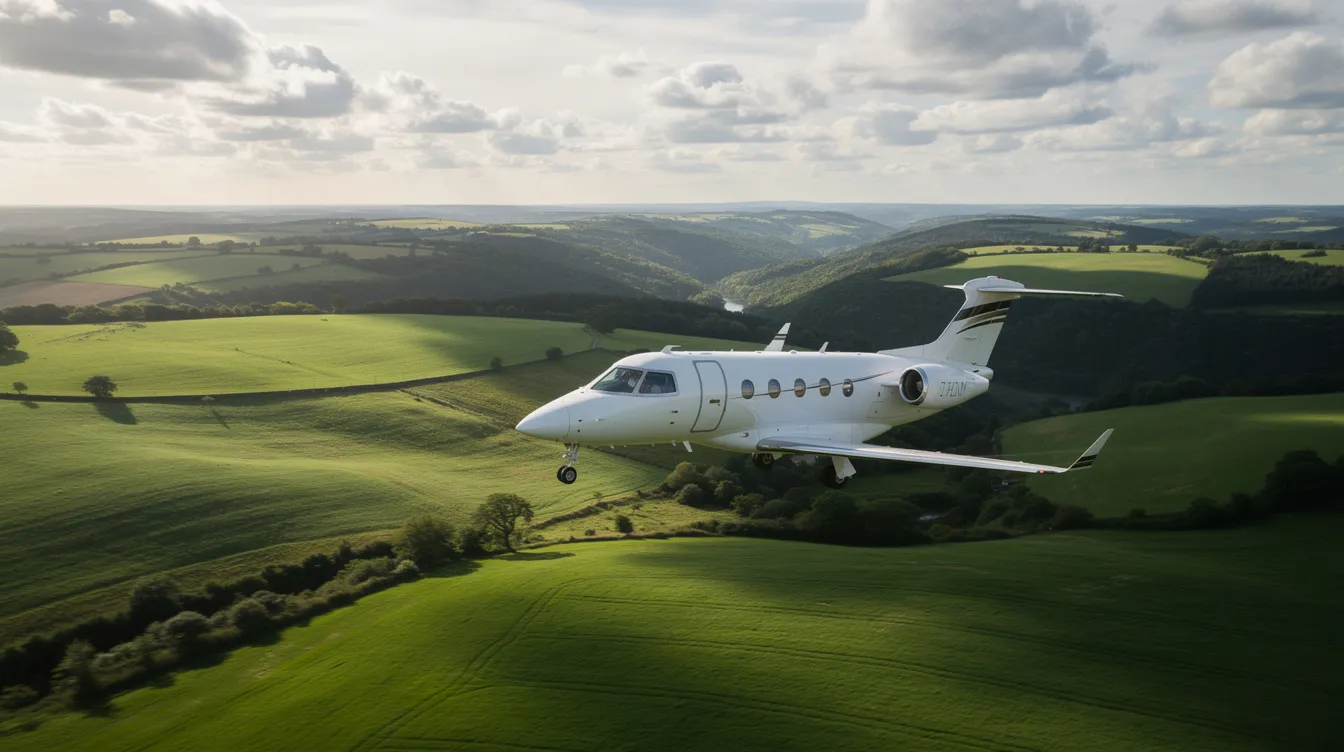
For travelers who treat time as their most valuable asset, the right aircraft isn't a luxury—it's a decision that compounds. The HondaJet Elite II is an advanced very light jet built for efficient, high-performance regional travel, with seating for up to seven passengers, a 1,547-nautical-mile range, and standout automation such as autothrottle and Emergency Autoland. For frequent business travelers, entrepreneurs, family offices, and regional corporate teams weighing private access against the cost and complexity of ownership, it stands out for its aerodynamic design, lower operating burden, and ability to cut door-to-door travel time on short to mid-range missions.
This guide examines where the HondaJet Elite II delivers in practice: performance specs, design innovations, safety systems, cabin comfort and connectivity, operating costs, sustainability, and how access through a Jet Card can compare with full ownership. That matters if you're deciding how to fly more efficiently and safely without sacrificing flexibility—particularly as fuel efficiency, advanced automation, and streamlined private aviation access become bigger priorities.
Why the HondaJet Elite II Matters for Serious Travelers
(The HondaJet Elite II is an advanced light business jet, positioned in the very light jet (VLJ) segment, which refers to small, efficient jets designed for short to mid-range missions.)
Private aviation is a strategic advantage, not simply a comfort upgrade. While commercial first class still subjects you to security queues, hub connections, and rigid schedules, an advanced light business jet like the HondaJet Elite II collapses door-to-door travel time on routes where every hour matters—New York to Miami, Los Angeles to Aspen, or Paris to Ibiza.
Announced at the 2022 NBAA-BACE in October, the Elite II is Honda Aircraft Company's latest continuation of the HondaJet Elite line, positioned in the very light jet segment of the market. It is the fastest, highest, and farthest-flying aircraft in its class, pushing the boundaries of performance and innovation with a normal range of 1,547 nautical miles and seating for up to seven passengers. The aircraft is primarily aimed at frequent business travelers and high-net-worth individuals seeking superior performance without the overhead of larger cabin jets.
Headline specs set the stage: a maximum cruise speed of 422 knots, takeoff distance of approximately 3,699 feet at sea level, and a factory list price of $6,950,000. For those who prefer flexible access over ownership, the Elite II is an efficient alternative to buying or fractional shares—delivered through a program like the BlackJet Jet Card, where prepaid hours replace capital risk and hangar fees.
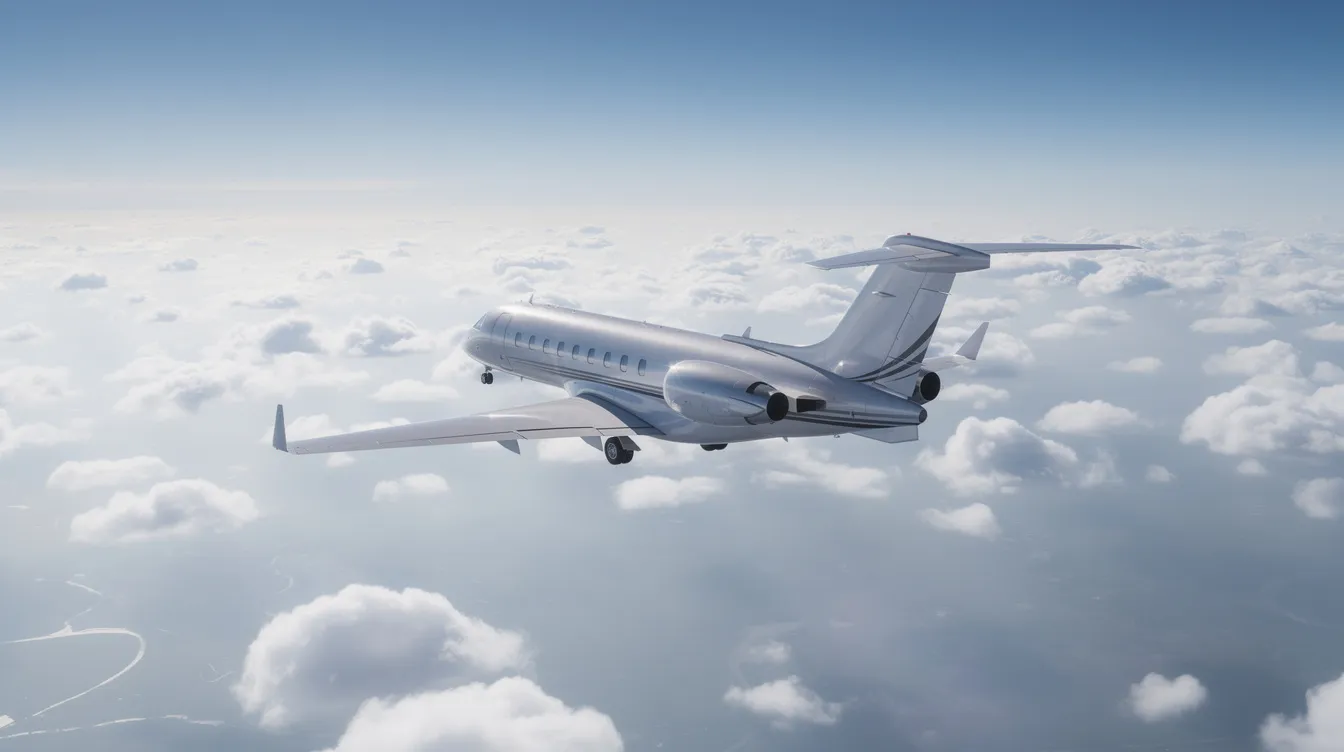
Honda Aircraft Company and the Evolution of the HondaJet Elite Line
Honda Aircraft Company, headquartered in Greensboro, North Carolina, was founded in 2006 as a subsidiary of Honda. The company delivered its first production HA-420 HondaJet after receiving FAA type certification in December 2015, and the first delivery marked a new chapter in light jet category innovation.
The product evolution tells a story of relentless improvement:
Original HondaJet – established the aerodynamic breakthrough technologies (OTWEM, Natural Laminar Flow, composite fuselage) with a range near 1,200 nm.
HondaJet Elite (2018) – extended range to ~1,437 nm with noise reduction and interior refinements.
Elite S (June 2021) – increased maximum takeoff weight by 200 lbs, added FAA DataComm and steering augmentation.
Elite II (October 2022) – pushed range to 1,547 nm with increased fuel capacity, ground spoilers, autothrottle, and Emergency Autoland plans.
By late 2021, over 200 HondaJets had been delivered globally with 98,000+ fleet hours and a 99.7% dispatch reliability. Safety challenges have emerged—a small number of runway excursions in 2022–2023 drew scrutiny—but Honda Aircraft and the HondaJet Owners and Pilots Association responded with procedural reviews, enhanced training programs, and strong owner and operator support after incidents, groundings, or procedural reviews, setting new standards for the fleet.
Honda's automotive DNA—efficiency born from decades of engine and aerodynamics research-carries directly into its aviation philosophy. At BlackJet, we pay close attention to these developments because aircraft like the Elite II align with our emphasis on technology, safety, and lower carbon impact—the same principles that underpin our premium private jet card programs.
Design & Aerodynamics: What Sets the Elite II Apart
The Elite II's silhouette is unmistakable: a smooth nose shaped for laminar flow, engines mounted above the wing, and a carbon composite fuselage that looks as refined as it performs. Every surface is intended to reduce drag, cut fuel burn, and deliver a quieter cabin experience.
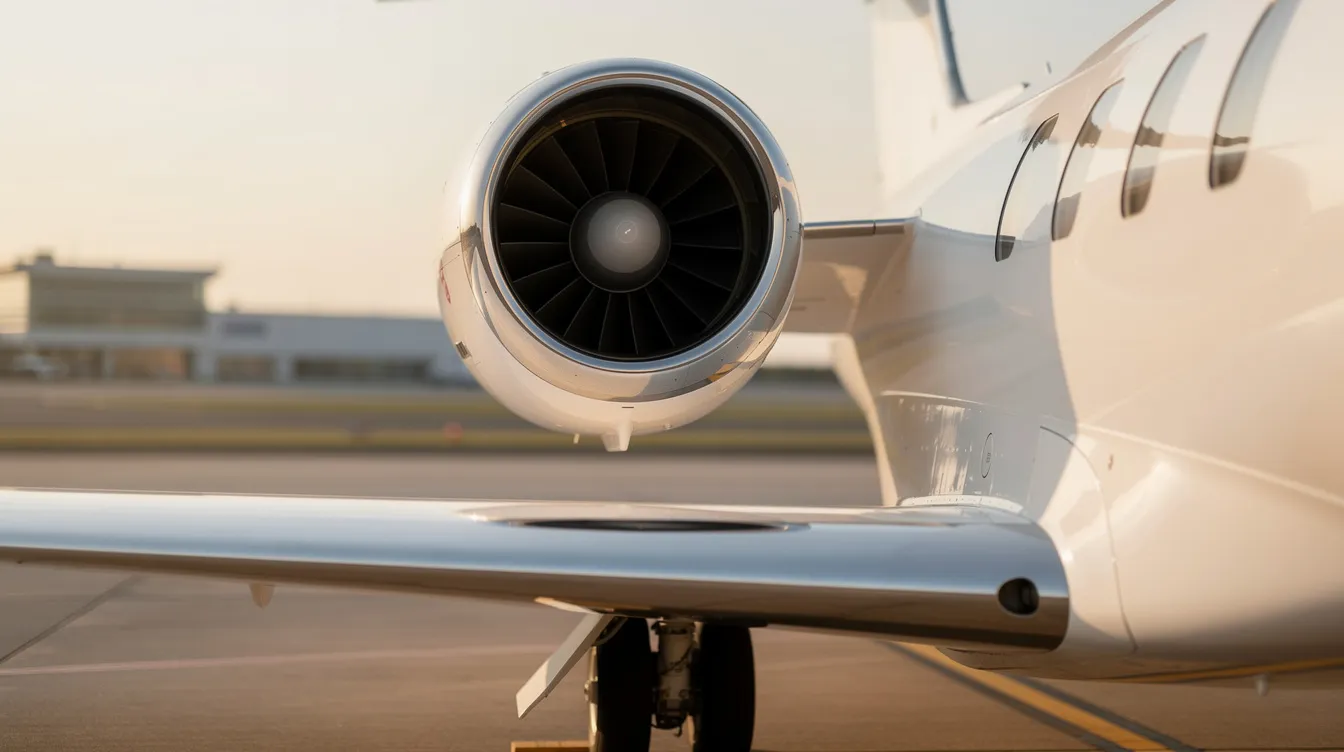
Over-The-Wing Engine Mount (OTWEM): By placing the twin GE Honda HF120 turbofan engines over the wing rather than on the fuselage, Honda Aircraft achieves reduced interference drag and moves engine noise away from the cabin floor. This configuration frees interior space-enabling one of the largest cabins in the very light jet category-while improving fuel efficiency across every flight.
Natural Laminar Flow (NLF): The wing and nose are precision-manufactured to keep airflow smooth longer before transition to turbulence. The result is measurably lower skin friction drag and better fuel burn per seat-mile than most competing VLJs.
Composite fuselage: Carbon composite construction means lighter weight, smoother aerodynamic shaping, and improved corrosion resistance versus traditional aluminum. Maintenance intervals benefit, and the wider cross section accommodates a maximum baggage capacity of 62 cubic feet without structural compromise.
Compared to peers in the light jet category-Embraer Phenom 100, Cessna Citation M2-the Elite II's aerodynamic efficiency and cruise profile represent a measurable edge in hourly cost and emissions per mission, a subject that matters increasingly to discerning travelers in today's market.
Performance Specs: Range, Speed, and Takeoff Distance
This is where the numbers speak. The HondaJet Elite II expands the operational envelope for regional flights with performance that stands apart in its category:
Specification | Value |
|---|
Range (NBAA IFR, 4 pax) | 1,547 nm |
Max Cruise Speed (FL 300) | 422 KTAS |
Service Ceiling | 43,000 ft (FL 430) |
Takeoff Distance (MTOW, SL) | 3,699 ft |
Landing Distance (4 pax) | 2,717 ft |
Max Takeoff Weight | 11,100 lbs |
Max Passengers | Up to 7 |
That 1,547-nautical-mile range translates into nonstop missions like Chicago to Palm Beach (~1,280 nm) or Dallas to New York with comfortable reserves. The aircraft can operate efficiently at high altitudes, cruising at FL 430 to avoid commercial traffic and turbulence, powered by twin HF120 engines that redefine what pilots expect from a VLJ.
Short takeoff and landing distances mean access to secondary and executive airports closer to your actual destination, reducing total door-to-door time. For BlackJet clients, this opens location options that larger jets simply cannot reach. In a typical configuration, operators seat four to five passengers for maximum comfort and baggage allowance, though the alternative configuration accommodates seven.
With an annual operating cost of approximately $978,993 for an owner flying typical business jet hours, many travelers realize that Jet Card or charter access delivers the same performance without asset depreciation or crew management overhead, especially once they understand the broader private jet price list and ownership cost landscape.
Cabin Experience: Comfort, Layout, and Connectivity
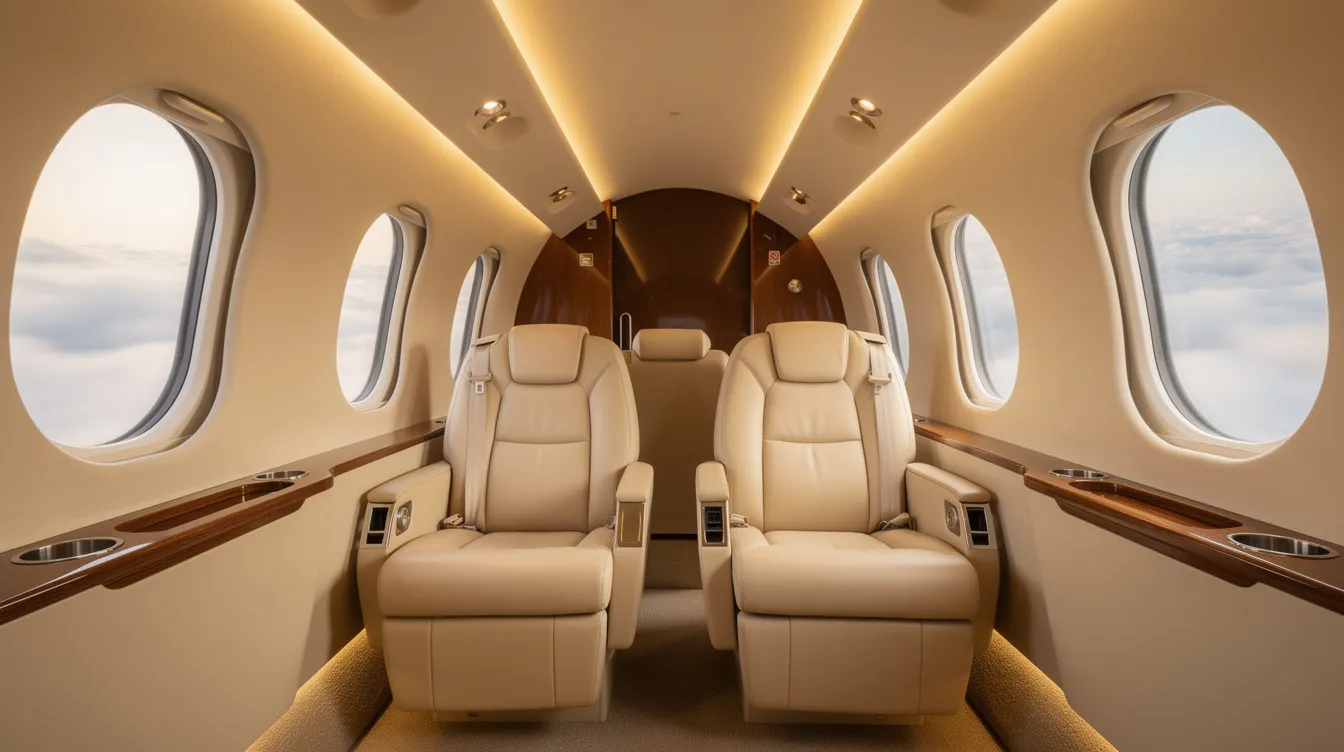
Step aboard and the first thing you notice is what you don't hear. The OTWEM configuration and new cabin treatments further reduce ambient noise, giving the Elite II a flight experience that rivals jets half again its length. The interior features a fully redesigned cabin for enhanced comfort, with two-toned contoured leather seats that swivel and track in an executive club arrangement.
The HondaJet Elite II features redesigned interior themes including Onyx and Steel-rich, modern palettes paired with generous windows that flood the cabin with natural light. An enclosed aft lavatory with belted seating and accessible baggage storage make multi-day trips practical without crowding the cabin.
For BlackJet clients, many operator-configured Elite IIs come equipped with Wi-Fi, USB and power outlets, and optional cabin management systems for lighting, climate, and media—features that complement the advantages of chartering a small private plane for regional missions. On routes like Dallas to Nashville or Zurich to Barcelona, the cabin functions as a flying office-or a private retreat. The balance of intimacy and privacy is unmatched: for couples, families, or small executive teams, a VLJ like the Elite II offers total cabin exclusivity versus shared premium cabins on commercial airlines.
Avionics, Safety, and Automation: G3000, Autothrottle & Emergency Autoland
The HondaJet Elite II includes advanced Garmin G3000 avionics technology, and the aircraft is certified for single-pilot operations, optimized with heavy automation to reduce workload and raise safety margins.
Key automation features delivered with the Elite II:
Autothrottle – automatic power management across climb, cruise, and descent, certified in October 2024.
Stabilized Approach Monitoring – visual and aural alerts warn pilots of unstable approaches before they become critical.
Ground Spoilers – the addition of ground spoilers enhances the aircraft's takeoff and landing performance.
Emergency Autoland – introduced by end of 2023 as a development target and FAA-certified in February 2026, this system can autonomously assume control in an emergency situation such as pilot incapacitation. It selects an appropriate airport, communicates with ATC, executes the approach and landing, and brings the aircraft to a stop-all without passenger intervention.
These features represent a clear response to the industry-wide push for higher automation after incidents across the light jet fleet and the rising awareness of total private jet pilot and crew costs in overall safety and operations planning. At BlackJet, when we search for operators flying HondaJet Elite II aircraft, we prioritize those with rigorous pilot training, safety certifications, and maintenance plans that match the aircraft's advanced technology.
Ownership, Operating Costs, and Access via Jet Card vs Buying
Owning a HondaJet Elite II at a factory list price of $6,950,000 makes sense for those flying 200–400+ hours annually. Currently, two HondaJet Elite II listings are available for sale on the pre-owned market, and financing options are available for those seeking to acquire one outright. The HondaJet Elite II can also be acquired through fractional ownership.
Annual operating cost components for an owner-crew, hangar, insurance, maintenance, fuel-total roughly $978,993, a figure that leads many flyers to compare ownership with more budget-friendly private aircraft and access options. For travelers flying fewer hours, those fixed costs push the per-hour price sharply upward, making it essential to compare Jet Card cost per hour across providers and aircraft types.
This is where a Jet Card changes the equation, especially once you understand how Jet Card costs and membership structures work. With BlackJet's 25-hour or 50-hour programs, you prepurchase flight time across multiple aircraft categories—including very light jets like the Elite II-without depreciation risk, crew management, or hangar fees, and can benchmark that value against a detailed 50 hour Jet Card cost analysis.
Use-case scenario: An executive based in Charlotte uses a 50-hour Jet Card to fly weekly routes to New York, Chicago, and Florida aboard a HondaJet Elite II or comparable aircraft, taking advantage of transparent Jet Card pricing structures and benefits. Predictable hourly pricing, guaranteed availability, and access to short-field airports near each destination cut half the ground time that commercial connections would demand—hallmarks of the best jet cards for frequent flyers. No repositioning headaches, no ownership burden.
Fractional and lease options exist, but Jet Cards remain the most flexible, low-commitment entry point—the elite program's vision realized for those who want excellence in the air without the business of running a flight department, even when compared with traditional private jet charter.
Sustainability and Efficiency: Flying Smarter, Not Just Faster
Honda Aircraft designed the Elite II to be fuel efficient at its core. The aerodynamic breakthrough technologies-NLF surfaces, OTWEM-and modern HF120 engines — deliver improved fuel efficiency over traditional light jets, translating into lower fuel burn per seat-mile and a reduced environmental footprint.
Honda Aircraft's broader plans include next-generation concepts like the HondaJet 2600, supporting the industry's future decarbonization goals and expanding a field that now includes some of the cheapest private jet options for new entrants. At BlackJet, every flight is carbon neutral through verified offset programs, and fuel-efficient aircraft like the Elite II are prioritized where the mission profile allows.
Consider a typical 800 nm business trip: the Elite II consumes measurably less fuel than a midsize jet on the same route, cutting emissions without compromising on cabin comfort or speed-efficiency and performance in one package, a success story that more travelers should discover.
Frequently Asked Questions (FAQs) About the HondaJet Elite II
Q: What is the maximum range of the HondaJet Elite II?
A: The HondaJet Elite II has a normal range of 1,547 nautical miles, making it ideal for regional nonstop missions.
Q: How many passengers can the HondaJet Elite II accommodate?
A: The aircraft comfortably seats up to seven passengers, with typical configurations optimized for 4 to 5 for maximum comfort.
Q: What advanced safety features does the HondaJet Elite II include?
A: Key safety features include Emergency Autoland, autothrottle, stabilized approach monitoring, and ground spoilers to enhance takeoff and landing performance.
Q: Is the HondaJet Elite II certified for single-pilot operations?
A: Yes, the Elite II is certified for single-pilot operations and is designed with heavy automation to reduce pilot workload.
Q: What is the approximate annual operating cost of the HondaJet Elite II?
A: The annual operating cost is approximately $978,993, covering fuel, maintenance, crew, hangar, and insurance.
Q: How does the Over-The-Wing Engine Mount (OTWEM) configuration benefit the aircraft?
A: OTWEM reduces drag, improves fuel efficiency, lowers cabin noise, and frees up interior space for a larger cabin and baggage capacity.
Q: Can I access the HondaJet Elite II through a Jet Card program?
A: Yes, BlackJet offers Jet Card programs that provide flexible, prepaid access to the HondaJet Elite II and other aircraft without ownership burdens.
Q: What makes the HondaJet Elite II more fuel-efficient than other light jets?
A: Its aerodynamic breakthroughs like Natural Laminar Flow surfaces, OTWEM, and efficient GE Honda HF120 engines deliver superior fuel efficiency and lower emissions.
Q: What cabin amenities are available on the HondaJet Elite II?
A: The cabin includes redesigned interiors with Onyx and Steel themes, noise reduction treatments, Wi-Fi, USB and power outlets, and optional cabin management systems.
Q: What is the factory list price of the HondaJet Elite II?
A: The factory list price is $6,950,000 as of the latest update.
Is the HondaJet Elite II Right for Your Missions?
The Elite II is best matched to entrepreneurs, family offices, and regional corporate teams doing frequent sub-1,500 nm trips with two to five passengers. If that profile fits, here is a quick decision guide:
Ideal trip length: Up to ~1,500 nm nonstop
Group size: 2–5 passengers for optimal comfort and baggage
Airport access: Short runways, secondary and executive airports
Baggage needs: Up to 62 cubic feet across nose and aft compartments
For longer transcontinental routes, larger groups, or heavy equipment, a super-midsize or large-cabin jet is the better choice—and BlackJet's fleet options make stepping up seamless, including top 16-seat private jet options for larger teams.
When the mission fits, the Elite II delivers a rare combination: class-leading automation (Emergency Autoland, autothrottle), a cabin that punches above its category in comfort, and operating economics that reward smart access over raw ownership. This is innovation you can feel on every August red-eye or February ski trip.
Discover how BlackJet's Jet Card programs can place you aboard aircraft like the HondaJet Elite II on your regular routes. Speak with a flight advisor and explore how private aviation shifts from occasional indulgence to strategic advantage—on your terms.


 Sign up with google
 Sign up with Apple