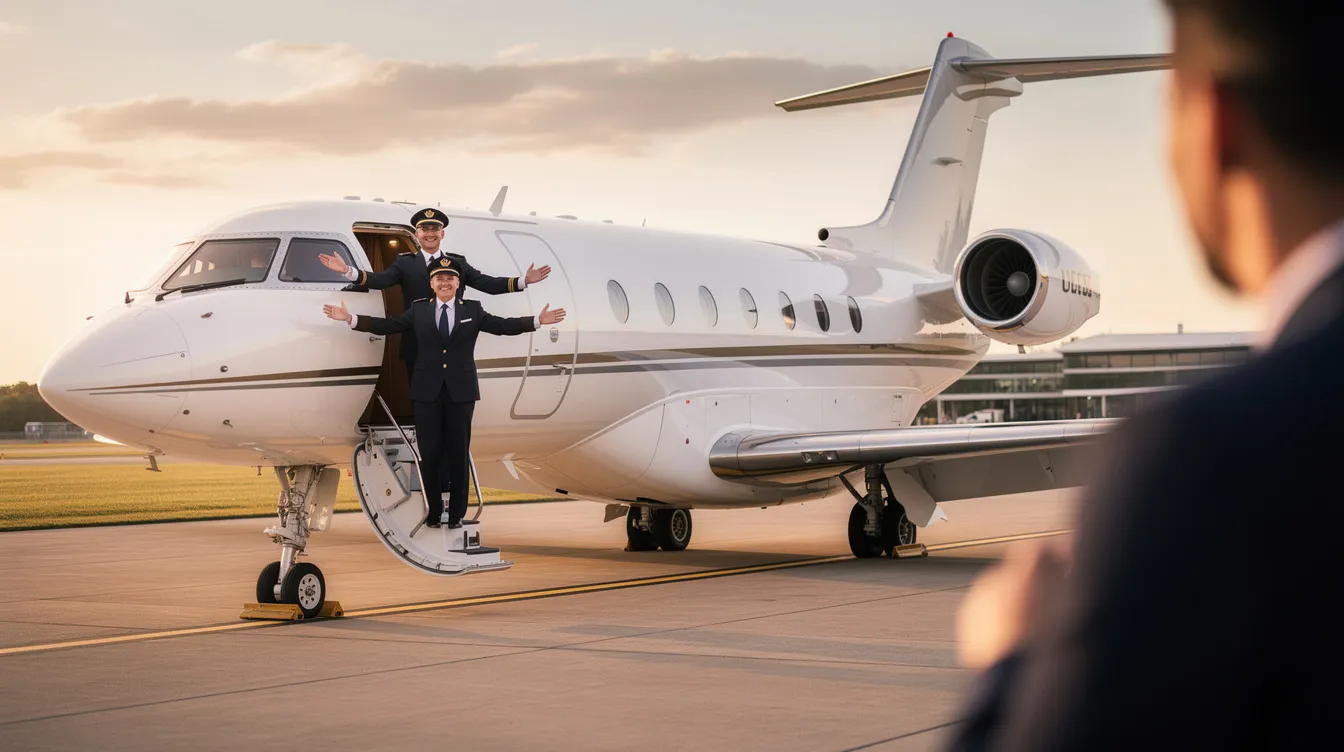
In the world of premium travel, domestic and international first-class flights offer elevated comfort, service, and amenities compared to economy or premium economy. However, even the best commercial first-class cabins come with fixed schedules, shared spaces, and the inevitable airport crowds. For discerning travelers seeking unparalleled privacy, flexibility, and efficiency, a BlackJet Jet Card provides a strategic advantage. Flying private means customizing your departure time, accessing smaller airports closer to your destination, and enjoying a fully private cabin tailored to your needs—saving precious time and enhancing productivity.
Below is a concise comparison of the best first-class airlines in the USA alongside BlackJet’s private jet service, highlighting key differences in seat comfort, privacy, and convenience:
Delta Air Lines: Recliner and lie-flat seats on select routes, including Delta One suites with full-height walls and sliding doors offering exceptional privacy, free Wi-Fi for SkyMiles members, access to Sky Club and Delta One Lounges, serving approximately 275 destinations worldwide, and notably fewer customer complaints (829 in the first half of 2025) compared to competitors.
American Airlines: Recliner and lie-flat seats on select aircraft with Flagship First Class cabins notably smaller with as few as eight seats but less privacy due to lack of high wall dividers, Admirals Club and Flagship Lounges access, extensive network with 365 destinations across 60 countries.
United Airlines: Recliner and lie-flat seats with Polaris cabins featuring a 1 x 2 x 1 seat configuration for excellent privacy, Polaris Lounges across six U.S. cities including the only five-star Polaris Club lounge in Houston, broad route network exceeding 350 destinations, and ongoing enhancements to their inflight entertainment system.
Alaska Airlines: Recliner seats with strong regional service focus, limited privacy, no dedicated first-class lounges, primarily serving West Coast and transcontinental routes.
Private Jet with BlackJet: Fully private cabins customizable by aircraft type, complete privacy, use of private terminals (FBOs), flexible scheduling, and carbon-neutral flights, offering seamless regional and international access.
While commercial first class enhances comfort and service, it still involves fixed schedules, shared cabins, and typical airport processes. BlackJet’s Jet Card elevates the experience by offering personalized, private travel with on-demand scheduling and direct access to more airports, making it a smarter choice for frequent travelers who value time, discretion, and convenience.
This guide will help you navigate when premium commercial first and business class flights meet your needs and when stepping up to private aviation with BlackJet provides unmatched advantages.
Comparing Key Features of Leading First Class Airlines and Private Jet Services
To provide a clear understanding of how the top U.S. first-class airlines stack up against each other and against private jet options like BlackJet, the table below highlights essential features. This comparison covers seat types, privacy levels, Wi-Fi availability, lounge access, route networks, and baggage allowances. It serves as a practical guide for discerning travelers evaluating comfort, convenience, and service across premium commercial and private aviation options.
Airline / Service | Typical Seat Type | Seat Pitch (inches) | Privacy Level | Wi-Fi Availability | Lounge Access | Route Network Coverage | Checked Bags Included | Notes |
|---|
Delta Air Lines | Recliner / Lie-flat (select) | 37–38 | Moderate | Free for SkyMiles | Sky Club, Delta One Lounges | ~275 destinations worldwide | 2 | Delta One suites have sliding doors |
American Airlines | Recliner / Lie-flat (select) | 37–38 | Moderate | Varies | Admirals Club, Flagship Lounges | 365 destinations across 60 countries | 2–3 | Flagship First has 8 seats, less privacy |
United Airlines | Recliner / Lie-flat (select) | 38–39 | Moderate | Varies | United Club, Polaris Lounges (6) | 350+ destinations worldwide | 2 | Polaris lounges in 6 US cities |
Alaska Airlines | Recliner | ~38 | Low | Varies | No dedicated first-class lounges | Focused on West Coast & transcon | 2 | Strong regional service |
Private Jet with BlackJet | Fully private cabin | Customizable | Complete privacy | Varies by aircraft | Private terminals (FBOs) | Flexible, regional & international | Custom | On-demand scheduling, carbon-neutral flights |
How We Ranked the Best First Class Airlines in the USA
When evaluating the best first-class airlines in the USA, we apply a comprehensive framework that balances both tangible and experiential factors. This approach ensures a nuanced understanding of what distinguishes top-tier premium travel within the domestic and international markets.
Our evaluation criteria include:
Hard product: The quality and design of first-class seats and suites, including features such as lie-flat or angled recline, seat pitch and width, and privacy elements like sliding doors or partitions.
Soft product: The caliber of food and beverage offerings, onboard service quality, and overall passenger experience.
In-flight technology and Wi-Fi: Availability and reliability of entertainment systems, seatback screens, streaming options, and internet connectivity.
Ground experience: Efficiency and exclusivity of check-in, security, boarding processes, and access to premium lounges.
Route network and schedule: The breadth of destinations served and flight frequency, which impact convenience and connectivity.
Points and redemption value: The flexibility and value of loyalty programs for earning and redeeming miles on first-class travel.
In addition, while our primary focus is on airlines serving or operating within the U.S. market, we reference premium international first-class products—such as Singapore Airlines Suites and Air France La Première—for context and benchmarking.
It is important to note that BlackJet’s comparison dimension diverges from traditional airline metrics. Instead of seat pitch or mileage accrual, BlackJet emphasizes aircraft category choice, instant availability through Jet Cards, proprietary safety certifications, and carbon-neutral flight offerings, providing a distinct value proposition in private aviation.
Domestic First Class Showdown: Delta vs American vs United vs Alaska
Overview of Domestic First Class Cabins
Most “first class flights” within the USA are actually domestic first or business-class-style cabins featuring recliner seats rather than true first-class suites. These cabins typically offer a 2–2 seating layout with seat pitches ranging from 37 to 40 inches, providing more legroom and comfort than economy but without the full privacy or lie-flat beds found on select premium transcontinental and international flights.
Key Features for Comparison
To summarize key features for comparison in the article’s eventual table, include: typical seat pitch and width, seat layout (2–2 recliner versus lie-flat on select transcontinental routes), in-seat power and entertainment options, Wi-Fi policies, and checked bag allowances for Delta, American, United, and Alaska Airlines.
Delta Air Lines Domestic First Class
Delta Air Lines offers Delta First on its A321neo and B737 aircraft with a 2–2 seating configuration and approximately 37–38 inches of pitch. The cabins feature high-quality seatback screens and provide free Wi-Fi for SkyMiles members. Delta is known for strong service consistency and a reliable first-class experience.
American Airlines Domestic First Class
American Airlines’ domestic first-class cabins on A321neo and B737 aircraft include power outlets, device holders, and decent catering on flights longer than three hours. Many routes allow meal preordering, though service consistency can vary. Their Flagship First Class cabin is smaller with as few as eight seats and less privacy due to lack of high wall dividers.
United Airlines Domestic First Class
United Airlines’ United First product provides slightly more legroom, around 38–39 inches of pitch, with ongoing cabin upgrades on A321neo and 737 MAX aircraft. Entertainment is accessible via streaming apps, although Wi-Fi reliability varies by aircraft. United operates six Polaris lounges across the U.S., including the only five-star Polaris Club in Houston.
Alaska Airlines Domestic First Class
Alaska Airlines offers comfortable recliner first-class seats with good legroom and a strong service culture, particularly on West Coast and transcontinental routes. However, lie-flat seats are generally not available on its domestic operations, and it lacks dedicated first-class lounges.
Overall Domestic First Class Assessment
Overall, Delta tends to lead the domestic first-class segment for its balance of modern cabins, amenities, and service quality. Still, airport location and schedule convenience often play a more decisive role than marginal differences in seat comfort among these carriers.
True Long-Haul Luxury: Best International First Class Products Serving U.S. Flyers
Real First Class Suites on International Flights
Real “first class suite” products with sliding doors, restaurant-level dining, and highly private spaces are mostly found on long-haul international flights, not typical U.S. domestic routes.
Singapore Airlines
Singapore Airlines: On selected transatlantic and Asia-U.S. routes, Singapore Airlines offers A380 Suites and A350 First cabins with apartment-style design, and on the A380, the first-class cabin consists of six suites on the upper deck. Expect a separate seat and sleeping space, Poltrona Frau leather, large screens, and “Book the Cook” dining; some center suites can even form a double bed.
Air France La Première
Air France: La Première on the 777-300ER serves U.S. routes such as New York–Paris and Los Angeles–Paris, with a 1-2-1 layout, curtains for privacy, refined haute cuisine, and one of the world’s best ground experiences, including a dedicated first-class lounge and chauffeur service.
Middle Eastern First Class: Emirates, Etihad, Qatar
Emirates / Etihad / Qatar: Emirates First Class on the 777 and A380 is known for shower suites, an onboard bar on the A380, and fully enclosed suites on select Boeing 777s; Etihad’s A380 First Apartment adds exceptional space and an onboard shower on select London and New York routes; Qatar Airways A380 First delivers elegant suites, bar access, and gourmet dining.
Private Jet Alternative
These first-class airlines set the global standard for suites and fine dining, but they still have shared cabins. By contrast, BlackJet can arrange fully private large-cabin jet options for U.S.–Europe or U.S.–Caribbean trips, drawing on a broad range of private jet sizes to match each mission.
Ground Experience: Lounges, Priority, and What Private Aviation Skips Entirely
The airport experience is a big part of any premium trip, and many major airlines offer premium ground service touches like express check-in, priority security, lounge access, and baggage perks for first-class passengers before you even board.
Delta, American, and United each provide their own version of priority airport treatment for domestic first class and long-haul premium cabins, including dedicated check-in areas, faster security access where available, and earlier boarding groups. In practice, first-class passengers can usually use express check-in lines, and they typically receive priority baggage handling after landing.
Lounge access is more nuanced. Standard lounges like Delta Sky Club, United Club, and Admirals Club are not always included with a domestic first-class ticket, while premium long-haul cabins may unlock more exclusive spaces. United operates six Polaris lounges across the U.S., and many airlines provide access to exclusive first-class lounges or premium lounge spaces, though access rules vary by route and cabin.
These perks can still be valuable, especially because two free checked bags are commonly included on premium tickets, but they remain a step below the private terminal experience. With BlackJet, travelers use FBOs instead of crowded main terminals, which means drive-up access, minimal waiting, and boarding just minutes before departure.
A simple example is New York to Dallas: commercial premium travel may improve comfort and reduce some airport friction, but a private flight through a BlackJet Jet Card can save meaningful door-to-door time, avoid the usual terminal process, and give you full control over departure timing.
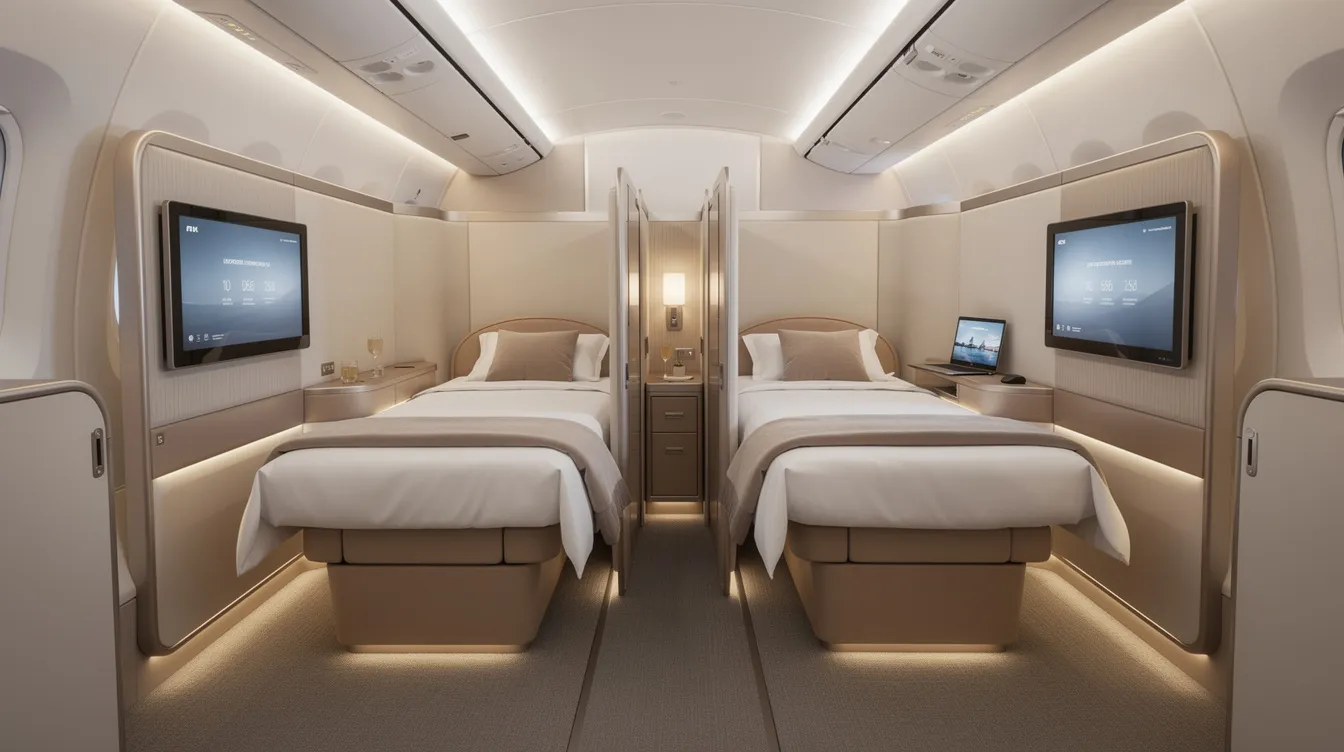
Seats and Suites: From Domestic Recliners to Fully-Flat First Class Suites
In the realm of premium air travel, cabin types vary significantly, shaping the passenger experience from domestic hops to international journeys. Domestic first-class cabins typically feature recliner seats arranged in a 2–2 layout, offering approximately 37 to 40 inches of pitch. These seats recline farther than economy but share the cabin with other travelers, providing moderate privacy and priority boarding along with enhanced catering compared to standard cabins.
On the other hand, select transcontinental and long-haul flights feature international and premium transcontinental products with lie-flat seats, elevating comfort for extended travel. Examples include Delta One suites on the Airbus A350 and A330-900, which boast full-height walls and sliding doors for privacy; United Polaris cabins arranged in a 1 x 2 x 1 configuration; and American Airlines’ Flagship First and Business classes offering lie-flat seats on Boeing 777-300ERs and certain A321T aircraft. Fleet updates are increasingly blurring the lines between first and business class, enhancing passenger choice.
Globally recognized benchmarks for first-class luxury include Singapore Airlines Suites, Air France La Première, and Emirates First Class on the 777 and A380. These products provide more personal space and suite-style accommodations compared to domestic recliners, setting standards for privacy, comfort, and exclusive service.
Contrastingly, BlackJet offers travelers the unique advantage of selecting from a range of private jet aircraft categories—light, midsize, super-midsize, and large cabin jets—where every seat functions as a first-class seat. Passengers enjoy full cabin control, flat floors, and the freedom to sleep, hold meetings, or dine privately without the presence of other passengers, redefining what it means to fly first class.
Cabin Experience: Service, Dining, and In-Flight Technology
Beyond the seat itself, the real first-class experience comes down to service, food, and technology. The best first-class service also depends on attentive flight attendants and polished meal timing, not just extra space or a better seat.
Service: Delta, American, United, and Alaska all have solid first-class reputations, but the onboard experience can vary a lot by route, aircraft, and crew. On domestic flights, service is often efficient rather than deeply personalized, while long-haul premium cabins usually invest more heavily in training and consistency. Responsive flight attendants often make the biggest difference in how premium the cabin feels, especially when they anticipate requests instead of simply reacting to them. On longer flights, premium first-class amenities may also include bedding and toiletries.
Dining: Food is one of the clearest areas where airlines separate a true premium product from a standard upgraded seat. On better routes, first-class food often includes a full meal service rather than a simple tray, with chef-curated menus, plated courses, and preorder options such as American’s meal selection tools, United’s Polaris-style dining approach, and Delta One’s more elevated menus. In many cases, first-class passengers enjoy complimentary gourmet meals and drinks, while shorter flights may offer a simpler meal service with complimentary food and drinks instead of a full restaurant-style setup. Beverage service also tends to be more polished on stronger products, with better wine, spirits, and pacing throughout the flight.
Technology: The onboard tech gap between airlines is still real. Some carriers offer a stronger in-flight entertainment system with larger seatback displays and a better content interface, while others rely more on streaming to personal devices. Seatback power and USB charging are now expected, but coverage and reliability still vary. Complimentary Wi-Fi remains inconsistent across U.S. airlines rather than being a universal first-class feature.
BlackJet contrast: This is one area where private aviation changes the experience completely. On BlackJet flights, catering can be fully customized around your schedule and tastes, whether that means a specific restaurant order, dietary preferences, or preferred champagne. Where onboard connectivity is available, your devices connect directly, and the whole cabin functions like a private office or living room—without the compromises that come with shared commercial cabins.
First Class vs Business Class in the U.S. Market
In the U.S. aviation market, the term “first class” often applies to domestic routes featuring recliner seats rather than the fully enclosed, lie-flat suites found on international or premium transcontinental flights. Many airlines now distinguish their domestic first-class cabins from international premium cabins by branding and service levels, with flying business class sometimes providing a comparable experience to first class, especially regarding seat comfort and onboard service.
Key differences between domestic first class and business class include:
Seat type: Domestic first class generally offers recliner seats, while business and international first class feature lie-flat beds or suites.
Cabin size and privacy: Business and international first-class cabins tend to be smaller with enhanced privacy, often with suites or partitions; domestic first-class cabins are larger with less privacy.
Lounge access: Premium lounges are more commonly accessible to business and international first-class passengers, whereas domestic first-class lounge access varies by airline and route.
Checked baggage: Business class often includes higher baggage allowances compared to domestic first class.
Miles and points: Earning and redemption rates may differ, with business class sometimes offering better value on long-haul flights.
On transcontinental flights, these distinctions become more pronounced, as lie-flat premium seats significantly enhance comfort and rest compared to domestic recliners.
For some travelers, business class may be functionally equivalent to first class, particularly for sleeping and working on overnight or long-haul flights. U.S. carriers like American Airlines are updating fleets to blur the lines between business and first class, while United Airlines offers some of the best hard products for sleeping on long-haul red-eye flights.
When deciding which cabin to choose, consider the following scenarios:
Domestic short hops: A domestic first-class recliner seat is often sufficient for flights under three hours.
Overnight and long-haul flights (8+ hours): Prioritize lie-flat business or first-class suites for optimal rest and productivity.
Frequent travelers facing premium upgrade costs: When the upgrade premium approaches the cost of shared or full private jet travel, exploring options like BlackJet’s private aviation services becomes worthwhile.
This framework helps clarify when domestic first class meets your needs and when stepping up to business class or private jet travel offers a superior experience.
When a Jet Card Beats First Class: The BlackJet Advantage
BlackJet redefines premium air travel by offering a level of privacy, flexibility, and personalized service that surpasses even the best first-class airlines. Tailored for frequent business travelers and high-net-worth leisure flyers, BlackJet’s Jet Card programs unlock access to a curated fleet of private jets, delivering unmatched convenience and comfort.
BlackJet’s 25+ Hour Jet Card and 50-Hour Jet Card programs provide prepaid flight hours at fixed hourly rates across various cabin classes, making it easier to benchmark jet card cost per hour against what you typically spend on commercial first-class fares. Unlike the constant search for first-class fares, these Jet Cards offer predictable pricing and instant access to private aircraft, eliminating the uncertainty and hassle of commercial booking.
Time savings are a hallmark of BlackJet’s service. Passengers typically arrive just 20–30 minutes before departure, bypassing crowded terminals by using private FBO terminals, and often flying into secondary airports closer to their final destination. This streamlined approach significantly reduces travel time compared to commercial first-class itineraries, which often involve early airport arrival and connections.
Safety is paramount with BlackJet. Every operator in the network meets stringent safety certifications and undergoes rigorous vetting, ensuring consistent crew and aircraft quality. Transparent pricing and clear access options provide travelers with confidence in the value behind these high standards.
Sustainability is embedded in BlackJet’s offering, with carbon-neutral flights included as standard. Through verified carbon offset programs, BlackJet appeals to ESG-conscious executives who seek to balance luxury travel with environmental responsibility, setting it apart from cost-focused private jet alternatives.
Advanced technology and dedicated support further enhance the experience. BlackJet’s 24/7 digital booking platform allows users to view aircraft categories and cabin layouts in real time, ensuring transparency and reliability unmatched by commercial first-class flights, where aircraft swaps and seat changes are common.
Consider the example of a New York to Los Angeles executive undertaking month-long business trips. While first-class commercial flights may involve multiple hours lost in hub airports and risk of delays, a BlackJet Jet Card offers predictable hourly rates and the ability to fly direct from private terminals, minimizing disruptions and maximizing productivity. This practical comparison highlights how BlackJet’s private jet access delivers superior value for the frequent traveler.
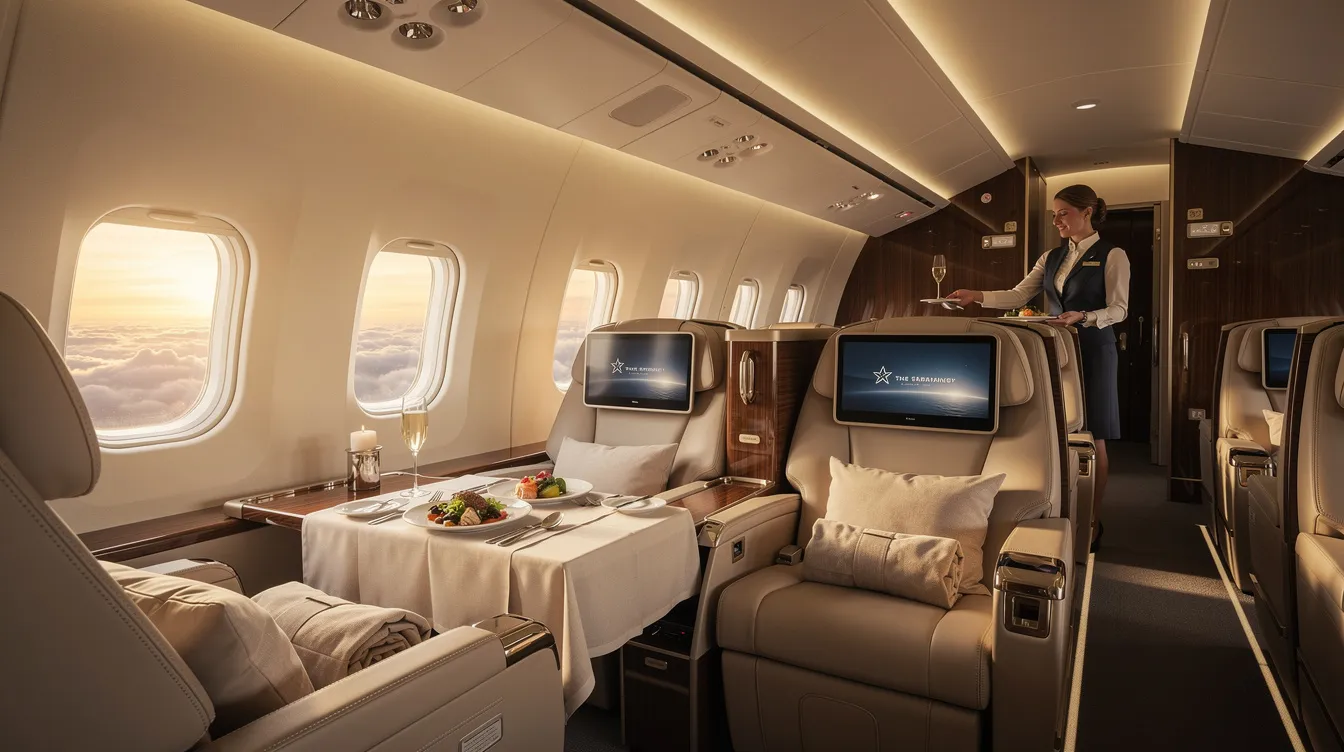
How to Choose: First Class Ticket, Business Class, or Private Jet?
Choosing between premium commercial first-class flights and private jet travel involves assessing your unique travel needs and priorities. For occasional leisure travelers, booking discounted first-class or business-class seats on major U.S. carriers may provide sufficient comfort and value. However, frequent travelers flying eight to ten or more times annually should consider the economics of a Jet Card, which offers prepaid access to private jets with predictable costs and enhanced flexibility, and is best understood through a clear view of jet card pricing structures and benefits.
Consider your typical routes and airport access: if you often fly into secondary or regional airports such as Teterboro instead of JFK, or Van Nuys instead of LAX, private jets via BlackJet deliver significant time savings and convenience. Understanding jet card pricing structures for different aircraft categories and regions can help you model your travel costs effectively, especially when you use a comprehensive guide to overall jet card costs and membership pricing.
Privacy and productivity are key factors—traveling with family, high-profile clients, or teams makes private jets more attractive than shared first-class cabins, especially for confidential discussions or negotiations, and understanding the different types of private jets available helps you choose the right cabin for that experience. This advantage scales for larger groups, with options available for private jets accommodating around 20 passengers or even 50 passengers.
Finally, consider sleep quality and schedule control. When departure times, overnight rest, and same-day returns are mission-critical, private jets can be scheduled around your needs rather than the airline’s timetable, and choosing among the best jet cards for frequent flyers helps match that flexibility to your actual travel patterns. This flexibility is especially valuable for large teams or executives with tight itineraries, who may eventually benefit from scaling up to a 100-hour jet card commitment when their private flying needs grow.
Explore how a BlackJet Jet Card can complement or replace your first-class routine, unlocking effortless access to private aviation’s unmatched privacy, convenience, and service.
FAQs: First Class Airlines in the USA and Private Jet Alternatives
Which U.S. airline has the best domestic first class?
For most travelers, the answer comes down to Delta Air Lines, American Airlines, United, and Alaska, since each offers a different mix of seat comfort, reliability, route strength, and service. If you are trying to identify the best first-class airline for domestic U.S. trips, Delta often stands out for consistency, while American and United can be attractive on premium transcontinental routes, and Alaska remains a strong option for West Coast flyers.
What’s the difference between first class and business class on U.S. airlines?
On most domestic routes, first class usually means a wider recliner seat, better meal service, earlier boarding, and a more personal cabin experience than economy. Business class is often used more selectively, especially on longer or premium transcontinental flights, where the seat and service can be closer to what travelers expect from international premium cabins.
Are international first-class suites like Singapore Airlines available on U.S. routes?
Usually not, because the most elaborate suites and enclosed first-class products are typically found on international carriers and long-haul routes rather than standard domestic service. Many airlines save their most luxurious cabins for intercontinental markets, which is why names like Singapore Airlines and Air France are more often used as premium benchmarks than U.S. domestic flights, while some travelers instead consider private jet charters in Karachi or other regional hubs when they need a truly private experience on long routes.
How do ground experiences compare between first-class lounges and private jet terminals?
Even an excellent airline lounge is still part of the commercial airport process, with crowds, gate areas, and standard terminal timing. Private aviation changes that experience by using private terminals, reducing wait times, and creating a more direct curb-to-aircraft flow, which is one reason BlackJet is better viewed as a premium private alternative than a direct airline competitor.
Are Americans’ premium options worth considering?
They can be, especially if you value route coverage, loyalty rewards, and availability on key business corridors. For travelers comparing points redemptions and cabin access, American Airlines flights may offer good value depending on the route, aircraft, and whether you are booking domestic first class or a premium transcontinental product, just as understanding NetJets jet card cost can provide a benchmark when weighing private alternatives.
What sources are useful when comparing airlines?
It helps to look at a mix of airline fleet details, route maps, loyalty program rules, and hands-on cabin reviews rather than relying on one ranking alone. Many travelers also check comparison coverage from Points Guy and similar travel publications to see how seats, lounges, and redemption options stack up across carriers, alongside guides on how to buy a seat on a private jet when they want to compare commercial and private options side by side.
When does a Jet Card make more sense than buying first-class tickets?
A Jet Card starts to make more sense when you fly frequently, need access to airports that the airlines do not serve well, or want more control over departure times and privacy. Instead of comparing one fare at a time, you are evaluating whether prepaid private access gives you more practical value than repeatedly booking top commercial cabins, and guides to 25-hour jet card features and costs can help frame that decision.
How does BlackJet handle safety and carbon-neutral flights, and how should you evaluate it against airline options?
BlackJet focuses on certified operators, clear service standards, and carbon-neutral flights, which appeals to travelers who want private access without losing sight of safety or sustainability priorities. The simplest way to evaluate it is to compare your usual first-class airline choices against how often you fly, how much flexibility you need, and whether private terminals, cabin privacy, and on-demand scheduling would improve your overall travel experience, potentially using a 50-hour jet card cost guide to understand longer-term commitment levels.
Conclusion: Elevate Your Travel with the Right Choice
Choosing between the best first-class airlines in the USA and private jet travel with BlackJet ultimately depends on your travel priorities. Commercial first class offers enhanced comfort, premium dining, and access to exclusive lounges, making it a strong choice for many business and leisure travelers. However, it still involves fixed schedules, shared cabins, and the usual airport crowds.
BlackJet’s Jet Card program represents the next level of premium travel—combining complete privacy, flexible scheduling, access to secondary airports, and a seamless door-to-door experience. For frequent flyers who value time, discretion, and personalized service, private aviation offers unmatched advantages in safety, sustainability, and technology.
Whether you prioritize the familiarity and reach of top U.S. first-class airlines or the bespoke convenience of private jets, understanding the nuances of each option empowers you to make smarter travel decisions. Explore how BlackJet can complement or replace your current first-class routine and unlock a new standard of effortless, premier travel.


 Sign up with google
 Sign up with Apple