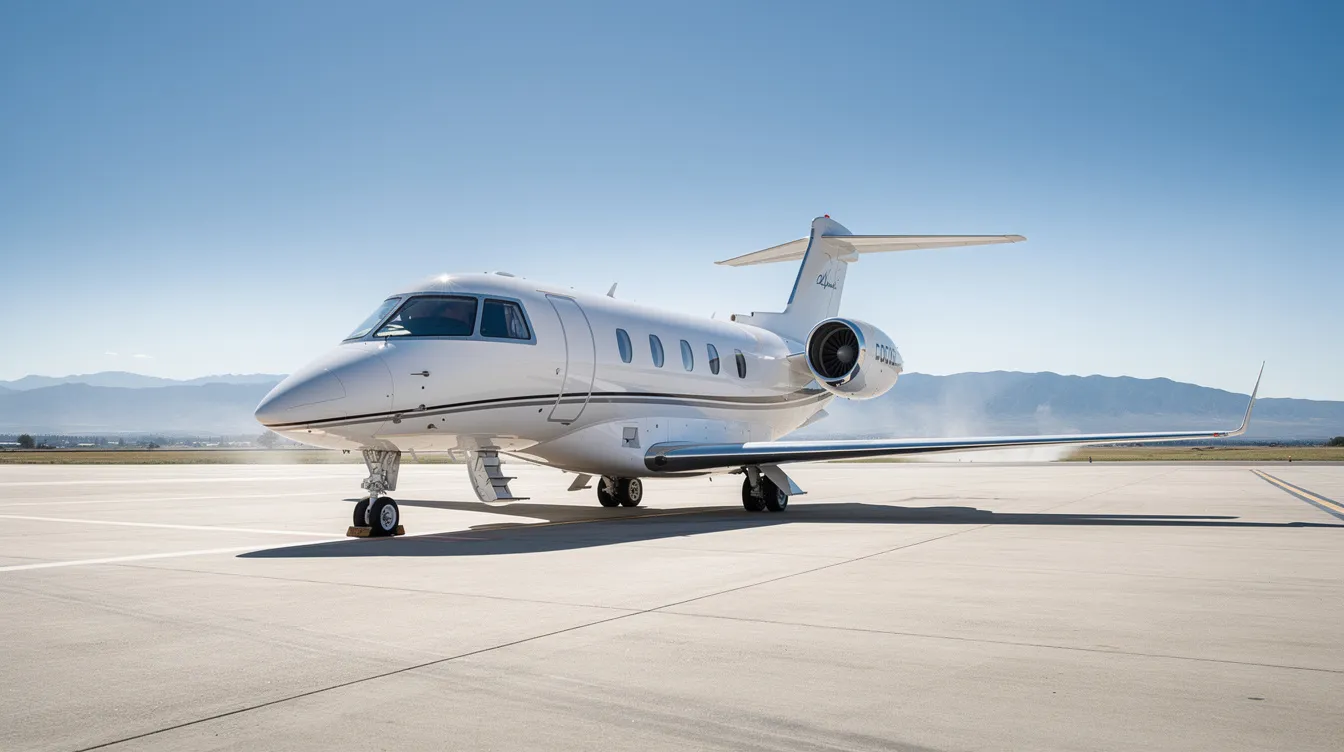
The difference between owning a private jet and accessing one intelligently can be measured in tens of millions of dollars, hundreds of hours of administrative burden, and years of depreciation risk. This guide breaks down every dollar involved in buying, operating, and maintaining a private jet in 2026, then shows you where alternatives like Jet Cards deliver equal value at a fraction of the commitment.
Executive Overview: What a Private Jet Really Costs in 2026
Flying private is no longer just a luxury. It is a strategic advantage. Eliminating commercial airline queues, controlling your own schedule, and reaching 5,000+ airports that scheduled airlines cannot serve translates into measurable productivity gains. For executives and high-net-worth travelers, private travel saves an average of 2–4 hours per trip compared to commercial first-class time that compounds across dozens of annual journeys.
But what does a private jet actually cost for sale today? Private jet ownership costs range from $2 million to $100 million depending on aircraft class, age, and specification. New private jets cost between $3.5 million and $85 million, while used private jets can start under $500,000 for the oldest turboprops and very light jets.
Here is a snapshot of 2026 private jet pricing and annual costs:
Very light jets: $2 million–$5 million new; annual operating costs approximately $700,000–$900,000 at 200 flight hours
Light jets: $3.5 million–$9 million new; annual operating costs around $1.1 million–$1.3 million
Midsize jets: $5 million–$30 million; annual operating costs approximately $1.25 million–$1.5 million
Super-midsize jets: $25 million–$30 million new; annual operating costs near $1.8 million
Large-cabin jets: $25 million–$100 million; annual operating costs $2 million–$3.5 million+
Annual operating expenses for private jets can range from approximately $700,000 to $3.5 million or more
For travelers flying under roughly 300 hours per year, jet cards offer prepaid access to private jets at fixed rates-delivering most of the benefits of jet ownership without tying up $5 million to $50 million in capital. BlackJet's Jet Card programs provide guaranteed availability across cabin classes, carbon-neutral flights, and 24/7 digital booking, all at predictable hourly rates.
How Private Jet Prices Break Down by Category
Private jet cost for sale scales sharply with cabin size, range, and payload capability. The six primary aircraft categories each serve distinct mission profiles.
Very light jets: Typically seat 4–6 passengers with a range of 1,200–1,500 nm. New purchase price: $2 million–$5 million. Best for short flights and regional hops.
Light jets: 6–8 passengers, 1,800–2,200 nm range. Light jets range from $3.5 million to $9 million new.
Midsize jets: 7–9 passengers, 2,500–3,200 nm range. Midsize jets are priced between $5 million and $30 million. Midsize and super-midsize jets typically range from $5 million to $15 million for popular pre-owned models.
Super-midsize jets: 9–10 passengers, 3,300–3,900 nm. New pricing: $25 million–$30 million, overlapping with the best features of a 20 million dollar private jet for buyers targeting high-performance, long-range aircraft.
Large-cabin jets: 10–14 passengers, 4,000–5,500 nm. Large jets cost between $25 million and $100 million. Large jets can accommodate 12–19 passengers on flagship models.
Ultra-long-range jets: 12–19+ passengers, 6,000–8,000+ nm. Heavy and ultra-long-range jets can range from $20 million to over $75 million.
Keep in mind: list prices exclude options, taxes, delivery costs, and the expense of a pre-purchase inspection. Pre-owned jet prices depend heavily on age, total flight hours, and maintenance status.
Very Light and Light Jets: Entry-Level Private Jets for Sale
Very light and light jets handle missions of 800–2,000 nm carrying 4–8 passengers-ideal for US East Coast shuttles, intra-European routes, and quick domestic hops to smaller airports with shorter runways, and many of the most compelling 2 million dollar private jet options sit in this entry-level segment.
Concrete 2026 sale prices include:
Cirrus Vision Jet G3: approximately $3.5 million new, making it one of the cheapest private jet options on the market
Cessna Citation Mustang: used examples from 2010–2015 trade around $1.5 million–$2.5 million
HondaJet Elite II: approximately $7.6 million new
Embraer Phenom 100: around $2 million used
Cessna Citation CJ3: mid-single-digit millions used, depending on hours and avionics
Very light and light jets cost between $800,000 and $3 million on the used market for older airframes. Pre-owned jets typically cost 20–50% less than new models in this segment, making them some of the top affordable private planes for new entrants to private aviation. Operating costs for light jets run about $1,000 to $1,100 per flight hour,r including fuel and engine reserves.
The key advantages: lowest acquisition cost, low operating costs relative to larger aircraft, and access to thousands of smaller airports. Trade-offs include tighter cabins, limited luggage capacity, and potential fuel stops on longer itineraries.
Midsize and Super-Midsize Jets: The Business Workhorses
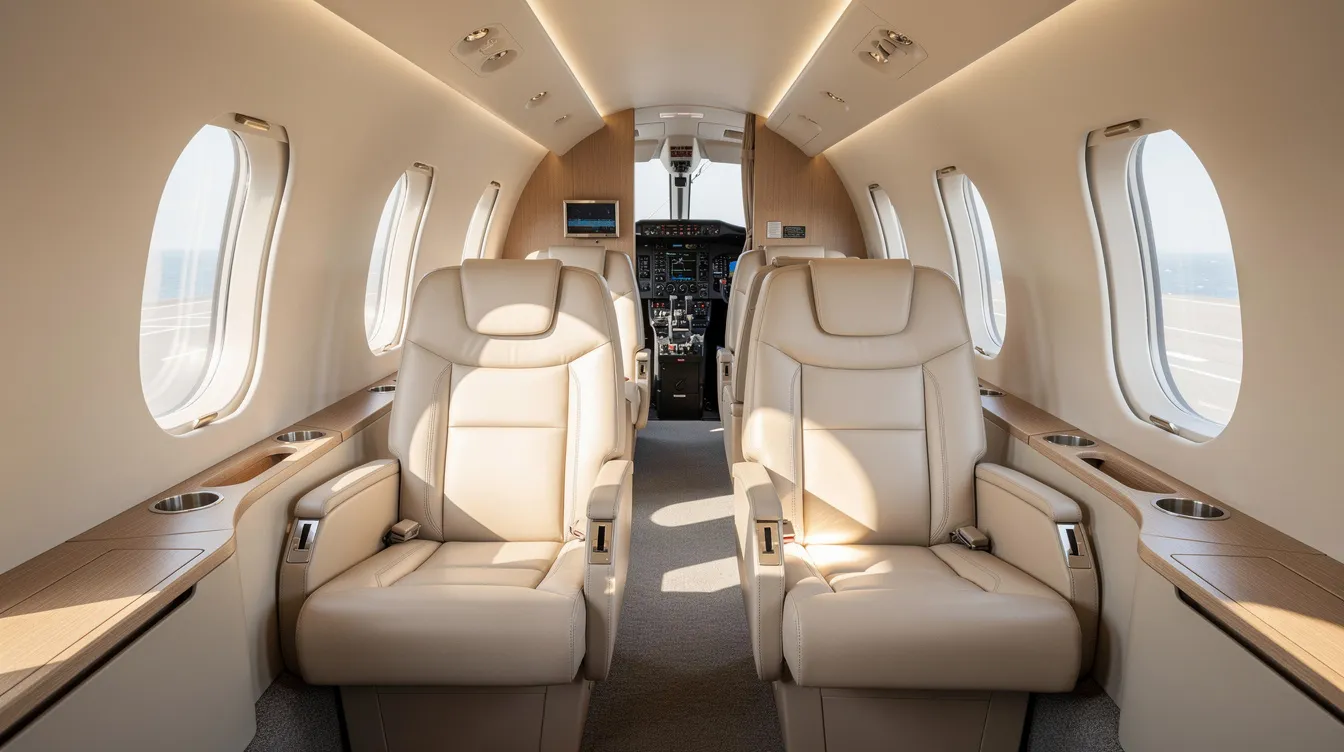
Midsize and super-midsize jets represent the sweet spot for corporate flight departments. They seat roughly 8–10 passengers in stand-up cabins with 2,000–4,000+ nm range-enough for most transcontinental and some transatlantic routes.
Representative 2026 models and values:
Cessna Citation XLS+ and Citation Latitude: used pricing often $5 million–$12 million depending on vintage
Bombardier Challenger 300/350: 2015–2018 models trade around $10 million–$18 million
Embraer Praetor 600: new list price approximately $24 million–$30 million
Phenom 300E: new approximately $12.9 million; 2018–2020 used models in the $9.5 million–$13.5 million range
Annual maintenance costs for midsize jets range from $1.25 million to $1.5 million at 200 flight hours, including crew pay, hangar, insurance, and routine maintenance. Annual operational costs for larger jets in this bracket can exceed $1 million even at modest utilization.
Here is a quick comparison across the lower three categories; if your missions are mostly short-haul and regional, understanding the best small private aircraft for every need will help refine which column truly fits your profile:
Factor | Light Jet | Midsize | Super-Midsize |
|---|
Passengers | 6–8 | 7–9 | 9–10 |
Range (nm) | 1,800–2,200 | 2,500–3,200 | 3,300–3,900 |
Used Price Range | $3M–$9M | $5M–$15M | $12M–$22M |
Annual Ops (200 hrs) | ~$1.1M–$1.3M | ~$1.5M | ~$1.8M |
Many corporates favor this segment because it balances private jet cost against cabin comfort and range. Most jets in this class can reach major business jet hubs without the expense of a heavy jet.
Large-Cabin and Ultra-Long-Range Jets: Top-Tier Private Jets for Sale
These are the flagships of private aviation: 10–19 passengers, nonstop legs of 6,000–7,500 nm covering routes like New York–Tokyo or London–Singapore. Cabin volume allows multiple living zones, full galleys, and berth-style sleeping.
2026 pricing for specific models:
Gulfstream G650 / G650ER: used examples listed at approximately $35 million–$48 million depending on specification
Bombardier Global 6000: pre-owned in the low $20 million range
Bombardier Global 7500 / Global 8000: new approximately $75 million–$85 million
Gulfstream G700: approximately $84.9 million new; G800: approximately $80.4 million new
Bombardier Challenger 650: lower end of the large-cabin spectrum, still requiring seven-figure annual budgets
Dassault Falcon 8X: used in the $30 million–$40 million range
Annual ownership costs can exceed $2 million for larger jets. At 200–400 flight hours, total ongoing costs frequently reach $2.4 million–$3.5 million+ due to higher fuel costs, larger crews, and more complex maintenance. Larger aircraft sizes exponentially drive up purchase prices and fuel burn.
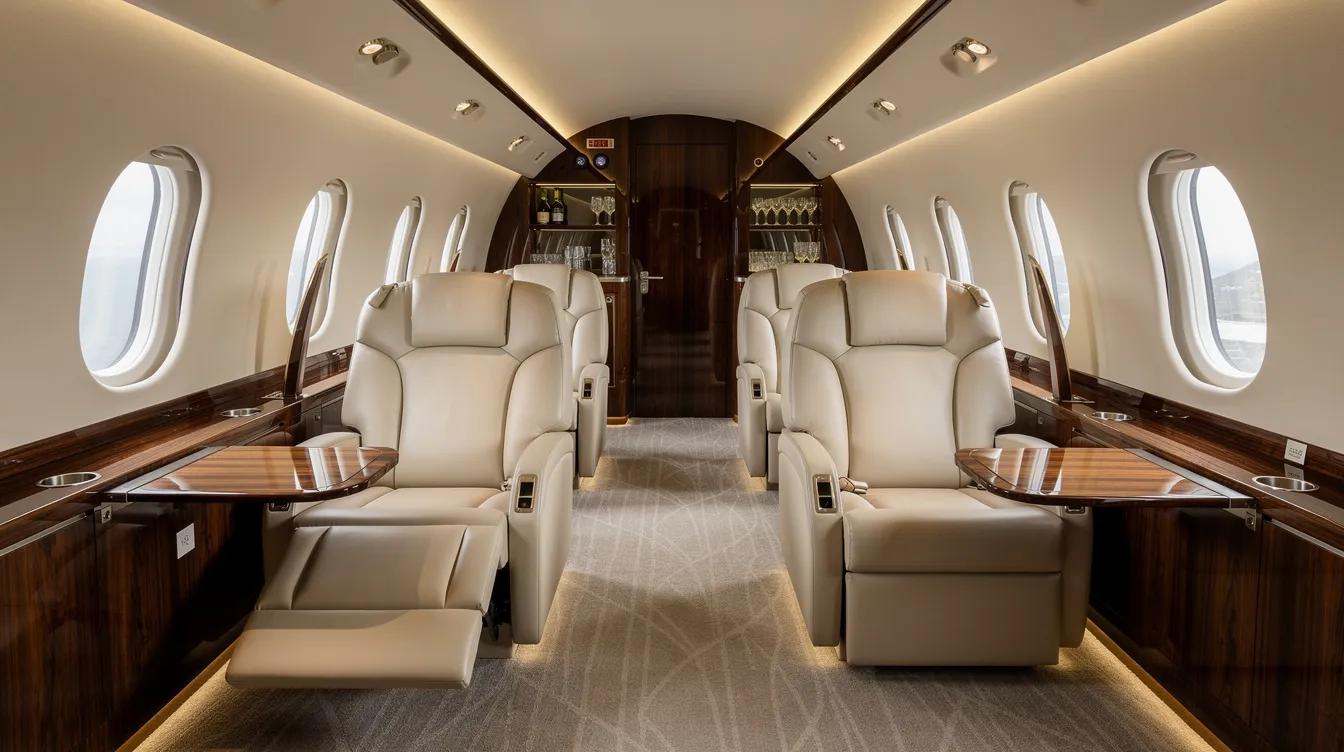
This level of private aircraft normally makes sense only for ultra-high-net-worth individuals, governments, or multinationals with an operation worldwide that demands hundreds of annual flight hours across continents, and many will gravitate toward the largest private jets for sale to maximize comfort, prestige, and nonstop range.
Key Price Drivers for Private Jets for Sale
Two aircraft of the same model can differ by millions of dollars. Here is a mental checklist for evaluating any listing:
Age and total flight hours: the age and condition of an aircraft influence its purchase price significantly. Older jets or those with high airframe hours trade at steep discounts-but upcoming major inspection intervals matter more than age alone.
Engine and parts program enrollment: jets on programs like Rolls-Royce Corporate Care or Pratt & Whitney ESP command premiums but de-risk expensive future overhauls. Off-program aircraft trade down heavily to account for unknown engine reserves and overhaul liability.
Avionics compliance: updated suites with ADS-B Out, CPDLC, and FANS capability are now regulatory requirements in many airspaces. Non-compliant aircraft need costly retrofits.
Interior condition and damage history: a recent cabin refurbishment, clean paint, zero accident or corrosion history-these factors alone can swing private jet price by millions on the same model.
Market data and supply dynamics: used large-cabin jets have tight inventory, supporting strong asking prices. Midsize segments show higher inventory, giving buyers more leverage, and reviewing a comprehensive private jet price list can clarify how these dynamics translate into real-world asking ranges.
Purchasing private jets involves additional costs such as legal fees, registrations, and custom upgrades that are rarely reflected in the headline acquisition cost. Insurance costs vary widely based on hull value and pilot experience-another line item that many factors can influence.
Ownership Costs: Fixed vs Variable and Annual Operating Costs
Understanding private jet operating costs means separating what you pay regardless of whether your aircraft flies from what scales with each flight hour.
Fixed costs remain steady regardless of flight hours:
Crew salaries and training can range from $100,000 to $500,000+ annually
Hangar fees typically range from $1,000 to $8,000+ per month
Private jet insurance premiums (varies by hull value) and the broader cost of employing private jet pilots
Monthly management fee if using a management company
Regulatory compliance and recurrent pilot training
Fixed costs for ownership can range from $500,000 to $2 million+ annually depending on aircraft type.
Variable costs scale with each flight hour:
Jet fuel typically accounts for 25% to 35% of total hourly operating expenses
Scheduled maintenance generally costs 5% to 10% of the aircraft's acquisition value annually
Landing fees and navigation charges
Catering and ground handling
Variable hourly costs typically range from $1,000 to $5,000+ per flight hour. Variable costs can reach $5,000 per flight hour for larger jets. Total annual ownership costs generally run about 15% to 25% of the aircraft's total value. Annual ongoing costs range from $500,000 to $2 million, reinforcing the importance of benchmarking against the broader private jet pricing landscape.
Prospective owners should model scenarios at 100, 200, and 400 hours to understand break-even points:
Usage | Super-Midsize Fixed | Variable (~$3,600/hr) | Total Annual | Effective $/hr |
|---|
100 hrs | $800,000 | $360,000 | $1,160,000 | ~$11,600 |
200 hrs | $800,000 | $720,000 | $1,520,000 | ~$7,600 |
400 hrs | $800,000 | $1,440,000 | $2,240,000 | ~$5,600 |
The math is clear: under-utilization punishes owners. Annual operating costs include pilot and crew salaries, fuel, maintenance, hangar rental, and insurance-all of which persist whether the aircraft flies or sits, and a detailed breakdown of private jet pilot cost and compensation highlights how significant just one line item can be.
Pre-Purchase Inspection and Due Diligence
A thorough, independent pre-purchase inspection is non-negotiable when evaluating private jets for sale. Skipping it is the single most expensive mistake a buyer can make.
Key inspection components include:
Airframe structure and corrosion checks
Engine and APU health, including remaining time before overhaul
Avionics suite compliance and condition
Landing gear condition and remaining cycles
Complete logbook review and damage history verification
Compliance with all airworthiness directives and service bulletins
PPI costs typically run tens of thousands of dollars. For a larger aircraft or older jets, costs can reach six figures. These are modest compared to the seven-figure surprises they can uncover-an engine overhaul alone on a super midsize jet can exceed $1.5 million, and structural corrosion repair can ground a private plane for months.
Aircraft depreciation represents a high hidden cost of ownership. Verifying enrollment in engine, APU, and parts programs (such as MSP Gold or Rolls-Royce Corporate Care) during due diligence directly impacts future depreciation risks and resale trajectory. A jet that looks like a bargain at the purchase price can become a money pit if a major inspection is due within months, a pattern that also appears in billionaire private jet price trends where customization and upkeep dramatically influence long-term value.
How Many Private Jets Do You Really Need?
The question of how many private jets a buyer needs is answered by utilization math, not prestige. Most private jet owners and companies start with one aircraft matched to their primary mission profile-say, a super midsize jet for domestic and occasional transatlantic routes.
Operating multiple private jets makes financial sense only for large corporations with diverse, simultaneous route demands, head-of-state fleets, or ultra-high-net-worth families operating both a light jet for regional hops and a long-range aircraft for intercontinental travel.
Private jet ownership becomes economically practical if you fly 200 to 400+ hours per year. Under-utilization of even one aircraft inflates the effective per-hour cost dramatically. For most buyers, supplementing one owned jet with Jet Card access through a provider like BlackJet covers backup, supplemental, and mismatched missions without doubling the fleet's fixed costs.
The pragmatic approach: own the perfect aircraft for your most frequent mission, and use a Jet Card for everything else.
Private Jet Ownership vs Charter vs Jet Cards
The three main paths to flying private each carry distinct financial profiles.
Buying a private jet outright:
Millions in upfront costs, plus delivery, customization, and tax
Full control over your own schedule, crew, and cabin
Owning a jet typically requires 200+ flight hours to be economical
You absorb all depreciation risks, maintenance surprises, and residual value uncertainty
Private jet charter as a cost-effective alternative:
Chartering a private jet costs about $7,500 per hour on average, varying by aircraft class
Chartering is more cost-effective for under 200 flight hours annually, especially once you factor in all the variables outlined in a thorough private jet charter cost comparison
Chartering eliminates ongoing ownership costs like maintenance and crew
Chartering offers flexibility to choose aircraft per trip needs
Charter rates fluctuate with demand, fuel, and positioning-no price guarantee
Jet cards and how their pricing works:
Users can purchase jet cards for 25 or 50 hours at fixed hourly rates, and understanding Jet Card pricing structures helps decode what those rates actually include
Jet cards provide flexibility without ownership commitments while still allowing you to optimize Jet Card cost per hour against your travel profile.
Jet card programs include fixed hourly rates for flights
Jet cards allow access to multiple cabin types, and the best jet cards for frequent flyers emphasize this multi-cabin flexibility
No capital tied up, no residual risk, no crew management
Fractional ownership sits between buying and cards: fractional ownership allows shares from 1/16th to 50% of a jet, reducing capital outlay but still carrying ongoing costs and depreciation. Leasing a private jet avoids high upfront costs and depreciation risks but typically locks you into a single aircraft type.

For travelers not ready to buy, a 50-hour Jet Card cost breakdown provides a clear middle ground between ad-hoc charter and the capital commitment of full ownership.
Use case: An executive flying New York–London monthly plus US domestic routes logs roughly 200–250 hours annually. Owning a Bombardier Challenger 350 (acquisition ~$15 million used) would cost approximately $1.8 million per year in operating costs-before accounting for depreciation. For this level of utilization, analyzing a 100-hour Jet Card cost guide alongside a BlackJet super-midsize Jet Card at a fixed hourly rate eliminates the capital outlay, asset risk, and management complexity, while guaranteeing availability and safety standards.
Case Studies: Example Private Jet Costs by Model
Here are four real-world cost profiles based on late 2026 market data:
1. Cessna Citation Mustang (very light jet)
Acquisition cost: approximately $1.5 million–$2.5 million used
Operating costs per flight hour: roughly $1,000–$1,200, including fuel and routine maintenance
Annual fixed costs: mid-six figures (crew pay, hangar, insurance)
Best for: private jet owners doing frequent short flights under 1,500 nm
2. Bombardier Challenger 300 (super-midsize)
Used acquisition: $10 million–$15 million
Annual operating costs at 200 flight hours: well above $1 million, approaching $1.8 million
Per-hour variable: approximately $3,500–$4,500
Cost-effective option for corporates needing transcontinental range with stand-up cabin comfort
3. Gulfstream G650ER (large-cabin / ultra-long-range)
Used acquisition: $35 million–$48 million
Annual operating costs: $2.5 million–$3.5 million+ at 200 hours
Variable per hour: often exceeding $8,000 including fuel and engine reserves
Justified only when the aircraft flies hundreds of hours annually on intercontinental routes
4. Bombardier Global 6000 (ultra long range jets)
Used acquisition: low $20 million range
Annual costs: $2.5 million+ at moderate utilization
A Bombardier Global with strong logbooks and program enrollment holds value well
Contrast any of these with a BlackJet Jet Card: comparable cabin access at a predictable hourly rate, zero capital at risk, and no exposure to the millions in annual operating costs and depreciation that private jet ownership demands.
Safety, Certification, and Sustainability Costs in Private Aviation
Top-tier safety is not optional-it is the baseline. But it adds to both acquisition and ongoing costs.
Operator standards: IS-BAO Stage II+, ARG/US, and WYVERN audits ensure the highest operational rigor. Crew must hold current type ratings with recurrent CRM training. These requirements raise crew pay and training budgets.
Avionics compliance: ADS-B Out, CPDLC, and FANS are regulatory necessities in most international airspaces. Non-compliant older jets require retrofits costing $200,000–$500,000+, directly impacting private jet cost for sale.
Sustainability: Sustainable Aviation Fuel (SAF) currently carries premiums of 1.5×–3× over conventional jet fuel. Carbon-offset programs add incremental cost. Buyers increasingly factor environmental performance into their purchase decisions.
BlackJet integrates rigorous safety vetting and carbon-neutral flights as standard across every Jet Card program. Members access top safety and sustainability standards without personally managing aircraft compliance, crew certifications, or offset logistics.
Technology, Connectivity, and Cabin Upgrades: Hidden Cost Multipliers
Modern business travelers treat their private aircraft as airborne offices. That expectation drives costs that rarely appear in headline private jet price listings.
In-flight connectivity: Ka-band satellite, Starlink, and Gogo Avance L5 installations can cost $200,000–$1,000,000+ depending on antenna type, STC certification, and aircraft type. These are now expected luxury amenities by most buyers.
Interior refurbishment: A full cabin refresh on a midsize or heavy jet-seats, galley, carpet, LED lighting, soundproofing-runs $500,000–$2 million. New paint adds another $200,000–$500,000.
Cabin noise reduction: Vibration damping, premium window seals, and acoustic insulation raise both acquisition cost and maintenance complexity on larger aircraft.
Jet Card users with BlackJet enjoy modern, high-spec cabins and reliable connectivity without personally funding these upgrade cycles. The operator absorbs the capital investment; you simply book and fly.
Is Buying a Private Jet the Right Move Now-or Is Smart Access Better?
Here is a simple decision framework:
Annual flight hours: If you consistently fly 250–400+ hours per year, ownership can be the most cost-effective option. Below that threshold, Jet Cards or charter almost always win on total economics.
Mission profile: Do you need one aircraft type for most trips, or do you fly a mix of short flights and intercontinental legs requiring different jet sizes?
Control and customization: Ownership gives you a bespoke cabin, dedicated crew, and total scheduling control. If these matter deeply, ownership may justify the premium.
Capital and risk tolerance: Are you prepared to absorb aircraft depreciation, unexpected maintenance, regulatory upgrades, and residual value uncertainty?
For those logging under approximately 250 hours annually, BlackJet's Jet Card programs-available in 25-hour and 50-hour blocks across cabin classes-deliver predictable private jet cost per flight hour with carbon-neutral flights, guaranteed availability, and 24/7 digital booking. Understanding overall Jet Card cost and membership pricing helps you see exactly how those blocks compare to outright ownership. No crew management. No hangar leases. No seven-figure surprises.
Ownership suits some. But for many, premium access is the smarter financial and operational decision.
FAQs: Private Jets for Sale and Cost of Access
What is the cheapest private jet I can buy in 2026?
Used very light jets like the Cessna Citation Mustang or early Cirrus Vision Jet models trade in the $1.5 million–$3 million range. Used private jets can start under $500,000 for the oldest turboprop or piston aircraft, though these are rarely true "jets."
What are typical annual operating costs?
At roughly 200 flight hours per year: very light jets ~$700,000–$900,000; light jets ~$1.1 million–$1.3 million; midsize ~$1.5 million; super-midsize ~$1.8 million; large-cabin ~$2.4 million; ultra-long-range ~$3.4 million+. Annual operating costs can exceed $1 million for larger jets even at modest utilization.
Do I need a pre-purchase inspection?
Yes-always. A PPI can uncover engine overhaul needs or structural corrosion costing millions. It is essential due diligence for any serious buyer evaluating market data on a listing.
How do engine programs affect private jet price?
Aircraft enrolled on engine programs (e.g., Rolls-Royce Corporate Care, MSP Gold) command higher asking prices but protect the buyer from catastrophic overhaul costs. Off-program jets may appear cheaper but carry substantial hidden risk.
How many private jets does a typical owner operate?
Most own one aircraft. Multiple jets are justified only by very high utilization across diverse routes. Supplementing one owned jet with a Jet Card is a common, cost-effective strategy.
When is a Jet Card better than owning?
For annual usage under approximately 250–300 flight hours, or when schedules and routes vary, Jet Cards offer prepaid access to private jets without ownership commitments. Members pay only for flight hours-no capital risk, no crew management, no empty leg flights to manage, and a solid grasp of Jet Card pricing makes the comparison with ownership straightforward.
How does private jet cost compare with using a BlackJet Jet Card?
BlackJet Jet Card members lock in fixed hourly rates across multiple aircraft classes, with no purchase price, no ongoing costs for maintenance or crew, and no depreciation exposure. For most travelers flying under 250 hours per year, the total cost is meaningfully lower than ownership, especially when you leverage the BlackJet 25+ Hour Jet Card structure to match your actual flying.
How BlackJet Fits: Premium Jet Cards vs Buying Your Own Jet
BlackJet exists for the traveler who wants every benefit of flying private-without the burden of owning an asset that depreciates, demands management, and generates unpredictable costs.
Fixed hourly rates: Prepaid hour blocks (25 or 50 hours) across multiple cabin classes, from light to ultra-long-range. No hidden surcharges.
Guaranteed availability: Access to vetted aircraft when you need them, across the routes you fly-no positioning headaches, no scheduling gaps.
Safety and certification: BlackJet applies proprietary safety standards with continuous operator vetting, crew monitoring, and compliance oversight that meets or exceeds IS-BAO and ARG/US benchmarks.
Sustainability built in: Every BlackJet flight is carbon neutral. Offset and SAF integration are handled for you-no additional complexity, no extra cost.
Technology-forward: Mobile booking platform, real-time flight support, and digital trip management designed for executives who expect seamless operations.
Elevate your travel-on your terms. Whether you are evaluating a private jet for sale or simply seeking smarter access to the aircraft that fit your life, BlackJet's Jet Card programs deliver safety, sustainability, and flexibility without the weight of ownership. Explore BlackJet's Jet Card programs and discover how refined, capital-efficient private travel becomes your new standard.


 Sign up with google
 Sign up with Apple