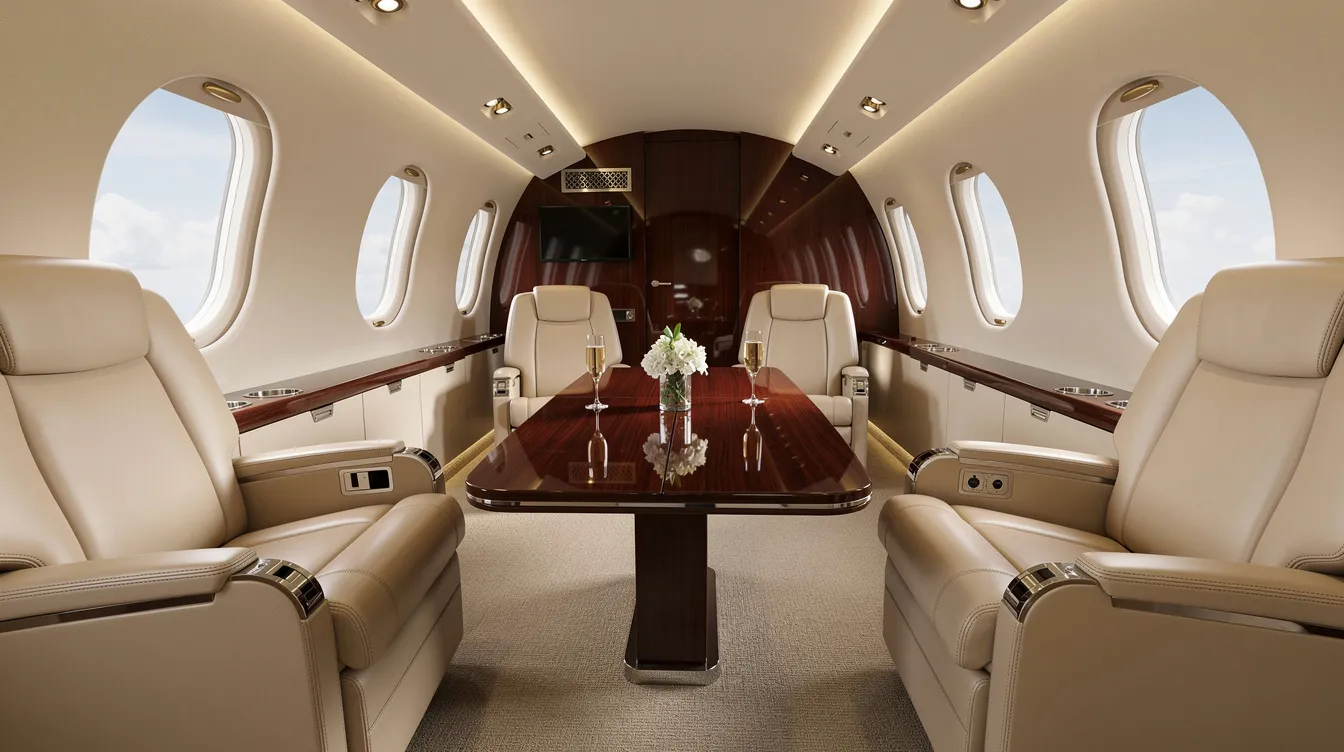
The term "plane characteristics" carries a dual meaning worth exploring in this article. In aviation, it refers to the measurable performance traits that define what an airplane can do, including range, cruise speed, cabin size, runway performance, and safety certifications. For frequent business travelers and high-net-worth leisure flyers who want flexibility, privacy, safety, and luxury without owning an aircraft, understanding those traits is how you choose the right private jet for each trip. In nature, it describes the features of the plane tree, a genus called Platanus within the family Platanaceae, and that parallel helps frame how characteristics guide smarter selection in both travel and landscape planning.
Consider a business executive flying from New York to London. Commercial business class means roughly 6–7 hours in the air, but door-to-door the journey stretches to 10–12 hours once you account for ground transfers, security, and boarding. A BlackJet-arranged private jet, departing from a private terminal with direct drop-off, compresses that to approximately 7–8 hours total. That advantage comes from matching the mission to the aircraft's range, cruise speed, cabin class, runway performance, onboard technology, and safety standards. The sections that follow compare private jet categories, explain key aircraft performance traits and certifications, touch on aviation sustainability, and show how BlackJet's Jet Card programs-available in 25-hour and 50-hour increments-use these characteristics to deliver more efficient, comfortable, and carbon-neutral travel.
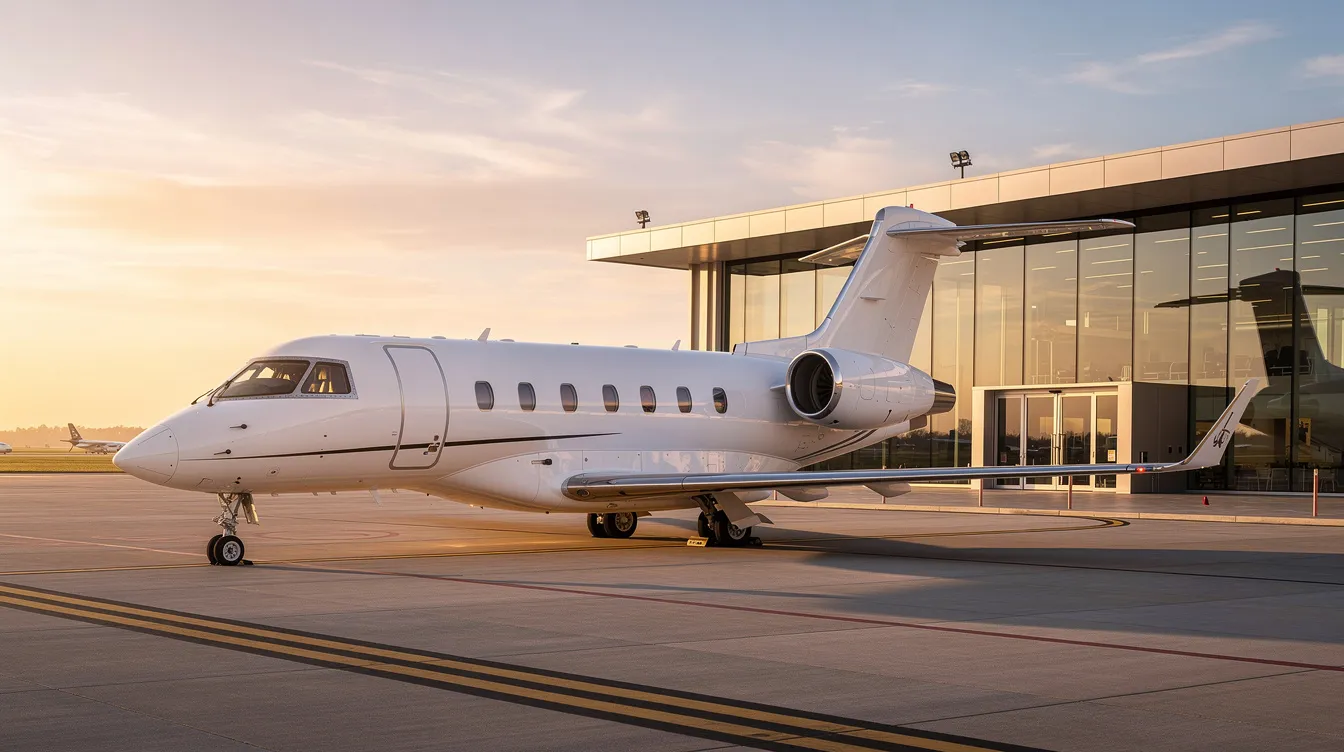
Key Aircraft Characteristics That Shape a BlackJet Flight
Airplanes are classified by their intended purpose, size, and powerplant. Key categories include commercial airliners, cargo planes, private jets, general aviation, and military aircraft. Commercial airliners are designed for scheduled passenger transport-narrow-body airliners typically have a single aisle designed for short-to-medium routes, while wide-body airliners have two aisles and a large passenger capacity designed for long-haul routes. Cargo aircraft are designed for transporting freight, goods, and large objects. Military aircraft are specialized for defense, combat, surveillance, and transportation, often requiring specialized technology such as radar-evading capabilities and weapon systems. General aviation aircraft are commonly used for personal flying, flight training, and aerial photography, frequently powered by piston engines common in small general aviation aircraft, providing reliable power. Private jets, the focus here, are used for private travel and corporate transportation, and their characteristics matter enormously to Jet Card members scheduling multiple trips per year.
Aircraft design balances speed, fuel efficiency, payload, and range considerations. Below is a table summarizing the primary characteristics that shape every BlackJet flight:
Characteristic | Definition | Impact on Flight |
|---|
Range | Maximum distance an aircraft can fly without refueling | Determines nonstop city pairs; e.g., light jet covers NY–Miami, large-cabin jet covers NY–London |
Cruise Speed | Typical operating speed during most of a flight (Mach 0.75–0.90 for jets) | Higher cruise speed saves time, especially on long legs |
Cabin Size/Configuration | Fuselage size, passenger capacity, cargo volume, and layout | Affects comfort, number of passengers, and luggage capacity |
Payload Capacity | Maximum weight of passengers, cargo, and mail | Influences how much can be carried on each trip |
Maximum Takeoff Weight | Heaviest allowable weight for takeoff | Determines operational limits and airport compatibility |
Runway Performance | Ability to take off/land on shorter runways | Opens access to smaller regional airports, saving ground time |
Operational Ceiling | Maximum altitude (41,000–51,000 ft for jets) | Allows jets to fly above weather/turbulence, improving efficiency |
Wingspan | Distance from tip to tip of wings | Influences lift efficiency and airport compatibility |
Wing Design | Shape and sweep of wings | Straight wings for low-speed, swept wings for high-speed performance |
Landing Gear Config | Tricycle, taildragger, retractable, etc. | Affects airport compatibility and ground handling |
Engine Type | Turbofan, piston, etc. | Determines speed, altitude, and fuel efficiency |
Range and Cruise Speed
Range is the maximum distance an aircraft can fly without refueling. It determines nonstop city pairs—for example, a light jet covers New York–Miami (~1,300 nm), while New York–London (~3,500 nm) demands a large-cabin, long-range aircraft.
Cruise speed is the typical operating speed during most of a flight, generally Mach 0.75–0.90 for business jets. The critical Mach number indicates when airflow over the wings reaches the speed of sound, a threshold aircraft designers must respect. Higher cruise speed on extended legs can save an hour or more (evaint.com).
Cabin Size and Payload
Cabin size and configuration vary by class. The fuselage affects passenger capacity, cargo volume, and aerodynamics.
Payload capacity is the maximum weight of passengers, cargo, and mail that an aircraft can carry, while maximum takeoff weight is the heaviest allowable weight for an aircraft to take off.
Runway Performance and Operational Ceiling
Runway performance opens access to smaller regional airports, creating time savings on the ground.
Operational ceiling (41,000–51,000 ft) lets jets rise above weather and turbulence, improving flow and route efficiency.
Aerodynamic Forces and Engine Types
Four forces govern every flight: lift is an upward-acting force on an aircraft, affected by the airfoil's shape and angle of attack. Drag is a retarding force opposing thrust. Weight is the downward force due to gravity. Thrust is the forward-acting force provided by propulsion systems—turbofans are the most common engine for modern commercial planes, while business jets use smaller turbofan variants. Wingspan influences lift efficiency and airport compatibility, and wing design varies based on function, with straight wings suitable for low-speed performance and swept wings for high-speed performance. Even landing gear configurations—including tricycle gear, taildragger, and retractable gear—affect which airports an aircraft can use. Aircraft engines determine speed regime, altitude capabilities, and fuel efficiency.
BlackJet's booking platform presents these characteristics clearly—range, seats, luggage, Wi-Fi, lavatory type—so members can filter by desired parameters and understand types of private jets for every traveler. Before any aircraft appears in search results, BlackJet evaluates operator safety ratings (ARGUS, IS-BAO, Wyvern) as a non-negotiable. Compared to buying a single jet, the Jet Card model lets members access aircraft with different characteristics trip by trip.
Aircraft Categories in the BlackJet Fleet: How Characteristics Differ
BlackJet's fleet options span multiple cabin classes, each constructed for specific missions, from pistons and turboprops to the best small private aircraft for every need. The structure of each category reflects a different balance of space, speed, and ability:
Light Jets
Light jets (e.g., Embraer Phenom 300, Citation CJ4) carry 4–7 passengers with ~1,800–2,100 nm range. Smooth, compact cabins suit regional hops—London to Ibiza or Boston to Washington, D.C. Fuel burn is relatively modest, and in many cases these jets overlap with the cheapest private jet options, though per-passenger emissions remain affected by load factor.
Midsize Jets
Midsize jets (e.g., Citation XLS+, Hawker 900XP): seat 6–8 passengers, ~2,100–2,400 nm range, with stand-up cabins in many models. Ideal for coast-to-coast movement within the U.S. or cross-European trips.
Super-Midsize Jets
Super-midsize jets (e.g., Challenger 350, Gulfstream G280): 8–9 passengers, ~3,000–3,600 nm. These fly New York–Los Angeles or Paris–Dubai with minimal fuel stops, offering wider cabins, Ka-band Wi-Fi, and lower noise—a meaningful development over smaller classes and a bridge toward top-tier luxury private jets.
Large-Cabin, Long-Range Jets
Large-cabin, long-range jets (e.g., Gulfstream G600, Bombardier Global 6000): 10–14 passengers, 5,000–6,500+ nm, designed for nonstop New York–London, LA–Tokyo, or Dubai–Singapore. Cabin width exceeds seven feet; multi-zone interiors support work, dining, and rest, and larger variants can be configured as the best private jet for 20 passengers.
A Jet Card removes the compromise of owning one aircraft that is too small for some trips and too large for others. All aircraft meet strict maintenance and pilot-experience thresholds, regardless of category.
Safety, Certification, and Technology as Core Plane Characteristics
For discerning travelers, the most critical plane characteristics are those invisible in photographs: safety oversight, pilot training, and avionics technology. These are not opinions or marketing techniques—they are measurable, audited standards.
Operator certification: BlackJet prioritizes FAA Part 135–compliant operators with third-party ratings like ARGUS Platinum and IS-BAO Stage II/III at every stage.
Pilot experience: Typical thresholds include 3,000+ total hours, type ratings, and recurrent simulator training—a practice that produces consistently high crew competence.
Maintenance history: BlackJet reviews CAMP tracking, inspection cycles, and service-bulletin compliance. Aircraft age alone is not a reliable method; what matters is the documented maintenance record and materials used in overhauls.
Avionics: Modern systems—TCAS, EGPWS, ADS-B Out, enhanced vision—provide situational awareness and control that reduce risk, while advanced tools such as a dedicated private jet flight time calculator translate performance data into precise trip planning.
BlackJet's technology platform is an extension of these principles: real-time flight monitoring by the operations team, plus digital trip briefs summarizing aircraft, crew info, and safety background before departure. Compared to chartering ad hoc via smaller brokers, BlackJet's standardized safety criteria eliminate the guesswork. Only aircraft that pass strict vetting ever appear in member search results.
Sustainability and Environmental Characteristics of Modern Planes
Both plane trees and planes interact with the environment in powerful ways. Trees cleanse city air; aircraft emit CO₂. BlackJet addresses the latter head-on through carbon-neutral operations and by advising on budget-friendly private aircraft options that balance efficiency, cost, and environmental impact.
Fuel burn varies dramatically: light jets burn roughly 48 gallons per hour, while large-cabin long-range jets can consume up to 576 gallons per hour. Private aviation emissions per passenger are higher than commercial first class, but can be optimized via load factor, aircraft selection, and efficient routing.
Carbon-neutral commitment: Every BlackJet flight is offset against actual fuel burn data, supporting verified projects such as reforestation and renewable energy. Members can also request newer, more fuel-efficient aircraft or operators using blended Sustainable Aviation Fuel where available.
Just as the London plane tree was widely identified and planted across 18th–19th century London to absorb pollution—its shedding bark a natural method of self-cleaning—BlackJet uses carbon offsetting and aircraft selection to mitigate the environmental footprint of business travel. Consider a member flying London to New York on a large-cabin jet: the flight's fuel burn produces approximately 7–8 tons of CO₂, which BlackJet calculates from performance data and offsets entirely. The benefits are tangible and traceable.
Plane Trees (Platanus): Species, Urban Resilience, and Symbolism
The plane tree is any species in the genus Platanus, the only living genus in the family Platanaceae. Plane trees can live for several centuries—some oriental plane specimens in Türkiye exceed a thousand years, serving as living landmarks. The genus has fossil records derived from deposits exceeding 60 million years, underscoring its ancient lineage.
Plane trees are deciduous, with large, palmately lobed leaves and bark that exfoliates in plates, leaving mottled, camouflage-like patterns of varying thickness. They produce spherical fruits that persist through autumn and into winter, and their flowers are wind-pollinated. The wood is dense and valued in craft.
Platanus orientalis (Oriental Plane)
Platanus occidentalis (American Sycamore)
Platanus × acerifolia (London Plane Tree)
Plane trees thrive near rivers and can adapt to urban areas. London plane trees are highly tolerant of air pollution, with strong root systems and expansive crowns that provide deep shade in city streets. The planting of London plane across Victorian-era London—when industrial smog made survival of other trees difficult—remains one of the most successful acts of urban nature management in science and practice.
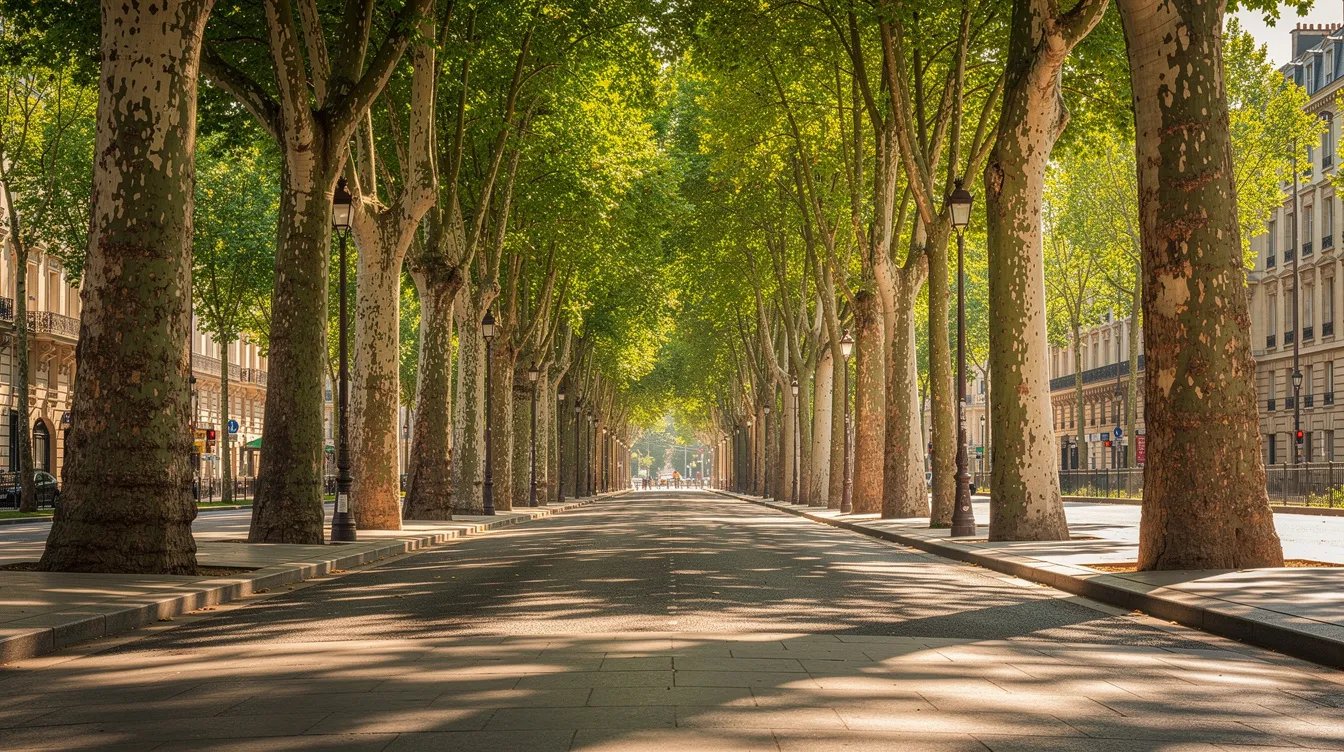
Comparing London Plane Tree, Oriental Plane, and American Sycamore
Many travelers encounter different plane species across cities without realizing they belong to the same broader group. A child spotting mottled bark along the Thames and a traveler admiring ancient trunks near the Bosphorus are looking at close relatives.
Species | Bark | Leaf Shape | Fruit Arrangement | Urban Use |
|---|
London plane (P. × acerifolia) | Heavily mottled | 3–5 lobed leaves | Paired spherical clusters | Primary street tree in London; highly pollution-resistant |
Oriental plane (P. orientalis) | Mottled, often thick plates | Deeply lobed | Clusters of 2–6 | Monumental in squares, riversides in southeastern Europe/Asia |
American sycamore (P. occidentalis) | Smooth, white upper bark | Broad, less deeply lobed | Usually solitary | Common in North American parks and floodplains; less pollution-tolerant |
Key differences include fruit arrangement (pairs in London plane versus single in American sycamore), leaf shape, and growth habit. Just as city planners choose between these species based on local climate and soil, BlackJet advisors help members choose between aircraft types based on mission profile, passenger count, and runway constraints, guided by a clear understanding of the private jet price list and options.
Point, Line, and Plane in Geometry vs Real-World Flight Planning
In geometry, a plane is an ideal, infinitely flat surface—a foundational concept in mathematics and physics. Any straight line drawn between two points lies completely within the plane. In projective geometry, the concept gains extra points at infinity where parallel lines reach an intersection, a notion that maps metaphorically onto how long-range routes converge along great-circle tracks on a spherical Earth.
In practice, flight planning uses spherical geometry rather than a flat plane. Aviation software projects these routes onto 2D map planes so pilots can visualize efficient paths. A BlackJet-arranged flight from Los Angeles to Tokyo, for example, follows a great-circle arc that appears as a curve on a flat map but represents the shortest distance—an application of mathematical concepts that produces real-world time savings, especially on large private jets for 50 passengers and other long-haul aircraft. The same precision-performance curves, fuel planning, and climb and descent profiles underpin how BlackJet matches aircraft characteristics to each client's itinerary, heading in the opposite direction from guesswork.
Frequently Asked Questions About Plane Characteristics
What are the main categories of airplanes, and how do their characteristics differ?
Airplanes are classified by intended purpose, size, and powerplant. Key categories include commercial airliners (narrow-body for short-to-medium routes, wide-body for long-haul), cargo planes designed for freight, private jets for corporate and private travel, general aviation aircraft used for personal flying and training, and military aircraft with specialized technology. Each category balances speed, payload, range, and cabin size differently to suit its mission.
How does runway performance affect private jet travel?
Runway performance determines an aircraft's ability to take off and land on shorter runways. Jets with better runway performance can access smaller regional airports closer to your destination, reducing ground travel time and enhancing convenience.
What safety certifications does BlackJet require for its aircraft operators?
BlackJet requires operators to be FAA Part 135–compliant and hold third-party safety ratings such as ARGUS Platinum and IS-BAO Stage II/III. Pilots must meet experience thresholds, including 3,000+ flight hours and recurrent simulator training. Maintenance records and avionics standards are also rigorously reviewed.
How do plane trees contribute to urban environments?
Plane trees, especially the London plane, are highly tolerant of air pollution and thrive in urban settings. Their large canopy provides shade, improves air quality by filtering pollutants, and adds aesthetic and ecological value to city streets and parks.
What is the significance of the critical Mach number in aircraft performance?
The critical Mach number is the speed at which airflow over some part of the aircraft reaches the speed of sound, causing changes in aerodynamic forces such as increased drag and reduced lift. Aircraft are designed to operate below this threshold to maintain efficiency and safety.
Choosing the Right "Plane": Trees for Cities, Jets for Your Jet Card
This article has explored two parallel worlds of plane characteristics: plane trees as long-lived anchors of urban environments, and aircraft performance as the foundation of seamless private travel. City planners select between London plane, oriental plane, and American sycamore based on climate, pollution levels, and desired canopy form—an understanding of resilience and longevity that mirrors how BlackJet members select aircraft.
Range, cabin class, runway performance, and safety credentials remain the non-negotiable characteristics in aircraft selection. BlackJet's Jet Card turns these parameters into simple choices on a digital interface—"4 passengers, 1,500 nm, ski equipment"—with 24/7 support.
Imagine a year with a 25-hour Jet Card or the dedicated BlackJet 25+ Hour Jet Card: winter flights to Aspen on a light jet, spring meetings in London aboard a large-cabin long-range aircraft, summer in the Mediterranean on a super-midsize—each trip leveraging different aircraft characteristics, much like different plane trees shape different cityscapes. The meaning of "right fit" changes with every season and every mission, and understanding jet card pricing structures helps ensure those hours are allocated strategically.
Explore BlackJet's Jet Card programs and discover how matching aircraft characteristics to your travel strategy can reshape every journey you take, whether you're comparing 100 hour jet card cost, evaluating a 50 hour jet card cost guide, analyzing jet card cost per hour, reviewing Flexjet jet card pricing, studying jet card cost comparisons, benchmarking NetJets jet card cost, or weighing the tax benefits of fractional jet ownership alongside Jet Cards.


 Sign up with google
 Sign up with Apple