
Introduction
In 2027, the newest aircraft are not simply incremental upgrades; they represent a strategic leap in range, efficiency, and onboard experience that reshapes how discerning travelers move across the world. For high-net-worth individuals and corporate executives, newer airframes mean fewer refueling stops, reduced jetlag through advanced cabin environments, lower noise footprints at sensitive airports, and dispatch reliability that older platforms simply cannot match. The Boeing 747 saw its final delivery in 2023, closing one chapter while opening another defined by composites, geared turbofans, and digital flight management.
This year, the aviation landscape spans an extraordinary breadth of innovation, from widebody airliners like the Boeing 777X and Airbus A321XLR, to the USS Gerald R. Ford aircraft carrier rewriting naval operations, to ultra-long-range business jets that BlackJet members can access through Jet Card programs. Each category pushes the standard forward, and the technologies converge: fly-by-wire controls, composite structures, electromagnetic launch systems, and sustainable fuel compatibility now run through commercial, military, and private aviation alike.
This guide is for high-net-worth individuals, corporate executives, and aviation enthusiasts seeking to understand the latest advancements in aircraft technology and what they mean for private flyers. We cover the newest commercial airliners, business jets, military platforms, and aircraft carriers, highlighting their impact on private aviation.
Here is how the newest aircraft break down across categories:
Commercial airliners: A321XLR, A220 family, A330neo, A350-1000, and 737 MAX variants deliver 14–25% fuel savings and open new long-haul city pairs
Near-term future airliners: Boeing 777-9, Boom Overture, Comac C929, and MC-21 target certification milestones between 2027 and the early 2030s
Military platforms: The Gerald R. Ford-class carriers and the B-21 Raider represent a significant advancement in stealth capabilities and carrier-based operations. Unmanned aircraft systems, also known as drones, are increasingly important in military aviation for surveillance and combat roles.
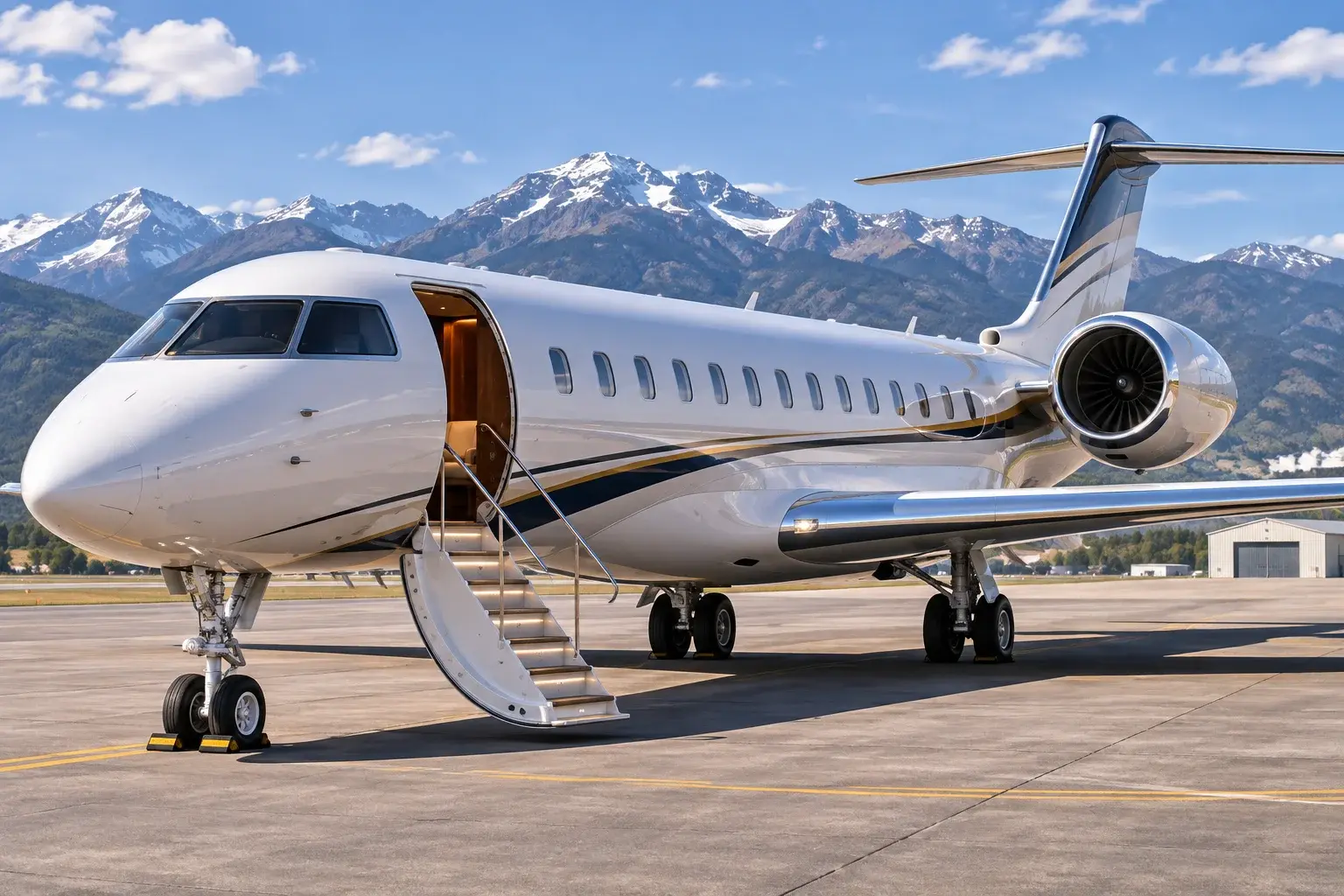
Business jets: Gulfstream G700/G800, Bombardier Global 7500/8000, and Dassault Falcon 10X offer nonstop ranges exceeding 7,500 nautical miles with bespoke cabin layouts designed for productivity and rest
Newest Commercial Airliners
The Newest Commercial Airliners in Service (as of 2027)
The latest airliners define what global travelers expect in comfort, range, and efficiency. Even for those who fly privately, these platforms matter: they drive airport congestion patterns, shape engine and avionics development timelines, and set the technology baseline that filters into every business jet BlackJet sources for its fleet.
Airbus A321XLR
The A321XLR has a range of up to 4,700 nautical miles, enabling transatlantic "thin" long-haul routes between secondary European and US East Coast cities. Entry into service came in October 2024 with Iberia, following EASA type certification in July 2024. Its permanent Rear Centre Fuel Tank is a redesign that extends range without sacrificing cabin space.
Airbus A220 Family
A clean-sheet design in service since 2016, the A220 family seats 100–160 passengers, with geared turbofan engines that deliver up to 25% lower fuel burn per seat. Airlines like Delta, airBaltic, and Air France use it on premium regional routes, and its quieter cabins ranked it among the most passenger-friendly narrowbodies flying today.
Airbus A330neo and A350-1000
The A330neo entered service with TAP Air Portugal in December 2018 and achieves roughly 25% lower fuel burn per seat versus older widebodies. The Airbus A350-1000 seats roughly 350 to 410 passengers and has a range near 8,700 nautical miles, built with composite-heavy construction for ultra-long-haul operations.
Boeing 737 MAX 8
The Boeing 737 MAX 8 first entered service in 2017 and offers 14% lower fuel burn than its predecessor. By 2027, it is fully re-certified and globally deployed as the narrowbody workhorse for airlines worldwide.
Technology Crossover
Advances in composite materials, advanced avionics, and new-generation engines from these modern planes feed directly into the business jets available to BlackJet members, ensuring that private aviation benefits from decades of airliner research and development.
Upcoming Airliners: Boeing 777X, MAX 7/10, MC-21, Boom, and C929
Several near-term future aircraft are expected to reshape airline fleets over the coming decade, with 2027 marking critical certification milestones for multiple programs.
Boeing 777X (777-9)
The Boeing 777X family includes the 777-9 model, the largest twin-engine jet ever built. Its first flight occurred in January 2020, and FAA certification with first deliveries to Emirates is expected around early 2027. The Boeing 777-9 achieves 20% lower fuel use and emissions versus older 777s and has a 40% smaller noise footprint than predecessors. The 777X features folding wingtips for airport compatibility, serving over 400 passengers per flight.
Boeing 737 MAX 7 and MAX 10
The MAX 7 was certified in 2026, with the MAX 10 close behind and deliveries planned for 2027. Launch customers include Southwest (MAX 7) and United, Delta, and Alaska (MAX 10), filling capacity gaps with preserved efficiency.
Yakovlev MC-21-310
This narrowbody rival to the A320neo and 737 MAX completed domestic test flights in 2026, with a certification target of 2027. Sanctions-driven design changes have reshaped its engines and systems, though Rossiya remains the expected launch operator.
Boom Overture
A supersonic design pushing Mach 1.7 for 64–80 passengers. The XB-1 demonstrator broke the sound barrier in January 2025 during testing. Flight testing for Overture targets the late 2020s, with entry into service around 2029–2030. Pre-orders from United, American, and Japan Airlines signal serious demand for time-critical long-haul competition.
Comac C929 and C919
China's twin-aisle follow-up to the C919, the Comac C929 is expected to seat approximately 280 passengers with a range of around 7,450 miles. It is still in the design phase, with a first flight expected around 2030. The Comac C919 is a narrowbody aircraft seating 158 to 192 passengers that entered service in May 2023 with China Eastern. The C919 aims to compete with Airbus and Boeing for fuel efficiency.
What These Aircraft Mean for Premium Travelers
More point-to-point routes reduce layovers, quieter cabins improve the life of frequent flyers, and future supersonic choices could cut transatlantic flight times in half for time-critical corporate travel.

Business Jets
Newest Business Jets and Private Aircraft Shaping Premium Travel
While commercial airplanes grab headlines, the most meaningful change for BlackJet members comes from the newest business jets and the broader types of private jets available. These aircraft deliver nonstop city pairs like New York–Tokyo and London–Los Angeles with bespoke interiors, flexible scheduling, and cabin environments that double as boardrooms at 51,000 feet.
Dassault Falcon 10X
First flight on 19 June 2026, with entry into service expected around 2029. Maximum range of 7,500 nautical miles at Mach .85, with a cabin width of approximately 9 ft 1 in and height of 6 ft 8 in. Powered by twin Rolls-Royce Pearl 10X engines, it can fly from ground level runways under 6,000 ft at MTOW. Meanwhile, the Dassault Falcon 6X introduced the first flaperon in business aviation and has the tallest and widest cabin of any purpose-built business jet.
Gulfstream G700 and G800
Ultra-long-range platforms with ranges of approximately 7,750 nm (G700) and 8,000 nm (G800), seating up to 19 passengers. These are among the best business jets for intercontinental missions, providing advanced avionics and high-altitude cruise capability.
Bombardier Global 7500 and 8000
Offerings in the 7,700 nm range with large, flexible cabins built for intercontinental runs. These aircraft are routinely ranked among the planes with the longest range in business aviation.
Embraer Phenom 300EV
Launched in July 2026, the latest evolution of the world's best-selling light jet adds Garmin Emergency Autoland and performance enhancements. In 2023, automation technologies were widely integrated into light and midsize aircraft, and the Phenom 300EV continues that trajectory. The Cessna Caravan family remains the most delivered utility turboprop, but for Jet Card members, the Phenom 300EV represents the heart of efficient regional access.
BlackJet's Curated Network
Members access modern, late-model aircraft rather than older, noisier jets through premium private jet card programs. Aircraft categories span light, midsize, super-midsize, and large-cabin/long-range tiers, ensuring the right aircraft for every mission and providing flexibility that ownership cannot match.
Aircraft Carriers
Next Generation Aircraft Carriers: USS Gerald R. Ford and Aviation at Sea
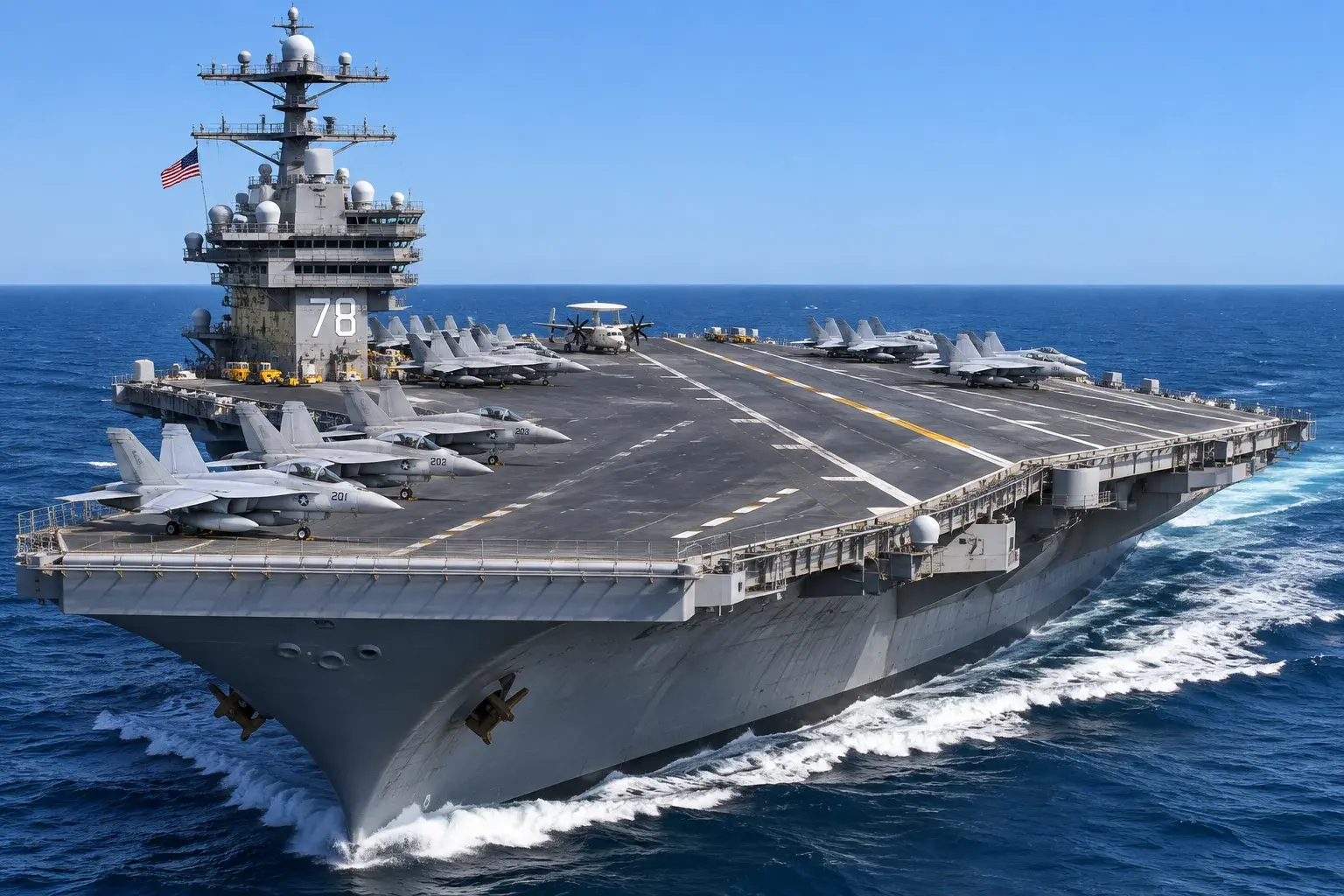
The Gerald R. Ford-class is the newest aircraft carrier generation for the US Navy, and its innovations mirror broader next generation aviation trends in ways that extend well beyond the ship itself.
Redesigned Flight Deck
The USS Gerald R. Ford (CVN-78) features a larger, repositioned island and optimized layout that improves aircraft handling, sortie generation, and safety compared with Nimitz-class carriers—much as large-cabin private jets for 20 passengers prioritize efficient movement and safety in confined spaces. Construction took place at Newport News Shipbuilding in Newport News, Virginia, where the ship was built and delivered.
Performance Gains
The Ford-class targets around 25% higher sortie rates, and the Gerald R. Ford-class carriers require 700 fewer sailors than Nimitz-class vessels, cutting crew costs while improving operations through automation and integrated electric systems—similar to how private jets for groups of around 30 passengers balance capacity, efficiency, and crew requirements.
Relevance to Business Travelers
Lessons on reliability, maintenance reduction, and high-tempo operations from military jets and naval aviation often contribute to civil and business-aviation procedures and technologies over the following decades.
Key Technologies
Key Technologies on the USS Gerald R. Ford: EMALS, AAG, and Advanced Sensors
These flagship technologies for launch, recovery, and situational awareness on the Ford-class represent the cutting edge of what it means to run a modern flight deck.
Technology | What it does | Key benefits |
|---|---|---|
Electromagnetic Aircraft Launch System (EMALS) | Replaces steam catapults with a linear induction motor, providing smoother acceleration across a wider weight range of aircraft. | Reduces stress on airframes and lowers fresh water and energy demand, while requiring less maintenance than steam-driven weapons elevators and catapults. |
Advanced Arresting Gear (AAG) | An electromagnetically controlled system that absorbs landing energy more smoothly. | Reduces shock loads on airframes and ensures safer operations with both heavier and lighter aircraft for the first time on a carrier of this class. |
Integrated radar | CVN-78 originally combined X-band AN/SPY-3 and S-band AN/SPY-4 in a dual-band radar. Later ships in the Ford class changed to AN/SPY-6(V)3 Enterprise Air Surveillance Radar. | The change reduced cost and simplified maintenance, echoing how large private jets for up to 50 passengers integrate advanced avionics and surveillance systems for safe global operations. |
Future-Ready Power Reserves
The Ford-class is designed to support future systems like high-energy lasers and electric armor, ensuring the navy can integrate emerging weapons and sensors without a full redesign.
Civil Aviation Parallels
Similar electronic and fly-by-wire philosophies appear in the newest airliners and business jets BlackJet sources for members, from envelope protection to integrated sensor suites.
Design and Engineering
Design Changes and 3D Digital Engineering: Building the Newest Aircraft
Advanced 3D computer-aided design tools now underpin the development of the newest airliners, business jets, and carriers, enabling design changes that would have been impossible to manage on paper even a decade ago.
Newport News Shipbuilding and 3D Modeling
Newport News Shipbuilding used Dassault Systèmes CATIA V5 for full 3D modeling of the Gerald R. Ford-class, improving pathways for weapons movement, reducing crew workload, and preventing interference with flight deck operations—paralleling how designers refine the best private jets in the world for optimal layouts and passenger experience.
Scale of Changes
CVN-78 alone required around 19,000 design changes during construction, many linked to EMALS electrical systems and evolving warfare and commercial technologies. This level of iteration is now standard across complex aerospace programs and even influences how premium private jets for sale in the UK are upgraded over their life cycles.
Airliner and Business Jet Parallels
Modern airliners like the A350 and 777X, as well as the newest business jets, are designed and continuously updated in full 3D digital environments to optimize aerodynamics, structures, and cabin experience throughout their service life—factors that directly influence the private jet price landscape when comparing models and ownership options.
BlackJet's Digital Operations
Digital fleet data, predictive maintenance tracking, and safety certification oversight are part of BlackJet's real-time operational management for every Jet Card flight, ensuring members benefit from the same digital engineering principles that the world's most advanced platforms rely on.
Passenger Experience
Comfort, Crew, and Passenger Experience on Next Generation Platforms
Improvements in crew accommodations on the newest aircraft carrier and cabin innovations on modern airliners converge on a single principle: the people aboard matter as much as the machine. BlackJet prioritizes this philosophy when selecting fleet partners.
Ford-Class Crew Features
Reduced crew size (approximately 2,600 vs. 3,300 on Nimitz), quieter berthing, gender-neutral spaces, and integrated medical facilities including a hospital, ICU, ER, and pharmacy serving thousands.
Airliner Cabin Innovation
Aircraft design innovations focused on larger and lower-altitude cabins in 2023, and aircraft introduced that year aimed to improve passenger comfort and reduce cabin altitude. The A321XLR, A350, and A220 deliver lower cabin altitude, improved humidity, larger windows, and quieter cabins for executives flying overnight sectors.
Business Jet Advantage
The newest business jets go further with fully flat seating, configurable meeting spaces, ultra-low noise levels, and advanced air filtration. These aircraft function as extensions of office and home at close to Mach .90.
BlackJet Cabin Matching
Members can choose aircraft category and cabin class—light, midsize, super-midsize, or large-cabin—so the layout matches each mission rather than forcing a generic experience, supported by the best jet card options for frequent flyers. Explore how different cabin classes compare when selecting a Jet Card.
Safety and Certification
Safety is not a feature; it is the ground on which every other advantage is built. Newer aircraft are designed around layered safety systems, advanced flight decks, and certification standards that BlackJet treats as baseline requirements for every operator in its network.
Fly-by-Wire and Envelope Protection
New commercial types like the 737 MAX (post-recertification) and 777X, along with the latest business jets, incorporate fly-by-wire controls and envelope protection that reduce pilot workload and enhance situational awareness—part of the value calculus when evaluating overall jet card costs and pricing.
Naval Aviation Parallels
EMALS and AAG improve takeoff and landing margins on carriers, while advanced radars expand detection and response time—principles mirrored in civil traffic-avoidance and weather systems and echoed in NetJets jet card pricing and features that emphasize safety and reliability.
Real-Time Telemetry Systems
The introduction of real-time telemetry systems enables aircraft to send fault data mid-flight, allowing ground-based maintenance crews to prepare before landing and reducing turnaround delays.
BlackJet's Safety Stance
BlackJet partners only with operators that meet or exceed top third-party audit standards such as ARGUS and IS-BAO, focusing on modern aircraft with strong safety records and rigorous maintenance regimes.
Member-Facing Technology
Real-time flight support, continuous weather and NOTAM monitoring, and proactive re-routing protect members from operational disruptions before they occur.
Sustainability
The newest aircraft across commercial, military, and private aviation are all being shaped by efficiency and sustainability pressures that go far beyond marketing. Next-generation aircraft developments aimed for 15–25% better fuel efficiency, and the current crop delivers on that promise.
Airliner Efficiency
Jets like the A321XLR, A330neo, A350, 777X, and A220 treat reduced fuel burn, lower emissions, and quieter operations as core design goals. Aircraft models introduced in 2023 emphasized automation and sustainable aviation fuel compatibility, and the wider use of SAF and automation are central themes in modern aviation advancements—trends that also shape the most affordable private jet options now entering the market.
Military Platforms and Propulsion Research
Ford-class carriers incorporate more electric systems and improved power management, laying groundwork for cleaner auxiliary systems. Hydrogen fuel cells and electric propulsion systems were tested as alternatives to conventional engines during recent years, and industry efforts in 2023 included collaborative research on the X-66 demonstrator for fuel efficiency, mirroring the push toward budget-friendly private aircraft options that use newer, more efficient designs.
Advancements in 2023 included electric and hybrid propulsion research for regional aviation, pushing the boundary of what smaller aircraft can achieve without conventional engines and expanding options for travelers who may buy a single seat on a private jet rather than chartering an entire aircraft.
BlackJet's Sustainability Commitment
All flights are operated as carbon-neutral by default through verified offsets, with a focus on newer, more efficient aircraft in the partner fleet—whether members are flying in North America, Europe, or booking private jet charters in Karachi. Learn more about BlackJet's approach to green private jet travel.
SAF Adoption
Business aviation is increasingly adopting sustainable aviation fuel blends up to 50%, and BlackJet encourages SAF use where operationally available, reducing baseline emissions at their source for routes worldwide, including private jet charters in Lahore.

Member Benefits
How BlackJet Members Benefit from the Newest Aircraft Era
While "newest aircraft" spans everything from the USS Gerald R. Ford to Boom Overture, the practical advantage for BlackJet members is how next generation aviation capabilities translate into everyday convenience and strategic time savings. The run of innovation across March through December of this year alone has delivered certifications, first flights, and deliveries that change what is possible.
Jet Card Model
BlackJet's Jet Card programs—including 25-hour and 50-hour options—give prepaid, predictable access to modern private jets without the capital and complexity of ownership, with the BlackJet 25+ Hour Jet Card offering fixed rates across mid, super-mid, and large-cabin categories. This means members fly when they need to, on the aircraft that fits, with no long-term maintenance or crew obligations.
Trip Scenarios
A New York–London overnight on a large-cabin jet positions an executive for a 9 a.m. board meeting in Mayfair, arriving rested after sleeping flat in a cabin laid out for privacy. Or consider a same-day multi-city US tour in a super-midsize jet: New York at 7 a.m., Chicago at noon, Dallas by 4 p.m.—a schedule commercial airlines cannot match in August or any other month, especially when paired with a flexible 25 hour jet card program.
Digital Platform and Real-Time Support
BlackJet's digital booking platform and 24/7 support leverage the reliability and range of the newest aircraft to create flexible, last-minute routing, whether tied to a 25-, 50-, or 100 hour jet card solution. Members can choose aircraft category and cabin class tailored to route length, passenger count, and onboard work needs.
Personalized Mission Planning
Whether the demand calls for a light jet hop or an ultra-long-range crossing, members align next generation hardware with their specific requirements rather than settling for whatever is available—choosing between options like 100 hour jet card plans or 50 hour jet card programs based on how often and how far they fly.
Frequently Asked Questions About the Newest Aircraft
What counts as the newest aircraft in 2027?
“Newest” can refer to a recently introduced aircraft already carrying passengers or a program still in testing or development. The A321XLR and C919 are among the latest commercial airliners in service, while programs such as the Boeing 777X, Boom Overture, and Comac C929 represent future developments. Business aviation also continues to advance through newer long-range jets, digital flight systems, and more efficient cabin designs.
Which newest aircraft matter most to private flyers?
For private travelers, the most relevant advances are in business jets and the technologies that improve range, cabin comfort, connectivity, and operational reliability. Aircraft such as the Gulfstream G700 and G800, Bombardier Global 7500 and 8000, and Dassault Falcon 10X illustrate the trend toward long-range, highly configurable cabins. BlackJet Jet Card members can access aircraft by category without owning or maintaining a jet.
How do newer aircraft improve efficiency and sustainability?
Newer designs can reduce fuel use through improved aerodynamics, lighter materials, and more efficient engines. The Boeing 777-9, for example, is designed for 20% lower fuel use and emissions than the aircraft it replaces. Across aviation, sustainable aviation fuel, operational improvements, and research into electric, hybrid, and hydrogen propulsion also contribute to the transition. BlackJet flights are carbon neutral through verified offsets, with SAF encouraged where available.
How does BlackJet assess private aviation safety?
Aircraft age alone does not determine safety. Operator oversight, pilot training, maintenance practices, and independent safety audits matter. BlackJet partners with operators that meet or exceed third-party audit standards such as ARGUS and IS-BAO, and provides real-time flight support, weather monitoring, and proactive routing assistance.
What is the difference between a Jet Card and aircraft ownership?
A Jet Card provides prepaid access to private flights without the acquisition costs, crew management, maintenance responsibilities, and ongoing operating commitments associated with owning an aircraft. BlackJet’s 25-hour and 50-hour programs give members access to different cabin categories, supported by digital booking tools and 24/7 assistance. The aircraft can be matched to each trip rather than tied to one owned model.
Can a private jet save time compared with commercial first class?
It can, particularly when a trip involves multiple stops, a secondary airport, or a schedule that does not align with airline service. For example, a business traveler visiting New York, Chicago, and Dallas in one day can plan a direct itinerary around meetings instead of coordinating airline connections. Actual time savings depend on route, airport access, weather, and operational conditions.
Conclusion: Turn the Newest Aircraft Era into a Travel Advantage
The newest aircraft are changing what travelers can expect from range, efficiency, cabin comfort, and operational technology. From the A321XLR’s long-range narrowbody capability to next-generation business jets with spacious, connected cabins, these advances matter most when matched to the right mission. Safety oversight, certification, and responsible sustainability practices remain essential alongside innovation. Explore the different types of private jets to see how aircraft categories support different routes and passenger needs.
For executives and frequent travelers, private jet access offers a practical way to convert those capabilities into more control over schedules and routing—without the cost and complexity of aircraft ownership. BlackJet’s Jet Card programs provide prepaid access across cabin categories, supported by digital booking, real-time assistance, and carbon-neutral flights through verified offsets. Compare Jet Card and charter options to understand which model fits your travel patterns, or review Jet Card costs when weighing private access against ownership. Whether planning a regional business trip or a long-range journey, members can select an aircraft suited to the itinerary and travel priorities.
Explore BlackJet’s Jet Card offerings to discover a more flexible, considered way to travel.
Elevate your travel-effortlessly. With BlackJet, private flight is accessible on your terms through our Jet Card programs, complete with rigorous safety, carbon-neutral performance, and unmatched flexibility. Explore our offerings and discover how the newest aircraft era becomes your personal advantage.