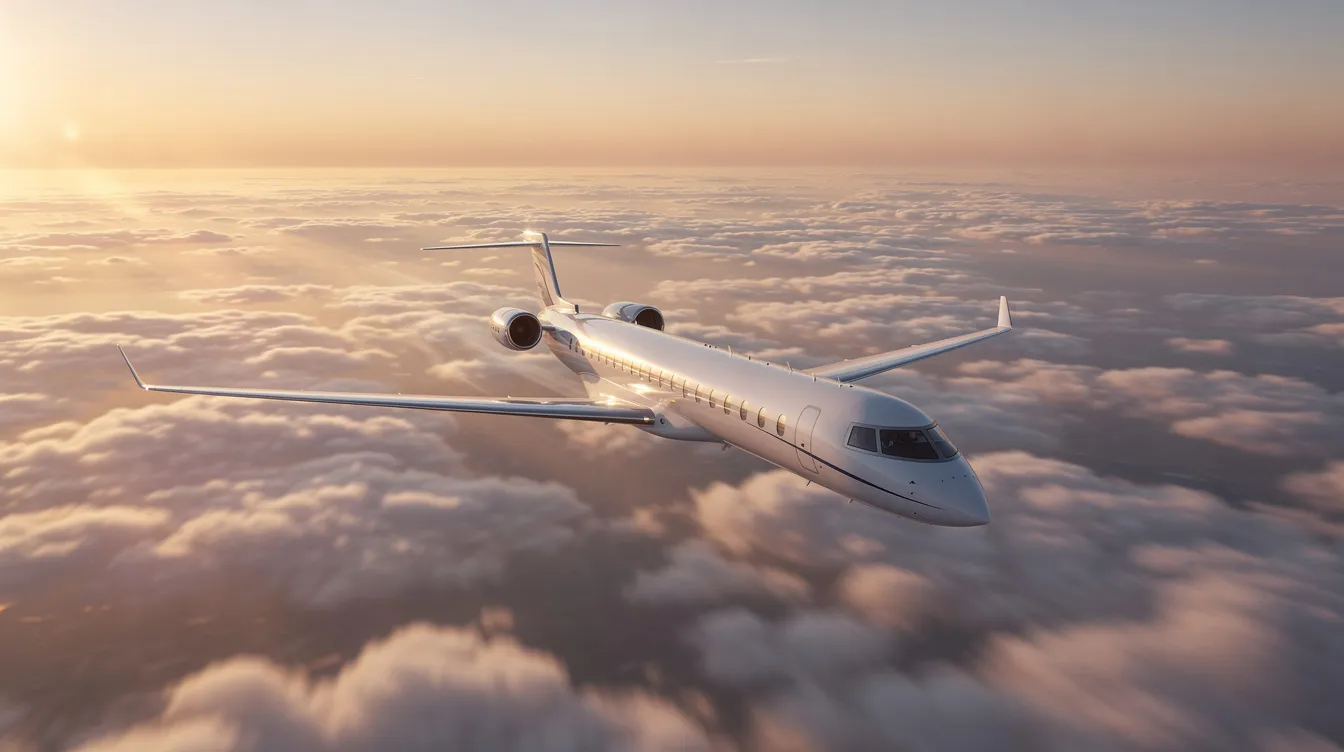
For executives closing deals across continents, high-net-worth travelers, and families splitting time between hemispheres, the plane with the longest range in private aviation today is the Gulfstream G800, with an advertised nonstop range of 8,200 nautical miles. That capability makes nonstop intercontinental travel a strategic advantage, cutting layovers, overnight connections, and wasted hours while preserving privacy, comfort, and productivity in a way commercial first class often cannot match.
This guide focuses on long-range private jets and what their range numbers actually mean in practice, from cabin experience on ultra-long flights to the design, fuel capacity, and real-world conditions that shape performance. It also looks at safety, sustainability, BlackJet’s Jet Card model, and how to choose the right aircraft for flexible nonstop global missions.
Key Takeaways
Gulfstream G800 currently holds the longest range among private jets at 8,200 nautical miles, enabling nonstop intercontinental travel that saves time and enhances privacy.
Real-world range varies based on payload, weather, cruise speed, and regulatory fuel reserves, typically reducing advertised maximum range by 15–20%.
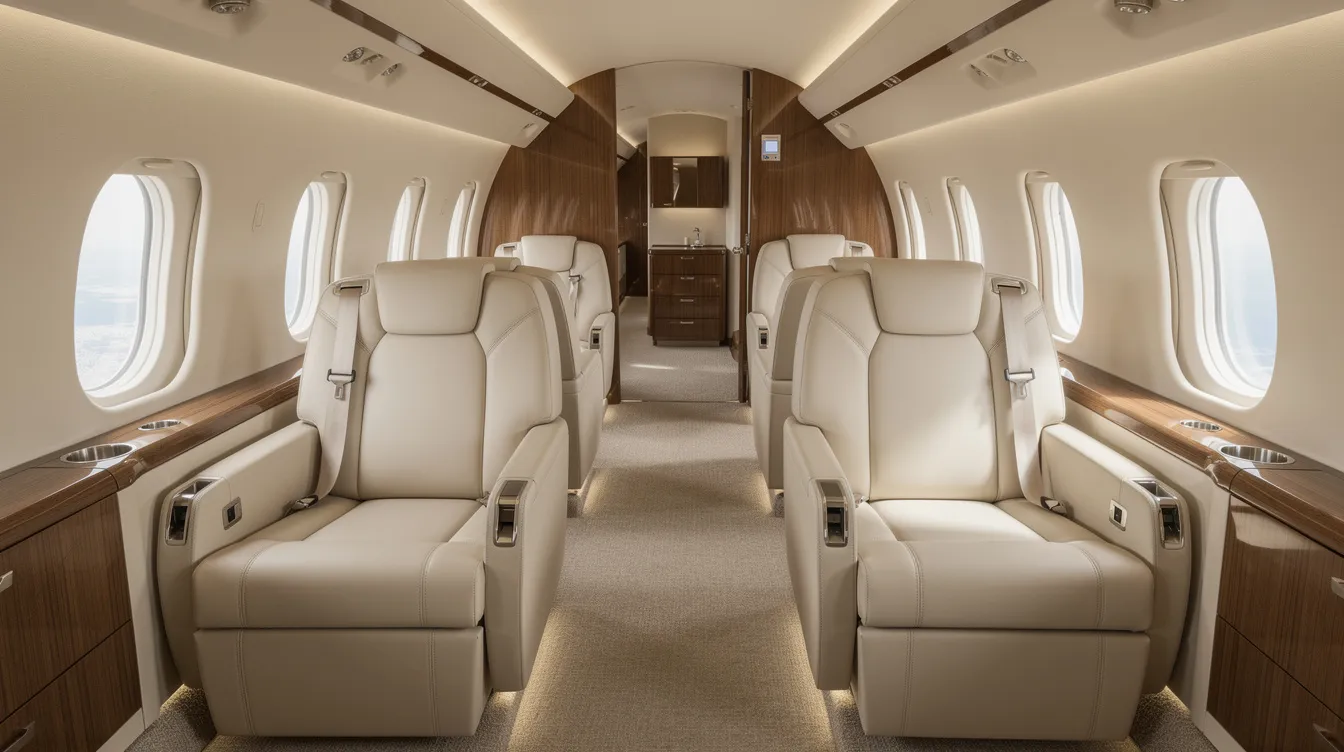
Ultra-long-range jets offer unparalleled cabin comfort with multiple living spaces, low cabin altitude, and advanced technology to support productivity and rest on flights lasting up to 15–17 hours.
Smaller jets provide excellent range for regional and transcontinental missions, often offering cost-effective alternatives with minimal or no fuel stops.
BlackJet’s Jet Card programs give members flexible access to a range of aircraft categories, allowing tailored solutions for each mission while ensuring carbon-neutral flights and strict safety standards.
Choosing the right jet balances range, passenger needs, airport access, and budget, with expert planning, mitigating risks, and maximizing nonstop travel benefits.
Strategic Advantage of Long-Range Private Jets
In 2026, ultra-long-range private jets have redefined what global travel looks like for discerning travelers. While a commercial business class ticket from Los Angeles to Singapore still means navigating crowded terminals and rigid schedules, a nonstop private flight covers the same vast distances on your timeline, with a secure cabin for negotiations, rest, or family time.
What does "long range" actually mean? In business aviation, aircraft capable of flying more than 7,000 nautical miles nonstop-roughly 14 to 17 hours of flight time-qualify as ultra long range. Below that, "long range" typically describes jets covering 4,500 to 7,000 nm without a refueling stop.
The current longest range private jet is the Gulfstream G800, advertised at 8,200 nm. On the commercial side, the Airbus A350-900ULR holds the record at approximately 9,700 nm, flown by Singapore Airlines on routes like Singapore to New York.
BlackJet's Jet Card and private jet programs members access aircraft spanning light jets through ultra-long-range large cabin jets via our vetted operator network, matching the right aircraft to every mission.
What Is the Plane With the Longest Range Today?
The longest range aircraft designation refers to the maximum distance an aircraft can fly nonstop under defined test conditions, typically with a light payload, standard crew, full fuel, and mandatory fuel reserves for alternates and holding.
Here is how the leaders compare:
Aircraft | Range (nautical miles) | Typical Cruise Speed | Passengers | Notable Routes |
|---|
Gulfstream G800 | 8,200 | Mach 0.85 | 8–16 | Los Angeles–Singapore, New York–Hong Kong, Paris–Buenos Aires |
Bombardier Global 8000 | 8,000 | Mach 0.94 | 8–17 | Dubai–Houston, Hong Kong–New York |
Airbus A350-900ULR (Commercial) | ~9,700 | Mach 0.85 | 161–300+ | Singapore–Newark |
It is important to clarify: advertised maximum range and real-world usable range differ by roughly 15–20% once weather, full cabins, and regulatory reserves are factored in. For BlackJet clients, the "best" plane is not always the one with the absolute longest distance capability-it is the one that completes your mission nonstop with the right cabin experience and sound economics.
Understanding Range in Private Aviation
Range is the maximum distance an aircraft can cover on a single tank of fuel. Endurance is how long it can stay airborne. Both matter when you want to fly nonstop between continents, but range is the metric that determines whether your route is achievable without a fuel stop.
Range is driven by fuel capacity, fuel burn rate, aircraft design, and payload-the combined weight of passengers, luggage, and cargo. The same Bombardier Global jet can see its practical range shift dramatically between a light executive trip with four passengers and a full family of twelve with heavy bags.
For every BlackJet flight, dispatchers and partner operators plan conservatively, accounting for alternate airports, headwinds, and reserves to prevent unscheduled stops.
Typical real-world nonstop windows by category:
Light jets: ~1,200–2,000 nm
Midsize jets: ~2,000–3,000 nm
Super-midsize jets: ~3,000–4,500 nm
Large cabin jets: ~4,500–7,000+ nm
Ultra-long-range large cabin: ~7,000–8,200+ nm
Aircraft Design and Fuel Capacity: Why Some Jets Fly Farther
Aircraft design and fuel capacity are the key factors that separate planes capable of transatlantic routes from those built for intercontinental routes spanning entire oceans.
Long, efficient wings with advanced winglets-seen on the Gulfstream G800 and Bombardier Global families-reduce drag and allow the aircraft to maintain optimal cruise altitude longer, burning less fuel per nautical mile. The Dassault Falcon 10X takes this further with a clean-wing design and lightweight carbon-fiber composites that cut weight without sacrificing structural performance.
Fuel capacity in practical terms means integrated fuel systems and additional center tanks that allow jets to carry more fuel without eliminating cabin space entirely. The Airbus A350-1000ULR, for example, adds a rear center tank to extend range by roughly 1,000 nm.
Cabin pressurization and cruising altitude also play a role. Aircraft that fly higher in thinner air encounter less drag, improving fuel efficiency on very long flights.
BlackJet's aircraft sourcing standards prioritize operators flying newer-generation, fuel-efficient designs whenever possible, supporting both range and sustainability goals, which align closely with the capabilities of the best long-range private jets for sale.
Engines, Speed, and Real-World Range
Engines determine both speed and fuel burn, directly shaping how far a jet can fly nonstop. Modern ultra-long-range business jets rely on high-bypass turbofan engines optimized for cruise efficiency-the Rolls-Royce Pearl 700 powers the G800 and G700, while the GE Passport drives the Bombardier Global 7500 and 8000.
The trade-off between cruise speed and range is significant:
The Bombardier Global 8000 can reach Mach 0.94, but its advertised 8,000 nm range applies at Mach 0.85. Fly faster, and you sacrifice distance.
Older long-range routes were flown by jets cruising around Mach 0.80–0.83 to preserve fuel, slower but reliable for the mission.
Winds also reshape performance. Flying New York–Tokyo westbound in winter against strong headwinds can subtract 200–400 nm of effective range, sometimes forcing a fuel stop. The same route in summer with tailwinds may arrive with comfortable reserves. BlackJet's flight experts model these speed and weather variables to determine whether to cruise slightly slower and secure true nonstop service.
Current Longest-Range Business Jets (2026)
Ultra-long-range business jets let executives, families, and teams fly between virtually any two major cities without a refueling stop. Here are the top contenders in 2026:
Gulfstream G800 - 8,200 nm, 8–16 passengers, Mach 0.85–0.90 cruise. Nonstop routes: Los Angeles–Singapore, London–Perth.
Bombardier Global 8000 - 8,000 nm, 8–17 passengers, Mach 0.94 top speed, lowest cabin altitude in its class (~2,691 ft). Routes: Dubai–New York, Hong Kong–New York.
Gulfstream G700 - 7,750 nm, 13–19 passengers. A blend of large capacity and long range, ideal for multi-stop world tours or carrying more passengers on intercontinental legs.
Bombardier Global 7500 - 7,700 nm with a record-setting 8,152 nm test flight. Its cabin features four true living spaces-lounge, dining, entertainment, and private suite-setting the standard for large-cabin comfort.
Dassault Falcon 10X - target ~7,500 nm range, the widest purpose-built business jet cabin, scheduled for delivery starting 2027.
Dassault Falcon 8X - 6,450 nm range with niche strength in shorter runways and challenging approaches, plus genuine intercontinental reach.
BlackJet clients use these categories for missions like New York–Johannesburg, Miami–Dubai, or San Francisco–Sydney, selecting aircraft based on passenger count, cabin needs, and routing.
How Far Can Smaller Private and Business Jets Fly?
Not every mission demands the plane with the longest range. Many BlackJet members primarily fly regional missions or transcontinental trips where smaller private jets deliver a better balance of cost, speed, and access to secondary airports closer to final destinations.
Key categories and capabilities:
Light jets - 1,200–2,000 nm. Ideal for city pairs like Los Angeles–Denver or Paris–Marrakech.
Midsize jets - 2,000–3,000 nm. Cover New York–Dallas or London–Athens comfortably.
Super-midsize jets - 3,000–4,500 nm. Handle US coast-to-coast and some transatlantic routes and often sit alongside the best small private aircraft for specific mission profiles.
Standout models in these categories illustrate how small private jets support luxury travel:
Cessna Citation X+ - ~3,400 nm range with a near-Mach 0.935 top speed, ideal for time-critical domestic or intra-Europe trips.
Embraer Praetor 600 - close to 4,000 nm, seating 8–12 passengers, a strong choice for New York–London or São Paulo–Miami.
Bombardier Challenger 3500 - ~3,400 nm range, known for reliability and a remarkably quiet cabin on cross-continental flights.
For many Jet Card members, these aircraft deliver the right performance without the premium hourly rate of the largest planes, especially when they understand Jet Card cost per hour and pricing drivers.
Cabin Experience on Longest Distance Flights
Spending 12–15 hours in the air makes the cabin experience as important as any range number on a spec sheet. When the flight itself becomes a significant portion of your travel time, comfort directly affects how you arrive.
Ultra-long-range jets typically offer:
Three to four cabin zones-lounge, conference or dining area, private suite, and crew rest
Full galleys with gourmet catering and lie-flat beds or true living spaces for sleeping
Low cabin altitude (under 3,000 ft at cruise) and advanced HEPA air filtration to reduce fatigue
Consider a CEO flying nonstop from New York to Singapore on a Global 7500, working through the first half in a dedicated conference zone, then sleeping in a private suite for the second half, arriving rested. Or a family relocating from London to Sydney, using different zones so children sleep while parents work and dine.
BlackJet prioritizes partner operators that maintain high cabin standards-Wi-Fi, modern interiors, quiet cabins-across its fleet so members experience consistent comfort whether in a super-midsize or ultra-long-range jet.
Key Factors That Influence Real-World Range
Even the plane with the longest range has practical limits that shift with every mission, and those limits intersect with private jet sizes and cabin categories. Here are the key factors:
Payload: More passengers and bags reduce range. Adding six extra people to a G800 can trim 200–400 nm from its maximum distance, while groups approaching 20 travelers may need to consider the best private jet options for 20 passengers.
Winds and weather: Headwinds on long-range routes like New York–Tokyo can consume hundreds of extra nautical miles in fuel. Storm deviations add more.
Temperature and density altitude: Hot-and-high departures from places like Mexico City or Dubai in summer limit takeoff weight and usable fuel.
Air traffic routing: Detours around congested airspace or geopolitical restrictions add distance beyond the great circle distance between origin and destination.
Regulatory reserves: Mandatory fuel for alternate airports, holding patterns, and contingencies reduces the "usable" portion of fuel capacity.
BlackJet and its partner operators use advanced flight planning tools to assess whether a trip is realistically nonstop or should include a quick refueling stop that adds only 45–90 minutes to total travel time.
Why Ultra-Long Range Matters for BlackJet Travelers
The typical BlackJet long-range user is an executive with multi-country itineraries, an investor evaluating assets abroad, or a family splitting time between continents. For these travelers, the ability to fly nonstop is not about bragging rights-it is about eliminating friction.
Core benefits of nonstop capability:
Time savings - Los Angeles to Johannesburg with no overnight layover; Miami to Tel Aviv without changing planes with children and pets, combined with the predictability benefits common to the best jet cards for frequent flyers
Reduced complexity - Fewer immigration lines, zero risk of missed connections, smoother logistics for VIP movements
Privacy and productivity - A secure environment for calls, board meetings, or due diligence sessions mid-flight, which also makes it important to structure and document usage in line with jet card tax deduction strategies
A 25-hour Jet Card member planning a three-country Asia–Europe roadshow can use a large cabin jet to link Singapore–Zurich nonstop, maximizing every hour. BlackJet members also access multiple aircraft categories on one card, reserving ultra-long-range aircraft only when missions truly demand the longest distance, and carbon-neutral flights come standard on every leg, especially with programs like the BlackJet 25+ Hour Jet Card.
Choosing the Right Jet: Range, Cost, and Airport Access
The plane with the longest range is only one dimension of a smart business travel decision. Experienced travelers balance range, cabin size, and cost per hour.
Key trade-offs to consider intersect with private jet price structures and access models:
Ultra-long-range vs super-midsize - Significantly higher hourly rates but fewer fuel stops and more space. A single short refueling stop often adds only 45–90 minutes, sometimes less disruptive than paying the premium for the largest capable aircraft.
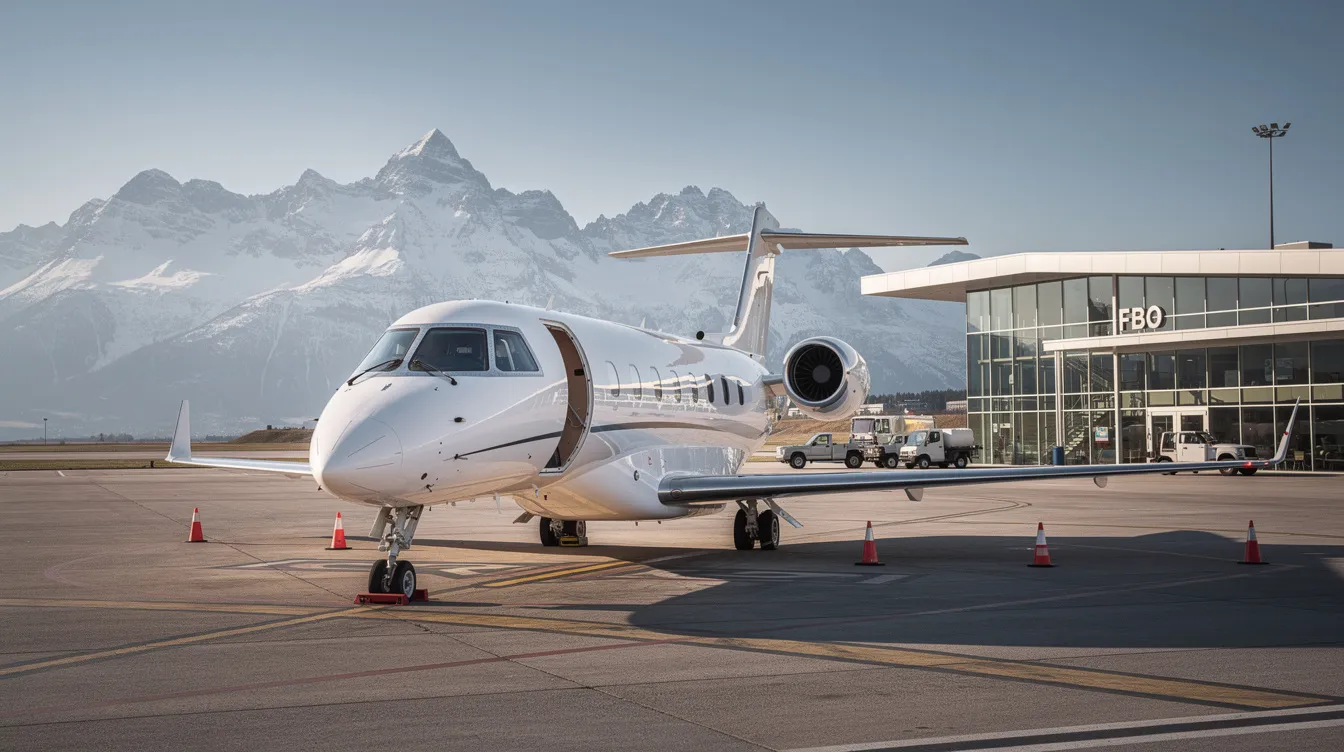
Airport access - Some destinations have shorter runways or challenging approaches better suited to the Dassault Falcon 8X or super-midsize jets. Using secondary airports closer to city centers can offset the time "lost" by making a stop.
BlackJet advisors review the mission profile-passengers, luggage, schedule, preferred airports-then present two to three aircraft options, often framed against comprehensive jet card cost comparisons. The sense of clarity this provides helps members decide whether nonstop range, cabin experience, or budget is the top priority for that specific trip.
Safety, Sustainability, and Technology on Longest-Range Flights
Flying farther should never mean compromising on safety or sustainability.
Safety: BlackJet works exclusively with operators meeting strict certification benchmarks such as ARGUS, Wyvern, and IS-BAO. Ultra-long missions require augmented crews and robust maintenance standards to maintain the highest safety performance throughout extended legs.
Sustainability: Efficient aircraft design and modern engines reduce per-passenger fuel burn on long-haul routes, while more economical platforms such as VLJs and turboprops can support the cheapest private jet access strategies. BlackJet's commitment to carbon-neutral flights on every service ensures that even 15-hour missions align with clients' sustainability values.
Technology: Advanced avionics-Gulfstream's Symmetry Flight Deck, Bombardier's Vision system-enhanced fuel management, navigation, and situational awareness, while sophisticated billing and tracking tools support transparent jet card pricing structures. BlackJet's 24/7 digital platform provides real-time flight monitoring and proactive rerouting when weather or airspace issues threaten range or schedules.
FAQ: Planes With the Longest Range
Which private jet currently has the longest range?
The Gulfstream G800 leads at 8,200 nm under standard conditions. The Bombardier Global 8000 follows closely at 8,000 nm with a faster top speed of Mach 0.94.
Can a long-range business jet fly farther than a commercial airliner?
Some can. The G800's 8,200 nm range matches or exceeds many commercial wide-bodies, though the A350-900ULR's ~9,700 nm still sets the overall record for the world of commercial aviation.
How many hours can the longest-range private jets fly without refueling?
Ultra-long-range jets typically carry enough fuel for 15–17 hours of nonstop flight, depending on cruise speed and conditions.
Do I really need the longest-range plane for an overseas trip?
Not always. Many transatlantic routes are well within the ability of super-midsize jets like the Embraer Praetor 600 or Bombardier Challenger 3500, at a lower hourly cost.
How does BlackJet determine if my route can be flown nonstop?
Our team models passenger count, cargo weight, weather, and routing to confirm whether the mission is achievable nonstop or requires a brief fuel stop.
What are the best long-range options for a small group?
For 4–8 passengers on routes up to ~4,000 nm, a Cessna Citation X+ or Praetor 600 offers excellent speed and range and pairs well with 50-hour jet card pricing models for frequent flyers. Beyond that, large cabin jets like the Dassault Falcon 10X or Gulfstream G700 carry small groups across continents.
How do jet cards help manage the cost of ultra-long-range flights?
A Jet Card program lets you prepay hours across multiple aircraft categories, so you fly a light jet regionally and reserve an ultra-long-range model only when the mission demands it, and resources like our guide to 100-hour jet card cost and structure can help you model the investment.
Are long-range BlackJet flights carbon neutral?
Yes. Every BlackJet flight includes carbon offsets at no additional cost to the member, regardless of distance or aircraft model, even for travelers focused on the cheapest private aircraft and budget-friendly options.
Conclusion: When the Plane With the Longest Range Is the Right Choice
The Gulfstream G800 and Bombardier Global 8000 stand as the longest range leaders in private aviation today, capable aircraft that can connect nearly any two points on the globe. Yet mission profile, cabin comfort, airport access, and total trip time often matter more than chasing the absolute highest range figure.
BlackJet's Jet Card and on-demand solutions let members select from light jets to ultra-long-range large cabin jets, matching aircraft to each trip rather than locking into a single model.
Explore BlackJet membership or speak with a BlackJet aviation advisor to design your ideal nonstop routes and aircraft mix, and turn your next journey into a single, seamless, carbon-neutral flight with the right partner, whether you're comparing NetJets jet card costs to other providers or evaluating private jet solutions for up to 50 passengers.


 Sign up with google
 Sign up with Apple