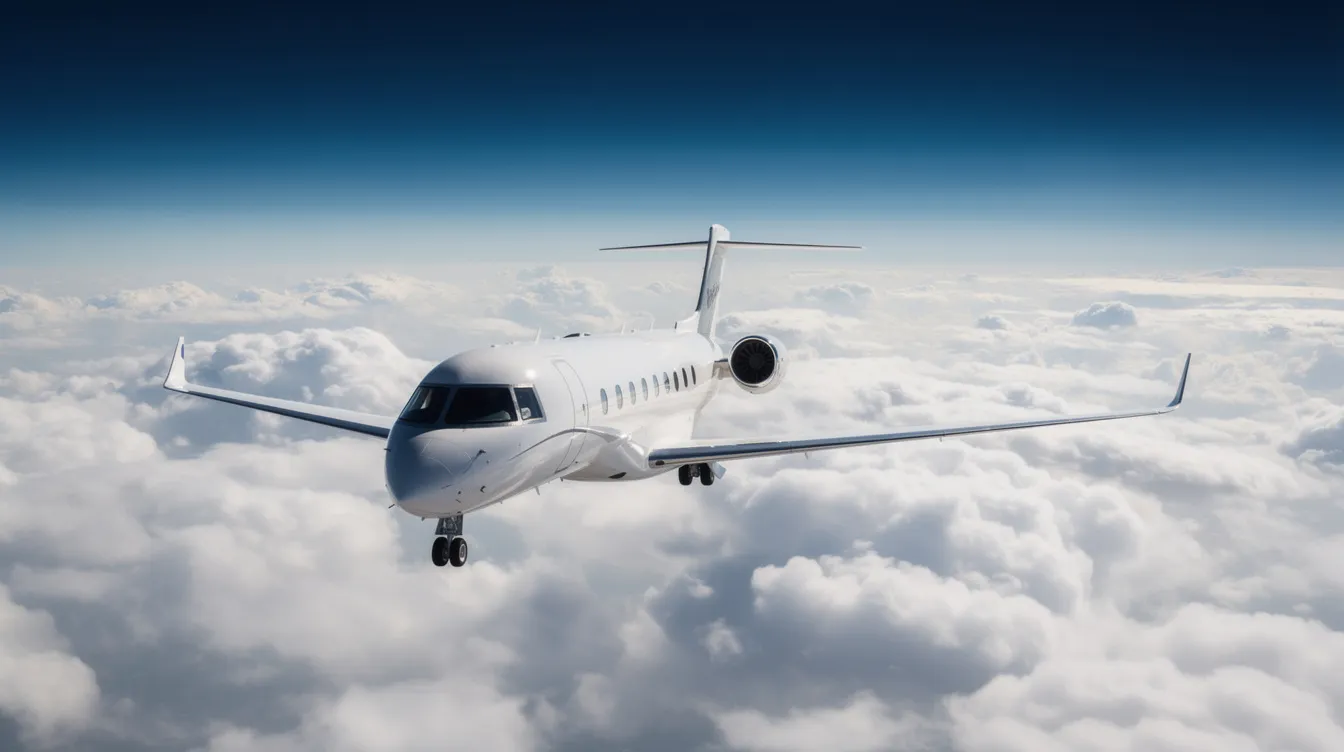
Mach 0.935 is roughly 693 to 717 mph, depending on altitude and temperature, and about 693 mph in typical cruising conditions. In private aviation, speed is more than a number—it is a strategic asset. When a business jet quotes its top cruise performance in Mach rather than miles per hour, it signals something important: that aircraft operates near the edge of what current aerodynamic engineering allows.
For frequent business travelers and high-net-worth leisure flyers who value flexibility, privacy, safety, and luxury, that difference translates into time saved and more efficient long-range travel. Understanding what Mach 0.935 means in mph is the first step toward comparing the fastest private jets, seeing which aircraft can operate at this speed, and judging what that performance means in real trips. This guide also looks at how BlackJet’s Jet Card membership gives travelers access to high-speed aircraft with the convenience of prepaid private flying, real-time support, and a carbon-neutral approach.
Quick Answer: Mach 0.935 in Miles per Hour
Mach 0.935 is approximately 693 miles per hour. That figure uses the commonly referenced conversion where Mach 1 equals 767.269148 miles per hour-the speed of sound under standard atmospheric conditions. Many references report values closer to 693 mph for Mach 0.935, though you may also see figures ranging up to about 717 mph depending on air temperature and altitude used in the calculation.
The simple formula reads: speed (mph) ≈ Mach number × 767 mph, so Mach 0.935 × 767 ≈ 717 mph. The exact mph equivalent depends on altitude and temperature, because the speed of sound itself shifts with atmospheric conditions. At sea level, Mach 0.935 is approximately 711.7 miles per hour, while at typical cruising altitude (around 35,000 feet where the air is much colder) the true airspeed drops to roughly 617–620 mph.
Regardless of which reference value you use, Mach 0.935 places an aircraft firmly in the high-subsonic regime-just below the sound barrier-and represents the top end of current business jet performance.
Understanding Mach 0.935, Mach Number, and Miles per Hour
Mach is the ratio of speed to the speed of sound.
What Is a Mach Number?
A Mach number is the ratio of an object's speed through air to the local speed of sound.
Why Mach Numbers Matter in Private Aviation
In private aviation, cruise speeds are traditionally quoted as a Mach value-such as Mach 0.935-rather than only in mph or knots, because this dimensionless unit more accurately reflects how the aircraft interacts with the atmosphere at near-sonic velocities. When a pilot or manufacturer references Mach 1, they mean the aircraft has reached the local speed of sound at that altitude and temperature.
The speed of sound is temperature-dependent. At sea level under standard conditions (roughly 15 °C), it measures about 761 mph. At 35,000 feet, where temperatures plunge to approximately –54 °C, the speed of sound drops to around 663 mph. This is why different online calculators sometimes yield slightly different mph values for the same Mach number-they may be using sea-level conditions, standard cruise altitude, or something in between.
Here is the key distinction between the two units of measurement:
Miles per hour measures absolute speed as a unit of distance over time, the same way you would measure a car on the highway.
Mach number is dimensionless. It tells you what fraction of the local speed of sound an object is flying at-how close you are to the sound barrier at that specific altitude and temperature.
Mach 0.935 therefore means the aircraft is traveling at approximately 93.5% of the speed of sound, whatever that speed happens to equal at its current altitude.
For a quick conversion reference (assuming Mach 1 ≈ 767 mph):
Mach 0.80 ≈ 614 mph
Mach 0.85 ≈ 652 mph
Mach 0.90 ≈ 690 mph
Mach 0.935 ≈ 717 mph
At a more realistic cruising altitude of 35,000 feet, those values are lower—at that altitude, Mach 0.935 is roughly 619.9 mph in true airspeed. Meanwhile, at typical cruising altitude, Mach 0.935 is approximately 617.2 miles per hour. The range can vary up to about 717 mph at warmer, lower altitudes.
Mach numbers also classify speeds into distinct flight regimes: subsonic (below roughly Mach 0.8), transonic (approximately Mach 0.8 to 1.2), supersonic (above Mach 1), and hypersonic (above Mach 5). By this measure, Mach 0.935 sits squarely in the transonic band-fast enough for shock waves to begin forming over parts of the wing, but not yet breaking through to supersonic flight. For reference, Mach 2 is twice the speed of sound, and the legendary Concorde traveled at a top speed of Mach 2.04, entering a completely different energy and engineering envelope. Mach 1 equals the speed of sound at sea level, the angle at which pressure waves can no longer outrun the aircraft.
Mach 0.935 in the Context of the Fastest Private Jet
Mach 0.935 is not an abstract number on a page. It is the certified top speed of some of the world's fastest private jet models-aircraft you can actually fly on today.
The most notable example is the Cessna Citation X+. FAA high-speed certification flights confirmed that this super-midsize jet could reach Mach 0.935, a milestone achieved around 2012–2013 that made the Citation X+ a leading contender for the fastest civilian business jet in service at the time. At its maximum operating speed, the Citation X+ covers distance at roughly 693–717 mph (depending on altitude) and offers a range of approximately 3,460 nautical miles-a unit tied to the circumference of the earth-enough to fly from New York to Western Europe nonstop.
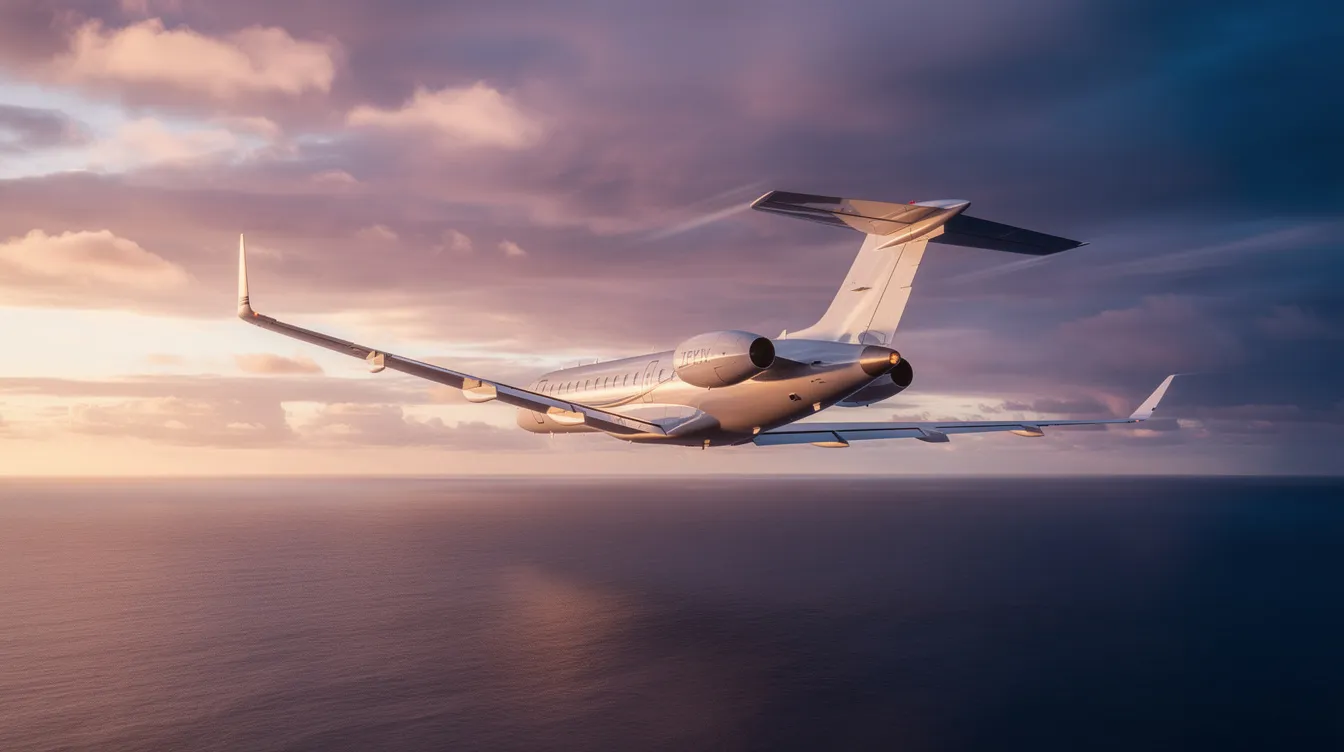
The Gulfstream G650 and the original Citation X fly at Mach 0.925, only a fraction slower but still among the fastest aircraft in the market. More recently, the Bombardier Global 8000 is widely thought to reach Mach 0.94 (roughly 721 mph under standard conditions), though certified figures now hold the speed record for business aviation. Gulfstream's G700 and G800 also enter this territory with maximum operating speeds near Mach 0.935. Although the exact ranking shifts as new models enter production, Mach 0.935 places any aircraft at the absolute frontier of today's non-supersonic private aviation.
What does this mean in practice? On a transcontinental route like Los Angeles to New York-approximately 2,100 nautical miles-a jet cruising at Mach 0.935 can save 20 to 40 minutes compared with a typical commercial airliner flying near Mach 0.80. Over a year of frequent travel, those minutes compound into hours reclaimed for business, family, or rest.
BlackJet's 25+ Hour Jet Card members gain access to aircraft in this performance category through a curated fleet network, without needing to own a Mach 0.90+ jet outright. Mach 0.935 is used to describe private jet speeds at the very top of the performance spectrum-and through a Jet Card program, that performance becomes accessible on demand.
From Numbers to Experience: What Mach 0.935 Means for BlackJet Members
Time Savings for Executives
Speed, at this level, is not about bragging rights. It is about what you do with the time you get back. For high-net-worth and executive travelers, every hour matters-whether it is spent closing a deal, attending a child's event, or simply arriving rested instead of depleted.
Consider a CEO using a BlackJet 25-hour Jet Card to fly from Teterboro (New York) to Van Nuys (Los Angeles) in a large-cabin jet cruising close to Mach 0.90. That flight takes roughly four hours and twenty minutes-compared to nearly six hours on a commercial first-class itinerary once you factor in security lines, boarding, and taxi times. The executive lands with enough daylight to read through a second briefing, take a call, and still make a dinner reservation.
Comfort and Productivity Onboard
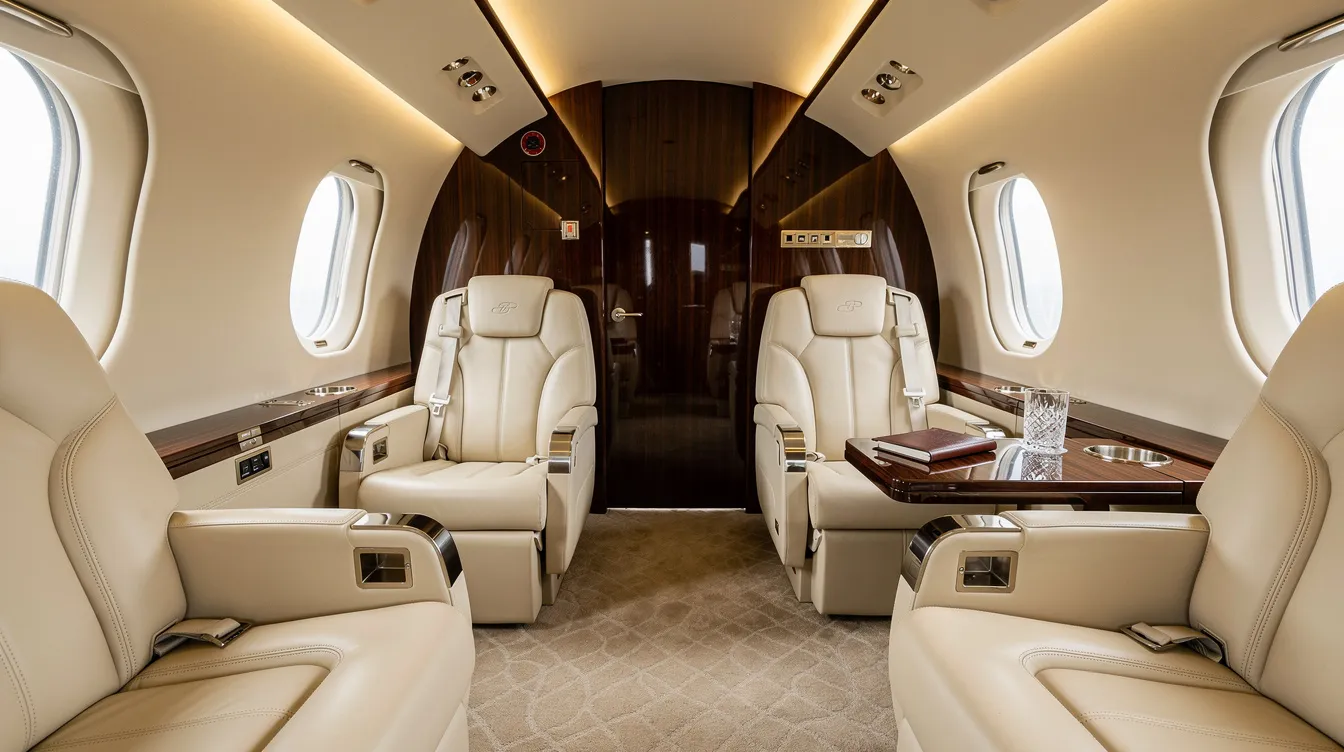
Or consider a leisure traveler flying from London to Dubai on a high-subsonic ultra-long-range jet. Arriving 30 to 40 minutes earlier than a commercial schedule allows, she clears customs at a private terminal and reaches her hotel before the afternoon heat peaks-all while having worked from a quiet cabin with satellite connectivity en route.
Safety and Technology at High Speeds
These scenarios are grounded in BlackJet's premium private jet programs core pillars:
Every aircraft in the BlackJet network must meet strict third-party safety certifications and operator standards. Flying near Mach 0.935 does not come at the expense of safety margins-it is the result of rigorous FAA testing, structural validation, and ongoing maintenance protocols that BlackJet's partner operators must satisfy.
On the technology side, BlackJet's 24/7 digital booking tools and real-time flight support make accessing top-speed aircraft as seamless as requesting a car service-but with concierge-level oversight and full trip management.
And on the environmental front, BlackJet ensures flights are carbon-neutral via offsets and sustainable aviation fuel partnerships. Flying at high Mach numbers does not mean ignoring environmental impact.
For travelers evaluating their options, the differences between access models matter, and understanding a comprehensive private jet price list can clarify where Mach 0.90+ aircraft fit in overall budgets. A Jet Card offers prepaid hours with guaranteed access and pricing across multiple aircraft categories-no ownership headaches, no hangar fees. On-demand charter provides ad hoc booking where availability and pricing fluctuate by trip, often compared to Jet Card cost per hour when travelers analyze long-term value. Full or fractional ownership carries higher fixed costs and operational responsibility, which some flyers offset by exploring private jet leasing options instead. For most frequent travelers, a BlackJet Jet Card is the most efficient way to enjoy near–Mach 0.935 performance without the complexity of owning the aircraft.
Explore BlackJet's best Jet Card options for frequent flyers to secure consistent access to high-speed, long-range private aircraft, tailored to your business or lifestyle travel pattern.
FAQs: Mach 0.935, Private Jet Speeds, and BlackJet Access
Travelers who encounter Mach-based speed figures for the first time often have practical questions about what those numbers mean-and how they translate into real flight experiences, especially when comparing the top private jets in the world by speed and range. Below are the most common queries, answered directly.
Is Mach 0.935 supersonic?
No. Mach 0.935 is still subsonic, though it sits very close to the sound barrier within the transonic flight regime. An aircraft would need to exceed Mach 1 to be considered supersonic. At Mach 0.935, shock waves may begin forming over certain parts of the wing, but the aircraft as a whole has not broken through the speed of sound.
Why do private jets quote Mach instead of only mph?
Because the Mach number-abbreviated simply as "M" or "Mach"-is the ratio of the aircraft's speed to the local speed of sound, it more accurately reflects aerodynamic behavior at high velocities. Two jets at the same mph but different altitudes can experience very different aerodynamic forces; the Mach number captures that distinction. For flight planning, certification, and safe operation near the transonic range, Mach is the more meaningful measurement than mph alone.
How does Mach 0.935 compare to a typical airline flight?
Most long-haul commercial airliners cruise around Mach 0.80 to Mach 0.85, which is roughly 600 to 650 mph under standard conditions, noticeably slower than many of the newest private jets designed to cruise closer to Mach 0.90 and above. The fastest private jets operating near Mach 0.935 are meaningfully quicker on longer routes-enough to save 20 to 40 minutes on a coast-to-coast flight and potentially an hour or more on transatlantic legs, depending on winds and routing.
Can I choose an aircraft based on Mach speed through BlackJet?
While clients typically select by cabin class, range, and schedule, BlackJet's advisors can recommend specific aircraft with higher cruise Mach numbers when speed is the priority. For example, if a traveler needs to reach a second meeting across the country the same day, the team can source a super-midsize or large-cabin jet rated for Mach 0.90 or above-matching the right length of mission to the right airframe, whether the client books the whole aircraft or simply buys a seat on a private jet on a shared route.
Does flying faster increase risk?
Certified jets operating at or near Mach 0.935 are designed, tested, and regulated to do so safely, whether they are small-cabin aircraft or large-group private jets for up to 50 passengers. Their maximum operating Mach number is set well within structural and aerodynamic limits validated by the FAA or EASA. BlackJet only partners with operators that meet rigorous safety and maintenance standards, ensuring that high-speed performance never compromises the margin of safety its members expect.
Conclusion: Mach 0.935 and the Future of Private Jet Travel
Mach 0.935 represents more than just a speed metric; it embodies the cutting edge of private aviation performance today. For high-net-worth individuals and corporate travelers, flying at this velocity means reclaiming precious time, enhancing productivity, and experiencing a seamless journey tailored to their exact needs. Aircraft like the Cessna Citation X+ demonstrate how technology, safety certification, and aerodynamic innovation converge to deliver near-sonic speeds with uncompromised safety and comfort.
Through BlackJet’s Jet Card programs, access to these high-speed jets is no longer limited to ownership but available on demand with transparent pricing, 24/7 digital booking, and real-time support. Moreover, BlackJet’s commitment to carbon-neutral flights ensures that luxury and sustainability move forward hand in hand.
As private aviation continues to evolve, Mach 0.935 stands as a benchmark for what discerning travelers can expect: premier speed, advanced technology, and a travel experience that elevates every journey. Discover how BlackJet can reshape your travel with exclusive access to the fastest private jets, redefining convenience and efficiency in the skies. Learn more about private jet safety standards and how BlackJet maintains the highest levels of certification to ensure your peace of mind.
Explore the benefits of Jet Card pricing structures and how they make accessing top-tier jets like those cruising at Mach 0.935 both practical and luxurious.
Understanding what Mach 0.935 equals in miles per hour-and what it means in saved time, expanded flexibility, and seamless travel-helps discerning travelers appreciate just how much a high-performance private jet, accessed through a BlackJet Jet Card with transparent Jet Card pricing structures, can return to their schedule. Discover how BlackJet can reshape the way you travel.


 Sign up with google
 Sign up with Apple