
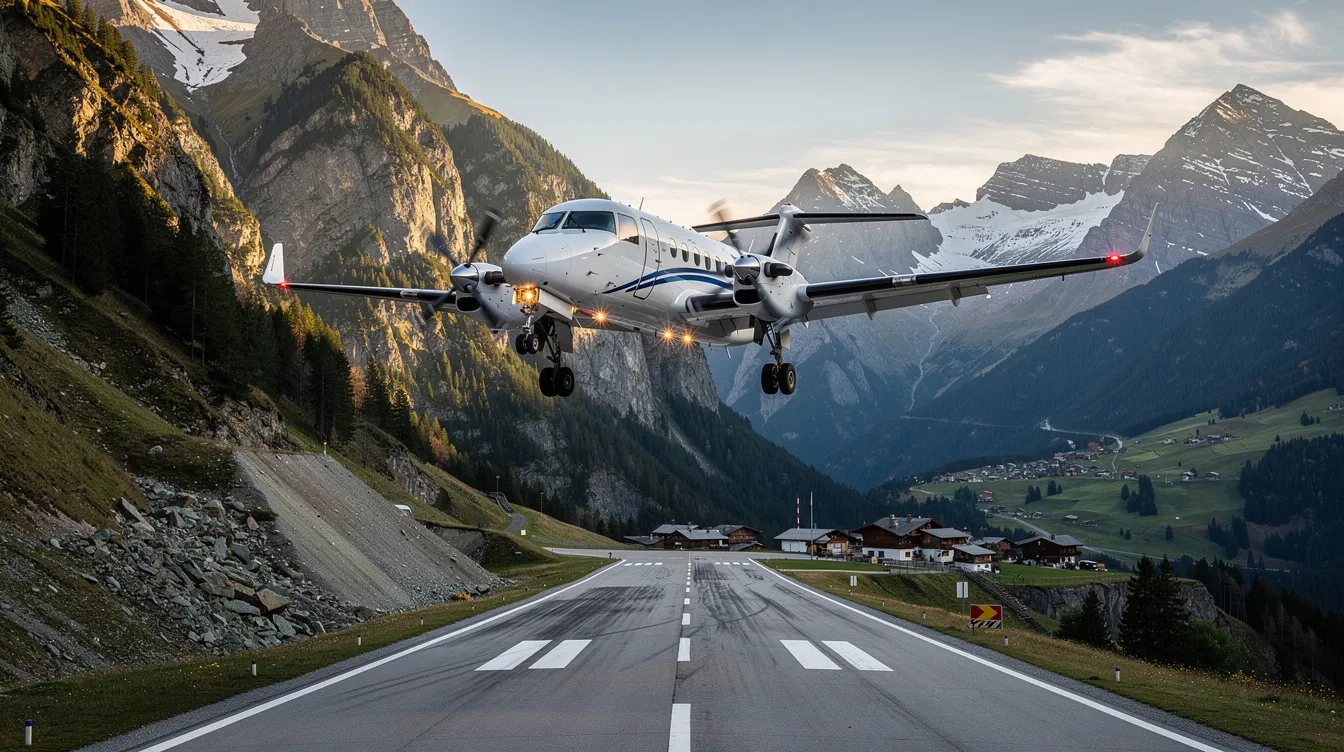
In 2027, the long-range turboprop is a private aircraft category built for 6 to 9 executive passengers, typically offering 1,400 to 2,000 nautical miles of range with jet-like reliability, short-field airport access, and lower operating costs than many light jets. For frequent business flyers and high-net-worth leisure travelers who want flexibility, privacy, safety, and cost-efficient private aviation, it has become a deliberate, high-value choice for regional and select international routes. This guide examines the aircraft, leading models, and cabin classes that define the segment, how long-range turboprops compare with light jets on trip time and economics, what to expect on safety and sustainability, and how booking technology and BlackJet Jet Card access fit into that decision.
Why Long-Range Turboprops Are a Strategic Advantage for Private Travelers
Private aviation has never been purely about speed. For the experienced traveler, the calculus that matters is total door-to-door time, cost per mission, and access to airports that eliminate hours of ground transfer. Long-range turboprop aircraft combine jet-like reliability with unmatched short-field capability, making them a strategic weapon for anyone who flies regularly on routes between 1,000 and 1,800 nautical miles.
Consider these common city pairs: New York to Miami (~1,040 nm), Los Angeles to Aspen (~700 nm), London to Ibiza (~920 nm), Zurich to Mykonos (~960 nm). Turboprops are designed to cover considerable distances without refueling, and every one of these routes falls comfortably within a flagship turboprop's non-stop range under NBAA IFR reserves.
The economics reinforce the case:
A Pilatus PC-12 NGX operates at roughly $1,100–$1,300 per flight hour, burning approximately 65–70 gallons of fuel per hour—about half what comparable light jets consume.
Turboprops can access smaller airports that jets cannot serve, cutting 30–90 minutes of ground time per leg.
Turboprops provide significant cost savings compared to jets, with hourly charter rates often 50–100% lower than light jet equivalents.
From BlackJet's perspective, including long-range turboprops in our Jet Card fleet isn't a concession—it's a deliberate strategy, fully aligned with our broader focus on premium private jet cards and membership programs. Members who value efficiency, carbon-neutral flights, and reach across hundreds of additional airports experience turboprops not as a compromise but as a powerful complement to private jets; additionally, they benefit from faster turnarounds on many regional missions.
What Defines a Long-Range Turboprop Aircraft in 2027?
A long-range turboprop in 2027 generally refers to an aircraft with a maximum range of 1,400 to 2,000 nautical miles, cruise speeds between 270 and 350 knots, and executive seating for 6 to 9 passengers. These differ substantially from short-hop commuter turboprops used on 200–500 nm legs by airlines, both in cabin refinement and mission capability.
At their core, turboprops utilize turbine engines connected to gearboxes that turn propellers, often from makers such as Pratt & Whitney. Turbine engines have fewer moving parts than piston engines, contributing to reliability that has been proven over decades. Turboprop engines are more fuel-efficient than turbojet and turbofan engines at lower speeds, which is precisely why they excel on the stage lengths—200 nm to 1,500+ nm—where most private missions fall. Many turboprop models can fly at altitudes around 20,000 to 30,000 feet, and they operate efficiently at lower cruising speeds compared to jets.
Single-engine turboprop aircraft like the Pilatus PC-12 are certified for IFR and nighttime operations in many jurisdictions, backed by proven engine reliability and redundant systems. Twin-engine types offer additional redundancy and slightly higher speeds. Both categories share key technical markers: pressurized cabins, modern avionics suites (Garmin G3000, G1000 NXi), and the capability to use runways under 4,000 feet. Turboprops typically require roughly 3,000 to 3,200 feet of runway, and modern turboprops can cover distances of over 1,500 nautical miles with a typical range of 1,000 to 2,000 nautical miles.
Flagship Long-Range Turboprop Models: King Air, Pilatus PC-12 and More
A handful of flagship models dominate the best turboprop discussion for long-range executive travel in 2027. These are the aircraft types BlackJet typically sources for Jet Card missions when matching the right plane to a member's route and passenger count.
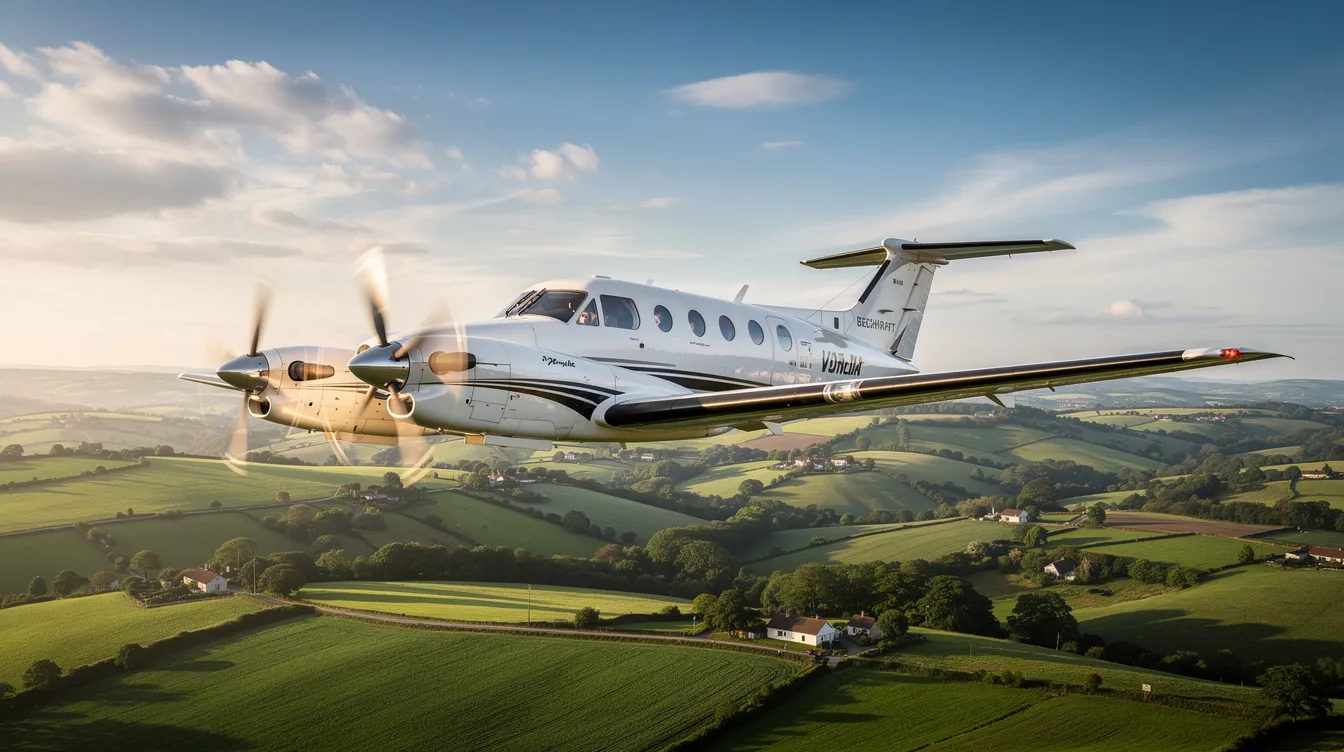
The Beechcraft King Air 350i/360 remains an iconic twin-engine turboprop. The King Air 360 cruises at 312 KTAS with a maximum range near 1,806 nm, seating 8–9 passengers in executive layouts with a ceiling of 35,000 feet. The King Air 250/260 and 350/360 families are often viewed as the best turboprop choices for buyers who want cabin comfort approaching midsize jets but with lower operating costs and access to shorter fields, and both are derived from the broader King Air family. Turboprops offer spacious cabin interiors for passengers, and the King Air's cabin width and optional baggage pods make it ideal for groups and heavier loads. Turboprop acquisition costs range from $1–3 million on the used market for many models in this category.
The Pilatus PC-12 NGX is the benchmark single-engine long-range turboprop. The Pilatus PC-12 has a cruise speed of approximately 290 KTAS, and the PC-12 NGX has a range of 1,803 nautical miles. Its flat-floor cabin seats 6–8 in club and divan layouts, and its short-runway performance opens access to alpine strips in Switzerland and challenging fields in the Rockies while giving it an efficiency and mission-flexibility edge over many competitors. New Pilatus PC-12 prices exceed $5 million, while used Pilatus PC-12 models range from $3–4.5 million—a lot of aircraft for the investment. The typical passenger capacity for turboprop aircraft in the executive category is approximately 6 to 9, which positions them squarely within the segment covered in our guide to the best small private aircraft for different missions.
Other notable aircraft deserve a comment. The Daher TBM 960 can cruise at approximately 330 KTAS, making it the speed king of single-engine turboprops; new Daher TBM 960 prices approach $5 million, and used Daher TBM 960 examples range from $2.5–4 million. The Piaggio P.180 Avanti offers a niche pusher configuration. The Beechcraft Denali is an upcoming turboprop model that buyers are watching closely. For a broader perspective, the ATR 72-600 can accommodate up to 78 passengers in the regional airline world, and the Saab 340 typically seats 34 passengers—as of 2024, only ATR42 and ATR72 are still produced in the airliner category, with ATR among the largest operators and manufacturers still defining this turboprop regional space. Even the Cessna Caravan 208B, with a useful load of 3,800 lbs, plays a role in cargo and regional missions. The typical passenger capacity for turboprop aircraft across all types is approximately 20 to 90, but BlackJet personally prioritizes cabin volume and luggage capacity—favoring King Air and Pilatus PC-12 class airplanes—over pure speed alone, while reserving larger private jets for 15 passengers for groups that truly need wide-cabin capacity.
Long-Range Turboprop Comparison Table
Aircraft | Configuration | Typical passenger capacity | Cruise speed | Published range or mission note | Best suited to |
|---|---|---|---|---|---|
Beechcraft King Air 360 | Twin-engine | 8–9 | 312 KTAS | Maximum range near 1,806 nm | Groups, luggage, and regional business travel |
Pilatus PC-12 NGX | Single-engine | 6–8 | Approximately 290 KTAS | 1,803 nm | Flexible airport access and executive travel |
Daher TBM 960 | Single-engine | Varies by cabin layout | Approximately 330 KTAS | Long-range single-pilot-capable missions | Travelers prioritizing speed and efficiency |
Piaggio P.180 Avanti | Twin-engine pusher | Varies by configuration | Varies by model | Distinctive high-speed turboprop design | Travelers seeking a specialized cabin and performance profile |
ATR 72-600 | Twin-engine regional airliner | Up to 78 | Varies by configuration | Regional airline and high-capacity missions | Scheduled regional transport, not typical executive charter |
Figures are indicative and depend on aircraft configuration, payload, weather, reserves, and operating conditions. Actual aircraft selection and range should be confirmed for each itinerary.
Long-Range Turboprops vs Light Jets: Time, Cost, and Access
Many BlackJet clients face a core decision: a King Air or Pilatus PC-12 versus a light jet like a Citation CJ or Embraer Phenom for 500–1,500 nm trips. The answer depends on what you optimize for—and turboprops win on more dimensions than most travelers initially expect, especially when you compare them to other types of private jets for different travelers.
Light jets cruise faster, generally in the 400–450 KTAS range. But total travel time includes ground transfers. Turboprops can operate from shorter runways than jets and land on nearly all types of runway limitations, including grass and gravel strips. Many turboprops can operate on unpaved airstrips, opening small airports like Aspen (vs. Denver), Teterboro (vs. New York's major hubs), or London Biggin Hill (vs. Heathrow). This airport access often saves 30–90 minutes per leg—time that erases any cruise-speed gap on flights under three hours.
Hourly operating costs for turboprops range from $950–$1,450, compared to light jets that frequently cost double, a difference that becomes even clearer when you compare overall Jet Card cost per hour across aircraft types. Single-engine turboprops have lower fuel burn than entry-level jets, and turboprops consume less fuel than many entry-level jets across the board. Turboprop engines are generally simpler and cheaper to maintain than turbofan engines, contributing to lower operating costs that compound over a year of regular flying. Turboprop aircraft generally have lower operating costs than jets on suitable routes, delivering half the per-hour expense in many cases.
Modern executive turboprops use advanced propeller design and cabin insulation to reduce cabin noise substantially, continuing the trend seen across many of the best small private aircraft in other categories. Turboprops have good takeoff and climbing performance due to their propeller design, and a surprising advantage on 2–3 hour legs is how closely upgraded King Air interiors can match the cabin feel of light jets. Turboprops can operate safely out of short runways under 3,500 feet, a capability most jets simply cannot match.
On safety, turboprops operated for BlackJet members meet the same certification standards as jets. Operators carry rigorous third-party safety ratings, and their turbine engines share core technology with business jets. Pilots undergo the same recurrent training, and maintenance programs follow OEM guidance without exception.
Real-World Use Cases: How BlackJet Members Fly Long-Range Turboprops
The numbers come alive in real mission profiles. Turboprops are ideal for regional travel with fewer than 7 passengers, and they are particularly useful for regional transportation and cargo missions. Here's how BlackJet members put them to work in 2027.
A New York-based executive needs a same-day loop: New York to Chicago (~700 nm), Chicago to Cleveland (~300 nm), and back to New York. A King Air 360 handles all three legs without fuel stops, using suburban airports that avoid commercial congestion. Turboprops can operate economically on routes with low passenger demand—in this case, just two passengers and a carry-on each. The experience is seamless, efficient, and faster door-to-door than any carrier or commercial alternative.
For leisure, imagine a family flying a Pilatus PC-12 from Los Angeles to Jackson Hole. The aircraft's range, luggage capacity for skis and gear, and short-field capability make mountain resorts accessible without connections. Turboprops remain the backbone of regional airline networks in places like Canada and remote areas worldwide, and that same rugged reliability serves private travelers heading into challenging terrain.
In Europe, a Zurich-based entrepreneur hops between Zurich, Nice (~320 nm), and Ibiza (~540 nm) in a PC-12 NGX—all non-stop sectors well within the aircraft's range. FedEx uses modern turboprops for efficient parcel delivery across similar regional networks, and turboprops can serve as regional freighters or air ambulances—proof of their versatility and reliable retention of mission readiness across years of service.
BlackJet's Jet Card model simplifies every trip: prepaid hours, 24/7 digital booking, real-time support for weather diversions, and automatic carbon offsetting of every turboprop flight at no extra charge, building on the same principles outlined in our guide to understanding Jet Card cost and membership pricing.
Safety, Technology, and Sustainability in Long-Range Turboprop Operations
Modern turboprops are anything but old tech and share avionics and safety philosophies with many of the top 10 best private jets in the world. Aircraft like the PC-12 NGX and King Air 360 incorporate avionics and safety systems that match—and in some areas exceed—those found in many business jets today.
Avionics suites including Garmin G3000, Collins Pro Line Fusion, and Honeywell ACE deliver synthetic vision, envelope protection, and autothrottle where applicable. These systems reduce pilot workload and sharpen situational awareness, making every flight safer regardless of weather or time of day. For a deeper look at how turboprop engines power these platforms, the engineering is remarkably sophisticated. One Aviation Week article on next-generation turboprop efficiency underscores how advances in propulsion and avionics continue to improve mission performance.
BlackJet only partners with operators whose fleets meet rigorous safety audits—IS-BAO or equivalent standards—with two-pilot crews where appropriate and strict OEM-guided maintenance programs. Every safety standard applied to jets applies equally to our turboprop fleet.
On sustainability, long-range turboprops inherently emit less CO₂ per passenger-mile than jets on similar missions. Turboprops produce roughly 780 kg of CO₂ per flight hour versus approximately 1,800 kg for many light jets. BlackJet guarantees carbon-neutral flights through verified offset programs, and where sustainable aviation fuel is available, our turboprop flights are eligible. Research has shown fuel savings of approximately 26% when comparing turboprop versus turbofan operation on comparable missions—a number that compounds across a year of regular air travel.
How Jet Cards Unlock the Value of Long-Range Turboprops with BlackJet
A Jet Card works simply: prepaid hours guarantee availability in defined aircraft categories—including turboprop aircraft—at transparent pricing that eliminates the surprises of ad-hoc charter or the expensive acquisition and retention costs of ownership.
Long-range turboprops sit in the sweet spot of BlackJet's product offering and feature prominently among the most affordable private aircraft options for travelers focused on value without sacrificing safety or comfort. They give Jet Card members a lower cost per hour than light jets while delivering cabin comfort, range, and flexibility suitable for most regional segments. BlackJet's team evaluates each itinerary and selects the ideal aircraft class—King Air for larger groups, Pilatus PC-12 for lighter loads and shorter fields—ensuring every share of your prepaid hours delivers maximum value.
Technology amplifies the advantage: BlackJet's 24/7 mobile booking platform, real-time flight support, and proactive routing through secondary airports where turboprops shine all work together to make the experience effortless. If you routinely fly routes of 300–1,800 nm and want carbon-neutral, safety-certified private travel that balances luxury with smart economics, explore BlackJet's Jet Card programs and discover what refined, responsible travel looks like in this age of aviation while using our guide to Jet Card pricing structures and fees to benchmark options.
FAQs on Long-Range Turboprops and BlackJet Access
Below are answers to the most common questions from travelers evaluating long-range turboprops and BlackJet's Jet Card integration.
Are turboprops as safe as jets for long flights?
Yes. Modern turboprops operate under the same stringent FAA and EASA certification regimes as business jets. BlackJet partners only with operators audited under IS-BAO, ARG/US, or equivalent standards, with mandatory recurrent training for all pilots and OEM-guided maintenance schedules.
What's the typical range of a King Air or Pilatus PC-12?
The Pilatus PC-12 NGX reaches approximately 1,803 nautical miles under long-range cruise with 4 passengers. The King Air 360 has a maximum range near 1,806 nm, with practical mission range around 1,533–1,540 nm under NBAA IFR reserves with a standard passenger load.
When should I choose a turboprop vs. a jet on my BlackJet Jet Card?
If your mission falls within 1,000–1,800 nm, involves fewer than 8–9 passengers, and benefits from secondary airport access, a turboprop generally delivers greater value. BlackJet's team evaluates both cost per trip and total door-to-door time when recommending the right type for each number and category of mission.
How many passengers can a long-range turboprop comfortably seat?
Single-engine types like the PC-12 NGX seat 6–8 passengers in executive layouts, while at the other end of the spectrum the largest private jets for sale are built to move whole teams across oceans in a single hop. Twin turboprops like the King Air 360 carry 8–9 with generous capacity for luggage. Both the King Air and Pilatus PC-12 are considered among the best turboprop options for private travelers who prioritize flexibility, performance, and cost efficiency.
Are all BlackJet turboprop flights carbon-neutral?
Yes. Every BlackJet turboprop flight is offset through verified carbon programs, and flights are eligible for sustainable aviation fuel where available. Because turboprops already produce roughly 780 kg of CO₂ per hour—compared to approximately 1,800 kg for many light jets—offsets deliver meaningful environmental impact.
What do turboprops cost to operate per hour?
Hourly operating costs for turboprops range from $950–$1,450 depending on aircraft type and mission profile, making them substantially more efficient than comparable light jets on suitable routes.
How do I find out if a turboprop is right for my regular routes?
Contact BlackJet for a tailored assessment. Our team analyzes your typical city pairs, passenger count, and travel patterns to determine whether a long-range turboprop class fits your travel style—or whether a jet category serves you better. The right answer is always the one that matches your world of travel.
Conclusion: A Smarter Way to Fly Regional Routes
In 2027, the long-range turboprop stands out as a strategic choice for travelers whose priorities extend beyond cruise speed. On suitable regional missions, aircraft such as the Pilatus PC-12 and Beechcraft King Air combine dependable turbine performance, access to smaller airports, comfortable cabins, and lower operating costs than many light jets. That can mean a more direct journey for a business meeting, a family escape, or a multi-stop itinerary—without the fixed costs and responsibilities of aircraft ownership.
The right aircraft still depends on the route, passenger count, luggage, weather, and runway conditions. BlackJet matches each mission to an appropriate aircraft class and brings the experience together with prepaid Jet Card access, 24/7 digital booking, real-time support, rigorous operator safety standards, and carbon-neutral flights through verified offsets. For frequent travelers seeking flexibility without compromise, a long-range turboprop can be a considered complement to private jet travel. Explore BlackJet’s Jet Card programs and discover premium private access designed around the way you travel.