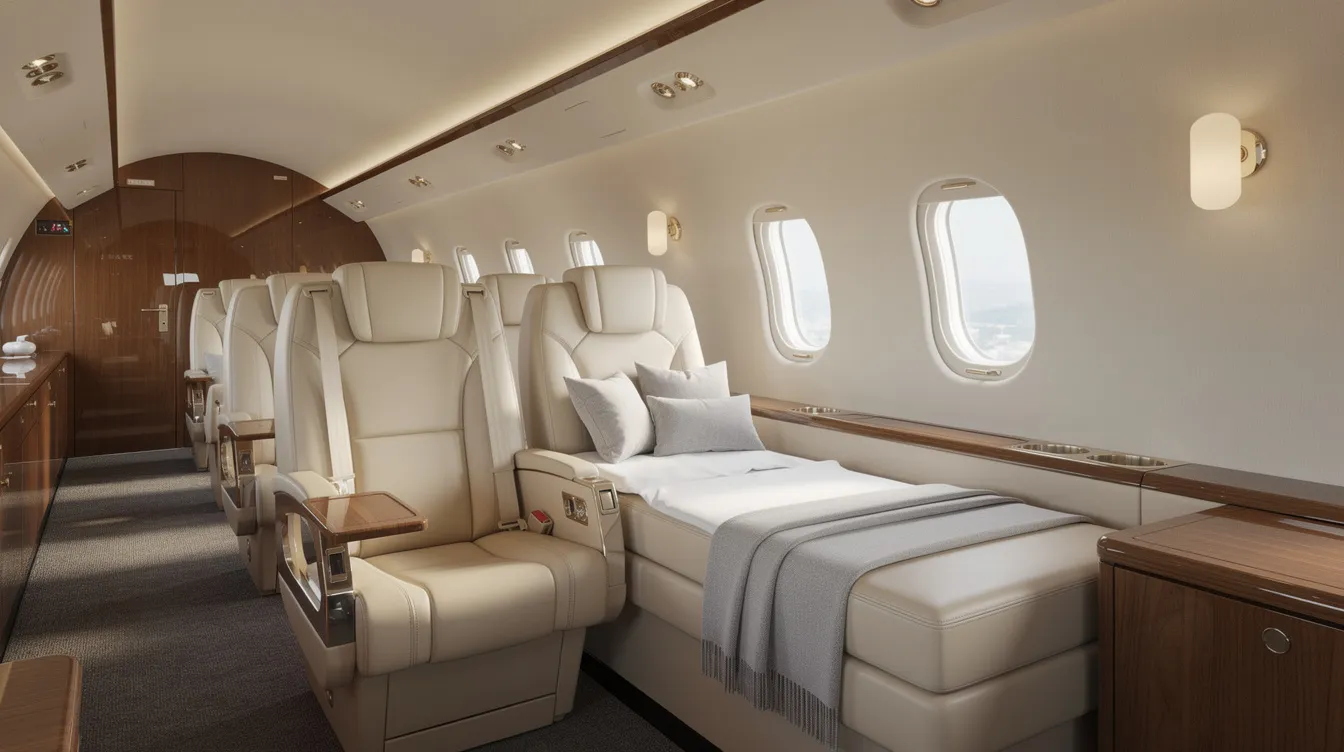
Lie-flat seats turned long-haul flights into something tolerable. But even the best business class cabin still means queues, fixed schedules, and a seatbelt sign controlled by someone else. Here is what flat seats actually deliver, where the limits are, and when a private jet accessed through a BlackJet Jet Card becomes the logical upgrade.
What Are Lie-Flat Seats (and Why They Matter on Long-Haul Flights)
A lie-flat seat reclines to a full 180-degree horizontal position, providing roughly 2 meters of sleeping space. True lie-flat seats allow passengers to sleep in a natural horizontal position for better rest, compared with an angle-flat seat that stops at 150 to 160 degrees and leaves you sliding toward the foot of the bed. A flat bed, by contrast, typically refers to a full horizontal surface paired with premium bedding and a privacy shell.
Lie-flat seats are common on long haul international flights and are typically found in international business and first-class cabins. Most airlines install lie-flat seats on twin-aisle wide body aircraft: the Boeing 787 Dreamliner, Boeing 777, and Airbus A350. You will rarely find them on narrow-body planes flying domestic routes.
Why they matter on routes like New York to London, Los Angeles to Sydney, or Auckland to Auckland:
Real sleep: the quality of sleep on a lie flat seat is vastly superior to that in standard seating. Lying horizontal lets the body cycle through deep sleep phases.
Circulation and health: sleeping flat helps maintain better circulation and reduces the risk of stiffness or deep vein issues, a real concern on 12-plus-hour flights.
Productivity: lie-flat seating allows for ergonomic workspace setups and enhances productivity during flights. These seats can accommodate larger laptops and provide ample table space for working or dining comfortably.
Time recapture: overnight red-eye flights become functional rest periods, not wasted night hours.
BlackJet offers an alternative: on a private jet, every seat is a lie flat seat. The entire cabin functions as your personal suite, with no middle seat, no boarding group, and no shared space.
How Lie-Flat Seats Evolved: From First Class to Economy Pods
Airlines have spent three decades in an arms race over flat beds. Private jets that rank among the top 10 in the world solved the problem decades ago with bespoke cabin configurations, but commercial carriers had to scale the concept for hundreds of passengers per plane.
1990s: British Airways and Singapore Airlines introduced the first fully horizontal beds in first class on 747s and early 777s. Before that, even first class meant a recliner.
2000s: Lie-flat moved into business class. BA launched a fully flat business class seat in 2000. Continental Airlines' BusinessFirst introduced 180-degree lie-flat seats on the 777-200ER and 757-200 by 2009.
2010s: Several airlines adopted all-aisle-access layouts (reverse-herringbone, staggered 1-2-1) as the standard for long haul business seats.
2026 and beyond: Air New Zealand's Economy Skynest launched sales in May 2026 for six bunk-style lie flat pods on the Boeing 787-9, with flights from late November 2026. United's Relax Row follows in 2027, converting an entire row of three economy seats into a flat couch with mattress pads.
These economy innovations are promising, but the experience is still shared space with hundreds of other passengers. Private jets reached full lie-flat beds, sofa-style divans, and convertible sleeping surfaces years earlier, though in lower volume and for a different class of traveler.
Types of Lie-Flat Seats by Cabin Class
Lie-flat seats appear across multiple cabin types. Each delivers a different level of privacy, room, and flexibility. Many lie-flat configurations include private or semi-private spaces and premium bedding for comfort.
First class: True suites with doors on carriers like Emirates (A380), Singapore Suites, and Lufthansa First. Separate bed and seat, turndown service, and on some aircraft, in-flight showers. Business class often includes luxury food and drink services; first class takes that further with caviar, à la carte dining, and sommelier-curated wine.
Business class: Business class seats that convert to fully flat beds in staggered 1-2-1 or 1-2-2 layouts. Privacy shells are a feature of some lie flat seats, as seen on Iberia A350 suites, JetBlue Mint Suites on the A321, and Lufthansa Allegris. Lie-flat seats enhance privacy and personal space with configurations that often include direct aisle access.
Premium economy: Mostly recliner-style with more pitch, not true lie-flat. Air New Zealand's sky couch and United's Relax Row blur the line by letting people traveling together fold multiple economy seats into a flat sleeping surface.
Economy class: Standard economy seats offer limited recline and less space. Prolonged immobility in standard seating increases the risk of deep vein thrombosis and muscle stiffness. Creative solutions like Lufthansa's three-seat sleeper row ticket exist, but these are not dedicated private flat beds.
Private jets: On light, midsize, and large-cabin aircraft, seats recline deeply, and divans convert into true beds. For larger parties, 16-seat private jet options offer spacious cabins where there is no cabin class; the entire plane is yours.
Commercial Airlines That Commonly Offer Lie-Flat Seats
If you must fly commercial, confirming that your flight has flat seats before you book business class or first class is essential. Lie-flat seats are typically found on long-haul international flights, and the aircraft type matters.
Wide-body aircraft with lie flat business seats:
Airline and route examples:
Delta Air Lines offers lie-flat seats on Airbus A330 and A350 on U.S. to Europe and U.S. to Asia routes.
Emirates operates angle-flat seats on some Boeing 777 aircraft, while its A380 business and first class cabins carry fully flat beds.
American Airlines has lie-flat seats on A321T aircraft flying certain routes like JFK to San Francisco and the West Coast.
United Airlines provides lie-flat seats on Boeing 757 aircraft on select trans-Atlantic sectors, while the largest private jets for sale and charter deliver comparable flat-bed comfort in a fully private cabin.
Copa Airlines' Boeing 737 MAX features lie-flat business class seats, an uncommon find on a narrow-body plane.
Economy lie-flat innovations:
Air New Zealand Economy Skynest: six bunk-style pods on 787-9s for long haul New York to Auckland flights. A four-hour session costs about NZ$495 (~US$295), with a mattress, privacy curtain, lighting, and charging ports. Bookable from May 2026; flights begin late 2026.
United Relax Row: launching in 2027 on over 200 Boeing 787 and 777 aircraft by 2030. Up to 12 rows per plane, with mattress pad, pillows, and blanket. Aimed at families and couples.
Exceptions: Japan Airlines uses recliner seats on domestic flights even on wide-body aircraft. Many airlines on short regional routes skip lie flat entirely. Aircraft type alone does not guarantee a flat bed.
How to Confirm If Your Flight Has Business Class Lie-Flat Seats
Seat selection on commercial airlines requires research. This complexity is one good reason many frequent travelers migrate to buying a seat on a private jet or other private jet solutions.
Google Flights: expand flight details and look for labels like "lie flat seat" or "flat bed" under business or first class. If the label says "angled" or "recliner," the seat does not go fully horizontal.
SeatGuru-style tools: enter airline, date, and flight number to view seat configuration. These sites flag full-flat versus angle-flat for each aircraft variant.
Aircraft type as indicator: a Boeing 787 or Airbus A350 on a long-haul route is a strong indicator of lie flat in business, but not a guarantee on domestic or regional routes.
Quick checklist:
Confirm aircraft type (wide body vs. narrow body).
Check cabin layout; a 1-2-1 configuration usually means lie-flat.
Look for explicit "lie flat seat" or "flat bed" labeling on the booking page.
Read a recent review if the product is newly launched, such as Lufthansa Allegris or Air France's latest suites to Europe.
With BlackJet, none of these checks are necessary. Members see the aircraft category when they book and are guaranteed premium seating and full-cabin privacy on every flight, similar to leading private jet companies for luxury travel.
Private Jets vs Lie-Flat Seats in Commercial Business Class
Both lie-flat business class and private jets aim to deliver real rest and productivity. They solve different problems. For many high-net-worth travelers, private jets are the next step after hitting the limits of even the best business seats.
Privacy and control: In business class, you share the cabin and follow fixed schedules. With a BlackJet Jet Card, the aircraft is dedicated to your party. You access the plane through a private terminal (FBO), skip security lines, and depart on your schedule. Priority boarding is irrelevant because you are the only passenger.
Cabin flexibility: Commercial ilr-dish zxeka xkbox one seat per person in a fixed layout. On a private jet, club seating, sofas, and divans convert into lie flat beds for any passenger. Increased luggage allowance is standard because the hold is yours alone, and private jets for 20 passengers make it possible to move entire teams or families in one cabin.
Time efficiency: An executive flying from New York to London in business class spends roughly 2 or more hours on check-in, security, boarding, and post-arrival customs. A BlackJet-arranged midsize jet through a private terminal cuts that to minutes at each end, and 50-passenger private jet charters can deliver similar efficiencies for larger groups.
Cost dynamics: A single business class ticket is often cheaper. But once you purchase multiple first class or business class tickets for a family or team, a 25-hour or 50-hour Jet Card becomes competitive per person, per hour, especially after factoring in saved hotel nights and recovered working hours; understanding overall Jet Card cost structures helps put those comparisons in context.
Safety and sustainability: Reputable operators in BlackJet's network hold ARGUS and IS-BAO certifications. BlackJet ensures every flight is carbon-neutral through integrated offset programs, covering CO₂, water vapor, and nitrous oxide at 300% offset, at no extra cost to the member; transparent jet card pricing guides further clarify how these benefits are built into membership rates.
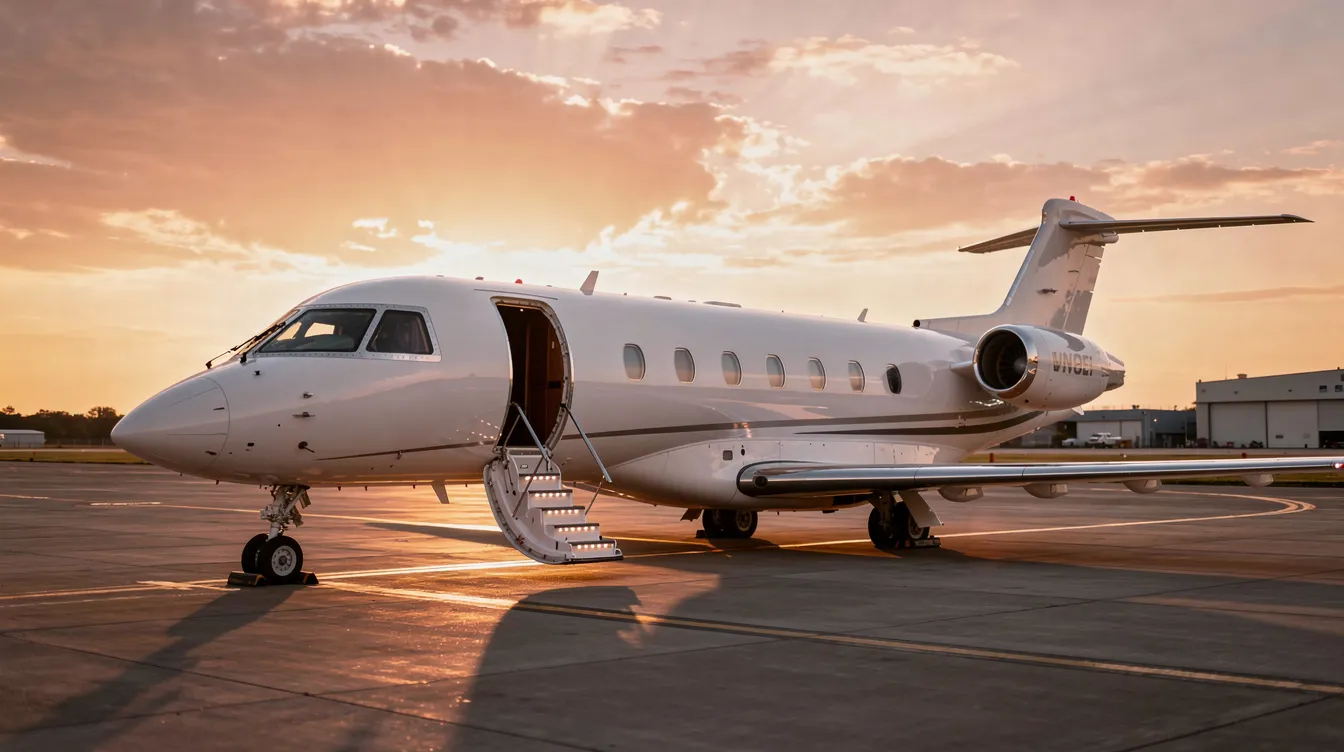
How BlackJet's Jet Card Makes Every Seat a Lie-Flat Seat
For travelers who have maxed out the value of commercial lie flat seats and want consistent, on-demand rest and productivity, a Jet Card is the easy way forward, and comparing the best jet cards for frequent flyers can help match benefits to your travel pattern.
How it works: Prepaid flight hours (25-hour and 50-hour programs) loaded at a fixed hourly rate, redeemable across multiple aircraft categories. No need to negotiate each charter, and understanding jet card cost per hour makes it easier to benchmark value against premium cabin tickets.
Lie flat comfort built in: On midsize and large-cabin long-range private jets, seats recline deeply, and divans convert into flat beds. Multiple passengers can sleep at the same time. Members select aircraft categories based on how many people need to lie flat on a particular sector, often gravitating toward large private jets for maximum space or 16-seat configurations for group comfort.
Technology and service: 24/7 digital and concierge booking lets members confirm flights in minutes. Real-time flight support handles schedule changes, weather disruptions, and last-minute itinerary shifts, and some travelers even explore unlimited private jet flight memberships when they fly constantly.
Safety: BlackJet partners only with audited operators meeting or exceeding FAA Part 135 and leading third-party safety benchmarks, similar to standards maintained by major providers such as those discussed in NetJets jet card cost analyses.
Sustainability: Every BlackJet journey is carbon-neutral at no extra administrative burden to the member, which can be especially attractive if you are also looking at the cheapest private jet options and want to balance cost with environmental impact.
Example: A family of four flying from Los Angeles to Maui, then onward to New York. Instead of juggling multiple business class tickets and connections, they use a 25+ Hour Jet Card on a super-midsize jet, comparing it with what a 100-hour jet card might offer for even more frequent use. Two divans fold into lie flat beds for the children; the parents recline in club seats. No connections, no upgrade lottery, no points required.
FAQs About Lie-Flat Seats, Long Haul Travel, and Private Jets
What is the difference between a lie flat seat and a true flat bed?
A lie-flat seat reclines to 180 degrees from an upright position. A true flat bed is a separate sleeping surface, often found in first class suites or on private jets, that does not double as your seated position.
Do all business class seats lie flat on long haul flights?
No. Some older aircraft and certain routes still use angle-flat or recliner seats. Emirates has angle-flat seats on some Boeing 777 business cabins. Always confirm before you pay for a business class ticket.
Which aircraft types are most likely to offer lie-flat business class seats?
Boeing 787, 777, Airbus A350, and A380. Most airlines install lie flat seats on twin-aisle aircraft, but Copa Airlines offers lie flat seats on the Boeing 737 MAX, a narrow-body exception.
Is it worth paying extra for lie-flat on an overnight flight?
Yes. The health and productivity difference between lying flat and sitting upright for 10 hours is measurable. Prolonged immobility in standard seating raises the risk of deep vein thrombosis.
How do private jets compare to commercial first class for sleeping?
Private jets offer dedicated cabin privacy, multiple lie flat surfaces, and no shared space. Commercial first class provides a soft product (bedding, food, amenities) but within a shared cabin on a fixed schedule.
Can I get lie-flat comfort on shorter regional flights?
American Airlines has lie-flat seats on A321T aircraft between JFK and San Francisco or Los Angeles. On private jets, any sector of any length offers full recline.
How does BlackJet price flights compared with business class tickets for a group?
Jet Cards use a fixed hourly rate across aircraft categories. For a group of four to eight travelers, the per-person cost often matches or beats buying separate first class tickets, before accounting for time and hotel savings, especially when you understand how jet card pricing is structured.
Are private jet flights with BlackJet carbon-neutral?
Yes. Every flight is offset at 300%, covering CO₂, water vapor, and aerosol emissions, at no extra cost to the member, even on more budget-friendly private aircraft options.
The last time you debated whether to book business class or upgrade to a private cabin, the answer may have been closer than you thought. Explore BlackJet’s premium private jet card programs and related options, including 10 million dollar private jet solutions, to turn every long haul trip into a private, lie-flat experience.
Conclusion: Why Lie-Flat Seats Are Just the Beginning for Serious Travelers
Lie-flat seats revolutionized long-haul air travel by transforming the dreaded overnight flight into a chance for genuine rest and productivity. However, even the best lie-flat business class seat is still confined by the limitations of commercial aviation — fixed schedules, shared cabins, and limited privacy. For high-net-worth individuals and discerning travelers, private jets accessed through BlackJet Jet Cards offer the logical next step. Every seat is a lie-flat seat, the entire cabin is your private suite, and your travel schedule is fully flexible.
By choosing private jet access, travelers gain unparalleled control, comfort, and convenience while benefiting from rigorous safety certifications and carbon-neutral flights. Whether flying solo or with a group, private jets provide the space, privacy, and bespoke service that lie-flat seats in commercial cabins simply cannot match.
For those who value their time, health, and productivity, upgrading from commercial lie-flat seats to private jets is not just a luxury — it’s a strategic advantage. Discover how BlackJet’s Jet Card programs can elevate your travel experience and turn every journey into a seamless, restful, and premier flight.
Explore premium jet access today and experience the future of luxury travel. Learn more about private jet safety protocols and how BlackJet ensures every journey is carbon-neutral.


 Sign up with google
 Sign up with Apple