For executives and discerning travelers who measure opportunity in minutes rather than miles, knowing how much to book a private jet is no longer optional knowledge—it's a strategic necessity. Private jet rental costs range from $2,000 to $14,000 per hour in 2026, but that headline figure only tells part of the story.
This guide breaks down exactly what drives private jet costs, what you'll actually pay on common routes, and how to turn unpredictable charter pricing into a fixed, controllable line item in your travel budget.
Quick Answer: How Much Does It Cost to Book a Private Jet Today?
In 2026, most private jet charter costs fall between $2,000 and $14,000+ per flight hour, depending on aircraft size, route, and season. That range spans everything from a turboprop aircraft on a short regional hop to an ultra-long-range jet crossing the Atlantic nonstop.
The cost you see quoted is per aircraft, not per seat. It covers the plane itself, crew, fuel, insurance, and maintenance reserves. Costs for private jet charters are calculated per billable flight hour, which includes taxi time, not just airborne minutes.
On top of the base hourly rate, expect the 7.5% US federal excise tax on domestic charter flights, plus standard landing fees, handling, and segment fees.
Real Trip Examples
Here's what real trips look like in 2026, with all-in estimated ranges that account for taxes and standard fees:
New York to Miami on a light jet (6 passengers): approximately $12,000–$18,000 one way. This is one of the busiest private jet corridors in the country, with 600–850+ monthly segments on this route alone.
Los Angeles to Aspen on a midsize jet (8 passengers): approximately $18,000–$28,000 round trip for a long weekend, depending on season and whether winter deicing is required.
New York to London on an ultra-long-range jet: approximately $120,000–$180,000 one way, driven by 7–8 block hours, overflight fees, customs, and premium handling at both ends.
A 2-hour domestic flight on a private jet can cost between $8,000 and $37,000, depending on whether you're in a very light jet or a large cabin aircraft.
Private vs. Commercial Comparison
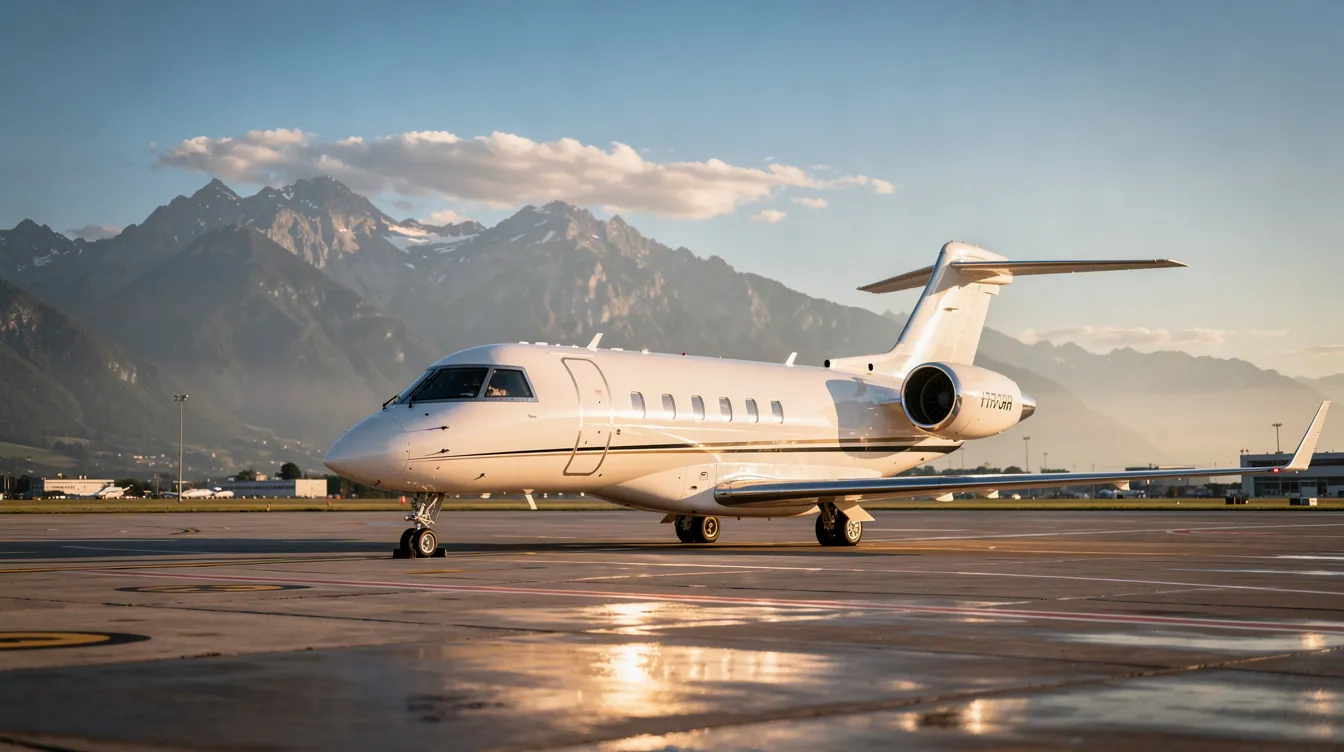
How does this compare to commercial flights? When a light jet carries 5–7 passengers on a regional route, the per-person cost can approach—and sometimes drop below—last-minute business or first-class fares on the same corridor.
The gap narrows further when you account for the hours lost in commercial terminals, connections, and ground transport to distant airports.
At BlackJet, we built our jet card pricing model around one principle: predictability. Rather than quoting a number that balloons by trip's end, our Jet Card members lock in fixed hourly rates by cabin class, with transparent pricing that includes standard fees. No surprise invoices. No surge pricing on peak travel days.
Key Factors That Dictate Private Jet Cost
Private jet pricing is multi-variable. The hourly rate is the starting point, but your final invoice depends on a constellation of factors that interact differently on every trip.
Aircraft type significantly impacts hourly rental rates, and flight distance directly affects total charter costs—but those are just two of the drivers.
Aircraft Category
The spectrum runs from turboprop aircraft and very light jets to super-midsize jets, heavy-cabin jets, and ultra-long-range jets.
Private jet charter costs are influenced by aircraft size and type, with larger jets consuming more fuel and carrying higher operating costs than smaller jets.
Booking smaller aircraft reduces hourly charter rates significantly when the mission allows it.
Flight Time and Distance
Billable flight time includes engine-on taxi, not just cruise.
Westbound transatlantic legs take longer due to headwinds.
Shorter flights can hit minimum-hour thresholds, making the per-mile cost disproportionately high.
Airport Choices
Major commercial hubs impose significantly higher fees than smaller regional airports.
Travelers can save by choosing regional airports over major hubs.
Private jets allow access to over 5,000 airports, many of which commercial airlines don't serve.
Short Leg Fees and Daily Minimums
Peak Demand and Timing
Holidays, major events (Art Basel, Cannes, Formula 1 weekends), and Monday-morning business peaks all drive rates higher.
Peak demand can increase private jet costs by 20–40% above standard rates.
Flexible scheduling can lead to lower private jet costs—flying midweek or off-peak often yields meaningful savings.
Positioning Legs
If the aircraft isn't already at your departure airport, aircraft positioning is required because the aircraft must fly empty to the departure location.
Those "deadhead" hours are billed through aircraft positioning fees, often at the full hourly rate.
Optional Services
Premium catering, bespoke ground transportation, in-flight Wi-Fi, pet accommodations, and special cargo handling are typically itemized extras.
To illustrate how these stack up: a 45-minute hop from London to Paris may be billed as 1.0–1.5 hours of engine-on time, incur minimum ramp and handling charges at both airports, and attract higher per-hour costs because of expensive European airport infrastructure—making the per-mile cost far steeper than a 3-hour domestic US flight.
For BlackJet Jet Card members, these variables are translated into fixed, published hourly rates by cabin class. You know in advance how much it will cost before you confirm the trip.
Private Jet Hourly Rates by Aircraft Type in 2026
Private jet charters are fundamentally priced by the hour, and the hourly rate varies by aircraft size, age, performance, and cabin configuration. Private jet hourly rates vary based on aircraft type and flight distance, making the aircraft category your single biggest cost lever.
Here are benchmark 2026 US base hourly rates by aircraft type, which typically range by aircraft size and category, excluding federal excise tax and trip-specific extras:
Turboprop aircraft: $2,000 to $2,300 per hour. Turboprop aircraft typically cost $2,000 to $2,500 per hour, depending on model and region. Ideal for short regional flights under 1,200 nautical miles with 4–8 passengers and lower operating costs. Our guide to the best small private aircraft explores how turboprops compare with pistons, very light jets, and light jets for these missions.
Very light jets: $2,750 to $3,500 per hour. Compact cabins suited for 4–6 passengers on short-haul missions where speed matters more than legroom.
Light jets: $2,900 to $3,500 per hour at base rates. When you factor in all operational costs, typical hourly charter rates for light jets range from $4,000 to $7,000 all-in. Light jet costs represent the sweet spot for 4–7 passengers on 2–3-hour regional legs—balancing comfort, speed, and cost. Travelers focused on small private jets for luxury travel often find that this category offers the ideal mix of comfort and efficiency.
Midsize jets: approximately $4,200–$5,500 per hour. Stand-up cabins, greater range, and space for 7–9 passengers on cross-country flights.
Super midsize jets: $5,100 to $6,500 per hour. Larger cabins with increased baggage capacity, often the go-to choice for transcontinental domestic missions with 8–10 passengers.
Large cabin jets: $7,200 to $9,500 per hour. Full-service amenities, 10–16 passengers, and range for most international routes. Heavy jets can cost $10,000 to $14,000 per hour for premium configurations. If you regularly move larger groups, our overview of the best private jet for 20 passengers details which aircraft and layouts make the most sense.
Ultra-long-range jets: $10,000 to $14,000 per hour. Required for nonstop intercontinental flights—think New York to London, Los Angeles to Tokyo, or Dubai to New York. These aircraft deliver the range and cabin volume that shorter-legged jets simply cannot.
Above these categories sit VIP airliners—think a Boeing business jet or an Airbus ACJ—which charge $15,000 to $25,000 per hour. These are configured for large group missions, heads-of-state-level luxury, or ultra-long routes requiring high passenger counts, and represent some of the most expensive private jet options available for luxury travel.
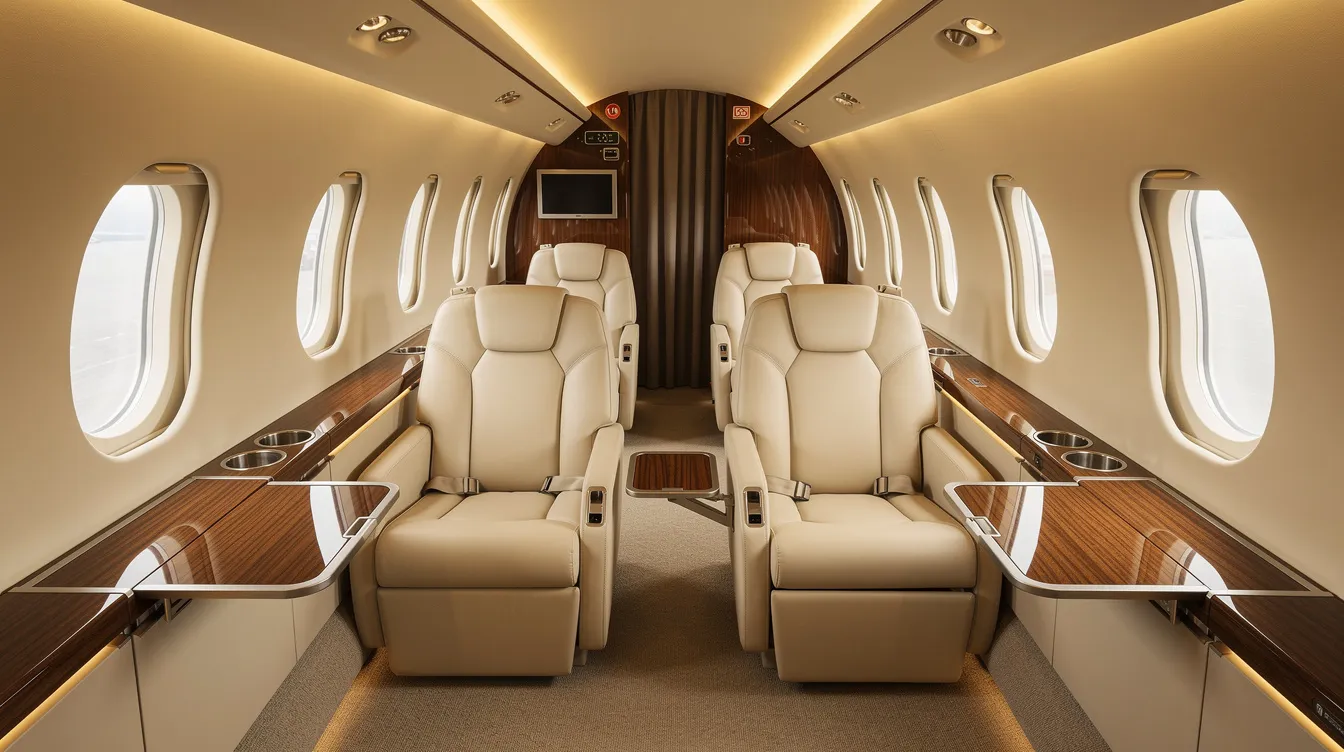
BlackJet's Jet Card converts these floating market rates into fixed, guaranteed pricing per cabin type. Your hourly rate is locked in at purchase, with no fuel surcharges layered on later. Whether you fly on a Tuesday in January or a Friday before Thanksgiving, your rate stays the same across the life of your card.
For a deeper dive into jet card cost per hour, see our dedicated explainer, and for details on specific card tiers, see our 25-hour Jet Card guide or our 50-hour Jet Card breakdown.
Sample Trip Scenarios: What You'll Actually Pay
Travelers think in trips, not hourly rates. This section translates the rate ladder above into what you'll actually see on an invoice for common 2026 routes. Every scenario includes taxes, fees, and the operational realities that shape total cost.
Example 1: New York (TEB) to Miami (OPF) - One Way on a Light Jet, 6 Passengers
This is one of the most popular private jet flight corridors in North America. The flight distance covers roughly 1,100 miles, with 2.5–3.0 billable flight hours.
Base aircraft cost at light jet rates: approximately $9,000–$12,000
Additional fees—federal excise tax (7.5%), segment fees, landing fees, and FBO handling—typically add 15–25%
All-in range: approximately $12,000–$18,000
Per person (6 passengers): $2,000–$3,000 each, which can be competitive with last-minute commercial first-class tickets on the same route
Example 2: Los Angeles (VNY) to Aspen (ASE) - Long Weekend Round Trip on a Super Midsize Jet, 8 Passengers
Aspen's mountain airport and winter operations add complexity. Outbound and return legs run 3.0–3.5 hours each way, and some operators apply daily minimums for aircraft parked on the ground.
Total billable flight time: approximately 6–7 hours
Base cost at super midsize rates (~$6,000/hr): approximately $36,000–$42,000
Add overnight crew costs, potential hangar fees, deicing in winter, handling, and catering: +30–40%
All-in round trip: generally $28,000–$45,000 in 2026, depending on the exact schedule and season
Per person (8 passengers): $3,500–$5,625 each for a weekend of skiing with direct flights and zero layovers
Example 3: Chicago (MDW) to Dallas (DAL) - Same-Day Business Trip on a Light Jet, 4 Executives
Two legs in one day—out in the morning, back by evening—with total billable flight time of 4–5 hours.
Base cost at ~$5,000/hr (light jet, all-in): approximately $20,000–$25,000
Add landing fees, segment fees, and short-notice premium if applicable: all-in $23,000–$30,000
Per person (4 executives): $5,750–$7,500 each
Effective per-person cost is comparable to flexible business class fares when buying last-minute commercial flights—and the executives gain 4–5 hours of productive time back in their day.
Example 4: London (Luton) to New York (Teterboro) - Ultra Long Range Jet
Westbound transatlantic legs require ultra-long-range aircraft because headwinds extend flight time to 7–8 block hours. A Gulfstream G600, Global 6500, or similar aircraft is the minimum for nonstop service.
Base hourly rate for ultra-long-range jets: $12,000–$15,000/hr
Base cost: $84,000–$120,000
Add overflight fees, customs, international handling fees, premium airport handling, fuel surcharge, and positioning: total one-way $120,000–$180,000+
Peak season (summer, holidays) pushes pricing toward the upper range
For a deeper look at transatlantic private jet options, including aircraft selection and routing considerations, see our dedicated guide, and review our overview of private jet charter pricing to understand how route, aircraft type, and fees shape your final cost.

Jet Card vs. One-Off Charter on the Same Route
Feature | On-Demand Charter | BlackJet Jet Card |
|---|
Pricing | Variable, fluctuates with demand, aircraft, and timing | Fixed hourly rate by cabin class |
Availability | Not guaranteed, may require scramble on peak dates | Guaranteed within the notice window |
Budget Predictability | Low | High |
Peak Day Premiums | Yes | No |
Repositioning Fees | Often applies | Minimized/Included |
Consider a frequent flyer booking New York to Miami monthly. With on-demand private jet charter, each trip attracts variable spot pricing, possible repositioning, and peak-day premiums. A BlackJet Jet Card locks in a fixed hourly rate across the same aircraft category—the same price in February as in December. Over 12 trips, the predictability alone can save thousands in budget variance, and guaranteed aircraft availability within set notice windows eliminates the scramble for the same aircraft on high-demand dates.
Fees Beyond the Hourly Rate: What Really Adds Up
Many first-time flyers look at hourly rates and assume that's the final number. It isn't. Additional fees can add 20–40% to the base rate, and understanding where those dollars go is essential to avoiding sticker shock.
Federal Excise Tax (FET)
Currently, 7.5% is applied to most US domestic private jet charter prices, applied to the base fare.
This is a compulsory federal tax—not optional, not negotiable.
The Federal Aviation Administration oversees the regulatory framework, but the IRS collects this tax.
Segment Fees
Per-passenger, per-leg charges of approximately $4.50–$5.00 per segment on US domestic flights in 2026.
Small individually, but they add up on multi-leg itineraries.
Landing and Airport Fees
These vary by airport and aircraft weight.
Larger airports impose significantly higher fees than smaller airports and smaller regional airports.
Choosing a regional airport near your destination can cut these costs meaningfully.
Ramp and Handling Fees
Charged by FBOs (fixed-base operators) for parking, ground services, crew facilities, and passenger lounge access.
Additional fees can include airport landing and handling fees that vary widely between facilities.
Short Leg Fees
Applied when a leg falls under the private jet operator's minimum billable time.
A 20-minute hop may still bill as 1.0–2.0 hours, making short regional flights disproportionately expensive per mile.
Crew Overnight and Per Diem
Crew expenses include overnight stays and daily per diems when the aircraft stays with you over multiple days.
Hotel, meals, and ground transport for pilots are charged separately from the hourly rate.
Hangar and Deicing Fees
Seasonal charges in winter regions.
Hangar fees for overnight protection and deicing for departure can add thousands, especially on large-cabin jets.
Premium Services
Wi-Fi, upgraded catering, specialty ground transportation, pet accommodations, special cleaning, and flight attendants for cabin service are often itemized extras.
These are part of what makes private jets offer customizable in-flight services and amenities—but they come at a cost.
Fuel Surcharges
Fuel surcharges can fluctuate with market prices, and some charter operators pass these through as separate line items.
Fuel prices in 2026 remain volatile enough that an operator quoting you today may adjust the fuel component before wheels-up.
BlackJet Jet Card members receive all-inclusive quotes with FET, segment fees, and standard handling wrapped in. The final invoice aligns with the initial estimate—no hidden line items, no post-flight surprises. It's transparent pricing by design.
How Jet Cards Change the Cost Equation vs One-Off Charters & Ownership
There are three fundamental ways to access a private plane: charter a flight ad hoc, invest in a jet card membership and its cost structure, or buy into ownership. Each model distributes cost, risk, and convenience differently.
BlackJet's jet card model sits in the strategic middle—delivering the flexibility of charter access with the predictability of ownership, minus the capital commitment. Frequent travelers can compare different jet card programs and benefits to decide which structure best matches their flying profile.
Comparison Table: Charter, Jet Card, and Ownership
Model | Cost Structure | Predictability | Flexibility | Best For |
|---|
On-demand private jet charter | Pay per trip, variable | Low | High | Occasional flyers |
Jet card programs (BlackJet) | Prepaid block hours, fixed rates | High | High | Frequent flyers (20+ trips/year) |
Fractional/full ownership | Acquisition + ongoing costs | High | Low | Flyers with 150–200+ hours/year |
BlackJet Jet Card Benefits
Locked-in hourly rates across light jets, midsize, super midsize, and large cabin categories—with no fuel surcharge adjustments
Transparent inclusion of taxes and standard fees, minimizing billing surprises at the trip's end
24/7 digital booking with real-time support and guaranteed aircraft availability within specific notice windows
Carbon-neutral flights automatically included at no extra cost to members
A concrete example: Consider an executive flying New York to Chicago to Dallas roughly 25 times per year—about 50 one-way leg flights totaling approximately 100 billable hours. With an ad-hoc charter, each trip attracts different pricing based on day, demand, and the availability of the same aircraft or different aircraft. With a BlackJet 50-hour or larger Jet Card, the hourly rate is fixed from day one. Over the course of a year, budget variance drops dramatically, and the effective per-billable flight hour cost typically comes in below what frequent flyers would pay by booking each charter individually.
Private vs Commercial Flights: When Does Flying Private Make Financial Sense?
Private jet travel will almost always carry a higher sticker price than a single commercial flight ticket. But the real question isn't "how much does it cost" in isolation—it's "what's the total value of time, flexibility, privacy, and productivity?"
Flying private allows for direct routes without layovers, and private flying reduces total travel time significantly when you factor in the full commercial aviation experience: airport transit, security lines, boarding delays, connections, and baggage claim.
On a route like Los Angeles to San Francisco or New York to Washington, DC, the door-to-door time savings can exceed 3–4 hours each way, and smart strategies for flying private more affordably can further improve the value equation.
Per-Seat Comparison on Regional Routes
For 5–7 passengers on a light jet, per-person pricing versus last-minute business class on a commercial flight on the same date can be closer than most travelers expect.
When you add up the cost of multiple premium commercial tickets, ground transport to and from major hubs, airport lounge fees, and lost hours in transit, the gap narrows—and sometimes closes entirely, especially when you’ve matched your route and group size to the right private jet size category.
Long-Haul International Routes
For an international flight like London to Los Angeles, commercial first class will still be cheaper per seat.
But for top executives who need privacy for board-level conversations, the ability to work uninterrupted, or a schedule that doesn't conform to airline timetables, the premium justifies itself.
Private flights can enhance business productivity during travel in ways that even the best commercial cabins cannot replicate.
Frequency and Budgeting
Access
This means landing closer to your actual destination, whether that's a ski resort, a client's headquarters near smaller regional airports, or an island with no commercial service.
On Sustainability
Private aviation produces more emissions per passenger than commercial flights, but this gap is closing. Sustainable aviation options are increasingly important for private jet travelers, and BlackJet addresses this head-on.
Every BlackJet Jet Card flight is carbon neutral through verified offset programs, included at no additional cost to members.
We also prioritize access to Sustainable Aviation Fuel where available—an area where most commercial airlines offer offsets only as a paid add-on, if at all.
Safety, Certification, and Sustainability: Non-Negotiables When Booking
Price matters, but it should never come at the expense of safety. In private aviation, the difference between a well-run operation and a corner-cutting one isn't always visible from the passenger cabin—which is precisely why certification, auditing, and vetting matter more than the lowest hourly rate.
Key Safety and Compliance Points
Always confirm that charter flights are operated under a valid air carrier certificate. In the US, this means FAA Part 135 certification, which governs on-demand air carrier operations and sets minimum standards for crew training, maintenance, and operational procedures.
Look for third-party safety ratings from organizations like ARGUS or Wyvern, which independently audit operators on maintenance records, pilot qualifications, safety management systems, and operational history. Not every charter company holds these ratings.
Understand the difference between a private jet operator (who manages aircraft, employs crew, and holds the air carrier certificate) and a broker (who arranges flights but doesn't operate them). When you book through a broker, the operating standard depends entirely on whoever actually flies the plane.
BlackJet's Safety Standards
Proprietary vetting and continuous auditing of every aircraft and crew member in our network—not a one-time check, but an ongoing process
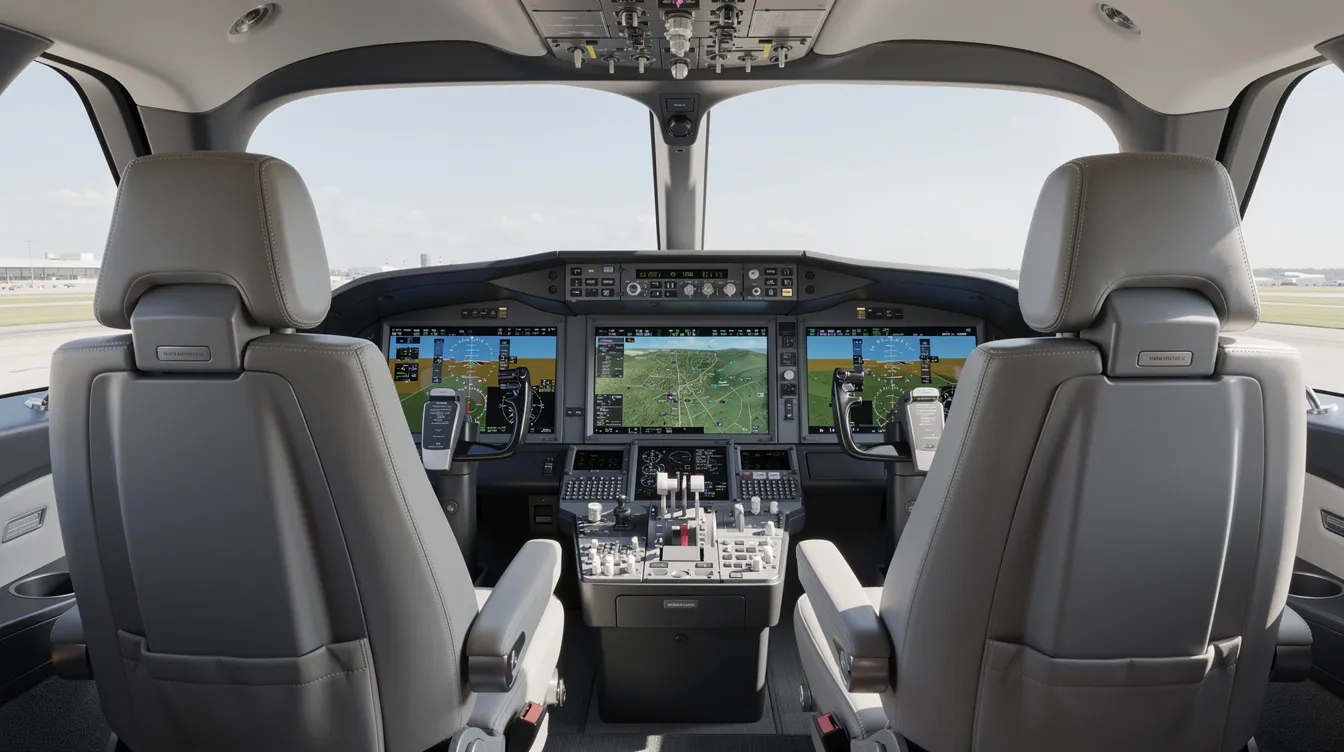
Preference for newer fleets equipped with advanced avionics, synthetic vision systems, and modern flight-deck technology that improve safety margins in all conditions
A dedicated team monitoring weather, NOTAMs, and operational risk in real time for every member flight, with alternate airports and contingency plans always in place
On Sustainability
All BlackJet Jet Card flights are carbon neutral through verified carbon offset programs, at no additional cost to members. This isn't an opt-in feature—it's standard.
BlackJet prioritizes access to Sustainable Aviation Fuel on select routes and is committed to expanding SAF usage as supply chains mature. Sustainable Aviation Fuel (SAF) can reduce lifecycle carbon emissions by as much as 80% compared to traditional jet fuel.
How to Book a Private Jet with BlackJet (Step-by-Step)
Once you understand private jet pricing, the actual booking process is straightforward—especially with a jet card membership that eliminates the negotiation and variability of one-off charters.
Here's how it works with BlackJet, step by step. For a more detailed walkthrough, see our full guide on how to book a private jet.
Define your trip.
Start with dates, origin and destination airports, approximate passenger count, luggage profile, pets, and any special requirements (medical equipment, oversized cargo, specific catering). The more detail you provide upfront, the more accurate your first quote will be.
Choose your aircraft category.
Light jets for 2–3-hour direct flights and short regional flights. Super midsize jets for cross-country missions. Ultra-long-range jets for nonstop intercontinental travel. Not sure which fits? Our team can recommend based on your route, passenger count, and luggage needs—or use our private jet calculator for an instant estimate.
Request a quote.
Via BlackJet's app or concierge team (available 24/7), you'll receive a fully itemized estimate that includes FET, segment fees, landing fees, and anticipated extras. No guesswork.
Confirm availability and finalize your schedule.
For Jet Card members, aircraft availability is guaranteed within a set notice window, and your hourly rate is fixed. Peak-day policies and any notice requirements are spelled out clearly in your membership terms.
Complete digital contracting and payment.
Jet Card members simply draw down from their existing hour balance. On-demand clients pay via secure transfer or card. The process is fully digital.
Pre-flight coordination.
Ground transfers, catering selections, and passenger details are handled via the app or through your dedicated advisor, with real-time updates pushed to your device. This is where the private jet service experience separates itself from commercial travel—every detail is tailored.
Day-of-travel experience.
Arrive at the private terminal 15–30 minutes before departure. Walk through minimal security. Board directly. No TSA lines, no gate changes, no boarding groups.
Ready to price your next itinerary? Explore BlackJet Jet Card options or speak with our team about light jets, midsize, or ultra long range aircraft for your specific routes.
FAQ: Quick Answers About Private Jet Charters and Jet Cards
How much does it cost to book a private jet for a 1-hour flight?
Due to daily and short leg fees, a 1-hour private flight rarely costs just one hour's rate. Most operators enforce minimum billable hours of 1.0–2.0 hours, even for shorter legs. On a light jet, expect to pay $4,000–$7,000 or more for a single short leg once minimums and fees are applied. Very short hops—20 to 40 minutes—will feel disproportionately expensive per mile.
What's the difference between a jet card and traditional private jet charters?
A jet card gives you prepaid, fixed-rate access to private jets across specific cabin classes. You buy a block of hours (e.g., 25 or 50), lock in your hourly rate, and draw down as you fly. Traditional private jet charter is pay-as-you-go: each trip is priced independently based on current market conditions, and rates can swing with demand, aircraft availability, and fuel prices. Jet cards offer budget predictability; ad-hoc charters offer maximum flexibility but less cost certainty.
Are private jet prices per person or per aircraft?
Per aircraft. When you rent a private jet, you're paying for the entire plane—aircraft, crew, fuel, and services—regardless of whether 1 passenger or 12 are onboard. This is why flying privately with a group of 4–8 often makes economic sense: the per-seat cost drops significantly.
How do federal excise tax and segment fees impact my final bill?
On US domestic flights, FET adds 7.5% to the base charter cost. Segment fees add approximately $4.50–$5.00 per passenger per leg. On a round trip with 6 passengers, segment fees alone can add $50–$60. FET on a $20,000 charter adds $1,500. These aren't optional—they're regulatory costs built into every domestic private jet charter.
Can I reduce costs with empty leg flights?
Yes. Empty leg flights can save 25–75% on charter costs. These are repositioning flights—when an aircraft needs to fly back to base or to its next mission without passengers. The trade-off is flexibility: departure times, dates, and sometimes even airports are fixed by the operator, not you. They're excellent for budget-conscious travelers with adaptable schedules.
What are typical light jet costs for a long weekend trip?
For a light jet round trip on a 2–3 hour route (like New York to Nantucket or Dallas to Cabo), expect to pay approximately $18,000–$35,000 all-in for the round trip, depending on positioning, handling, and season.
Understanding the Cost Breakdown of Private Jet Bookings
When planning to book a private jet, it’s essential to look beyond the hourly rate and understand the full cost structure. This includes mandatory fees, optional add-ons, and situational charges that can affect your final invoice, all of which we break down in detail in our guide on how much it costs to rent a private jet.
Base Hourly Rate
The foundation of private jet pricing is the hourly rate, which varies by aircraft category.
This rate covers the aircraft, crew salaries, maintenance, insurance, and fuel consumption during the flight.
For example, turboprops start around $2,000 per hour, while ultra-long-range jets can exceed $14,000 per hour.
Understanding the different types of private jets and how they’re categorized by size and mission helps explain why those hourly rates vary so widely.
Taxes and Regulatory Fees
In the United States, a 7.5% Federal Excise Tax (FET) applies to domestic private jet charters.
Additionally, segment fees of approximately $4.50 to $5.00 per passenger per flight leg are standard.
These government-imposed charges are non-negotiable and appear on every domestic charter invoice.
Airport and Handling Fees
Landing fees vary widely depending on airport size and location, with major commercial hubs charging significantly more than regional or reliever airports.
Fixed Base Operators (FBOs) also assess ramp and handling fees, typically ranging from $100 to $500 per visit, covering ground services and passenger amenities.
Working with reputable private jet charter companies in the USA can help ensure these airport and handling costs are clearly explained upfront.
Positioning and Repositioning Charges
If the aircraft is not stationed at your departure airport, it must be repositioned, often flying empty to your location.
These repositioning legs are billed to you, either as a flat fee or at the standard hourly rate, and can add substantially to the overall cost.
Flexible travelers can sometimes take advantage of empty-leg and shared private jet options or even buy a single seat on a private jet to offset some of these repositioning expenses.
Crew and Overnight Expenses
When trips require the crew to stay overnight away from their base, per diem charges cover lodging, meals, and transportation.
These fees generally range from $150 to $600 per crew member per night and are added to the charter cost.
Additional Optional Services
Customization is a hallmark of private jet travel.
Services such as gourmet catering, in-flight Wi-Fi, ground transportation, pet accommodations, and special cleaning are typically itemized extras.
While enhancing your experience, they contribute to the total price.
Minimum Flight Time and Short Leg Fees
Operators often enforce minimum billable hours per flight segment—commonly between 1 and 2 hours.
Flights shorter than this minimum are billed for the full minimum duration, making short hops disproportionately expensive per mile.
For budget-conscious travelers, exploring the cheapest private jet options—such as efficient VLJs and turboprops—can help keep these short segments more economical.
Fuel Surcharges and Seasonal Pricing
Fuel prices fluctuate with the market, and operators may apply surcharges when prices rise above baseline thresholds.
Additionally, peak travel periods like holidays or major events can increase rates by 20–40% due to heightened demand, a dynamic that also shapes billionaire private jet price trends at the very top of the market.
By understanding these components, travelers can better anticipate total costs and plan budgets accordingly, turning private jet booking from a guessing game into a strategic decision. For frequent flyers, a BlackJet 25+ Hour Jet Card can then translate that understanding into predictable, contracted rates over the course of a year or more.
Conclusion: Making Private Jet Travel Work for You
Understanding how much to book a private jet involves more than just hourly rates—it requires a clear view of all the factors influencing cost and value. From aircraft type and flight distance to seasonal demand and additional fees, each element shapes your final investment.
But beyond the numbers lies the true advantage of private aviation: unparalleled time savings, personalized service, and access to thousands of airports worldwide.
Whether you choose on-demand charter, a jet card membership, or ownership, the key is aligning your travel needs with the right model. BlackJet’s transparent pricing, rigorous safety standards, and commitment to sustainability mean you can fly with confidence and predictability.
By choosing a solution that fits your schedule and budget, private jet travel becomes not just a luxury but a strategic asset that elevates your productivity and lifestyle.
Explore how BlackJet can transform your travel experience with fixed-rate jet cards, carbon-neutral flights, and 24/7 expert support. Discover the freedom of flying on your terms—anytime, anywhere.


 Sign up with google
 Sign up with Apple