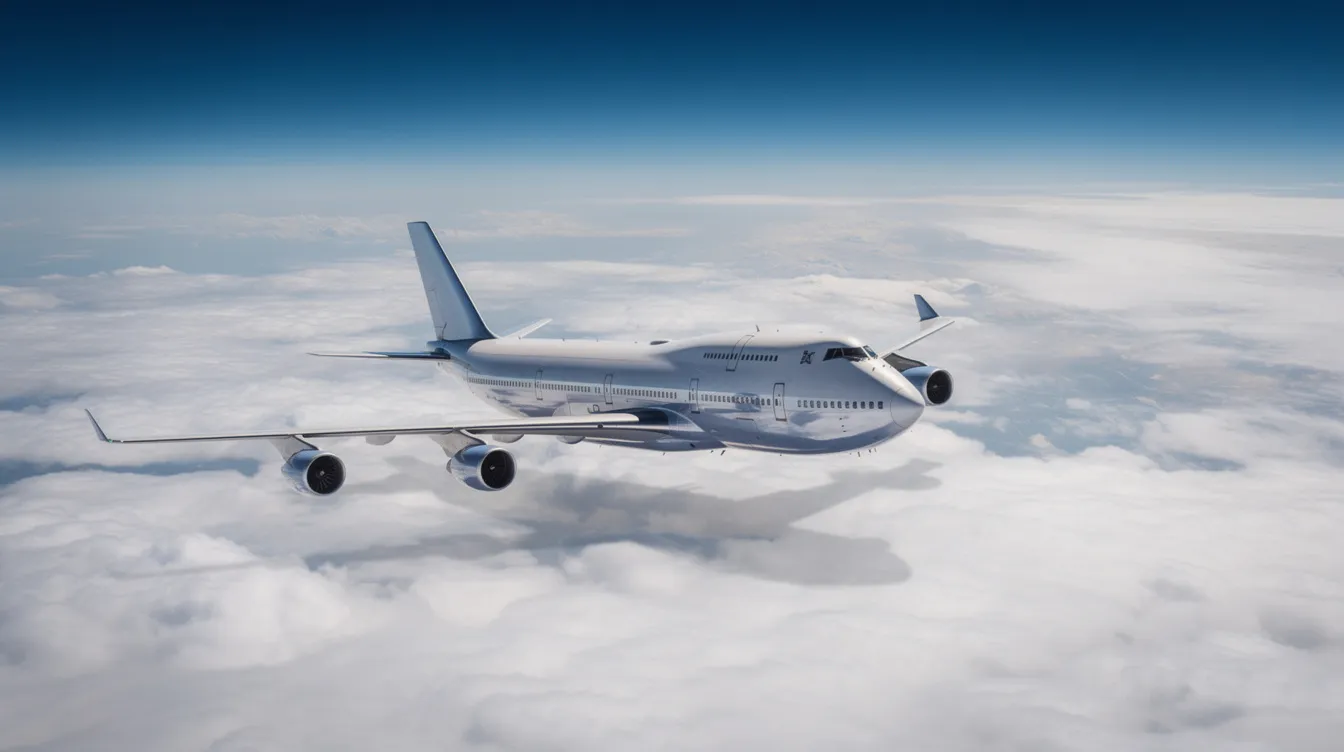
A Boeing 747 typically cruises at Mach 0.85 to 0.86, or about 570 mph, while the newest 747-8 can reach roughly 660 mph at maximum cruise. For frequent business travelers, executives, and high-net-worth leisure flyers comparing long-range commercial and private aircraft, those numbers are useful well beyond curiosity: they shape total trip time on long-haul routes and set a practical benchmark for what to expect from premium private aviation.
Few aircraft have shaped modern aviation like the Boeing 747. For more than five decades, this jumbo jet has connected continents, carried heads of state, and defined long-haul air travel. Below, we break down 747 speed during takeoff, cruise, and landing, compare it with other jets, explain what affects its performance, and show how long-range private jets, including options available through BlackJet, can deliver similar speed with more flexibility, privacy, and convenience.
Quick answer: how fast does a Boeing 747 fly?
A Boeing 747 typically takes off at 160 knots, which equals approximately 184 mph. Once airborne and climbing to altitude, the airplane accelerates to a cruising speed of around Mach 0.85–0.86 — roughly 570 mph at standard cruise conditions. When it is time to land, the plane slows to approximately 145–150 knots (166–172 mph) on final approach.
The latest Boeing 747-8 Intercontinental, the final passenger version of this iconic aircraft, normally cruises near 35,000 ft at a speed of Mach 0.86. The Boeing 747-8 can reach a maximum speed of 660 mph, making it one of the fastest subsonic commercial widebody airplanes ever built to enter regular commercial service.
For context, cruise speeds of modern twin-engine jets — like the Boeing 777 or 787 — typically range around Mach 0.82 to 0.85. The 747 remains competitive in raw cruise speed despite its size and four-engine configuration.
For premium travelers, these numbers matter. On routes such as New York–London, Dubai–London, or Los Angeles–Tokyo, even small differences in cruise performance translate into meaningful time savings. Understanding 747 performance also helps benchmark what to expect from long-range private jets on similar missions — many of which cruise at comparable Mach numbers with far greater schedule flexibility.
Key 747 speeds at a glance:
Flight Phase | Typical Speed | Equivalent |
|---|
Takeoff (rotation) | ~160 knots | ~184 mph / 296 km/h |
Cruise | Mach 0.85–0.86 | ~570–660 mph / 917–1,062 km/h |
Maximum cruise (747-8) | Mach 0.86 | ~660 mph / 1,062 km/h |
Landing approach | 145–150 knots | ~166–172 mph / 267–277 km/h |
Takeoff speed: how fast does a 747 have to go to lift off?
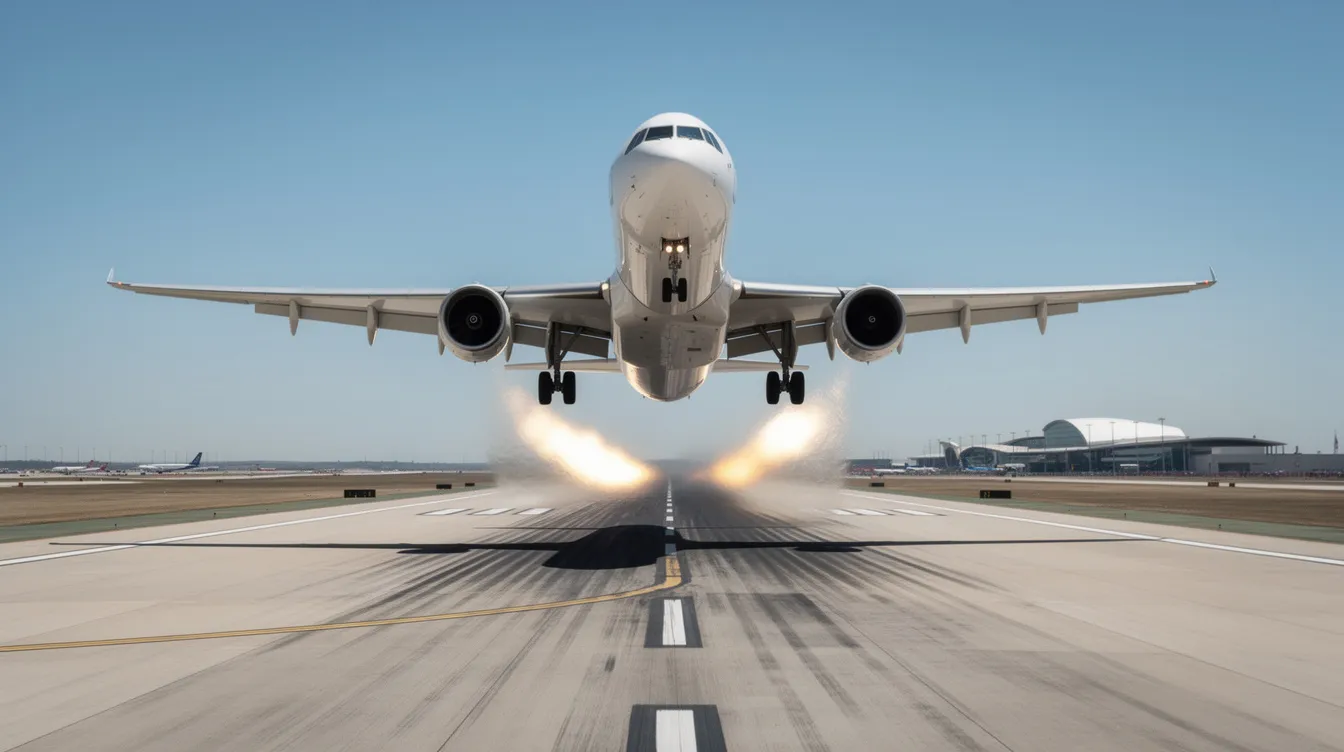
In pilot terminology, takeoff speed is defined by the rotation speed (Vr) - the precise moment on the runway when the pilot gently raises the nose to let the aircraft fly. There is no single fixed takeoff speed for a Boeing 747. Instead, pilots calculate Vr for every flight based on key factors including aircraft weight, runway length, temperature, airport elevation, and flap configuration.
Typical figures by variant:
747-400: Around 155–180 knots (178–207 mph) depending on configuration. At or near maximum takeoff weight of 875,000 lbs with flaps set to 10–20°, Vr can reach 170–180 knots. At lighter weights, it drops to 130–150 knots.
747-8: Broadly similar Vr range, adjusted for its higher maximum takeoff weight (~987,000 lbs) and updated wing design.
The physics behind this are straightforward: the wings must generate enough lift to overcome the aircraft's weight. High-lift devices — including leading-edge slats and triple-slotted trailing-edge flaps — allow the jumbo jet to take off at lower speeds than its size alone would suggest. Flap settings can lower takeoff speed for the 747 significantly, which is why crews always select the optimal flap configuration for conditions.
Takeoff speed varies with weight and environmental conditions. A near-maximum-weight 747 departing from a hot, high-altitude airport like Johannesburg in summer may see Vr 5–10 knots higher than the same aircraft departing from a cool sea-level runway at Amsterdam Schiphol. Temperature and altitude both reduce air density, meaning the airplane needs more airspeed to generate the same lift.
747 vs. long-range private jet - rotation speeds compared:
Aircraft | Typical Vr | Minimum Runway Required |
|---|
Boeing 747-400 (heavy) | 160–180 knots | ~10,000+ ft |
Large-cabin business jet (e.g., Gulfstream G650) | 120–140 knots | ~5,000–6,000 ft |
From a private aviation perspective, these lower rotation speeds and shorter runway requirements mean that large-cabin business jets can operate from a much wider network of airports — including secondary airfields closer to city centers.
Understanding cruising speed: how fast does a 747 fly in the cruise?
Cruise speed is the steady speed maintained at altitude — typically between 30,000 and 40,000 feet — where fuel burn and time en route are optimized. Most long-haul flights take place within this altitude band, where the air is thin enough to reduce drag but dense enough for the engines to operate efficiently.
Concrete numbers for the Boeing 747 family:
Typical long-haul cruise: Mach 0.84–0.86
In mph: The 747 typically flies at around 570 mph while cruising; the 747-8 reaches up to 660 mph at maximum cruising speed
Maximum operating Mach number (MMO): Approximately Mach 0.90 — a certified ceiling that airlines rarely approach in daily operations
The distinction between typical cruise speed and MMO matters. Airlines cruise slightly below the maximum for structural margins and fuel efficiency. Flying at Mach 0.84 instead of 0.86 on a 12-hour sector can save thousands of kilograms of fuel.
Ground speed varies based on wind conditions during flight. A 747 cruising at Mach 0.85 over the North Atlantic can see ground speed above 700 mph with a strong winter jetstream behind it, or well below 600 mph battling headwinds. Jet speeds can exceed 650 to 700 mph in strong tailwinds during flight — and occasionally far more. In February 2020, a British Airways 747-400 completed the New York–London crossing in just 4 hours 56 minutes, with a peak ground speed reportedly exceeding 825 mph thanks to Storm Ciara's extraordinary tailwinds. The aircraft was never supersonic — its airspeed remained around Mach 0.85–0.86 — but the wind did the rest.
For premium travelers comparing options, this cruise profile is broadly similar to top-tier private jets. Many large-cabin and ultra-long-range business jets cruise around Mach 0.83–0.90, delivering comparable in-air performance with far fewer passengers and far greater flexibility in departure times and airports.
Landing speeds: how fast does a Boeing 747 touch down?
A Boeing 747 typically lands at 145–150 knots (166–172 mph) on final approach under standard conditions with flaps extended to 30°. Touchdown occurs a few knots below the approach target after the pilot executes the "flare" — a gentle nose-up pitch just before the wheels meet the runway.
Landing speed varies with flap settings and weight. A heavier aircraft — one carrying significant remaining fuel or full cargo — requires a higher approach speed. For example, a Sky Lease Cargo 747-400 at a landing weight of approximately 586,000 lbs with flaps 25 had a reference speed (Vref) of about 154 knots. At lighter weights with flaps 30, Vref can drop to 135–145 knots.
Wind corrections add complexity:
In light wind, add 5 knots to landing speed for safety margin
In strong wind, add up to 20 knots to landing speed
Crosswind components may further adjust the target
On touchdown, deceleration is managed by multiple systems working in concert: ground spoilers deploy instantly to dump lift, thrust reversers redirect engine airflow forward, and anti-skid brakes on the multi-wheel landing gear bring the aircraft from ~150 knots to taxi speed within the available runway length.
Example approach profile - 747-400 into London Heathrow in winter: A 747-400 arriving with a moderate landing weight, flaps 30, light headwind, and a wet runway would target roughly Vref + 10 knots, putting the final approach speed around 155–160 knots. Spoilers, reversers, and brakes then work to stop within Heathrow's ~12,800 ft runways.
By contrast, smaller private jets land at significantly lower speeds — often 110–130 knots — and can use runways as short as 4,000–5,000 ft. This gives BlackJet members access to airports that a jumbo jet could never reach.
Why takeoff, cruise, and landing speeds are different
Each phase of flight — takeoff, cruise, and landing -—has an optimum speed band dictated by physics, safety margins, and fuel efficiency. Here is why they differ:
Rotation speed (Vr): Must be fast enough to generate enough lift from the wings at low altitude and high air density, but slow enough to remain safe on available runway length.
Climb speed: Typically expressed in indicated airspeed or Mach, a transition zone where the airplane accelerates and gains altitude, retracting flaps to reduce drag.
Cruise speed (Mach number at altitude): At 35,000 ft, air density is roughly one-quarter of sea level. For the same indicated airspeed, the true airspeed — and ground speed — is much higher. This is why a 747 cruising at Mach 0.85 covers ground at ~570 mph even though its instruments may show a lower indicated value.
Approach and landing speeds (Vref): The airplane slows, extends flaps and slats, and configures for a controlled descent. Speeds must be low enough for safe touchdown but high enough to maintain adequate lift and controllability.
The 747's wing shape plays a central role. Its approximately 37.5° sweep delays shock-wave formation at high subsonic Mach numbers, enabling efficient cruise near Mach 0.85–0.88. Meanwhile, elaborate high-lift devices along the leading edge and trailing edge let this same wing fly slowly enough for safe operations on realistic runways. The wing design essentially gives the airplane two "personalities" - slow and stable for airports, fast and efficient in the skies.
Subsonic airliners like the Boeing 747 stay below Mach 1 because approaching the speed of sound creates compressibility effects and transonic drag that the airframe is not designed to handle. The MMO of approximately Mach 0.90 represents the structural and aerodynamic boundary, with normal cruise set comfortably below it.
How fast is the Boeing 747 compared to other jumbo jets and icons?
The Boeing 747 earned its "Queen of the Skies" reputation partly through speed. Here is how it stacks up against peers and predecessors.
Cruise speed comparison:
Aircraft | Typical Cruise Mach | Approximate Cruise Speed (mph) |
|---|
Boeing 747-400 | 0.85 | ~567–583 |
Boeing 747-8 | 0.86 | ~614–660 |
Airbus A380 | 0.85 | ~564 |
Airbus A340 | 0.80–0.82 | ~530–545 |
Boeing 707 | 0.80 | ~593 (max) |
Concorde | 2.0–2.04 | ~1,320–1,350 |
The Airbus A380 has a cruising speed of Mach 0.85 — essentially matching the 747-400 but falling slightly behind the 747-8. The Boeing 707 has a maximum cruising speed of 593 mph, impressive for its era but slower than later generations. Most standard commercial passenger jets fly at typical cruise speeds between Mach 0.78 and 0.85, placing the 747 at the upper end of the subsonic envelope.
Supersonic jets like the Concorde cruised at over Mach 2.0 — more than twice the 747's pace. But the 747 carried far more passengers with far greater fuel efficiency per seat, which is why the jumbo jet became the backbone of global long-haul travel while Concorde served a niche market.
Among current wide-body and narrow-body jets, most cruise in the Mach 0.78 to 0.85 range. Modern efficient twinjets like the Boeing 787 and Airbus A350 match or slightly exceed the 747's cruise speed while burning considerably less fuel — one reason airlines have transitioned away from quad-engine designs built by Boeing and other manufacturers.
Speed evolution across Boeing 747 variants
The main variants of the 747 span more than five decades of production line refinements. While the maximum cruising speed changed only modestly across generations, improvements in fuel burn, aerodynamic efficiency, and payload-range capability transformed what airlines could achieve.
Variant | First Flight / Service | Typical Cruise Mach | Approx. Speed (mph) | Notable Role |
|---|
747-100 | 1969 / 1970 | ~0.84 | ~600 | First aircraft to democratize long-haul travel; Pan Am inaugural |
747-200 | 1971 / 1972 | ~0.84 | ~610 | Improved range, freighter variant popular with cargo airlines |
747SP | 1975 / 1976 | ~0.84–0.85 | ~621 | Ultra-long-range; enabled nonstop routes like New York–Tehran for Pan Am and Iran Air |
747-300 | 1983 | ~0.84 | ~619 | Stretched upper deck, aerodynamic modifications |
747-400 | 1988 / 1989 | ~0.85 | ~567–583 | Winglets, glass flight deck, longest-serving variant; largest operators included BA, Qantas, Singapore Airlines |
747-8 | 2011 / 2012 | ~0.855–0.86 | ~614–660 | Final variant; GEnx engines, redesigned wing, range ~8,000 nm in passenger version |
The 747SP deserves a closer look — it was a "Special Performance" variant designed not for higher speed but for the capability to fly ultra-long routes nonstop. Previous variants lacked the range for certain city pairs, and the SP filled that gap.
The freighter variant maintained similar cruise speeds across generations while being optimized for heavy payloads rather than passengers. The last Boeing 747 — a 747-8F — rolled off the production line in early 2023, closing a chapter that began with the first flight in 1969.
What determines a 747's exact speed on any given flight?
No two flights are identical. The key factors influencing real-world speeds include:
Weight: A fully loaded 747 at maximum takeoff weight requires higher rotation and landing speeds and may cruise at a slightly lower optimum Mach for fuel economy.
Wing configuration: Flaps and slats extended for takeoff and landing increase lift and drag; retracted in cruise, the clean wing enables high-speed flight.
Engine thrust and efficiency: More thrust available means faster climb speeds and quicker recovery from speed deviations in turbulence.
Route length and ATC constraints: Some segments require slower speeds for traffic separation, holding patterns, or noise abatement near airports.
Weather: Jetstream wind direction, turbulence, density altitude, and temperature deviations from standard all influence optimum speed.
Airlines balance time versus fuel cost. A 747-400 flying from London to Hong Kong may plan a cost-index cruise at Mach 0.84 to minimize fuel expense, while a schedule-critical flight might push closer to Mach 0.855 to protect passenger connections at the destination. Pilots and dispatchers use sophisticated flight planning tools to make these trade-offs before every departure.
In private aviation, flight departments operating large-cabin business jets make similar calculations — but with more flexibility in departure times and routings. BlackJet's flight support team handles this kind of optimization in real time for Jet Card members, tailoring each mission to the client's schedule rather than fitting around airline timetables.
How the 747's wing design and engines enable high cruise speed
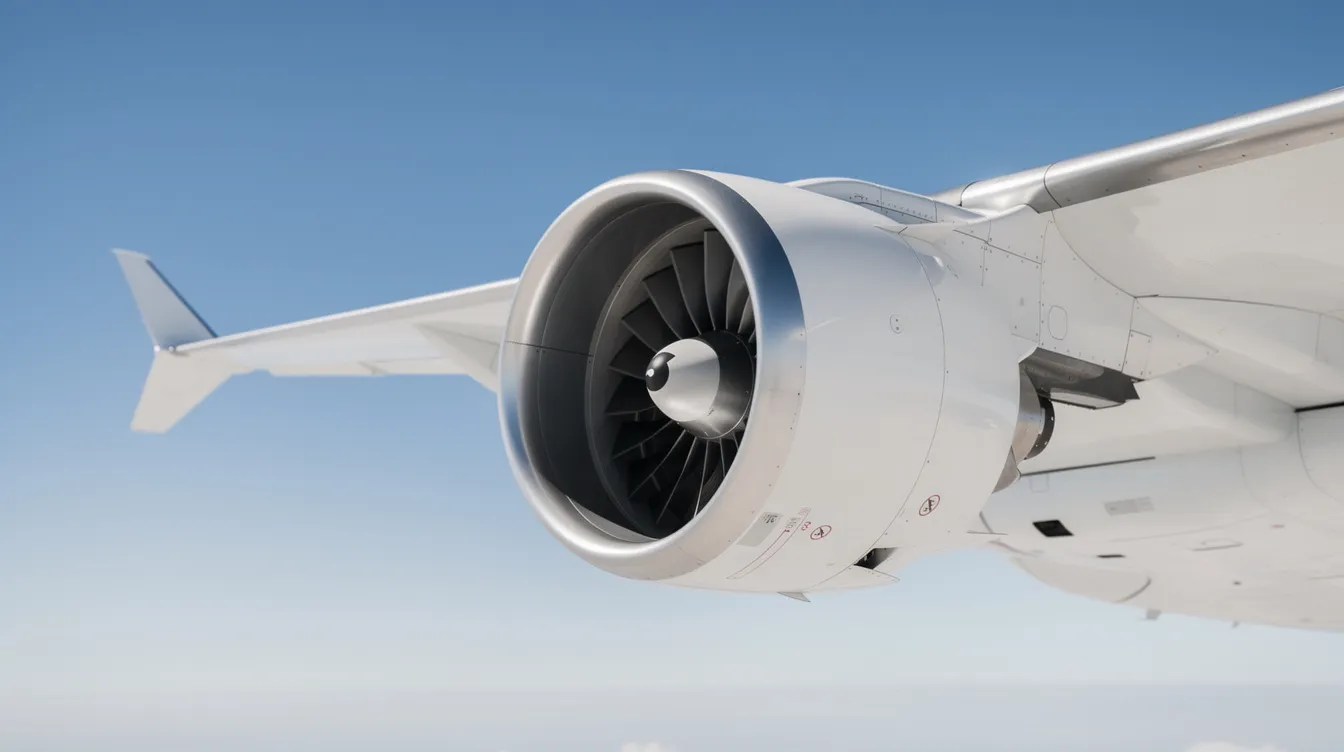
The Boeing 747's wing design allows it to cruise efficiently at high speeds. The wing sweep of approximately 37.5° is the critical feature — swept wings delay the onset of shock waves at high subsonic Mach numbers, reducing transonic drag and allowing the airplane to maintain Mach 0.85–0.88 without encountering the sharp drag rise that would slow a straight-winged aircraft.
The evolution of powerful engines across the program's history enabled each generation to fly farther and more efficiently:
JT9D (747-100/200): The first high-bypass turbofan engine purpose-built for a widebody airliner, delivering breakthrough thrust and fuel efficiency compared to earlier turbojets.
CF6, RB211, PW4000 (747-400): Higher thrust, lower specific fuel consumption, quieter operation. These engines helped the 747-400 operate profitably on routes spanning 7,000+ nautical miles.
GEnx-2B67 (747-8): Modern wide-chord fan blades, advanced composite materials, and improved combustion — further reducing fuel burn and emissions while maintaining the thrust needed for a nearly million-pound airplane.
Along the leading edge, Krueger flaps and slats extend to reshape the airflow over the wing at low speeds, generating enough lift for safe takeoff and landing. Along the trailing edge, triple-slotted flaps deploy to increase both lift and drag. Retracted, these surfaces tuck flush, giving the wing its clean, efficient cruise profile.
Many of the aerodynamic and engine advances pioneered on large airliners like the 747 now inform the design of high-performance long-range business jets — the same aircraft that serve private travelers through programs like BlackJet's.
From first test flight to final delivery: proving the 747's speed and performance
The story of the Boeing 747's speed begins in the late 1960s. The first aircraft prototype rolled out of Boeing's massive new assembly plant in Everett, Washington, in September 1968 — a facility built specifically for this airplane because no existing factory was large enough.
The maiden test flight took place on February 9, 1969, from Paine Field near Everett. Test pilots Jack Waddell and Brien Wygle validated handling, climb performance, and early cruise characteristics over a 75-minute flight. Subsequent test flight campaigns — involving five airframes and more than 1,400 hours of flying — systematically proved stall behavior, takeoff and landing speeds at various weights, and structural margins at Mach numbers up to and beyond the certified operating envelope.
The FAA granted type certification in December 1969. Early concerns about wake turbulence — the massive vortices shed by the 747's enormous wings at speed — prompted additional test flights with smaller aircraft trailing behind, which helped authorities establish new separation standards for this class of airplane.
Each subsequent generation — 747-200, 747-300, 747-400, and finally the 747-8 — included aerodynamic refinements validated through dedicated flight test programs before entering commercial service. The 747-400's introduction of winglets and a digital flight deck in the late 1980s, for example, required extensive testing to certify the modified wing's performance at all speeds. When Boeing delivered the final 747-8F in January 2023, the design had benefited from more than five decades of continuous aerodynamic and structural refinement.
747 speeds in commercial service vs private jet operations
Airlines leveraged the Boeing 747's cruise speed to open and sustain the world's most important long-haul routes. Routes like New York–London, Los Angeles–Tokyo, and London–Hong Kong became simple flying realities for millions of passengers — journeys that earlier-generation aircraft could manage only with fuel stops or severely limited payloads. For travelers who now prefer private aviation over legacy widebodies, BlackJet's premium private jet cards and membership programs offer comparable cruise performance with significantly more control over the end-to-end journey.
But the 747's airline use case — high passenger volume, fixed schedules, operations through major hub airports — comes with trade-offs that matter enormously to time-sensitive travelers. The airplane is capable of remarkable speed in the air, yet passengers often spend more time on the ground than airborne: check-in queues, security screening, boarding hundreds of fellow travelers, taxiing on congested runways, and waiting for luggage at the destination.
Many modern long-range private jets cruise nearly as fast as a 747 — Mach 0.83–0.90 — while carrying far fewer passengers with a higher proportion of cabin space per traveler. The difference is not raw airspeed; it is the total journey.
747 airline service vs. large-cabin private jet - same route, different experience: For groups traveling together, this comparison becomes even more pronounced when you evaluate the best private jet options for around 15 passengers.
Factor | Boeing 747 (Scheduled) | Large-Cabin Private Jet (BlackJet Jet Card) |
|---|
Cruise Mach | 0.85–0.86 | 0.83–0.90 |
Flight time (NYC–London) | ~6.5–7 hours | ~6.5–7 hours |
Airport check-in/boarding | 2–3 hours | 15–30 minutes |
Airport options | Major hubs only (JFK, LHR) | Major hubs + private terminals + secondary fields |
This versatility scales from smaller teams to larger groups, including those evaluating private jet solutions for around 20 passengers on long-haul routes.
| Schedule | Fixed airline timetable | Departure at your preferred time | For a transatlantic private jet mission, the in-air time is essentially equivalent when you plan using an advanced private jet flight time calculator that accounts for routing and winds aloft. The time savings come on the ground.
Safety, speed, and certification: why speeds are carefully managed
Every key speed — takeoff, climb, cruise, approach, and landing — is thoroughly validated during type certification. Safety margins are built into maximum operating speeds (VMO/MMO) and structural limits, ensuring that the airplane operates well within its design envelope under all normal conditions.
Both airline and private jet operators follow strict standard operating procedures for calculating speeds before every flight. Onboard performance software and flight management systems on the flight deck assist crews in computing Vr, approach speeds, and optimal cruise Mach based on real-time conditions.
On the Boeing 747, redundancy reinforces safety at every speed regime:
Multiple independent hydraulic systems control flight surfaces at any speed
Robust wing structure tested to loads well beyond anything encountered in service
Reinforced landing gear designed for touchdown forces across the full range of landing weights and speeds
Strict speed limits in turbulence or flap-extended configurations to protect structural integrity
BlackJet applies the same philosophy to private aviation. Every flight — whether on a large-cabin jet crossing an ocean or a light jet connecting regional cities — adheres to performance and speed limits that prioritize passenger safety over schedule pressure. BlackJet partners only with operators meeting the highest safety certifications in the industry, reinforcing that private jet travel is highly safe when operated under rigorous standards.
Sustainability and speed: fuel burn, emissions, and modern alternatives
There is a direct relationship between cruise speed and fuel consumption: flying closer to maximum cruise speed increases fuel burn per mile, while slightly slower cruise — sometimes called "long-range cruise" or "cost-index cruise" - reduces both fuel use and emissions.
The Boeing 747's four-engine configuration and large size mean higher absolute fuel burn than modern twin-engine widebodies on similar routes, even when cruise speed is comparable. This is one reason airlines have increasingly retired 747s in favor of more efficient twins.
In the 21st century, many 747 operators deliberately chose slightly reduced cruise Mach numbers — Mach 0.84 instead of 0.86 — on ultra-long sectors to optimize for fuel cost and carbon output. The trade-off: a few extra minutes of flight time versus meaningful fuel savings.
In private aviation, the same trade-offs apply. BlackJet addresses sustainability through initiatives that align with the latest innovations in next-generation private jets focused on lower emissions and higher efficiency:
The goal is to deliver high-speed, long-range travel without compromising environmental responsibility, whether you are flying major intercontinental trunk routes or booking bespoke private jet charters from cities like Karachi.
What these speeds mean for high-end and business travelers
For a transatlantic or transpacific traveler, the difference of a few knots in cruising speed is far less important than departure timing, airport choice, and end-to-end journey design. The Boeing 747's high cruise speed helped set the expectation that intercontinental trips could be "overnight" or "same-day" affairs. Modern private jets match this pace while adding privacy, flexibility, and bespoke service.
Example scenario: A corporate team based in London needs to attend a 9 a.m. meeting in New York, flying often enough that a 100-hour private jet card program becomes a strategic alternative to ad-hoc charter.
Option A - Scheduled 747 service: Depart the evening before on a fixed airline schedule from Heathrow, arrive at JFK, clear customs with hundreds of other passengers, transfer to Manhattan. Total door-to-door time: 14–16 hours.
Option B - BlackJet Jet Card flight: Depart from a private terminal at a time chosen by the team, fly overnight on a large-cabin jet at a similar cruise Mach, arrive at Teterboro (minutes from Midtown Manhattan), clear customs privately. Total door-to-door time: 9–11 hours, which can be efficiently budgeted and planned using insights from a 50-hour jet card pricing guide.
The flight time is nearly identical. The difference lies in everything around it:
Direct access to smaller airports not suitable for 747 operations, similar in spirit to what leading providers like NetJets jet card programs offer frequent flyers
Ability to choose departure time instead of fitting around a fixed schedule
24/7 digital booking and real-time flight support to adapt to last-minute changes, all within a transparent jet card pricing framework that keeps overall journey costs predictable
Privacy and a productive cabin environment throughout, with aircraft options ranging from large-cabin jets down to the best small private aircraft for regional missions
Frequently asked questions about Boeing 747 speeds
Is a Boeing 747 faster than a typical commercial airliner? The 747 cruises at Mach 0.85–0.86, placing it at the upper end of the subsonic airliner range. Most current wide-body and narrow-body jets cruise in the Mach 0.78 to 0.85 range, so the 747 is broadly similar to — or slightly faster than — most of its peers.
What is the maximum speed a 747 has ever achieved in service? A 747-400 recorded a ground speed exceeding 825 mph during a transatlantic crossing in February 2020, riding powerful jetstream tailwinds from Storm Ciara. Its airspeed remained subsonic at approximately Mach 0.85–0.86; the wind provided the rest. The top speed in terms of airspeed is limited by the MMO of about Mach 0.90.
How fast does a 747 go on takeoff compared with a private jet? A Boeing 747 typically rotates at around 160 knots (184 mph) under standard conditions, though this climbs with weight and altitude. Many large private jets rotate at 120–140 knots, requiring significantly shorter runways, especially within structured programs like Flexjet’s jet card offerings that standardize performance and access.
Can a 747 break the sound barrier? No. The Boeing 747 is designed as a subsonic airliner with an MMO of approximately Mach 0.90 and a typical cruise around Mach 0.85–0.86. Its wing shape and structure are optimized for efficient flight below the speed of sound, not beyond it. Military aircraft and dedicated supersonic designs like the Concorde operate under entirely different aerodynamic principles.
Why do some flights seem faster than others on the same route? Wind is the primary factor. Tailwinds — especially the jet stream over the North Atlantic and Pacific — can add 100+ mph to ground speed. Headwinds do the opposite. ATC routings, weather deviations, and holding patterns also affect total flight time.
How does 747 speed compare to smaller regional aircraft? The 747 cruises much faster than turboprops (typically Mach 0.40–0.55) and many regional jets (Mach 0.70–0.80). It is in a different performance class entirely.
Are private jets faster than a 747? Many long-range business jets cruise at comparable or slightly higher Mach numbers — up to Mach 0.90 for the fastest models. However, the real journey-time advantage comes from operational flexibility: private terminals, smaller airports, and departure schedules built around the traveler, not the other way around.
Which Air Force aircraft use 747 airframes? The United States Air Force operates modified 747-200s as VC-25A presidential transport (commonly known as Air Force One when the president is aboard) and is replacing them with 747-8-based VC-25B aircraft. These operate at similar cruise speeds to their civilian counterparts.
How BlackJet can match 747 performance with private jet convenience
The Boeing 747 remains one of the most impressive high-speed commercial aircraft ever built. Its specifications — Mach 0.86 cruise, intercontinental range, and the ability to carry hundreds of passengers — defined an era of aviation. But for the discerning traveler who values time, privacy, and flexibility above all else, modern private jets accessible through BlackJet's Jet Card programs deliver comparable cruise speeds with a fundamentally different experience.
How BlackJet's model works:
Prepaid Jet Card hours - available in 25-hour or 50-hour blocks - across multiple cabin classes, from light jets for regional trips to large-cabin aircraft capable of matching the 747's range, all built on a comprehensive guide to jet card cost and structure
24/7 digital booking platform and real-time flight support that optimize departure times, routings, and aircraft selection for every mission
Carbon-neutral flights on every booking, ensuring speed and range comparable to airliners without compromising sustainability commitments
For the high-net-worth or executive traveler, the advantages are clear: similar cruise performance to a 747 on long-range routes, drastically reduced time on the ground, privacy and security at every stage, and safety oversight that meets the highest standards in private aviation, especially when leveraging the best jet card programs for frequent flyers.
The Boeing 747 set the benchmark for what fast, long-range air travel could be. BlackJet ensures you can fly at that level — on your terms, whether through on-demand charter, curated jet cards, or even exploring premium private jets for sale in the UK for those considering ownership.
Explore premium jet access and discover how a BlackJet Jet Card can turn 747-level performance into a fully bespoke private travel experience, while informed by a clear understanding of jet card cost per hour in private aviation.


 Sign up with google
 Sign up with Apple