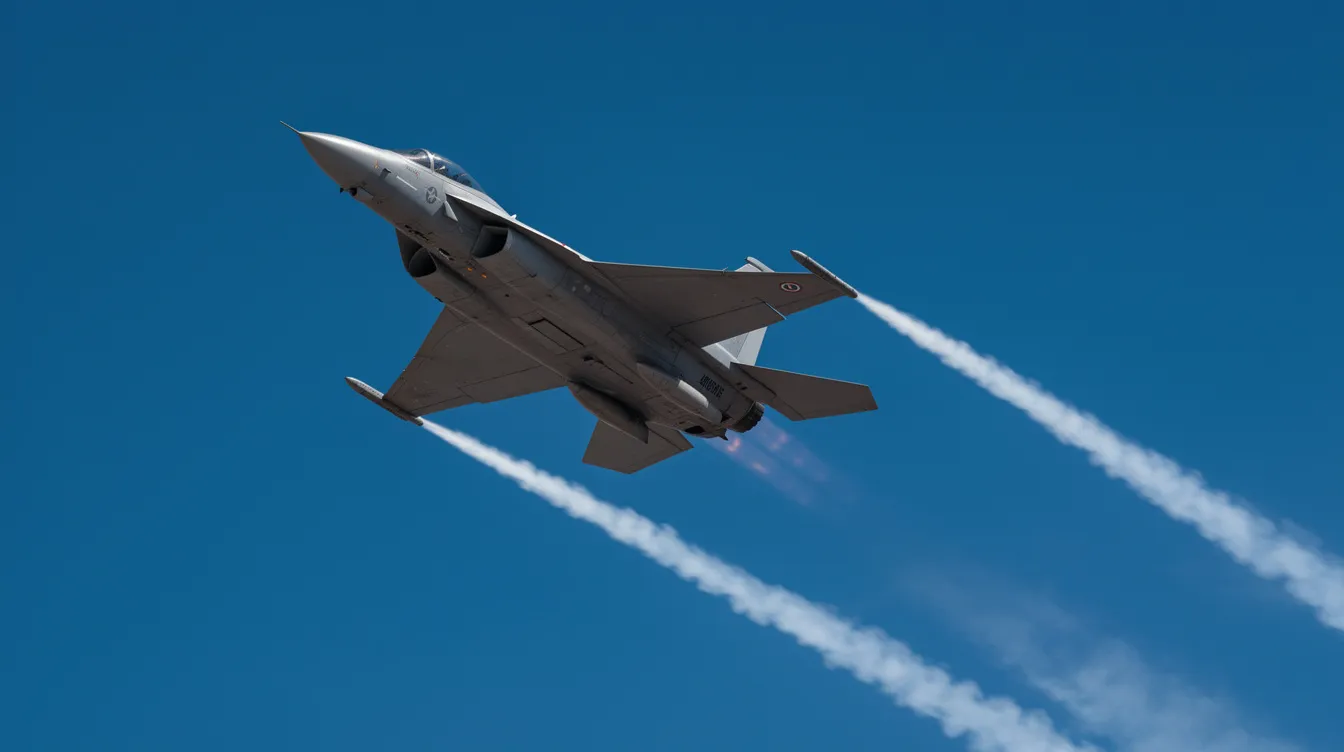
A fighter jet is a fixed-wing military aircraft optimized for air-to-air combat and ground attacks, designed primarily to establish air superiority by engaging and destroying enemy aircraft. Few machines in history combine raw power, engineering precision, and geopolitical weight the way a fighter jet does. A fighter jet is a high-speed, highly maneuverable military aircraft optimized for air-to-air combat and ground attacks, built to establish air superiority and engage enemy aircraft with speed and agility. From the rudimentary biplanes that dueled above the trenches of France to the sensor-fused stealth platforms patrolling contested skies today, fighter jet development traces the history of modern warfare and the technologies that shaped civilian aviation.
For frequent business travelers, high-net-worth leisure flyers, and anyone interested in how military precision influences private aviation, that connection is more practical than it first appears. This guide looks at fighter jet history, core technology, combat roles, aircraft generations, pilot training, safety standards, sustainability in aviation, and the links between military innovation and BlackJet’s approach to private flying. Understanding fighter jets helps explain where many modern expectations around aircraft performance, operational precision, and safety come from—and why those advances still matter when you choose a private flight experience.
Why Fighter Jets Still Matter for Power, Security & Prestige Today
Modern fighter aircraft underpin the strategic deterrence of every major world power. When a nation fields advanced jet fighters, it signals technological sophistication, industrial capacity, and the willingness to project force across vast distances. Air superiority — the ability to clear the skies of enemy planes and win total control of the airspace — remains the single most decisive advantage in any conventional military conflict. Without it, ground forces are exposed, naval fleets are vulnerable, and critical infrastructure sits undefended.
The performance gap between a fighter jet and a commercial airplane is staggering. A modern fifth-generation fighter routinely exceeds Mach 1.6 to Mach 2.0 in level flight, operates above 50,000 feet, and can scramble from alert to airborne in under five minutes. Compare that to a commercial airliner cruising at Mach 0.85 and requiring hours of pre-departure preparation. Fighter pilots experience sustained G-forces that would incapacitate an untrained passenger, executing maneuvers at the very edge of human physiology and aircraft structural limits.
Understanding the evolution of fighter aircraft - from the fabric-covered scouts of World War I to stealth platforms like the F-22 Raptor and the F-35 Lightning II — explains how air forces project power globally and why alliances like NATO invest hundreds of billions of dollars in air combat capability. The history of the fighter is the history of modern strategy itself.
At BlackJet, our fleet is entirely civil and unarmed. But our aviation expertise and safety culture are shaped by the same rigorous standards that govern high-performance military airplane operations. Our pilots often carry military backgrounds, including experience serving under a squadron commander. Our maintenance protocols mirror the discipline of flight-line crews who keep combat aircraft mission-ready. When you fly with us, you benefit from that heritage - translated into comfort, privacy, and precision.
Latest Military Aviation & Fighter Jet Developments (2024–2026)
The fighter aircraft landscape is evolving rapidly. In 2025, Lockheed Martin delivered a record-breaking 191 F-35 Lightning II aircraft - surpassing the previous high of 142 set in 2021 and bringing the global fleet to nearly 1,300 aircraft in service across twelve nations. New Lots 18–19 contracts covering up to 296 additional jets are set to commence deliveries in 2026, signaling sustained momentum for the program well into the next decade.
In Europe, the Greek Air Force reached the midpoint of its F-16V "Viper" modernization program by September 2025, having received 42 of 84 upgraded aircraft equipped with APG-83 AESA radar, modern cockpits, and enhanced mission systems. Poland followed with a formal US$3.8 billion contract to upgrade its 48 F-16C/D Block 52+ fighters to the F-16V standard between 2028 and 2038, bolstering NATO's eastern flank with interoperable, fourth-generation-plus capability.
Scandinavia saw milestone news as well. On October 20, 2025, Sweden officially took delivery of the first JAS 39 Gripen E from Saab's production line — the first of 60 planned aircraft, with deliveries running through 2030. Meanwhile, Thailand signed an approximately US$500 million contract for three Gripen E and one dual-seat Gripen F, expanding the type's footprint into Southeast Asia.
On the hypersonic front, the U.S. Navy conducted a successful conventional hypersonic missile launch from Cape Canaveral in May 2025, and the Stratolaunch Talon-A reusable test vehicle completed flights above Mach 5 over the Pacific, advancing both weapons development and testing infrastructure. These developments collectively reshape the air power balance across the Indo-Pacific, Eastern Europe, and the Arctic, where modernization is accelerating fastest.
From Recon Biplanes to Armed Fighters: Origins Before and During World War I
The airplane's journey toward combat began with the Wright brothers' 1903 flight at Kitty Hawk and took a military turn in 1909 when the U.S. Army Signal Corps accepted the Wright Military Flyer for reconnaissance duties. For the first years of aviation, planes were slow, fragile, and unarmed - their value lay in flying over enemy territory to photograph trenches and spot artillery fire, not in fighting.
When World War I erupted in 1914, observers on both sides quickly recognized the threat that enemy aircraft posed to their reconnaissance missions. The first ad hoc air battles saw pilots firing pistols and rifles at one another from open cockpits - a far cry from any systematic air combat doctrine. The breakthrough came around 1915 with the development of synchronization gear, which allowed a machine gun to fire through the spinning propeller arc without destroying the blades. Aircraft like the Fokker Eindecker exploited this technology to deadly effect, and the first fighter aircraft emerged during World War I as purpose-built machines designed to shoot down other aircraft.
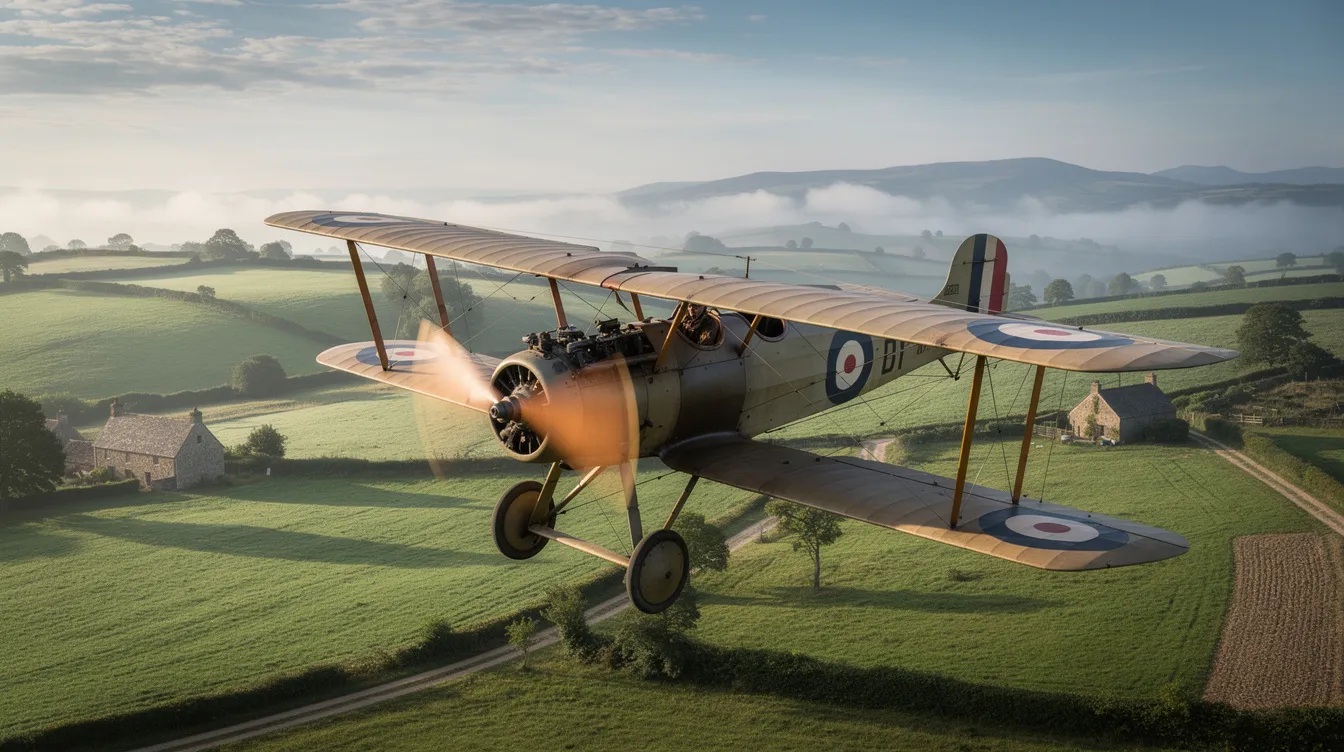
Early air aces like Oswald Boelcke and Manfred von Richthofen — the legendary "Red Baron" - did more than accumulate victories. They codified the tactics of aerial combat: altitude advantage, attacking with the sun behind you, coordinated pair flying. Their innovations in the cockpit and on the battlefield began shaping fighter aircraft design and operational doctrine, establishing principles that fighter pilots still study today. By the armistice in 1918, the fighter had evolved from improvisation to an indispensable instrument of war.
Inter‑War Innovation: Monoplanes, Metal Airframes and New Fighter Concepts
Between 1919 and 1939, air forces worldwide experimented aggressively. Engineers replaced fabric-and-wood structures with all-metal airframes, enclosed open cockpits to protect pilots at higher speeds, and fitted increasingly powerful radial and inline engines. The monoplane gradually displaced the biplane, though some air forces clung to biplane designs for their agility and the conservatism of a commander who trusted proven platforms over untested concepts.
Key fighters of the 1930s signaled what was coming. The Hawker Hurricane first flew in 1935 and would become the backbone of Britain's defense. The Messerschmitt Bf 109 prototype took to the skies in the same year and would become the most-produced fighter in history. The Soviet Polikarpov I-16, which first flew in 1933, was among the world's first low-wing monoplane fighters with retractable landing gear — a genuinely modern design for its era.
The Spanish Civil War from 1936 to 1939 served as a brutal testing ground. German, Italian, and Soviet aircraft and pilots fought in Spanish skies, refining tactics that would define World War II. The Luftwaffe developed the "finger-four" formation — two pairs of fighters flying in a spread pattern for mutual support — a formation so effective that virtually every air force in the world adopted it, and variations remain in use today. Doctrine was finally catching up to technology.
World War II: Mass Fighter Combat and the Battle for Air Superiority
World War II transformed the fighter from a supporting asset into a decisive weapon. Between 1939 and 1945, air superiority determined the outcome of campaigns across Europe, North Africa, and the Pacific. Nations that could control the skies could deliver bombs on enemy industry, protect their own ground forces, and deny the enemy the ability to do the same.
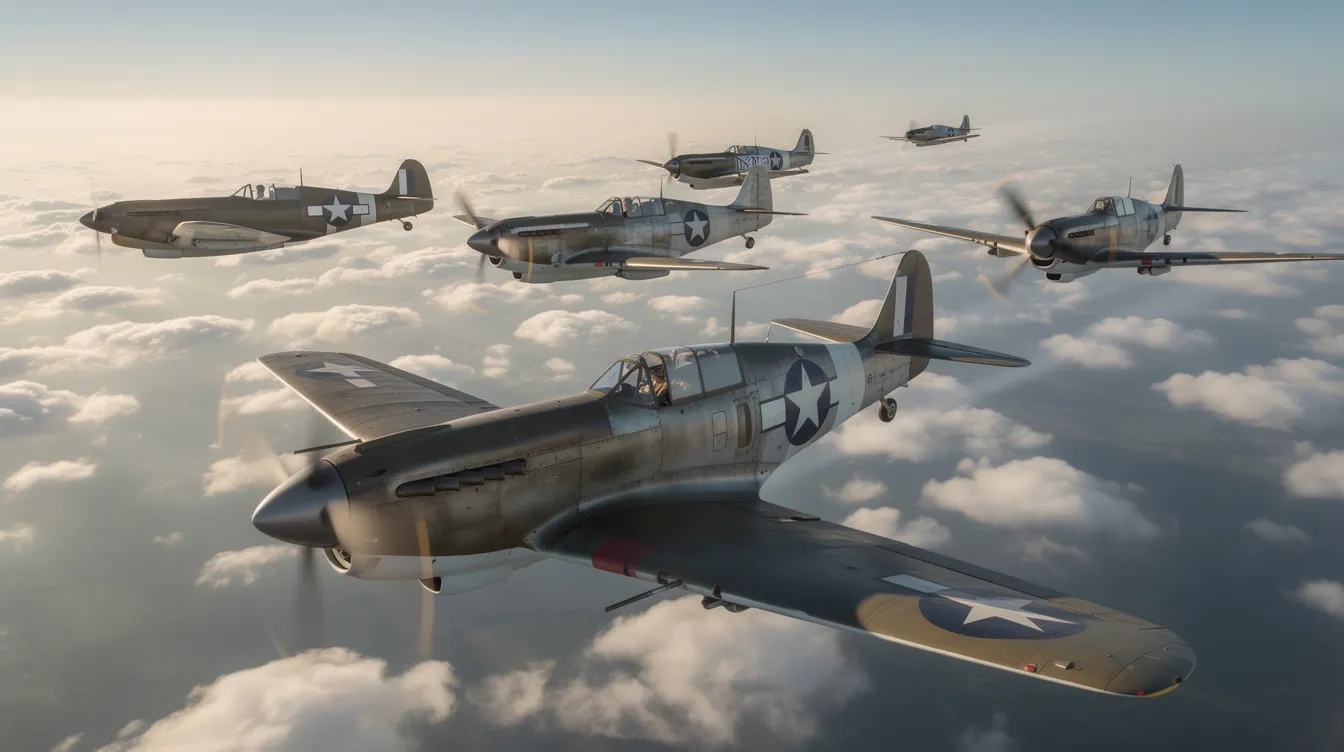
The war produced iconic fighters whose names still resonate. The Supermarine Spitfire, with a top speed around 370 mph in its early marks, defended Britain during the Battle of Britain. The Messerschmitt Bf 109 and Focke-Wulf Fw 190 gave the Luftwaffe formidable air superiority and ground-attack capability. Across the Atlantic, the North American P-51 Mustang — reaching speeds above 430 mph with the Merlin engine — became the long-range escort that protected B-17 and B-24 bombers deep over Germany. In the Pacific, Japan's Mitsubishi A6M Zero dominated early in the war with exceptional range and agility before being outclassed by newer American designs. The Soviet Yak-3, light and maneuverable, proved devastatingly effective on the Eastern Front.
Fighter roles multiplied. Air superiority remained paramount, but fighters also served as bomber escorts over vast distances, interceptors scrambling to meet incoming raids, and fighter-bombers like the P-47 Thunderbolt that carried bombs and rockets to attack ground targets directly. Radar-guided air defense, pioneered during the Battle of Britain, changed the fight by giving defenders early warning and vectoring fighters to intercept enemy aircraft before they reached their targets.
At the war's end, two aircraft hinted at a revolution. The Messerschmitt Me 262, the first operational jet fighter, entered combat in 1944 with twin turbojet engines pushing it past 540 mph — far faster than any propeller-driven airplane. The Me 163 Komet, a rocket-powered interceptor, could climb to altitude in minutes but carried only enough fuel for a few minutes of powered flight. Both were too few and too late to change the war's outcome, but they foreshadowed the jet age that was about to break open.
Rocket‑Powered Fighters: Bold Experiments in Extreme Performance
The concept of rocket-powered flight dates to the late 1920s, but it reached operational reality with the German Me 163B Komet during World War II. The tactical idea was elegant: use a rocket engine's extraordinary climb rate to intercept high-altitude bombers before they could reach their targets. In practice, the Komet was terrifyingly dangerous — its volatile fuel combination killed more pilots in accidents than in combat, and its powered endurance lasted only about seven minutes.
After the war, several nations explored mixed-power concepts combining jet and rocket engines. The British Saunders-Roe SR.53 and SR.177 and the American Republic XF-91 all attempted to marry sustained jet cruise with rocket-boosted intercept capability. None entered service. By the late 1950s and early 1960s, rapid advances in turbojet and later turbofan engine technology delivered sufficient speed and climb performance to make dedicated rocket fighters obsolete.
Rocket power lives on today - not in manned fighters, but in the missiles they carry, in RATO (rocket-assisted takeoff) systems for heavy aircraft on short runways, and in experimental space-access vehicles. The brief era of the rocket fighter, however, proved that sheer speed without endurance and safety offers no lasting decisive advantage.
The Dawn of Jet Fighters: First‑Generation (1940s–1950s)
First-generation jet fighters emerged in the late 1940s and early 1950s as designs that were generally subsonic or barely transonic, armed primarily with guns and unguided rockets. Fighter jets evolved from propeller-driven aircraft to turbojet engines during this period, and the performance leap was dramatic: where the best piston-engine fighters topped out around 450 mph, early jets routinely exceeded 600 mph.
The Me 262 was the starting point. The first operational jet fighter, it demonstrated the jet engine's potential despite Germany's desperate wartime circumstances. Post-war, Britain's Gloster Meteor and de Havilland Vampire entered service, followed rapidly by American designs. Fighter jets transitioned from piston engines to turbojet engines in the 1940s, fundamentally changing what air combat looked like.
The Korean War from 1950 to 1953 became the first large-scale jet-versus-jet conflict. The Soviet MiG-15, with its swept wings and powerful cannon armament, shocked Western allies when it appeared over Korea. The American F-86 Sabre, also swept-winged, met it in the world's first jet dogfight arena - the famous "MiG Alley" over northwestern Korea. Their clashes validated swept-wing aerodynamics and proved that the jet age demanded entirely new tactics, training, and engineering. The era of the propeller fighter was over.
Supersonic Breakthrough: Second‑Generation Fighters (1950s–1960s)
Second-generation fighters, appearing from the mid-1950s to the mid-1960s, broke the sound barrier as a matter of routine. Afterburning turbojets gave these aircraft the thrust to push past Mach 1 and, in some cases, well beyond Mach 2. The F-100 Super Sabre became the first production fighter capable of level supersonic flight, entering U.S. Air Force service in 1954. The Soviet MiG-19 followed closely, while the Lockheed F-104 Starfighter - nicknamed "the missile with a man in it" — could exceed Mach 2 and was aircraft designed to intercept high-altitude bombers at extreme speed.
This generation also introduced the first practical onboard radars and, crucially, air-to-air missiles. Early heat-seeking missiles like the AIM-9 Sidewinder and radar-guided missiles promised kills beyond visual range, leading some air forces to conclude that the dogfight was dead and that guns were obsolete. Several fighters of this era were built without internal cannons — a decision that combat experience would soon prove dangerously premature.
The interceptor role dominated strategic thinking during the early Cold War. Nuclear-armed bombers were the primary threat, and fighters were optimized to climb fast, fly high, and fire missiles at incoming bombers before they reached their targets. Fighter-bomber roles existed but were secondary. The design philosophies of this generation - speed over agility, missiles over guns — would be tested and often found wanting in the skies over Vietnam and the Indo-Pakistani wars of the 1960s and 1970s.
Multirole Muscle: Third‑Generation Jet Fighters (1960s–1970s)
Third-generation fighters appeared in the 1960s, bringing improved maneuverability, better analog avionics, and a growing emphasis on multirole missions. The McDonnell Douglas F-4 Phantom II, entering service in 1960, became the defining aircraft of this generation - a massive, twin-engine jet that could fight air-to-air combat, deliver bombs, perform reconnaissance, and suppress enemy air defenses. The Soviet MiG-21, lighter and cheaper, became the most-produced supersonic jet fighter in history, serving in dozens of air forces. France's Dassault Mirage III and Sweden's Saab 37 Viggen added further variety.
Combat experience rewrote the rulebook. In Vietnam, American fighters initially struggled against nimble MiG-21s in close-range engagements because training had emphasized missile combat at the expense of maneuvering. Kill ratios dropped alarmingly. The U.S. Navy responded by founding the "Top Gun" program — formally the Navy Fighter Weapons School — to retrain pilots in dogfight tactics. In the Middle East, the Six-Day War of 1967 and the Yom Kippur War of 1973 demonstrated the devastating effectiveness of ground-based air defenses against fighters and reinforced the need for dedicated suppression of enemy air defenses, or SEAD, missions.
These wars also accelerated the development of precision-guided munitions — bombs and missiles that could hit specific targets rather than carpet-bombing an area. Fighters increasingly needed to deliver ordnance accurately, expanding the ground-attack capabilities that had previously been secondary. The third generation proved that the future belonged to multirole platforms, not single-mission specialists.
Fourth‑Generation Fighters: Agility, Avionics and True Multirole Capability
Fourth-generation fighters, spanning roughly the 1970s through the 2000s, represent a quantum leap in capability. These aircraft featured relaxed static stability, fly-by-wire flight controls, advanced pulse-Doppler radars, and true multirole mission flexibility. The MiG-29 and F-15 are notable fourth-generation fighters, alongside the F-16 Fighting Falcon, the F-14 Tomcat, the Su-27 Flanker, the Mirage 2000, and the Eurofighter Typhoon.
The F-15 Eagle, which first flew in 1972, was built around the mantra "not a pound for air-to-ground" - a pure air superiority fighter with a combat record of over 100 aerial victories and zero losses in air combat. The F-16, first flying in 1974, took the opposite approach: a lightweight, agile, affordable multirole platform that became the most widely operated fighter in the Western world. The Soviet response — the heavy Su-27 and the lighter MiG-29 - matched or exceeded Western fighters in raw agility.
Design concepts like energy-maneuverability theory, pioneered by Colonel John Boyd, fundamentally changed how engineers shaped fighters. All-aspect infrared missiles meant that an enemy could now fire from any angle, not just from directly behind - transforming tactics entirely. Examples of key fighter jet generations include 4th, 4.5th, and 5th generation aircraft, and the 4.5-generation upgrades — adding AESA radars, improved data links, conformal fuel tanks, and modern weapons — have kept fourth-generation airframes competitive well into the 2020s and beyond.
These fighters became the backbone of air forces worldwide, seeing extensive use from the Iran-Iraq War to the Gulf War of 1991, where coalition F-15s, F-16s, and Tornados dominated Iraqi air defenses, to the Balkans conflicts of the 1990s. Their proven combat record and upgrade potential explain why nations continue investing billions in modernizing them.
Fifth‑Generation Fighters: Stealth, Sensor Fusion and Networked Air Superiority
Fifth-generation fighters feature advanced stealth technology, integrated sensor fusion, AESA radars, and internal weapon bays. They represent a fundamental change in how air combat is conducted — shifting from platform-centric warfare to network-centric operations where the fighter is as much a sensor and communications node as it is a weapon.
The F-22 Raptor is a fifth-generation fighter jet, introduced in 2005 as the world's first operational stealth air superiority fighter. With supercruise capability — sustained supersonic flight without afterburner — thrust-vectoring for extreme agility, and a radar cross-section smaller than a marble, the F-22 remains arguably the most dominant air superiority platform ever built. Its production was capped at 187 airframes, making it rare and exclusively American.
The F-35 Lightning II followed, entering initial operational capability in the mid-2010s with a radically different mission profile. The F-35 is designed for multirole missions and features advanced sensor fusion capabilities that combine data from its AN/APG-81 AESA radar, distributed aperture system, electro-optical targeting system, and off-board sources into a single, unified picture. The F-35 has over 1 million flight hours across its global fleet. It integrates air, land, sea, space, and cyber operations - a capability no previous fighter has matched. It is considered the most lethal and survivable aircraft in production today, with stealth technology used to minimize its radar cross-section.
Other nations are pursuing their own fifth-generation or near-fifth-generation programs. China's Chengdu J-20 entered service around 2017, and Russia's Sukhoi Su-57 has seen limited production. India, South Korea, and Turkey are developing indigenous designs at various stages of maturity. The primary design role of a fighter can affect its capabilities — some fifth-generation programs prioritize air superiority, while others emphasize multirole functionality.
Fifth-generation fighters act as force multipliers for older fourth-generation fleets via secure data links and cooperative engagement. A single F-35 can share targeting data with a flight of F-16s, effectively extending the stealth fighter's sensor reach across an entire formation. This networked approach to combat is rewriting doctrine in every allied air force.
Toward Sixth‑Generation Fighters: Collaborative Combat and AI‑Enabled Warfare
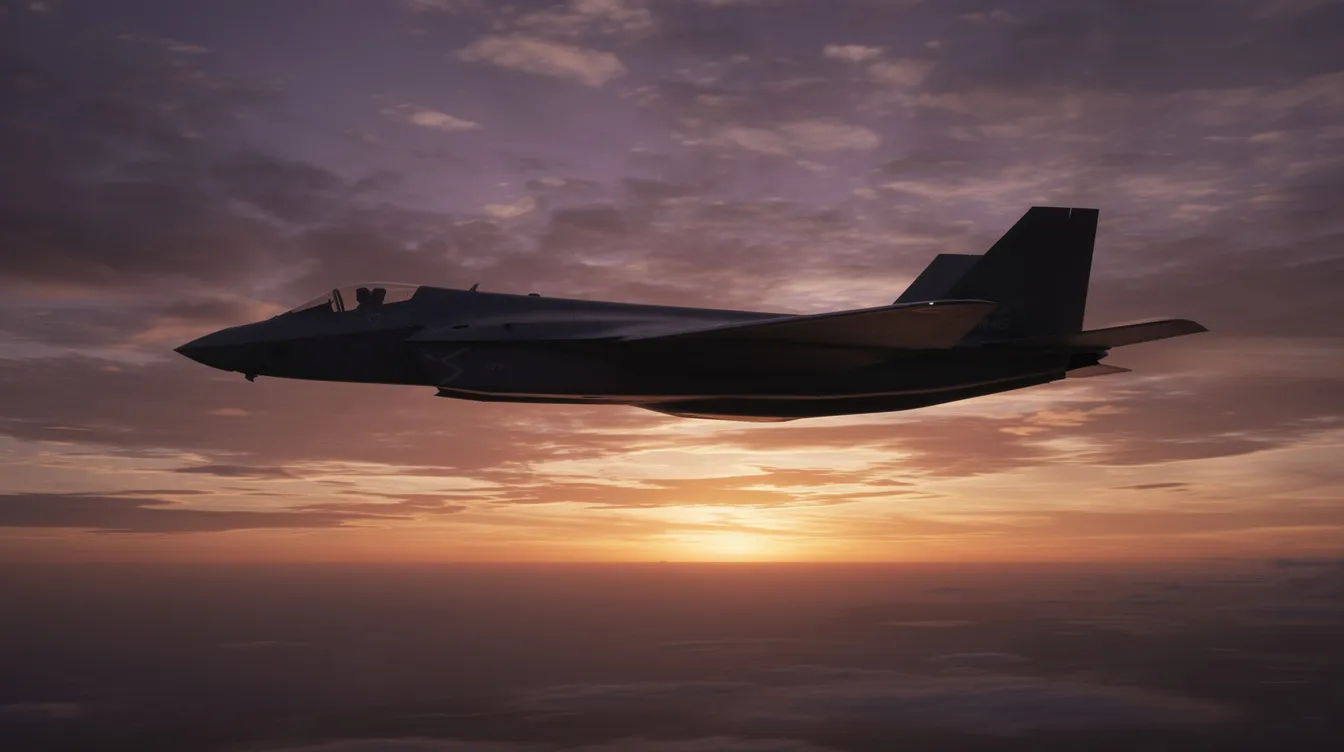
Sixth-generation fighters are currently under development by several countries, with target dates stretching from the 2030s into the 2050s. The U.S. Air Force's Next Generation Air Dominance, or NGAD, program is the most prominent Western effort, though details remain heavily classified. Reports indicate that a full-scale NGAD demonstrator has already flown, but official confirmation of specifications is scarce.
In Europe, the Global Combat Air Programme - a collaboration among the United Kingdom, Italy, and Japan - and the Franco-German-Spanish FCAS program are pursuing separate sixth-generation concepts. Both envision manned fighter cores integrated with loyal wingman drones and unmanned combat air vehicles to create a "system of systems" rather than a single aircraft.
Expected features of this future generation include even lower observability, adaptive cycle engines that optimize for speed or fuel efficiency depending on the mission phase, advanced electronic warfare suites, and optionally manned operation. AI-driven mission planning, real-time data fusion from space-based sensors, and swarming tactics involving dozens of autonomous drones may redefine what the word "fighter" even means.
China has shown technology demonstrator aircraft whose classification remains subject to analyst debate. What is clear is that the development race is accelerating, with implications for global air power balance that will unfold over the next two decades.
Core Fighter Roles: Air Superiority, Interception, Strike and Multirole Flexibility
Fighter jets are designed primarily to establish air superiority by engaging and destroying enemy aircraft. Air superiority fighters like the F-15C and the Su-27 focus on dominating enemy aircraft through speed, sensor range, and weapons reach. Clearing the sky of enemy planes to win total control of the airspace has been the fundamental mission since the first World War dogfights, and it remains the prerequisite for all other military operations.
Fighter jets are also capable of performing interception by rapidly engaging enemy bombers or ballistic threats. Interceptors like the MiG-31 are optimized for rapid climb and long-range engagement, racing to altitude to meet incoming threats before they reach defended space. Meanwhile, many modern fighter jets are multirole aircraft designed for both air-to-air and air-to-ground missions. The distinction between fighter and attack aircraft has become less rigid in modern aviation, as platforms like the F-35 switch between roles in-flight based on sensor data and mission requirements.
Fighter jets can also perform reconnaissance using advanced sensors and gather intelligence from the air - a role that dates back to the very origins of military aviation. Specialized missions like suppression of enemy air defenses and maritime strike are now routinely carried out by the same fighter aircraft that perform air-to-air combat, making today's multirole platforms the most versatile military airplanes ever built. Countries design fighter jets based on missions, budgets, geography, technology, and military doctrine, which is why the global fleet is so diverse.
Night, All‑Weather and Beyond: Specialized Fighter Types
The challenge of fighting at night or in poor weather drove some of aviation's most important technological advances. During World War II, dedicated night fighters like the Bristol Beaufighter and the Northrop P-61 Black Widow carried primitive airborne radar sets - heavy, unreliable, but revolutionary. For the first time, a fighter could detect and engage enemy aircraft without visual contact, extending combat operations around the clock.
Post-war all-weather interceptors like the F-106 Delta Dart and the English Electric Lightning pushed radar and avionics further, enabling fighters to operate effectively in clouds, rain, and darkness. The Cold War demand to intercept Soviet bombers regardless of weather or time of day drove relentless improvement in infrared sensors, fire-control computers, and weapons capable of hitting targets the pilot could not see with the naked eye.
Long-range escort fighters and strategic interceptors also evolved during this period. Some aircraft were designed to protect bombers on deep penetration missions far from friendly bases, while others were tasked with defending vast continental airspaces. Today, these specialized roles have been largely absorbed into modern multirole fighters equipped with sophisticated sensor suites that make environmental conditions almost irrelevant. A modern fighter can fight as effectively at midnight in a storm as at noon on a clear day.
Weapons and Sensors: From Machine Guns to Hypersonic Missiles
The evolution of fighter armament mirrors the evolution of the fighter itself. In World War I, pilots began with pistols and rifles before fixed machine guns became standard. World War II fighters carried batteries of machine guns or cannons — the Spitfire's eight .303 Brownings, the Bf 109's engine-mounted cannon and wing guns. Unguided rockets and bombs added ground-attack capability, but air-to-air combat remained a close-range affair where the pilot aimed by eye.
The missile age transformed everything. Short-range infrared missiles like the AIM-9 Sidewinder, entering service in the 1950s, homed on the heat signature of an enemy's jet engine. Radar-guided missiles like the AIM-120 AMRAAM and the Russian R-77, maturing through the 1980s and 1990s, enabled kills beyond visual range - engaging enemy aircraft dozens of miles away without ever seeing them. Fire-and-forget capability changed tactics fundamentally.
Fighter jets utilize advanced avionics and radar for detecting, tracking, and engaging targets. The shift from mechanically scanned arrays to Active Electronically Scanned Array radars represents one of the most significant leaps in sensor capability. AESA radars can track hundreds of targets simultaneously, resist jamming, and operate in multiple modes - air-to-air, air-to-ground, electronic warfare — at once. Infrared search and track systems, helmet-mounted sights, and off-boresight missile cueing further extend the pilot's ability to detect and engage threats from any direction.
Emerging capabilities include air-launched hypersonic weapons and networked targeting supported by AWACS aircraft and satellites. Missiles carrying their own advanced sensors can now receive mid-course updates from other aircraft via data links, turning an entire formation into a distributed weapons system. The weapons and sensors a fighter carries matter as much as the airframe itself.
Global Air Forces and Their Signature Fighter Jets
The United States maintains the largest and most diverse fighter fleet in the world. The U.S. Air Force operates the F-15 Eagle and F-15E Strike Eagle for air superiority and strike, the F-16 Fighting Falcon as its multirole workhorse, the F-22 Raptor as its premier air dominance platform, and the F-35A Lightning II as its future backbone. The U.S. Navy and Marine Corps add the F/A-18E/F Super Hornet and the F-35B and F-35C variants, providing carrier-based power projection.
Russia fields the Su-27 family - including the advanced Su-35S — alongside the MiG-29 and the limited-production Su-57 fifth-generation fighter. China's People's Liberation Army Air Force operates the J-20 stealth fighter alongside large numbers of J-10 and J-16 multirole platforms, with rapid modernization reshaping the Indo-Pacific balance. For a deeper look at leading platforms, see our guide to the best US top fighter jets.
Key NATO allies bring formidable capability. The Royal Air Force flies Eurofighter Typhoons and F-35Bs. France operates the Dassault Rafale across its air force and navy. Japan operates F-15Js and is acquiring F-35As to counter growing regional threats. Newer F-35 operators — Finland, Poland, Switzerland — are reshaping regional deterrence simply by introducing fifth-generation capability into previously fourth-generation-dominated theaters.
Air forces structure their fighter units into squadrons and wings, with readiness depending not just on equipment but also on the squadron or wing commander responsible for operational standards, training, and maintenance. A nation may own advanced fighters on paper, but without the infrastructure, spare parts, simulator time, and trained ground crews to sustain high sortie rates, those aircraft are strategic symbols rather than operational tools. The discipline of maintenance and readiness is what separates capable air forces from merely equipped ones.
Iconic Fighter Jets Across the Generations
Some fighters transcend their era and become cultural as well as military icons. Among the most influential are a handful of aircraft that changed how wars were fought and, in many cases, how the public imagined flight itself. For a broader look, explore our roundup of top 10 cool fighter planes.
The Supermarine Spitfire, first flying in 1936 and reaching speeds around 370 mph, became the symbol of British resistance during the Battle of Britain. The P-51 Mustang, with its Merlin engine and 430+ mph top speed, proved that a single-engine fighter could escort bombers across the breadth of Germany and fight effectively after arriving. The MiG-21 "Fishbed," first flying in 1956 and capable of Mach 2, became the most widely exported supersonic fighter in history, seeing combat on every continent except Antarctica.
The F-4 Phantom II, entering service in 1960, was the defining multirole jet fighter of the Cold War — massive, fast at Mach 2.2, and adaptable to nearly every mission. The F-16 Fighting Falcon, first flying in 1974 with a top speed above Mach 2 and an emphasis on agility over brute power, democratized advanced fighter capability and has been produced in over 4,600 examples. The Su-27 Flanker, with its extraordinary range and agility, gave the Soviet Union and its successors a world-class air superiority platform.
The F-22 Raptor, entering service in 2005 at speeds exceeding Mach 2 with supercruise, redefined what stealth and performance could achieve in a single package. The F-35 Lightning II, now the backbone of allied air forces, trades some raw performance for unmatched sensor fusion, networking, and versatility across three variants. Each of these fighters shaped doctrine, tactics, and even popular culture - from videos of breathtaking maneuvers to Hollywood films that fuel fighter pilot dreams for new generations.
Training the Fighter Pilot: From World War I Barnstormers to Simulator‑Driven Elites
In World War I, fighter pilot training was rudimentary and often lethal. Recruits received a few hours of dual instruction in fragile trainers before being sent to the front, where survival depended on natural ability and luck as much as skill. Casualty rates among new pilots were staggering.
Today, training a fighter pilot is a multi-year investment measured in millions of dollars. Candidates typically progress through primary flight training on turboprop aircraft, advance to jet trainers like the T-38 Talon or T-7A Red Hawk, and then enter operational conversion units where they learn to fly their assigned combat type. High-fidelity simulators supplement every phase, allowing pilots to rehearse complex scenarios — formation combat, electronic warfare, night operations — without the cost or risk of live flying.
The physical and mental demands are extreme. Fighter pilots routinely experience six to nine Gs during combat maneuvers, requiring specialized anti-G suits and physical conditioning. Situational awareness — the ability to track multiple threats, friendlies, terrain, fuel state, and weapons status simultaneously — separates good pilots from exceptional ones. Continuous training, regular evaluations, and structured debriefs after every mission maintain proficiency throughout a career.
At BlackJet, we do not train fighter pilots, but many of our pilots carry military fighter or heavy jet backgrounds. They undergo recurrent training that mirrors the discipline seen in air forces — standardized procedures, scenario-based simulator sessions, and rigorous competence checks. That heritage directly benefits every member who steps aboard one of our aircraft.
Safety, Certification and Risk Management in High‑Performance Aviation
Operating high-performance fighter jets involves inherent risks: sustained high-G maneuvers, close formation flying, low-level operations at extreme speed, and weapons employment in contested environments. Military aviation manages these risks through strict maintenance schedules, system redundancy, standardized operating procedures, and a safety culture that treats every near-miss as a learning opportunity.
These principles translate directly to civil aviation. Rigorous checklists, crew resource management, predictive maintenance, and safety management systems are shared foundations between a fighter squadron and a well-run private aviation operation. The same discipline that keeps a squadron of F-16s combat-ready keeps a fleet of business jets safe and reliable.
At BlackJet, our aircraft operate under stringent civilian safety regulations, and every operator and crew in our network undergoes proprietary vetting through BlackJet Certified standards. We draw on best practices from both military and commercial aviation to ensure that safety is never a compromise — it is the foundation of every flight we arrange. For high-net-worth travelers who demand reliability, understanding that their aviation provider thinks with the rigor of a military flight operations center is not a luxury — it is a requirement.
Fighter Jets vs. Private Jets: Purpose, Performance and Passenger Experience
The contrast between a fighter jet and a private business jet illuminates what each is built to do. A fighter is a military aircraft engineered for combat: it carries weapons, generates extreme G-forces, has an ejection seat instead of a reclining chair, and its cockpit is designed for a single pilot wearing a helmet, oxygen mask, and G-suit. A typical combat radius might be 400 to 600 nautical miles before needing to refuel.
A modern long range private jet, by contrast, can fly 6,000 nautical miles nonstop in a cabin pressurized to a comfortable equivalent altitude, with noise levels low enough to hold a conversation, and seats that convert into beds. There are no weapons, no G-forces beyond gentle turns, and no ejection seats — only productivity, rest, and privacy at 45,000 feet.
Why should high-net-worth individuals care about fighter performance? Because understanding what military airplane technology can achieve puts the sophistication of today's business jets in perspective and highlights how even the cheapest private jet options now deliver capabilities once reserved for state militaries. The avionics, structural materials, navigation systems, and flight-control architectures in your private jet trace their lineage directly to programs that built fighters. BlackJet's Jet Card and private jet programs — spanning light jets to large-cabin and ultra-long-range aircraft — deliver near-military responsiveness with luxury rather than austerity, making the experience intense in impact on your schedule, not on your body.
Fighter Tech in the Civilian Sky: How Military Innovation Shapes Private Aviation
Technologies pioneered for fighter jets now fly millions of private-aviation passengers every year. Composite carbon-fiber structures, first developed to make fighters lighter and stronger, form critical components of high-end business jets, reducing weight and improving fuel efficiency. Fly-by-wire flight controls, standard in fifth-generation fighters, appear in advanced civil aircraft, providing smoother handling and enhanced safety margins.
Glass cockpits — digital flight decks with multifunction displays replacing analog gauges — descend directly from the heads-up displays and situational awareness screens of fighters. Terrain-awareness warning systems, GPS-INS navigation, and real-time weather and traffic data links all parallel the network-centric operations of modern combat aircraft. For BlackJet members, these innovations translate into safer, more efficient, and more comfortable flights aboard modern private jets — a direct inheritance from the technology migration that began in military programs decades ago.
Sustainability and the Future: From High‑Burn Fighters to Carbon‑Neutral Private Flights
Fighter jets, by design, burn substantial fuel. An afterburning turbofan in full military power consumes fuel at rates that would be scandalous in any civilian context. Yet even militaries are beginning to explore sustainable aviation fuel and efficiency improvements - lighter composite structures, more efficient engine cores, and optimized flight profiles.
Private aviation can move faster. Business jets are already adopting SAF blends, operators are investing in more efficient flight planning, and carbon offset programs are becoming standard among responsible providers. BlackJet ensures every flight booked through our Jet Card and charter programs is carbon neutral through verified offset and sustainability initiatives — at no extra work or cost for the member, and travelers evaluating membership options can draw on independent guides to overall jet card cost and value and Jet Card pricing structures to benchmark programs across the market.
The contrast is instructive. Hard military requirements - national defense, deterrence, combat training — make emissions reduction secondary. In business aviation, sustainability leadership is a choice and a competitive advantage. BlackJet is forward-leaning and responsible, positioning cleaner high-performance flying not as a future aspiration but as a present reality.
Fighter Jet Experiences vs. True Private Jet Access
The appeal of flying in a fighter jet has spawned a niche industry. Civilians can fly fighter jets through specialized companies offering rides in trainer aircraft or decommissioned military planes. MiG-29 flights were popular for civilian experiences until recently, offered by operators in Russia and occasionally elsewhere. Sky Combat Ace offers aerial dogfighting experiences for civilians using modified aircraft over the Nevada desert. Fighter jet rides typically cost between $5,000 and $10,000 for sorties lasting 30 to 60 minutes. Fighter jet experiences often involve strict medical and insurance requirements, and the time you actually spend at the controls is extremely limited. In many cases, you mostly watch while the pilot handles the flight.
These experiences are thrilling but impractical for real-world travel. They are one-off adrenaline events — memorable, certainly, but not repeatable solutions for how you move through the world. For those interested in the intersection of civilian and military aviation, our guide on privately owned military jets offers fascinating context, as does practical advice on how to buy a seat on a private jet if full aircraft access is not yet the goal.
BlackJet's value proposition is fundamentally different. Through our Jet Card programs - including flexible 25-hour jet card options and 50-hour jet card solutions - members gain predictable, repeatable access to premium private jets with 24/7 digital booking, real-time support, and end-to-end service. Instead of a single adrenaline rush, you gain a strategic tool that transforms routine business and leisure trips into seamless, time-saving experiences. The investment compounds every time you fly, not just once.
How Fighter Jet Discipline Informs BlackJet's Service Philosophy
Fighter squadrons operate on precision timing, meticulous planning, redundant contingencies, and constant debriefing to improve performance. Every mission is briefed, executed, and debriefed — with lessons incorporated immediately into the next sortie. This cycle of plan-execute-review drives continuous improvement and eliminates complacency.
Consider a concrete scenario. An executive needs to reach London, Zurich, and Milan within 36 hours for three separate meetings. A fighter-pilot mindset - situational awareness, prioritization, flexibility — informs how BlackJet's team approaches such itineraries. We assess weather, airspace restrictions, crew duty times, and airport slot availability in real time, adjusting routes and aircraft as conditions evolve. The result is a trip that flows seamlessly, with contingencies already in place for anything the world throws at the schedule.
Our brand pillars - safety, certification, sustainability, and technology - each connect to practices originally refined in the military aviation world. BlackJet's safety standards reflect the same ethos that keeps combat aircraft mission-ready: redundancy, discipline, transparency, and an uncompromising commitment to getting it right every single time. When you partner with BlackJet, you partner with an organization that thinks like an elite flight squadron — on your side.
FAQs: Fighter Jets, Private Jets and BlackJet Jet Cards
What is the main difference between a fighter jet and a private jet? A fighter jet is a military aircraft designed for combat - engaging enemy aircraft, striking ground targets, and defending airspace. A private jet is a civil aircraft designed to transport passengers in comfort, privacy, and efficiency. They share technological DNA but serve entirely different purposes.
Can civilians legally fly in real fighter jets? Yes, civilians can fly fighter jets through specialized companies that operate decommissioned or trainer military aircraft under civilian aviation regulations. These experiences involve strict medical screening, insurance requirements, and typically cost between $5,000 and $10,000 for short flights.
What types of aircraft does BlackJet offer access to through its Jet Cards? BlackJet Jet Cards provide access to multiple aircraft categories — from light jets ideal for short regional hops to midsize, large-cabin, and ultra-long-range aircraft suited for transcontinental and international travel, including configurations suitable for private jets for 20 passengers and specialized private jets for 50 passengers when large groups need to move together. Cards are available in 25-hour and 50-hour blocks with full digital booking and real-time support.
How does BlackJet ensure safety and maintenance standards for its fleet partners? Every operator in BlackJet's network is vetted through our proprietary BlackJet Certified program, which evaluates safety records, maintenance practices, crew qualifications, and operational standards. This process draws on best practices from both military and commercial aviation to exceed baseline regulatory requirements.
Are BlackJet flights carbon neutral? Yes. BlackJet ensures every flight booked through our Jet Card and charter programs is carbon neutral through verified offset and sustainability initiatives, at no additional cost or effort to the member.
Elevate Your Own Flight Profile: From Studying Fighter Jets to Flying with BlackJet
From the first armed biplanes over the Western Front to today's stealth, networked platforms patrolling contested skies, the fighter jet represents a century of relentless innovation in speed, technology, and strategy. That same spirit of precision and performance has filtered into every corner of modern aviation — including the private jets that carry executives and families across continents with effortless efficiency.
Fighter aircraft dominate the sky for nations. Private jets, used strategically, let individuals and businesses dominate their time and opportunities. Whether you are drawn to aviation by fighter pilot dreams or by the practical need to compress three-city itineraries into 36 hours, the principle is the same: control of the air confers a decisive advantage, whether you partner with top private jet companies for on-demand access or evaluate premium private jets for sale in the UK to build your own bespoke fleet.
We invite you to explore BlackJet Jet Card membership or tailored private jet charter solutions matched to your travel profile. Not just luxury - a measurable strategic edge in how and when you move through the world.


 Sign up with google
 Sign up with Apple