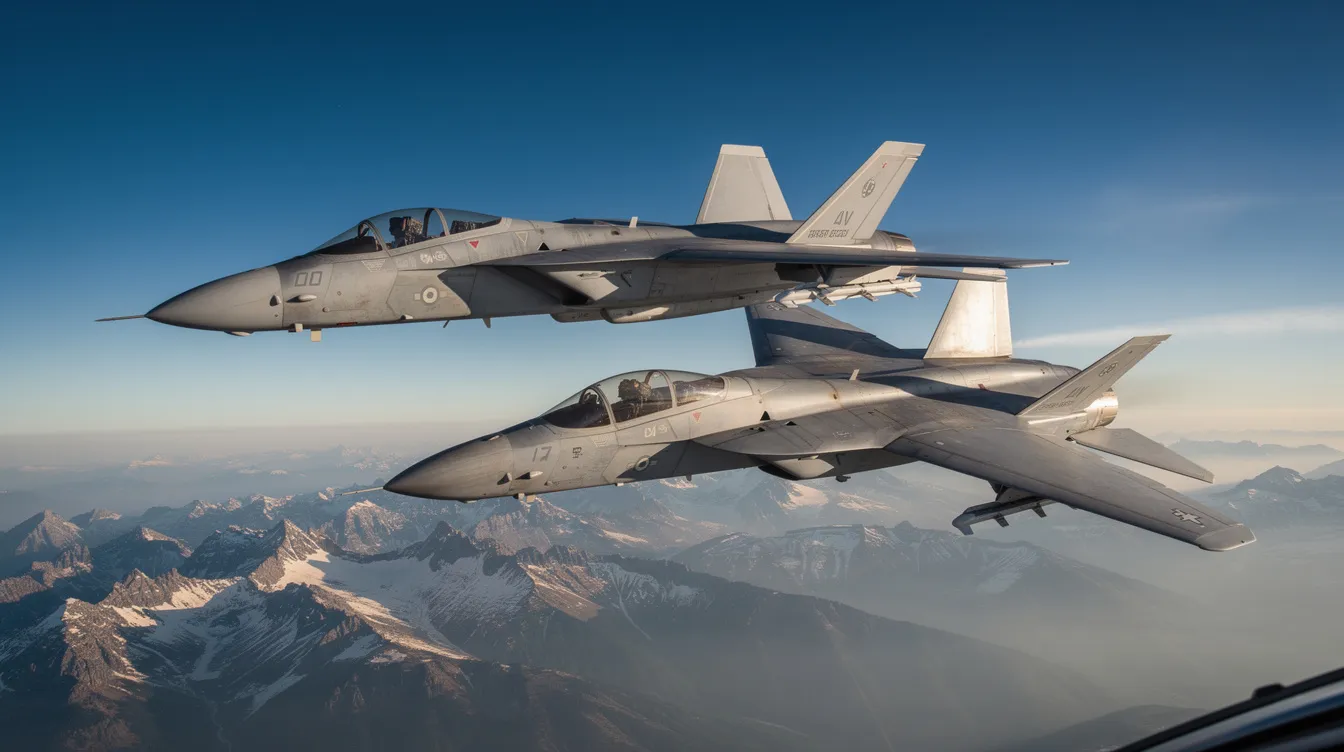
Why Mach Speed Still Matters for Modern High‑End Travelers
Private Jet Speed in Practice
Mach speed—the ratio of an object's velocity to the speed of sound—remains one of aviation's most compelling metrics, and the fastest Mach speed ever recorded by an air-breathing aircraft is Mach 9.6 (7,366 mph), set by NASA's X-43A in 2004. The fastest crewed aircraft is the North American X-15 at Mach 6.72 (4,520 mph), while the SR-71 Blackbird reached Mach 3.3 (2,193 mph), making it the fastest crewed air-breathing jet in history.
Whether it's a scramjet-powered research vehicle crossing the upper atmosphere or a large-cabin business jet cruising at Mach 0.90, speed shapes how we think about flight. For aviation enthusiasts, those records are the headline. For executives, frequent business flyers, and high-net-worth leisure travelers who value flexibility, privacy, safety, and luxury, the more useful question is how aircraft speed translates into time saved door to door.
That is where private aviation changes the calculation. A private jet cruising at Mach 0.85 that departs from a private terminal fifteen minutes after you arrive will often beat a commercial itinerary slowed by early boarding, layovers, and hub connections. In practice, the advantage is less about chasing hypersonic numbers and more about reclaiming hours through direct routing, flexible scheduling, and operational efficiency.
This guide puts those tradeoffs in context by comparing record-setting aircraft with current jet speed categories, the fastest aircraft past and present, and the real-world performance of private jets. It also explains how BlackJet's premium private jet card programs turn that performance into practical benefits through prepaid access, safety-focused operations and certification standards, and carbon-neutral flight options designed for travelers who want measurable time savings without the complexity of ownership, and how broader jet card pricing structures shape the overall value proposition for frequent flyers.
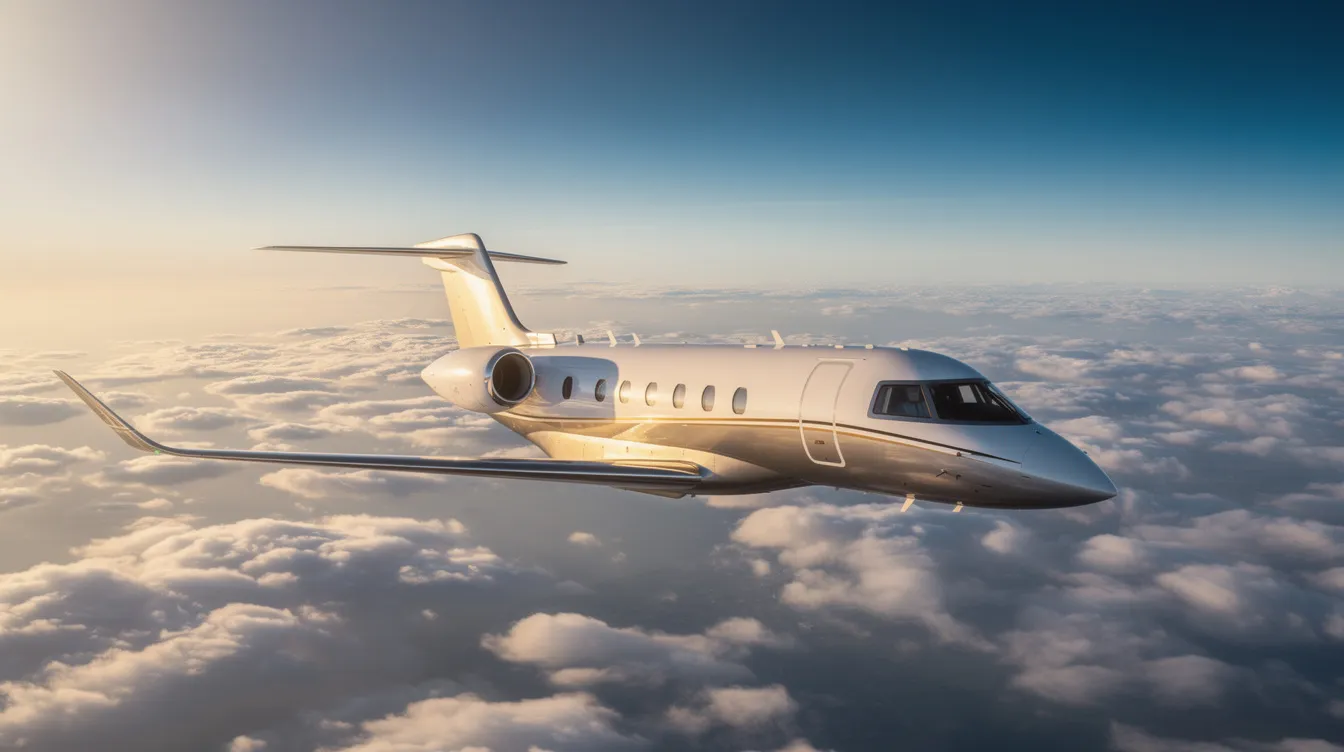
Understanding Mach: How Fast Is Mach 1, Mach 3, or Mach 9.6?
Mach speed is the ratio of speed to the speed of sound. The concept of Mach speed was introduced in 1887 by Ernst Mach, the Austrian physicist whose work on gas dynamics laid the groundwork for modern aerodynamics. Unlike miles per hour, the Mach number shifts with conditions: the speed of sound varies with temperature and altitude, meaning Mach 1 at sea level is different from Mach 1 at 40,000 feet.
At sea level under standard atmospheric conditions, Mach 1 is approximately 1,195 km/h or 717 mph. At typical cruise altitude—around 35,000 feet where air temperature drops significantly—Mach 1 falls to roughly 660–690 mph (1,060–1,110 km/h). This is why engineers and military pilots use Mach rather than raw mph: above about Mach 0.8, aerodynamic effects like compressibility, shockwaves, and thermal stress scale with Mach number, not ground speed.
Here's how the categories break down:
Category | Mach Range | Approx. Speed at Altitude | Notable Aircraft |
|---|
Subsonic | Below Mach 1 | Under ~660 mph | Commercial airliners, private jets |
Transonic | Mach 0.8–1.2 | ~530–790 mph | Breaking the sound barrier zone |
Supersonic | Mach 1–5 | ~660–3,300 mph | Concorde, SR-71, fighter jets |
Hypersonic | Above Mach 5 | 3,300+ mph | X-15, X-43A |
Subsonic speeds are below Mach 1—the regime where virtually all commercial and private aircraft operate today. Supersonic aircraft exceed Mach 1, creating sonic booms that limit where they can fly over populated areas. Hypersonic vehicles exceed Mach 5, entering a domain where air temperature and structural loads become extreme challenges.
Fastest Mach Speed Ever Reached: NASA's X‑43 Waverider
The fastest aircraft ever to fly using atmospheric oxygen reached a speed that most aviation enthusiasts still find difficult to comprehend. On 16 November 2004, the NASA X-43A achieved Mach 9.6 (7,366 mph) over the Pacific Ocean at approximately 109,000 feet—making it the fastest unmanned aircraft and the world's fastest aircraft in the air-breathing category.
The NASA X-43A used a scramjet engine for its record flight. A supersonic combustion ramjet, or scramjet, differs from conventional jet engines because it compresses incoming air at supersonic speeds without any moving parts—no turbine blades, no compressor fans. The vehicle was carried aloft by a B-52 mothership, then accelerated by a Pegasus rocket booster before the scramjet ignited. The powered phase lasted only seconds before the craft glided back toward the ocean.
This was strictly flight research. The X-43A had no cockpit, no payload capacity, and no practical transport function. It existed to prove that scramjet-powered vehicles could sustain stable combustion at hypersonic speeds—a stepping stone for future propulsion concepts, not a platform anyone would board for a transatlantic crossing.
Despite the extreme speed, the X-43 doesn't qualify as the fastest fighter jet or fastest aircraft in service. It's a research milestone—one that demonstrated what's theoretically possible when engineers push beyond the limits of conventional propulsion. The gap between Mach 9.6 and the Mach 0.85–0.94 range of today's fastest private jets illustrates just how far apart experimental hypersonic technology and practical aviation remain.
Fastest Manned Aircraft: The X‑15 and the Edge of Space
The fastest crewed aircraft ever flown is the North American X-15, a rocket aircraft that rewrote the rules of high-speed flight. On 3 October 1967, pilot William J. "Pete" Knight pushed the X-15A-2 to Mach 6.72 (4,520 mph) at an altitude of approximately 102,100 feet—reaching speeds that placed him at the boundary between aviation and spaceflight.
The X-15 was air-launched from a modified B-52, igniting its XLR99 rocket engine at altitude and climbing into the upper atmosphere under its own power. Across 199 flights between 1959 and 1968, the program collected data on aerodynamic heating, stability at hypersonic speeds, pilot physiology under extreme conditions, and re-entry dynamics. Several X-15 pilots flew above 50 miles altitude, earning astronaut wings from the Air Force.
The X-15 experienced extreme temperatures during its flight—skin temperatures exceeding 1,200°F on some missions required special Inconel X alloy construction and, for the fastest flights, ablative coatings to absorb extreme heat. This wasn't an aircraft designed for air combat or reconnaissance. It was a pure experimental aircraft that generated data directly used in the Apollo program, the space shuttle, and modern hypersonic technology development.
X-15 at a Glance:
Top speed: Mach 6.72 (4,520 mph / 7,274 km/h)
Record flight date: 3 October 1967
Pilot: William J. "Pete" Knight
Peak altitude: 354,200 ft (67 miles) on a separate flight
Program duration: 1959–1968
Total flights: 199
Fastest Air‑Breathing Crewed Jet: The SR‑71 Blackbird
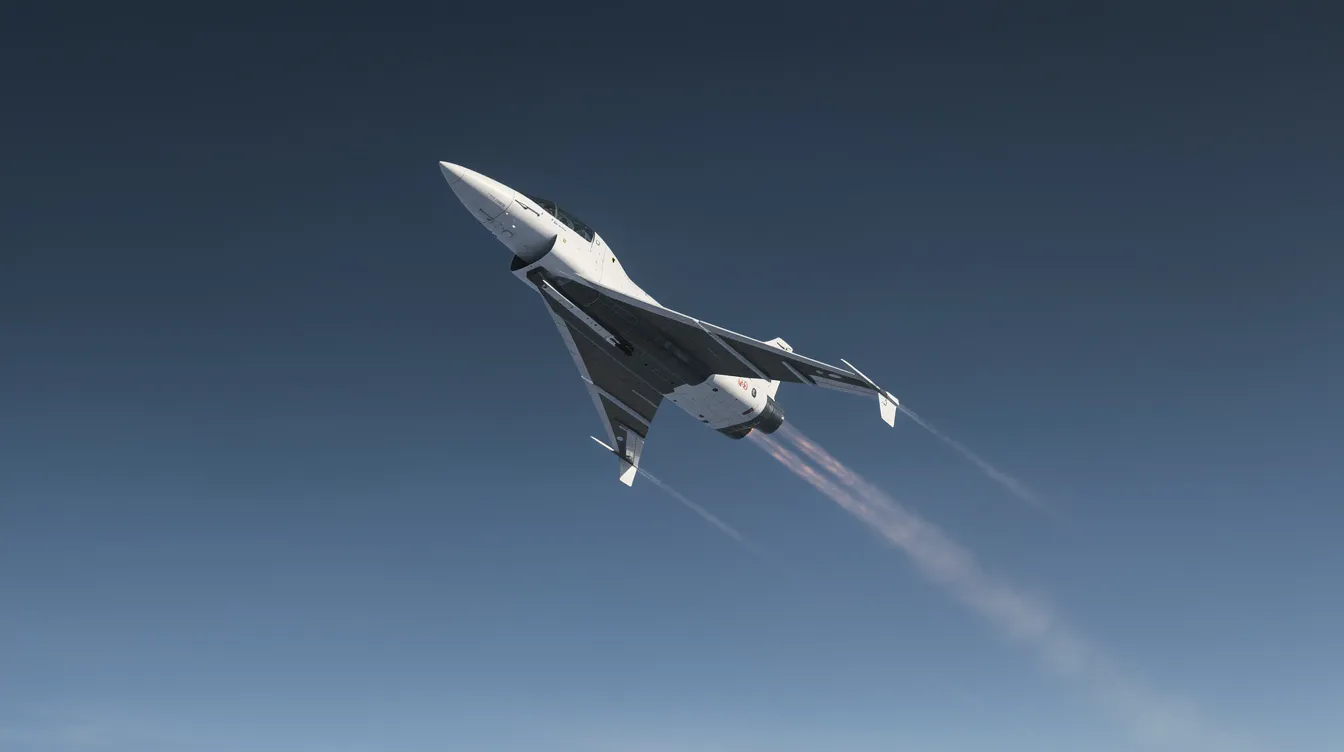
When it comes to the fastest crewed aircraft powered by jet engines rather than rockets, one name stands alone. The Lockheed SR-71 Blackbird achieved speeds of Mach 3.3 (2,193 mph / 3,529 km/h) on 28 July 1976 near Beale Air Force Base—a record among air breathing jets that has never been surpassed.
The SR-71 Blackbird was a Cold War-era reconnaissance aircraft built to overfly hostile territory at altitudes above 80,000 feet, literally outrunning surface to air missiles rather than evading them. Its design innovations were decades ahead of their time: a titanium airframe that could withstand the extreme heat generated at Mach 3+, distinctive chines along the fuselage that provided aerodynamic lift and contributed to a reduced radar cross-section, and Pratt & Whitney J58 engines that functioned as hybrid turbojet-ramjets at high speed.
The SR 71 burned JP-7 fuel—a special low-volatility blend with high thermal stability, necessary because conventional jet fuel would ignite from airframe heat alone at those speeds. Pilot Brian Shul famously claimed reaching speeds above Mach 3.5 during a 1986 mission over Libya, though this remains unofficial. What's documented is that the aircraft routinely operated at the edge of its certified envelope, achieving ground speed readings that no other crewed jet has matched before or since.
The Blackbird's flight profiles were fundamentally different from those of a typical fighter jet. It didn't dogfight; it didn't need to. Its mission was strategic intelligence gathering—fly high, fly fast, photograph everything, and be gone before anyone could respond. In that role, raw Mach speed was not just a specification; it was a survival strategy.
The Fastest Fighter Jet in History: MiG‑25 and Other Contenders
Defining the fastest fighter jet requires a distinction from rocket aircraft and reconnaissance platforms. For this article, we're talking about purpose-built combat aircraft capable of carrying weapons and engaging enemy aircraft—not experimental research craft or unarmed spy planes.
By that standard, the MiG-25 Foxbat stands as the top contender. The MiG-25 Foxbat can reach speeds of Mach 3.2 (2,190 mph) under emergency conditions, though this came at a severe cost: engines required complete overhaul afterward. Its safe operational limit sat around Mach 2.83, still extraordinarily fast for a military aircraft carrying air-to-air missiles and advanced radar.
Designed in the Soviet Union during the 1960s to intercept high-altitude threats like the American XB-70 Valkyrie supersonic bomber, the MiG-25 prioritized altitude and raw speed over agility. It could climb to above 80,000 feet and track multiple targets using its Smerch-A radar system. But in close aerial combat, it was unwieldy—a trade-off its designers accepted because the interceptor's mission was to reach incoming bombers quickly, not to turn-fight with nimble opponents.
Other contenders for the fastest fighter jet title include:
MiG-31 Foxhound: An evolution of the MiG-25, the MiG-31 can reach speeds of Mach 2.83 (1,864 mph), with improved radar and the ability to engage low-flying cruise missiles.
F-15 Eagle: The F-15 Eagle can achieve speeds of Mach 2.5 (1,650 mph), but its legendary 104-0 combat record owes more to its radar, weapons, and pilot training than to top speed alone.
F-14 Tomcat: The F-14 Tomcat achieves speeds of Mach 2.34 (1,544 mph), featuring a variable-sweep wing design that optimizes performance across speed regimes.
Su-27 Flanker: The Su-27 Flanker reaches speeds of Mach 2.35 (1,553 mph), renowned for its exceptional maneuverability and the famous "Pugachev's Cobra" maneuver.
The pattern is clear: after the MiG-25's Mach 3+ capability, subsequent fighters traded some max speed for better maneuverability, sensor integration, and multi-role capability.
The English Electric Lightning: Britain's Cold War "Skyrocket"
The English Electric Lightning holds a unique place in the story of setting speed records among Western fighter jets. Entering service in the early 1960s, it was the first aircraft in RAF service capable of reaching about Mach 2.0 (approximately 1,300 mph / 2,090 km/h)—making it, at the time, one of the fastest planes in NATO's arsenal.
What set the Lightning apart was its unconventional design. Two Rolls-Royce Avon engines were stacked vertically in the fuselage rather than placed side by side, giving the aircraft a remarkably slim profile and an extraordinary climb rate. Pilots frequently described the experience as "being strapped to a rocket"—the Lightning could reach 36,000 feet in under three minutes from brake release.
Its primary mission was point-defense interception: scrambling from British airfields to intercept Soviet bombers approaching over the North Sea before they could threaten UK airspace. In this role, extreme speed and climb performance mattered more than combat range or loiter time.
Key characteristics of the English Electric Lightning:
Top speed: Approximately Mach 2.0
First flight: 1954 (prototype); service entry 1960
Role: Point-defense interceptor
Engines: Two vertically stacked Rolls-Royce Avon turbojets with reheat
Notable limitation: Short combat range due to high fuel burn at supersonic speeds
The Lightning's legacy endures in British aerospace engineering as proof that bold design choices—stacked engines, a notched delta wing—could produce performance that rivaled or exceeded aircraft from much larger defense industries.
From Breaking the Sound Barrier to Hypersonic Flight
The history of Mach speed milestones reads like a compression of human ambition into decades. Each leap required new materials, new propulsion, and new courage.
The Bell X-1 first broke the sound barrier in 1947 when Chuck Yeager achieved Mach 1.06 in level flight over Edwards Air Force Base—proving that the "demon" of the sound barrier was an engineering challenge, not a physical wall. The sonic boom that accompanied transonic flight would become a defining characteristic (and regulatory headache) for every supersonic aircraft that followed.
Within a decade, in the years after World War II, fighter jets like the MiG-15—which reached a top speed of 670 mph—were pushing into the transonic regime during the Korean War, and engineers were already accelerating into supersonic design for Mach 2. The progression accelerated:
1947: Bell X-1 breaks Mach 1 (rocket aircraft, air-launched)
1953: First flight of the F-100 Super Sabre, the first aircraft to achieve sustained supersonic speed in level flight under its own power
1960s: MiG-25, SR-71 programs begin; interceptors reach Mach 2–3
1967: X-15 reaches Mach 6.72, the edge of space
2004: X-43A achieves Mach 9.6, the fastest air-breathing flight ever recorded
Each step required advances in aerodynamics (delta wings, area ruling, variable geometry), materials (titanium replacing aluminum, carbon-carbon composites for thermal protection), and propulsion (from early turbojets with afterburners to ramjets and ultimately the scramjet engine). Many of these record-breaking aircraft were purpose-built research or reconnaissance platforms—not everyday fighter jets or passenger aircraft.
Today, hypersonic research continues primarily in unmanned systems and missile programs, while crewed hypersonic flight remains firmly in the experimental domain.
Fastest Fighter Jets vs Modern Air Superiority
Raw top speed once defined a fighter jet's prestige. Today, air superiority depends on a far more complex equation that balances speed, agility, stealth technology, sensors, and weapons integration.
Consider the contrast. The MiG-25 could sprint past Mach 3 but struggled in a turning fight. Modern stealth fighters like the F-22 Raptor—with a top speed of approximately Mach 2.25 and the ability to supercruise (sustain supersonic speeds without afterburners)—emphasize low observability, sensor fusion, and first-look/first-shot capability over reaching speeds that would be structurally risky to maintain.
Key examples that illustrate this shift:
F-15 Eagle (Mach 2.5): Unmatched kill ratio in air combat, relying on powerful radar, weapons flexibility, and pilot training
Su-27 Flanker (Mach 2.35): Renowned for extreme agility and visual-range dogfighting capability
F-22 Raptor (Mach 2.25 with supercruise): Stealth aircraft that can engage before being detected
Rafale (Mach 1.8): Multirole fighter jet balancing air combat with ground attack, carrier operations, and nuclear deterrence
Beyond visual range engagements now dominate modern aerial combat doctrine. Advanced radar and long-range missiles mean that the aircraft with superior situational awareness—not necessarily the highest top speed—typically controls the engagement. Internal weapons bays on stealth aircraft like the F-22 and F-35 eliminate external drag, maintaining speed and reducing radar signature simultaneously.
The fastest fighter jet on paper is increasingly less important than the one that sees first, decides first, and engages first.
How Top Speed Is Measured – Test Numbers vs Operational Reality
Test vs Operational Speeds
When manufacturers or militaries quote a max speed for an aircraft, that number almost always represents performance under ideal test conditions: high altitude, minimal fuel weight, no external weapons or stores, clean aerodynamic configuration, and full afterburner engagement. Real-world operational speeds are typically lower—sometimes significantly.
The distinctions matter:
Theoretical maximum (design limit): The speed an airframe is engineered to withstand, often never actually tested in flight
Demonstrated maximum (flight-tested): Achieved during dedicated test flights under controlled conditions
Sustainable operational speed: What military pilots or commercial operators actually use during missions or routes, factoring in engine life, fuel efficiency, structural fatigue, and regulations
The F-15EX, for instance, carries a published max speed of Mach 2.5, but operational sorties with external weapons loads and fuel tanks rarely approach that number. The MiG-25 could reach Mach 3.2, but doing so risked catastrophic engine damage—hardly a repeatable tactic.
Another subtlety: because local speed of sound changes with air temperature and altitude, 700 mph at sea level represents a different Mach number than 700 mph at 50,000 feet. This is why Guinness World Records and aviation bodies carefully specify altitude and atmospheric conditions when certifying speed records.
For private aviation, the gap between brochure numbers and real-world cruise speeds is narrower but still relevant. An aircraft rated for Mach 0.935 may typically cruise at Mach 0.85–0.90 for optimal fuel burn and range.
Fastest Planes by Category: Fighters, Bombers, Recon, Experimental
Speed Records by Aircraft Type
To make sense of speed records across aviation history, it helps to group the fastest planes by their intended mission:
Fighter Jets / Interceptors:
Bombers / Strike Aircraft:
XB-70 Valkyrie: The XB-70 Valkyrie could sustain speeds of Mach 3.1 (2,056 mph)—a supersonic bomber concept that never entered full production but influenced decades of high-speed aerodynamics. It was the first supersonic bomber designed for sustained Mach 3 cruise.
B-58 Hustler: Mach 2.0, the first operational supersonic bomber in Air Force service
Tu-160 Blackjack: Mach 2.05, the largest supersonic military aircraft ever built
Reconnaissance Aircraft:
Experimental / Research:
X-15: Mach 6.72 (rocket-powered manned aircraft)
X-43A: Mach 9.6 (fastest unmanned aircraft, scramjet-powered)
Supersonic Passenger Aircraft:
Each era produced aircraft optimized for different priorities. Cold War interceptors chased raw speed. Modern military aircraft emphasize survivability and sensor advantage. And in civil aviation, the push is toward sustainable high-subsonic performance.
Fastest Private Jets: High‑Subsonic Speed with Luxury and Range
While fighter jets and experimental craft chase extreme Mach speed numbers, the fastest private jet models operate in a different regime entirely—cruising just below the speed of sound where efficiency, comfort, and range intersect.
Private jets typically cruise around Mach 0.78 to 0.935, depending on the aircraft class and mission. Current leaders include:
Aircraft | Top Speed | Typical Cruise | Range |
|---|
Bombardier Global 8000 | ~Mach 0.94 | Mach 0.85–0.90 | 8,000 nm |
Cessna Citation X+ | Mach 0.935 | Mach 0.85 | 3,460 nm |
Gulfstream G700 | Mach 0.925 | Mach 0.90 | 7,500+ nm |
Gulfstream G800 | ~Mach 0.925 | Mach 0.90 | 8,000 nm |
The Bombardier Global 8000 operates at similar high-subsonic speeds as the Citation X+ but pairs that velocity with intercontinental range. The Gulfstream G700 reaches speeds of Mach 0.925, while the Gulfstream G800 is also among the fastest private jets—both offering cabin experiences that redefine long-range travel. The Cessna Citation X+ can achieve Mach 0.935, making it one of the quickest options for shorter transcontinental routes.
Why don't these aircraft push past Mach 1? Because drag and fuel burn rise sharply as aircraft approach the sound barrier—a phenomenon called transonic drag rise. The structural stress, cabin noise, and sonic boom issues compound rapidly. For a business traveler, the difference between Mach 0.90 and Mach 0.94 on a transatlantic flight might save 20–30 minutes, while the increase in fuel burn can exceed 15–20%.
For most private aviation journeys, the hours saved by avoiding hub connections, security queues, and boarding delays dwarf any marginal gain from a higher Mach number.
Why Private Jets Don't Fly as Fast as the Fastest Fighter Jets
The mission profiles couldn't be more different. A fighter jet is built for short, intense bursts of performance—intercepting threats, engaging in air combat, then returning to base. A private jet is optimized for sustained, comfortable travel across thousands of nautical miles.
The trade-offs explain everything:
Fuel burn: Afterburners multiply fuel consumption by 3–5x. A fighter jet in afterburner might burn through its fuel in minutes; a private jet needs to carry passengers for 8–14 hours
Structural fatigue: Sustained high-Mach flight generates extreme heat and stress cycles that drastically shorten airframe life
Cabin environment: Passengers need stable temperature, pressurization, low noise, and smooth ride quality—none of which improve at supersonic speeds
Noise and regulation: Sonic booms prohibit supersonic overland flight in most jurisdictions, limiting practical routes
Operating cost: Every increment of Mach above 0.90 brings exponentially higher maintenance, insurance, and fuel costs
Consider a practical example: on a 3,000-nautical-mile trip, a jet cruising at Mach 0.80 arrives roughly 35 minutes later than one at Mach 0.90. But a passenger who bypasses commercial check-in, boards at a private terminal, and departs within 20 minutes of arriving at the airport saves two to three hours on that same trip—regardless of cruise speed.
For BlackJet clients, the fastest aircraft isn't the one with the highest number on a spec sheet. It's the one that delivers them door to door with the least friction.
How BlackJet Turns Speed into Real‑World Time Saved
Aircraft performance sets a theoretical ceiling. What BlackJet's Jet Card programs do is translate that ceiling into consistent, measurable time savings through operational efficiency that no commercial airline can match.
The mechanics are straightforward:
No TSA lines or commercial check-in: Arrive at a private terminal 15–20 minutes before departure
Direct routing: Access to thousands of airports that commercial carriers don't serve, often closer to your actual destination
On-demand scheduling: Depart when your meeting ends, not when the airline schedule permits
Quick turns: Coordinate consecutive legs in the same day without connection windows or layover risk
Scenario 1: New York to London - An executive using a large-cabin jet via a BlackJet 50-hour jet card departs from Teterboro at 7:00 PM, arrives at Farnborough by 6:30 AM local time. No Heathrow queues, no immigration crowds, no baggage carousel. She's in a London office by 8:00 AM. For travelers who fly less frequently, a 25-hour jet card can offer similar flexibility and time savings with a smaller initial commitment, while the comparable commercial first-class experience adds 3–4 hours of airport time on each end.
Scenario 2: Los Angeles to Aspen - A Friday afternoon departure on a midsize jet from Van Nuys, arriving in Aspen 2 hours later. Commercial alternatives involve connecting through Denver, adding half a day of travel.
BlackJet's 24/7 digital booking, real-time flight support, and access to multiple aircraft classes through a single Jet Card balance mean that members choose the right aircraft for each mission—light jets for short hops, super-mids for transcontinental legs, large-cabin platforms for international travel. Understanding private jet sizes and capabilities and the best small private aircraft for specific missions helps match each trip to the most efficient option. Understanding private jet sizes and capabilities and the best small private aircraft for specific missions helps match each trip to the most efficient option.
Speed, Safety, and Certification in Private Aviation
Every knot of cruise speed is earned within a framework of safety protocols, airframe limits, and regulatory compliance. In business aviation, this framework is non-negotiable.
BlackJet operates exclusively with vetted operators who meet or exceed industry safety standards, including:
Dual-pilot crews on every flight, regardless of aircraft size
Advanced avionics with redundant navigation and communication systems
Strict maintenance cycles that often exceed manufacturer minimums
Audited operator partnerships evaluated against rigorous certification frameworks
Continuous monitoring of pilot training records, flight hours, and safety metrics
BlackJet will not trade safety margins for marginal gains in cruise Mach. An aircraft operated at 98% of its certified maximum speed under suboptimal conditions introduces unnecessary risk. Operating within a carefully managed envelope—typically Mach 0.85–0.90 for most private jets—ensures consistent performance, lower structural stress, and longer intervals between major maintenance events.
For sophisticated travelers who fly frequently, this disciplined approach to speed versus safety is a hallmark of professional aviation management.
Sustainability at High Speed: Carbon‑Neutral Private Flights
Higher speeds generally mean higher fuel burn and emissions per mile flown. This is a physical reality—drag increases exponentially as aircraft approach the sound barrier, and every additional tenth of a Mach number at cruise demands meaningfully more fuel.
BlackJet addresses this directly through its commitment to carbon-neutral flights. Every flight is offset through verified carbon credit programs that fund certified projects—reforestation, methane capture, renewable energy development—designed to remove or avoid an equivalent amount of CO₂.
For members, the process is seamless:
Flight emissions are calculated based on aircraft type, distance, and fuel burn
Offsets are purchased automatically—no additional cost, no administrative burden
BlackJet continues to expand its use of sustainable aviation fuel (SAF) where available, working with operators and FBOs that support next-generation fuel infrastructure
A typical transcontinental private jet flight generates roughly 4–6 tonnes of CO₂. Under BlackJet's program, this impact is neutralized through project investments that are third-party verified and transparently reported.
Flying fast and privately while acting responsibly toward the environment isn't a contradiction. It's a mark of how modern private aviation operates at its best.
Why Modern Military Jets Aren't Getting Much Faster
Since the 1970s, the top speed of frontline fighter jets has barely increased. The MiG-25 hit Mach 3.2 in the 1960s. The latest fifth-generation fighters—F-22, F-35, Su-57—top out around Mach 2.0–2.25. Why the plateau?
The answer lies in physics and strategy:
Thermal limits: Beyond Mach 2.5, skin friction heating becomes a dominant design constraint. Conventional aluminum structures can't survive; titanium and exotic alloys add massive cost and manufacturing complexity
Fuel consumption: Sustaining Mach 3+ requires continuous afterburner or specialized propulsion, consuming fuel at rates that slash combat range to impractical levels
Diminishing tactical returns: In an era of beyond-visual-range missiles with Mach 4+ capability, a fighter sprinting at Mach 3 gains little additional survivability
Stealth vs speed: Low observability—being invisible to radar—provides greater survivability than outrunning missiles. Stealth aircraft prioritize radar-absorbing materials, internal weapons bays, and carefully shaped airframes over raw velocity
Modern hypersonic efforts focus on unmanned missiles and glide vehicles, avoiding the pilot risk from extreme heat and G-forces. Programs developing scramjet-powered weapons and hypersonic boost-glide vehicles represent the current frontier of extreme speed—but these are weapons, not crewed platforms.
The age of ever-faster crewed jets has plateaued. What's advanced instead is capability: sensor fusion, networking, electronic warfare, and precision. In private aviation, the parallel is striking—fuel efficiency, range optimization, and operational flexibility deliver more value than chasing higher Mach numbers.
Cold War Speed Race: MiG‑25, F‑15, SR‑71, and Beyond
The Cold War was the crucible that forged the fastest military aircraft in history, building on propulsion and airframe advances that accelerated after World War II. Superpower competition between the United States and the Soviet Union drove both nations to develop platforms that pushed the limits of Mach speed, altitude, and materials science.
The MiG-25 Foxbat emerged from Soviet anxiety about the American XB-70 Valkyrie program—a proposed Mach 3.1 supersonic bomber that would have been nearly impossible to intercept with existing technology. Soviet engineers responded with an interceptor built from welded stainless steel (rather than expensive titanium), capable of reaching speeds of Mach 3.2 at altitudes above 80,000 feet. When the XB-70 program was canceled, the MiG-25 remained—a solution built for a threat that never fully materialized, but formidable nonetheless.
The American response was multifaceted. The F-15 Eagle was developed specifically after intelligence (much of it inaccurate) suggested the MiG-25 was a supremely agile dogfighter. In reality, the MiG-25 was a straight-line interceptor, but the F-15 that emerged from the program became the most successful air superiority fighter in history, optimized for both speed and agility with a max speed of Mach 2.5.
Meanwhile, the SR-71 Blackbird occupied a separate lane entirely—a reconnaissance aircraft that relied on extreme speed and altitude to survive, overflying targets that no other platform could reach. Its Mach 3.3 capability wasn't about air combat; it was about strategic intelligence gathered at speeds that made interception practically impossible.
Post-Cold War, the emphasis shifted from sheer speed to multirole flexibility, stealth, and network-centric warfare—a transition that mirrors how private aviation has evolved from "fastest possible" to "most efficient and practical."
Aerial Combat at Mach Speed: What High Velocity Really Changes
Speed in air combat isn't just about who flies faster—it fundamentally changes engagement geometry, missile performance, and pilot decision-making.
At supersonic speeds, a fighter jet's turn radius widens dramatically. Energy management becomes critical: a pilot who accelerates to Mach 2 to close distance may find himself unable to turn tightly enough for a follow-up engagement. Conversely, speed provides kinetic energy that can be converted into altitude or weapons range.
In beyond-visual-range engagements—now the dominant mode of aerial combat—speed amplifies missile effectiveness. A missile launched from a platform traveling at Mach 1.5 inherits that velocity, extending its effective combat range compared to a subsonic launch. This is why modern fighters emphasize supercruise: sustained supersonic flight without afterburners gives a persistent energy advantage without the fuel penalty.
Practical examples:
F-15 and Su-27: Both rely on energy-maneuverability doctrine, converting speed and altitude into positional advantage during air-to-air engagements
MiG-31: Uses its Mach 2.83 dash speed to rapidly intercept incoming cruise missiles or bombers—reaching speeds to close gaps that slower interceptors couldn't
Yet many fighter jets rarely fight at absolute top speed. Most engagements occur in the transonic regime (Mach 0.8–1.2), where aircraft can balance turn rate, energy retention, and sensor performance. Mach numbers alone don't decide aerial combat outcomes—the aircraft with superior situational awareness and weapons integration consistently prevails.
Fastest Passenger and Business Aircraft: Concorde to Boom Overture
The Concorde flew at speeds of Mach 2.04, cutting London to New York transit time to approximately 3.5 hours—a marvel that defined supersonic commercial travel for nearly three decades. It was the first supersonic passenger jet to enter scheduled service, and for its loyal clientele, it represented the ultimate fusion of speed and prestige.
Its retirement in 2003 came down to economics and environment: staggering fuel burn (roughly 5,600 gallons per hour), a sonic boom that restricted routes to overwater corridors, limited seating capacity, and operating costs that no ticket price could sustainably cover.
The next generation is approaching cautiously. Boom's Overture program targets approximately Mach 1.7 using 100% sustainable aviation fuel, with advanced noise-reduction technology designed to address the sonic boom problem that grounded its predecessor. But certification, regulatory approval, and route economics remain significant hurdles.
In the meantime, today's fastest passenger aircraft operate just below the sound barrier. The top private jets cruise at Mach 0.85–0.94, combining near-optimal speed with global range, spacious cabins, and access to thousands of airports that no supersonic airliner could serve.
BlackJet represents the practical, available-today solution: near-optimal subsonic speed combined with unmatched scheduling control, direct routing, and private terminal access. For travelers comparing options, an overview of private jet pricing and access models clarifies how this value stacks up against ownership, charter, or fractional alternatives. The supersonic future may arrive eventually—but the private aviation advantage is available now.
BlackJet Jet Cards: Choosing the Right Aircraft Class for Speed and Comfort
Selecting the right aircraft for each trip is where speed, range, and comfort intersect—and where BlackJet's advisory approach delivers tangible value.
Key aircraft classes available through BlackJet Jet Cards:
Light jets: Ideal for flights under 3 hours. Cruise around Mach 0.78. Perfect for city-pair hops like New York–Washington or LA–San Francisco
Midsize jets: Regional and short transcontinental. Cruise Mach 0.80–0.82. Stand-up cabins, enhanced luggage capacity
Super-midsize jets: Transcontinental range with mid-cabin comfort. Cruise Mach 0.82–0.85. Balanced speed and efficiency
Large-cabin jets: International missions with full-size cabins, lie-flat seating, and Mach 0.85–0.90+ cruise. Aircraft like the G700 and Global series
BlackJet's Jet Card programs—available in blocks such as 25-hour and 50-hour increments—offer prepaid access with transparent pricing and guaranteed availability within specific notice windows. Advisors help members select the fastest practical option for each route, matching aircraft performance to mission requirements rather than defaulting to a single aircraft type, while resources on jet card pricing structures and benefits and the best jet cards for frequent flyers further support informed decision-making.
Example: A member with a 25-hour Jet Card might use a light jet for a Monday morning Boston–Philadelphia meeting, a super-mid for a Wednesday Dallas–Seattle flight, and a large-cabin jet for a Friday transatlantic departure—all managed through a single account with consistent pricing and service standards.
Technology Behind the Scenes: How BlackJet Optimizes Your Flight Plan
Aircraft Mach capability sets the upper limit. What often determines actual travel time is everything that happens before and after the engines spool up.
BlackJet's technology platform works behind the scenes to convert speed potential into dependable outcomes:
Real-time route optimization: Weather data, airspace restrictions, and wind patterns are analyzed to select the most efficient routing—sometimes shaving 20–30 minutes from flight time compared to standard airways
Digital booking and instant confirmation: App-based or online scheduling eliminates back-and-forth coordination, providing confirmed itineraries within minutes
FBO coordination: BlackJet works directly with fixed-base operators to minimize ground time, ensuring fueling, customs clearance, and crew positioning are handled before members arrive
Quick turns: For multi-leg days, aircraft are positioned and prepared to depart within the shortest possible window between flights
Smart routing and ground-time management often save more real-world time than a marginally faster jet. When a member's flight plan avoids a congested arrival slot at Teterboro by routing through a nearby reliever airport—saving 40 minutes of holding pattern time—that's technology delivering tangible value that no Mach number can provide.
FAQ: Fastest Aircraft, Mach Numbers, and Private Jet Travel
What is the fastest aircraft ever built? The fastest air-breathing aircraft ever flown is the NASA X-43A, which achieved Mach 9.6 (7,366 mph) in November 2004 using a scramjet engine. It was unmanned and experimental. The fastest manned aircraft is the X-15, which reached Mach 6.72 (4,520 mph) in October 1967.
What is the fastest fighter jet in service? The MiG-25 Foxbat holds the record for highest demonstrated speed among fighters at Mach 3.2, though operationally limited to around Mach 2.83. Among current Western fighters, the F-15 Eagle at Mach 2.5 remains one of the fastest.
What is the fastest private jet available today? The Bombardier Global 8000 leads with a top speed near Mach 0.94. The Cessna Citation X+ achieves Mach 0.935, and the Gulfstream G700 and G800 reach Mach 0.925. For more detail, see our guide to the fastest personal planes.
What is Mach speed? Mach speed measures how fast something moves relative to the speed of sound. Mach 1 equals the speed of sound—roughly 761 mph at sea level or about 660 mph at cruise altitude. A typical commercial airliner cruises around Mach 0.78–0.82; the fastest private jets cruise at Mach 0.85–0.90.
Can private jets break the sound barrier? Not in regular service. Supersonic flight over land is restricted in most countries due to sonic boom regulations. The fuel burn, structural stress, and noise issues make supersonic private travel impractical with current technology, though companies like Boom are working toward certified supersonic passenger aircraft.
How much real time can a Jet Card save me per trip? Typically 2–5 hours per trip compared to commercial first class, depending on the route. The savings come primarily from eliminating check-in procedures, security lines, connections, and baggage delays—not from flying at a marginally higher Mach number. On busy routes like New York–Miami or London–Geneva, the advantage is even more pronounced.
How does Mach speed change with altitude? Because the speed of sound depends on air temperature, and temperature drops with altitude, Mach 1 represents fewer miles per hour at 40,000 feet than at sea level. This is why pilots reference Mach number rather than ground speed for high-altitude cruise.
What aircraft did BlackJet use? BlackJet does not operate its own fleet. Instead, the Jet Card model provides access to vetted operators flying certified aircraft across light, midsize, super-midsize, and large-cabin categories—selected to match each member's speed, range, and comfort requirements.
Conclusion: From Record‑Breaking Mach Speeds to Effortless Private Journeys
The story of the fastest Mach speed is a story of relentless engineering ambition. NASA's X-43A proved that scramjet propulsion could work at Mach 9.6. The X-15 carried pilots to the edge of space at Mach 6.72. The SR-71 Blackbird outran every threat at Mach 3.3. And the MiG-25 Foxbat defined what it meant to be the fastest fighter jet of its era, reaching speeds of Mach 3.2 in pursuit of incoming threats.
These achievements are extraordinary—and they matter. They pushed forward the boundaries of materials science, aerodynamics, and human endurance that ultimately trickle down into every aircraft flying today, including the private jets that serve BlackJet members.
But for the traveler who values time above all else, the relevant number isn't Mach 9.6 or Mach 3.3. It's the total hours between decision and arrival—the sum of booking, ground transport, boarding, flight time, and deplaning. That's where private aviation consistently outperforms every alternative, and where BlackJet's combination of curated aircraft access, rigorous operator vetting, carbon-neutral flights, and tech-driven simplicity creates measurable advantage.
The fastest planes in history inspire us. The right private jet, at the right time, on the right terms—that's what moves your life forward.
Explore BlackJet Jet Cards and discover how to match aircraft performance with the scheduling control that turns speed into time reclaimed.


 Sign up with google
 Sign up with Apple