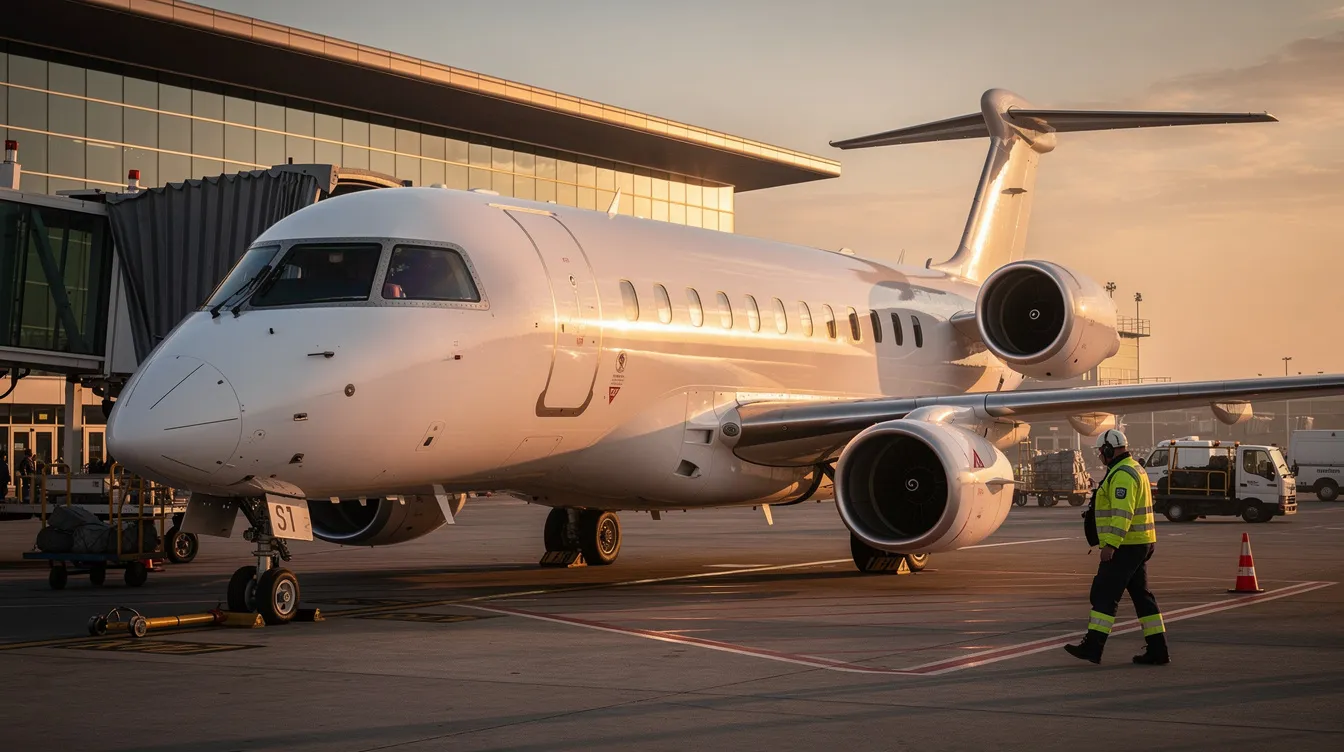
For discerning travelers who split their time between private jets and commercial aviation, the aircraft that carries you matters. The Embraer 175 has become the backbone of regional flying across North America—and its safety record is one of the most impressive in commercial aviation. Here is everything you need to know about the Embraer 175 safety record, from hard data and design philosophy to what it means for your next mixed itinerary.
Quick Answer: How Safe Is the Embraer 175?
The Embraer 175 has recorded zero fatal accidents involving passengers and zero hull loss accidents in airline operations since its entry into commercial service in July 2005. For an aircraft that has accumulated millions of flight hours globally and carries passengers on thousands of daily cycles, that is a remarkable distinction in the regional jet category.
Here are the key facts:
Air Canada was the launch customer for the E175, putting it into passenger service in July 2005 on high-frequency domestic routes.
The E-Jet family maintains an excellent safety record among regional jets, and the E175 specifically has never suffered a fatal crash or total airframe loss in commercial operations.
The aircraft is certified by the FAA in the United States, EASA in Europe, and ANAC in Brazil—all three agencies enforce strict airworthiness standards covering design, manufacturing, and ongoing maintenance.
The estimated fatality rate for the E175 is modeled at approximately 0.04 per million flights—statistically negligible for any commercial aircraft type.
Compared to older regional types like early Bombardier CRJ variants, the E175 benefits from newer structural engineering, advanced avionics, fly-by-wire flight control protections, and engines designed for reliability over high-cycle operations. Where some legacy regional jets have experienced fatal accidents over their service lives, the E175's operational history remains clean.
For BlackJet members who combine private jet legs with commercial segments, the Embraer 175 is one of the safest regional aircraft you can choose when stepping onto a scheduled flight.
Embraer 175 at a Glance: Regional Jet, Big-Jet Safety
The Embraer 175 is a twin-engine, single-aisle regional jet with typical seating for 76 to 88 passengers. Its signature 2+2 seating layout means there are no middle seats—every traveler has either a window or an aisle seat. The aircraft is built for short to medium-haul routes, with a maximum range of about 2,200 nautical miles.
Within the E-Jet family, the E175 sits as a stretched member of the E170, below the larger E190 and E195 in capacity but sharing the same wing, flight deck, and core systems architecture across the jet family. This commonality reduces training costs for airlines and ensures consistent safety standards across variants.
Key performance figures relevant to safety and operations:
Maximum takeoff weight of 89,000 lb
Maximum landing weight designed for frequent high-cycle operations on shorter runways
Service ceiling of 41,000 ft
Cruising speed of approximately Mach 0.75, with maximum cruise capability near Mach 0.82
The aircraft usually operates with dual-class configurations on North American regional routes under brands like United Express, Delta Connection, American Eagle, and Air Canada's regional partners. Embraer aircraft in this segment also serve carriers in Europe and the Asia Pacific region.
The E175's design target was "mainline comfort with regional economics" — which translates to robust systems, generous cabin height, and a big-jet feel in a smaller airframe. It is widely considered one of the most comfortable regional jets in service today.
Who Builds the Embraer 175 and Why That Matters for Safety
Embraer S.A., headquartered in São José dos Campos, Brazil, designs and manufactures the E175. It is one of the world's largest commercial aircraft manufacturers, ranking alongside Airbus and Boeing in terms of total deliveries and global reach. Embraer has delivered over 1,800 E-Jets, with the E175 being the dominant variant in that family.
Founded in 1969 and privatized in 1994, Embraer commercial aviation built its reputation through military programs before pivoting to regional jets—first the ERJ family, then the E-Jets. That progression created an engineering culture steeped in systems redundancy, structural fatigue management, and iterative design improvement. You can explore Embraer's broader corporate history and capabilities for additional context.
Embraer operates four main divisions:
Commercial Aviation – E-Jets, including the E175
Executive Aviation – Phenom, Praetor, and Lineage business jet lines
Defense & Security – Military aircraft and surveillance systems
Services & Support – MRO, parts, diagnostics, and fleet management
Cross-pollination of technology across these divisions benefits safety. Avionics lessons from military programs, structural design rigor from the business jet division, and diagnostic systems like AHEAD-PRO all feed back into the E-Jet family. For BlackJet clients accustomed to executive-jet standards, this shared engineering culture is meaningful—Embraer's private jets and its commercial aircraft emerge from the same design philosophy.
Embraer's global MRO network spans North America, Europe, and Asia-Pacific, ensuring parts availability and standardized maintenance procedures wherever E175s fly.
Operational History and Safety Milestones of the E175
The E175's first flight took place in June 2003. Two years later, it entered commercial service with Air Canada in July 2005, beginning a production aircraft program that would become the dominant force in the sub-100-seat segment.
Early deployments tested the aircraft in some of the harshest operating environments in commercial aviation. Air Canada flew E175s through Canadian winters, while US airline partners operated them across the Midwest and Northeast—conditions that validated anti-icing systems, cold-weather engine performance, and structural resilience. LOT Polish Airlines also became an early operator, expanding the type's exposure to diverse European weather and airfield conditions.
Key milestones in the E175's operational history:
By July 2020, 25 million passengers had flown on E175s globally
The E175 had accumulated over 650,000 flight hours by 2020
Hundreds of production aircraft were delivered through the 2010s and 2020s, maintaining a relatively young fleet average
The type now dominates the 70–76 seat segment in North America
Dispatch reliability—measured by on-time departure rates and low technical cancellation rates—has been consistently strong across operators. While no aircraft is immune to mechanical events, the E175's early minor technical issues (isolated hydraulic and engine events common to new programs) were addressed through service bulletins and updated maintenance procedures, reflecting a maturing safety system that learns from every operational cycle.
Documented Incidents vs. Accidents: Understanding the Record
Understanding the Embraer 175 safety record requires clarity on terminology. The International Civil Aviation Organization (ICAO) distinguishes between incidents (events affecting safety but not resulting in serious injury or aircraft loss) and accidents (events involving serious damage, hull loss, or fatalities). These categories are tracked globally by agencies like the NTSB, EASA, and dedicated databases.
As of mid-2026, the Embraer 175 has no fatal passenger crashes and no hull-loss accidents in commercial service. This is particularly noteworthy given that other variants in the broader E-Jet family have recorded several non-fatal hull losses on the E190 and E195.
Safety databases such as AeroInside record only a handful of serious incidents for the E175—none involving loss of life. For an aircraft type that feeds passengers onto regional routes across thousands of daily flights, this track record is exceptional.
Most recorded E175 events involve precautionary returns to the departure airport, minor system warnings, or low-severity mechanical issues where the flight crew followed standard operating procedures and landed safely. Each event triggers an investigation process, and when warranted, airworthiness directives or operational updates are issued.
The strong record is both design-driven and process-driven: the aircraft's built-in redundancies prevent escalation, and the regulatory framework ensures that every event produces lessons that strengthen the system.
Notable Embraer 175 Safety Incidents (No-Fatality Cases)
While the E175's record is excellent, transparency about non-fatal events matters to discerning travelers. Here are representative incidents that illustrate how the aircraft and its operators have handled real-world challenges:
Tail strike on landing (Boston, July 2025, Republic Airways for Delta) – During landing, the aircraft contacted the runway with its tail section. No injuries were reported. The event was attributed to approach handling and prompted a review of stabilized approach criteria.
Hydraulic failure on runway (Washington, October 2021, Republic Airways) – A hydraulic system failure disabled the aircraft on the runway after landing. The crew managed the situation without injury or significant damage. Maintenance procedures were updated for the affected component.
Electrical failure with instrument loss (KLM Cityhopper, Amsterdam, June 2026) – Climbing out of Amsterdam en route to Bremen, the flight crew lost some instrument indications. The aircraft diverted safely back to Amsterdam, demonstrating the value of redundant display systems and crew training.
Engine shutdowns (multiple operators, 2024–2026) – Envoy Air and Republic Airways flights experienced in-flight engine issues requiring single-engine operations. In every case, the dual-engine design and full authority digital engine control systems allowed safe returns.
Bird strikes, cracked windshields, pressurization alerts – These frequent but low-severity events occur across all commercial aircraft types. The E175's robust windshield construction, redundant pressurization systems, and clear cockpit alerting have consistently prevented escalation.
Each incident led to follow-on actions: updated checklists, revised maintenance intervals, or additional simulator scenarios for crew training. The pattern is one of continuous improvement rather than systemic concern.
Design Features That Underpin the E175's Safety
The E175's safety record is inseparable from its modern design philosophy, which prioritizes system redundancy and structural resilience for high-cycle regional operations.
Critical safety-related design features include:
Dual hydraulic systems with independent routing to prevent single-point failures from disabling multiple control surfaces simultaneously
Multiple electrical power sources including engine-driven generators, an auxiliary power unit, and emergency battery backup
Redundant flight control computers that cross-check each other and can isolate faults without degrading aircraft controllability
Segregated wiring and hydraulic lines routed through different parts of the airframe to minimize vulnerability to localized damage
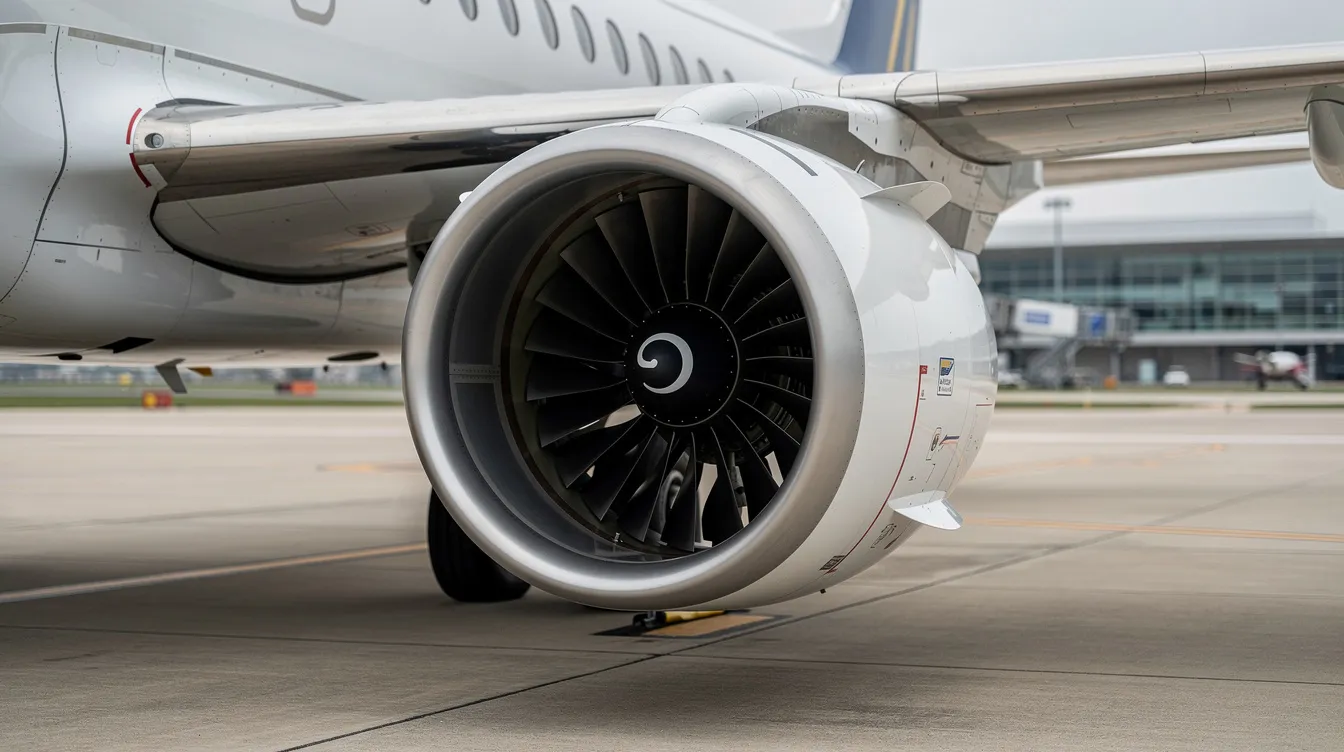
The aircraft is powered by two General Electric CF34-8E engines, a mature and well-understood powerplant across the regional jet category. The airframe itself—predominantly aluminum alloy with fail-safe structural design—is engineered for the punishing cycle counts of regional operations, where an aircraft may complete six or more takeoff-and-landing cycles per day.
The E175's certification process included extensive testing across icing conditions, crosswind limits, high-altitude airports, and rejected-takeoff scenarios. These tests, conducted under the scrutiny of the FAA, EASA, and ANAC, are directly connected to the aircraft's real-world safety outcomes: the design was proven before it ever carried a revenue passenger.
Fly-by-Wire, Avionics, and Automation on the E175
The E175 was among the first regional jets to integrate fly-by-wire elements for spoilers and rudder control, combined with a Honeywell Primus Epic glass cockpit—a level of technology previously associated with larger jets and private jets alike.
The E175 employs a fly-by-wire flight control system that provides flight envelope protection against overspeed, excessive bank angles, and stall conditions. Multiple Flight Control Modules cross-check inputs and outputs, reducing the likelihood of loss-of-control events—the single largest cause of fatal accidents in commercial aviation history.
The integrated avionics suite includes:
Large 8×10-inch multi-function displays for primary flight and navigation data
Flight management systems supporting advanced range and precision approaches
TCAS (Traffic Collision Avoidance System) for separation from other aircraft
EGPWS (Enhanced Ground Proximity Warning System) for terrain awareness
Modern weather radar for real-time convective weather avoidance
Each CF34-8E engine is managed by a dual-channel FADEC (full authority digital engine control) system. Each engine produces approximately 14,500 lbf of thrust, and the FADEC protects against exceedances in temperature, speed, and torque while supporting safer single-engine performance if one engine must be shut down.
Built-in-test functions and Embraer's AHEAD-PRO diagnostic tools enable rapid fault isolation on the ground, minimizing the chance that an aircraft dispatches with a latent critical failure.
Cockpit, Crew Training, and Human Factors
A safe aircraft still depends on a well-trained flight crew, and the E175 was designed with pilot workload and ergonomics at the forefront. The flight deck layout shares a common type rating with the E170, meaning standardized switchology, display configuration, and emergency procedures across variants. This commonality reduces transition errors and builds deep crew familiarity.
Airlines typically train E175 crews in full-motion simulators replicating scenarios such as:
Engine failure after takeoff (V1 cuts)
Severe icing encounters
Hydraulic system malfunctions
Dual electrical failure procedures
Rejected takeoffs at maximum weight
These simulator sessions directly improve real-world outcomes. Evidence from investigated incidents—including the 2019 pitch control event near Atlanta—confirms that crews responded precisely as trained, just as leading private operators and programs such as NetJets’ jet card offerings rely on standardized training to underpin their safety records.
Post-9/11 security standards apply equally to regional aircraft. The E175 features a reinforced, locking flight deck door and standard security protocols identical to those on larger jets.
Fatigue management is a critical consideration in regional operations, where crews may fly many short legs per day. Operators like Republic Airways, Envoy Air, and SkyWest follow strict Part 121 duty-time rules and rest requirements, which form an essential layer of the overall safety ecosystem beyond the aircraft itself.
Cabin Layout, Passenger Safety, and Emergency Egress
The E175's cabin design connects passenger comfort directly to safety. A well-organized cabin with clear sightlines and unobstructed aisles enables faster, more orderly evacuations—a factor that matters in the rare event of an emergency.
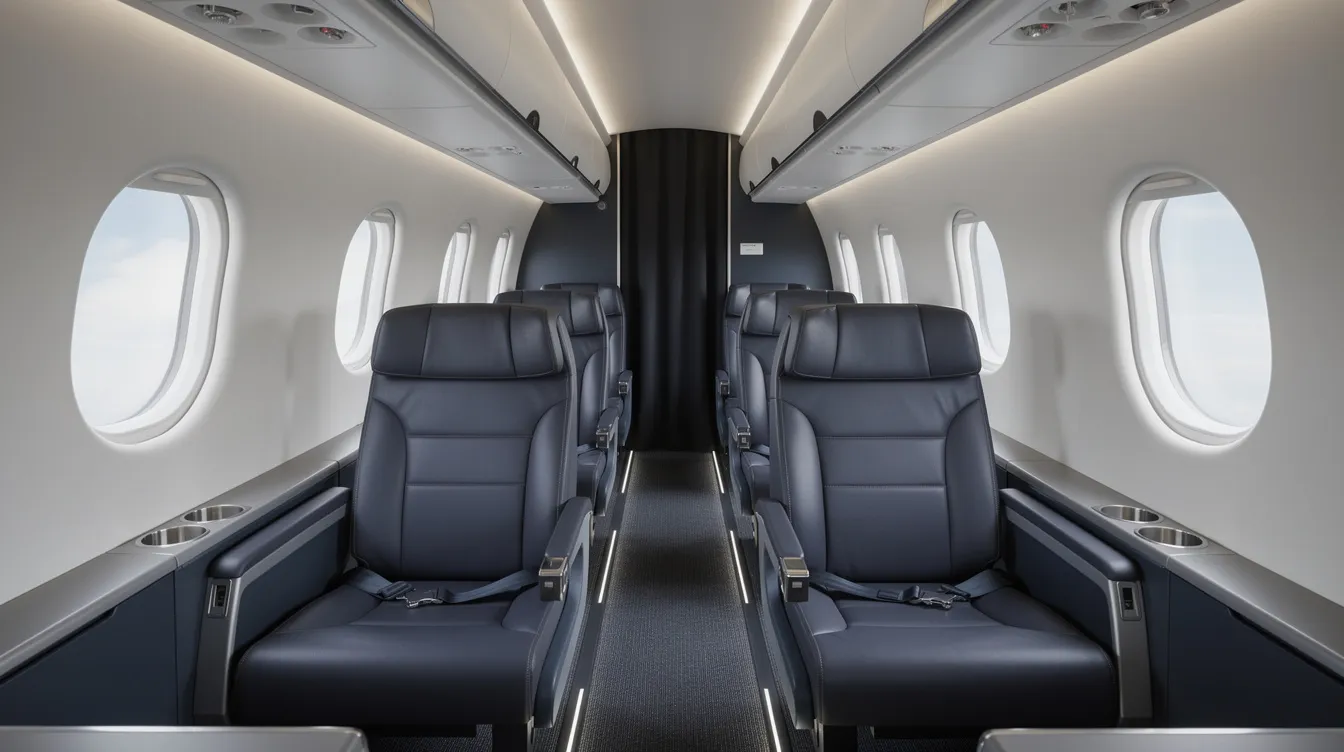
The 2+2 seating layout ensures that no passenger faces the dreaded middle seat. Every traveler has either a window or an aisle seat, which makes briefed safety procedures—locating exits, assuming brace positions—more intuitive and less physically constrained. The cabin width is approximately 2.74 meters, with economy seats measuring about 18.5 inches wide.
Typical configurations vary by operator and market:
76-seat dual-class layout – Forward first-class cabin with 12 first-class seats, followed by a main cabin of economy seats. Common on US regional routes under scope clause constraints.
88-seat high-density layout – The aircraft can be configured to seat up to 88 passengers in an all-economy arrangement, used outside North American scope clause markets.
The E175's large windows sit at near-eye level thanks to vertical sidewalls, improving visibility and reducing claustrophobia during turbulence or in stressful moments. Overhead bins are sized for standard carry-on bags, reducing aisle obstructions that could impede evacuation.
Standard safety elements include certified emergency exits with slides, illuminated floor path lighting for low-visibility conditions, crew jumpseats positioned near exits, and cabin crew training specific to the E175's door and slide systems.
How the E175 Compares to Other Regional and Mainline Jets
When comparing the E175 against other regional jets and even some mainline types, its safety credentials hold up under scrutiny.
The Embraer E175 competes with the Bombardier CRJ700/900 series in safety ratings and market share. While all modern commercial aircraft must meet the same certification standards, the E175's record of zero fatal accidents since its 2005 entry into commercial service stands out in the under-100-seat category. Several CRJ variants have experienced fatal accidents over their longer service histories.
Users regard the E175 as secure and reliable, especially in rough air—a perception backed by its modern wing design, digital flight controls, and smooth ride characteristics. Passengers frequently note that the E175 feels more like a larger jet than a traditional regional aircraft, thanks to its wider cabin, bigger windows, and absence of middle seats. For perspective on how the E175 stacks up against other commercial plane models, a broader comparison can be useful.
The global jet hull-loss rate was 0.14 per million sectors in 2024. The E175 has recorded zero hull loss accidents, placing it well below the industry average for exposure-adjusted risk, a standard that also informs how travelers evaluate large private jets for groups of up to 50 passengers when safety and redundancy are paramount.
The "Is Embraer safer than Boeing?" question comes up regularly. Both manufacturers follow identical global certification standards. However, the E175's clean track record compares favorably to many larger types when normalized for flight hours and cycles. It was designed from the outset with fly-by-wire elements and advanced avionics, narrowing the technology gap with the latest narrowbody jets from either manufacturer.
Airline Service, Maintenance Culture, and Safety Oversight
The E175's safety is a function of who operates it and how—not just how it is built. The aircraft's airline service record reflects the maintenance culture and regulatory oversight of its operators.
Major E175 operators include:
SkyWest Airlines – Operates E175s for United Airlines, Delta Air Lines, American Airlines, and Alaska Airlines
Republic Airways – Flies for United Express and Delta Connection
Envoy Air – American Eagle regional partner
Horizon Air – Alaska Airlines' regional carrier
Air Canada partners – Jazz Aviation and previously Sky Regional
These regional airlines operate under Part 121 regulations in the US and equivalent standards in Canada and Europe, with safety management systems overseen by both national regulators and the major carriers whose brands they represent. For additional detail on how SkyWest's E175 operations compare to private alternatives, BlackJet has explored that topic separately.
Maintenance regimes involve A-checks and C-checks performed on strict calendars and flight-hour cycles, with many operators exceeding minimum regulatory requirements. Embraer issues continuous service bulletins, software updates, and component enhancements based on in-service data, which airlines incorporate into their maintenance plans.
Because regional fleets like the E175 undergo frequent takeoffs and landings, structural inspections, landing-gear overhauls, and fatigue monitoring play a heightened role in preserving the aircraft's clean accident history. The combination of manufacturer support, regulatory oversight, and operator discipline creates a layered safety architecture.
Middle Seats, First Class Seats, and Safety Perception
Many BlackJet clients care about both safety and comfort—and seat configuration influences how "safe" a cabin feels, even though it does not materially change underlying crashworthiness.
The E175's 2+2 layout with no middle seats ensures every traveler has either an aisle seat or a window position. This matters beyond comfort: clear access to aisles means faster movement during an evacuation, and passengers can more easily see and reach emergency exits from any seat.
In a typical 76-seat dual-class configuration, 12 first-class seats occupy the forward rows in a 1-2 arrangement. The first-class cabin offers extra legroom, wider seats, and fewer neighbors—conditions that reduce stress and improve the ability to follow crew instructions during an emergency. In some configurations, first-class seats on the E175 offer more legroom than even long-haul first class on certain widebody types.
The main cabin behind first class features the standard 2+2 economy seat layout, still without any middle seats. This is a meaningful differentiator from other regional jets and even some larger jets that use 3+3 configurations.
All class seats, whether first class or economy, must meet identical crashworthiness and head-injury criteria for certification under FAR 25 and EASA CS-25. The differences between classes affect comfort and situational awareness, but not the regulatory safety standard applied to each seat.
Scope Clauses, E175 Dominance, and Fleet Age
US pilot scope clauses cap the size of regional jets that airline affiliates can operate—typically limiting them to 76 seats maximum and a specific maximum takeoff weight threshold. The first-generation E175 was designed to comply with US scope clauses, fitting precisely inside those limits. Its maximum takeoff weight fits within scope clause restrictions, making it the largest regional jet allowed under current agreements.
This has driven extraordinary market dominance. The E175 holds approximately 80 percent market share in North America's scope-clause-constrained segment, and it is the only aircraft produced in its market segment as of 2024. US regional airlines prefer the E175 because no competing production aircraft meets the same combination of capacity, range, and scope-clause limits.
For operators facing tighter restrictions, the E175SC variant is limited to 70 seats, providing additional flexibility, while cost-focused flyers might instead evaluate the cheapest viable private aircraft and access models when deciding between regional jets and entry-level private options.
The newer E175-E2 variant features a higher maximum takeoff weight that exceeds current scope clause limits, which means US airlines continue to order and operate the original E175. This dynamic keeps the fleet relatively young:
Many US E175s were delivered in the 2010s and 2020s
Younger fleet age means fewer life-cycle fatigue concerns
More standardized avionics configurations across the fleet
Better alignment with the latest training and maintenance procedures
For BlackJet clients flying commercial segments that connect to a private flight, choosing regional carriers operating newer E175s is a conservative, safety-minded decision, particularly when paired with structured programs like Flexjet-style jet cards and similar offerings that guarantee modern, well-maintained private fleets.
Air Canada and Other Flag Carriers: Launch and Long-Term Use
Air Canada's role as the E175 launch customer in 2005 signaled confidence in the aircraft's safety and reliability from a major flag carrier. The airline configured its initial E175s with dual class seating-a class cabin arrangement with business and economy sections—for high-frequency regional routes across Canada.
Over time, Air Canada transferred these aircraft to regional partners including Sky Regional and Jazz Aviation under the Air Canada Express banner. Throughout two decades of continuous service, these aircraft have accumulated tens of millions of passenger journeys without a fatal incident.
Other flagship operators that have trusted the E175 for premium feeder service include:
LOT Polish Airlines – One of the earliest European operators
Alaska Airlines through Horizon Air – Serving West Coast typical routes and connecting smaller cities to major hubs
Delta Air Lines via Republic Airways and SkyWest – Operating Delta Connection flights on domestic routes
United Airlines through Republic Airways and SkyWest – Flying United Express service from constrained airports to major hubs
American Airlines via Envoy Air and Republic Airways – Serving American Eagle regional routes
Star Air – Operating E-Jet variants in international markets
These regional carriers often offer dual-class seating including first-class seats on the E175, which has encouraged business travelers to view the aircraft as a credible alternative to mainline jets on shorter legs. Sustained use by conservative, safety-focused airlines is itself a validation of the aircraft's safety performance over two decades, and informs how high-net-worth travelers compare it with owning or accessing $10 million-class private jets for longer or more bespoke missions.
Sustainability, Technology Updates, and the Future of Safe E-Jets
Embraer's progression toward the second-generation E2 family and broader sustainable aviation fuel compatibility intersects directly with safety. The E175 continues to benefit from incremental upgrades that enhance both efficiency and operational awareness.
Recent and ongoing improvements include:
New wingtip devices improving aerodynamic efficiency
Avionics software updates incorporating advanced range capabilities
Enhanced weather radar systems for improved convective weather detection
Larger overhead bins and cabin mood lighting that improve the passenger environment
Improved fuel efficiency—newer deliveries after 2016 burn approximately 6.4 percent less fuel than earlier models—reduces operating costs and frees capital for maintenance and crew training investments. Many E-Jets, including the E175, are being certified for higher sustainable aviation fuel blend use, aligning with industry sustainability goals without compromising engine reliability or performance margins.
BlackJet's commitment to carbon-neutral private flights mirrors this broader industry focus on responsible aviation. For travelers who demand both safety and environmental stewardship, resources that explain how safe private jets are compared to other forms of air travel reinforce that sustainability initiatives are layered on top of already rigorous safety standards, creating a coherent travel philosophy across both commercial and private legs.
The E175 in Mixed Commercial–Private Travel Itineraries
Consider a scenario: a BlackJet member needs to travel from Dallas to a business meeting in Des Moines. There is no efficient private jet routing for this short leg, but Delta Connection and United Express both operate frequent E175 service on this corridor. After the meeting, the client boards a BlackJet-arranged private jet from Des Moines for a non-stop international leg—a trip that connects smaller cities to global destinations through a hybrid approach.
The E175's strong safety record, modern cabin, and lack of middle seats make it a preferred commercial aircraft choice when clients cannot or choose not to use private jets for every sector, though large groups may instead compare it with private jets configured for around 20 passengers when exclusivity and unified itineraries are critical. On dense medium-haul routes where schedule frequency matters, the E175 offers departures every few hours from major hubs—something even the most flexible jet card cannot always match, though many clients still explore ways to buy just a seat on a private jet when point-to-point convenience is a priority.
BlackJet's real-time support team can help members select itineraries that leverage airlines and aircraft types with robust safety pedigrees. When the commercial segment involves an E175, clients can be confident they are flying one of the safest and most comfortable regional jets in service.
For some travelers, this hybrid strategy—private for the most time-sensitive or remote segments, E175 for hub-to-hub travel—creates the optimal balance of safety, schedule efficiency, and cost discipline, especially when you carefully select from the best small private aircraft for each mission profile.
Private Jets vs. Embraer 175: Safety, Control, and Experience
Both modern private jets and the E175 meet rigorous safety standards, but the risk profile and degree of control available to the traveler differ meaningfully.
Factor | Embraer 175 (Commercial) | Private Jet (BlackJet) |
|---|
Safety oversight | Airline SMS, FAA Part 121 | Operator audits, FAA Part 135 |
Schedule control | Fixed timetables | Client-defined departure times |
Airport selection | Major hubs, regional airports | 5,000+ airports including private terminals |
Cabin density | 76–88 passengers | 4–16 passengers typical |
Middle seats | None (2+2 layout) | None |
Customization | Limited to class of service | Fully personalized |
Private jet providers like BlackJet curate operators that meet rigorous third-party safety audits, ensuring standards that complement—and in some areas exceed—commercial airline safety protocols. Private jets also allow clients to choose departure times, use airports closer to their origin or destination, and avoid congested hubs—reducing exposure to ground delays and missed connections, all within a pricing framework best understood through an overview of private jet costs and access options.
The cabin environment differs significantly: personalized service, lower passenger density, and flexible seating on private jets versus structured but comfortable first class or main cabin on an E175, and those differences become especially relevant when evaluating whether a 50-hour jet card program matches your typical travel pattern. For understanding Part 135 operations that govern private charter safety, BlackJet provides detailed resources, including guidance on how to evaluate jet card cost per hour across aircraft types and providers.
For safety-conscious travelers, the optimal solution is often a hybrid approach: private where schedule and routing complexity are highest, E175 where commercial frequency and proven safety records are strongest, supported by premium private jet card programs from BlackJet that standardize safety, pricing, and aircraft quality.

BlackJet's Safety Standards and How They Complement Flying on an E175
BlackJet treats safety, certification, and sustainability as non-negotiable pillars of every flight it arranges. As a premium jet card provider, BlackJet partners only with operators that meet strict audit standards, employ experienced crews, and maintain aircraft to or above regulatory requirements.
BlackJet's safety framework includes: along with financial planning resources such as how to maximize potential jet card tax deductions for qualifying business travel.
Vetting operators against recognized safety audit programs
Requiring minimum crew experience thresholds
Monitoring aircraft maintenance histories and fleet age
Ensuring every private journey is carbon-neutral at no additional cost to the client
When BlackJet's trip-planning team helps members construct mixed itineraries, they can factor in aircraft type, operator history, and route considerations for any commercial legs a client chooses to fly. The E175 is frequently recommended on regional sectors precisely because of its exemplary safety record and comfortable cabin experience.
For clients who want to understand how a jet card integrates with commercial travel, BlackJet's advisory team can design strategies that pair the safest passenger planes on commercial segments with premium private access for the legs that matter most, guided by a clear view of overall jet card costs and value.
Explore BlackJet's jet card programs to discover how private aviation can elevate your travel while keeping safety and sustainability at the center of every decision.
FAQs: Embraer 175 Safety, Comfort, and Use Cases
Frequently asked questions about the Embraer 175's safety, cabin, and role in modern travel:
Is the Embrlandings—have Yes. The Embraer 175 has had zero fatal accidents since entering commercial service in 2005 and zero hull-loss accidents in airline operations. It is certified by the FAA, EASA, and ANAC, and has been widely used by major US airlines through regional affiliates including SkyWest, Republic Airways, and Envoy Air.
Has an Embraer 175 ever crashed? The E175 has not been involved in a fatal crash or a first-class accident in commercial service. Engine shutdowns, system alerts, and hard landings have occurred but were managed safely by trained crews without loss of life.
Does the E175 have middle seats? No. The E175 features a 2+2 seating layout with no middle seats. Every passenger has either a window or aisle seat, which improves both comfort and emergency egress.
How many first class seats are on a typical E175? In a standard 76-seat dual-class layout, the E175 typically has 12 first-class seats in the forward first-class cabin, with the remaining seats in the main cabin.
What is the difference between the E175 and other E-Jets? The E175 is a stretched member of the E170, sharing the same wing and flight deck. The E190 and E195 are larger, with more seats and an advanced range profile. While the broader E-Jet family has experienced a small number of non-fatal hull losses on other variants, the E175 itself has a clean record.
Which airlines fly the Embraer 175? Major operators include SkyWest, Republic Airways, Envoy Air, and Horizon Air in North America, flying for United Airlines, Delta Air Lines, support—idealines, and Alaska Airlines. Internationally, LOT Polish Airlines, KLM Cityhopper, and other regional carriers operate the type. It connects smaller cities to major hubs on thousands of daily flights.
When should I choose a private jet instead of an E175? When schedule control, privacy, airport selection, or routing to underserved destinations matters most. BlackJet's jet card model gives you prepaid access to private jets across multiple cabin types, with 24/7 booking and real-time support—ideal for the legs where commercial frequency or comfort falls short of your standards and comparable to the best jet cards available for frequent flyers. What Business Class Travelers Should Remember About the Embraer 175
Conclusion: Why the Embraer 175 Safety Record Matters for Elite Travelers
The Embraer 175 stands out as a benchmark in regional aviation safety, combining modern engineering, rigorous certification, and operational reliability. Its zero fatal accident record since 2005, advanced fly-by-wire systems, and robust design tailored for high-cycle operations make it an exceptional choice for discerning travelers who prioritize safety without compromising comfort.
For high-net-worth individuals and corporate travelers, the E175 offers a dependable commercial option that complements private jet travel. Whether connecting smaller cities to major hubs or serving as part of a mixed itinerary, the E175’s proven safety pedigree provides confidence in every flight.
As private aviation continues to evolve, understanding the safety landscape of commercial regional jets like the Embraer 175 helps travelers make informed decisions. BlackJet’s commitment to integrating the safest aircraft across commercial and private sectors ensures clients enjoy seamless, secure journeys tailored to their unique travel needs.
Explore BlackJet’s premium Jet Card programs to experience how combining trusted commercial aircraft like the E175 with exclusive private jet access can elevate your travel strategy with unmatched safety, convenience, and luxury.
The Embraer 175 is one of the safest and most comfortable regional jets ever built. With zero fatal accidents across nearly two decades of commercial service, a robust design within the E-Jet family, and continuous support from Embraer and global regulators, it has earned a safety reputation that few aircraft in any category can match.
Key points worth remembering:
No middle seats, generous cabin dimensions, and up to 12 first-class seats in dual-class matters—especially advanced avionics, fly-by-wire flight control protections, and dual FADEC-equipped engines
A strong operator base including every major US carrier's regional partners
Continuous Embraer support through service bulletins, diagnostic systems, and fleet-wide upgrades
The E175 has been widely used by major US airlines and international carriers on typical routes connecting smaller cities to major hubs
For high-net-worth and corporate travelers, understanding aircraft safety pedigrees matters—especially when blending commercial airline service with private jet travel. The E175's record makes it a smart choice for the commercial segments of a mixed itinerary.
BlackJet exists to help clients make informed, safety-forward choices across both private and commercial legs, integrating reliable aircraft like the E175 into broader travel strategies that prioritize efficiency, comfort, and peace of mind, often anchored by a clear understanding of jet card pricing structures and benefits.
Discover how a BlackJet jet card can elevate your travel beyond airline first class while keeping safety and sustainability at the core of every flight through flexible options like the BlackJet 25+ Hour Jet Card program.


 Sign up with google
 Sign up with Apple