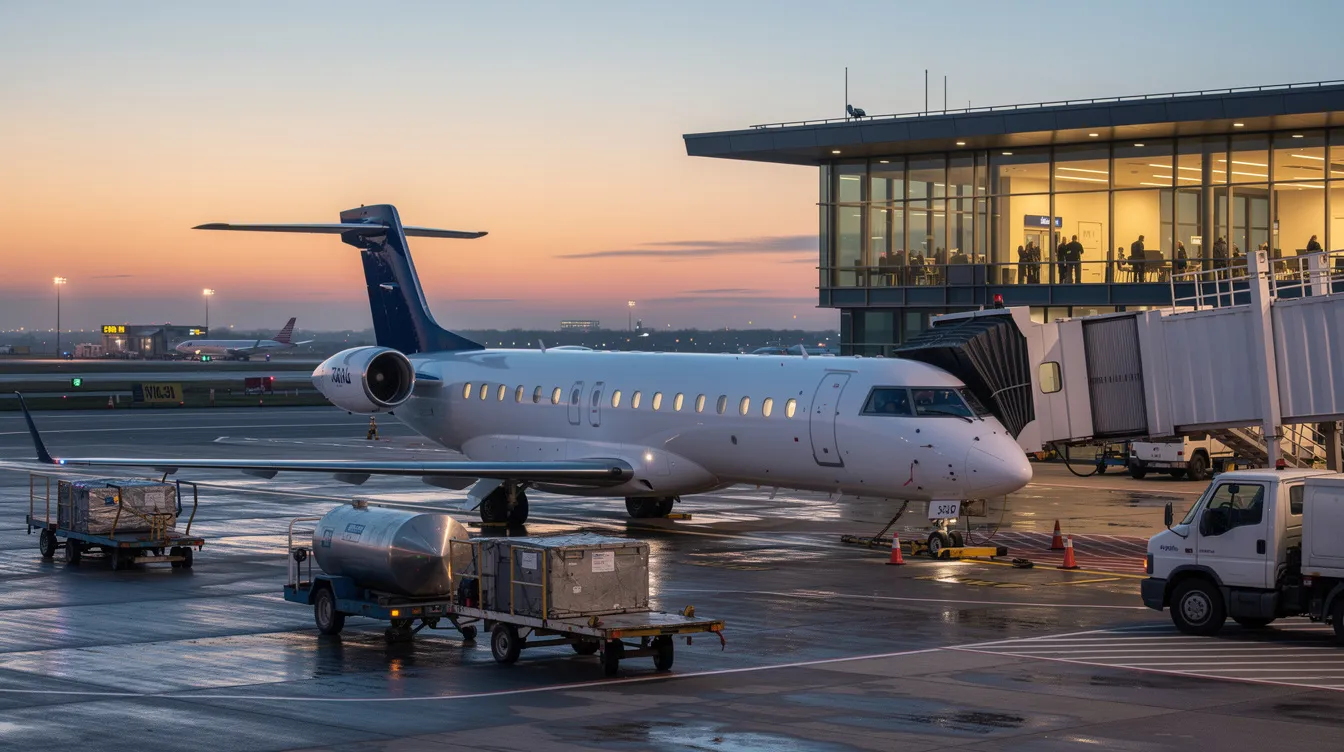
Introduction: Why The SkyWest Airlines E175 Matters To High-End Travelers
Every day, thousands of business and leisure travelers board a SkyWest E175 without realizing it. The SkyWest E175 is a 70- to 76-seat Embraer regional jet that SkyWest Airlines flies for major U.S. carriers including United Express, Delta Connection, American Eagle, and Alaska Airlines, typically with a dual-class cabin, 2-2 seating, and no middle seats. It is the workhorse connecting regional markets to major hubs under familiar airline brands while SkyWest operates the aircraft behind the scenes.
For frequent business travelers and high-net-worth leisure flyers who regularly use regional flights—or are weighing whether private aviation would better fit their schedules—this guide explains what the SkyWest E175 actually delivers. It breaks down the aircraft’s specifications, cabin layout and seat configurations, first class versus economy, onboard comfort, operational performance, safety, and sustainability, then compares that experience with private jet access through BlackJet’s Jet Card model. While the E175 is one of the more comfortable regional aircraft, it still comes with the limits of commercial travel: fixed schedules, hub connections, limited privacy, and standard seat maps. A regional connection through a hub on an E175 can easily take three to four hours door-to-door, while a nonstop private flight arranged through BlackJet can cut one to two hours per leg—an important benchmark if time, flexibility, and privacy shape how you travel.
SkyWest E175 Overview: Aircraft, United Express Partners, And Fleet Role
The SkyWest E175 is the Embraer E175 regional jet flown by SkyWest on behalf of major US carriers under brands like United Express, Delta Connection, American Eagle, and other airlines through capacity purchase agreements. The aircraft allows for dual-class service with first class and economy configurations, and the Embraer E175 accommodates 70 to 76 passengers depending on partner requirements - typically 12 first class and 64 economy in the 76-seat version, or 12 first class and 58 economy in the 70-seat layout.
Manufactured by Embraer, the company based in Brazil that has become a global leader in Embraer commercial aviation, the E175 aircraft features a maximum range of up to 2,000 nautical miles, a flight ceiling of 41,000 feet, and a quieter, smoother ride than older 50-seat regional jets. The Embraer E175 is favored for its spacious cabin and comfort compared to older regional jets - a plane that outperforms predecessors like the CRJ200 on virtually every passenger comfort metric, and holds its own against larger Airbus narrow-bodies on short sectors.
SkyWest is the largest operator of the E175 in the world, with 271 e175 aircraft in scheduled service as of early 2026. In June 2025, the company announced a firm order for 60 new E175s with deliveries starting in 2027, plus purchase rights for an additional 50 E175 aircraft. The president and CEO stated the company was pleased with continuing fleet modernization. Of those 60 aircraft, 16 will be delivered, replacing older Bombardier CRJ700 and CRJ900 models - a move agreed upon as part of a Delta contract announced at an event in Europe. This cements the E175 as the cornerstone of regional aviation in North America, operating high-frequency shuttle routes between regional business centers and major hubs. US scope clauses cap regional partners at 76 seats and 86,000 lb maximum takeoff weight, which is exactly where SkyWest's E175 configurations sit. For corporate travelers who read this and note the limitations, these same constraints are what eventually drive the transition to private aviation.
Cabin Layout And Seat Maps: First Class Vs Economy On The Embraer E175
The SkyWest-operated Embraer E175 divides its cabin into two distinct classes. SkyWest E175 first class has 12 exclusive seats arranged in a 1-2 layout, offering a first class seat pitch of 37 inches and first class seats that are 24 inches wide. Economy class on the E175 has 64 seats in the standard 76-seat version, set in a 2-2 layout with no middle seats. The E175 features a 2-2 seating layout with no middle seats across the entire aircraft, a design detail that makes this regional jet feel less cramped than many mainline narrow-bodies configured 3-3.
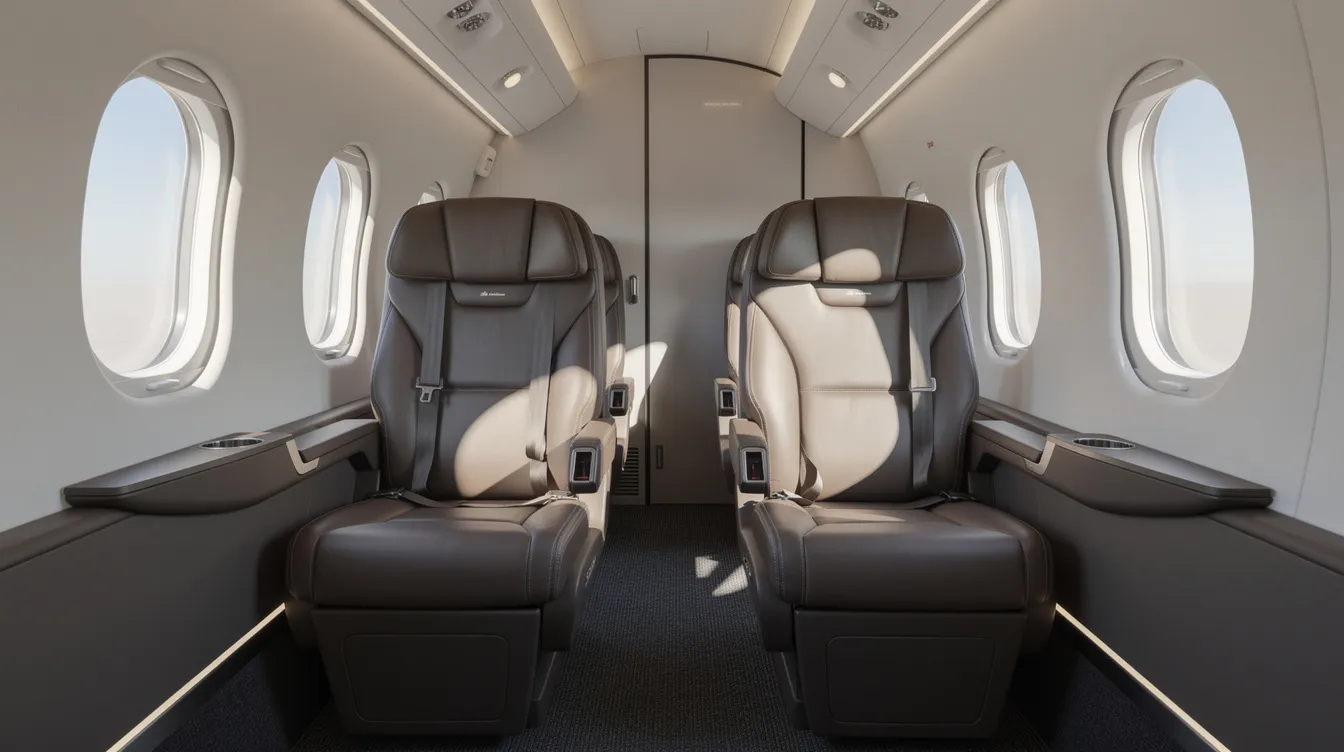
Seat maps vary slightly by partner. A United Express E175 commonly shows 12 first-class and 64 economy seats, while delta Connection versions mirror that split. American Eagle and Alaska Airlines configurations maintain the dual-class concept with minor variations in galley and lavatory placement. When reading a seat map, look for exit rows and bulkhead first-class seats for the best legroom. The aircraft's larger overhead bins improve boarding efficiency, though bins above seats A and B can be tighter on some variants - a comment that appears frequently in passenger reviews. The windows are generously sized for a regional jet, contributing to a sense of openness.
User-generated seat map ratings on major travel sites average around 4 to 4.5 out of 5 based on hundreds of reviews. Pros include the 2-2 seating and decent legroom; cons center on limited overhead storage for larger carry-ons. The cabin is designed for a cozy environment, and it delivers - but it still operates within airline constraints: fixed departure times, boarding queues, and shared cabin space. That's a hard reality for travelers who need guaranteed privacy, a factor that makes the comparison with a BlackJet-arranged private cabin worth considering.
Onboard Experience: First Class, Economy, And Service Compared To Private Jets
In first class, the 12-seat cabin offers a measurably better experience. First class seat pitch is 37 inches with first class seats recline of 5 inches for comfort, and the seats measure 24 inches wide - enough room to work on a laptop or settle in for a comfortable rest. First class offers gourmet dining and premium entertainment depending on the operating carrier, along with complimentary beverages, priority boarding, and attentive service. It's easier to focus here than in the main cabin, and solo travelers particularly value the single "A" seat on the window side.
Economy delivers a lot more than you might expect from a regional jet. Seat pitch in economy class is 30 to 31 inches, and economy seats are 18.2 to 19.3 inches wide - tight by mainline standards, but the absence of a middle seat changes the experience on any given day. Passengers can enjoy a range of in-flight entertainment, and passenger amenities vary by carrier and may include Wi-Fi and power options. United's E175s, for example, provide AC power at every seat. Traveler feedback consistently stated that the 2-2 layout makes the economy cabin feel less restrictive than a 737 in a similar class.

Now compare this to private jet travel through a Jet Card. Picture a business executive flying weekly between two regional cities. On the E175, each leg involves driving to a hub, clearing security, boarding, connecting, and arriving - easily three to four hours each way. With BlackJet, the same traveler departs from a private terminal 15 minutes before wheels-up, flies point-to-point, and arrives with time to spare. No TSA lines, no connections, no shared cabin. The year-over-year time savings compound quickly. BlackJet's Jet Card model - prepaid hours granting access across light, midsize, and large-cabin aircraft, with options like the BlackJet 25+ Hour Jet Card - means upgrading from E175 first class to private becomes a strategic productivity decision, not merely a luxury preference.
Operational Performance, Safety, And Sustainability: E175 Vs Private Aviation Options
The E175 is designed for regional flights that require efficiency and comfort. Operational efficiency of the E175 is suitable for shorter regional routes, and the aircraft offers good fuel efficiency compared to larger aircraft. SkyWest's reliability record is notable: in 2024, the airline logged 305 days of 100% controllable completion across its fleet, operating under strict FAA Part 121 regulations with standardized pilot training and maintenance.
On the private aviation side, BlackJet partners only with operators that meet or exceed top third-party safety standards - including ARG/US, Wyvern, and IS-BAO certifications, reinforcing the broader reality that private jets are a highly safe mode of air travel. Every operator in BlackJet's curated network upholds rigorous safety protocols comparable to or exceeding commercial aviation benchmarks.
Sustainability matters in both categories. The E175's growing share of SkyWest's fleet - replacing older, less efficient CRJ200s - has helped reduce CO₂ per available seat mile. But private aviation carries a different footprint. BlackJet ensures every journey is carbon neutral at no extra cost, offsetting 300% of emissions to account for non-CO₂ impacts like water vapor and aerosols. For travelers weighing environmental responsibility alongside flexibility, that commitment is a meaningful differentiator, particularly for those exploring the cheapest private jet options that still align with sustainable flying goals.
Fleet flexibility completes the picture. The E175 is locked to fixed airline schedules and set cabin layouts, whereas large groups can opt for the best private jets for around 20 passengers or even large private jets configured for up to 50 passengers when they need a bespoke cabin and itinerary. Private aviation through a premium Jet Card program from BlackJet offers choice among aircraft categories depending on passenger count and route - always in a private configuration, always on your schedule.
When To Fly SkyWest E175 And When To Choose BlackJet Private Jet Access
For many travelers, the SkyWest E175 is an excellent commercial option on regional routes - especially in first class. But clear thresholds exist where private jet access becomes the more rational choice, particularly once you understand how much it costs to rent a private jet and the factors behind those rates and how 50-hour Jet Card pricing compares for frequent regional travelers.
Consider a regional executive commuting weekly on a SkyWest-operated United Express E175 route. Over a year, hub connections and boarding lines consume hundreds of hours—enough to justify evaluating 100-hour Jet Card costs and value against recurring premium cabin tickets and even comparing Flexjet Jet Card costs and structures to BlackJet’s model. A 25-hour BlackJet Jet Card converts that lost time into productive work and extra hours at home, and resources explaining Jet Card membership pricing and cost structures help travelers budget those hours confidently. Or consider a leisure traveler connecting via E175 from a smaller city to a long-haul flight, who later discovers that private jets can fly directly to resort destinations not well served by scheduled carriers - making the entire journey easier and more seamless, especially when they know how to buy a seat on a private jet through shared or semi-private options, explore private jet charters from cities like Karachi, or arrange bespoke private jet charters from Lahore for truly tailored itineraries.
Decision triggers favoring private aviation include: regular need to travel on short notice, traveling with small teams where multiple first-class tickets approach the hourly cost of a private jet, and situations requiring discretion or onboard meetings—classic scenarios where chartering a private jet can be worth the cost and where choosing among the best Jet Cards for frequent flyers becomes a strategic decision. BlackJet's 24/7 digital booking tools and real-time support deliver airline-like convenience with private jet flexibility, and predictable Jet Card pricing eliminates the volatility of last-minute commercial fares, especially when you understand how Jet Card pricing is structured and what drives costs.
If you already know the SkyWest E175 well, you understand what regional aviation does right - and where it falls short. Before switching, many travelers review a comprehensive private jet price list and access options to benchmark costs. Discover how BlackJet can turn your most critical regional trips into seamless, carbon-neutral private flights that align with your lifestyle and business priorities.
Frequently Asked Questions About the SkyWest E175 and Private Jet Access
Q1: How many seats does the SkyWest E175 have in economy class?
The SkyWest E175 typically features 64 economy seats in the 76-seat configuration, arranged in a 2-2 layout with no middle seats, providing a more spacious and comfortable experience compared to traditional narrow-body jets.
Q2: Which major airlines does SkyWest operate the E175 for?
SkyWest operates the E175 under several major U.S. airline brands, including United Express, Delta Connection, American Eagle, and Alaska Airlines, serving as a key regional partner.
Q3: What are the main differences between flying first class on the E175 and private jet travel?
First class on the E175 offers wider seats, greater pitch, gourmet dining, and premium entertainment within a commercial schedule and shared cabin. Private jet travel through BlackJet offers point-to-point flights on your schedule, complete privacy, and access to various aircraft categories with carbon-neutral commitments.
Q4: How does the E175 compare in terms of safety and sustainability?
The E175 operates under strict FAA Part 121 regulations with a strong safety record. BlackJet’s private jet operators meet or exceed top third-party safety certifications. In sustainability, SkyWest’s E175 fleet modernization reduces emissions per seat, while BlackJet offsets 300% of flight emissions for carbon neutrality, even when clients choose more economical, budget-friendly private aircraft options to balance cost and environmental impact.
Q5: What is the benefit of choosing BlackJet’s Jet Card over commercial regional flights?
BlackJet’s Jet Card offers prepaid private jet hours with 24/7 booking flexibility, eliminating connections, TSA lines, and fixed schedules. This saves time and enhances privacy, making it ideal for frequent travelers seeking efficiency and luxury beyond commercial regional aviation.
Conclusion: Elevate Your Regional Travel Experience Beyond the SkyWest E175
The SkyWest E175 stands as a premier regional jet, delivering comfort, efficiency, and a reliable connection to major hubs under leading airline brands such as United Express. Its spacious dual-class cabin, absence of middle seats, and thoughtful amenities mark it as a top choice within commercial regional aviation. However, for discerning travelers prioritizing time savings, privacy, and bespoke service, private jet access through BlackJet represents a strategic evolution in regional travel.
By choosing BlackJet’s Jet Card program, frequent flyers gain seamless, point-to-point flights with unparalleled flexibility, safety, and sustainability — including carbon-neutral journeys at no additional cost. This level of personalized travel eliminates the constraints of fixed schedules, airport security lines, and shared cabins inherent to commercial flights on aircraft like the E175. Whether flying for business or leisure, BlackJet transforms your regional trips into effortless, productive, and luxurious experiences.
Discover how elevating your travel with BlackJet can redefine convenience and performance beyond what regional aviation offers. Join our Jet Card program today and unlock premier private jet access tailored to your lifestyle and professional demands.


 Sign up with google
 Sign up with Apple