Introduction
This comprehensive guide explores the Embraer 175 inside, focusing on its seat map, cabin layout, in-flight amenities, and how it compares to private jet alternatives. Designed for frequent business travelers and high-net-worth leisure flyers who regularly take regional or international trips, this article provides detailed insights into the Embraer 175’s seating options, cabin experience, power and Wi-Fi availability, and tips for choosing the best seats. Understanding the Embraer 175 inside is essential for maximizing comfort, making informed seat selections, and enhancing your overall travel experience—whether you’re flying for business or pleasure. For those considering a step up in privacy and flexibility, we also compare the commercial E175 experience with private jet options, including BlackJet’s Jet Card programs, to help you determine the best fit for your travel needs.
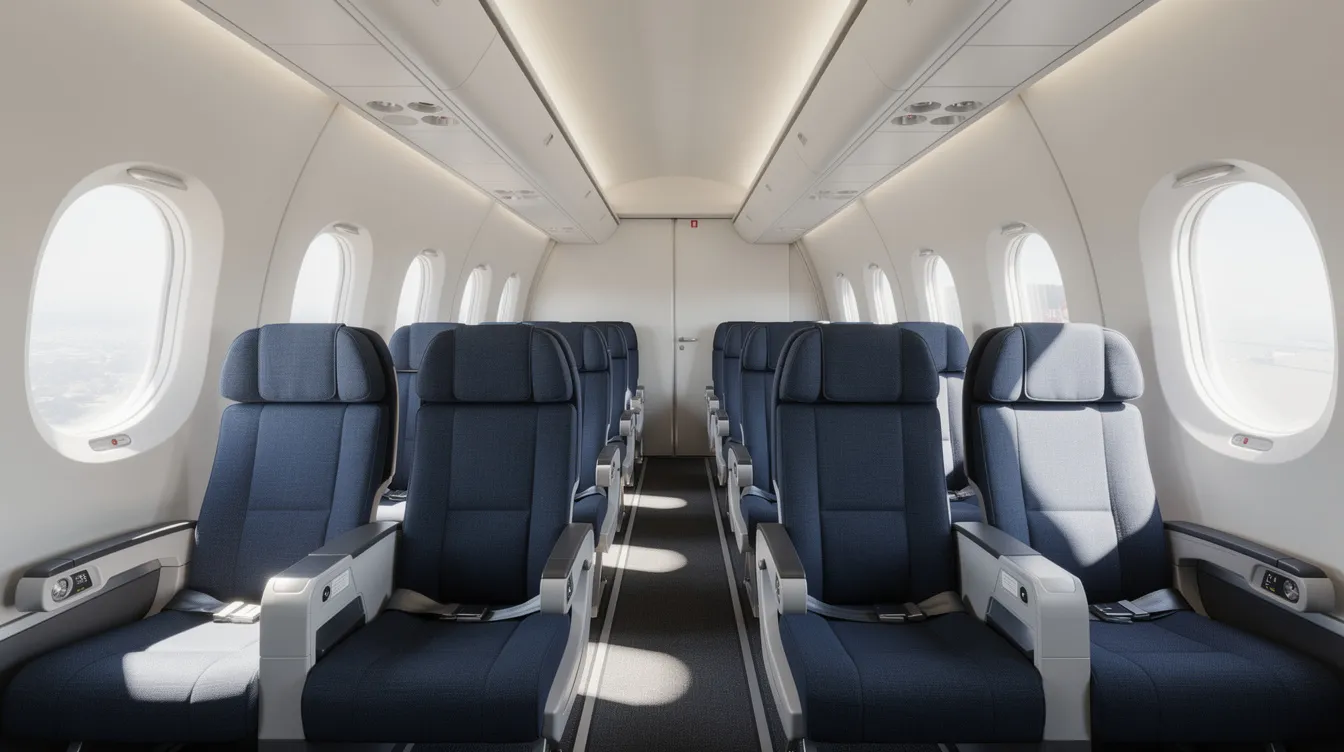
The Embraer 175 inside is one of the better regional-jet cabins you'll find: a 76-passenger, dual-class layout with a 2-2 seat configuration, no middle seats, larger windows, overhead bins that usually fit rollaboards, and a relatively quiet cabin for flights under three hours between mid-tier cities and major hubs across the United States.
For frequent business travelers and high-net-worth leisure flyers who take regional or international trips several times a year, this guide breaks down the Embraer 175 seat map, cabin layout, first-class and main-cabin experience, power and Wi‑Fi availability, and which seats to pick or avoid. It also compares that commercial experience with private jet options, including where BlackJet’s Jet Card programs may offer more privacy, scheduling flexibility, comfort, safety, and a better fit for how you travel.
Quick Answer: What the Embraer 175 Is Like Inside
The Embraer 175 carries 76 total seats across a dual-class cabin on most U.S. carriers, including American Airlines, Delta, and SkyWest Airlines operating as American Eagle or United Express. The aircraft uses a 2-2 seating configuration throughout, which means there are no middle seats. Every passenger gets either a window or an aisle seat. Compared to smaller regional jets, the Embraer 175 is designed to feel spacious, with a cabin height of 6 feet 6 inches and overhead bins that fit smaller rolling bags.
First-class seats include power outlets for charging devices, and Wi-Fi is available on most modern fleet aircraft. Main cabin amenities vary by airline and row. The plane is a comfortable regional aircraft for flights under three hours, but it remains a shared commercial cabin with fixed schedules and TSA lines. On a BlackJet Jet Card flight, there is no seat map to study; private jets allow for full cabin privacy, and the entire space belongs to one group.
Embraer 175 Interior Overview
Embraer introduced the E175 as part of its E-Jet family in the mid-2000s, with Air Canada taking the first delivery in July 2005. The aircraft was designed to bring a "mainline" feel to regional routes, replacing older, cramped turboprops and 50-seat jets on short- to mid-range flights across North America.
The cabin layout contributes to improved visibility with larger windows than older regional aircraft. The Embraer 175 has a relatively quiet cabin due to engine placement on the rear-mounted wing pylons, and its engine design improves ride stability during turbulence. Overhead bins accommodate standard rollaboard carry-ons, and larger overhead bins are available as upgrades on some Embraer 175 configurations. Newer interiors feature bright LED lighting for a fresh, modern feel.
Typical operators include American Airlines (via Envoy, PSA, and SkyWest Airlines), Delta Connection, United Express, and Alaska Airlines. Cabin capacity ranges from 70 to 88 seats depending on the airline, but the most common U.S. configuration holds 76 seats to comply with pilot union scope clauses.
Embraer 175 Seat Map & Cabin Layout
A seat map is the diagram you see when choosing seats during booking or check-in. On the standard American Airlines Embraer 175, that map shows 76 seats: 12 first class, 20 Main Cabin Extra, and 44 standard main cabin seats. The E175 features a 2-2 seating configuration in all cabins, so no passenger sits in a middle seat.
From front to rear, the cabin order runs: cockpit, forward galley and lavatory, first class cabin (rows 1 through 4), Main Cabin Extra (rows 8 through 12), then standard economy (rows 13 through 23), ending at the rear galley and lavatories. The standard configuration of the Embraer 175 includes both a forward and an aft galley and lavatory. Four main exits, including overwing exits, provide emergency egress.
To read the seat map effectively, look for:
Bulkhead rows: extra legroom, but limited under-seat storage
Exit rows: added legroom with restrictions on recline and personal items during taxi, takeoff, and landing
Last rows: proximity to rear lavatories and galleys
SkyWest Airlines and other regional operators may have small internal layout differences, but the overall structure remains the same: no middle seats, dual-class cabin, 2-2 throughout.
First Class on the Embraer 175
First class on the E175 typically has 12 seats arranged in a 1-2 layout across four rows. On AA, the left side offers solo class seats (1A through 4A) with both window and direct aisle access, making them popular with business travelers who want privacy.
Key comfort specifications:
Feature | Measurement |
|---|
Seat width | ~20 in |
Pitch (legroom) | ~37 in |
Seats per row | 1 left, 2 right |
Total first-class seats | 12 |
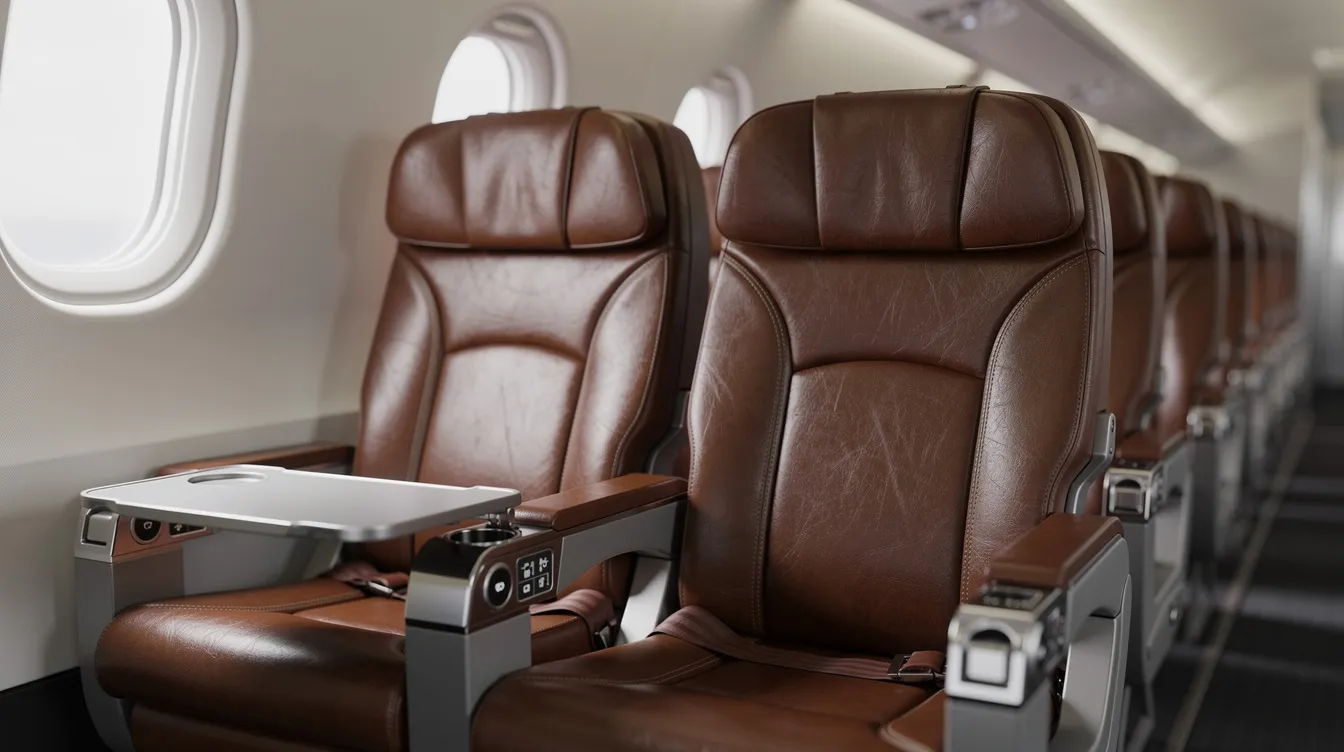
First-class seats have a pitch of approximately 37 inches, a deeper recline than main cabin rows, and a quieter environment away from rear galleys. Amenities include larger tray tables, adjustable headrests, padded armrests, and dedicated overhead bin space. Complimentary snacks and alcoholic beverages are standard on most routes.
First-class seats include power outlets at each seat and often USB ports, so passengers can keep a laptop or device charged gate to gate. The best first-class seats depend on priorities: the bulkhead row (row 1) offers maximum legroom but no under-seat storage, while rows 2 and 3 balance quiet with quicker deplaning.
Main Cabin & Extra-Legroom Seats
The main cabin covers both standard economy and extra-legroom sections like Main Cabin Extra on American Airlines or Comfort+ on Delta. The Embraer 175 has a total of 76 seats, with a 2-2 seating configuration in all cabins. Main Cabin Extra has 20 seats with approximately 34 inches of pitch, while standard economy includes 44 seats with about 30 inches of pitch. This layout ensures that every passenger enjoys either a window or aisle seat, with no middle seats anywhere on the plane.
Cabin Section | Number of Seats | Pitch (Legroom) |
|---|
Main Cabin Extra | 20 | ~34 in |
Standard Economy | 44 | ~30 in |
Main Cabin Extra
Main Cabin Extra has 20 seats directly behind first class, with approximately 34 inches of pitch versus the 30 inches in standard economy. Some airlines include preferred boarding or complimentary drinks for these rows. Seat width in the main cabin is typically around 18 to 19 in, which is slightly more generous than many Airbus A320 or Boeing 737 economy class seats in 3-3 configurations.
Standard Economy
Standard economy includes 44 seats with about 30 inches of pitch, limited recline, and increasing proximity to lavatories and the galley as you move toward the rear. Row selection matters. Forward main cabin rows offer faster exit and slightly less engine noise. Exit row seats add legroom but require passengers to meet FAA safety criteria and keep belongings stowed. Because there are no middle seats anywhere on the plane, even standard main cabin seats feel less uncomfortable than a typical 3-3 narrowbody row, and every passenger can sit next to either a window or an aisle.
In-Seat Amenities: Power Outlets, Wi-Fi & Entertainment
Exact amenities depend on the airline and specific aircraft tail number, but modern fleets of the Embraer 175 often feature Wi-Fi for passengers. Wi-Fi is available for all passengers onboard, and internet speed determines how well email, messaging, video calls, and streaming work. Performance may drop for HD streaming or VPN-heavy work at cruising altitude on congested routes.
First class almost always has AC power outlets at each seat. USB ports are available in many Main Cabin Extra rows, while some standard economy seats may lack AC power entirely. American Airlines is rolling out fast satellite Wi-Fi and power at every seat across its regional dual-class fleet, with completion expected by early 2026.
Built-in seatback screens are rare on Embraer 175 aircraft. In-flight entertainment is available through personal devices; airlines use wireless streaming portals accessed on your own device for movies, TV, and music. Board with a fully charged device and your own headphones, as regional flights rarely stock spare accessories.
Best & Worst Seats on the Embraer 175
Seat selection matters most on longer regional legs of two to three hours, where a poor seat can turn an otherwise short trip into an uncomfortable experience. Here is a quick breakdown:
Best Seats
Solo first class seats on the left side (1A through 4A) offer privacy and window access
Forward Main Cabin Extra rows (8 through 10) for a balance of quiet and quick exit
Exit rows with extra legroom
Window seats with well-aligned windows (check a detailed online seat map before booking)
Seats to Avoid
Last row in each cabin (row 23 in economy); restricted recline, bright galley lighting, heavy foot traffic near lavatories
Seats beside rear galleys or lavatories; door noise and constant passenger access
Some window seats with misaligned windows (e.g., row 18A on AA layouts) that limit views
Bulkhead seats offer extra legroom but lose under-seat storage. Exit row tray tables are fixed in the armrests, and passengers must remain upright during taxi, takeoff, and landing. Even at the same point, the worst seat on an E175 avoids middle-seat discomfort, which is not the case on many 737 or Airbus A320 aircraft.
Comfort, Safety & Sustainability: E175 vs a BlackJet Private Cabin
The Embraer 175 operates under FAA Part 121 regulations, with rigorous maintenance schedules, crew training, and safety audits. It is a safe, efficient aircraft for mid-range flights. But even first-class passengers share the cabin with up to 11 others, adhere to fixed airline schedules, navigate TSA security, and deal with boarding queues and gate changes.
The E175's manufacturer, Embraer, introduced aerodynamic improvements including advanced wingtips that cut fuel burn by about 6.4% compared with earlier models, making it a relatively eco-conscious choice within commercial aviation.
BlackJet operates through vetted operators that meet or exceed FAA Part 135 standards, with curated safety audits and two-pilot crews. Every flight through BlackJet's Jet Card programs is carbon-neutral via integrated offsets at no extra cost to the member, covering CO₂ and other climate-relevant emissions. For travelers weighing their environmental footprint, both options offer pathways, but the cabin experience differs at every measure: on an E175, you optimize via seat map choices; on a BlackJet flight, you control the entire cabin layout, schedule, and onboard environment.
From Studying Seat Maps to Choosing a Jet Card
Picture a frequent traveler booking American Airlines Embraer 175 flights between Nashville and Atlanta each week, selecting row 3A in first class for the power outlet and aisle access, checking specifications on the seat map before every trip. That traveler still arrives at the airport an hour early, waits in line, and boards with 75 other passengers.
Even with the best seat, commercial flying costs time: early arrival, security, boarding procedures, potential delays. Private jet flights let you fly on your schedule instead of the airline’s. BlackJet Jet Card programs offer 25-hour cards for frequent regional trips and 50-hour cards for broader domestic or international travel. Members select an aircraft category and cabin configuration rather than individual seat letters, because the entire interior is theirs.
Consider an executive commuting weekly between Chicago and Dallas. On an E175, that is two hours of flight plus two to three hours of airport time per round trip. With a Jet Card, departure from a private terminal cuts total travel time by roughly half on each leg, with no brown-bag lunch from the terminal; catering is custom. A family flying from Los Angeles to Aspen faces the same math. Read more posts on how Jet Cards work to understand the structure.
If you have mastered the Embraer 175 inside and still feel constrained by seat selection and fixed schedules, explore how BlackJet can reshape your travel. Discover private cabins, safety-focused operations, and carbon-neutral flights built around your schedule, not the airline's. Comment below or visit BlackJet to learn more.
Conclusion & Invitation to Explore BlackJet
The Embraer 175 inside offers a refined regional jet experience with a spacious 2-2 seating layout, no middle seats, and thoughtful cabin amenities that cater to business and leisure travelers alike. Its 76-seat dual-class configuration, featuring first class with approximately 37 inches of legroom and Main Cabin Extra with 34 inches, provides comfort beyond what many regional jets deliver. Enhanced by onboard Wi-Fi, power outlets, and a quiet cabin, the E175 is well-suited for short- to medium-haul flights.
However, even the best seats on the Embraer 175 come with inherent commercial aviation constraints: shared cabin space, fixed schedules, TSA security, and airport overhead. For travelers who value privacy, flexibility, and control, private jet alternatives like those offered through BlackJet’s Jet Card programs present a compelling upgrade. BlackJet combines rigorous safety standards, proprietary certification, and seamless technology with carbon-neutral flights, ensuring a premier travel experience that transcends seat maps.
Whether you fly 25 or 50 hours annually, the choice between optimizing your commercial seat and owning your entire cabin is clear. Explore BlackJet’s Jet Card programs to elevate your travel with effortless access to private jets, personalized scheduling, and sustainable aviation. Discover how BlackJet can transform your journeys from routine flights into strategic advantages tailored to your lifestyle and business needs.
Elevate your travel—explore premium jet access with BlackJet today.


 Sign up with google
 Sign up with Apple