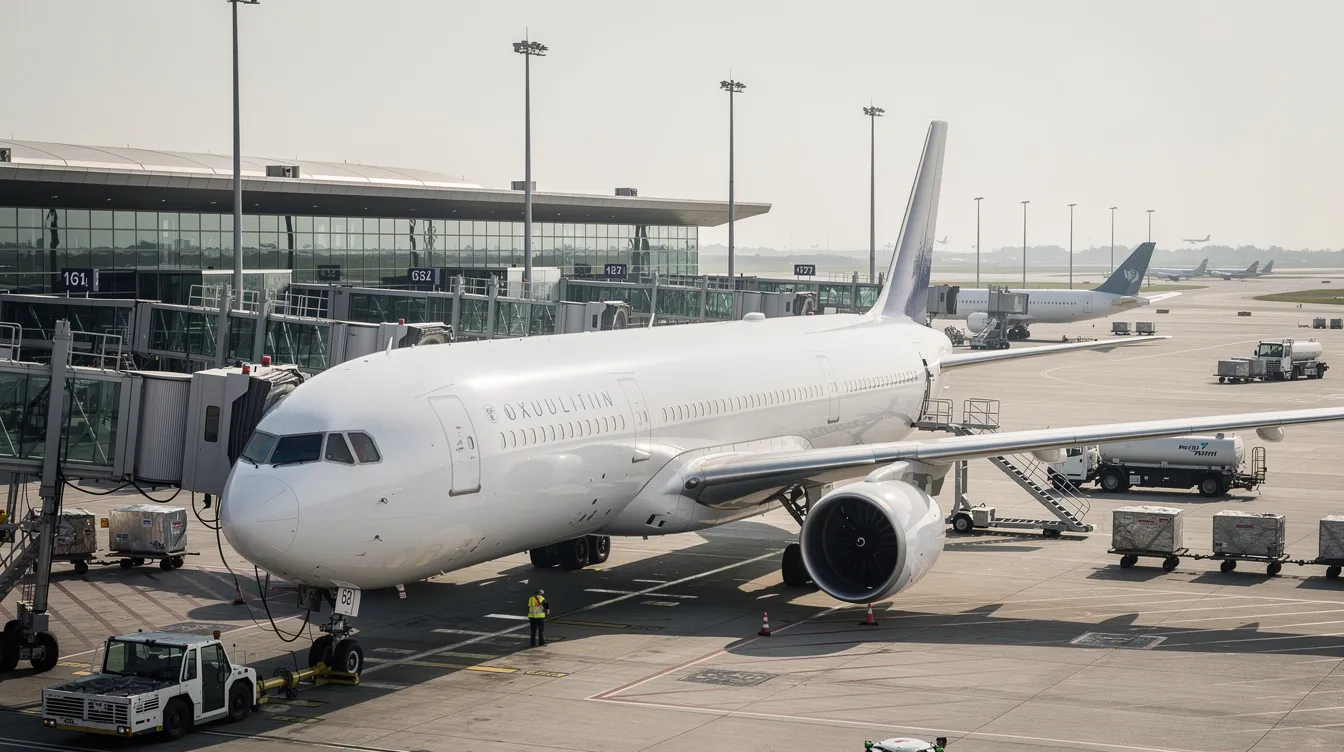
The Boeing 747 earned its reputation as the "Queen of the Skies" across five decades of service. Boeing produced 1,574 of these aircraft before the last one rolled off the line on January 31, 2023, delivered to Atlas Air. The Boeing 747 family includes over twenty sub-variants, and the dimensions of a 747 vary depending on the model. This overview covers those differences and what they mean for range, payload, and passenger experience.
Key Boeing 747 Dimensions at a Glance
The 747's external size determines which airports it can access, how many seats fit inside, and how much cargo it can carry. For BlackJet members accustomed to large cabin jets, these numbers also illustrate why smaller aircraft remain the practical choice for groups under 16.
Specification | 747 100 | 747 200 | 747 400 | 747 8 |
|---|
Overall length | 231 ft 10 in (70.66 m) | 231 ft 10 in (70.66 m) | 231 ft 10 in (70.66 m) | 250 ft 2 in (76.25 m) |
Wingspan | 195 ft 8 in (59.64 m) | 195 ft 8 in (59.64 m) | 211 ft 5 in (64.44 m) | 224 ft 5 in (68.40 m) |
Tail height | 63 ft 5 in (19.33 m) | 63 ft 5 in (19.33 m) | 63 ft 8 in (19.41 m) | 63 ft 6 in (19.35 m) |
Cabin width | ~6.1 m | ~6.1 m | ~6.1 m | 6.1 m |
The 747- 8 is the largest variant: 18 ft 3 in longer than the 747- 400 and nearly 29 ft wider in wingspan than the original 747 100.
A Gulfstream G650, by contrast, spans roughly 99 ft 7 in wing-to-wing, is about 100 ft long, and offers a cabin width of 8 ft 2 in; far smaller overall, but designed to deliver more space per passenger for groups of 13 to 16.
This article focuses on physical dimensions, both external and internal, rather than pure performance metrics.
External Dimensions of the Boeing 747 Family
External dimensions drive airport compatibility. Runway length, gate spacing, and taxiway width all depend on an aircraft's footprint. The 747 pushed these boundaries from the moment Pan Am placed its initial order in 1966, and each successive variant grew larger.
Boeing 747 100 / 747 100SR: The original design introduced by Boeing in 1969. Length 231 ft 10 in, wingspan 195 ft 8 in, wing area approximately 511 m². Pan Am flew the first commercial service in January 1970. The 747 100SR, built for Japan, shared these external dimensions but had a reinforced structure for high-cycle short routes.
Boeing 747 200 (including Combi and 747 200F): Same fuselage length as the 747 100, with upgraded engines and increased fuel capacity for longer range. The 747 200F introduced a main deck cargo door, making it the first true 747 freighter. Some were later converted into cargo aircraft for freight operators across the market.
747 400: Boeing added winglets and wing-tip extensions, pushing wingspan to 211 ft 5 in. Wing area grew to roughly 525 m². The 747 400 has distinct features compared to modern twin-engine jets like the Boeing 777, including its four engines and double-deck cockpit hump. The Airbus A380, introduced later, surpasses the Boeing 747- 8 in wingspan and passenger capacity; the Boeing 777-9, at approximately 76.7 m in length, rivals the 747- 88 in fuselage size.
747 8 Intercontinental747-8I8I) and 747-8F: Boeing launched the 747- 8 program with a completely redesigned wing featuring raked tips instead of winglets. Wing area reached 554 m². These dimensions require ICAO Code F infrastructure, limiting the aircraft to major hubs, while private jets that use smaller runways can reach regional airports closer to final destinations.
Fuselage Length and "Hump" Profile: 747- 100 to 747- 8
The 747's raised cockpit was originally designed to allow a nose cargo door on freighter variants, creating the iconic hump. On early 747- 10000 aircraft, the upper deck behind the cockpit served as a small lounge. With the 747- 300, Boeing introduced a stretched upper deck that added premium cabin space, and the 747 400 retained that extension. The 747-8I8I8I stretched the fuselage to 250 ft 2 in, adding roughly 18 ft 3 in over the 747- 400. That additional length created room for 34 more seats in typical layouts. The 747 400D was designed for Japanese trunk routes with structural reinforcements for frequent short cycles, omitting winglets to save weight on domestic service between cities like Tokyo and Osaka.
BlackJet members trade this multi-deck scale for single-deck private plane layouts with bespoke interiors, where the cabin is tailored to a handful of travelers rather than hundreds, and can choose among a wide range of types of private jets for every traveler.
Wingspan, Wing Area, and Airport Compatibility
Wingspan determines aerodynamic efficiency, gate classification, and fuel burn per seat. The progression tells a clear story:
747 100 / 747 200: 195 ft 8 in. Classic swept wing, no winglets.
747- 400: 211 ft 5 in. Winglets added 6 ft of vertical tip structure, improving cruise efficiency without requiring wider gates at most airports. Qantas operated these on ultra-long-range routes between Australia and Europe for decades.
747 8: 224 ft 5 in. Raked wingtips replaced winglets; the new wing borrowed ideas and inspiration from 787 technology, making the 747 8 the most fuel-efficient variant per seat.
A large-cabin private jet's wingspan of roughly 94 to 100 ft allows it to use FBO ramps and taxiways that no 747 could navigate, giving Jet Card holders access to thousands more airports worldwide, with pricing structures explained in detail in our guide to understanding Jet Card cost.
Cabin Dimensions and Seating Layouts on the Boeing 747
The Boeing 747- 8 has a cabin width of 6.1 m, wide enough for 10-abreast economy seating in a 3-4-3 layout on the main deck. The typical seating capacity of the Boeing 747- 8 is approximately 410 to 467 passengers,s depending on class configuration.
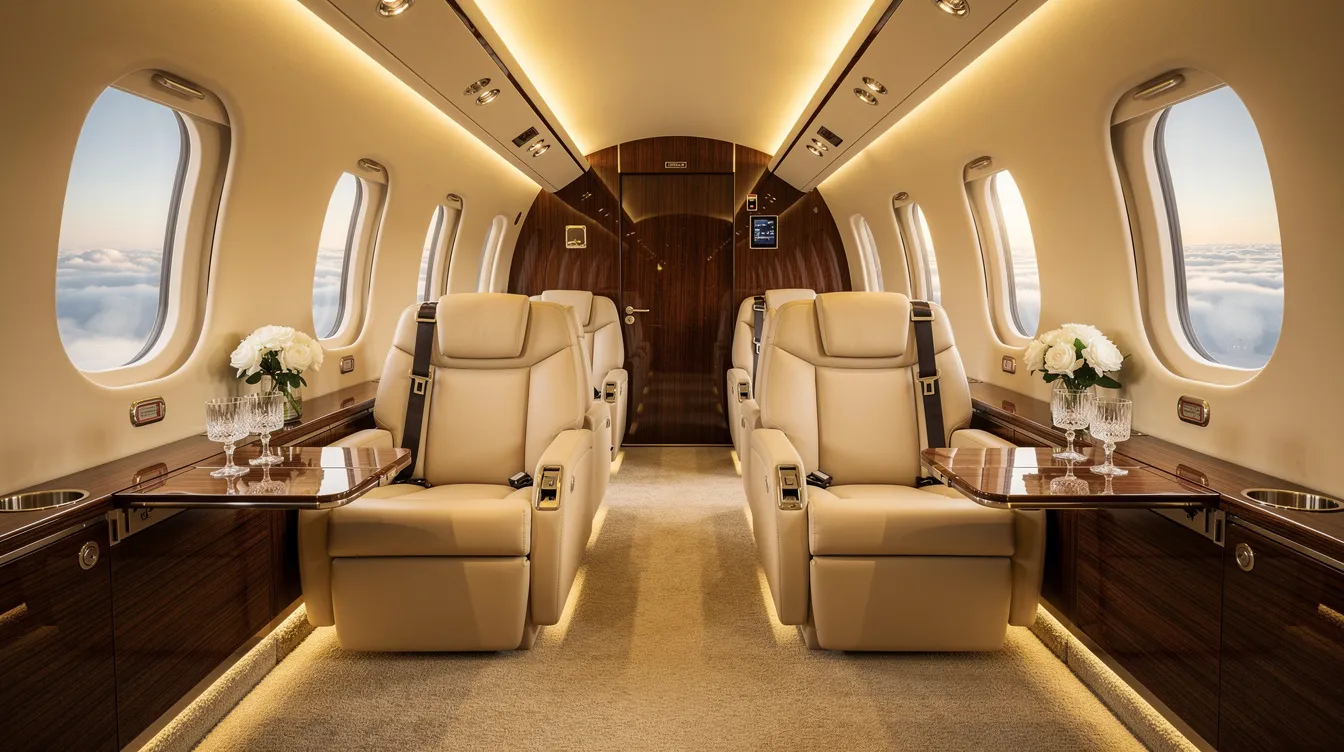
On the 747- 100 and 747- 20000, airlines placed first class in the nose with a lounge on the upper deck. The 747 400's stretched upper deck hosted full business-class cabins; Lufthansa, for example, placed its First Class suite at the nose and Business Class across the upper deck. The 747 8 updated its interior with thinner sidewalls, higher ceilings, and LED lighting borrowed from the 787, though the basic cross-section remained the same.
By comparison, a 16-seat private jet offers each passenger far more personal space than even a premium seat on a widebody airliner, and travelers moving groups of similar size can review the best private jet for 15 passengers when planning long-range missions. BlackJet clients consistently prioritize privacy and cabin design over raw seat count.
Cargo Hold Dimensions: 747 200F, 747 400F, and 747 8F
From its earliest design phase, Boeing designed the 747 with cargo capacity in mind. The raised cockpit freed the entire nose for a nose cargo door, and the site of the glass cockpit atop the fuselage became one of aviation's most recognizable profiles. Lockheed's competing C-5 Galaxy used similar ideas for military freight, but the 747 dominated the commercial freighter market.
Key freighter specs:
747 200F: First dedicated cargo variant. Main deck and lower holds combined volume of roughly 21,000+ cu ft, with the nose door enabling outsized payload.
747 400F: Main deck cargo area of 21,645 cubic feet; cargo hold length of 185 feet across the main deck. The main deck cargo door measures 134 inches by 123 inches. The aircraft can carry containers up to 10 feet high, with a maximum takeoff weight of 397 tons and the ability to carry 249,000 pounds of payload. Total volume across all holds reaches approximately 26,766 cubic feet.
747 8F: Features a fuselage stretch and updated technology, adding several hundred cubic feet of volume over the 747 400F. Freighters continue to serve global cargo airlines; many older 747 400 passenger frames have been converted into freighters to continue meeting freight demand.
BlackJet's fleet focuses on right-sized aircraft rather than heavy cargo carriers. Where a 747F hauls 249,000 lb of freight, a private charter passenger needs only enough baggage volume for a few bags and perhaps golf clubs, which makes small private jets for luxury travel a far better fit than widebody freighters.
Operational Implications of 747 Dimensions vs Private Jets
Boarding a Boeing 747 at a major hub means navigating terminal crowds, multiple jet bridges, and taxi times that can exceed 20 minutes at congested airports. A private jet departure from an FBO typically takes under 10 minutes from car to cabin.
The 747's size requires runways of 10,000 to 15,000 ft at heavy weights. A Gulfstream G650 needs roughly 5,800 to 6,300 ft. Both aircraft types operate under rigorous safety and maintenance standards, but smaller aircraft allow more direct oversight per mission and typically cruise at higher altitudes than airliners, as explained in our guide to how high a private jet flies compared to commercial flights.
On sustainability: the 747 400 and 747 8 optimize fuel burn per seat across 400+ passengers. BlackJet ensures carbon-neutral private flights by offsetting emissions on every page of a member's flight history, at no additional cost, even for travelers exploring the cheapest private jet options as an entry point into private aviation.
FAQs About the Dimensions of a Boeing 747
Q: What is the length of the largest Boeing 747 variant?
A: The Boeing 747-8 is the largest variant, measuring 250 ft 2 in (76.25 m) in length.
Q: How does the wingspan of the Boeing 747-8 compare to earlier models?
A: The 747-8 has a wingspan of 224 ft 5 in (68.40 m), significantly larger than the 211 ft 5 in wingspan of the 747-400 and the 195 ft 8 in wingspan of the original 747-100.
Q: What is the typical passenger capacity of a Boeing 747-8?
A: Depending on configuration, the 747-8 typically seats between 410 and 467 passengers.
Q: When was the last Boeing 747 delivered?
A: The final Boeing 747 was delivered to Atlas Air on January 31, 2023.
Q: How do the dimensions of a 747 affect airport access?
A: Due to its large size, the 747 requires runways and gates that can accommodate its wingspan and length, typically limiting operations to major international airports with ICAO Code F infrastructure.
Q: How does the Boeing 747 cargo capacity compare across variants?
A: The 747-400F cargo hold measures 21,645 cubic feet on the main deck, with a total volume of approximately 26,766 cubic feet including lower holds. The 747-8F features a fuselage stretch and updated technology, increasing cargo volume further.
Q: What makes the 747's "hump" design unique?
A: The raised cockpit allows for a nose cargo door on freighter variants, enabling loading of outsized cargo and creating the iconic 747 silhouette.
Q: How does the 747 compare to private jets in terms of operational flexibility?
A: While the 747 excels in passenger and cargo capacity for long-range routes, private jets offer greater flexibility with access to smaller airports, faster boarding, and customized interiors for fewer passengers.
Choosing the Right Boeing 747 Aircraft Size for Your Mission
The Boeing 747's dimensions made it the foundation of long-range mass air travel for over five decades. But those same dimensions —ns, 250 ft of length, 224 ft of wingspan — require infrastructure that limits flexibility, especially compared with the nimble profiles of the best small private aircraft for every need.
Consider a business executive flying New York to London. A large-cabin private jet accessed through a BlackJet Jet Card covers the same 3,450 nm with comparable comfort, zero terminal wait, and the ability to land at secondary airports closer to final meetings, particularly when using a BlackJet 25+ Hour Jet Card for predictable access and pricing. The right aircraft size is the one matched to your mission, not the largest one on the ramp.
Explore BlackJet's Jet Card programs to find the cabin and aircraft that fit your typical routes.


 Sign up with google
 Sign up with Apple