Aircraft requiring smaller runways are typically STOL (Short Takeoff and Landing) aircraft and specialized short-field capable jets, including models such as the Cirrus Vision Jet and Pilatus PC-24 that can operate on roughly 2,000 to 3,000 feet. For frequent business travelers, executives, and high-net-worth leisure flyers who want privacy, flexibility, and access to smaller or more remote airports, that capability changes what private aviation can actually deliver. Private aviation delivers a strategic advantage that goes far beyond cabin comfort. The ability to reach destinations others cannot, on a schedule only you control, is what separates a convenient trip from a transformative one.
At the center of that advantage sits a factor most travelers overlook: runway length. This guide explains which aircraft categories fit short-runway operations, from STOL aircraft to very light and light jets, how they expand airport access, what operational and airport constraints matter, and how safety, technology, sustainability, and BlackJet’s Jet Card access model shape the decision. The result is less ground time, more destination options, and a more efficient way to reach places conventional jets often cannot.
Immediate Answer: What Does "Aircraft Requiring Smaller Runways: Abbr." Point To?
If you've encountered the crossword clue "Aircraft requiring smaller runways: Abbr.," the answer is almost certainly STOL, short for Short TakeOff and Landing. In American quick crosswords, STOL fits as a clean four-letter solution, though some grids may accept VLJ (very light jet) when the pattern and crossings align.
Beyond the puzzle, these abbreviations describe real aircraft engineered for short-distance operations. Aircraft designed for short runways are often classified as STOL or specialized short-field aircraft, and they open access to airfields that conventional jets simply cannot reach. The Cirrus Vision Jet can use runways shorter than 2,000 feet, while the Pilatus PC-24 lands comfortably on strips under 3,000 feet. At BlackJet, our operations team works with these categories daily, matching the right airplane to each constrained airport on your itinerary.
Why Short-Runway Aircraft Matter for High-End Travelers in 2026
Consider the difference between arriving at JFK-navigating terminal congestion, lengthy taxi queues, and a 60-minute ground transfer into Manhattan-versus touching down at a smaller regional field minutes from your meeting or resort. Smaller aircraft unlock access to remote destinations and smaller municipal airports, turning multi-day commercial itineraries into efficient same-day returns.
The numbers speak clearly: landing at Teterboro (TEB) outside New York instead of JFK can save 90 minutes of ground time each way. London Farnborough (FAB) puts you in central London faster than Heathrow. Aspen-Pitkin County (ASE) eliminates the Denver connection entirely. Aircraft requiring smaller runways unlock thousands of additional airfields across the U.S. and Europe, and fewer passengers aboard smaller aircraft result in faster boarding and deplaning times.
For discerning travelers-executives needing schedule control and UHNW families seeking privacy-this access is not a luxury but a strategic solution. BlackJet's Jet Card members routinely leverage short-runway-capable aircraft for last-minute meetings and weekend escapes to places commercial aviation rarely serves, supported by premium private Jet Card programs and services tailored to these use cases.
How Runway Length Shapes Your Private Flying Experience
In practical business aviation terms, "short runways" typically means 2,000 to 4,000 feet. Typical runway requirements for some light aircraft can be as short as 300 to 1,000 feet, though these extremes belong to specialized pistons and bush planes rather than cabin-class jets.
The limiting factor is usually takeoff performance at maximum weight. Takeoff distance grows sharply with increased payload, higher elevation, or hotter temperatures. Landing distance is generally shorter, but factors like runway slope, surface condition, and braking capability still matter. These variables determine which aircraft category can operate from a given field: turboprops are suitable for shorter runways compared to jet aircraft, while midsize jets may need 5,000 feet or more.
The practical result for you: a Cirrus Vision Jet can depart from a well-maintained 2,000-foot strip near your property, while a midsize cabin jet requires a full-length commercial runway. Smaller aircraft do not require large terminals or heavy-duty runways, which means shorter queues, more direct city-pair options, and a flying experience measured in minutes rather than hours.
Notable Airports With Short or Constrained Runways
Several world-class destinations demand aircraft with exceptional runway performance, making small private jets for luxury travel especially valuable for accessing them efficiently:
Aspen-Pitkin County (ASE, Colorado): Runway 15/33 measures roughly 8,000 feet, but the airport sits at 7,800 feet elevation. Density altitude can effectively "shorten" usable runway length by hundreds of feet in summer, making short-field capable jets essential.
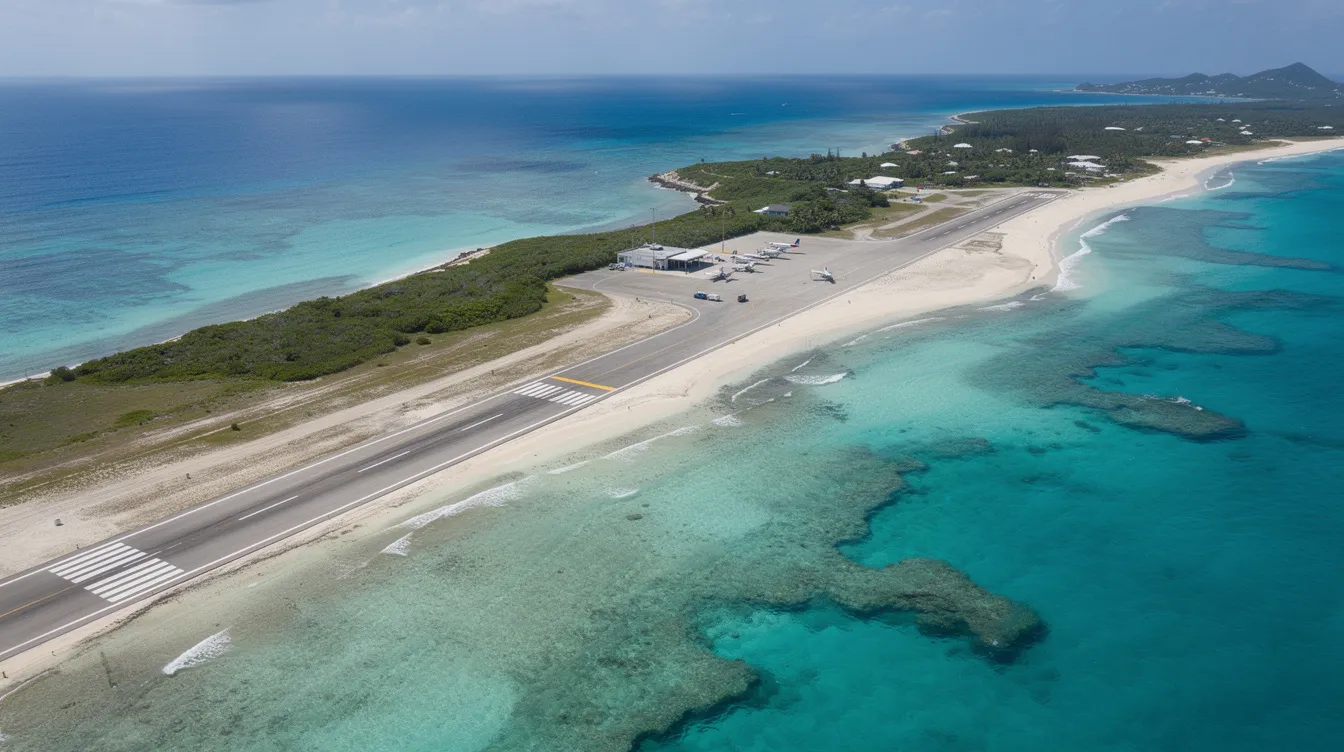
St. Barts Gustaf III (SBH): At approximately 2,120 feet, this is one of the most demanding strips in the world. Aircraft designed for wilderness flying prioritize steep approach angles and low landing speeds-exactly what SBH requires.
London City (LCY): Runway length of roughly 4,948 feet with a steep 5.5° approach angle, compared to the standard 3°. Only aircraft certified for this approach may operate here.
Lugano (LUG, Switzerland): Around 4,660 feet, surrounded by terrain, wind shear, and elevation challenges.
Regional strips (various): Thousands of airfields across the Caribbean, New England, the Alps, and leisure destinations such as Ibiza sit at or below 3,000 feet, often with grass or gravel surfaces.
BlackJet's operations team checks each destination's runway length, elevation, and conditions before assigning an aircraft to ensure every mission is safe and efficient.
Key Aircraft That Excel on Short Runways in 2026
The following profiles cover leading turboprop aircraft, VLJs, and light jets that combine short-field performance with cabin comfort. All figures reflect current production models as of 2024–2026. While some are popular with owner-pilots, BlackJet clients typically access them through Jet Card programs or charter flights, and a broader comparison of the best small private aircraft for different missions can further refine your choice.
Aircraft Model | Type | Takeoff Distance (ft) | Landing Distance (ft) | Cruise Speed (KTAS) | Range (nm) | Passenger Capacity | Notable Features |
|---|
Pilatus PC-12 NGX | Turboprop | 2,650 | ~2,170 | ~285 | 1,800 | 6–8 | Access to 90% of airfields, gravel runway capable |
Pilatus PC-24 | Light Jet | 2,930 | - | 440 | 2,000 | Up to 10 | Certified for unpaved runways, steep approach capability |
Cirrus Vision Jet | VLJ | ~2,000 | ~1,622 | 300–311 | 600–1,200 | 5 adults + 2 kids | Whole-airframe parachute, Safe Return autoland |
HondaJet Elite II | Light Jet | 3,699 (balanced field) | ~2,717 | 422 | 1,547 | 4 (+ optional seat) | Over-the-wing engines, low cabin noise |
Embraer Phenom 100EV | Light Jet | 3,190 | - | ~400 | 1,175–1,200 | 4–6 | Efficient light jet, popular for short-haul business |
Cessna Citation M2 Gen2 | Light Jet | 3,210 | - | 404 | 1,550 | Up to 7 | Modern avionics, refined cabin |
Cessna Grand Caravan EX | Turboprop | 2,160 | - | - | - | Up to 14 | Excellent short-field and unpaved runway capability |
Piper M500 | Turboprop | 2,600–2,800 | - | - | - | 4–5 + pilot | Utility turboprop with short runway performance |
Daher TBM 910/940 | Turboprop | 2,380 | - | Up to ~330 | ~1,700 | 4–6 | High speed, advanced avionics, autoland (TBM 960 variant) |
STOL, VLJ, Light Jet: What the Crossword Clue Doesn't Tell You
The crossword answer "STOL" barely scratches the surface. Here's what each category means in practice:
STOL (Short TakeOff and Landing): STOL aircraft often require less than 500 feet of runway for takeoff and landing. STOL airports are capable of taking off and landing in significantly less distance than conventional planes. These aircraft are built with high power-to-weight ratios to allow for quick acceleration on unprepared runways, and STOL aircraft typically utilize high-lift devices like leading-edge slats and large flaps. They are often lightweight with robust landing gear for short-field operations, and some designs use a T-tail as part of their aerodynamic setup. STOL aircraft are designed for low-speed landing and short-distance operations-think bush planes, Twin Otters, and the Pilatus PC-6 Porter.
VLJ (Very Light Jet): Models like the Eclipse 500, HondaJet, and Vision Jet, with runway needs in the 2,000–3,500 feet range.
Light Jet: Phenom 100EV, Citation M2 Gen2, and similar aircraft generally need 3,000–4,000 feet-still far less than midsize jets.
For BlackJet clients, these acronyms translate into concrete routing options and airport choices, not just crossword clues, and they also define the entry-level segment covered in guides to the cheapest private jet options for new flyers.
Crossword Clues & Aviation Knowledge Overlap
Aviation terms like STOL, VLJ, and SST appear frequently in crossword clues because they're compact abbreviations with distinctive letter patterns. Related clue patterns include "Small-runway aircraft, abbr." "Short-field flier," "Very light jet, abbr.," and a website search can help you find crossword answers or abbreviation patterns faster. Solvers use letter counts and crossings to solve these, while most crossword databases list STOL as the primary answer for aircraft requiring smaller runways.
Your knowledge of aircraft performance gives you a genuine edge in puzzles-and in planning your next flight. If you follow aviation closely, you may find yourself recognizing aircraft in both your logbook and your daily crossword community, and it helps to check the date on a clue archive or database entry when recurring clues come up.
How BlackJet Uses Short-Runway Aircraft to Reshape Your Itinerary
BlackJet's Jet Card platform doesn't lock you into a single aircraft, and understanding Jet Card cost and membership pricing is key to choosing the right structure for that flexibility. Instead, it matches each trip to an appropriate short-runway-capable type, reflecting client interest in shorter-runway access for certain itineraries and ensuring the operational efficiency of on-demand travel without rigid schedules, while drawing on a broad spectrum of private jet types for every traveler profile.
Consider a 600 nm executive day trip from York (or New York) to Chicago: a HondaJet Elite II or Citation M2 Gen2 uses a less congested, shorter runway airport, saving two hours of ground time compared to O'Hare. Or a leisure weekend from Dallas to Santa Fe, where a PC-12 NGX accesses a 3,000-foot strip minutes from your ranch. Some modern private jets are engineered to access smaller regional airports, and BlackJet's focus is converting multi-leg commercial itineraries into single-day, multi-stop loops, with emerging private plane rideshare options further expanding how travelers share capacity on these routes.
Jet Card vs Ownership vs On-Demand Charter for Short-Field Missions
The access model matters as much as the aircraft type:
Ownership: High capital intensity. You're locked into one aircraft type-a PC-12 NGX may not serve every mission profile, and you bear all maintenance costs from continuing operations on rough strips. Travelers comparing this path with long-term access often evaluate the total cost of a 100-hour Jet Card as an alternative.
On-demand charter: Flexible, but pricing can vary based on availability. Sourcing niche short-field types at the last minute is not always possible, depending on the route, timing, and local fleet availability, which is why some flyers explore 50-hour Jet Card pricing and value as a way to lock in predictable access.
Jet Card (BlackJet): Prepaid hours with guaranteed access to multiple aircraft classes-turboprop, VLJ, light jet-at transparent hourly rates. For clients flying 75–200 hours per year into a mix of major hubs and short fields, a Jet Card typically offers the best balance of control, cost certainty, and fleet variety, especially once you understand how Jet Card pricing structures work.
Safety, Certification & Technology on Short-Runway Aircraft
Short-field operations demand disciplined safety standards. Smaller aircraft can be more susceptible to weather conditions compared to larger aircraft, making advanced avionics and operator expertise essential for safety, performance, and day-to-day reliability. BlackJet only partners with operators meeting recognized safety benchmarks such as ARGUS, Wyvern, and IS-BAO, with vetted operators and audited standards supporting reliability. For many clients, comparing Jet Card cost per hour across providers and reviewing the best small private aircraft for specific safety and performance needs are parallel steps in the same decision.
Key technologies on modern short-field capable aircraft include synthetic vision, terrain awareness, autothrottle, and autoland systems, which enhance situational awareness and short-field margins. Cirrus CAPS provides a whole-airframe parachute. These aircraft are manufactured to rigorous certification standards, helping support dependable operation. The PC-24's enhanced braking system reduces risk margins on short runways. Before every flight, operators compute performance calculations covering runway length, slope, elevation, temperature, wind, and surface contamination.
For reference, VTOL aircraft can take off and land vertically without a runway, though this technology remains in early commercial stages. Smaller aircraft typically have strict payload limits and higher per-passenger operating costs, and they usually have a shorter range and may require refueling for long distances-factors every operator must weigh.
Sustainability: Short-Runway Access With a Lighter Footprint
Modern turboprops and efficient light jets often deliver superior fuel efficiency per passenger-mile compared to larger jets on comparable legs. Aircraft like the TBM 960 and PC-12 NGX are designed with lower emissions in mind. Smaller aircraft can operate from regional airfields, allowing for closer proximity to final destinations, which reduces total ground transfer emissions.
BlackJet ensures every Jet Card flight is carbon-neutral through verified offsets and, where available, sustainable aviation fuel. Consolidating missions into direct flights to closer, smaller airports can reduce total trip emissions compared with multi-segment commercial plus long ground transfers. Convenience and environmental responsibility are not mutually exclusive, and many of the best aircraft of 2026 integrate sustainability advances that align with this approach.
Practical Checklist: Choosing Aircraft for Short Runways
Use this framework to create a shortlist before your next mission:
Under ~2,500 ft: Specialized STOL turboprops, select Vision Jet scenarios, Caravan EX
~2,500–3,000 ft: PC-12 NGX, PC-24, Piper M-Class
~3,000–3,500 ft: VLJs and light jets (Phenom 100EV, Citation M2 Gen2, HondaJet Elite II), similar in size to aircraft often featured in NetJets Jet Card cost comparisons for this category.
Over 3,500 ft: Most midsize and larger jets; new aircraft models continue pushing this threshold lower, including large private jets suitable for 20 passengers when group size outweighs short-field access needs.
Weigh your typical leg length, passenger count, baggage volume, and desired cabin standard alongside runway constraints. High-elevation or hot-weather airports effectively shorten usable runway length and may push the choice toward turboprops. Smaller aircraft provide operational flexibility by using smaller airports, but every mission profile is different, and understanding private jet sizes and cabin categories helps align runway performance with comfort and range expectations.
Share a few recent and upcoming trip examples with BlackJet so a specialist can recommend an appropriate aircraft class and Jet Card structure, including options like the BlackJet 25+ Hour Jet Card for clients with predictable annual flight hours.
FAQ: Aircraft Requiring Smaller Runways, Crossword Clues & BlackJet Access
What is the minimum runway length for a private jet? Many light jets need 3,000–4,000 feet. Only a few-like the PC-24 at roughly 2,930 feet or the Vision Jet near 2,000 feet-dip below 3,000 feet at typical loads. Performance will vary based on weight, elevation, and temperature.
Which aircraft are best for very short runways under 2,500 ft? STOL turboprops and carefully managed Vision Jet operations. The best choice depends on baggage, passenger mix, and mission profile. The Pilatus PC-12 requires a runway length of 2,650 feet, while the Cessna Grand Caravan EX requires about 2,160 feet for takeoff. Operator expertise is essential at these distances.
What does STOL mean in crossword clues and aviation? STOL stands for Short TakeOff and Landing-aircraft that can land and depart from significantly shorter runways than conventional planes. In crossword puzzles, it appears as a four-letter answer to clues about aircraft requiring smaller runways.
Can I specify "shortest runway possible" when booking with BlackJet? Yes. Members can prioritize access to smaller airports, and our operations team will match the mission to a suitable, certified aircraft based on each runway's specific conditions.
How quickly can BlackJet arrange a short-runway-capable aircraft? Jet Card members typically receive confirmed availability within 12–24 hours, with same-day options for select routes and aircraft types.
Does short-runway flying compromise ease or comfort? Not necessarily. Models like the PC-24 and HondaJet Elite II deliver cabin standards and configuration choices that rival larger jets, with features designed for the most discerning travelers. The trade-off is rarely comfort-it's range and passenger count.
Conclusion: Unlock Exceptional Access with Aircraft Requiring Smaller Runways
Aircraft requiring smaller runways are more than just a niche category—they are a cornerstone of strategic private aviation in 2026. By enabling access to thousands of regional, remote, and constrained airports, these short-field-capable jets and turboprops redefine convenience, efficiency, and privacy for high-net-worth and corporate travelers.
At BlackJet, we understand that runway length shapes your itinerary as much as speed or cabin class. Our Jet Card program offers seamless access to a curated fleet of STOL, VLJ, and light jet aircraft optimized for short-runway operations, and the company makes these aircraft classes available through flexible prepaid access, backed by rigorous safety certifications and carbon-neutral commitments. Whether you’re flying last-minute to a mountain retreat, hopping between urban business hubs, or escaping to an exclusive island, the right aircraft ensures your journey is effortless and tailored to your needs.
Discover how smaller runway aircraft can transform your travel by reducing ground time, expanding destination options, and enhancing sustainability—all without compromising luxury or safety. Explore premium jet access with BlackJet and elevate your private flying experience beyond the limits of conventional aviation.


 Sign up with google
 Sign up with Apple