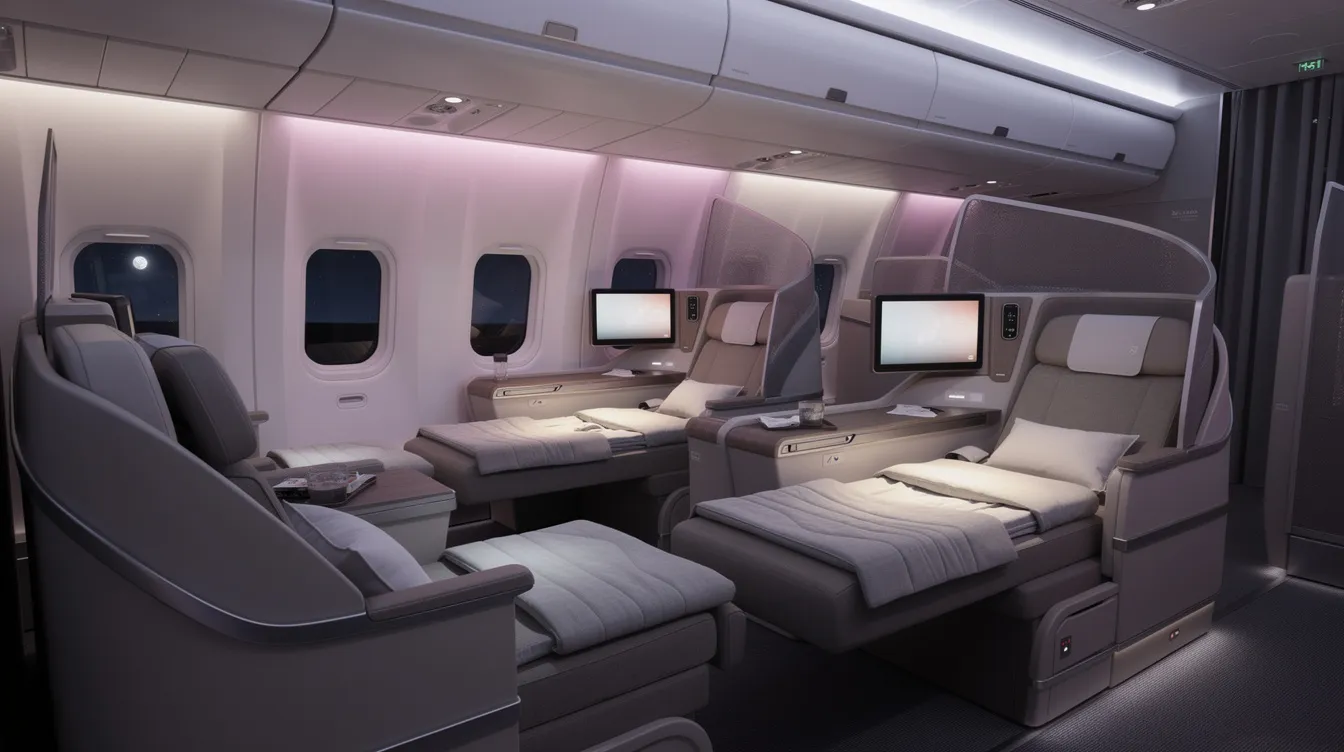
The Delta One Suite on the Airbus A350 has redefined what business class looks like on a US airline. With sliding privacy doors, lie-flat beds stretching 76.5 inches, and Missoni-branded bedding, it offers a compelling argument for commercial premium travel. But for executives and high-net-worth travelers who measure their journeys in time saved rather than miles earned, even the best commercial business class cabin has structural limits that no suite door can fix.
Executive summary: Delta One A350 vs BlackJet private jet access
Delta One on the A350-900 represents one of the strongest business class products flying today. The cabin features 32 suites arranged in a 1-2-1 configuration, each with a sliding door for privacy, an 18-inch high-resolution seatback screen, Bluetooth audio pairing, and wireless charging. The Missoni amenity kit and memory foam bedding set complete a package that genuinely narrows the gap between commercial business class and private aviation.
Still, narrowing a gap is not closing it. A Delta One passenger boards from a busy international concourse after navigating check-in counters, security lanes, and crowded gate areas. The flight departs on the airline's schedule, not the traveler's. The cabin, however refined, is shared with 31 other passengers seated in the same business class cabin.
"Even the finest business class suites are a suite within someone else's aircraft. A private jet cabin is entirely yours."
A BlackJet Jet Card flips this equation. Consider the Atlanta to Cape Town corridor — one of Delta's flagship A350 routes. A Delta One business class ticket on this 15-hour nonstop can start above USD 5,000 one-way, with limited schedule flexibility. A BlackJet member traveling the same corridor might pair a private hop from a regional southeastern airport directly to an international hub, then connect onward — or, for groups, charter a long-range aircraft that eliminates the hub entirely. No terminal queues. No fixed departure windows. No shared cabin. The question for frequent premium travelers is straightforward: when does the best commercial business class stop being enough, and when do options like buying a seat on a private jet or full-cabin charter start to make more sense?
Delta One A350 overview: aircraft, routes, and positioning
Delta Air Lines deploys the Airbus A350-900 as its flagship long-haul aircraft, and the type is central to the carrier's premium strategy. With 41 A350-900s currently in service and 18 more on order, plus the forthcoming A350-1000 expected to begin deliveries in early 2027, the A350 family anchors Delta's most prestigious international flights.
Delta operates the A350 primarily on ultra-long-haul routes where cabin comfort becomes a competitive differentiator. These include Atlanta to Cape Town, Los Angeles International Airport to Sydney, Seattle to Seoul (Incheon), and Detroit to Tokyo (Haneda and Narita), among others. The aircraft also appears on select high-demand domestic routes between major hubs. In its standard 306-seat configuration, the A350-900 carries 32 Delta One Suites at the front, followed by a premium economy section (Delta Premium Select), Delta Comfort+, and Main Cabin.
It is worth clarifying what "Delta One" actually means. It is not a separate airline or a first-class product — it is Delta's top business class cabin on international and selected premium domestic flights. No other US airline uses quite the same branding approach, which sometimes creates confusion for travelers accustomed to the traditional first-and-business hierarchy found on carriers like American or United.
What makes the A350 platform itself noteworthy goes beyond the seat product. The aircraft features a quieter cabin due to its composite fuselage, higher cabin humidity to reduce fatigue on a long flight, larger windows, and approximately 20% lower fuel burn per available seat mile compared with the older widebodies it replaces. For passengers, this translates to arriving less fatigued. For Delta, it translates to a more sustainable fleet.
Inside the Delta One business class cabin on the A350
Step into the Delta One cabin on an A350-900 and the first impression is one of structured privacy. The business class cabin uses a 1-2-1 staggered suite configuration, with pairs flanking the center section so every passenger has direct aisle access — no climbing over a neighbor, no awkward aisle negotiations during the entire flight.
The design palette is restrained: dark blue and gray tones, clean modern lines, and mood lighting that shifts subtly between boarding warmth, dinner ambiance, and sleep-mode dimness. High sidewalls rise around each suite, and separated galley areas reduce noise intrusion from meal service preparation.
On many A350-900s, the Delta One cabin is divided into two sections:
A larger forward business cabin holding roughly 24 suites
A smaller rear mini cabin (often rows 7–8) with approximately 8 suites, creating a more intimate, boutique-like atmosphere
The mini cabin is a favorite among frequent flyers who prefer the quieter environment and fewer passengers seated nearby. In both sections, seats Delta places in the middle pair use privacy dividers that can be raised or lowered, making them suitable for couples traveling together or solo travelers who want maximum separation.
With the A350-1000 layout arriving in 2027, Delta plans to evolve this concept further — enhanced storage, improved privacy partitions, and a cabin where roughly 50% of all seats will sit in premium cabins. The new Delta One Suites on those aircraft will feature 24-inch 4K QLED screens, extended bed lengths, and refined business class seats with smart stowage additions like shoe cubbies and integrated device trays.
The Delta One Suite: business class seat details
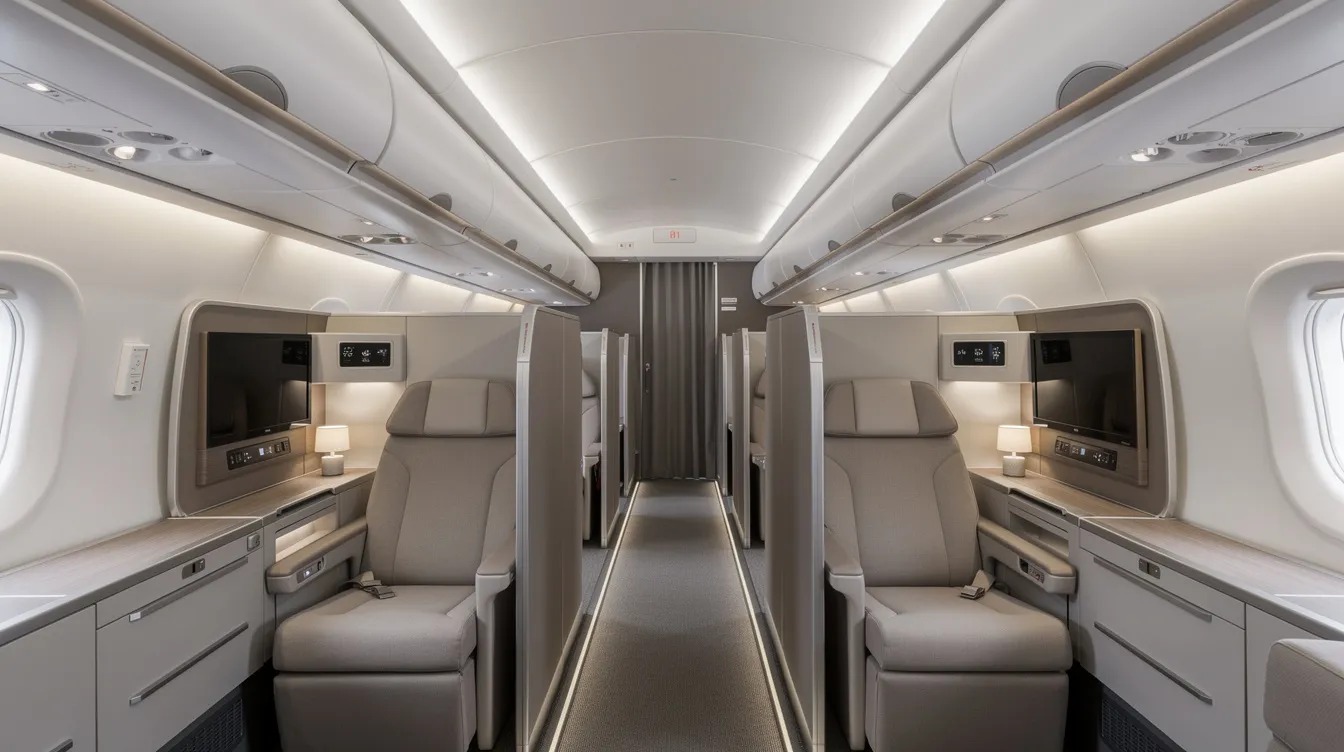
The Delta One Suite is where Delta's investment becomes tangible. Each business class seat measures 20.5 inches of width in both seated and bed mode, with the seat converting to a fully flat bed measuring 76.5 inches — just over six feet four inches. Seat pitch sits at 76 inches, providing ample legroom even for taller travelers. In bed mode, the 180-degree lie-flat surface is supplemented by adjustable headrest and legrest controls.
The suite door mechanism is a defining feature. Each Delta One Suite features a sliding door for privacy - a full-height panel that closes to create a cocoon-like environment. True window seats, typically in odd-numbered rows in the A and D positions, feel the most enclosed because the seat is positioned against the fuselage wall with the door closing off the aisle side entirely. Center suites, while still private, sit closer to the aisle on one side.
Key comfort features within each suite include:
Memory foam seat cushions with a pillow-top mattress pad
A Missoni lumbar pillow that doubles as mattress support
A large tray table that folds out from the side console
Reading light and seat controls integrated into the armrest panel
Overhead bins accessible from within the suite
Reviewers have noted a few downsides. Footwells in certain rows — particularly some center seats — can feel tight or shallow, limiting stretch-out space for passengers over six feet. The sliding door latches occasionally require both hands and can feel less robust than the door itself suggests. Storage in the most private window suites is also relatively limited: aside from the shoe cubby and side console, there is not much space for larger personal items within arm's reach.
How does this compare to a private jet? Conceptually, a Delta One Suite approximates the experience of sitting in a club chair on a midsize or super-midsize private jet — comfortable, fully flat, with personal controls. The crucial difference is that the same seat exists in a shared cabin with 31 other occupied suites. On a private aircraft, the entire cabin is yours.
Technology and entertainment: 4K screens, Bluetooth and connectivity
The current A350-900 Delta One Suites feature an 18-inch high-resolution seatback screen — large enough for comfortable viewing during a long-haul flight, and sharp enough for 4K content. The next-generation A350-1000 suites will push this to 24-inch cinema-quality 4K QLED displays, the largest seatback screens in Delta's fleet.
Tech integration across each suite includes Bluetooth headphone pairing, both USB-A and USB-C ports, a universal AC power outlet, and on many aircraft a wireless charging pad built into the armrest or side console. The seat controls are intuitive, with preset positions for takeoff, dining, lounging, and full bed mode.
The onboard entertainment system — Delta Studio, powered by Thales — offers a large library of movies, TV series, podcasts, and music, along with a personalized Delta SkyMiles interface and interactive moving map. Noise-cancelling headphones are provided, though many travelers bring their own and pair via Bluetooth.
Wi-Fi is available fleet-wide, with free messaging for SkyMiles members and often complimentary full Wi-Fi on many routes. However, trip reports from transpacific sectors consistently flag intermittent or slow coverage over certain oceanic regions, particularly the deep Pacific. Delta's incoming A350-1000s will address this with Airbus HBCplus multi-orbit connectivity, combining satellite and low-earth-orbit links for more consistent service.
Soft product: bedding, amenity kit and in-seat comforts
Delta's soft product on the A350 has improved markedly in recent years, largely through its partnership with Italian fashion house Missoni.
The Missoni amenity kits contain useful skincare products from Grown Alchemist - hand cream, lip balm, and hydra-restore eye patches — alongside a bamboo toothbrush, Marvis toothpaste, eye mask, earplugs, socks, and a Delta pen. The kits come in five seasonal colorways inspired by destinations (Cape Town Canopy, Seoul Sunrise, among others), making them genuinely collectible rather than disposable. The exterior features Missoni's signature zigzag textile pattern.
Bedding is where Delta One separates from most other US airline business class offerings. Delta One Suites include a mattress pad, pillow, and blanket as a baseline set. The mattress pad enhances comfort during sleep by adding a cushioned layer over the seat surface, and it doubles as lumbar support when the seat is upright. Bedding quality is above average with memory foam comfort - on flights longer than approximately 12 hours, an additional memory-foam pillow is provided. Slippers are included on most long-haul international flights.
Small touches round out the experience: bottled water at each seat before departure, hot towels distributed after boarding, cloth-covered tray table service during meals, and the Grown Alchemist soap in lavatories.
These details narrow the gap between commercial business class and private travel meaningfully. But on a BlackJet-operated flight, amenities and brands can be customized to passenger preference before departure — from specific skincare lines to particular pillow types — a level of personalization that even the best top airlines' business class cannot match.
Dining in Delta One: long-haul business class meals
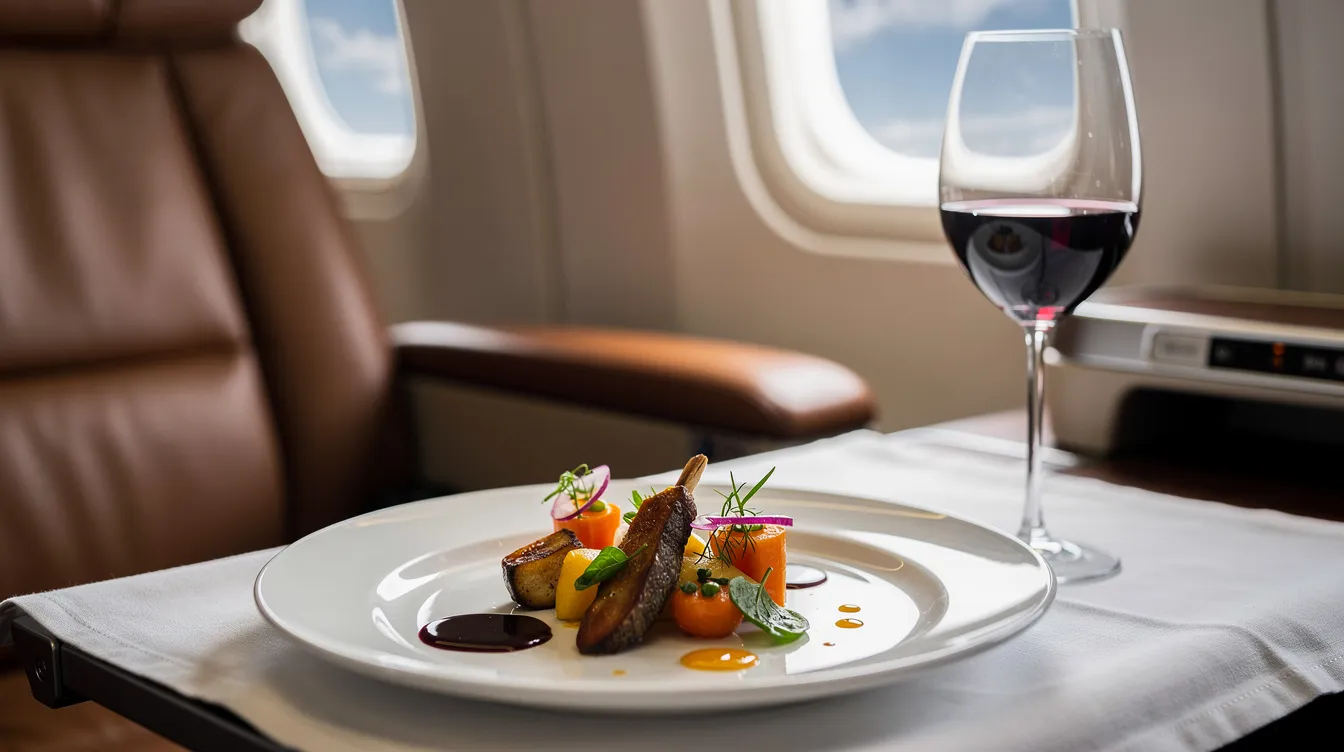
Delta One offers a four-course dinner service on long-haul routes, and the quality has become one of the product's genuine strengths. On a 12-to-15-hour flight like Atlanta to Cape Town or Los Angeles to Sydney, the meal flow follows a predictable but well-executed rhythm.
Typical meal progression:
Course | Timing | Examples |
|---|
Pre-departure beverages | Before pushback | Champagne, orange juice, water |
Hot towel service + warm nuts | After takeoff | Delta One serves warm mixed nuts as a signature starter |
Main dinner | 1–2 hours into flight | Wild mushroom lasagna, seared salmon, braised short rib, vegetarian curry |
Desserts | After main course | Customizable ice cream sundaes, cheese plates, plated desserts |
Mid-flight snacks | Mid-cruise | A burger or flatbread option, plus a snack basket in the galley |
Pre-arrival meal | 2 hours before landing | Breakfast includes options like banana bread, French toast, omelets, fruit |
The beverage program includes a curated wine list, branded spirits, craft beers, and specialty teas. Hot dishes are plated individually and served on linen, with the main course typically offering three to four choices. Pre-ordering via the Delta app is available on many routes, which helps secure preferred options on high-demand flights.
Special meals—vegetarian, vegan, kosher — are accommodated when ordered in advance, though dessert options for restricted diets can be limited compared with the standard menu.
The contrast with private aviation dining is structural rather than qualitative. A fixed airline meal service operates on the crew's timeline and the airline's menu. On a BlackJet charter, menus, serving times, and even the style of table setting are built around the traveler's agenda — breakfast at 3 AM or a working lunch served during a briefing, with catering sourced from the traveler's preferred restaurants.
Delta One lounges and airport experience
The ground experience for Delta One passengers begins at check-in. Delta One passengers use Sky Priority check-in at dedicated counters and proceed through expedited security lanes where available. Delta One passengers board in Zone 1 of 8, ensuring settled access to overhead bins and suite setup time before the cabin fills.
At major hubs, the exclusive Delta One Lounge concept takes the experience further. Locations at JFK, Boston, Los Angeles, and Seattle offer restaurant-level dining — think plated dishes rather than buffet trays — along with craft cocktail bars, quiet workspaces, shower suites, and a curated design environment. Delta One Lounge access is available at select airports for qualifying passengers, and Delta One Lounge offers complimentary food and drinks. Notably, Delta One passengers can skip the waitlist for lounges, bypassing the queues that sometimes form at busy Delta Sky Club locations.
At airports without a dedicated Delta One Lounge, passengers typically use Delta Sky Club lounges, which provide hot and cold buffet options, bar service, showers, and workspace. These clubs are well-maintained but can feel busier and less exclusive during peak travel periods. At the Atlanta hub, for instance, Delta One passengers access large Sky Clubs in Concourses E and F before boarding international flights like the ATL to Cape Town service.
Surprise-and-delight services — such as Porsche transfers from gate to aircraft at select hubs — exist but are not guaranteed or predictable.
The contrast with private aviation is stark. BlackJet customers normally bypass commercial terminals entirely, using FBOs (fixed-base operators) with private lounges, direct ramp access, and car-to-aircraft transfers timed precisely to the minute. There is no security line, no gate area, and no Zone 1 boarding - because the aircraft is waiting for you, not the other way around.
Route spotlight: Delta One A350 from Atlanta to Cape Town
The Atlanta to Cape Town nonstop is one of Delta's showcase routes and among its longest — approximately 14.5 to 15 hours of flight time, operated several times per week on the A350-900. It is also one of the few nonstop services connecting the United States directly with Southern Africa, making it strategically important for both business and leisure travelers.
A typical journey departs Atlanta in the early evening. After the hot towel service and warm nuts, dinner service begins as the aircraft crosses the southeastern US coastline. Most business class passengers settle into bed mode over the mid-Atlantic, with cabin lights dimmed and suite doors closed. Sunrise arrives over the South Atlantic, and a pre-arrival breakfast is served roughly two hours before the mid-day landing in Cape Town.
Sleep quality in the Delta One Suite on this sector is generally well-reviewed. The combination of the lie-flat bed, mattress pad, Missoni bedding, and mood lighting creates conditions conducive to five or six hours of rest. Mid-flight, the galley offers a self-serve snack basket and beverages for passengers who wake during the cruise phase.
Pricing reflects the route's exclusivity. Cash prices for Delta One business class to Cape Town often start above USD 5,000 one-way, with peak-season fares climbing significantly higher. Award pricing through Delta SkyMiles can approach 400,000 to 500,000 miles for a standard round-trip redemption.
For a BlackJet member, this route illustrates where commercial and private aviation can complement each other, and even opens the door to exploring more economical private aircraft options for regional hops once on the ground in Southern Africa. A traveler might fly Delta One on the transoceanic leg and then use a BlackJet Jet Card for private touring within Southern Africa - hopping between Cape Town, the Winelands, Kruger National Park, and Mozambique on a schedule no airline serves.

Booking Delta One A350 business class: cash, points and partners
Delta uses dynamic pricing for Delta One business class, so Delta business class fares and booking options can fluctuate significantly by season, booking window, and demand. Round-trip cash fares on flagship A350 routes can easily reach five figures, particularly during peak travel windows (December–January for Cape Town, June–August for European routes).
Award options add complexity. Delta SkyMiles pricing is fully dynamic, and a Delta One business class award on a high-demand A350 route might cost 250,000 to 500,000 miles one-way depending on availability. Partner programs can offer better value: Virgin Atlantic Flying Club redemptions have historically priced some Delta One routes at 165,000 to 190,000 points one-way, though availability is limited and subject to change.
Strategies for securing better value include monitoring fare calendars for sudden drops, using credit card transfer partners to move points into Virgin Atlantic or Air France-KLM Flying Blue, and setting alerts through deal-tracking services that flag rare saver-level business class availability.
The economics of private aviation work differently. A BlackJet Jet Card converts spending into guaranteed hourly rates across specific aircraft categories — light, midsize, super-midsize, or large-cabin — and understanding jet card cost per hour helps frame that comparison against repeated business class tickets. There is no dynamic pricing surprise, no award chart devaluation, and no seat map anxiety. Frequent travelers prefer the convenience of prepaid jet time without owning a jet, and the predictability of locked-in rates removes the budgeting uncertainty that plagues even savvy airline award bookers.
Comparing cabin classes on the Delta A350
The Delta A350-900 offers a clear hierarchy of cabin classes, each serving a different traveler profile, but none can replicate the dedicated space and customization of a private jet configured for 20 passengers:
Cabin | Seat Width | Pitch / Bed Length | Key Features |
|---|
Delta One Suites | ~20.5 in | 76–77 in (flat bed) | Sliding privacy doors, lie-flat, full meal service |
Delta Premium Select (premium economy) | ~18.5 in | 38 in pitch | Extra recline, enhanced meals, amenity kit |
Delta Comfort+ | ~17.4 in | 33–34 in pitch | Extra legroom, priority overhead bins |
Main Cabin | ~17.4 in | 31–32 in pitch | Standard service |
The gap between premium economy and Delta One is enormous — far larger than the gap between Comfort+ and Main Cabin, and an even larger step occurs when groups move from any commercial cabin to private jets for up to 50 passengers. Business class suites with doors and enhanced privacy meaningfully improve both work productivity and sleep quality compared with any economy-adjacent product. A significant portion of travelers who experience Delta One on a long haul flight find it difficult to return to premium economy, let alone Main Cabin, on the same flight duration.
But even Delta One, the best the same seat class can offer, operates within the constraints of scheduled commercial aviation. For travelers considering whether even top-tier business class is enough, a private jet comparison reveals a fundamentally different value proposition.
Service, crew, and consistency on Delta One
Flying Delta One on an A350, particularly on flagship international routes, generally delivers the kind of attentive service that justifies the premium. Flight attendants on these sectors are often praised as personable, well-trained, and proud of the product. Small rituals set the tone: hot towels distributed shortly after boarding, warm nuts served with pre-departure beverages, and individually wrapped chocolates offered during descent.
The balance between attentiveness and discretion works well in a cabin with sliding privacy doors. Flight attendants walking passengers through meal options will typically crouch beside the suite at eye level, and on many flights crew members remember drink preferences from earlier in the service. The hot towel service bookends the journey—one set after takeoff, another before landing.
That said, consistency varies, and some travelers will compare this directly with the service models of top private jet companies that specialize in ultra-consistent, high-touch experiences. Some flights — particularly on less premium-heavy routes or during crew fatigue periods — deliver service that is decent but not exceptional. Reviewers on other airlines sometimes note that dedicated Delta One cabin crews on marquee routes outperform what you might experience on a shorter domestic Delta flight using the same seat product.
On a private jet, the crew-to-passenger ratio is inherently higher, and service is built around individual preferences communicated before departure. There is no menu rotation — there is your menu. This is the service model that BlackJet delivers as standard.
Compare Delta One suites with other business class products
When travelers compare Delta One Suites on the A350 with other US airline business class products, Delta holds its own. United Polaris offers competitive bedding (Saks Fifth Avenue partnership) and some "studio" rows with enhanced privacy, but door-equipped suites are not yet universal across all Polaris aircraft. American Flagship Business has undergone its own retrofit with doors and improved seats, but screen sizes and consistency vary across the fleet.
Against leading global carriers — Qatar Qsuite, Singapore Airlines, ANA - Delta's new suites narrow the gap considerably, especially in privacy and technology. However, some international carriers still lead in unique features: double bed configurations for couples, fully enclosed suites with standing room, exceptionally spacious footwells, and truly on-demand dining with no fixed service timing.
Delta One Suites are among the best business class seats from any US airline, with fully enclosed sliding privacy doors on most A350s, attractive design, strong bedding, and competitive onboard entertainment. The weaknesses flagged by frequent flyers — occasional Wi-Fi gaps, storage quirks, door operation friction, and catering that sometimes trails top Asian or Middle Eastern carriers — are real but relatively minor.
The structural limits, though, remain. Fixed schedules, shared cabins, security lines, and connection logistics are inherent to commercial aviation regardless of how refined the suite. For travelers who find themselves bumping against those limits regularly, the transition from business class to a jet card program becomes less about luxury and more about logistics; evaluating the best jet cards for frequent flyers is ultimately a question of time saved rather than amenities added.
Private jet alternative: when Delta One isn't enough
There are scenarios where even the best commercial business class cannot deliver what a traveler needs. Tight multi-city itineraries — visiting three European cities in two days - break down on fixed airline schedules. Last-minute changes, confidential onboard meetings, or multi-stop African tours from Cape Town to safari lodges served only by bush strips are simply outside the commercial system's capability.
Private aviation companies offer jet card programs for prepaid access to private jets, and BlackJet's model is built precisely for these use cases, especially in scenarios where travelers are weighing whether chartering a private jet is worth it compared with sticking to even the best commercial business class products. Members choose from light, midsize, super-midsize, or large-cabin aircraft with guaranteed availability windows and transparent hourly rates. Private jet charter services provide options across various aircraft categories and cabin classes, making it possible to match the aircraft to the mission rather than the mission to the airline's timetable, whether you are chartering a small plane for short hops or a larger jet for continental trips.
Consider a practical example: a leadership team flies Delta One on the A350 from New York to London, then needs to visit offices in Munich, Milan, and Zurich within 36 hours. On commercial flights, that itinerary requires three separate bookings, three airport transits, and significant dead time. On a BlackJet-arranged private jet, the team departs London City Airport after breakfast and completes all three city visits before dinner, returning to London that evening.
Customers of private aviation value flexibility, privacy, safety, and luxury — but the decisive factor is usually control. A Delta One Suite gives you a private space within a scheduled system, but ownership or access to a $15 million private jet delivers an entirely different level of control, customization, and availability. A private jet gives you the system itself. While competitors in private aviation include Wheels Up, Sentient Jet, NetJets, and XO, BlackJet differentiates through its combination of digital-first booking, rigorous operator vetting, and carbon-neutral flights as standard, and prospective clients often compare these offerings against details like NetJets jet card cost when choosing a provider.
Safety, certification, and sustainability: commercial vs private
Delta Air Lines maintains a strong safety culture backed by modern fleet investment, rigorous maintenance programs, and extensive pilot training infrastructure. The A350 itself represents the newest generation of widebody technology — composite materials, advanced avionics, and reduced environmental footprint.
BlackJet applies comparable rigor to private aviation through third-party safety certification frameworks, while clients can reference a broader private jet price list to understand how safety, aircraft type, and access model interact in the total cost of flying private. Operators are vetted against standards like ARGUS Platinum ratings, Wyvern Wingman certification, and IS-BAO compliance, with pilot experience minimums and maintenance oversight that exceed regulatory baselines. Real-time support is a feature of private aviation services designed for customer convenience, ensuring that safety monitoring continues throughout every flight segment.
On sustainability, Delta has made public commitments to carbon reduction and fleet renewal, with the A350 delivering lower emissions per seat than its predecessors meaningfully. Sustainable aviation initiatives by private jet companies include carbon-neutral flights and carbon offset programs, and BlackJet ensures every client flight is carbon neutral through verified offset programs - at no additional cost to the member, even for clients exploring the cheapest private jet options as an entry point into private aviation. Private aviation's flexibility can be made more responsible through smart routing, modern aircraft selection, and robust offsetting practices, and understanding private jet pricing in rupees underscores how these considerations play out in emerging premium markets like India.
For corporate travel managers and ESG-conscious executives evaluating both Delta One and private jet programs, the question is not whether one mode is inherently safer or greener than the other — it is whether each operator meets the standards your organization requires, whether that involves individual trips or large-format solutions like chartering a plane for 100 passengers.
Technology and booking experience with BlackJet
Mobile booking platforms enhance the jet booking experience for frequent travelers, and BlackJet's digital tools are designed to make private jet access as frictionless as booking a commercial ticket. The platform offers 24/7 mobile and web access for quoting, booking, and managing flights in real time — including aircraft type selection, catering requests, and ground transportation coordination.
Delta's app is excellent for managing tickets, seat selections, and lounge access for Delta One business class seats. But it operates within the constraints of scheduled routes and public airports. BlackJet's platform removes those constraints: quote a flight between any two airports (including thousands of private airfields), select an aircraft category, confirm catering preferences, and receive real-time updates from departure to arrival.
A jet card simplifies budgeting by converting travel spending into prepaid hours within specific cabin classes at locked-in rates, and for ultra-frequent fliers, analyzing a 100-hour Jet Card cost clarifies when shifting premium travel from commercial to private becomes financially rational. There are no hidden repositioning fees for standard service areas, no dynamic pricing surprises, and no award chart anxiety, especially when you understand how much it costs to rent a private jet on comparable routes.
For frequent Delta One travelers, the smartest approach may be hybrid: use BlackJet for time-critical segments, off-network airports, or confidential trips via a BlackJet 25+ Hour Jet Card, while continuing to leverage Delta One on the A350 for predictable transoceanic legs where the schedule aligns.
Frequently asked questions: Delta One A350 and private jets
Travelers evaluating premium commercial cabins alongside private aviation options frequently ask variations of these questions. Here are straightforward answers.
What exactly is Delta One, and is it first class? Delta One is Delta's top business class cabin on international and select premium domestic flights. It is not branded as first class, though the suite product - with doors, lie-flat beds, and multi-course dining — delivers an experience that rivals or exceeds legacy first class cabins on other airlines. On the A350, the Delta One Suite is the highest cabin available.
Which A350 routes offer Delta One Suites? Delta operates the A350-900 on most ultra-long-haul international flights, including Atlanta to Cape Town, Los Angeles to Sydney, Seattle to Seoul, and Detroit to Tokyo, among others. The A350-1000, with its upgraded one-suites, will begin service in 2027 on additional routes.
How do Delta's business class suites with doors compare to a private jet cabin? The sliding door on a Delta One Suite creates meaningful visual and acoustic separation from the aisle and neighboring suites. However, you remain in a shared cabin with up to 31 other business class passengers. On a private jet, the entire cabin belongs to you and your party — no adjacent passengers, no shared lavatories, no scheduled meal service timing.
How much does Delta One to Cape Town typically cost? Cash fares on the ATL–CPT route often start above USD 5,000 one-way, climbing considerably during peak season. SkyMiles awards can require 200,000 to 250,000 miles one-way at standard dynamic pricing, though partner program redemptions through Virgin Atlantic may occasionally offer lower rates.
Does lounge access come with a Delta One ticket? Yes. Delta One passengers receive lounge access at Delta Sky Club locations system-wide, and at dedicated Delta One Lounge locations where available (JFK, BOS, LAX, SEA). One lounge locations offer elevated dining, cocktail service, and shower suites beyond what standard Sky Clubs provide.
When does a jet card make more financial sense than repeated business class purchases? For travelers who fly premium cabins six or more times per year, especially on routes requiring connections or involving secondary airports, a 50-hour Jet Card can deliver better per-trip value when factoring in time savings, flexibility, and elimination of connection logistics. The calculus shifts further in favor of private when traveling with groups or when itinerary changes are frequent.
How does carbon-neutral private aviation work? BlackJet calculates the carbon footprint of each flight based on aircraft type, distance, and fuel burn, then purchases verified carbon offsets equivalent to or exceeding those emissions. This happens automatically on every flight — no opt-in required, no additional cost to the member.
Conclusion: choosing between Delta One A350 and BlackJet
Delta One on the A350 is, without qualification, one of the best business class cabins available from any US airline. The combination of lie-flat suites with sliding privacy doors, strong Missoni bedding, competitive technology, and refined meal service makes it a genuinely comfortable way to cross oceans - especially on showcase routes like Atlanta to Cape Town or Seattle to Seoul.
For solo or couple travel on major trunk routes where the schedule aligns well with meetings and connections, Delta One business class remains a smart, well-priced choice. The product delivers real rest, real privacy, and a ground experience that — particularly at hubs with a new Delta One Lounge — sets the right tone for important trips.
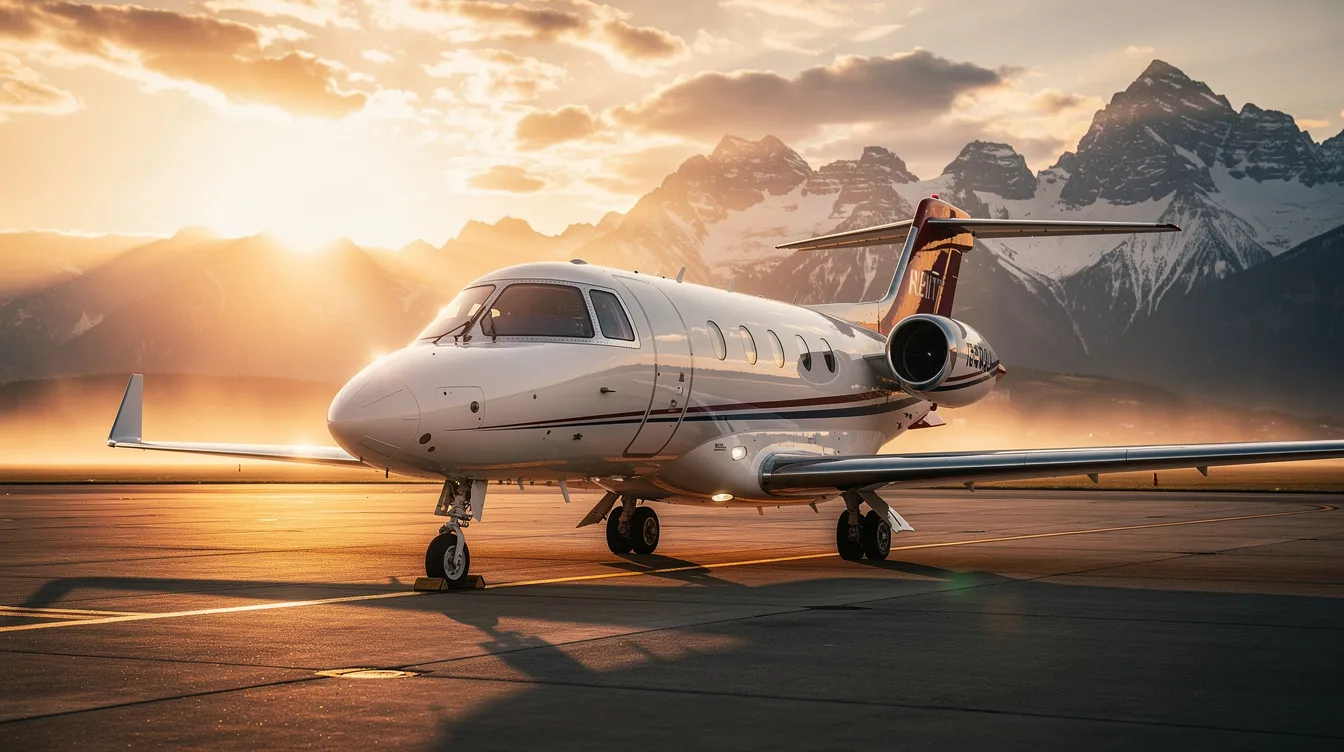
But for multi-stop itineraries, groups needing full-cabin privacy, last-minute schedule changes, secondary airports closer to home or client sites, and travelers who prioritize absolute control over their schedule and environment, the math points toward private aviation. Delta offers a suite. BlackJet offers the entire aircraft.
If you already fly Delta One or comparable business class suites several times a year, explore how a BlackJet Jet Card can elevate your travel from premium to truly private.


 Sign up with google
 Sign up with Apple