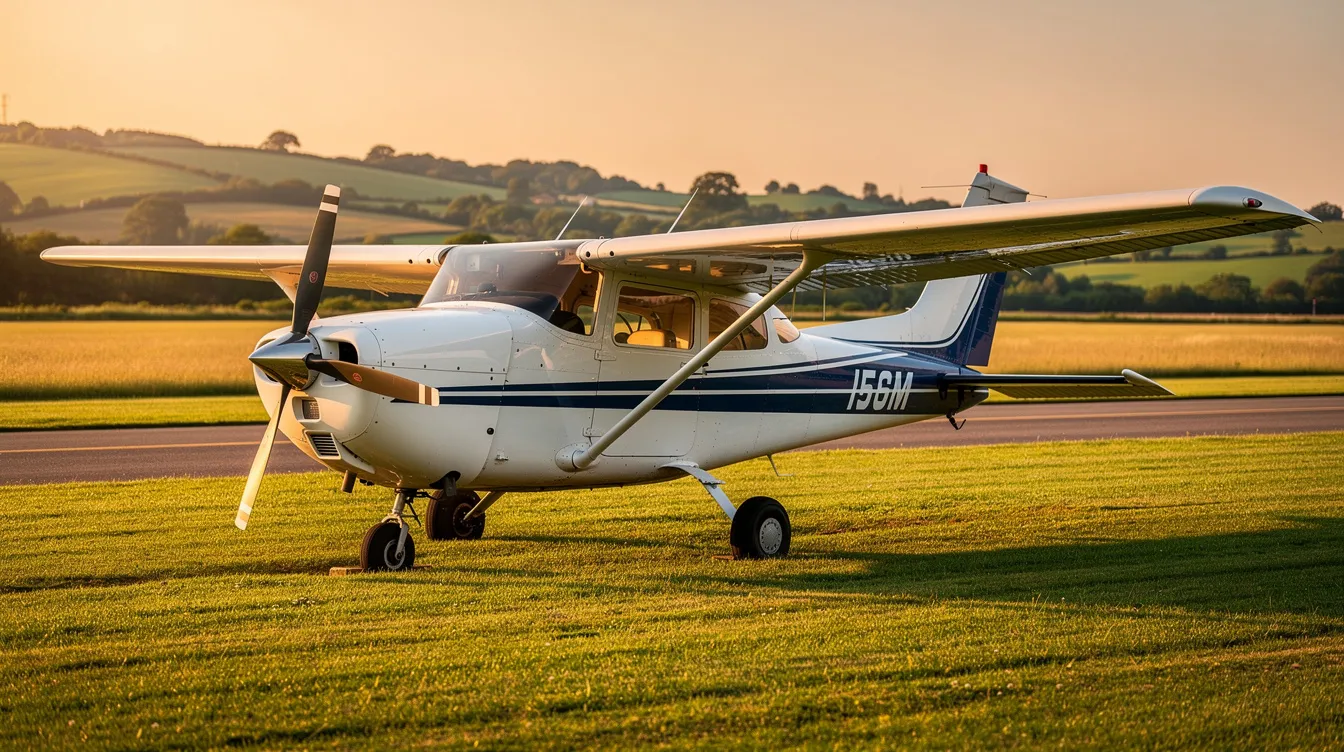
Quick Overview: Why the Cessna 150M Still Matters Today
The Cessna 150M is a popular, two-seat, high-wing light aircraft widely used for flight training and personal flying. Produced from 1975 to 1977, the 150M was the final model in a lineage stretching back to the late 1950s, and it benefits from every refinement Cessna developed across nearly two decades of production. Over 23,000 Cessna 150s have been built, and these aircraft are available globally for purchase—from the United States and Ontario, Canada, to France, Victoria in Australia, and Western Australia.
In 2026, prices for a Cessna 150M typically range from $30,000 to $70,000 depending on condition, engine time since major overhaul (SMOH), avionics upgrades, and paint and interior quality. A basic VFR trainer with legacy radios might sell for $35,000, while a well-equipped example with a Garmin panel, fresh paint, and a recent annual inspection can reach $70,000 or higher. Cessna 150 listings frequently change on the market, so acting quickly on a strong listing is essential.
Is a Cessna 150M for sale right for you? Consider these points:
You aim to build PIC time inexpensively as a time builder or student pilot.
You want a great time builder airplane with simple systems and forgiving handling.
You need an aircraft for short cross-country flights within a 200 NM radius.
Your budget for acquisition falls between $35,000 and $75,000.
You fly for fun or currency—not for long-range business travel, which is better served by a Jet Card program offering on-demand access to business jets for time-critical missions.
Current Cessna 150M Aircraft for Sale: Example Listings & Pricing
The aircraft for sale market for 150Ms shows a clear price spread based on equipment and engine status. Here are five realistic example listings reflecting what buyers encounter in late 2026:
1976 Cessna 150M – $35,000 – Mount Vernon, Ohio. Total time (TT) ~7,200 hrs, engine SMOH ~388 hrs on the Continental O-200A. Legacy King KX-170B com/nav radios, no GPS. Interior serviceable but dated. Paint faded. Annual inspection completed August 2026. Honest, budget-friendly VFR trainer.
1976 Cessna 150M – $47,500 – Richmond, Southern California. TT ~8,500 hrs, engine SMOH ~1,000 hrs. ADS-B Out installed, basic intercom, panel-mounted Apollo GPS. Interior clean, exterior repainted in 2020. Seller has complete logs from new. Solid mid-market pick.
1975 Cessna 150M Commuter – $69,750 – Columbus, Iowa. TT ~6,194 hrs, engine SMOH ~530 hrs. Modern IFR panel: Garmin GTR 225, WAAS GPS, Mode S transponder, four-place intercom. New leather interior 2024, fresh paint 2023. All ADs complied with. Fully IFR-capable.
1976 Cessna 150M – $65,000 – Fort Smith / Nampa, Idaho region. TT ~4,500 hrs, recent overhaul with new cylinders and electronic ignition. Garmin avionics suite, ADS-B Out. New interior and exterior. Set up for both VFR and IFR flight training.
1975 Cessna 150M – $42,000 – Auction sale, Midwest. TT ~5,800 hrs, mid-time engine (~900 SMOH). Legacy radios, no ADS-B (buyer must install). Damage history: minor nose gear incident in 1998, properly repaired and documented. Sold as-is.
For context, even older models appear alongside 150Ms—a 1969 Cessna 150K is listed for $57,000 with strong avionics, and a 1959 Cessna 150 with a total time of 2,579 hours trades in the low-$20,000 range. Equipment like ADS-B Out compliance, a new interior, and recent annual inspections consistently push asking price upward by $5,000–$15,000 on any given airframe.
Cessna 150 vs Cessna 150M: What Makes the "M" Model Different?
The Cessna 150 family developed steadily from its first flight in 1957. Over 23,000 units were produced across dozens of sub-models. The 150M succeeded the 150L and represents the final, most refined variant before Cessna transitioned to the 152 in 1978. Key differences:
The 150M features a vertical stabilizer and rudder approximately 15% larger than earlier models, with a six-inch taller fin improving spin recovery and crosswind control.
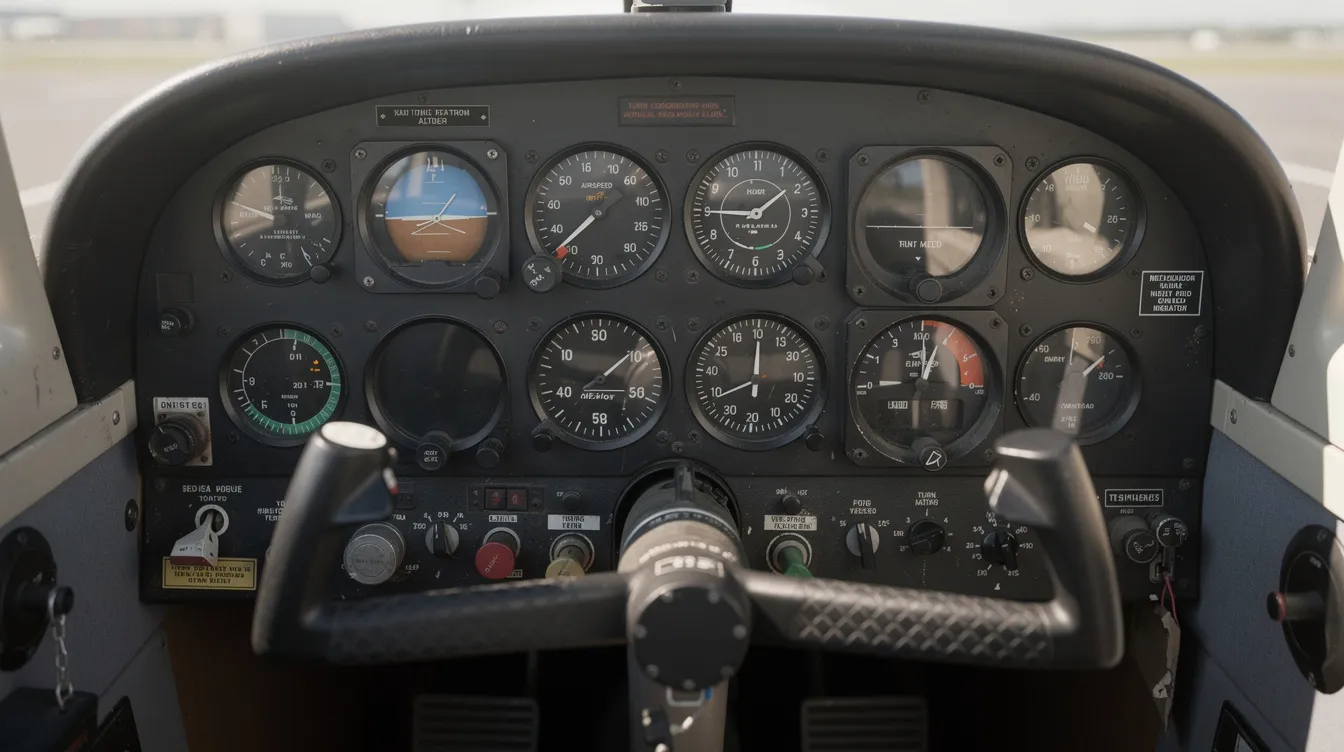
The Cessna 150M features a standardized panel layout for better pilot efficiency, with fuel and engine instruments repositioned in front of the pilot.
Circuit breakers replaced fuses starting in 1976 production, reducing maintenance complexity.
Inertia-reel shoulder harnesses became standard—a meaningful safety improvement over lap-belt-only earlier models.
Soundproofing enhancements in door posts and cabin trim refined the flying experience.
The Cessna 150D introduced the Omni-Vision rear window in 1964, a design carried forward through the M model.
The Cessna 150F had the largest production year with 2,745 units built—but the 150M remains more sought-after due to its accumulated refinements.
The Cessna 150 Aerobat is the aerobatic version of the model, offered in parallel with standard 150s and 150Ms for pilots wanting more dynamic flying.
The engine remains the 100 HP Continental O-200A across all 150 variants; the M model's value comes from airframe and systems improvements, not added horsepower.
Late-model 150s—especially the 150L and 150M—command a premium over early straight-tail models despite sharing the same basic engine, because flight schools and buyers prefer the swept tail, improved panel, and better safety features.
Cessna 150M Aircraft Specifications, Fixed Landing Gear & Performance
The following specifications are typical for a standard 1976 Cessna 150M equipped with the Continental O-200A engine. Actual performance varies with modifications, weight, altitude, and weather conditions.
Seats: 2
Empty weight: approximately 509 kg (1,122 lb)
Maximum takeoff weight: 726 kg (1,600 lb)
The useful load of the Cessna 150M typically ranges from 420 to 500 lbs depending on installed equipment
Fuel capacity: 85 L (22.5 US gal); approximately 26 gallons usable in long-range tank configurations
Wingspan: 10.11 m (~33 ft 4 in)
Length: approximately 23 ft 11 in
Cruise speed: 152 km/h (94 mph), roughly 90–95 KTAS at 2,400 RPM
The Cessna 150M burns about 5.5 to 6 gallons of fuel per hour, placing it among the cheapest private aircraft options in terms of hourly fuel cost
Range with 45-minute reserves: approximately 350–380 NM
Stall speed (flaps down, landing configuration): ~42–48 KCAS
Climb rate: approximately 670 fpm
Takeoff ground roll: ~735 ft; over 50-ft obstacle: ~1,385 ft
Landing ground roll: ~445 ft; over 50-ft obstacle: ~1,075 ft
Service ceiling: 4,300 m (14,000 ft)
Typical Time Between Overhaul for the Continental O-200-A engine is 1,800 hours
These specifications make the 150M ideal for local training, pattern work, and short cross-country flights. For anything beyond a 200 NM radius or requiring speed, payload, or weather capability, the page turns toward more capable aircraft described in our guide to the best small private aircraft—or private jet charter for business-critical travel.
How the Cessna 150M Fits Flight Schools and Time Builders
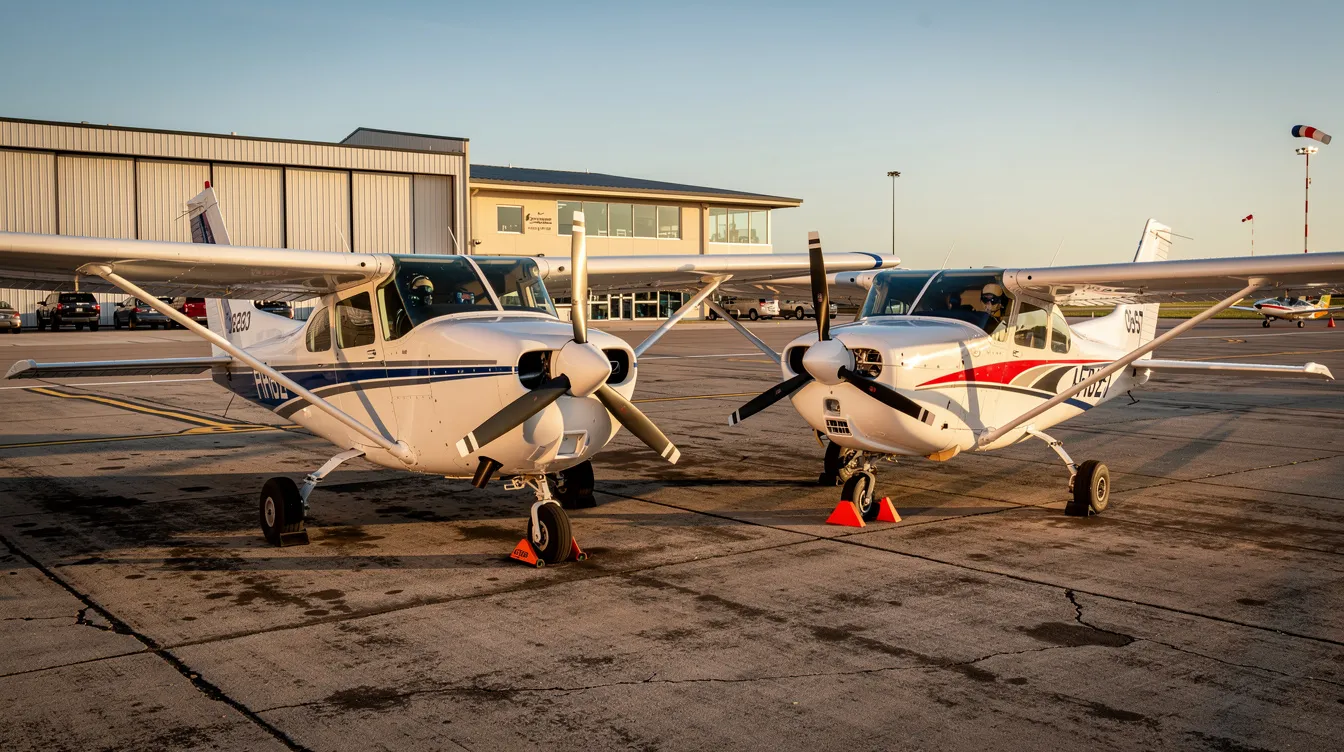
Many flight schools still operate Cessna 150 and 150M aircraft as primary trainers because their low operating costs, fixed landing gear, and forgiving stall characteristics make them ideal for students learning to fly.
Part 61 and Part 141 flight schools purchase 150Ms for ab-initio training. A Midwest flight school, for example, recently acquired a 1976 Cessna 150M with 168 hrs SMOH as a dedicated primary trainer—prioritizing low engine time and complete logs over cosmetic perfection, similar to other cheapest private aircraft options selected for training roles.
Flying clubs co-own 150Ms to split fixed costs among members, often reducing per-hour rates to $80–$100 compared to $130–$160 at commercial flight schools.
Individual pilots buying a 150M as a time builder can accumulate 100–300 hours of PIC time at roughly $30–$35/hr in fuel alone, making it one of the most inexpensive pathways to ATP minimums in the country.
Cessna 150M models often exhibit wear due to usage in flight training—expect worn seats, scuffed flooring, and higher airframe hours on ex-school aircraft. This is normal and doesn't necessarily indicate poor maintenance.
Realistic 2026 direct operating costs: fuel ~$33/hr (at $6/gal avgas), oil and consumables ~$3/hr, maintenance reserve ~$15–$20/hr, yielding roughly $50–$55/hr variable cost before fixed expenses.
While BlackJet focuses on turbine business aircraft, many of our members started their aviation journey in piston trainers like the Cessna 150M. That progression—from pattern work in a two-seat trainer to business jet travel or other affordable private jet options—is a natural evolution driven by expanding mission requirements.
Buying Guide: What to Inspect on a Cessna 150M for Sale
Buying a 40-to-50-year-old aircraft demands rigorous due diligence. Before committing to any Cessna 150M for sale, arrange a pre-purchase inspection with an independent A&P/IA mechanic, review the logbooks thoroughly, and run an FAA title search.
Airframe
Inspect for corrosion, especially in coastal or humid areas—common hotspots include wing strut attachments, carry-through spar, door posts, and the tailcone.
Structural integrity is an important consideration when purchasing older Cessna 150Ms. Look for evidence of prior damage, poorly executed repairs, or signs of hangar rash.
It's crucial to verify logbooks for completeness and compliance history. Complete logs from first flight to present are the gold standard; missing or patchy records should trigger serious price negotiation or a walk-away.
Engine and Propeller
Continental O-200A SMOH status and calendar time since overhaul. Typical Time Between Overhaul is 1,800 hours. An engine nearing TBO could require a $25,000–$30,000 overhaul.
Review compression trends over the last several annual inspections. Look for metal in oil filters—a red flag for internal wear.
Propeller condition, AD compliance, and any STC modifications (e.g., electronic ignition).
Avionics and Electrical
Verify ADS-B Out compliance with STC documentation. Non-compliant aircraft face significant upgrade costs.
Assess age and capability of com/nav radios, audio panel, and intercom. A legacy Apollo GPS versus a modern Garmin GNX 375 represents vastly different capability and value.
Check for recent rewiring or panel upgrades—older wiring in 1970s-era aircraft can develop insulation breakdown.
Interior and Paint
Note dates of interior refurbishment. New seats, flooring installed in 2022 or later add both comfort and resale value.
Age of exterior paint and evidence of hangar versus outdoor storage. Blistering or chalking paint often signals deeper corrosion underneath.
Cessna 150M vs Cessna 152 and Other Alternatives
Buyers scanning aircraft for sale listings often cross-shop the Cessna 150M against the Cessna 152 and small Pipers. Here's how they compare:
The Cessna 152 (1978–1985) replaced the 150M with a Lycoming O-235 engine producing approximately 110 HP. This engine was developed to run optimally on 100LL avgas, offers a slightly longer TBO (~2,000 hrs), and provides marginally better climb performance.
The 150M's Continental O-200A has lower overhaul costs and qualifies for autogas STCs in many configurations—a meaningful savings given avgas prices in 2026.
Gross weight on the 152 is slightly higher (~1,670 lb vs 1,600 lb), giving it a modest useful load advantage for heavier pilot-passenger combinations.
Market price in 2026: a comparable 1979–1982 Cessna 152 typically sells for $40,000–$80,000, generally $5,000–$10,000 above equivalent 150Ms. Avionics can skew this significantly.
The Piper Cherokee 140 offers more cabin room and a wider seats configuration but comes with higher acquisition cost and less benign stall characteristics, whereas stepping into a 5 million dollar private jet represents an entirely different category of capability and expense.
Entry-level tailwheel aircraft like the Champ or Luscombe build excellent stick-and-rudder skills but carry higher insurance requirements and aren't ideal for instrument training, while large-group missions demand private jets for up to 50 passengers.
Exit strategy: owners whose mission grows beyond two seats and 95 knots often move to a Cessna 172 or Cherokee 180. When travel requirements reach beyond piston GA capabilities entirely—multi-city business trips, international routes—a Jet Card or broader premium private jet cards & Jet Card programs replaces another piston purchase.
Ownership Costs: When a Cessna 150M Beats Renting
Ownership often becomes cheaper than renting a 150M once you exceed approximately 35–45 hours per year, depending on your hangar, insurance, and maintenance situation.
Annual Fixed Costs
Hangar or tie-down: $1,200–$4,000/year depending on region
Cessna 150 insurance includes liability and hull coverage: approximately $500–$2,000/year. Insurance brokers can help find tailored coverage for Cessna 150 owners. Personal accident insurance is an additional coverage option available for added protection. Cessna 150 insurance is essential for peace of mind after purchase.
Annual inspection: $1,000–$1,500 (parts and labor)
Subscriptions (charts, GPS databases): $200–$500/year
Variable Costs per Flight Hour
Fuel: ~$33/hr at current avgas prices
Oil and consumables: ~$3/hr
Maintenance reserves (engine overhaul, prop, airframe): ~$15–$20/hr
Unscheduled repairs: budget $5–$10/hr reserve
Example Scenario
An owner flying 60–80 hours per year in a 1976 Cessna 150M with low SMOH and hangared storage realizes roughly $95–$115/hr all-in. Compare that to renting a similar Cessna 150 from a flight school at $130–$160/hr—ownership saves $2,000–$4,000 annually at 60 hours.
Cessna 150 financing options are available through specialist companies that provide expert guidance throughout the financing process, similar to other affordable small planes for budget-conscious pilots. Financing helps secure loans tailored to the buyer's needs, making a $50,000–$70,000 acquisition manageable without depleting cash reserves.
That said, while a 150M handles short hops and training beautifully, frequent business travelers flying routes like New York–Miami or Los Angeles–Aspen several times per year will find a private jet solution or other budget-friendly private aircraft options far more practical than another piston purchase.
Safety, Maintenance History & Regulatory Considerations
Safety in light general aviation aircraft, much like in private jets, depends on maintenance quality, pilot proficiency, and regulatory compliance.
Airworthiness Directives compliance is essential for Cessna aircraft maintenance. Verify all applicable ADs for the 150M airframe, O-200A engine, and installed accessories against FAA records.
For aircraft used in flight schools, confirm 100-hour inspection compliance in addition to the standard annual inspection cycle.
Review discrepancies and sign-offs from the last 5–10 years of maintenance. Patterns of deferred maintenance or recurring squawks reveal how honestly a previous owner cared for the aircraft.
Use the 150M with CFIs for currency flights and rust-removal training. The safety mindset developed in piston flying carries directly into turbine operations.
At BlackJet, we operate in turbine categories with stringent third-party safety audits and proprietary certification standards. We encourage owners of Cessna 150M aircraft to apply the same rigor to their piston operations—safety is non-negotiable at every level of aviation.
From Cessna 150M to Private Jets: When to Consider a Jet Card
A Cessna 150M is perfect for the pilot who wants hands-on stick-and-rudder flying, weekend practice, and the satisfaction of owning an aircraft, while those prioritizing convenience can also buy a seat on a private jet when missions demand more range or comfort. But there are clear limits.
When the 150M is ideal:
Solo training, staying proficient in VFR, and pattern work
Flying within a 150–200 NM radius for recreation
Building pilot-in-command hours toward advanced ratings
Enjoying the honest simplicity of a low-and-slow cross-country flight
When BlackJet's Jet Card makes strategic sense:
Multi-city business trips in a single day where commercial schedules miss the mark, especially for travelers evaluating a 100 hour Jet Card cost structure against owning another aircraft
Family vacations across continents requiring comfort, speed, and reach far beyond piston range, where a 25 hour Jet Card program can offer flexible access without long-term commitment
Last-minute departures that demand flexibility no airline can match, particularly when you understand Jet Card pricing structures and how they lock in availability
Routes like Los Angeles–Aspen, New York–Nassau, or London–Nice where time savings justify premium jet access and comparing the best Jet Cards for frequent flyers
A typical BlackJet member might keep a Cessna 150M for local fun flying while using a Jet Card for time-sensitive business routes, after evaluating overall Jet Card membership pricing. Our network delivers carbon-neutral flights as standard, a curated operator network, real-time digital booking, and transparent hourly pricing across light, midsize, and large cabin jets through options like the BlackJet 25+ Hour Jet Card.
Frequently Asked Questions About the Cessna 150M
What is the typical price range for a Cessna 150M for sale?
Prices generally range from $30,000 to $70,000 depending on condition, engine time since overhaul, avionics, and cosmetic updates.
How does the Cessna 150M differ from earlier Cessna 150 models?
The 150M is the final and most refined model featuring a taller vertical stabilizer, standardized panel layout, circuit breakers instead of fuses, inertia-reel shoulder harnesses, and improved soundproofing.
What are the key specifications of the Cessna 150M?
It seats two, has a max takeoff weight of 1,600 lbs, cruise speed around 94 mph, fuel capacity of 22.5 gallons, and a service ceiling of 14,000 ft.
Is the Cessna 150M suitable for flight training?
Yes, it is widely used by flight schools due to its forgiving handling, low operating costs, and simple systems.
What should I inspect when buying a used Cessna 150M?
Check for corrosion, structural integrity, logbook completeness, engine and propeller condition, avionics upgrades, and recent maintenance history including AD compliance.
How do ownership costs compare to renting a Cessna 150M?
Ownership becomes cost-effective beyond 35-45 flight hours per year, with typical all-in costs around $95–$115 per hour compared to $130–$160 per hour renting.
Are there financing options available for purchasing a Cessna 150M?
Yes, specialist aviation finance companies offer tailored loans with expert guidance throughout the process.
How does the Cessna 150M compare to the Cessna 152?
The 152 offers a slightly more powerful engine, longer TBO, and higher gross weight but usually comes at a higher price point.
What alternatives exist to owning a Cessna 150M for business travel?
Private jet Jet Card programs provide flexible, on-demand access to jets with superior speed, range, and comfort for business-critical missions beyond piston aircraft capabilities.
How can BlackJet help Cessna 150M owners?
BlackJet offers Jet Card memberships for seamless access to private jets that complement piston flying with carbon-neutral, safety-certified, and flexible private jet travel options.
How to List or Find a Cessna 150M for Sale (& Next Steps with BlackJet)
Whether you're buying or selling, the process starts with preparation and the right channels.

For Sellers Preparing a Cessna 150M Listing
Gather complete logbooks with continuous history, high-quality photos (exterior, interior, panel, engine compartment), and a clear description of all installed avionics and STCs.
Document recent annual details, SMOH and TT data, and any autogas STC approvals.
Price honestly based on comparable sold listings—not just asking prices. The production history of the model and current market conditions should guide your expectations.
List on specialized GA marketplaces like Trade-A-Plane, Barnstormers, and AeroGurus, as well as flying club boards and regional broker networks.
For Buyers Engaging with a Seller
Request scanned logs before traveling to inspect the aircraft. Don't miss red flags you could catch from a desk.
Arrange a pre-buy inspection at a neutral shop—not the seller's home mechanic.
Confirm lien status through an FAA title search or services like AOPA's title search.
Negotiate based on upcoming maintenance needs: an engine nearing TBO, aging radios requiring replacement, or missing ADS-B Out compliance all justify price reductions.
Ready to Go Beyond the 150M?
Elevate your travel—effortlessly. Whether you're stepping up from Cessna 150M ownership or complementing weekend flying with business jet access, BlackJet's Jet Card programs deliver carbon-neutral, safety-certified private jet travel with the flexibility and precision your schedule demands. No hard sell—just seamless access to light, midsize, and large cabin jets, booked digitally and supported around the clock.
Explore BlackJet Jet Card membership and discover how refined, purposeful travel becomes your new standard.


 Sign up with google
 Sign up with Apple