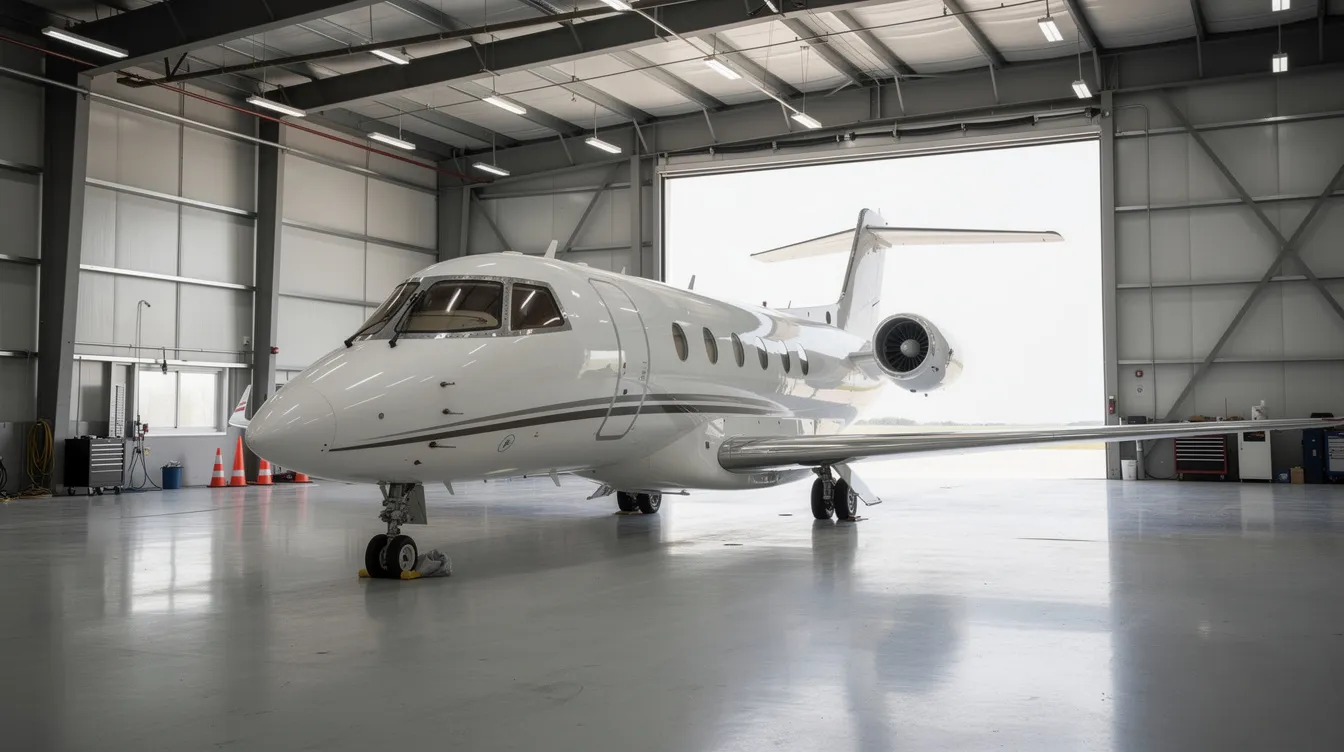
The BlackJet 25+ Jet Card gives you midsize through large cabin access at fixed hourly rates using either a $50,000 Pay-As-You-Fly structure or a $225,000 Fully-Funded 25-hour structure. You buy a block of flight time, then pay a contracted rate per hour when you fly, backed by guaranteed availability terms and a vetted operator network. This page breaks down how those rates are set, what the price includes, and how to compare BlackJet against other private jet membership programs without getting lost in fine print.
Prepared by the BlackJet Aviation Team and reviewed for safety and compliance accuracy by BlackJet's safety operations group, working alongside Chief Safety Officer Jake Miller.
The 30-Second Answer on What BlackJet 25+ Costs
A jet card is a prepaid private aviation program where you purchase a block of flight time and then redeem it at a contracted hourly rate when you fly. BlackJet 25+ applies that model to three cabin classes: Midsize, Super-Midsize, and Large Cabin private jets.
Two published payment structures exist. The Pay-As-You-Fly option is priced at $50,000 and works like an entry deposit that lets you draw down hours as you book them. The Fully-Funded 25-hour option is priced at $225,000 and secures your hours upfront. Both carry fixed hourly rates set by cabin category, and you pay only for hours flown.
Exact per-hour figures move with cabin choice and route, so request the current 25+ rate sheet for the precise numbers and any peak-day rules before you commit. Pairing fixed rates with guaranteed availability terms means predictable pricing and predictable access travel together. For broader background, this 25-hour jet card guide covers features and cost basics in more depth.
| | | | Table A. BlackJet 25+ Terms Snapshot |
Payment option | Published price | What it covers | Best for | Next step |
|---|
Pay-As-You-Fly | $50,000 | 25-hour access structure across cabin classes; draw down hours per booking | Buyers who want a lower entry cost and pay-as-they-go flexibility | Request the current 25+ rate sheet |
Fully-Funded 25-Hour | $225,000 | 25 hours funded upfront across cabin classes | Buyers who want hours secured in advance | Request the current 25+ rate sheet |
"Our goal with the BlackJet 25+ program is to remove uncertainty from private aviation. Whether a client chooses the Pay-As-You-Fly structure or the Fully-Funded option, they should understand exactly how pricing works, what they're receiving, and how to match the right aircraft category to every mission rather than paying for capacity they don't need."
- Justin Crabbe, CEO
How BlackJet 25+ Pricing Works
Here is the equation worth memorizing: Total trip cost = (fixed hourly rate × billable flight hours) + applicable taxes and fees not included in the program rate.
A fixed hourly rate is a contracted price per flight hour that doesn't change trip to trip within the agreed terms, so you can budget private flying more predictably. In a fixed-rate jet card, the main number you're buying is that contracted hourly rate by cabin category. The fine print is how billable hours and pass-through fees get handled.
Rates differ by cabin because aircraft cost, range, and capacity differ. Midsize jets carry a lower hourly rate than super-midsize, and super-midsize sits below large cabin. You pay only for hours flown, and most providers bill on occupied flight time, sometimes with daily minimums or taxi-time policies. Confirm those details before purchase, because they change your real per-trip cost.
Rate stability matters as much as the number itself. BlackJet publishes that its 50-hour program locks fixed hourly rates for 12 months and that those hours never expire. Confirm in writing whether the same rate-lock and non-expiring hours apply to the 25+ card, plus how refunds and unused-hour credits are handled. One practical advantage stands out across the program: cardholders can switch jet sizes, larger or smaller, at stable, fixed rates, and eligible round trips can earn up to 15% efficiency discounts.
A Jettly pricing guide explains why comparison gets tricky. Many programs quote a rate "plus 7.5% FET," meaning Federal Excise Tax lands on top of the headline number, so the effective hourly cost runs higher than advertised. Our own jet card pricing explained resource walks through the same mechanics.
| Table B. Billing Checklist to Confirm Before You Buy |
Item | What to confirm |
|---|
Billable hour definition | Occupied flight time vs block time, and how it is measured |
Daily minimums | Whether a minimum number of hours applies per day |
Taxi time policy | Whether ground taxi time counts toward billable hours |
Peak days and surcharges | Which dates are peak and what premiums apply |
De-icing | Whether de-icing is included or billed per event |
International handling | Permits, fees, and overflight charges on cross-border trips |
Cancellation window | Notice required to avoid penalties |
Refund terms | Whether unused hours are refundable or credited |
FET and fuel | Whether Federal Excise Tax and fuel surcharges sit inside the rate |
What's Included in BlackJet 25+ and What May Cost Extra
When people ask what a jet card includes, they usually mean three things: taxes (FET), fuel surcharges, and repositioning or deadhead costs. Getting straight answers on those three items tells you more than any advertised rate.
BlackJet has published base hourly rates that can be inclusive of fuel surcharges and Federal Excise Tax for certain cards. The BlackJet 25 Light Jet Card, for example, lists a base hourly rate stated as inclusive of fuel surcharges and FET, and the 50-hour cabin rates are also presented as including fuel surcharge and FET. Confirm on the 25+ product sheet whether that same inclusive treatment extends to midsize, super-midsize, and large cabin rates, since inclusion varies by card type and route.
Two features apply across the program. Elite BlackJet aircraft offer complimentary Wi-Fi at all times. Since the beginning of 2021, every flight flown by BlackJet Jet Card Owners is offset to be both carbon and emissions neutral at zero cost to clients, which can support ESG-oriented travel policies.
Some costs stay pass-through across the industry. De-icing, international handling and permits, special catering, and certain landing or handling fees are commonly billed separately, so confirm them per trip and per agreement. All-in pricing includes Federal Excise Tax in the quoted rate. Plus-FET pricing adds the tax on top, so the effective hourly cost runs higher than the headline rate, a distinction the Jettly guide spells out with the 7.5% domestic figure. To compare jet cards accurately, confirm whether the quoted hourly rate is all-in or quoted plus FET, and whether fuel surcharges are included or billed separately.
"When buyers compare jet card programs, they shouldn't focus only on the advertised hourly rate. They should compare what's actually included, how billable hours are calculated, whether peak-day restrictions apply, and what happens when demand is highest. The lowest advertised rate isn't always the lowest total cost."
- Justin Crabbe, CEO
BlackJet positions its program around clear pricing rather than hidden fees, so treat any "no hidden fees" claim as your cue to confirm inclusions in writing. Our breakdown of jet card cost per hour shows how to line up quotes fairly.
| Table C. Included vs Often Billed Separately |
Included (as published or by policy) | Often billed separately (confirm in agreement) |
|---|
Complimentary Wi-Fi on elite aircraft | De-icing during winter operations |
Carbon and emissions neutral offset at no cost | International handling and permits |
Fixed hourly rate by cabin category | Special catering requests |
Fuel surcharges and FET in base rate (certain published cards) | Certain landing and handling fees |
Ability to switch cabin sizes at fixed rates | Peak-day surcharges and extended call-out terms |
Inclusions vary by card type and route. Request the current 25+ rate sheet.
Aircraft Categories in the BlackJet 25+ Card
The right cabin category is the fastest way to control cost: choose the smallest aircraft that comfortably meets your range and passenger needs. In BlackJet's 25+ Card, midsize is ideal for regional-to-midrange trips, super-midsize is the U.S. coast-to-coast sweet spot, and large cabin is built for long-haul and transatlantic missions.
Midsize Private Jets
Midsize jets seat up to 8 passengers, cruise at an average speed of 463 mph, and cover an average range of 1,790 statute miles, roughly an Austin to New York run. Representative BlackJet Certified midsize aircraft include the Hawker 800XP, Praetor 500, Learjet 75, and Citation XLS+. This category fits regional business loops and short vacation hops where you want cabin comfort without paying for range you won't use.
Super-Midsize Private Jets
Super-midsize jets seat up to 8 passengers, cruise at an average speed of 555 mph, and reach an average range of 3,950 statute miles, roughly Los Angeles to Boston. BlackJet Certified models here include the Challenger 350, Citation Longitude, Citation Sovereign+, Praetor 600, Citation X+, Gulfstream G280, and Hawker 4000. This is the class most travelers pick for nonstop transcontinental flying with a full cabin.
Large Cabin Private Jets
A large cabin jet card is a prepaid program designed to secure access to heavy, large-cabin aircraft for longer-range and higher-capacity trips, often including international missions. Large cabin jets seat up to 12 passengers, cruise at an average speed of 535 mph, and cover an average range of 5,100 statute miles, roughly New York to London. BlackJet Certified large cabin aircraft include the Gulfstream G650, Gulfstream G550, Challenger 600, Falcon 8X, Global 7500, and Legacy 650.
For international travelers, BlackJet's Large Cabin Jet Card provides guaranteed, extended access to key EU destinations including Rome, Paris, Milan, and Frankfurt, with fixed guaranteed rates for both domestic U.S. travel and flights to Europe. If group size drives your decision, review these large cabin seating options before choosing a category.
| | | Mission Fit by Cabin Category |
Category | Typical passengers | Typical nonstop range | Example trips |
|---|
Midsize | Up to 8 | ~1,790 statute miles | Austin to New York |
Super-Midsize | Up to 8 | ~3,950 statute miles | Los Angeles to Boston |
Large Cabin | Up to 12 | ~5,100 statute miles | New York to London |
What Guaranteed Availability Really Means
Guaranteed availability means the provider commits, in writing, to sourcing an aircraft in your cabin category (or better) if you book within the stated notice window. When a jet card says "guaranteed availability," the only definition that matters is what the contract guarantees: aircraft category, booking notice, peak-day rules, and recovery terms.
Call-out windows vary across the industry, and peak days often extend them. Private Jet Card Comparisons frames guaranteed availability and fixed one-way rates as the industry baseline buyers should measure against. BlackJet's program is positioned to provide guaranteed availability during peak demand, with access fulfilled through its BlackJet Certified operator network of vetted FAA Part 135 and EASA operators.
A peak day is a high-demand travel date when providers may require more advance notice, apply a surcharge, or restrict certain benefits depending on the contract. Request the current peak-day calendar and any extended call-out terms in writing before you buy. Once you are flying, you can track your hours through your account.
"The biggest misconception in private aviation is that a fixed hourly rate alone creates predictability. It doesn't. True predictability comes from combining transparent pricing with guaranteed aircraft availability, clear contract terms, and a safety-vetted operator network. Those pieces together are what give clients confidence every time they fly."
- Justin Crabbe, CEO
Nine questions to ask about availability:
What booking notice is required for guaranteed sourcing?
Which dates count as peak days?
What does "or better" mean if my category isn't available?
How is a recovery aircraft arranged if a jet goes out of service?
What are the service-area boundaries?
How does international access work, including large cabin fleet availability to Europe?
What is the cancellation window?
How do interchange rules price a switch between cabin sizes?
How are aircraft substitutions handled?
Pricing Examples for 25 Hours by Cabin Class
If you want an apples-to-apples comparison, always convert everything to an effective hourly rate and list which fees are included. The effective hourly rate is what you actually pay per hour after adding required taxes and fees and subtracting any applicable discounts.
BlackJet has referenced 25-hour figures by cabin, before fuel surcharge and FET: Mid at $224,625, Super-Mid at $274,500, and Large Cabin at $324,750. Treat these strictly as reference figures. Verify the latest 25+ rate sheet and whether the 25+ structure is quoted all-in or plus FET before you rely on any number.
Example A, midsize regional loop. Assumptions: Austin to New York, roughly 3.5 flight hours each way, non-peak dates, two legs totaling about 7.0 billable hours. Using the reference midsize economics, that maps to an implied rate near $8,985 per hour before fuel surcharge and FET. If the rate is quoted plus 7.5% FET, add that to reach your effective hourly rate.
Example B, super-midsize coast-to-coast round trip. Assumptions: Los Angeles to Boston and back, roughly 5 hours each way, non-peak, eligible round trip totaling about 10 billable hours. Apply the up-to-15% efficiency discount on eligible round trips, and your effective hourly cost drops below the standard reference rate.
Example C, large cabin U.S. to Europe. Assumptions: New York to London, roughly 7 hours eastbound, large cabin, with international handling and permits billed separately. Confirm de-icing, overnight, and repositioning terms before departure. The plus-FET math matters most on high-value trips like this one.
The fastest way to compare jet cards is to compute an effective hourly rate and confirm, in writing, whether fuel surcharges and FET are included. When you are ready, get a private jet quote for your typical routes.
| | | | Table D. Example 25-Hour Totals (Illustrative) |
Cabin category | Reference 25-hour figure (before fuel/FET) | Implied reference hourly | What's included | Notes |
|---|
Midsize | $224,625 | ~$8,985 | Verify all-in vs plus FET | Reference only; confirm 25+ rate sheet |
Super-Midsize | $274,500 | ~$10,980 | Verify all-in vs plus FET | Eligible round trips may earn up to 15% off |
Large Cabin | $324,750 | ~$12,990 | Verify all-in vs plus FET | International handling/permits usually separate |
Request the current BlackJet 25+ rate sheet for exact fixed hourly rates.
How BlackJet Compares to NetJets, Sentient, Flexjet, Wheels Up, Jet Linx, and Magellan
All jet cards look similar until you compare: fixed rate structure, peak days, what's included, and whether hours expire. The best jet card comparison is the one that lists the same four items for every provider: availability terms, what's included in the hourly rate, whether hours expire, and how peak days are handled.
Model differences shape everything. NetJets and Flexjet run owned or managed fleet models rooted in fractional ownership and the NetJets Marquis Jet card lineage. Wheels Up markets a membership and marketplace approach. BlackJet coordinates flights through vetted FAA Part 135 or EASA operators under its BlackJet Certified process rather than claiming a wholly owned fleet. Each competitor states its own terms: Sentient Jet markets a card structure across cabin tiers, Jet Linx frames membership around guaranteed availability and fixed rates, and Magellan Jets publishes tiered cards with rate-lock language. Broader industry management context appears in NBAA's Business Aviation Insider.
BlackJet's edge sits in fixed-rate transparency, the ability to switch jet sizes at stable fixed rates, and sustainability that isn't optional. Every Jet Card Owner flight is offset to carbon and emissions neutral at no cost, a differentiator against programs where offsets cost extra or don't exist. For a brand-controlled deep dive, see our NetJets jet card cost analysis.
| | | | | | | Table E. Provider Comparison of What to Confirm |
Feature | BlackJet 25+ | NetJets | Sentient | Flexjet | Wheels Up | Jet Linx | Magellan |
|---|
Pricing model | Charter procurement, fixed rates | Fractional + card | Jet card | Fractional + lease | Membership + marketplace | Membership + card | Tiered jet card |
Rate lock | Fixed by cabin (50-hr locks 12 mo; confirm 25+) | Confirm/Varies | Confirm/Varies | Confirm/Varies | Confirm/Varies | Confirm/Varies | Confirm/Varies |
Fuel/FET handling | Inclusive on certain published cards; confirm 25+ | Confirm/Varies | Confirm/Varies | Confirm/Varies | Confirm/Varies | Confirm/Varies | Confirm/Varies |
Hours expiration | 50-hr non-expiring (confirm 25+) | Confirm/Varies | Confirm/Varies | Confirm/Varies | Confirm/Varies | Confirm/Varies | Confirm/Varies |
Interchange | Switch cabins at fixed rates | Confirm/Varies | Confirm/Varies | Confirm/Varies | Confirm/Varies | Confirm/Varies | Confirm/Varies |
Peak days | Guaranteed availability positioning; request calendar | Confirm/Varies | Confirm/Varies | Confirm/Varies | Confirm/Varies | Confirm/Varies | Confirm/Varies |
Sustainability | Carbon + emissions neutral at no cost | Confirm/Varies | Confirm/Varies | Confirm/Varies | Confirm/Varies | Confirm/Varies | Confirm/Varies |
Safety vetting | BlackJet Certified (operator, aircraft, pilot, flight) | Confirm/Varies | Confirm/Varies | Confirm/Varies | Confirm/Varies | Confirm/Varies | Confirm/Varies |
Booking tools | App, text, web portal, 24/7 | Confirm/Varies | Confirm/Varies | Confirm/Varies | Confirm/Varies | Confirm/Varies | Confirm/Varies |
What "BlackJet Certified" Means for Safety
Safety claims are easy to make and hard to verify, so this section explains what BlackJet says it checks before every flight. BlackJet Certified is a flight-by-flight safety program that evaluates the operator, aircraft, pilot, and the specific trip before departure.
The four-part process individually certifies every operator, aircraft, pilot, and flight. Pilots must meet standards that exceed FAR Part 135 requirements across multiple categories. Each aircraft passes an evaluation of operational history and maintenance reliability plus a detailed inspection of critical safety elements, comfort, and condition before earning certified status. BlackJet states it draws on more than 10 years of proprietary data with over 300 million data points across aircraft, pilots, airports, and operations.
Governance backs the process. A Safety Advisory Board of former FAA and NTSB leaders works alongside Chief Safety Officer Jake Miller. The BlackJet app provides real-time updates when an aircraft completes its safety checks and gives instant access to a pre-flight BlackJet Certified Safety Report.
Operational control means the FAA Part 135 (or EASA) air carrier holds responsibility for the flight's safety, crew, and dispatch decisions, which clarifies BlackJet's role as a coordinator and procurement partner. Use this quick verification list for any provider: request the operator name, confirm the Part 135 certificate, verify ARGUS, Wyvern, or IS-BAO status where applicable, request insurance evidence, and review the pre-flight safety report. For documentation habits, our jet card tax guide is a helpful educational read.
Booking and Using Your Hours
Jet cards are about predictability, and your booking workflow should be predictable too. BlackJet card owners can book through the BlackJet app, by text, or through the card owner portal, with real-time safety status updates available before departure.
The mobile app is available on the Apple App Store and Google Play, and it carries real-time updates, 24/7 live chat, and full flight details. Card owners can request quotes and book by text message, and the web platform shows account details, bookings, and remaining hours. Round-the-clock customer support and a client management team stand behind every trip.
How to book with BlackJet 25+:
Start a consultation and create your card owner account.
Choose Pay-As-You-Fly or the Fully-Funded structure.
Request your trip through the app, by text, or on the portal.
Confirm the aircraft category that fits the mission.
Review the pre-flight BlackJet Certified Safety Report.
Fly, then reconcile billable hours against your balance.
Track remaining hours and request a round-trip efficiency discount where eligible.
If your flying grows past 25 hours, compare the economics of the 50-hour jet card as a private jet membership upgrade path.
How to Choose the Right Cabin Category
Choosing the right category is the easiest way to avoid overpaying. The best jet card category is the smallest aircraft that comfortably meets your range and passenger needs. Anything larger is optional comfort, and anything smaller adds stops.
Run through this checklist before you pick midsize, super-midsize, or large cabin:
Passenger count: how many seats you need on typical trips.
Nonstop distance: the longest leg you fly without stopping.
Baggage: skis, golf clubs, or gear that eats cabin space.
Onboard productivity: Wi-Fi and work zones for the team.
Comfort needs: stand-up cabins and lie-flat seating on long legs.
International or overwater routing: range and handling requirements.
Peak-day travel frequency: how often you fly high-demand dates.
Interchange flexibility: how often you'll switch sizes across a jet card program.
New to private aviation? This primer on what a jet card is gives you the foundation before you decide.
Quick Answers
Cost structure: BlackJet 25+ publishes a $50,000 Pay-As-You-Fly option and a $225,000 Fully-Funded 25-hour option.
Inclusions: confirm whether your quoted rate is all-in or plus FET, and whether fuel surcharges sit inside the rate.
Availability: guaranteed availability is a written commitment to source your cabin category (or better) within the notice window.
Best cabin: pick the smallest aircraft that meets your range and passenger needs, then switch up per trip when needed.
Frequently Asked Questions
What is the BlackJet 25+ Jet Card?
BlackJet 25+ is a 25-hour jet card structure designed to provide access to midsize, super-midsize, and large cabin private jets at fixed hourly rates. You can choose a Pay-As-You-Fly structure or a Fully-Funded option depending on how you prefer to allocate funds, with exact rates and inclusions confirmed on the current rate sheet and agreement.
How much is the BlackJet 25-hour jet card?
BlackJet publishes a $50,000 Pay-As-You-Fly option and a $225,000 Fully-Funded 25-hour option for its 25-hour jet card structure. Your total trip cost still depends on the fixed hourly rate for the cabin category you book, which varies by aircraft class.
Are fuel surcharges and Federal Excise Tax included?
In jet cards, inclusion of fuel surcharges and Federal Excise Tax depends on the specific program terms, so you should confirm whether your quoted rate is all-in or plus FET. BlackJet has published examples where rates are shown inclusive for certain cards, so request the 25+ inclusions list to see what applies to your cabin.
What does fixed hourly rates actually mean?
Fixed hourly rates mean you have a contracted price per flight hour that doesn't change from trip to trip within the agreed terms. Peak days, de-icing, and international fees may still apply depending on contract language, so read those clauses closely.
What is guaranteed availability on a jet card?
Guaranteed availability is a written commitment that an aircraft in your category (or better) will be sourced if you book within the program's required notice window. Request the peak-day calendar and the exact call-out terms for the 25+ card so you know how high-demand dates are handled.
Can I switch aircraft sizes with BlackJet 25+?
Yes, BlackJet states cardholders can switch jet sizes, larger or smaller, at stable, fixed rates. Interchange is typically priced by category, which lets you match aircraft size to each mission instead of overpaying for a larger cabin on every trip.
Does BlackJet offset flights for sustainability?
BlackJet states that since the beginning of 2021, every flight flown by Jet Card Owners is offset to be both carbon and emissions neutral at zero cost to clients. This can support ESG-oriented travel policies and reporting for family offices and companies.
How do I book flights on the BlackJet 25+ card?
BlackJet card owners can request and book flights through the mobile app, via text message, or through the card owner web platform, with 24/7 support available. The app also shows a pre-flight safety report and lets you track remaining hours for added transparency.
Methodology, Assumptions, and Last Reviewed Date
Last reviewed: Jun 28, 2026. Published prices in this guide are the $50,000 Pay-As-You-Fly and $225,000 Fully-Funded 25-hour structures stated by BlackJet. Cabin figures of $224,625 (Mid), $274,500 (Super-Mid), and $324,750 (Large Cabin) are reference figures presented before fuel surcharge and FET, and the worked examples are illustrative calculations built on labeled assumptions. Items such as de-icing, international handling, permits, and peak-day surcharges vary by trip. Use the current BlackJet 25+ rate sheet and your agreement as the source of truth for exact hourly rates, inclusions, and peak-day terms.
Request Your BlackJet 25+ Rate Sheet
Fixed hourly rates only pay off when you can actually fly them, so line up the numbers that matter for your routes. Request the current BlackJet 25+ rate sheet and a quote for your typical trips across midsize, super-midsize, and large cabin.
Get My Fixed-Rate Quote or Download the Pricing Checklist. Call 1-866-321-JETS (1-866-321-5387) or email info@blackjet.com. Every booking is backed by 24/7 support and BlackJet Certified safety vetting, so you get predictable pricing and predictable access on the same card.
References
NBAA Business Aviation Insider (Sep/Oct 2024) - industry context on business aviation management.
Jettly Jet Card Pricing guide - all-in vs plus-FET explanation and fee categories.


 Sign up with google
 Sign up with Apple