For discerning travelers who measure trips in productivity rather than miles, understanding which aircraft carries you - and what it can deliver - is a strategic advantage, not trivia. A Boeing plane chart distills decades of aerospace engineering into a single, scannable reference that helps you compare cabin environments, route capabilities, and efficiency across every major Boeing family. Whether you are boarding a 787 Dreamliner in business class or stepping onto a private jet for the final leg, knowing what each aircraft brings to the table shapes smarter, faster, more comfortable journeys.
Overview of the Boeing Plane Chart and Why It Matters for Private Travelers
A Boeing plane chart is a structured, data-rich comparison that organizes every major Boeing aircraft family - 707, 727, 737, 747, 757, 767, 777, and 787 - by role, range, passenger capacity, and entry into service. Boeing's commercial aircraft lineup is split into narrow-body and wide-body families, each engineered for distinct mission profiles. Narrow-body aircraft typically serve short- to medium-haul routes, while wide-body aircraft are designed for long-haul international flights. The chart groups models chronologically within each family, uses IATA and ICAO type codes (such as "B738" or "B77W"), and includes concrete dates: 1969 for the Boeing 747's first flight, 1994 for the Boeing 777, and 2009 for the Boeing 787 Dreamliner.
Here is a condensed version of what a Boeing plane chart looks like in practice:
Model | First Flight | Typical Seats (2–3 Class) | Max Range (nmi / km) | Primary Role |
|---|
Boeing 707 | 1957 | 156–189 | 3,200–5,000 nmi (5,900–9,200 km) | Medium/long haul - retired |
Boeing 727 | 1963 | 130–150 | ~2,500 nmi (4,630 km) | Short-haul - retired |
Boeing 737 MAX 8 | 2016 | 160–180 | ~3,500 nmi (6,480 km) | Short/medium haul |
Boeing 747-8i | 1969 (original) | 366–524 | ~7,730 nmi (14,320 km) | Intercontinental trunk - largely retired |
Boeing 757-200 | 1982 | ~186 | ~3,900 nmi (7,220 km) | Thin long haul / high performance |
Boeing 767-300ER | 1981 (original) | ~218 | ~5,990 nmi (11,090 km) | Medium/long haul |
Boeing 777-300ER | 1994 (original) | ~370 | ~7,370 nmi (13,650 km) | Long-haul trunk |
Boeing 787-9 | 2009 | ~290 | ~8,300 nmi (15,370 km) | Modern long-thin routes |
The chart differs from a simple list because it imposes structure: families are grouped, variants are ordered, and each row carries actionable data rather than a vague description. When you search for "boeing plane chart," you want arrows pointing toward the right comparisons - not an unorganized catalog.
Why does this matter for private travelers? BlackJet does not operate large Boeing airliners. However, our members frequently move between premium cabins on Boeing aircraft for scheduled airline legs and our jet card fleet for private segments. Understanding the chart helps you plan seamless global itineraries - benchmarking the comfort, safety, and efficiency of a commercial widebody against the privacy and flexibility of a business jet.
One practical note: no email password log, Pinterest log, or personal login is ever required to browse or use a Boeing aircraft chart on the BlackJet site. Public fleet data and educational content remain entirely separate from member account credentials and any email password you use to access booking tools. Security best practices - from how you manage a Google account to how you continue browsing aviation data - should never be compromised by an informational resource.
Commercial Boeing Aircraft Families: From the 707 to the 787 Dreamliner
Boeing was founded in 1916 by William E. Boeing, and the company secured military contracts during World War I before eventually reshaping civilian air travel. From the first pressurized jetliner cabins of the 1950s to today's composite-bodied long-range twins, Boeing aircraft have defined how the world flies. The following review walks through each major family as it appears on the Boeing plane chart, pairing concise history with the specs that matter most to travelers planning intercontinental itineraries.
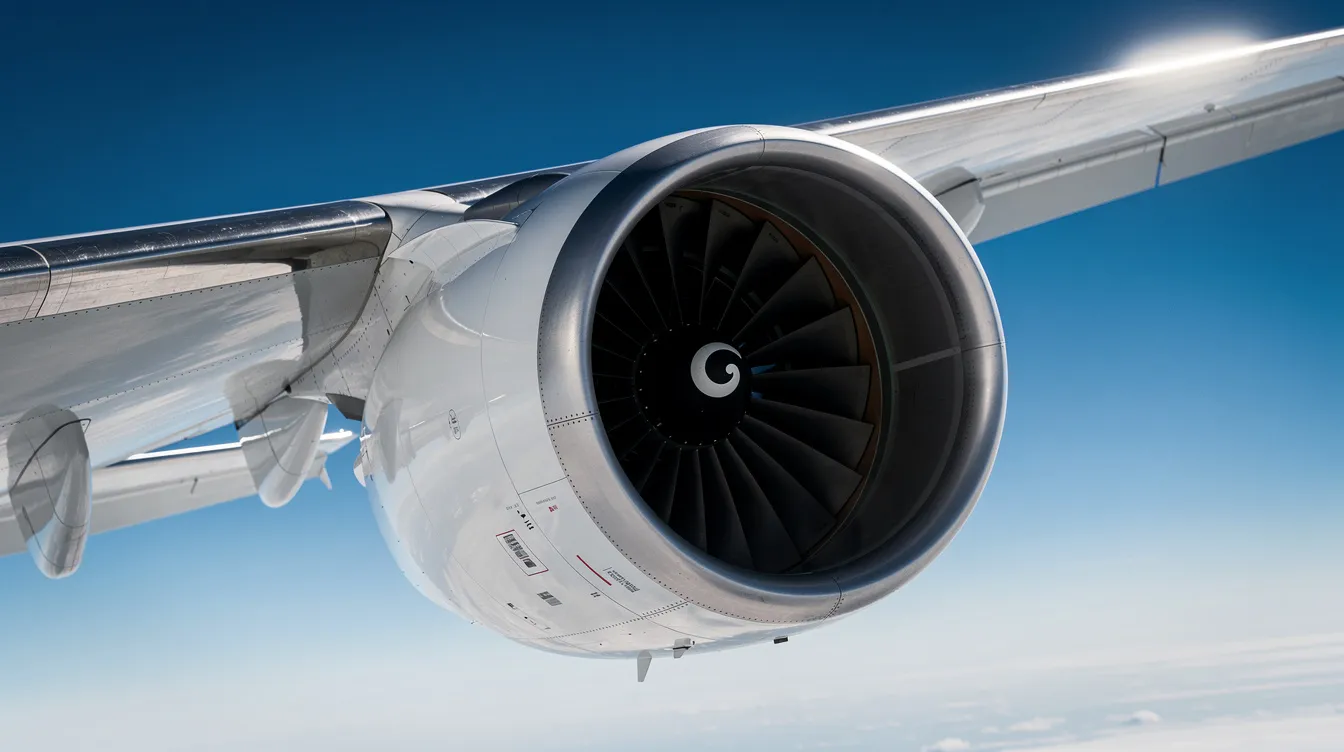
Boeing 707 - The aircraft that launched the Jet Age. The Boeing 707 was introduced in the late 1950s, with its first flight on December 20, 1957, and commercial service beginning in 1958. The intercontinental 707-320B could carry up to roughly 189 passengers with a maximum range of about 5,000 nautical miles. On the plane chart, it appears as a foundational type - retired from passenger service but essential context for every Boeing aircraft that followed.
Boeing 727 - A three-engine trijet designed for shorter fields and smaller markets, the 727 first flew in 1963. Typical seating ranged from 130 to 150 passengers. It represented Boeing's push into regional and domestic aviation before twin-engine economics made trijets obsolete. The chart flags it as retired, but its design philosophy - adapting to airports that larger jets could not reach - echoes in today's private aviation industry.
Boeing 737 family - The Boeing 737 is the best-selling commercial aircraft in history, and the 737 series is a popular narrow-body aircraft family that has been in continuous production for nearly six decades. The 737-100's first flight came in 1967. Boeing evolved the line through the Classic series, the Next Generation (NG) variants like the 737-800 in the late 1990s, and the current 737 MAX. The 737 MAX achieves a fuel reduction of up to 14% compared with earlier NG models, with Boeing citing approximately 20% CO₂ and fuel-use improvements over the original Next Generation 737. The largest MAX variant, the 737-10, received FAA certification in October 2026 under enhanced safety rules mandated by the 2020 Aircraft Certification, Safety, and Accountability Act. On the chart, the 737 family occupies more rows than any other because its variants span virtually every short- and medium-haul mission imaginable.
Boeing 747 "Jumbo Jet" - The Boeing 747 is known as the "Queen of the Skies" and features a partial upper deck that became its unmistakable silhouette. The Boeing 747 entered service in 1970 as the first wide-body aircraft, following a 1969 first flight. The Boeing 747 can carry over 400 passengers - in fact, three-class layouts on the 747-8 Intercontinental seat approximately 467, while high-density configurations can exceed 524. Range for the 747-8 reaches about 7,730 nautical miles. On the plane chart, the 747 is represented on trunk intercontinental routes - New York to Tokyo, London to Singapore - though it has been gradually replaced by more efficient twins like the 777 and 787. Its legacy continues in freighter form, where the 747-8F remains a workhorse for high-value cargo.
Boeing 757 - The Boeing 757 is known as the "pocket rocket" for its performance, and the Boeing 757 is known for its incredible performance on short runways. First flown in 1982, the 757-200 entered service in 1983, carrying about 186 passengers in a two-class layout with a range of approximately 3,900 nautical miles. On the chart, it occupies a unique niche: a narrow-body airframe with wide-body range, ideal for "thin" transatlantic routes such as New York–Shannon or Boston–Edinburgh that cannot fill a 777 but need to cross an ocean.
Boeing 767 - First flying on September 26, 1981, and entering service in 1982, the 767 was an early twin-engine widebody that pioneered ETOPS (Extended-range Twin-engine Operational Performance Standards) for overwater flights. It shares a common glass cockpit lineage with the 757, and variants continue to serve in freighter and military tanker roles. The chart shows the 767 as a bridge between the narrow-body 757 and the larger 777 - a versatile platform for both passenger and cargo operations.
Boeing 777 family - The Boeing 777 was the first commercial aircraft designed entirely by computer, a milestone that set new standards for precision engineering. Its first flight came in June 1994, with service entry in 1995. The Boeing 777 is recognized for its high passenger capacity and long-range capabilities: the 777-300ER seats approximately 370 passengers in a three-class configuration with a range of about 7,370 nautical miles. The chart differentiates several variants: the 777-200, -200ER, -200LR (one of the longest-range airliners ever built), -300, -300ER, the 777F freighter, and the upcoming 777X family (777-8 and 777-9) featuring folding wingtips and GE9X engines. For travelers who read premium-cabin reviews before selecting a long-haul flight, the 777 is often the aircraft behind the brands with the most acclaimed business-class suites.
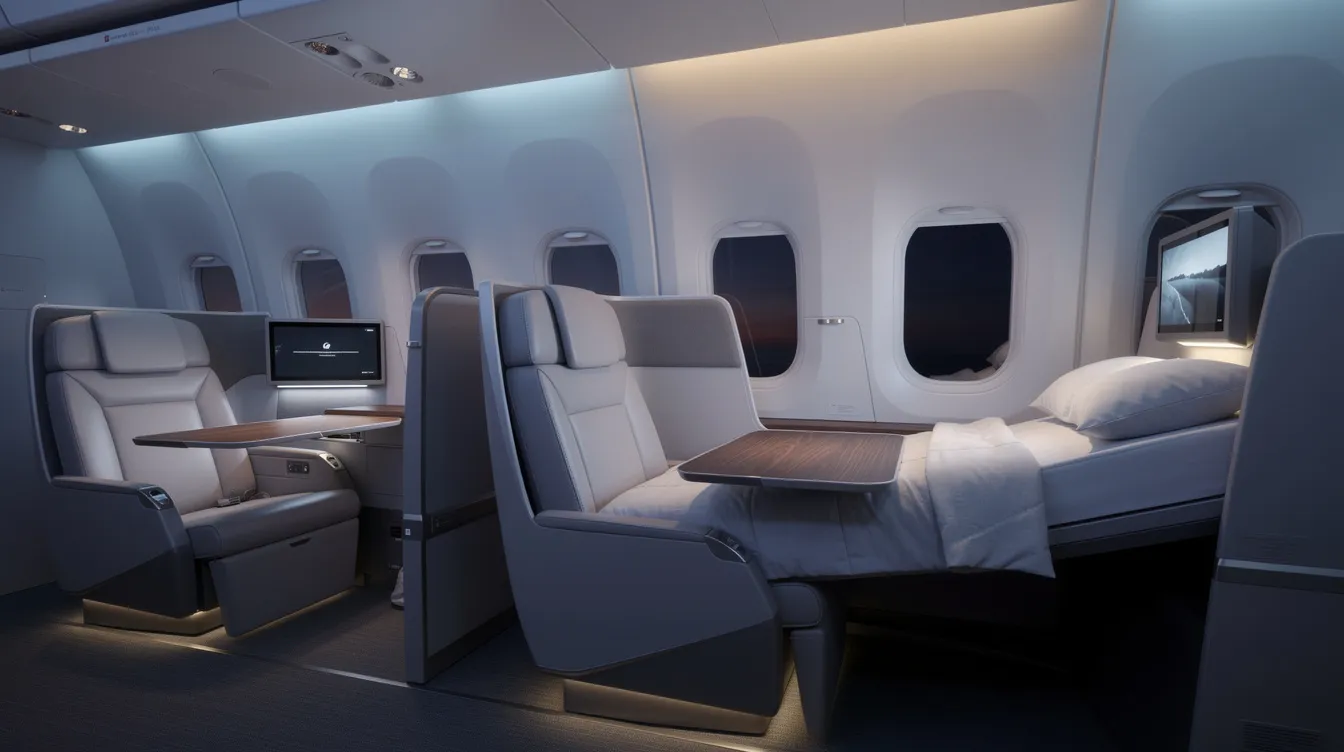
Boeing 787 Dreamliner - The Boeing 787 Dreamliner uses over 50% composite materials in its structure, a radical departure from traditional aluminum construction. First flown in 2009 and entering service in 2011, the Boeing 787 Dreamliner is over 20% more fuel-efficient than similar aircraft it replaces, delivering tangible sustainability gains. Variants include the 787-8 (approximately 242 seats, ~8,000 nmi range), the 787-9 (~290 seats, ~8,300 nmi), and the 787-10 (~330 seats). A recent study published in Nature found that replacing older widebodies with aircraft like the 787-9 could reduce fuel consumption by 25–28% across a fleet. On the chart, the 787 opens non-stop city pairs - London to Perth, Seattle to Bangalore - that are especially relevant for BlackJet members connecting via private jets at one end of the journey.
Cargo and combi variants also appear on a comprehensive Boeing plane chart: the 747-400F, 767-300F, and 777F among them. Boeing aircraft are designed for various applications, including domestic flights and cargo transport, and while BlackJet focuses on passenger private aviation, these freighter designations matter for members who coordinate high-value cargo or time-sensitive logistics alongside their travel.
How to use this section practically: Compare the Boeing aircraft types available on your scheduled New York–London route (likely a 777-300ER or 787-9), then use that baseline to decide which BlackJet cabin class best complements the long-haul leg in terms of comfort, productivity, and arrival flexibility. Understanding what a first-class seat on a commercial plane delivers helps you enter private aviation with clear expectations rather than assumptions.
From Boeing Aircraft Charts to Private Jet Choices with BlackJet
A Boeing plane chart tells you what the commercial aviation world offers. The next question - and the one that defines BlackJet's value - is what happens when that scheduled flight ends and your destination still lies an hour or two beyond the major hub. For executives, families, and UHNW travelers, the chart becomes a decision-making tool: understanding what you receive in a first-class cabin on a Boeing 777 versus what a midsize or large-cabin private jet delivers through a BlackJet Jet Card and the broader suite of premium private jet card programs, each with its own position on the broader private jet price list and access spectrum.
Jet cards are a prepaid option for private jet access,s offering flexible flight options - think of them as a bridge between the structure of commercial aviation and the freedom of wholly private travel, especially if you are still evaluating overall jet card cost and membership pricing and how jet card cost per hour varies by provider and aircraft. BlackJet organizes its own fleet overview in a way that parallels a Boeing aircraft chart, grouping by cabin class and mapping those categories to the different private jet sizes available for your journey and the broader types of private jets suited to each mission profile:
Attribute | Boeing 787-9 (Business Class) | Midsize Private Jet | Large-Cabin Private Jet |
|---|
Seat count | ~290 total (~48 business) | 8–9 | 10–14 |
Typical range | ~8,300 nmi | ~2,500–3,500 nmi | ~5,000–7,000+ nmi |
Time savings (door-to-door) | Baseline | 2–3 hours saved per trip | 2–3 hours saved per trip |
Privacy | Shared cabin | Exclusive | Exclusive |
Airport access | Major international hubs | 5,000+ airports including private airfields | 5,000+ airports including private airfields |
Carbon footprint per pax | Lower (high load factor) | Higher unless offset | Higher unless offset |
Scheduling flexibility | Fixed timetable | On-demand, 24/7 | On-demand, 24/7 |
Research by EBAA across 800,000 business aviation flights estimated that private aviation saved individual travelers the equivalent of 115 years of otherwise unproductive time - a figure that scales dramatically when aggregated. That time savings is the core reason high-net-worth travelers don't choose between commercial Boeing aircraft and private jets; they combine them, selecting from types of private jets tailored to each route.
Safety and Certification
Just as Boeing airliners undergo rigorous type certification, ETOPS validation, and MRO (maintenance, repair, and overhaul) regimes, every aircraft accessible through BlackJet is vetted against strict safety standards. This includes third-party audits, pilot flight-hour thresholds, and compliance with Part 135 operating certificates. We believe transparency in safety should be as accessible as a Boeing plane chart - something you can review, verify, and touch with confidence before you ever board.
Technology and Security
BlackJet's digital booking platform provides real-time flight support, QR code boarding credentials, and 24/7 concierge service, simplifying the process of buying a seat on a private jet whether you are booking entire aircraft or shared options. Operational aircraft data - such as Boeing model assignments on codeshare or shuttle connections - is kept entirely separate from any member email password log or personal security credentials. Whether you sign in through our app or continue a booking via desktop, your personal data is handled with the same rigor that governs flight safety, whether you are arranging a routine shuttle or bespoke private jet charter in Karachi or other global hubs.
Sustainability
Carbon-neutral flights are part of sustainable aviation initiatives in the industry, and BlackJet ensures every journey is carbon neutral at no extra cost to you, even for travelers exploring the cheapest private jet options and entry-level aircraft. Modern Boeing aircraft like the 737 MAX and 787 Dreamliner have moved the commercial fleet toward significantly lower per-seat emissions, in the same way that the world's top private jets balance luxury with efficiency. On the private side, BlackJet's carbon offset programs and growing adoption of sustainable aviation fuel (SAF) allow members to fly privately without compounding their environmental footprint. On a route like Los Angeles to New York, for example, flying a modern large-cabin jet with BlackJet offsets emits net-zero carbon - a standard that gives members more ideas for integrating sustainability into corporate travel policies without sacrificing flexibility.
A Concrete Travel Scenario
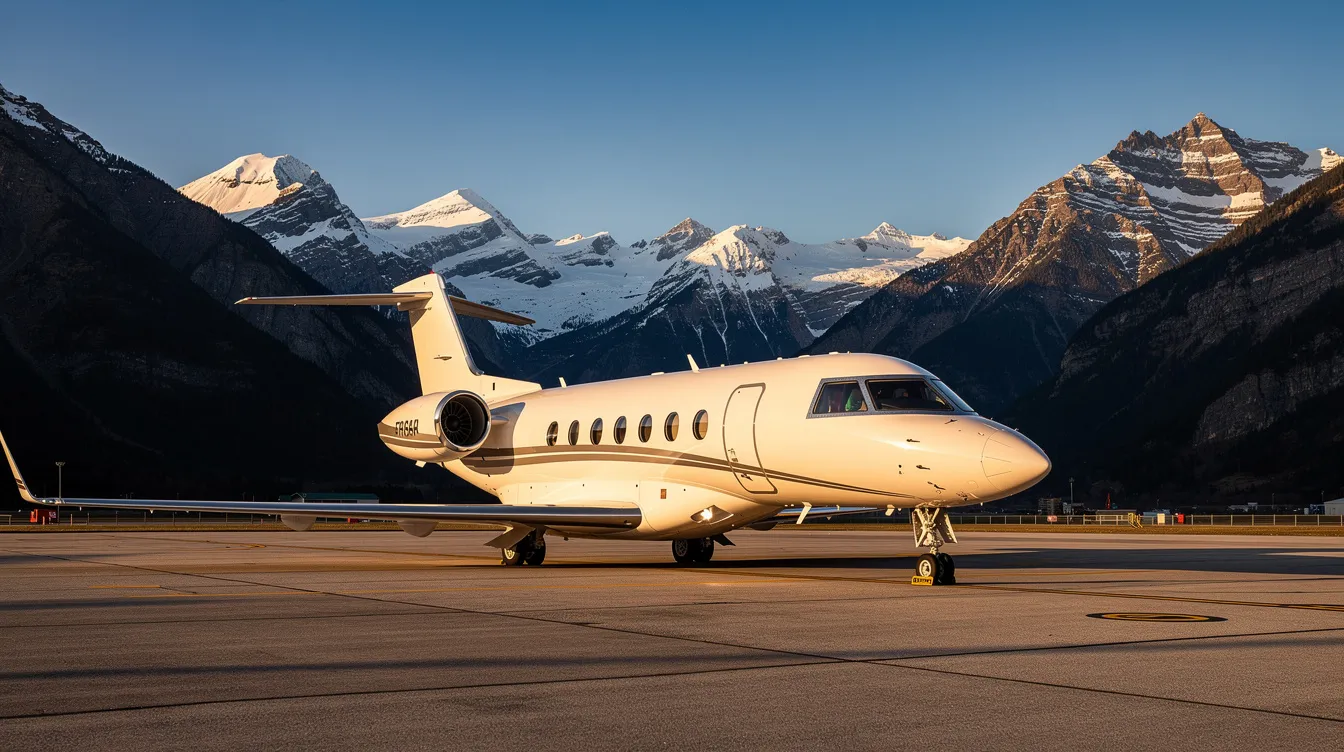
Consider a CEO flying London to New York on a Boeing 787-9 in airline business class - roughly seven hours of lie-flat comfort, Wi-Fi connectivity, and premium dining. She lands at JFK, but her final destination is a board retreat in Aspen. A commercial connection means a second airport, a second security line, a middle seat risk, and at least four additional hours of transit.
Instead, she transfers directly to a BlackJet large-cabin jet - 10 seats, a cabin wide enough for a standing meeting, and a range that reaches Aspen nonstop- drawing on the same principles that govern choosing the best private jet for groups of around 20 passengers or even evaluating the best private jet for 50 passengers using VIP airliners when the travel party scales up significantly, or considering full private jet ownership through curated aircraft for sale when usage and strategy justify it. Total added time: approximately 2.5 hours from JFK wheels-up to Aspen arrival. Total time saved versus commercial routing: closer to 4 hours. She arrives rested, prepared, and on her own schedule.
This is where the Boeing plane chart stops being reference material and starts being a planning tool, especially when it is paired with a clear view of which types of private jets align with each Boeing segment. Understanding what the 787 delivers on the transatlantic segment lets her select the right private jet class for the domestic leg - not overbuying a heavy jet when a super-midsize will do, and not underbuying a light jet that cannot make the distance or cabin-comfort standard she expects, especially once she has reviewed a transparent private jet price list and access options alongside a breakdown of jet card cost per hour across aircraft types.
To discover how other aircraft types compare across private and commercial categories, explore BlackJet's complete fleet and cabin-class guide.
Explore What Comes Next
The Boeing plane chart gives you knowledge. A BlackJet Jet Card gives you access.
Whether you are comparing the best jet card programs for flexible private travel, reviewing an independent guide to the best jet cards for frequent flyers, considering the value of a 50-hour jet card for recurring routes, weighing a 100-hour jet card for intensive travel schedules, or evaluating a 25-hour jet card for quarterly business trips, the process starts with understanding what you need - and what the commercial aviation industry already provides on scheduled legs, then mapping those needs to the most suitable jet card pricing structure and benefits. From there, the conversation shifts to what private aviation can add: time recovered, airports unlocked, schedules honored, and carbon neutralized, with pricing structured through jet card programs and their underlying pricing models.
Frequently Asked Questions About Boeing Plane Chart and Private Jet Access
What is a Boeing plane chart?
A Boeing plane chart is a structured comparison of Boeing aircraft families, detailing specifications like range, seating capacity, first flight dates, and primary roles. It helps travelers and aviation professionals quickly understand and compare different Boeing models.
Why is understanding Boeing aircraft important for private jet travelers?
Knowing Boeing aircraft capabilities and configurations allows private jet travelers to better plan seamless itineraries. It helps benchmark commercial flight comfort and efficiency against private jet options, aiding in selecting the right jet card program and aircraft for specific routes.
How do Boeing aircraft types differ in range and capacity?
Boeing aircraft range from narrow-body models like the 737, ideal for short to medium-haul routes, to wide-body models like the 777 and 787, designed for long-haul international flights with significantly larger passenger capacities.
What are the benefits of using a Jet Card with BlackJet compared to commercial Boeing flights?
Jet Cards provide prepaid, flexible access to private jets, offering time savings, privacy, and access to thousands of airports beyond major hubs. BlackJet ensures safety, sustainability with carbon-neutral flights, and real-time digital booking support.
How does sustainability factor into Boeing aircraft and private jet travel?
Modern Boeing models like the 737 MAX and 787 Dreamliner feature advanced fuel efficiency and reduced emissions. BlackJet complements this with carbon offset programs and sustainable aviation fuel use, making private jet travel more environmentally responsible.
Are Boeing 747s still in commercial service?
While largely retired from passenger service, Boeing 747s continue to operate in cargo roles and specialized missions. Their iconic design remains a benchmark for large-capacity air travel.
How does BlackJet ensure safety comparable to commercial Boeing aircraft?
BlackJet requires all private jets in its network to meet stringent safety standards, including third-party audits, pilot experience thresholds, and compliance with Part 135 operating certificates, paralleling the rigorous certification Boeing aircraft undergo.
Can I use a Boeing plane chart to choose the right private jet?
Yes, understanding Boeing aircraft specs helps travelers match commercial flight segments with appropriate private jet classes, optimizing for range, cabin size, and scheduling flexibility.
How can I access a Boeing plane chart?
Boeing plane charts are publicly available on aviation websites, including BlackJet's educational resources, without any login or password requirements, ensuring secure and easy access to data.
What is the significance of the Boeing 777 being the first commercial aircraft designed entirely by computer?
This milestone marked a leap in precision engineering, allowing Boeing to optimize design, efficiency, and passenger comfort, setting a new industry standard for long-haul wide-body aircraft.
Conclusion: Leveraging Boeing Plane Charts for Strategic Private Travel
For the discerning traveler, a Boeing plane chart is far more than a technical reference—it is a strategic tool that empowers smarter travel decisions. By understanding the capabilities, range, and cabin configurations of Boeing's iconic aircraft families, you gain a clear benchmark for comparing commercial flights with private jet options. This knowledge enables seamless integration of scheduled airline segments with BlackJet’s Jet Card programs, unlocking unparalleled flexibility, privacy, and time savings.
Safety, sustainability, and cutting-edge technology are pillars that define both Boeing aircraft and BlackJet’s private aviation offerings. Whether you’re navigating long-haul international routes aboard a 787 Dreamliner or transitioning to a midsize private jet for regional access, the data-driven insights from a Boeing plane chart ensure your journey is efficient, comfortable, and aligned with your values.
Elevate your travel experience by combining the best of commercial aviation with the bespoke advantages of private jet access. Explore BlackJet’s Jet Card programs to discover how you can transform your travel into a seamless, carbon-neutral, and secure experience—where every leg of your journey reflects precision, prestige, and performance. Learn more about types of private jets to match aircraft to your travel needs. Understand the private jet safety standards that guarantee peace of mind. For insights on environmental impact, see how carbon-neutral flights are reshaping private aviation. Finally, compare jet card costs and pricing models to find the best value for your travel lifestyle.


 Sign up with google
 Sign up with Apple