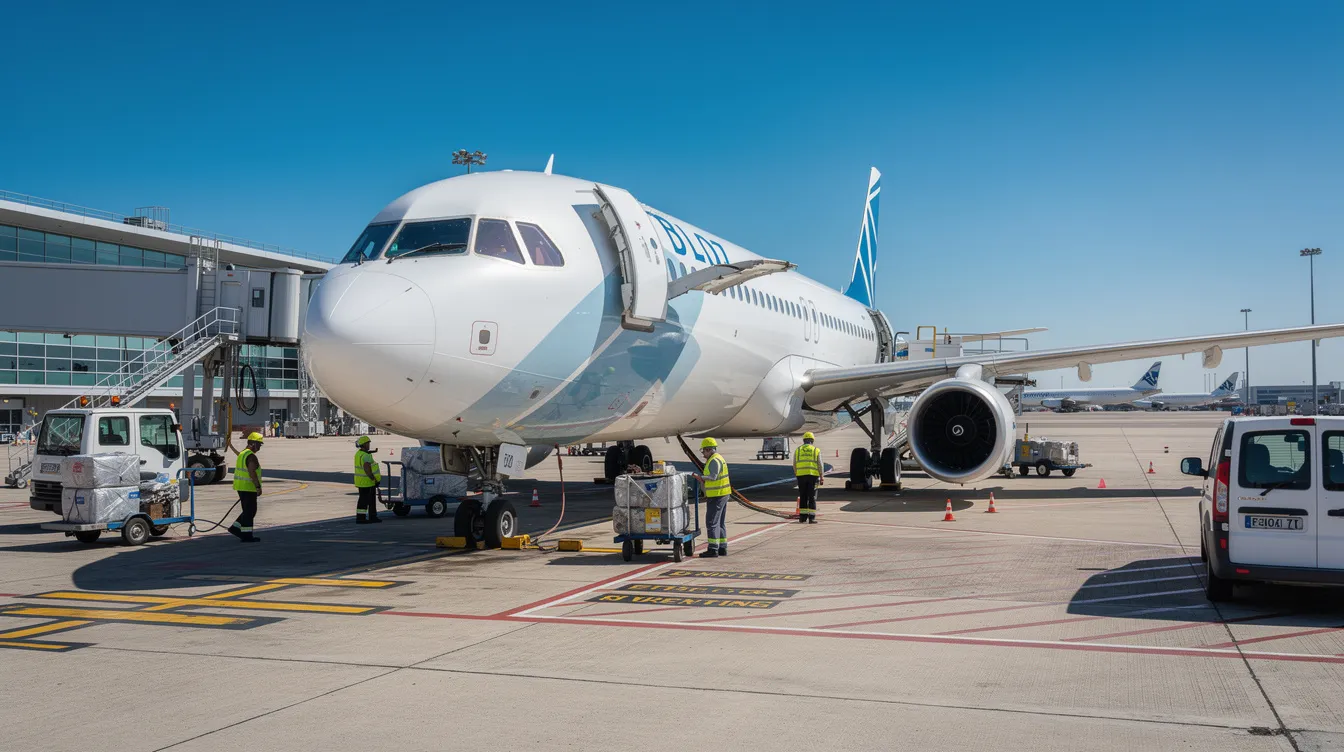
Boeing's new aircraft are transforming the landscape of global air travel, with significant implications for premium and private travelers. This article explores Boeing's latest aircraft developments—including the 737 MAX, 787 Dreamliner, and 777X—and what they mean for premium and private travelers seeking greater flexibility, efficiency, and sustainability in their journeys. We will cover how these new Boeing aircraft are reshaping route networks, improving fuel efficiency, and setting new standards for safety and passenger experience. Whether you are a frequent flyer in commercial premium cabins or a private jet user, understanding these changes can help you design smarter, more productive, and more sustainable travel itineraries.
Boeing's new aircraft programs are redrawing the map of global air travel. The 737 MAX family is Boeing's latest generation of single-aisle aircraft, designed for short- to medium-haul routes, and includes several variants such as the 737-7, 737-8, 737-9, and 737-10. With over 7,200 orders and more than 2,360 deliveries as of mid-2026, the 737 MAX family is reshaping short- to medium-haul routes with 20% lower fuel burn and a 50% smaller noise footprint compared to the generation it replaces. On the widebody side, the Boeing 787 Dreamliner family includes the 787-8, 787-9, and 787-10 variants, and the upcoming 777X family represents the latest evolution in widebody long-haul aviation. These aircraft are opening nonstop corridors between financial capitals that previously required connections. For executives and high-net-worth travelers, these shifts in fleet composition, range, and fuel efficiency create new possibilities for combining commercial premium cabins with the flexibility of private aviation.
BlackJet members frequently connect to or from major hubs served by these Boeing jets. Understanding which aircraft operate which routes allows them to design itineraries that pair a transatlantic widebody sector with a same-day private jet leg, eliminating the overnight layover or the lost afternoon waiting for a domestic connection, and to take full advantage of BlackJet's premium private jet card programs that make this hybrid strategy seamless. The goal is not luxury for its own sake; it is reclaiming time, maintaining productivity, and ensuring every flight meets the safety and sustainability standards that define modern premium travel.
The Latest Boeing 737 Developments: 737 MAX and Next-Generation Narrowbodies
The Boeing 737 remains the world's most widely operated narrowbody. More than 10,800 units of various 737 generations have been delivered since 1967, and the type operates on every continent. The current chapter centers on the 737 MAX family, Boeing's latest generation of single-aisle aircraft designed for short- to medium-haul routes, which includes several variants such as the 737-7, 737-8, 737-9, and 737-10. Boeing brought the 737 MAX back to service from late 2020 onward after a 20-month grounding and multi-jurisdiction recertification process, a period that proved how seriously regulators and manufacturers treat flight safety in the post-grounding era.
The Boeing 737 MAX offers efficiency and reliability across four variants, each designed for short- to medium-haul routes:
Variant | Two-class seats | Max seats | Range (nmi) |
|---|
737 MAX 7 | 135–160 | ~172 | ~3,800 |
737 MAX 8 | 160–180 | ~210 | ~3,500 |
737 MAX 9 | 175–195 | ~220 | ~3,300 |
737 MAX 10 | 185–210 | ~230 | ~3,100 |
The 737-7 is the smallest and longest-range variant of the MAX family, certified by the FAA on August 3, 2026. The 737-10 MAX variant can seat up to 230 passengers, making it the capacity leader. These specs allow airlines to open point-to-point routes from secondary cities, bypassing congested mega-hubs that eat into a traveler's schedule.
Fleet orders and production scale
The order book tells the story of airline confidence. United Airlines ordered 25 new Boeing 737 MAX aircraft for 2023 as part of a broader fleet renewal. Boeing received an order for 100 737 MAX jets from undisclosed buyers at recent industry events. SMBC Aviation Capital ordered 60 Boeing 737-10 aircraft; in total, SMBC Aviation Capital ordered 200 new aircraft from Boeing and Airbus, making the Dublin-based leasing company one of the largest single customers in narrowbody history. Boeing plans to lift the production cap on 737 MAX in October 2025, a move designed to accommodate the backlog and accelerate deliveries to airlines that have been waiting years for their slots.
Boeing's commercial backlog stood at over 6,200 aircraft as of June 2026, spanning narrowbodies and widebodies. The company has received strong demand in addition to these headline orders, with growth in Southeast Asian, Middle Eastern, and North American markets driving further commitments.
Safety: 737 MAX MCAS redesign and regulatory standards
The two fatal 737 MAX crashes (Lion Air Flight 610 in October 2018, Ethiopian Airlines Flight 302 in March 2019) were traced to the Maneuvering Characteristics Augmentation System (MCAS), which relied on a single Angle-of-Attack sensor and could push the nose down repeatedly beyond pilot override capacity. Boeing overhauled MCAS: the updated software requires agreement from two AOA sensors before activating, triggers only once per high-AOA event, and cannot command stabilizer movement that the pilot's control column alone cannot counter.
The FAA, EASA, and Transport Canada each conducted independent recertification reviews. As of July 2026, the FAA allowed Boeing to resume issuing airworthiness certificates for all 737 MAX and 787 airplanes after an eight-month data review confirming consistent production quality. For people who fly frequently, this layered oversight is a concrete benchmark. BlackJet applies a parallel philosophy to private aviation: every operator in its network undergoes third-party safety audits, including ARGUS Platinum and Wyvern Wingman evaluations, ensuring private flights operate under scrutiny that mirrors or exceeds commercial standards.
Environmental and cabin improvements
New aircraft are more fuel-efficient, reducing emissions and costs for the airlines that operate them. The 737 MAX's CFM LEAP-1B engines and aerodynamic refinements cut fuel burn by about 20% versus the Boeing 737-800 and other Next-Generation 737 models. For a single-aisle aircraft logging 3,000 flight hours per year, that reduction translates to hundreds of tons of CO₂ saved annually per airframe.
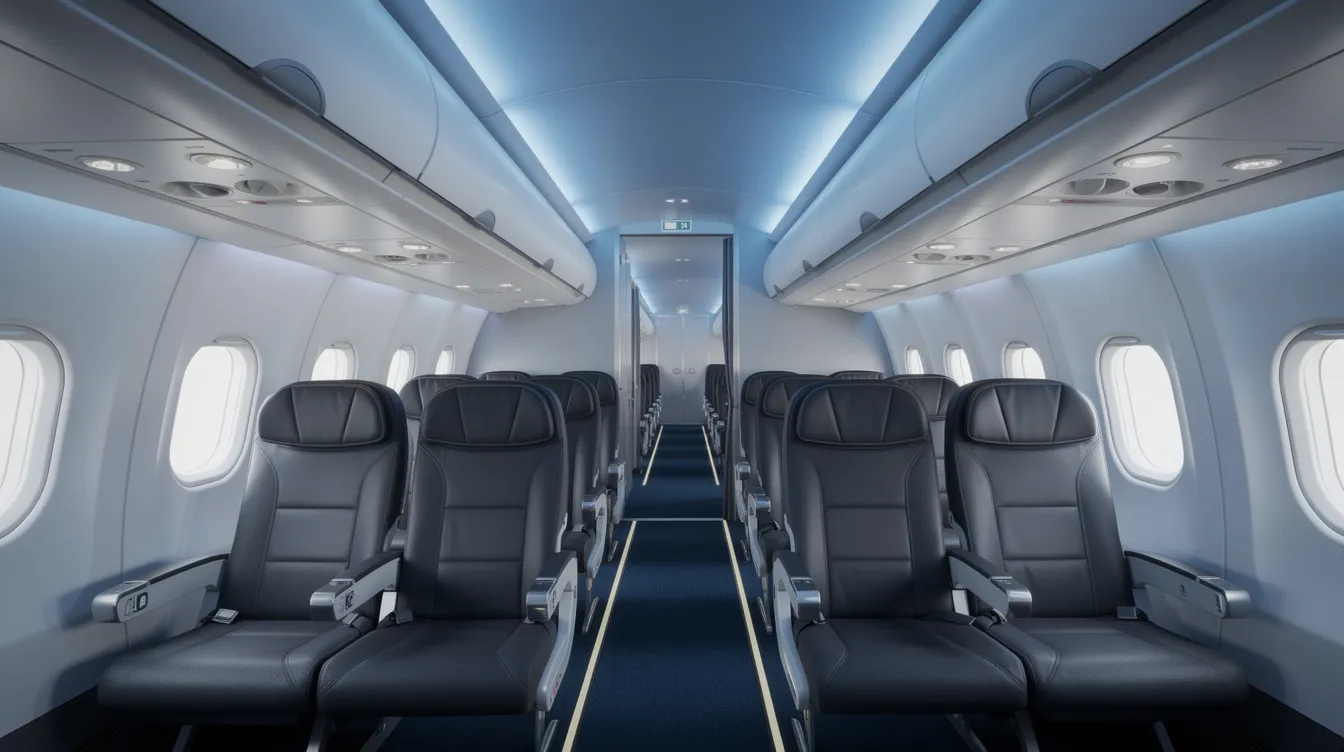
New aircraft will improve passenger comfort and connectivity as well. Larger overhead bins, quieter engine noise from the LEAP-1B's bypass ratio, and modern LED cabin lighting reduce fatigue on three- to five-hour sectors. These cabin features set a baseline that BlackJet members often compare against when booking a super-midsize private jet for similar route lengths. The difference: on a privately booked flight, six to ten passengers share the cabin instead of 180, and the departure schedule bends to the traveler rather than the other way around.
For BlackJet clients, the relevance is practical. As airlines add 737 MAX service on routes like New York to Miami, Chicago to Dallas, or London to Istanbul, these hubs become efficient jump-off points. A Jet Card holder can fly a 737 MAX commercial sector to a well-served hub, then board a private jet for the final 90-minute leg to a coastal meeting or a private estate, cutting total door-to-door time by hours.
Beyond the 737: Boeing's New Widebodies, Future Concepts and Private Jet Parallels
Boeing's widebody families form the backbone of long-haul premium travel between global financial centers. Whether a traveler prefers a lie-flat suite on a commercial flight or a large-cabin private jet for the same mission, understanding the capabilities of these airframes reveals where the industry is heading and what to expect from any aircraft built in this decade.
The Boeing 787 Dreamliner
The Boeing 787 Dreamliner family includes the 787-8, 787-9, and 787-10 variants. Each is built with roughly 50% composite materials by weight. Composites resist corrosion better than aluminum, reduce inspection downtime, and lower structural weight, which is why the 787 burns about 25% less fuel than the legacy 767s and older 777s it typically replaces.
Key specs:
787-8: seats ~200–275 (two-class), range up to ~8,000 nmi
787-9: seats ~250–325, range up to ~8,300 nmi
787-10: seats ~300–375, range up to ~7,500 nmi
Cabin altitude is pressurized to the equivalent of 6,000 feet rather than the 8,000 feet common in older widebodies. Higher humidity and larger electronically dimmable windows reduce jet lag on flights like New York to London or Los Angeles to Tokyo. Over 1,270 Dreamliners have been delivered, serving roughly 90 customers on more than 500 nonstop routes that did not exist before the model entered service.
The Boeing 787-10 is part of British Airways' fleet overhaul; British Airways is set to receive 12 Boeing 787-10 aircraft as part of its long-haul cabin refresh. Riyadh Air confirmed an order for 28 Boeing 787 Dreamliners, positioning the Saudi startup airline as a widebody launch customer. Ethiopian Airlines will add Airbus A350-900 and Boeing 787-9 aircraft to its fleet; Ethiopian Airlines' new aircraft feature advanced in-flight entertainment systems equipped with the latest connectivity hardware.
In March 2026, the FAA cleared increased maximum takeoff weight for the 787-9 (adding ~10,000 lb) and 787-10 (adding ~14,000 lb), enabling either additional payload or 300–400+ nautical miles of extra range per variant.
The Boeing 777X
The Boeing 777X family represents the latest evolution in widebody long-haul aviation. Designed to be the world's largest twin-engine jet, the 777X is built to replace the 777-300ER and aging 747 fleets at carriers like British Airways, Emirates, and Lufthansa.
Two passenger variants are in development:
The 777X aims to introduce advanced aerodynamic and structural technologies for lower fuel consumption. Its composite wing is the largest Boeing has ever built for a commercial jet. Folding wingtips allow the 777X to fit into standard airport gates designed for the current 777, avoiding costly terminal modifications. The GE9X engines provide roughly 10% better fuel efficiency than prior models, and the 777X aims for 20% lower fuel use and emissions footprint than competing aircraft in its category.
As of mid-2026, the program has logged roughly 4,800 flight hours across ~1,700 test flights, with about 50% of planned certification testing complete. First deliveries are expected in 2027, with Lufthansa as the launch operator. Emirates holds 270 total 777X orders after adding 65 more 777-9s in November 2025. Qatar Airways placed what Boeing calls its largest widebody order in company history: up to 210 widebody airplanes, including 30 777-9s. Despite these commitments, the program has faced delays; certification and production challenges have pushed the timeline back multiple times, a reality that airlines and their passengers have had to absorb.
On the competitive side, Airbus continues to press its advantage in narrowbodies: the Airbus A320neo provides a continuous delivery pipeline until the mid-2030s, giving airlines an alternative when Boeing capacity is constrained. In widebodies, Airbus offers the A350 family, though both manufacturers are committed to fuel-efficient, composite-intensive designs that define this generation of aircraft.
Commercial widebody vs. private jet: a comparison
Flying commercial first or business class on a new 787 offers a strong product: lie-flat seats, dimmable windows, low cabin altitude, and onboard Wi-Fi. The trade-off is fixed schedules, hub transit time, and the inability to hold a confidential board discussion at 40,000 feet without six strangers in earshot.
A BlackJet Jet Card holder flying the same route on a large-cabin private jet gains departure flexibility (leave on Monday at 6 a.m. or 10 a.m., your choice), door-to-door time savings of two to four hours per leg based on precise private jet flight time planning, and a cabin configured for work or rest with no competing passengers. BlackJet's aircraft categories span light, midsize, super-midsize, and large-cabin jets, reflecting the broader types of private jets available for every traveler and allowing travelers to replicate many of the distance capabilities of modern Boeing airliners but in a tailored, point-to-point network that avoids crowded hubs.
How Boeing's New Aircraft Influence Private Jet Strategy, Safety and Sustainability
Safety Benchmarks
Airlines around the world are spending billions to renew their fleets with Boeing 737 MAX narrowbodies and 787/777X widebodies. This fleet renewal is not an isolated commercial event; it signals macro trends in stricter emissions targets, heightened safety oversight, and traveler expectations for digital, connected experiences that cascade into private aviation.
The same regulatory environment that governs 737 MAX and 787 certification creates a safety benchmark for every aircraft that carries passengers. Boeing's recertification journey, with its multi-year timeline, independent reviews by four regulators, and public documentation, raised the bar for transparency. BlackJet mirrors this approach in private aviation. Every operator in the BlackJet network holds third-party safety ratings, and BlackJet's proprietary vetting process evaluates maintenance records, pilot training hours, and operational history on a rolling basis. The reliability of the private fleet a Jet Card member accesses depends on this continuous monitoring, not a one-time check.
Sustainability Initiatives
Boeing's focus on lighter structures and more fuel-efficient engines directly reduces per-seat CO₂ on commercial routes. BlackJet takes this principle further for private flights: every Jet Card hour flown is carbon neutral through verified carbon offsets and route optimization. When a client flies a 787 transatlantic leg with 25% lower fuel burn than the aircraft it replaced, then connects to a BlackJet super-midsize jet with offsets applied, the entire journey reflects a coherent sustainability posture. This matters to corporate boards that track Scope 3 emissions and to individuals who want their travel to prove consistent with their stated values.
Technology and Connectivity
Travelers accustomed to Wi-Fi-equipped Boeing 737 MAX and 787 aircraft expect always-on connectivity and digital service management. BlackJet's mobile booking platform and real-time flight support meet that expectation: Jet Card holders can book, modify, or track flights from a phone, receive cabin-ready confirmations, and communicate directly with flight support teams. The gap between the commercial digital experience and the private digital experience has narrowed to zero for operators that invest in it.
A use-case scenario
Consider a CEO based in London who needs to attend meetings in New York, Boston, and Washington, D.C. within 36 hours. She flies a Boeing 787-9 business class from Heathrow to JFK on a morning departure, arriving mid-afternoon Eastern time. A BlackJet-booked midsize jet meets her at a private terminal. By 5 p.m., she is in Boston for a dinner meeting. The next morning, she flies from Boston to Reagan National on the same Jet Card credit, arriving in time for a 9 a.m. briefing on Capitol Hill, and is home by evening. Total commercial connections avoided: two. Estimated time saved: six to eight hours across the trip. This is the practical difference between relying only on a Boeing 737 route network and layering private jet segments where they eliminate friction, especially when backed by a BlackJet 25+ Hour Jet Card that guarantees access at fixed rates.
Jet Card vs. charter vs. ownership
For travelers considering how to structure their private flying, the comparison is concrete, whether they lean toward a flexible 25-hour jet card solution or a larger commitment. Jet Cards offer prepaid hours at fixed or predictable rates, guaranteed access to vetted aircraft categories, and no idle-asset cost. Ad-hoc charter carries higher per-hour rates, availability risk during peak periods, and less pricing predictability, but there are situations where chartering a private jet is clearly worth it in terms of flexibility and time saved; in between, a 50-hour jet card can balance cost and access for frequent flyers. Full ownership involves capital outlay, crew management, maintenance scheduling, depreciation, and utilization risk. A detailed comparison helps travelers choose the model that fits their annual flight hours, route patterns, and tolerance for operational complexity, including understanding NetJets jet card costs alongside other providers.
Frequently Asked Questions about Boeing New Aircraft and Private Jet Travel
What makes the Boeing 737 MAX family important for short- to medium-haul travel?
The 737 MAX family offers improved fuel efficiency, lower emissions, and quieter cabins compared to previous 737 models. Its variants cover a wide range of passenger capacities and ranges, enabling airlines to open new point-to-point routes that bypass congested hubs.
How does Boeing ensure the safety of the 737 MAX after the grounding?
Boeing redesigned the MCAS system to require inputs from two sensors and limited its authority. The aircraft underwent multi-jurisdictional recertification by the FAA, EASA, and other regulators, with continuous production quality checks ensuring compliance with the highest safety standards.
What are the advantages of flying on Boeing 787 Dreamliners for premium travelers?
The 787 Dreamliner family uses advanced composite materials for fuel efficiency and lower emissions. Passengers benefit from higher cabin humidity, lower cabin altitude, larger windows, and improved Wi-Fi connectivity, making long-haul flights more comfortable and less fatiguing.
How do BlackJet Jet Cards complement commercial Boeing flights?
BlackJet Jet Cards provide prepaid access to private jets that can be paired with commercial Boeing flights to save time and add flexibility. For example, a traveler can fly commercially on a Boeing 787 for a transatlantic leg, then connect to a private jet for regional hops, avoiding layovers and fixed schedules.
What sustainability measures are associated with Boeing's new aircraft and BlackJet flights?
Boeing's new aircraft feature lighter materials and fuel-efficient engines that reduce CO₂ emissions per seat. BlackJet offsets the carbon footprint of every Jet Card hour with verified carbon offsets and optimizes routes to minimize environmental impact, offering carbon-neutral private flights.
How does BlackJet ensure the safety of its private jet operators?
BlackJet requires all operators in its network to hold third-party safety certifications such as ARGUS Platinum and Wyvern Wingman. The company continuously monitors pilot training, maintenance records, and operational history to maintain rigorous safety standards.
What are the differences between Jet Cards, chartering, and owning a private jet?
Jet Cards offer prepaid hours at fixed rates with guaranteed access to vetted aircraft categories, ideal for frequent flyers seeking convenience without ownership hassles. Chartering offers flexibility but with less pricing predictability and availability risk. Ownership requires significant capital, management, and maintenance responsibilities.
When will the Boeing 777X enter service, and what makes it unique?
The Boeing 777X is expected to enter service in 2027, featuring the world's largest composite wings with folding wingtips, GE9X engines with 10% better fuel efficiency, and seating for up to 450 passengers. It aims to replace older widebodies with a lower emissions footprint.
How can travelers use Boeing's new aircraft to optimize their private jet travel strategy?
Travelers can map commercial routes served by Boeing's efficient aircraft like the 737 MAX and 787, then use BlackJet's Jet Card program to fill gaps with private flights, saving time and increasing flexibility. This hybrid approach maximizes productivity and sustainability across complex itineraries.
Choosing Your Next Move: Integrating Boeing Routes With BlackJet Jet Card Travel
How to Analyze Your Routes
If you fly 50,000 or more commercial miles per year and regularly lose half-days to layovers, the question is not whether to add private aviation to your travel strategy. The question is where in your annual calendar private flights replace friction with speed, and how a clear understanding of overall jet card costs and membership pricing fits into that analysis.
Start by mapping the carriers and aircraft types on your most-flown routes. If United Airlines operates your Chicago-to-Denver leg on a 737 MAX, that commercial sector is well served: fuel-efficient, reliable, and frequent, just as regional markets such as private jet charters in Karachi are opening new options for pairing commercial and private segments. But if your final destination is Aspen, Telluride, or a ranch property 90 minutes from Denver by car, a BlackJet light jet from Centennial Airport eliminates the drive and gets you to your destination before lunch. The same logic applies globally: identify the legs where commercial Boeing 737 or 787 service is strong, then find the gaps where a Jet Card flight saves a connection, an overnight, or a lost business day, guided by a realistic view of your private jet price list and access options.
Trip Pairings That Work
Transatlantic + East Coast roadshow: Boeing 787 from London Heathrow to New York JFK, then BlackJet super-midsize from New York to Philadelphia to Charlotte in one afternoon, a profile where understanding your Jet Card cost per hour clarifies the ROI of replacing regional hops with private legs.
Transpacific + resort access: Boeing 777X (once delivered in the coming years) from Dubai to Singapore, then a BlackJet light jet from Singapore Changi to a resort island in Indonesia, avoiding a regional airline connection and its two-hour layover; for larger groups, similar patterns can leverage private jets for up to 50 passengers using VIP-configured airliners.
Domestic hub + final mile: 737 MAX from Dallas to Los Angeles, then BlackJet midsize from Van Nuys to Cabo San Lucas for a weekend, departing when you are ready rather than when the airline schedule allows, with transparent jet card pricing structures helping you predict total trip cost.
BlackJet's Four Pillars, Briefly
Safety: Operators vetted through ARGUS, Wyvern, and Part 135 compliance standards, with continuous monitoring rather than annual snapshots, a level of diligence that mirrors the financial scrutiny applied to options like fractional jet ownership and its depreciation considerations.
Sustainability: Every Jet Card hour offset to net-zero carbon, with route optimization built into flight planning, even for clients exploring the most affordable private jet options as an entry point into private aviation.
Technology: Mobile booking, real-time support, and transparent account management so you see your remaining hours, upcoming flights, and invoices in one place.
Flexibility: Choose the aircraft category that fits each mission, from light jets for 90-minute hops to large-cabin jets for six-hour sectors, including configurations ideal when you need the best private jet for 20 passengers, all under one Jet Card program.
Looking Forward
Boeing's production ramp, once it clears the current backlog, will put more fuel-efficient, better-equipped narrowbodies and widebodies onto routes over the next decade. Airlines will finally retire older, less efficient types at an accelerated pace. For private travelers, this means commercial segments will keep improving in comfort, emissions, and reliability, making hybrid itineraries (commercial + private) an even more rational set of choices.
The people who benefit most are those who design their travel around outcomes, not timetables. If you already appreciate the advantages of flying on modern Boeing aircraft but want more control, privacy, and carbon-neutral performance across your entire travel portfolio, a BlackJet Jet Card is the structural answer. Explore BlackJet's Jet Card programs and see how a prepaid-hours model reshapes your next 12 months of travel: fewer wasted hours, verified safety on every leg, and a sustainability commitment built into every flight.


 Sign up with google
 Sign up with Apple