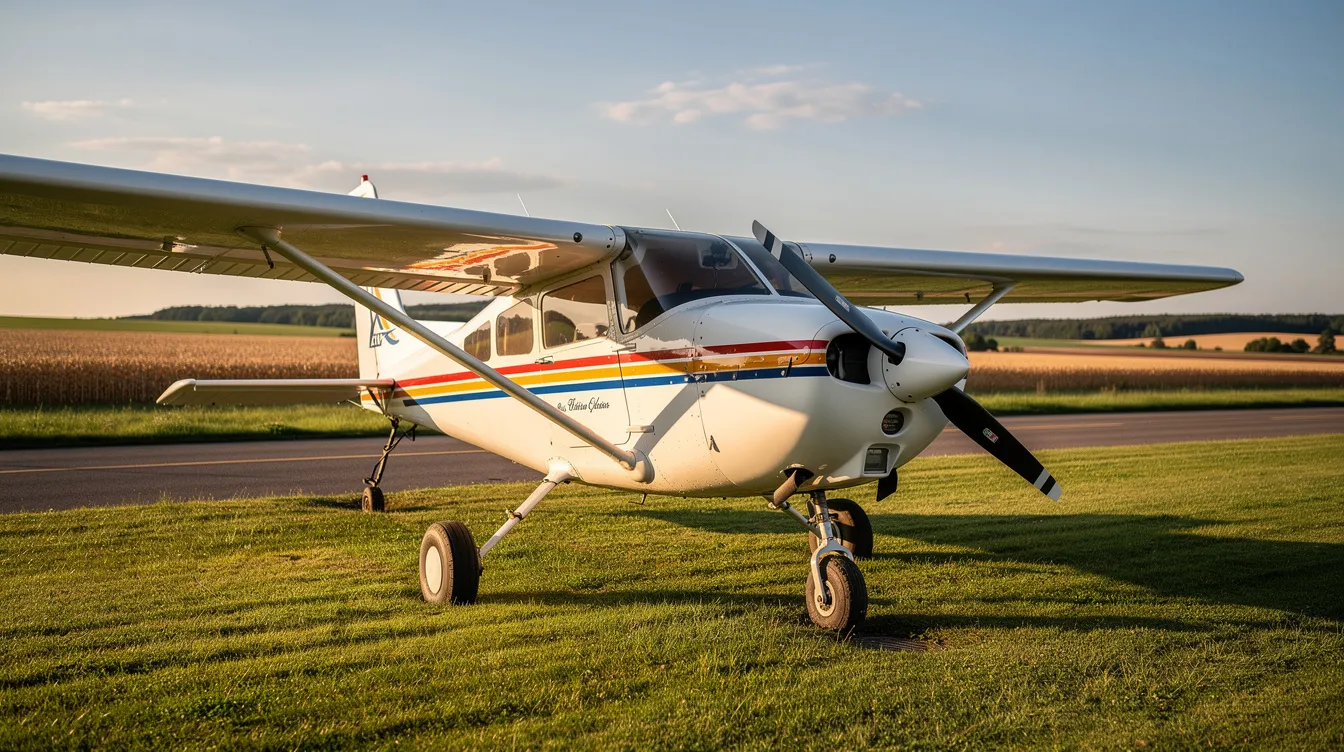
Why Cessna Aircraft Still Matter for Elite Travelers Today
Picture an entrepreneur with meetings in Madrid, Geneva, and Milan—all in a single day. Commercial aviation makes that itinerary nearly impossible: rigid schedules, layovers, security queues, and limited routes conspire against productivity. Private aviation eliminates every one of those friction points with direct routing, flexible departure times, and access to secondary airports that sit minutes from final destinations.
Cessna aircraft provide unmatched flexibility for private aviation because the brand covers every segment of the skies:
Single-engine piston aircraft for training
Grand Caravan turboprops for regional and remote operations
Citation business jets for continental and transcontinental missions
Cessna offers aircraft for different missions from training to executive travel, and that full spectrum is exactly what makes the brand so valuable to a jet card company like BlackJet.
BlackJet is a carbon-neutral private aviation service offering Jet Card programs within its broader premium private jet card and charter services that frequently leverage Cessna Citation jets in its network. This article traces the way a small training avioneta Cessna evolves into a fleet of business jets—and shows how a BlackJet Jet Card turns that fleet into effortless, on-demand access.
From Farm Fields to Textron Aviation: Short History of the Cessna Brand
The beginning of Cessna's story belongs to Clyde Cessna, who taught himself to fly over farm fields in Kansas during the 1910s. By 1927, he had formalized the Cessna Aircraft Company in Wichita, a city that would become the air capital of the world.
Post–World War II, the brand exploded: all-metal models like the 120 and 140 replaced fabric-covered designs, and the 1950s–1970s saw Cessna democratize flight with mass-produced trainers. Key milestones include:
1946 – Reintroduction of civilian production with Models 120/140.
1955–1970s – Launch of the 150, 152, and 172 families; Cessna built over 44,000 units of the 172 alone.
1992 – Textron Inc. acquired Cessna from General Dynamics for roughly $600 million.
2014 – Textron merged Cessna with Beechcraft and Hawker, forming Textron Aviation under one global brand.
Strategic decisions were not left without controversy. Moving production of the Cessna 162 Skycatcher to China in 2007 drew criticism, and during the 2008–2010 recession, Cessna cut over half its workforce. Yet the brand adapted. Today, under Textron Aviation, Cessna is a full-spectrum manufacturer: piston trainers, turboprops like the Grand Caravan family, and the Citation business jet series.
The Iconic Avioneta Cessna 172: First Flight to Global Training Standard
Key Features of the Cessna 172
The Cessna 172 made its first flight in June 1955, evolving from the taildragger 170 into a tricycle-gear design that would redefine training. The Cessna 172 was introduced in November 1955 and became an overnight sales success after its launch. Over 1,400 Cessna 172s were built in 1956—a pace that signaled something extraordinary.
Why did this model dominate? Most Cessna light aircraft feature a high-wing design that gives student pilots exceptional visibility. Many Cessna aircraft feature stable flight characteristics, and the 172's forgiving stall behavior makes it ideal for flight training. Cessna aircraft are known for their reliability, durability, and ease of handling—qualities that make the margin for error more forgiving during early lessons.
Training Impact
Consider a student at a flight school in Texas or Florida: their first solo almost certainly happens in a 172. Many BlackJet clients, reviewing their own aviation journey, can trace their love of flying back to that same airplane.
The Cessna 172 set a world record for flight endurance in 1959, and the model has been used for flight training and aerial patrol across decades.
Modern Upgrades
Production of the Cessna 172 halted in 1986 due to manufacturer liability costs and resumed in 1996 with modernized variants (172R, 172S) featuring fuel-injected engines. Modern Cessna piston aircraft are equipped with advanced avionics, and today's 172 fleet commonly includes Garmin G1000 NXi flight decks with ADS-B and enhanced autopilot.
Cessna 172 models can be modified for increased engine power through supplemental type certificates (STCs), enabling higher-power engines, STOL kits for bush flying, and extra fuel tanks, expanding the airplane well beyond its training roots, much like how affordable small planes such as the Cessna 150 can be optimized for budget-conscious owners.
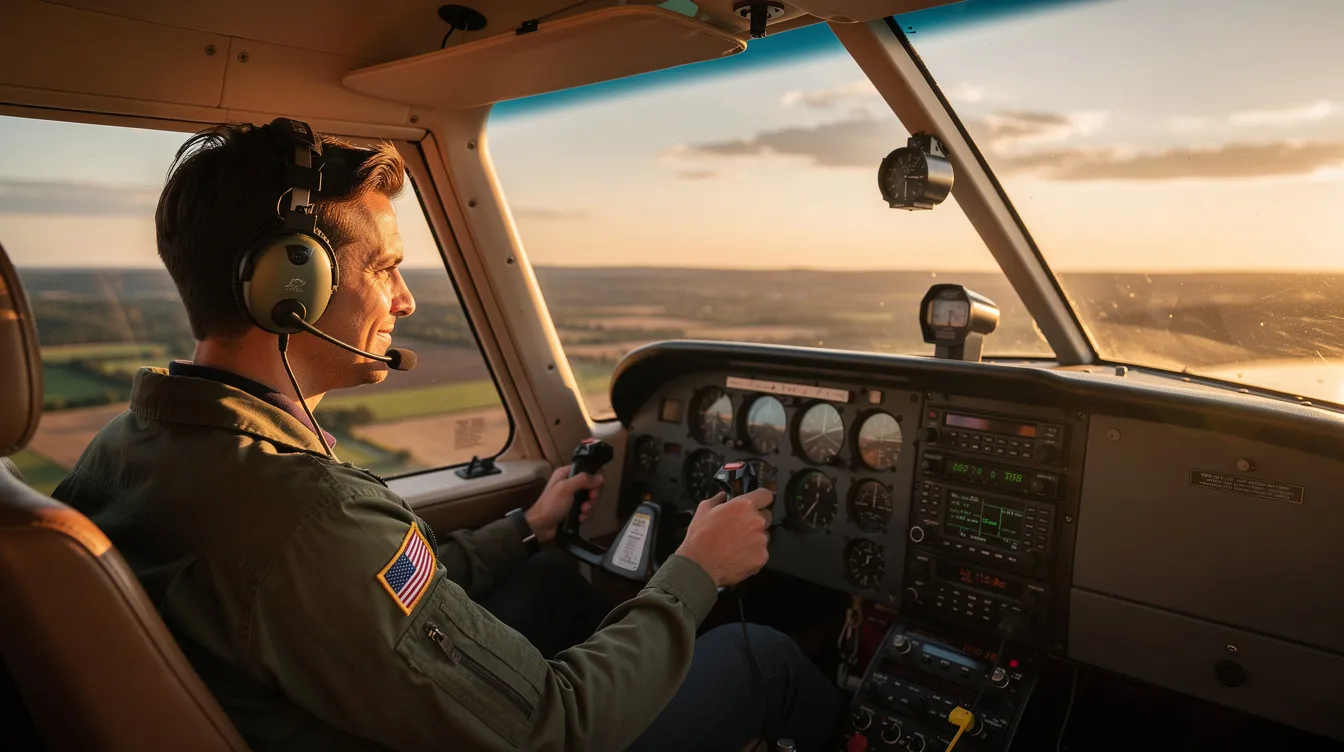
Beyond the Trainer: Cessna Piston and Turboprop Families
Cessna Piston Aircraft Lineup
Cessna 152s and 172s are standard at flight schools worldwide, but Cessna offers a range of piston aircraft for pilot training and utility work that extends far beyond the introductory model.
Cessna 150/152 – Two-seat trainers; the simplest way to begin a flying career.
Cessna 182 Skylane – Offers a faster cruise speed and greater range than the 172, with approximately 230 hp, ~145 KTAS cruise, and a useful load around 1,130 lb. Handles cross-country missions with four adults and full fuel.
Cessna 206/T206H – Used for transporting cargo to remote locations. The T206H Turbo Stationair has a maximum takeoff weight of 2,850 lb, making it a workhorse for bush operators.
Cessnas often offer lower operating costs compared to competing aircraft from manufacturers like Piper, which helps differentiate the brand in the United States and globally. They feature prominently in many guides to the best small private aircraft for varied missions. Many Cessna aircraft are recognized for their straightforward handling, a trait that carries forward as pilots progress from pistons to turboprops.
The Turboprop Bridge: Caravan and Grand Caravan EX
The turboprop family—led by the Cessna Caravan and Grand Caravan EX—bridges the gap between small avionetas and business jets, sitting alongside very light jets in discussions of the cheapest private jet options for new travelers and broader guides to types of private jets for every traveler. Pilots who build time in high-wing turboprops often step up into Cessna Citation jets, forming a career pipeline that supports the experience levels BlackJet demands of its partner crews.
The Grand Caravan: Utility Turboprop With Executive Options
Grand Caravan Performance and Use Cases
Cessna's Caravan family is the most delivered utility turboprop in aviation history, and its design philosophy reflects that status: a high-lift wing, fixed landing gear, and a Pratt & Whitney PT6A turboprop engine built for reliability in harsh conditions.
Metric | Value |
|---|
Cruise speed | ~186 KTAS (344 km/h) |
Ferry range | ~1,070 nm (1,980 km) |
Useful load | ~3,305 lb |
Takeoff ground roll | ~1,160 ft |
Passenger seating | 9–14 (config dependent) |
The Grand Caravan EX improves climb performance by roughly 38% over the base 208B thanks to a more powerful PT6A-140 engine. Operators use these aircraft for regional commuter routes, cargo feeder flights for integrators like FedEx, and access to short rural runways in Africa, Latin America, and island chains.
For BlackJet customers, the Grand Caravan fills a specific niche: last-mile access and sits in the same conversation as other affordable private plane options for efficiency-focused travelers. A client might fly a Citation into a regional hub, then connect via a Caravan to a remote resort or private landing strip that larger jets cannot reach.
Grand Caravan vs. Helicopter vs. Small Jet
Helicopters: Offer landing flexibility but cruise at only 120–150 knots, with a higher cost per seat-mile.
Small jets need longer runways and more fuel.
Caravan: Occupies the middle ground—similar payload to a helicopter, faster speed, and runway requirements that remain easy to meet at unimproved strips.

From Avioneta to Jet: Inside the Cessna Citation Business Jet Family
Citation Family Overview
The Citation line is Cessna's answer to travelers who search for speed, range, and cabin refinement beyond what any turboprop can deliver, including popular mid-size choices that define the features of a typical 5 million jet. Starting in the early 1970s, the Citation family has grown into one of the most versatile business jet portfolios in the world.
Model | Max Passengers | Approximate Range | Typical Mission |
|---|
Citation M2 | 6 | 2,900 km | Paris–Ajaccio |
Citation CJ3+ | 7 | ~3,300 km | Madrid–Marrakech |
Citation CJ4 | 9 | 3,700 km | Paris–Moscow |
Citation XLS | 10 | ~3,500 km | Milan–Istanbul |
Citation Latitude | 9 | ~4,700 km | London–Athens |
Citation Longitude | 12 | 7,400 km | New York–London |
Cessna Citation jets provide fast travel on many regional routes, and the larger models—Citation Latitude accommodates a maximum of 9 passengers, Citation XLS can transport up to 10 passengers, and Citation Longitude can carry up to 12 passengers—serve intercontinental missions with ease, while larger-cabin aircraft enter the realm of top 16-seat private jet options for groups that need even more space. Citation M2 can fly distances up to 2,900 km, while Citation Longitude has a range of 7,400 km.
BlackJet's Jet Card structure lets members select the right cabin class for each mission, benefiting from a clear jet card pricing structure and cost model and an understanding of jet card cost per hour that helps align aircraft choice with budget. A twin-engine Citation CJ4 for a business hop or a Longitude for a transatlantic crossing—access replaces the hard commitment of ownership. Safety standards are non-negotiable: modern avionics suites, dual-pilot operations, and strict operator certification ensure every flight meets the highest benchmarks, whether a client books a whole aircraft or simply buys a seat on a private jet.
Citation CJ4 and CJ4 Gen3: Efficiency for Business and High-Net-Worth Travel
The Citation CJ4 has a range of 3,700 km, making it a compelling choice for routes like New York–Dallas, Paris–Moscow, or São Paulo–Lima. The CJ4 Gen3 pushes performance further with refined avionics and interior upgrades:
Max cruise speed: ~451 KTAS (~835 km/h)
Seating: Up to 10 passengers
Takeoff field length: ~3,410 ft
Landing distance: ~2,940 ft
Ceiling: 45,000 ft
Imagine a European family using a BlackJet Jet Card: they request a CJ4 for a week-long Mediterranean itinerary—London to Nice, Nice to Ibiza, Ibiza back to London, having compared it with several of the best personal planes for leisure and business travel and other small private jets luxury travel options. Departure times align with their schedule, not an airline's. They use private FBOs instead of crowded terminals and arrive at airports close to their final destination.
Compared with commercial business class, the CJ4 offers similar or better comfort but eliminates ground-side delays and sits in a pricing tier that makes sense once you understand the broader private jet price list and ownership versus access costs and how it compares with 10 million dollar private jet options aimed at outright owners. The price per hour is higher than a commercial ticket, yet when executives value time at several thousand dollars per hour, the balance tips decisively toward private access. Russ Meyer, the former Cessna CEO who led the company through decades of growth, understood this equation: selling speed and convenience is ultimately selling productivity.
How Cessna Aircraft Fits Into BlackJet Jet Card Programs
Jet Card Structure
A BlackJet Jet Card is a prepaid access program—typically in 25-hour or 50-hour blocks—covering multiple aircraft categories at transparent hourly rates, fitting neatly into broader jet card cost and membership comparisons and aligning well with what travelers learn in a detailed 50-hour jet card cost guide or a complete 25-hour jet card features and costs breakdown.
Aircraft Selection by Mission
Members select Cessna aircraft types by mission, and heavy users often weigh these choices against the economics laid out in a 100-hour jet card cost analysis and potential jet card tax deductions:
Short-haul (under 2,000 km): Citation M2 or CJ3 for regional business.
Mid-range (2,000–4,000 km): Citation CJ4 or XLS for corporate travel.
Transcontinental/transatlantic: Citation Latitude or Longitude for long-range flights.
The booking journey is straightforward:
Request a flight via the app or the web
Review aircraft category options with sample Cessna models displayed
Confirm schedule
Receive real-time support before and during the trip
No need to work through complex documents or manage crew logistics.
Jet Card vs. Ownership
Factor | Jet Card | Ownership |
|---|
Capital outlay | None beyond the card price | Millions in acquisition |
Depreciation | Not your concern | Significant month over month |
Crew & hangar | Included | Owner's responsibility |
Fleet flexibility | Multiple aircraft types | One airplane |
Parts & maintenance | Managed by operator | Owner-managed |
BlackJet is aircraft-agnostic but often recommends Cessna Citations because of their global support network, Textron Aviation backing, and strong balance of speed, comfort, and operating efficiency, key criteria in most reviews of the best jet cards for frequent flyers and in comparisons with programs such as those outlined in an in-depth NetJets jet card cost guide. Competitors may rely on a narrower fleet mix; BlackJet's approach is to find the optimal aircraft for each route.
Safety, Training, and the Cessna Pipeline of Professional Pilots
The Typical Pilot Progression
The ubiquity of avioneta Cessna trainers creates a deep global pipeline of pilots intimately familiar with Cessna flight characteristics before they ever fly a jet. Cessna aircraft are popular for flight training due to forgiving stall behavior, and that foundation matters.
The typical pilot progression:
First solo and PPL in a Cessna 172.
Instrument and commercial ratings in complex Cessna models (182, 206).
Turbine transition via Caravan or similar turboprop.
Type rating on Citation jets through advanced simulation.
Textron Aviation–backed initiatives like the Top Hawk program supply factory-new Cessna 172s to flight schools, reinforcing quality and standardization and helping create a pipeline of pilots who may later fly many of the most affordable private planes in active service. BlackJet's safety framework demands that partner operators hold leading third-party audits—ARGUS, IS-BAO, or equivalent—and that pilots have logged thousands of hours, many in Cessna piston and turboprop aircraft. You can learn more about private jet safety standards and whether private jets are safe in real-world operations on our blog.
When you step into a Citation via BlackJet, you benefit from decades of pilot development and manufacturer safety culture that started in simple training avionetas. There is no shortcut to that kind of experience, and no room for error at 45,000 feet.
Sustainability and Technology: BlackJet and Textron Aviation's Shared Direction
Cessna's Commitment to Sustainability
Cessna is committed to reducing environmental impact in aviation, and Cessna aims for sustainable development goals by 2025 that include a 20% reduction in greenhouse gas emissions across operations, even on the most budget-friendly private aircraft and entry-level jets, a theme that also appears in guides explaining how much it costs to charter a small plane. All Textron turbine aircraft—Cessna turboprops and Citation jets—are approved to operate with sustainable aviation fuel (SAF), an increasingly important factor in rankings of the best small private aircraft for modern travelers.
Cessna's aircraft designs focus on lower fuel consumption across generations. A notable example: Cessna's Skyhawk JT-A model burns 3 gallons less fuel per hour than its conventional counterpart and delivers a range increase of over 38%. Newer Citation jets incorporate more efficient engines, winglets, and full-glass avionics that enable precise, fuel-optimized flying, while larger aircraft in the heavy-jet category become relevant when evaluating the best private jet for 20 passengers on long-range missions.
BlackJet's Carbon-Neutral Approach
BlackJet's carbon-neutral flights promise works simply: verified offset projects are applied automatically to every member flight at no extra cost, putting it in the same league as several of the top private jet companies for luxury and safety, and appealing to travelers evaluating 12-seater private jet costs and considerations before committing to ownership or charter. Beyond offsets, BlackJet's technology platform minimizes empty legs and optimizes fleet utilization, lowering emissions per trip while preserving on-demand flexibility.
Choosing a modern Cessna jet through BlackJet is not only a comfort and time decision—it is a more responsible way to navigate the skies compared with older, less efficient aircraft or poorly optimized charter models, especially when contrasted with the scale and complexity of charter plane 100-passenger cost structures.
Choosing the Right Cessna for Your Mission - and Next Steps With BlackJet
Quick Selector Table
Mission | Recommended Cessna Model(s) |
|---|
Training & hobby flying | Cessna 152/172/182 (not via BlackJet) |
Remote access & resorts | Grand Caravan turboprop |
Regional business (under 3,000 km) | Citation M2 or CJ3 |
Mid-range corporate (3,000–5,000 km) | Citation CJ4 or Latitude |
Transcontinental or transatlantic | Citation Longitude |
Example Scenarios
Scenario 1: A CEO needs same-day meetings in Boston, Providence, and Hartford. A Citation CJ3 handles all three legs before dinner.
Scenario 2: A family plans a Mediterranean holiday: London–Nice–Ibiza–Corsica. A CJ4 covers every hop with flexible departures.
Scenario 3: A transatlantic presentation demands a nonstop flight from New York to London. The Citation Longitude delivers 7,400 km of range and up to 12 seats.
Access beats ownership. A BlackJet Jet Card turns Cessna's entire lineup of business jets—a brand built over nearly a century in Kansas—into a flexible tool for time-sensitive, privacy-focused travelers.
Frequently Asked Questions About Avioneta Cessna and Private Jet Access with BlackJet
What is an avioneta Cessna and how is it used in aviation?
An avioneta Cessna typically refers to Cessna's single-engine piston aircraft like the Cessna 172, widely used for flight training, personal flying, and light utility missions. These aircraft are known for their reliability, ease of handling, and stable flight characteristics, making them ideal for pilot training and entry-level aviation.
Can I access Cessna Citation jets through BlackJet’s Jet Card programs?
Yes, BlackJet offers prepaid Jet Card programs that provide on-demand access to a range of Cessna Citation business jets. Members can select aircraft such as the Citation M2, CJ3, CJ4, Latitude, or Longitude depending on mission length and passenger needs, all supported by BlackJet’s seamless booking and safety standards.
How does BlackJet ensure safety when flying Cessna aircraft?
BlackJet partners with operators who meet rigorous third-party safety audits such as ARGUS and IS-BAO. Pilots flying Cessna aircraft in the BlackJet network are highly experienced, often progressing through Cessna piston and turboprop training before flying jets, ensuring a deep safety culture and operational excellence.
Are Cessna aircraft environmentally friendly?
Cessna is committed to sustainability goals by 2025, focusing on reducing fuel consumption and emissions. Models like the Skyhawk JT-A burn significantly less fuel, and Cessna Citation jets are approved to operate with sustainable aviation fuel (SAF). BlackJet complements this by offering carbon-neutral flights at no extra cost to members.
What types of missions are best suited for different Cessna models?
Single-engine piston Cessnas (152, 172) are ideal for training and recreational flying. Turboprops like the Grand Caravan serve regional and remote access missions. Citation jets cover regional business trips (M2, CJ3), mid-range corporate travel (CJ4, Latitude), and transcontinental or transatlantic flights (Longitude), offering flexibility across travel needs.
How does using a BlackJet Jet Card compare to owning a Cessna aircraft?
Jet Cards eliminate the capital investment, depreciation concerns, and operational responsibilities such as crew management and maintenance. BlackJet Jet Card members enjoy access to a diverse fleet of Cessna aircraft tailored to each mission without the complexities and costs of ownership, combining luxury with convenience and efficiency.
Conclusion: Elevate Your Travel Experience with Avioneta Cessna and BlackJet
Choosing a Cessna aircraft through BlackJet’s Jet Card programs offers discerning travelers a strategic advantage—combining the heritage, reliability, and versatility of Cessna with the convenience, safety, and sustainability of modern private aviation. Whether starting your journey in a trusted Cessna 172 trainer or flying transatlantic aboard a Citation Longitude, BlackJet transforms access into effortless luxury.
By leveraging a diverse fleet conforming to the highest safety standards and supported by Textron Aviation’s legacy, BlackJet ensures every flight is seamless, secure, and tailored to your schedule. With carbon-neutral commitments and cutting-edge technology, traveling with BlackJet is not just about reaching your destination—it’s about elevating the entire journey responsibly and efficiently.
Discover how BlackJet can reshape your travel experience with premier private jet access con un nivel incomparable de flexibilidad y exclusividad. Join our Jet Card program today and unlock the true potential of private aviation with Cessna at the heart of your journey.


 Sign up with google
 Sign up with Apple