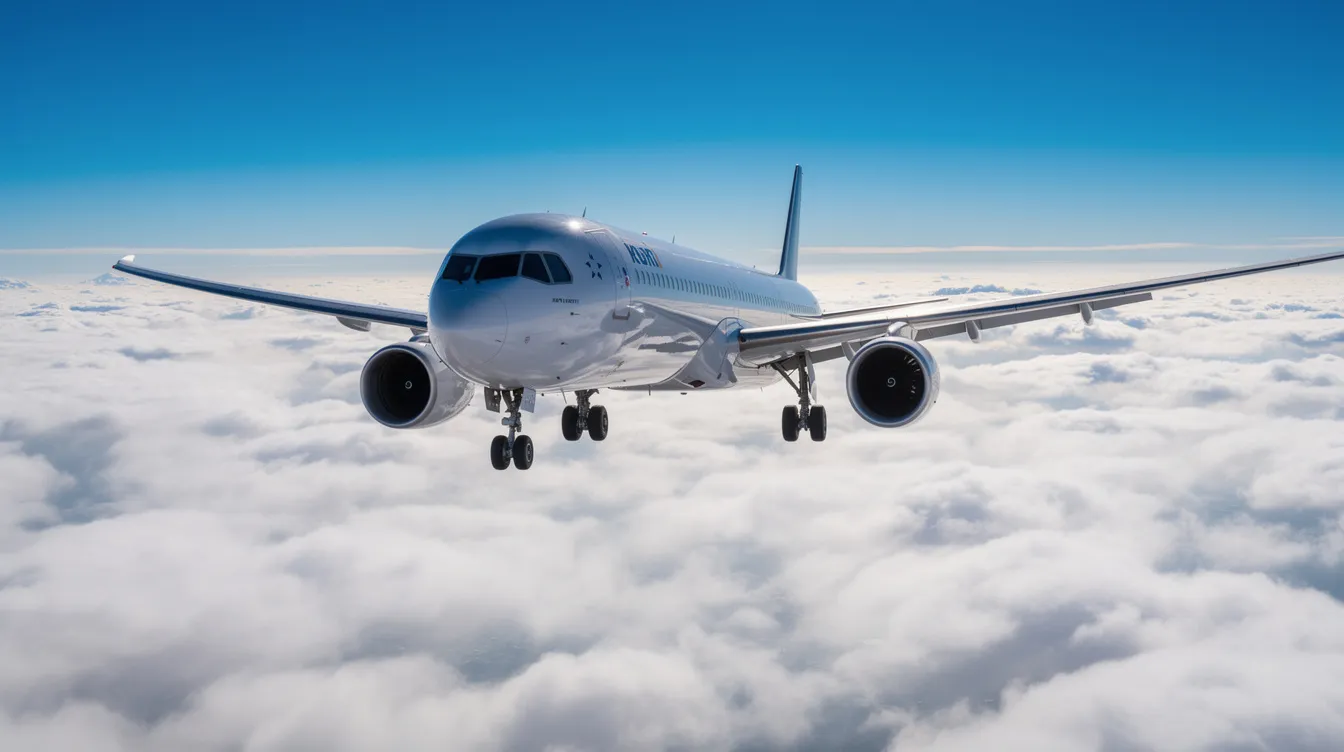
The aviation world spans many airplane brands, a term that refers to the major manufacturers of commercial, regional, and business aircraft—such as Airbus, which is the world's largest manufacturer of commercial passenger aircraft. From commercial leaders like Airbus and Boeing to regional aircraft makers such as Embraer and ATR, and business jet specialists including Bombardier, Gulfstream, Dassault Aviation, and Textron Aviation’s Cessna, these brands shape the global aviation landscape. For frequent business travelers and high-net-worth leisure flyers who value flexibility, privacy, safety, and luxury without owning an aircraft, understanding these manufacturers is more than trivia—it helps match the right aircraft to each mission. This guide looks at airplane brands across commercial, regional, and business aviation, along with aircraft categories and cabin classes, private travel safety standards, sustainable aviation efforts such as carbon offsetting, and how BlackJet’s digital booking platform and Jet Card services support more efficient private travel.
Why Airplane Brands Matter for Private Jet Travelers
Knowing the major aircraft manufacturers helps BlackJet members select the right aircraft category for each mission, whether that means a two-hour regional hop or a nonstop transatlantic crossing. The difference between commercial air travel and private jets is measured in hours, not minutes. A premium traveler flying from New York to London on a commercial airline typically spends two to three hours navigating security, check-in, and boarding before a seven-hour flight, then another 30–60 minutes clearing customs and collecting luggage. A BlackJet member can arrive at the terminal 30 minutes before departure and land at a less congested airport, cutting total door-to-door time dramatically.
BlackJet partners with vetted operators who use leading aircraft manufacturers rather than owning a fleet. This keeps access flexible, avoids capital-heavy ownership models, and allows the right aircraft to match each trip. The airplane brands that matter most fall into three groups:
Large commercial aircraft manufacturers like Airbus and Boeing
Regional aircraft builders such as Embraer and ATR
Business jet specialists, including Bombardier, Gulfstream, and Dassault Aviation
For Jet Card holders, this breadth of access is a strategic advantage that surpasses even the finest commercial first-class cabin, and understanding Jet Card membership pricing and cost structures helps align aircraft brands with your budget.
Key Takeaways: Navigating Airplane Brands for Private Jet Travel
The airplane manufacturing industry is vast, valued at over $426 billion in 2024, with Airbus and Boeing dominating commercial aircraft production.
Regional manufacturers like Embraer and ATR play a critical role in connecting smaller cities, feeding passengers into major hubs for private jet transitions.
Business jet specialists such as Bombardier, Gulfstream, and Dassault Aviation provide tailored aircraft for diverse mission profiles, from short regional hops to ultra-long-range intercontinental flights.
BlackJet partners with top-tier manufacturers to ensure safety, reliability, and access to a broad fleet, enabling members to select the right aircraft for each trip.
Sustainability is integral, with newer aircraft featuring fuel-efficient designs and BlackJet offering carbon-neutral flights through certified offset programs.
Choosing the right aircraft brand and category depends on mission specifics—distance, passenger count, luggage, and schedule—not just brand loyalty.
BlackJet’s Jet Card programs offer flexible, prepaid access to multiple airplane brands and categories without the burdens of ownership, combining luxury, safety, and environmental responsibility for frequent flyers seeking the best jet cards.
This strategic understanding empowers private jet travelers to optimize convenience, comfort, and sustainability on every flight.
The Global Landscape of Commercial Aircraft Manufacturers
The global airplane manufacturing market was valued at over $426 billion in 2024, reflecting the enormous scale of an aircraft manufacturing industry that supports airlines, defense forces, and private operators on a global scale—and shapes the private jet price landscape and access options available to travelers. A commercial aircraft corporation designs, certifies, and delivers airplanes to the world's airlines—its product range determines route networks, seat economics, and passenger comfort across every continent.
Major Commercial Aircraft Manufacturers
Airbus: The world's largest manufacturer of commercial passenger aircraft, producing the A320neo, A330neo, A350, and formerly the A380.
Boeing: A leading American manufacturer, producing the 737 MAX, 787 Dreamliner, and 777 families, as well as Boeing Business Jet variants.
Lockheed Martin: Focuses on military aircraft but contributes innovations to commercial and business aviation.
Raytheon Technologies: Supplies engines and defense systems across the aerospace industry.
Large commercial airliners are dominated by Airbus and Boeing, which together control the large commercial jet market. Boeing and Airbus account for virtually all wide-body and single-aisle deliveries to major players in the airline industry. For BlackJet clients, understanding these fleets matters because commercial flights often serve as connecting legs before transitioning to a private jet for the final, time-critical segment. Meanwhile, next-generation commercial aircraft focused on fuel efficiency and lower emissions signal a broader industry shift that sustainability-minded travelers increasingly demand.
Airbus: European Commercial Aircraft Leader
Airbus emerged in the late 1960s from multiple European companies and is now headquartered in Toulouse, France. Today, Airbus SAS is the world's largest manufacturer of commercial passenger aircraft, producing models that define modern air travel.
Key families include:
A320neo: Short and medium-haul routes (range approximately 3,500–4,000 nmi, seating 150–230 depending on variant)
A330neo: Long-haul operations with updated Rolls-Royce engines (range around 7,200–7,500 nmi)
A350: Next-generation wide-body built largely from composites (range exceeding 8,000 nmi)
A380: The largest passenger aircraft ever built (production ended; focus shifted to efficient twin-engine designs)
Airbus delivered 766 aircraft in 2024, mostly from the A320 family, and followed that with 793 deliveries in 2025—a record backlog of 8,754 aircraft extending well into the next decade. Airbus's revenues from defense contracts were only 17% in 2024, underscoring its commercial focus. These airplanes set the comfort benchmarks—cabin width, humidity control, noise reduction—that private jet travelers expect to surpass when stepping aboard business jets. Airbus also invests in lighter materials, more efficient wings, and hydrogen-powered concepts under its ZEROe program, aligning with the same sustainability ethos behind BlackJet's carbon-neutral flight commitment.
Boeing and Other U.S. Commercial & Defense Players
Boeing was founded in 1916 by William Edward Boeing and remains the primary American company rivaling Airbus in commercial production while also serving as a leading defense contractor. Boeing dominates the large commercial jet market alongside Airbus, and major military aircraft manufacturers include Boeing and the Lockheed Martin Corporation.
Boeing's core commercial lines include:
737 MAX: Short and medium-haul routes; one of the best-selling commercial jets in history
787 Dreamliner: Fuel-efficient long-haul operations (range 7,500–8,500 nmi)
777 family: High-capacity intercontinental service
Boeing Business Jet variants: Among the best private jet options for large groups up to 50 passengers
The Boeing company delivered 600 commercial aircraft in 2025, recovering from a difficult 2024 in which Boeing posted a $12.21 billion loss. Boeing's market cap fell from $248 billion in 2019 to $130 billion, reflecting quality challenges including the 737 MAX grounding and door-plug incidents that sharpened the entire industry's focus on certification and oversight. Additionally, 42% of Boeing's revenues came from U.S. government contracts in 2024, highlighting its dual role.
The Lockheed Martin Corporation, successor to the earlier Lockheed Corporation, delivered 110 F-35 Lightning II fighters in 2024 and continues to push avionics, composite materials, and flight-control innovations that filter into commercial and business aviation. Raytheon Technologies similarly contributes engines and defense systems across the aerospace industry. BlackJet's operator partners must meet FAA and EASA standards with rigorous safety certification, ensuring airworthiness scrutiny that matches or exceeds what these major commercial programs require, whether you book an entire aircraft or simply buy a seat on a private jet.
Regional Aircraft Manufacturers: Connecting Smaller Cities
Regional jets and turboprops feed passengers from secondary cities into major hubs—airports that many BlackJet members depart from before transitioning to private jets for direct routing. Regional airliners are built by manufacturers like Embraer and ATR, and their capabilities shape scheduling and connectivity for travelers worldwide, complementing the role of small private aircraft across pistons, turboprops, and light jets in point-to-point travel.
Leading Regional Aircraft Manufacturers
Embraer: Brazil-founded, global leader in regional and business jet markets; manufactures the E-Jet family and business jets like the Phenom and Praetor lines.
ATR (Avions de Transport Régional): Joint venture between Airbus and Leonardo; produces the ATR 42 and ATR 72 turboprops, widely used on short runways across Europe, Asia, and Africa.
Embraer revenues rose 21% in 2024, reflecting strong demand across both segments. The ATR 72 is one of the most common regional planes worldwide. These regional aircraft often serve as the first leg before high-net-worth travelers board a business jet through services like BlackJet's Jet Card. Many regional manufacturers also invest in next-generation propulsion and efficiency improvements, aligning with BlackJet's commitment to lower-emission connections and carbon offsets and supporting more affordable, entry-level private jet options for cost-conscious travelers.
Rising Aerospace Powers: HAL, KAI, and COMAC
Beyond established Western manufacturers, several emerging aerospace companies are expanding the aircraft industry on a global scale, particularly in Asia.
Notable Emerging Manufacturers
Hindustan Aeronautics Limited (HAL): India's flagship aerospace and defense firm; produces the Tejas lightweight fighter and military transport aircraft.
Korea Aerospace Industries (KAI): Developed the KF-21 Boramae fighter and T-50 trainer; supplies components for commercial aircraft programs.
COMAC: Chinese commercial aircraft manufacturer; C919 narrow-body entered service in 2023, competing with the A320neo and 737 MAX.
While these rising powers could reshape airline fleet availability in the future, BlackJet currently focuses on business jets from proven Western manufacturers with established service networks for member flights, distinct from the largest global private jet companies like NetJets and Flexjet.
Business Jet Specialists: The Brands Behind Private Travel
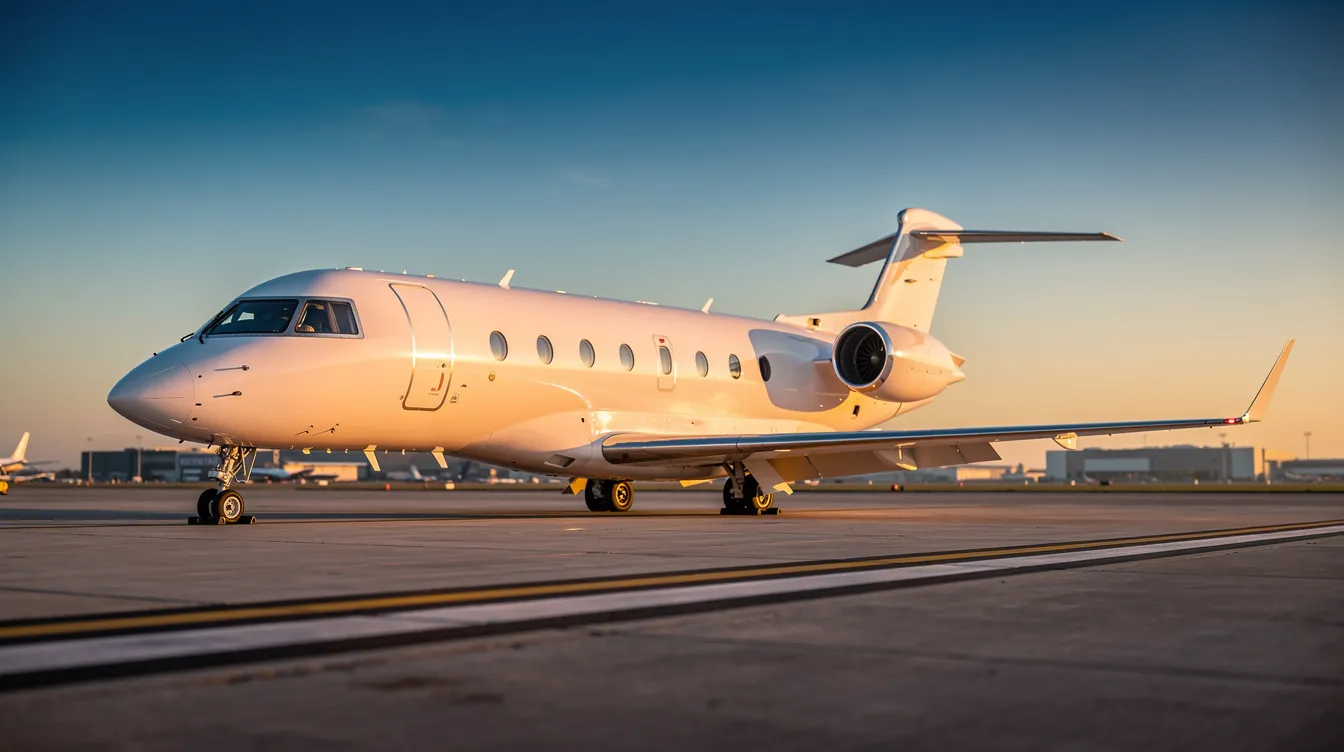
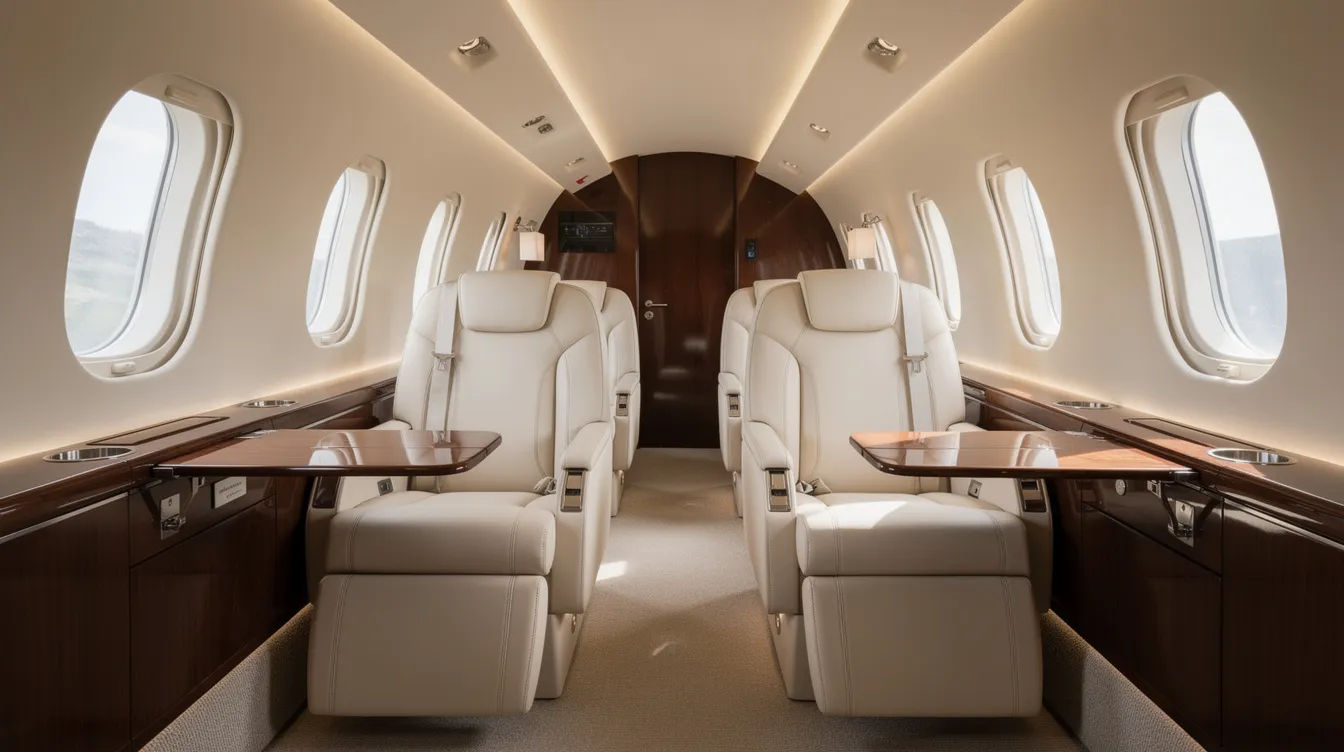
Business jets differ fundamentally from commercial aircraft. Custom cabin configurations, access to thousands of smaller airports, and on-demand scheduling give private jets a flexibility that scheduled airlines simply cannot match. The business aviation sector includes manufacturers like Bombardier and Gulfstream Aerospace, alongside Dassault Aviation and Textron Aviation—many of the same marques featured among the top 10 private jets for luxury and performance.
Categories of Private Jets
Very Light Jets: Short hops, typically under 1,200 nmi
Light Jets: Regional missions, up to 1,500 nmi
Midsize Jets: 1,500–3,000 nmi, more cabin space
Super-Midsize Jets: Coast-to-coast flights, stand-up cabins, full galleys
Large Cabin Jets: Ultra-long-range, intercontinental flights
VIP Airliners: Groups up to 50 passengers
For BlackJet Jet Card members, the choice between speed, cabin space, baggage capacity, and transoceanic range depends on the mission—not brand loyalty. BlackJet's model is aircraft-agnostic but standards-driven, partnering only with safety-rated operators who fly proven business jet brands.
Bombardier
Bombardier specializes in business aviation and high-performance aircraft. Having acquired Canadair and Learjet in the 1980s and 1990s, Bombardier now focuses exclusively on its Challenger and Global series.
Global 7500: Approximately 7,700 nmi of range with a four-zone cabin
Global 8000: Entering service in December 2025,it extends range to 8,000 nmi at speeds up to Mach 0.95
Challenger series: Popular for midsize and super-midsize missions
Bombardier delivered 146 aircraft in 2024, focusing on business jets, and the Global series remains the benchmark for ultra-long-range comfort.
Gulfstream Aerospace
Gulfstream Aerospace focuses on elite, large-cabin business jets.
G700: Certified in 2024, delivers a range of 7,750 nmi with up to five living areas, a cabin altitude of just 2,840 feet, and seating for up to 19 passengers
G500 and G600: Portfolio for slightly shorter missions with the same refined cabin pressure and humidity controls
Dassault Aviation
Dassault Aviation's Falcon line draws on decades of military aircraft heritage in flight control and safety systems.
Falcon 8X: Range approximately 6,450 nmi
Falcon 10X: In development, approximately 7,500 nmi
BlackJet members typically encounter these brands when booking intercontinental flights, and advisors can suggest the optimal fit based on passenger count and route through the business jet services platform.
Cessna Aircraft Company, Textron Aviation & Other Business Jet Brands
Textron Inc owns both Cessna and Beechcraft under its Textron Aviation umbrella. Textron Aviation is a major player in general aviation, and general aviation includes pilot training aircraft and personal airplanes from these storied brands. The historical Beech Aircraft Corporation—maker of the iconic Beechcraft Bonanza—merged into this family, creating one of the broadest product lines in the aircraft industry.
Cessna Citation Series
The Cessna Citation series is recognized in business aviation for spanning light through super-midsize categories, making it a core platform when evaluating the best small private aircraft for specific missions. Models include:
Citation M2 Gen3
CJ3+
Latitude
Longitude
These serve core BlackJet missions such as regional business trips under three to four hours.
Beechcraft and Other Notable Brands
Beechcraft King Air turboprops: Versatile for shorter runways and regional hops where jet speed is less critical
Heavy jets and VIP airliners: Step in as the best private jets for 20 passengers
Embraer's Phenom and Praetor lines
Pilatus PC-24
Hawker aircraft models: Still in active service
Piper Aircraft: Produced over 144,000 planes since 1927
Cirrus Design Corporation (Cirrus Aircraft): Delivered over 17,000 aircraft since inception, many single-engine piston aircraft used for training and personal flight
BlackJet works across multiple cabin classes and brands, using a digital platform to match member trips with the optimal airframe profile in real time—and can also support clients exploring premium private jets for sale in the UK when ownership becomes attractive.
How BlackJet Curates Aircraft by Brand, Safety, and Category
While travelers may recognize brand names first, BlackJet's selection process begins with safety and certification. Every operator must:
Hold current certificates
Pass third-party audits such as Wyvern Wingman ratings
Meet strict maintenance standards
Demonstrate pilot experience thresholds—regardless of aircraft manufacturer
Manufacturer reputations for reliability factor into BlackJet's preferred network. Brands like Gulfstream, Bombardier, and Cessna maintain global service networks with strong parts availability and proven fleet performance across decades of production. BlackJet's technology platform surfaces suitable options by aircraft category, range, and member preferences within seconds.
Example Aircraft Selection Procedure:
Member requests a flight (e.g., Los Angeles to New York with six passengers)
Platform surfaces options (e.g., super-midsize Cessna Citation Longitude, large-cabin Bombardier Challenger)
Member chooses based on timing, cabin preferences, and luggage requirements
BlackJet advisors provide recommendations based on mission needs
Sustainability, Next Generation Aircraft, and Carbon-Neutral Flights
Technological advancements across both commercial and business jet manufacturing are driving lower emissions and quieter operations, opening the door to more budget-friendly private aircraft options that still meet safety and comfort expectations. Newer business jets from Dassault, Gulfstream, and Bombardier feature fuel-efficient aerodynamics, advanced composite airframes, and compatibility with sustainable aviation fuel.
BlackJet’s Carbon-Neutral Commitment:
Flight emissions are calculated based on distance, aircraft fuel burn, and passenger weight
Offsets purchased through certified programs at no additional cost to the member
Preference for modern, efficient aircraft types
Sustainability choices include SAF, offsets, and modern helicopters and jets
These sustainability choices allow private travelers to balance performance with environmental responsibility.
Choosing the Right Aircraft Brand and Category for Your Mission
Mission profile—distance, passenger count, luggage, and schedule—should drive aircraft selection more than brand loyalty.
Aircraft Category Comparison Table:
Category | Typical Range (nmi) | Passenger Capacity | Best For |
|---|
Very Light Jet | <1,200 | 4–6 | Short hops, small groups |
Light Jet | <1,500 | 6–8 | Regional flights |
Midsize Jet | 1,500–3,000 | 7–9 | Medium-range, more cabin space |
Super-Midsize Jet | 3,000–3,500 | 8–10 | Coast-to-coast, stand-up cabins |
Large Cabin Jet | 4,000–7,500+ | 10–19 | Intercontinental, luxury, long range |
VIP Airliner | Up to 6,000+ | 20–50 | Large groups, special events |
Example Missions:
Paris-to-Geneva (250 nmi): Light jet
New York-to-Dubai (6,800 nmi): Ultra-long-range Gulfstream G700 or Bombardier Global 7500
BlackJet advisors decode the alphabet soup—G650, Global 8000, Citation Longitude—into clear recommendations based on your priorities. With a Jet Card, you access multiple brands and categories without the commitment of purchasing a single aircraft, and heavy users can compare that model against a 100-hour Jet Card cost structure to plan long-term flying.
FAQs: Airplane Brands and Private Jet Access
Which airplane brands does BlackJet most commonly use?
BlackJet's operator network features aircraft from Gulfstream, Bombardier, Dassault Aviation, Cessna, and Embraer, spanning midsize through ultra-long-range categories to cover virtually any mission profile.
Are business jets safer than commercial aircraft?
Both operate under stringent FAA and EASA oversight. BlackJet adds additional layers through third-party audits, Part 135 compliance, and proprietary operator vetting to ensure every flight meets the highest safety standards.
How old are typical private jets in service?
Many aircraft in BlackJet's network are recent models—the G700 was certified in 2024, and the Global 8000 entered service in late 2025. Preference is given to newer, more efficient jets.
What aircraft categories are available with a Jet Card?
Members can access very light, light, midsize, super-midsize, large cabin, and ultra-long-range jets depending on their private jet size needs, with Jet Card pricing structures varying by category and usage.
How does BlackJet verify aircraft and operator safety?
Through FAA/EASA certification, Wyvern and ARGUS ratings, maintenance record reviews, pilot experience thresholds, and ongoing compliance monitoring.
Discover Premium Jet Access with BlackJet
Understanding airplane brands equips you with knowledge, but having a team that translates that knowledge into seamless travel is what makes the difference. BlackJet combines safety certification across the largest aircraft manufacturers, access to top business jet brands, carbon-neutral flights, and 24/7 digital booking with real-time support.
Explore the 25+ Hour Jet Card program and 50-hour Jet Card programs as a flexible alternative to owning or fractionally sharing a single branded aircraft. Discover how BlackJet can tailor aircraft brands and categories to your travel style—putting the world's leading airplanes at your service through one streamlined, membership-based private aviation solution.


 Sign up with google
 Sign up with Apple