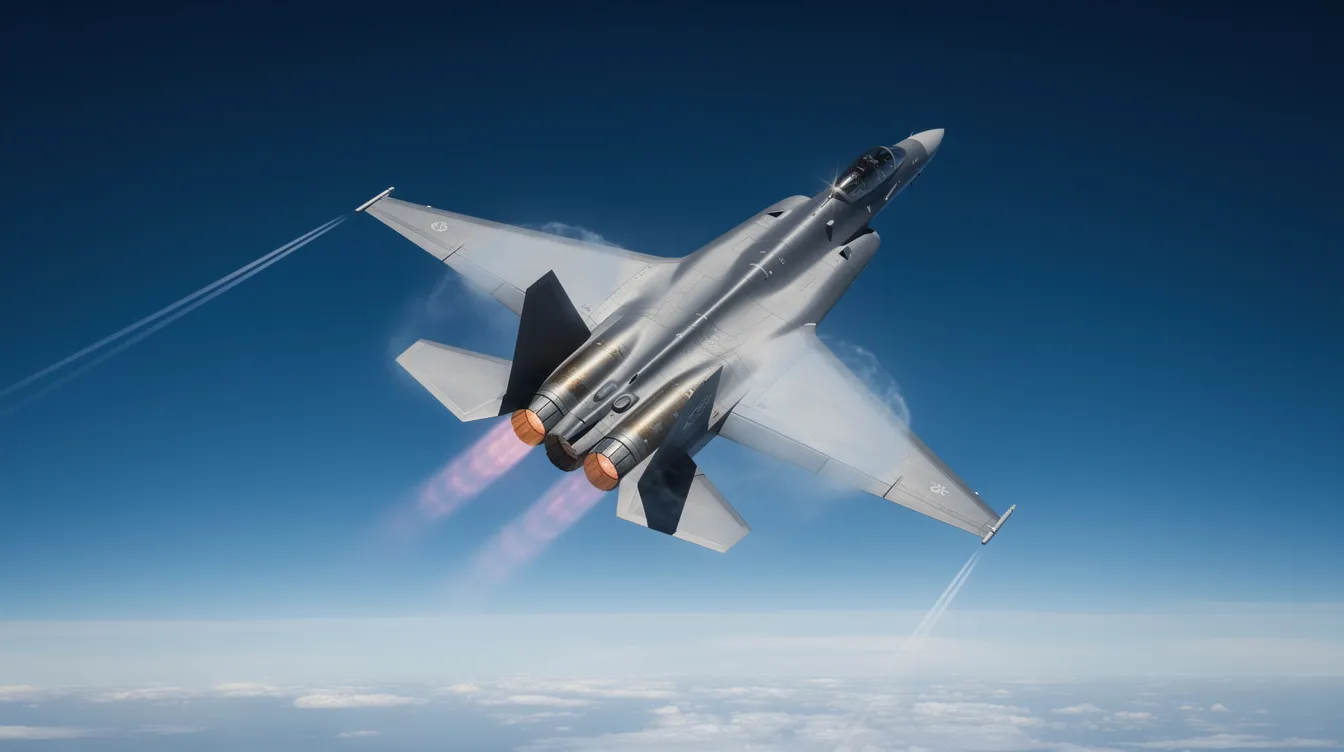
Speed defines aviation. From the raw power of a fighter jet screaming past Mach 2 to the refined cruise of a long-range private jet crossing continents at Mach 0.90, jet speed varies enormously depending on design, mission, and the physics of flight. This guide breaks down exactly how fast different categories of aircraft fly, what limits them, and why the smartest travelers care as much about logistics as they do about Mach numbers.
Quick Answer: How Fast Can Jets Go in the Real World?
Military fighter jets often exceed Mach 2, but those figures reflect different aircraft’s maximum speeds rather than their usual operating speeds: the F-15 Eagle reaches Mach 2.5 (1,875 mph) in clean configuration, while the fastest military jets in history—like the SR-71 Blackbird—have touched Mach 3.2 (2,193 mph). Modern military jets cruise around 600–700 mph during typical missions. Commercial airliners settle into a more measured Mach 0.74 to Mach 0.85, translating to roughly 550–600 mph at cruise altitude. Meanwhile, high-performance private jets can reach Mach 0.90–0.93, with typical private jets cruising between 400–600 mph depending on category.
Jet speeds vary significantly based on their design and mission. The fastest fighter jet in active US Air Force service can sprint above 1,800 mph, but an air force pilot on a routine patrol will fly far slower. Commercial aircraft prioritize fuel economy and passenger comfort. And modern private jets split the difference-slightly slower than a fighter jet in pure speed, but dramatically faster door-to-door than any commercial airliner.
That door-to-door advantage matters more than most speed charts suggest. BlackJet Jet Card members routinely save two to four hours per trip by bypassing crowded terminals, skipping security lines, and accessing thousands of smaller airports closer to final destinations. Even at similar cruise speeds to airlines, private jet travel compresses total journey time-while every flight is carbon-neutral at no extra cost to the member, and travelers can reference a detailed private jet price list with costs and access options to align budget with speed and convenience.
Understanding Jet Speed: Knots, MPH, KM/H, and Mach
Aviation uses multiple speed units because different phases of flight and different audiences need different references. Pilots and air traffic control communicate in knots, engineers often work in Mach, and passengers think in mph or km/h. Once aircraft approach the speed of sound, the Mach number becomes the essential metric because it describes how the aircraft interacts with the air around it.
One knot equals 1.15078 mph, or exactly 1.852 km/h. The speed of sound is approximately 343 m/s at sea level under standard conditions—about 761 mph. But the speed of sound changes with temperature and altitude: at 36,000 feet, where the air is much colder, Mach 1 drops to roughly 660–680 mph.
There are also important distinctions between:
Indicated airspeed: What the cockpit instruments show.
True airspeed: Actual movement through the air mass, corrected for altitude and temperature.
Ground speed: True airspeed plus or minus wind. Strong jet stream tailwinds can boost ground speed beyond 700 mph on transatlantic routes, even when the aircraft itself is cruising at a steady Mach 0.85.
Unit | Definition | Primary Use |
|---|
Knots (kt) | Nautical miles per hour | ATC, cockpit instruments |
MPH | Statute miles per hour | Public communication |
KM/H | Kilometers per hour | International reporting |
Mach | Ratio to local speed of sound | High-altitude cruise, military ops |
Breaking the Sound Barrier: What Mach 1 Really Means
In October 1947, Chuck Yeager flew the Bell X-1 past Mach 1 over the Mojave Desert. That moment proved the sound barrier was a physics challenge, not an absolute wall. It remains a psychological and engineering milestone in aviation history, marking the point where aerodynamics fundamentally changed.
Between Mach 0.8 and Mach1.2, the transonic regime aerodynamic drag increases dramatically as an aircraft approaches Mach 1. Shock waves form on the wings and fuselage, and these shock waves can dramatically increase wave drag at high speeds. Fuel consumption increases dramatically near Mach 1 as engines fight escalating resistance. Higher speeds require specialized aerodynamic designs to manage shock waves, including swept wings, area-ruled fuselages, and materials that can tolerate significant heating.
Supersonic flight also creates sonic booms—pressure waves that reach the ground as thunderous noise. The FAA has restricted supersonic flight over land in the United States since the early 1970s, and most other countries follow similar rules. Supersonic jets typically operate at Mach 1 to Mach 3, but only over oceans or in military airspace. Current private jet fleets, including those available through BlackJet, are optimized for high subsonic cruise (Mach 0.80–0.90), balancing speed with comfort, fuel efficiency, and sustainability.
How Fast Do Fighter Jets and Military Aircraft Fly?
Typical Cruise Speeds
Modern fighter jets fielded by air forces around the world can exceed Mach 2 in sprint configuration, but they rarely fly at maximum speed during real air combat. In practice, jet speed on a combat sortie is dictated by tactics, fuel reserves, and coordination with other aircraft-not by the aircraft's theoretical ceiling.
The typical cruise speed for a military aircraft on a transit mission sits between Mach 0.9 and 1.2, roughly 600–800 mph.
Sprint Speeds and Afterburners
Sprint speeds with afterburners engaged can reach speeds of Mach 1.6 to Mach 2.5 at high altitudes. Military jets can exceed Mach 2, reaching 1,500 mph or more depending on type and altitude.
Examples of Modern Fighter Jets
Concrete examples illustrate how different designs prioritize different capabilities:
F-16 Fighting Falcon: Achieves roughly Mach 2.0 in a clean configuration.
F/A-18 Hornet: The US Navy's workhorse, tops out around Mach 1.8.
Eurofighter Typhoon and Dassault Rafale: Reach Mach 1.8–1.9 depending on payload.
F-22 Raptor: Can reach Mach 2.25 (1,500 mph) and features stealth technology.
F-4 Phantom II: Achieved speeds of Mach 2.23, showing that pure speed has been a US military priority for decades.
In real missions, air force and military pilots often fly closer to Mach 0.8–1.1 to conserve fuel, protect airframes, and coordinate with tanker support and AWACS platforms during modern air combat.
The F-15 Eagle: How Fast Can the Air Force's Iconic Fighter Jet Go?
The F-15 Eagle is the benchmark air superiority fighter. First flown in 1972 and entering US Air Force service in 1976, it remains in frontline use today across multiple variants-a testament to its design excellence.
In a clean test configuration, the F-15 Eagle has a top speed of Mach 2.5 (1,875 mph), making it the fastest fighter jet currently in broad active service with the US Air Force. Its thrust-to-weight ratio exceeds 1:1, enabling near-vertical climbs and blistering acceleration from subsonic to supersonic speeds. The aircraft's undefeated air-to-air combat record-104 victories with zero losses-underscores that its design balances raw speed with lethality and survivability.
Operationally, F-15s conduct actual air combat and intercept missions closer to Mach 0.9–1.2. External fuel tanks, weapons, and targeting pods increase drag and weight, cutting maximum velocity by 15–25% from the published spec. The aircraft's advanced radar and fire control systems allow it to engage enemy fighters at beyond-visual range, reducing the need to close to maximum thrust.
The F-15EX, the newest variant, retains the airframe's theoretical speed ceiling near Mach 2.5 while adding modern fly-by-wire controls, a digital cockpit, and next-generation sensors. Interestingly, South Korea retired its older F-5 fleet and has invested in advanced fighters, while continuing to operate F-15K variants-further proof of the Eagle's enduring relevance as an air superiority platform.
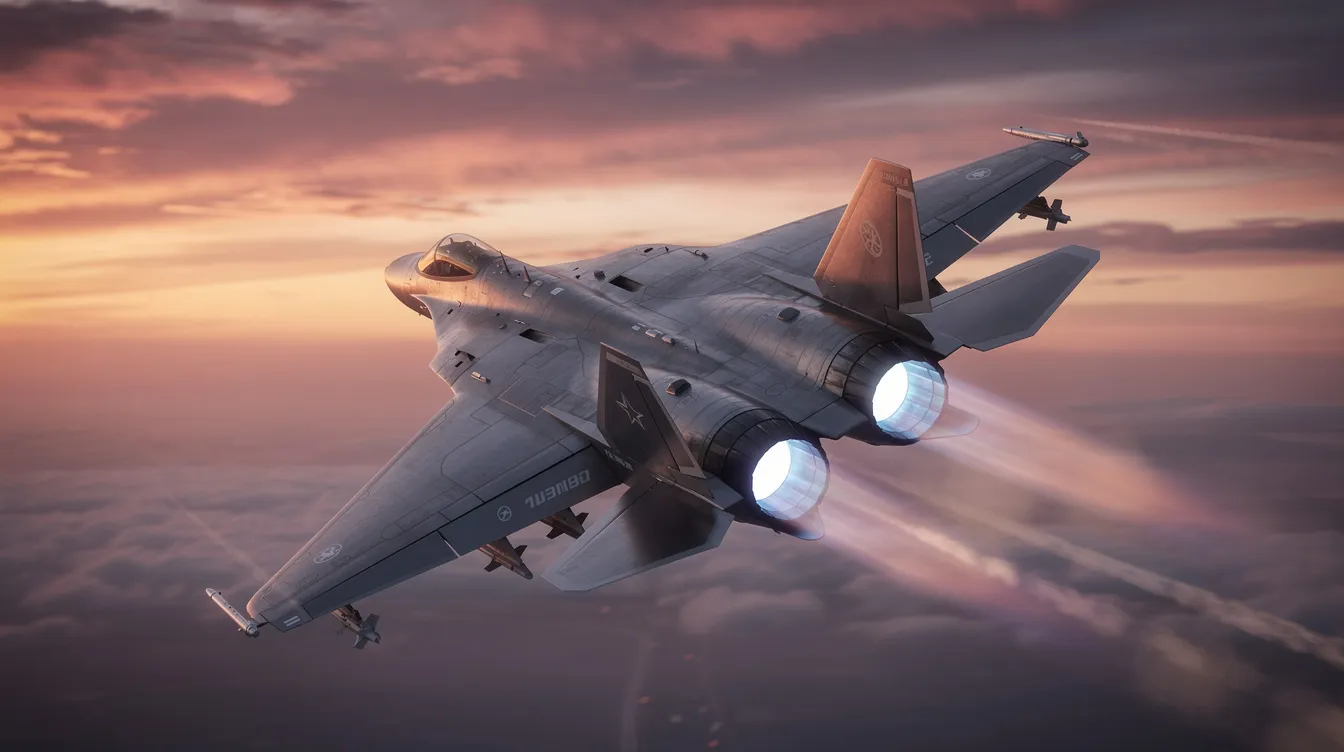
Fastest Military Jets in History (Records and Reality)
There is a crucial difference between experimental aircraft built to push boundaries and operational military jets designed to fly combat missions repeatedly.
The North American X-15, a rocket-powered experimental aircraft, reached Mach 6.70 (4,520 mph) in 1967, climbing above 100,000 feet. It was not a conventional jet aircraft but a research vehicle launched from a B-52 mothership, and its records belong in a different category than anything with a turbine engine.
The SR-71 Blackbird remains the fastest aircraft ever to enter sustained operational service. This reconnaissance aircraft cruised at Mach 3.2 and set its official speed record of 2,193 mph on July 28, 1976, at approximately 85,000 feet. Built largely from titanium to withstand extreme aerodynamic heating, the SR-71 was the only aircraft in service that could outrun surface-to-air missiles and enemy fighters simply by accelerating. It was designed during the Cold War to penetrate Soviet Union airspace and gather intelligence at altitudes and speeds no air defense systems could reach.
On the Soviet side, the MiG-25 Foxbat achieved speeds of Mach 2.83 (1,900 mph) in operational use, though it was theoretically capable of more. The Soviet Union limited its pilots to Mach 2.83 to prevent engine destruction and cockpit glass overheating-a reminder that maximum velocity on paper and sustainable performance in practice are very different things. The MiG-31, its successor, maintained similar sprint capability but was equally constrained by thermal limits.
Top Speed vs Real Air Combat: Why Fighter Jets Don't Always Fly Flat-Out
Picture an aerial combat scenario: a pair of jet fighters scramble to intercept an unknown aircraft approaching sovereign airspace. Despite having engines capable of maximum thrust well above Mach 2, the military pilots hold their speed around Mach 0.9. Why? Sustained supersonic flight at full afterburner would drain their fuel in minutes, leaving them unable to complete the mission or return to base without aerial refueling.
Fighter jets use afterburners for temporary thrust bursts, not sustained cruise. Afterburners provide 50–100% thrust increases for supersonic speeds, but fuel burn in afterburner can be three to five times the normal rate. Military jets often operate at subsonic speeds during missions to preserve endurance, reduce thermal stress on airframes, and maintain the maneuver margin needed for actual air combat.
Tactically, modern air combat emphasizes stealth technology, networked targeting, and beyond-visual-range engagement far more than raw speed. Air-to-air missiles travel at speeds of Mach 3–4, which is significantly faster than the maximum speeds of any fighter jet. The era when aerial combat depended on one aircraft trying to fly faster than another has largely passed. Today, advanced radar, electronic warfare, and sensor fusion determine outcomes—speed is a tool used in short bursts to break contact, close a gap, or reposition, not a constant state.
How Fast Do Commercial Airliners and Commercial Aircraft Fly?
Narrowbody Jet Speeds
Commercial airliners occupy a fundamentally different design space than military aircraft. They are built for fuel efficiency, safety, and passenger comfort over thousands of miles-not for supersonic speeds or rapid acceleration. Commercial jets prioritize fuel efficiency over maximum speed, and commercial airliners are designed for smooth flight rather than the violent accelerations a fighter pilot endures.
Narrowbody workhorses like the Boeing 737 MAX and Airbus A320neo cruise around Mach 0.78–0.80 (roughly 520–550 mph).
Widebody Jet Speeds
Widebody commercial aircraft—the Boeing 777, 787 Dreamliner, and Airbus A350—typically settle into Mach 0.84–0.85, with commercial jets typically cruising at 550–600 mph at optimal altitude. Some models have certified maximum Mach numbers slightly higher: the 787 can reach about Mach 0.90, the 747-8 around Mach 0.92, while in private aviation, different private jet sizes dictate typical cruise speeds, cabin space, and mission profiles.
Supersonic Commercial Flight (Concorde)
The historic Concorde proved that supersonic flight at Mach 2.04 (approximately 1,350 mph) was technically feasible for commercial service. It operated from 1976 to 2003 before noise regulations, fuel costs, and a limited route network forced its retirement. Airlines today often slow cruise by a fraction of a Mach point to save 5–10% on fuel burn, extending engine life and reducing emissions-a trade-off invisible to passengers but meaningful for sustainability and fuel economy.
How Fast Can Private Jets Fly? (And How They Compare to Fighter and Commercial Jets)
Typical Private Jet Cruise Speeds
Private jets sit closer to commercial airliners in raw speed but can rival the cruise Mach numbers of the fastest airliners-and sometimes exceed them. Modern jets typically cruise at Mach 0.85–0.90 for efficiency at the top end of private aviation, while typical private jets cruise between 400–600 mph depending on category and mission.
High-Performance Private Jets
The fastest private jets push even higher. High-performance private jets can reach Mach 0.90–0.93, and the Gulfstream G650 cruises at Mach 0.85–0.90, with a certified maximum operating Mach of about 0.925. Private jets typically cruise at Mach 0.85–0.90, around 650–700 mph at the large-cabin end of the spectrum.
Door-to-Door Time Advantage
These aircraft are slightly slower than a fighter jet in absolute terms—no business jet will break the sound barrier today. But that comparison misses the point. Even though private jets don't match the raw power of a Mach 2+ interceptor, BlackJet flights routinely match or exceed airline door-to-door times through better routing, airport access to thousands of smaller fields, and elimination of the ground delays that make commercial travel so time-consuming.
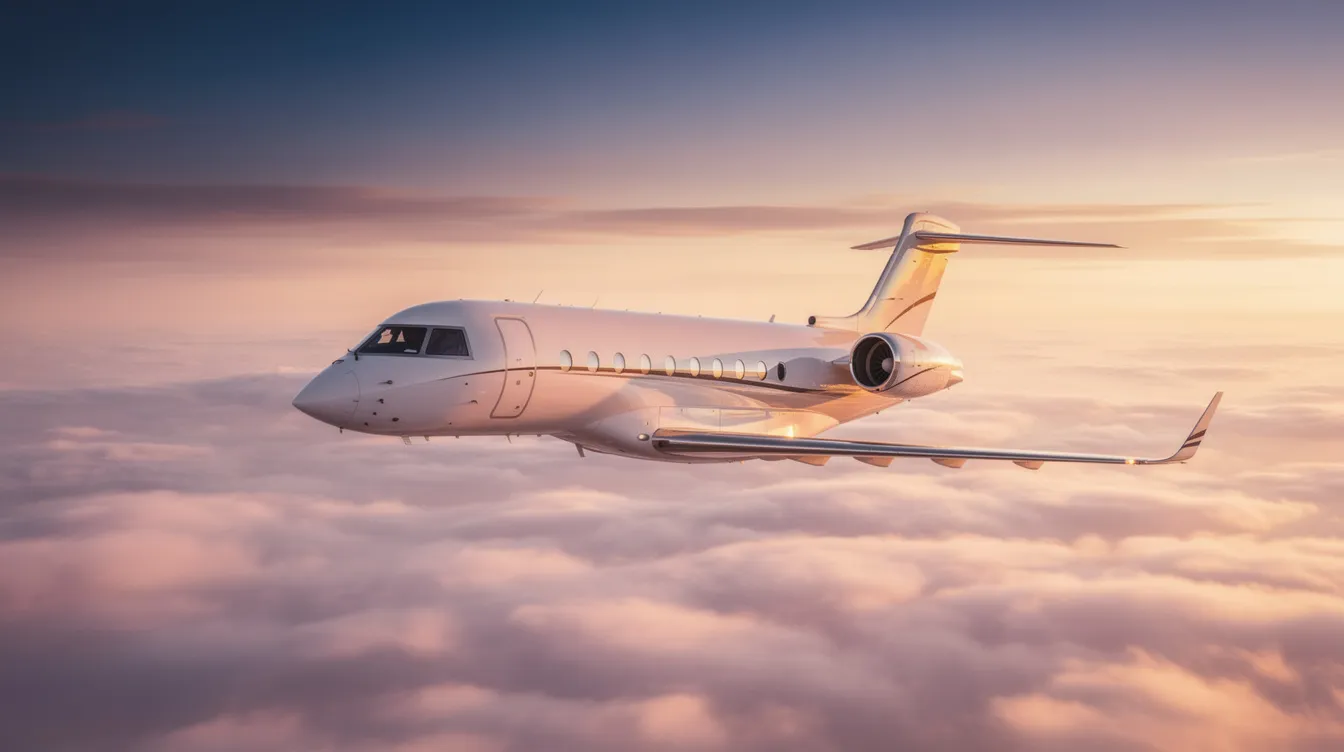
Speed by Private Jet Category: From Light Jets to Long-Range Flagships
BlackJet Jet Card members select from multiple aircraft categories depending on route distance, passenger count, and desired cruise profile, including spacious 16-seat private jet options for larger groups and other private jets suitable for around 15 passengers. Matching the right aircraft to the mission is how travelers fly faster in practice, and understanding the different types of private jets for every traveler helps align speed, range, and cabin comfort with each itinerary.
Private Jet Categories and Typical Speeds:
Very light jets and light jets (e.g., Embraer Phenom 300, Cessna Citation CJ3): cruise around 380–430 knots (437–495 mph). Ideal for one-to-three-hour regional hops: Los Angeles to Las Vegas, London to Geneva, or New York to Nantucket.
Midsize and super-midsize jets (e.g., Citation Latitude, Challenger 350) cruise at 420–470 knots (483–541 mph), covering routes like New York to Miami, Dallas to Chicago, or Paris to Athens with ranges of 2,000–3,000 nautical miles.
Long-range private jets (e.g., Gulfstream G650ER, Bombardier Global 7500, Dassault Falcon 8X): cruise at Mach 0.85–0.90 (roughly 560–610 mph) with ranges of 6,000–7,700+ nautical miles, enabling nonstop transatlantic routes—NewYork to Tokyo, London to Los Angeles—at cruise altitude above most airline traffic.
Factors That Decide How Fast a Jet Can Fly on Any Given Day
Every real flight is shaped by physics, regulations, and mission planning. The main factors include:
Altitude and Drag
Altitude: Thinner air at high altitudes reduces drag and allows faster speeds. Altitude reduces drag by roughly 50% above 30,000 feet compared to sea level, which is why both military and civilian jets climb as high as possible. Some private jets operate at 45,000–51,000 feet-well above most other aircraft-for smoother, faster cruise at optimal altitude, enabled by advanced types of jet engines that balance thrust, efficiency, and high-altitude performance.
Weight and Step Climbs
Weight: Heavier fuel loads increase drag and reduce speed. As fuel burns off on a long flight, the aircraft can perform "step climbs" to progressively higher altitudes, gradually increasing true airspeed. The engine's thrust must overcome aerodynamic drag for flight, and powerful jet engines are necessary to achieve high speeds against drag, but the balance between thrust and drag shifts constantly with weight and altitude, especially on the newest generation of high-speed private jets.
Engine Technology
Weather Effects
Safety, Regulation, and Sustainability: Why Jets Don't Always Fly as Fast as They Can
Structural Speed Limits
Speed is always balanced against safety margins, airframe limits, and environmental impact in both military and civilian aviation.
Every aircraft has published structural limits: Vne (never-exceed speed) and Mmo (maximum operating Mach number). Crews stay well below these thresholds to prevent structural damage, excessive vibration, and accelerated wear.
Regulatory Restrictions
In most jurisdictions, aircraft are also restricted to 250 knots below 10,000 feet, and supersonic flight remains banned over land in most countries.
Sustainability and Fuel Efficiency
The sustainability argument for measured cruise speeds is compelling. Slightly reducing cruise Mach from 0.85 to 0.82 can cut fuel burn by 10–15%, lower carbon emissions, and extend engine life—gains that compound across thousands of flights per year. BlackJet is committed to carbon-neutral flights through verified offset programs and the growing use of sustainable aviation fuel, ensuring that speed and environmental responsibility coexist.
BlackJet works exclusively with operators whose aircraft and crews meet rigorous safety certifications, using technology to plan efficient flight profiles that respect both structural limits and environmental responsibilities while delivering the comforts and benefits of premium private jet cards and Jet Card programs.
Why Private Jet Travel Often Feels Faster Than Flying on Commercial Airliners
Door-to-Door Time Comparison
Consider a concrete example. A BlackJet member flying from New York Teterboro to Miami Opa-locka departs the private terminal roughly 20 minutes before wheels-up. Total door-to-door time: approximately three hours. A commercial traveler on the same route—JFK to Miami International—faces a recommended two-hour early arrival, security lines, boarding queues, taxiing, and baggage claim. Total door-to-door: five to six hours. The cruise speed difference between the two flights is negligible; the time savings come entirely from logistics, and even travelers buying just a single seat on a private jet via shared or semi-private options can capture much of this advantage.
Airport Access Advantage
BlackJet customers benefit from airport access to over 5,000 public-use airports in the United States alone, compared to roughly 500 airports served by major airlines. That means landing closer to final destinations, avoiding congested hubs, and eliminating connecting flights with tailored options including private jet charters in Karachi and other key global cities.
In-Flight Productivity
In-flight productivity adds another dimension that speed charts don't capture. A CEO reviewing confidential documents, an investor conducting a board call, or a family resting in a private cabin—these are hours reclaimed, not just hours traveled. Private jet travel transforms transit time into working or recovery time, which is why speed advantages extend far beyond the cockpit instruments.
Future of Jet Speed: Supersonic, Hypersonic, and What It Means for Private Flyers
The aviation industry is exploring speed frontiers that would have seemed impractical a decade ago. Hypersonic military programs—Mach 5 to Mach 10 concepts under DARPA and NASA—are active but remain in the prototype or weapons stage, far from carrying passengers.
Closer to commercial reality are next-generation supersonic projects targeting Mach 1.7 for business-class-style service. NASA's X-59 low-boom demonstrator aims to prove that supersonic flight can be quiet enough for overland routes, potentially unlocking regulatory approval. But significant environmental hurdles remain: supersonic aircraft burn multiple times more fuel per seat mile than current subsonic designs, making carbon footprint and noise critical issues for certification.
BlackJet will integrate certified, efficient high-speed aircraft into its network only when they meet strict safety and sustainability standards. Until then, the fastest jets available through BlackJet's partner fleet—cruising at Mach 0.85–0.925—remain the most practical way to combine speed, comfort, and environmental responsibility in private aviation.
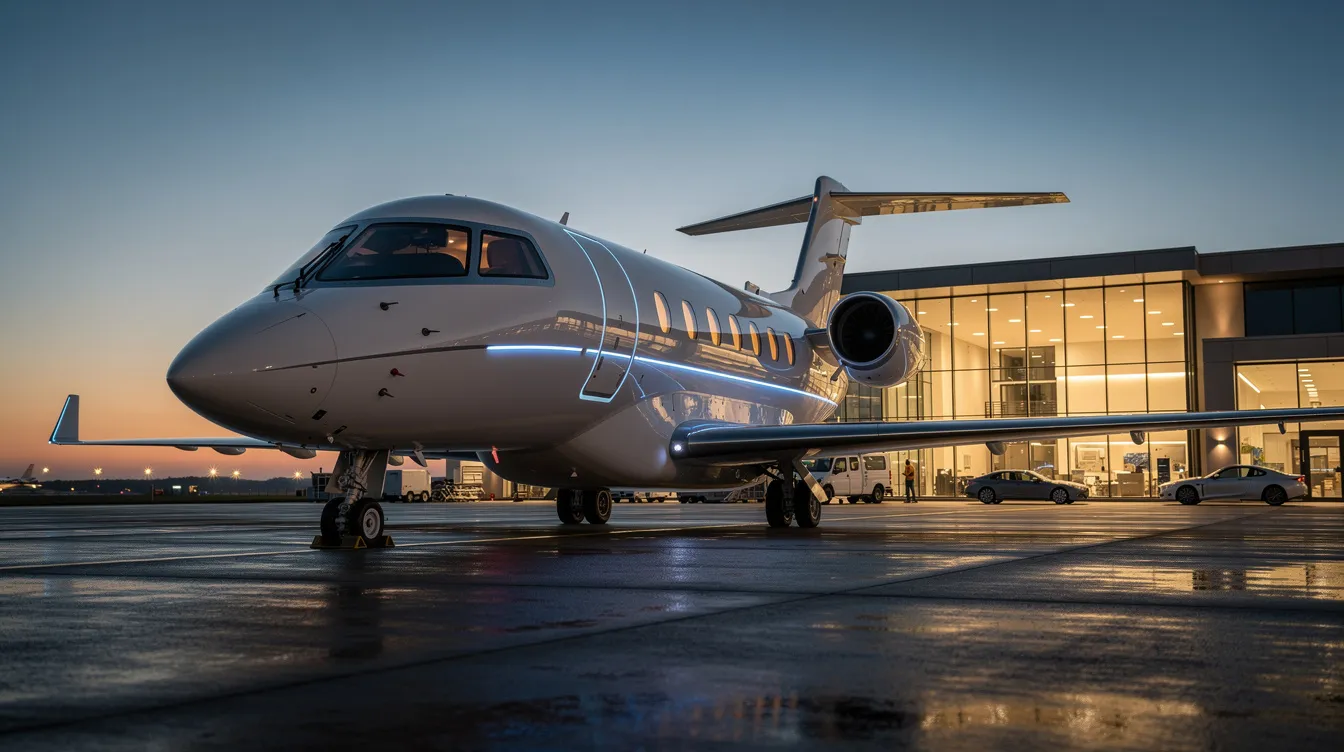
How BlackJet Turns Jet Speed into a Strategic Advantage
For CEOs, founders, investors, and families who need to connect multiple cities efficiently, speed is a strategic resource—not a thrill metric. The question is never simply how fast a jet can fly, but how quickly and comfortably you reach your destination and what you accomplish along the way.
BlackJet's Jet Card model (available in 25-hour and 50-hour programs) gives members prepaid access to multiple aircraft categories, with flexible options like the BlackJet 25+ Hour Jet Card that mirror many of the features outlined in this complete guide to 25-hour jet cards, their features, and costs. For frequent flyers comparing providers, understanding the best jet cards for frequent flyers, their benefits,s and costs clarifies how guaranteed availability and transparent pricing translate into real-world time savings. That means choosing the optimal balance of speed, range, and cabin class for each trip-a light jet for a quick regional hop, or a large-cabin flagship for a nonstop transatlantic crossing.
BlackJet's digital booking tools and 24/7 real-time flight support optimize departure times, airport selection, and routings to minimize total travel time. Every flight operates under rigorous safety certification standards, every journey is carbon-neutral, and pricing is transparent from the moment you book.
Discover how BlackJet can reshape the way you travel. Explore Jet Card programs or speak with an advisor about tailoring private jet access to your specific travel patterns and time-critical missions, especially if you're comparing overall jet card costs and membership structures and want a deeper understanding of jet card pricing, costs, and benefits.
FAQ: Jet Speed, Fighter Jets, and Private Jet Travel
What is the fastest fighter jet ever built, and how fast did it fly?
If we include experimental aircraft, the North American X-15 reached Mach 6.70 (4,520 mph) in 1967, though it was rocket-powered.
Among air-breathing jet aircraft, the SR-71 Blackbird holds the record at Mach 3.2 (2,193 mph), set on July 28, 1976. It remains the fastest jet aircraft to have served operationally.
How fast do modern fighter jets like the F-15 Eagle and F-15EX really fly on missions?
The F-15 Eagle has a top speed of Mach 2.5 (1,875 mph) in clean configuration, and the F-15EX retains that theoretical ceiling.
In practice, most fighter jet missions are flown between Mach 0.8 and 1.2 to conserve fuel and maintain tactical flexibility.
Maximum speed is a sprint capability, not a cruise setting.
Are private jets as fast as fighter jets?
No. The fastest private jets cruise at Mach 0.85–0.925, while modern fighter jets can exceed Mach 2.
However, private jets usually cruise at speeds around Mach 0.92 at the top end, and their door-to-door travel times often beat commercial alternatives by hours thanks to superior routing and airport access, making them faster where it counts.
Can private jets break the sound barrier?
No current production business jet is certified for supersonic flight.
Regulatory restrictions on supersonic overland flight, passenger comfort considerations, and the steep increase in fuel consumption at transonic speeds all keep private jets firmly subsonic.
Future low-boom supersonic designs may change this, but certification and sustainability challenges remain.
For business travel, what matters more—jet speed or airport logistics?
Airport logistics almost always matter more.
Eliminating two hours of security, boarding, and baggage processes saves more time than adding 30 knots to cruise speed.
BlackJet's access to thousands of airports and streamlined ground experience is where the real speed advantage lies.
Does flying faster always mean more emissions?
Not necessarily at the same altitude, but generally yes, fuel burn increases disproportionately with Mach number.
Flying at Mach 0.82 instead of 0.87 can reduce fuel consumption by 10–15%.
BlackJet balances speed and sustainability by selecting efficient cruise profiles and ensuring every flight is carbon-neutral through verified offsets or sustainable aviation fuel programs.
How do safety standards affect how fast private jets fly?
Every aircraft has certified maximum operating speeds (Mmo and Vne) that protect structural integrity.
Crews are trained to operate within these envelopes, and BlackJet's partner operators hold rigorous certifications that mandate compliance.
Flying safely always takes priority over flying at maximum speed.
Conclusion: Speed as a Strategic Advantage in Modern Aviation
How fast can jets go? The answer varies widely across categories—from the blistering Mach 2.5+ speeds of military fighters like the F-15 Eagle to the efficient Mach 0.85–0.90 cruise of the fastest private jets such as the Gulfstream G650. While experimental and Cold War-era aircraft like the SR-71 Blackbird set unmatched speed records above Mach 3, real-world operations prioritize balance: fuel efficiency, safety, mission requirements, and passenger comfort shape typical speeds today.
For discerning travelers and executives, raw airspeed is only part of the equation. The true value of private jet travel lies in strategic speed—combining high subsonic cruise with unparalleled access to thousands of airports, direct routing, and minimal ground time. BlackJet leverages this advantage through its Jet Card programs, advanced booking technology, and rigorous safety and sustainability standards, delivering journeys that often save hours compared to commercial alternatives.
As the aviation industry explores supersonic and hypersonic frontiers, BlackJet remains committed to integrating new technologies responsibly, ensuring every flight balances speed, safety, and environmental stewardship. Ultimately, speed in aviation is not just about how fast a jet can fly, but how efficiently and comfortably it can connect you to your next opportunity.
Discover how BlackJet can transform your travel experience—explore our Jet Card options or speak with an advisor to unlock premier private jet access tailored to your needs.


 Sign up with google
 Sign up with Apple