An aeroplane jet engine is more than a machine behind the wing; it is the reason modern aviation became fast, global, and dependable. Since the Boeing 707 entered service in 1958, jet engines have reshaped commercial jet aircraft, while today’s business jets give private travelers similar cruise speeds with far greater control over time, airports, and schedules. This guide explains how the technology works, why engine choice matters, and how BlackJet turns that capability into strategic private jet access.
Why Jet Engines Matter for Modern Private and Commercial Jet Aircraft
Private aviation is not simply a luxury upgrade. For executives, families, and high-net-worth travelers, it is a strategic advantage: fewer wasted hours, more direct routing, better privacy, and mission-specific aircraft selection.
Here is why the engine matters:
Jet engines transformed speed and range. Early commercial jet aircraft such as the Boeing 707 cut intercontinental travel times and made high-speed, high-altitude flight routine.
A New York–London trip on a commercial jet widebody and a long-range private jet may have similar cruise speeds, but the private option can save hours on the ground. You avoid fixed airline schedules, long check-in windows, crowded terminals, and hub dependence.
Engine type affects the entire experience. A turbofan engine is ideal for fast, high-altitude jet aircraft. A turboprop engine may be better for short runways or island destinations. A light jet with smaller turbine engines may suit regional business travel.
BlackJet gives members access to modern turbofan and selected turboprop aircraft through premium private Jet Card programs, with safety certification, carbon-neutral flights, 24/7 digital booking, and real-time flight support built into the experience.
The Basics: How a Jet Engine (Gas Turbine) Works
Most modern jet engines are a form of gas turbine engine operating on the Brayton cycle. The basic idea is simple: air enters, the engine compresses it, fuel burns in a combustion chamber, and hot gases exit through an exhaust nozzle to create forward thrust.
In aviation, “jet engines” usually means air-breathing gas turbine designs such as the turbojet engine and turbofan engine. The same principle powers both commercial jet aircraft and private business jets, though the size, bypass ratio, and fuel consumption vary by mission.
A jet engine works through four continuous stages, often described as “suck, squeeze, bang, and blow”:
Suck: air intake begins when intake air flows into the inlet. Air enters the engine at about Mach 0.4 before compression, even when the aircraft is moving at high speed.
Squeeze: compressor stages raise pressure. The compressor raises the pressure of incoming air, turning it into compressed air and then high-pressure air before the next stage.
Bang: the combustor ignites a mixture of air and fuel. Jet engines compress air before mixing it with fuel, and the combustion process releases useful energy as hot air and hot gases.
Blow: the nozzle directs exhaust gases to produce thrust. Exhaust gases exit the engine, creating thrust and pushing the plane forward.
Jet engines operate based on Newton’s third law of motion: every action has an equal and opposite reaction. As exhaust is accelerated backward, the opposite reaction creates engine thrust and forward thrust.
This continuous combustion differs from the intermittent internal combustion of a piston engine. With the engine running steadily, a gas turbine can deliver smoother power at altitude and very high speeds.
Key Parts of a Modern Jet Engine
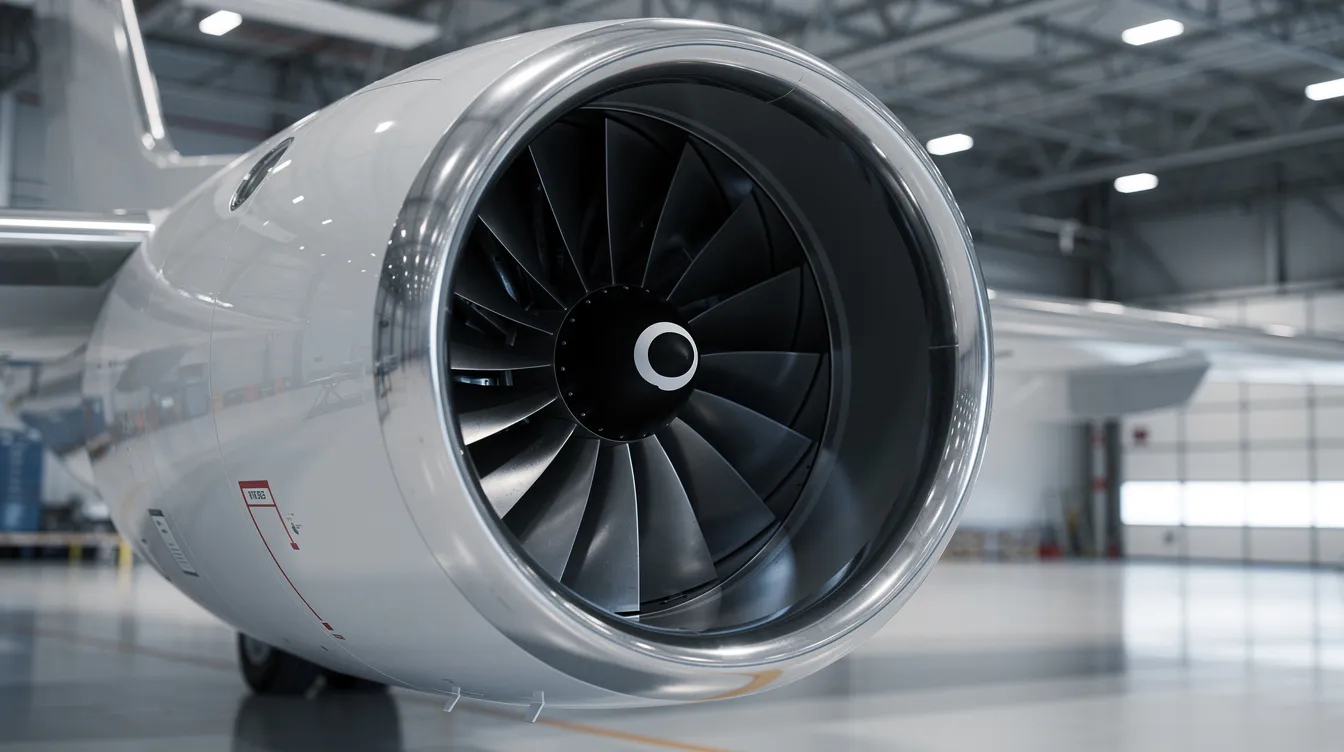
A typical turbofan engine on a Gulfstream, Bombardier Global, or large airline aircraft shares the same core architecture: air intake, fan, compressor, combustion chamber, turbine, and exhaust nozzle.
Air intake: The air intake is the first component that the airflow meets. It slows and smooths incoming air, guiding cold air into the engine core without turbulence. Its shape affects takeoff, climb, cruise, and performance when outside air density is low.
Fan: Modern turbofans utilize a large front fan for air intake. The fan sucks in large quantities of air, and much of that large volume becomes bypass air that flows around the engine core rather than through combustion. This makes the engine quieter and improves propulsion efficiency.
Compressor: The compressor uses rotating and stationary blades to raise pressure many times. In larger engines, a low-pressure compressor feeds higher-pressure sections. Blade tips must be engineered carefully because compressor efficiency depends on tight clearances, low weight, and stress resistance.
Combustion chamber: Fuel injectors spray fuel into high-pressure air, and combustion continues as a stable flame. Combustion efficiency is nearly 100% at sea-level takeoff conditions. Combustion in jet engines can reach temperatures up to 3000°F, roughly matching the 1,400–1,700°C range seen in modern high-performance engines.
Turbine: The turbine extracts energy from hot gases. The turbine spins to power the compressor and fan, and the turbine powers the compressor in a jet engine through shafts connected to the rotating assemblies. Turbine blades survive high temperatures through advanced alloys, coatings, and internal cooling.
Exhaust nozzle: The exhaust nozzle accelerates exhaust gases and helps generate thrust. In many subsonic engines, it is convergent; in some high-speed applications, it may be convergent-divergent. Matching exhaust pressure to atmospheric pressure improves efficiency as air leaves the engine.
Types of Aircraft Engines: From Piston to Turbofan
Aircraft engine choice determines speed, runway needs, range, fuel efficiency, and comfort. The four primary types of jet engines are turbofans, turbojets, turboprops, and ramjets/scramjets, while piston and turboshaft designs also matter in broader aviation. BlackJet primarily uses turbofan aircraft and selected turboprop aircraft where mission conditions call for them.
Engine Type | Description | Typical Use Cases | Efficiency & Performance |
|---|
Piston engine | Internal combustion in cylinders driving a propeller. Common in small general aviation aircraft. | Training, small aircraft | Efficient at low power, less suited for jets |
Turboprop engine | Gas turbine driving a propeller via gearbox. Efficient below 500 mph, ideal for short runways. | Regional, island, and remote airfields | High fuel efficiency at low speeds |
Turbojet engine | Early jet design sending all air through core, producing high-velocity exhaust. | Early commercial jets, military aircraft | High thrust, lower fuel efficiency, noisy |
Turbofan engine | Large fan moves bypass air around core, improving efficiency and noise. Dominant in modern jets. | Commercial airliners, private business jets | High fuel efficiency, quieter, suited for subsonic speeds |
Turboshaft engine | Gas turbine optimized for shaft power, mainly for helicopters. | Helicopters, auxiliary power units | High power-to-weight ratio, adaptable |
Ramjet/Scramjet | No moving parts, rely on high forward speed for compression. | Experimental, supersonic/hypersonic flight | Efficient at very high speeds, limited low-speed use |
From the First Jet Engine to Today’s Business Jets
The first jet engine era began with two parallel innovators: Frank Whittle in the United Kingdom, who patented his turbojet concept in 1930, and Hans von Ohain in Germany, whose work led to the Heinkel He 178, the first jet-powered flight in 1939. The whittle engine helped define the modern gas generator concept: compressor, combustor, and turbine arranged to produce continuous power.
Key moments followed quickly:
During World War II, aircraft such as the Messerschmitt Me 262, entering service in April 1944, and the British Gloster Meteor proved the value of high-speed jet propulsion.
The de Havilland Comet entered BOAC service in 1952 as the first commercial jet aircraft. It flew faster and higher than propeller aircraft, though structural fatigue issues led to major redesigns.
The Boeing 707 entered commercial service in 1958. Its underslung engine layout helped set the template for the modern commercial jet.
In the late 1950s and 1960s, turbofan engines improved fuel efficiency and reduced noise, enabling long-haul travel and influencing private aviation design.
Business jets followed. The Learjet 23 arrived in 1963, and the Gulfstream GII in 1966 showed how smaller turbofan engines could make private, high-speed, long-range travel practical.
Today, aircraft in BlackJet’s partner fleet use advanced turbofan technology, digital engine controls, strict maintenance scheduling, and operator certification standards designed for reliability and safety.

How Jet Engine Performance Impacts Private Jet Travel
For BlackJet members, engine choice affects range, climb performance, cabin comfort, airport access, and total trip time. It is not only about more thrust; it is about selecting the right aircraft for the mission.
Fuel efficiency: Specific fuel consumption measures fuel needed for one unit of thrust. Modern turbofan engines reduce specific fuel consumption through better bypass ratios, compressor design, and materials. That helps long-range business jets fly over 6,000 nautical miles nonstop on suitable routes.
Climb and cruise: Efficient compressors and turbines allow private jets to cruise at FL410–FL510, above much commercial traffic and weather. Higher altitude can improve comfort, punctuality, and routing flexibility.
Noise and emissions: Advanced combustion chamber design, fan airflow, and exhaust nozzle shaping reduce airport noise. Lower fuel consumption also reduces CO2, while modern combustors help manage NOx emissions.
Reliability and safety: FADEC digital controls manage fuel, temperature, rotor speed, and operating limits. Operators used by BlackJet follow rigorous inspection intervals, manufacturer guidance, and applicable rules such as FAA Part 135 Appendix G for extended operations where relevant.
Scenario: A BlackJet Jet Card member flying New York–Miami in a midsize twin-turbofan jet may not fly dramatically faster than airline business class once airborne. The advantage is door-to-door: private terminal access, flexible departure, direct airport pairing, and fewer schedule compromises.
Jet Cards, Aircraft Types, and Choosing the Right Engine for Your Missions
A Jet Card gives prepaid private jet access, typically with fixed or capped hourly rates and guaranteed availability across aircraft categories. BlackJet uses multiple aircraft types, powered by different jet engines, to match each member’s annual travel profile.
Consider these mission matches, which align with the main types of private jets for different travelers:
Light jets with smaller turbofans: Best for regional trips such as London–Geneva, New York–Boston, or Los Angeles–Scottsdale, and often feature among the cheapest private aircraft options for cost-conscious flyers.
Midsize and super-midsize jets: Strong for transcontinental missions such as Los Angeles–New York, with more cabin space and range, and they are frequently the focus of 50-hour Jet Card cost comparisons.
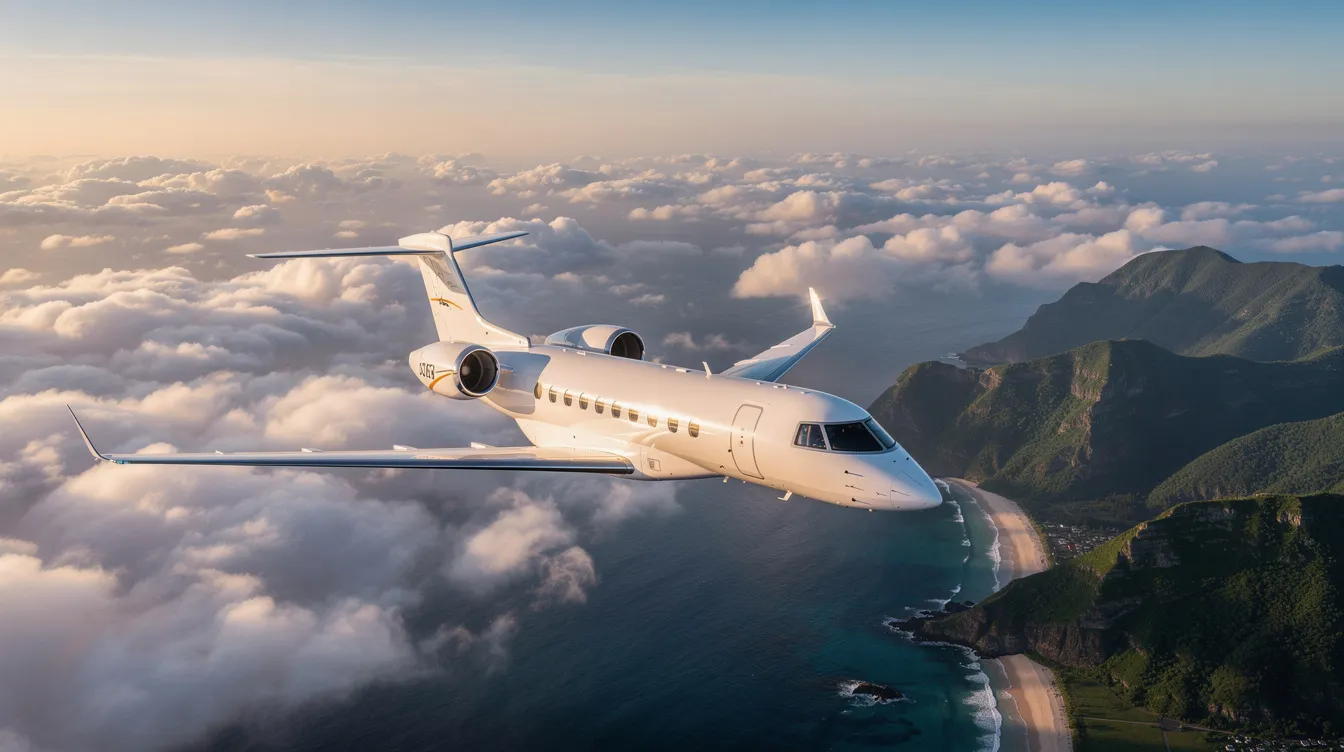
Long-range large-cabin jets: Built for intercontinental routes such as New York–London or Dubai–Paris, combining range, altitude, and cabin comfort, similar to aircraft featured among the top 10 private jets worldwide.
Turboprop aircraft: Recommended when short runways, island airports, or lower-distance flights make propeller efficiency more practical and cost-effective, and they often appear in guides to the cheapest private jet options.
BlackJet Jet Cards also compare favorably with other access models, especially when you understand the overall Jet Card cost and structure:
Owning a jet means capital cost, crew, hangar, insurance, maintenance, and engine overhaul exposure, all of which feature prominently in any comprehensive private jet price list.
On-demand charter offers flexibility but may come with variable pricing and less predictable access, which is why many travelers compare it with the Jet Card cost per hour before deciding.
Commercial first class provides comfort, but not schedule control, airport flexibility, privacy, or aircraft selection, leading some travelers to explore options to buy a seat on a private jet instead.
Safety remains central. BlackJet selects operators whose aircraft and aircraft engines adhere to Part 135 or EASA-equivalent maintenance standards, manufacturer-recommended overhaul intervals, and third-party safety audits where applicable, similar to the rigorous practices followed by top private jet companies.
Real-time support matters too. BlackJet’s platform and flight team evaluate runway length, weather, payload, destination constraints, and engine performance before recommending the right aircraft, whether for an individual traveler or a private jet for up to 50 passengers.
Sustainability and Jet Engines: Carbon‑Neutral Private Flights
Jet engines burn aviation fuel, and that creates CO2. Sustainability is therefore a serious topic in both commercial and private aviation, not a side note.
Modern turbofan engines improve environmental performance in practical ways:
Higher thermal efficiency and higher propulsion efficiency reduce fuel burn compared with earlier generations.
Advanced turbine materials and cooling allow safe operation at high temperatures, improving overall cycle performance.
Better routing, optimal altitudes, and right-sized aircraft selection reduce unnecessary fuel consumption.
Sustainable aviation fuel, or SAF, can be used in many current jet engines with little or no modification. Depending on feedstock and production pathway, SAF can materially reduce lifecycle CO2 emissions; the ICAO sustainable aviation fuel overview explains the broader industry framework.
BlackJet ensures every journey is carbon neutral at no extra cost to Jet Card members. Flights are offset to net-zero CO2 through verified carbon offset or insetting programs, including project types such as reforestation, renewable energy, and emissions-reduction initiatives, and these commitments are built into the BlackJet 25+ Hour Jet Card.
Frequently Asked Questions About Jet Engines and Private Jet Travel
What kind of jet engines power most private jets today?
Most private jets use medium-bypass or high-bypass turbofan engines. These engines balance range, speed, fuel efficiency, and airport noise requirements better than older turbojet designs.
How is a turbofan different from a turbojet engine?
A turbofan uses a large fan to move bypass air around the core, while a turbojet sends nearly all airflow through the core. This makes turbofans quieter and more efficient at subsonic speeds.
Are turboprop engines less safe than jet engines?
No. Safety is driven by certification, maintenance, crew training, and operational discipline, not only engine type. Turboprops are highly proven for short runways, regional trips, and remote destinations.
How do jet engines handle long, over-water flights on private jets?
Long over-water operations rely on engine reliability, redundant systems, maintenance programs, fuel planning, and alternate airport strategy. ETOPS-style requirements help ensure twin-engine turbine aircraft can complete missions safely.
Do BlackJet flights use more fuel than commercial flights?
A private jet typically has higher per-passenger emissions than a full airliner, even though the aircraft burns less fuel per hour than a widebody. BlackJet addresses this through mission-appropriate aircraft selection and carbon-neutral flights as standard.
Can I request a specific aircraft or engine type with my Jet Card?
Yes, members can generally request an aircraft category or preferred model, subject to availability and mission suitability. BlackJet’s team advises on runway needs, range, weather, payload, and engine performance so the selected aircraft fits the journey.
Conclusion: Harnessing Jet Engine Power Through BlackJet’s Jet Card Access
From early turbojets to today’s efficient turbofans, the aeroplane jet engine has reshaped global travel and made modern private aviation possible. Understanding how a jet engine works helps travelers choose the right aircraft for speed, comfort, range, safety, and sustainability.
BlackJet brings that capability together through curated aircraft access, rigorous safety and maintenance standards, carbon-neutral flights by default, and 24/7 digital booking with real-time support. Explore BlackJet’s Jet Card programs, learn about types of jet engines, and discover how expert-managed private jet access, powered by state-of-the-art jet engines, can redefine your business and leisure travel.


 Sign up with google
 Sign up with Apple