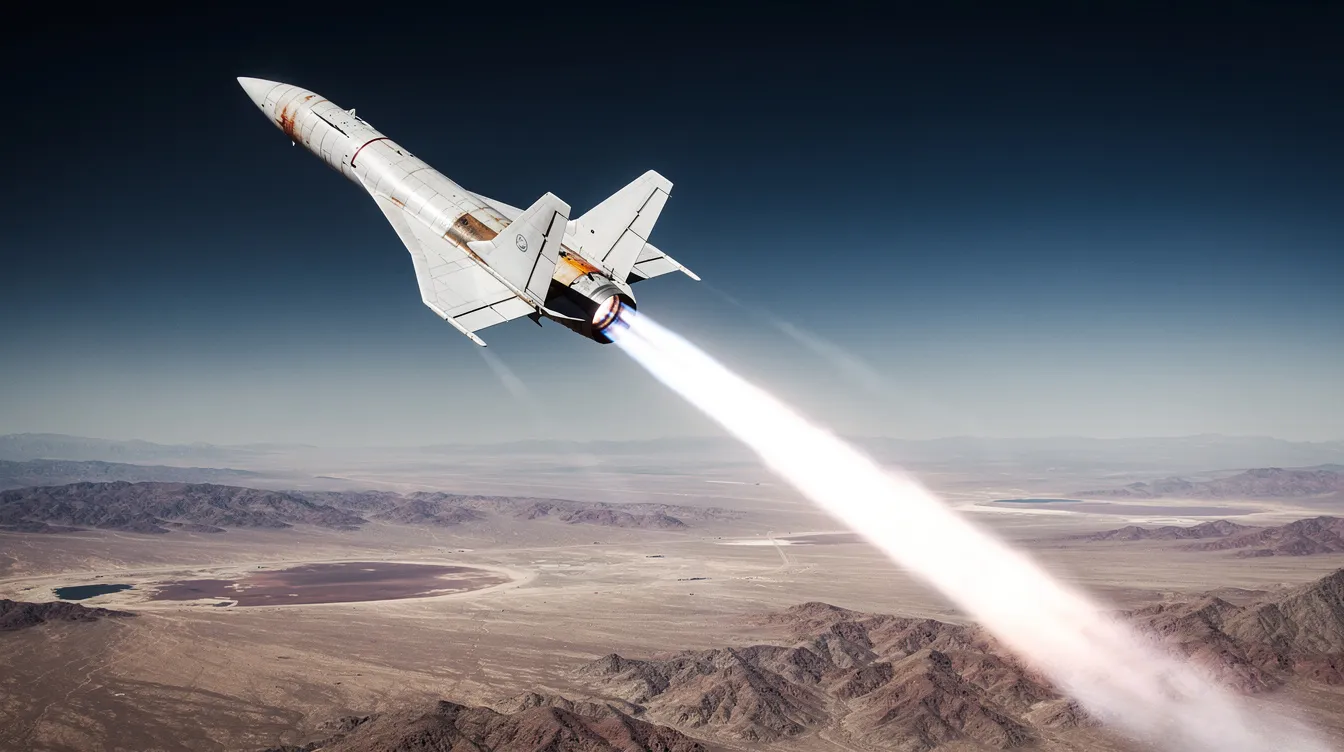
Humanity's pursuit of speed has shaped aviation history from the first flight of the Wright Flyer to the edge of space itself. But what is the highest Mach ever reached - and what does that extreme tell us about where high-speed flight is headed? Whether you're fascinated by experimental aircraft or simply want to understand how speed innovations filter into the private jets you fly today, this guide covers every major milestone, the engineering behind it, and why "practical speed" may matter more than raw Mach numbers.
Answering the Question Fast: The Highest Mach Ever Reached
The fastest aircraft ever to fly within Earth's atmosphere was NASA's unmanned X-43A, which reached approximately Mach 9.6 - around 7,366 mph (11,850 km/h) - on November 16, 2004. This was not a conventional jet fighter or a passenger aircraft. It was an experimental research vehicle powered by a scramjet engine, a type of propulsion system with no moving parts that burns fuel in supersonic airflow.
For crewed flight, the record belongs to the North American X-15, a rocket-powered American aircraft that hit Mach 6.72 (4,520 mph / 7,274 km/h) on October 3, 1967. And if you narrow the category to crewed, air-breathing military aircraft, the Lockheed SR-71 Blackbird still holds the world speed record at Mach 3.3 (2,193 mph / 3,529.6 km/h), set in 1976.
The answer depends on the category you ask about:
Category | Aircraft | Mach Number | Speed (mph) | Year |
|---|
Fastest air-breathing (unmanned) | X-43A | ~9.6 | ~7,366 | 2004 |
Fastest crewed vehicle (rocket) | X-15 | 6.72 | 4,520 | 1967 |
Fastest crewed jet (air-breathing) | SR 71 Blackbird | 3.3 | 2,193 | 1976 |
Fastest passenger aircraft | Concorde | 2.04 | 1,354 | Service 1976–2003 |
Fastest private jet (modern) | Gulfstream G700 | ~0.935 | ~715 | Present |
Even the fastest private jets cruise at subsonic Mach speeds - around Mach 0.90 to 0.935 - but they are optimized for something equally valuable: safe, efficient, and luxurious point-to-point travel that saves hours on every trip compared to commercial aviation.
What Is Mach? Understanding the Speed of Sound
The Mach number is the ratio of an object's speed to the speed of sound in the surrounding medium. If you're traveling at Mach 1, you're moving exactly at the speed of sound. At Mach 2, you're moving at twice the speed of sound.
At sea level on a standard day, the speed of sound is roughly 767 mph (1,235 km/h). But that figure isn't fixed - the Mach number varies with air temperature, pressure, and density. At 35,000 feet, where most jets cruise, the air is colder and thinner, so the speed of sound drops to about 660 mph. This is why pilots and engineers prefer Mach speeds over raw mph: the Mach number normalizes to local physics, making it far more useful at altitude.
Key definitions:
Subsonic: Below roughly Mach 0.8 - the regime of all commercial airlines and private jets today.
Transonic: Approximately Mach 0.8 to 1.2, where shock waves and buffeting create aerodynamic challenges.
Supersonic: Mach 1 to about Mach 5 - the domain of military fighters, the Concorde, and the SR-71.
Hypersonic: Above Mach 5 - the territory of experimental vehicles like the X-15 and X-43A.
The concept was introduced by physicist Ernst Mach in 1887, and the term "Mach number" was formally named in 1929 by Swiss aerodynamicist Jakob Ackeret. Mach speeds are expressed as Mach 1, Mach 2, and so on - a simple convention that belies the enormous engineering complexity required at each step upward.
To put it in perspective: an object at Mach 1 outruns every sound it creates. At Mach 3, it travels faster than a speeding bullet from many rifle cartridges. At Mach 9.6, it crosses the length of a football field in about four milliseconds.
From Breaking the Sound Barrier to Hypersonic Speeds
For decades, engineers believed the sound barrier was an impenetrable wall. Wind-tunnel data showed violent shock waves forming near Mach 1, and several pilots died in high-speed dives when their aircraft lost control in the transonic regime.
That changed on October 14, 1947, when Captain Chuck Yeager flew the Bell X-1 - nicknamed "Glamorous Glennis" - to Mach 1.06 at about 43,000 feet. The Bell X-1 was the first aircraft to break the sound barrier in level, controlled flight. It was a rocket-powered vehicle, air-launched from a B-29 mothership, and it proved that the "barrier" was an engineering problem, not a physical impossibility.
What followed was rapid acceleration through the record books:
1947: Bell X-1 reaches Mach 1.06 - supersonic flight is born.
1953: Bell X-1A achieves Mach 2.44, proving that faster speeds are achievable with the right airframe.
1956: Bell X-2 hits Mach 3.2 before a fatal loss-of-control accident highlights the dangers of pushing beyond known limits.
Late 1950s: The first operational supersonic fighters - the F-100 Super Sabre, MiG-19, and English Electric Lightning - enter service with various air forces.
The Cold War between the United States and the Soviet Union turned high-speed flight research into a strategic imperative. Both superpowers poured resources into reaching faster speeds and higher altitudes, each trying to outrun the other's fighters and missiles. This competition launched a new era of experimental aircraft that would redefine what was possible.
The X-15: Fastest Crewed Aircraft in Aviation History
The North American X-15 remains the fastest manned aircraft ever to fly. On October 3, 1967, Air Force test pilot William J. "Pete" Knight pushed the X-15A-2 to Mach 6.72 - approximately 4,520 mph (7,274 km/h) - making it the fastest crewed vehicle in atmospheric flight history.
Like the Bell X-1 before it, the X-15 was carried aloft by a larger aircraft - in this case, a B-52 Stratofortress - then dropped at altitude to ignite its XLR99 rocket engine. This approach allowed the X-15 to use its own power exclusively for acceleration and climb rather than wasting fuel on takeoff.
The program's achievements went beyond sheer speed:
Altitude records: Several X-15 flights exceeded 50 miles (80 km) above sea level, qualifying their pilots for astronaut wings. The highest flight reached approximately 354,200 feet (~107.8 km), beyond the Kármán line by most definitions.
Hypersonic aerodynamics: The X-15 provided the first real-world data on how airframes behave at hypersonic speeds - information that shaped the design of the space shuttle.
Thermal protection: At Mach 6+, friction heats the airframe's skin to over 1,200°F. The X-15 used Inconel X alloy, an early example of the thermal protection research that continues today.
Human factors: Pilots endured forces exceeding 5g during acceleration and reentry arcs, wearing full pressure suits in a cramped cockpit - pushing the boundaries of what humans could tolerate in high-speed flight.
The X-15's 199 flights between 1959 and 1968 produced data that fed directly into programs like the Space Shuttle and modern hypersonic technology development efforts. It remains the gold standard for what a piloted research vehicle can achieve.
The X-43A Hyper-X: Fastest Aircraft Ever Built
The X-43A achieved Mach 9.6 (7,366 mph), making it the fastest aircraft in the world ever recorded in atmospheric flight. More precisely, the final test flight on November 16, 2004, reached approximately Mach 9.68 - the fastest air-breathing aircraft ever - earning recognition from Guinness World Records as the fastest unmanned aircraft powered by an air-breathing engine.
The vehicle was developed under NASA's Hyper-X program at the NASA Langley Research Center to prove that a supersonic combustion ramjet - commonly called a scramjet - could function in real flight conditions. Unlike rockets, scramjet engines operate by scooping oxygen from the atmosphere for combustion, eliminating the need to carry heavy onboard oxidizer. This makes them fundamentally different from rocket-powered vehicles like the X-15.
The X-43A program included three flights:
June 2, 2001: The first flight failed when the modified Pegasus booster rocket veered off course and had to be destroyed. Ground tests had not fully predicted the booster rocket's behavior during separation.
March 27, 2004: The second flight succeeded, reaching approximately Mach 6.8 over the Pacific Ocean - the first time a scramjet-powered vehicle had achieved sustained combustion in free flight.
November 16, 2004: The record-setting third flight. The X-43A separated from its Pegasus rocket at roughly 110,000 feet, ignited its scramjet engine, and sustained powered flight for about 10 seconds at nearly Mach 9.6.
The thermal protection challenges were immense: at Mach 9.6, aerodynamic heating was roughly twice what the Mach 7 flight experienced. Carbon-carbon composites and advanced ceramics protected the vehicle's leading edges from temperatures that would melt conventional metals.
Why does this matter? The X-43A proved that sustained hypersonic, air-breathing flight is possible. Scramjet-powered vehicles could one day enable rapid global transportation or more efficient access to orbit - unlike rockets, they could fly higher and faster while still breathing atmospheric air, consuming far less fuel per unit of thrust at certain speed ranges.
The Highest Mach for Crewed, Air-Breathing Jets: SR-71 and Beyond
For crewed, air-breathing jet aircraft, the official world speed record still belongs to the Lockheed SR-71 Blackbird. On July 28, 1976, the SR-71 set a speed record of Mach 3.3 (2,193 mph / 3,529.6 km/h) over a measured 15/25 km straight course certified by the FAI. On the same date, it set the sustained altitude record of 85,069 feet. Both world records remain unbroken.
The SR 71 was a reconnaissance aircraft designed by Lockheed's Skunk Works, powered by two Pratt & Whitney J58 engines. These jet engines behaved partly like ramjets at high Mach numbers: as ground speed increased, bypass ducts redirected airflow around the compressor to sustain combustion efficiency at extreme velocities. The result was an aircraft that could cruise continuously above Mach 3 at altitudes where few surface to air missiles could reach it.
The SR-71's philosophy was simple: fly faster and fly higher than anything the enemy could throw at you. During the Cold War, it conducted strategic overflights knowing that no enemy aircraft or missile could catch it in time.
How does the SR-71 compare with its high-speed contemporaries?
Aircraft | Top Speed | Role | Country | Era |
|---|
SR-71 Blackbird | Mach 3.3 | Reconnaissance | USA | 1966–1998 |
YF-12A | ~Mach 3.35 | Interceptor prototype | USA | 1963–1968 |
MiG-25 Foxbat | Mach 3.2 | Interceptor | Soviet Union | 1970–present |
XB-70 Valkyrie | Mach 3.1 | Experimental bomber | USA | 1964–1969 |
The MiG-25 Foxbat could reach Mach 3.2 (2,190 mph) - reaching speeds that rivaled the Blackbird - though at the cost of destroying its own engines if pushed to maximum for extended periods. The XB-70 Valkyrie could sustain speeds of Mach 3.1 (2,056 mph) as an experimental strategic bomber, but the program was canceled as advancing missile technology made high-altitude, high-speed bombers increasingly vulnerable.
Official Records vs Unofficial Speeds
Not every claimed speed is a verified world record. The Fédération Aéronautique Internationale (FAI) - the international body governing aviation records - requires strict criteria: a measured course, calibrated instrumentation, independent witnesses, and documented conditions.
The SR-71's 3,529.6 km/h record over a straight course meets these standards. But numerous reports suggest the Blackbird routinely exceeded this in operational missions - some accounts place it above Mach 3.5 during classified reconnaissance runs. These speeds, however, have never been documented under FAI rules and remain unofficial.
Other category records worth noting:
Piston-engined aircraft: The modified F8F Bearcat "Rare Bear" reached 850.24 km/h - a fraction of the jet age's achievements, but remarkable for propeller-driven flight.
Seaplane: The Macchi-Castoldi M.C.72 set a still-standing seaplane record of 709.2 km/h in 1934.
Test-range dash speeds: MiG-25 pilots reportedly pushed their aircraft to Mach 3.2+ during interception attempts over the Middle East, but overstressing the engines and airframe in the process - speeds the aircraft was never originally intended to sustain.
When evaluating claims about the world's fastest aircraft, always ask: was the speed recorded under controlled, certified conditions, or is it anecdotal? The distinction matters enormously for setting speed records that stand up to scrutiny.
Cold War Competition: Why Extreme Mach Numbers Mattered
The Cold War transformed high-speed flight from an engineering curiosity into a matter of national survival. Both the United States and the Soviet Union invested heavily in aircraft that could fly faster than anything the other side fielded - for reconnaissance, interception, and nuclear strike.
Speed underpinned air superiority strategies on both sides:
Reconnaissance: The SR-71 and its predecessor, the A-12, flew over hostile territory at Mach 3+, outrunning every threat. The MiG-25 Foxbat could achieve speeds of Mach 3.2 during the Cold War, but was designed primarily to intercept high-altitude American bombers like the XB-70.
Interception: Aircraft like the MiG-25 and the YF-12A were built to sprint to altitude, reach supersonic speeds, and engage incoming bombers or reconnaissance aircraft before they could escape.
Nuclear delivery: Bombers like the B-58 Hustler (Mach 2) and the experimental XB-70 Valkyrie (Mach 3.1) were designed to penetrate enemy airspace faster than defenses could react.
The arms race in speed ultimately reached a plateau. As radar networks improved and surface-to-air missile systems grew more capable, raw speed alone could no longer guarantee survival. The emphasis shifted toward stealth technology - reducing radar cross-section rather than outrunning threats. The B-2 Spirit bomber, for instance, is subsonic but nearly invisible to radar, representing a philosophy diametrically opposed to the Mach 3 Valkyrie it spiritually replaced.
Yet the data from Cold War speed programs - in materials, propulsion systems, thermal management, and flight controls - continues to inform every military aircraft flying today.
Key Milestones Among the Fastest Planes in the World
Aviation history reads like a timeline of speed records, each milestone pushing design, materials, and courage further than the last. Here are the most significant entries among the fastest planes ever built:
Bell X-1 (1947): Mach 1.06 - the first aircraft to break the sound barrier. American, rocket-powered experimental.
MiG-15 (1947–1950s): Mach 0.92 - the Soviet Union's swept-wing jet fighter that shocked Western air forces in Korea and proved jet engines could dominate air combat.
English Electric Lightning (1954): Mach 2+ - the UK's first aircraft capable of reaching twice the speed of sound, featuring a distinctive stacked-engine design. A formidable interceptor that made Tom Cruise–era dogfight scenes look tame by comparison.
MiG-21 (1956): Mach 2.05 - the most-produced supersonic fighter in aviation history, used by dozens of air forces in combat missions worldwide.
Dassault Mirage III (1956): Mach 2.2 - France's delta-wing masterpiece, proven in combat over the Middle East.
B-58 Hustler (1956): Mach 2 - America's first operational supersonic bomber, designed for nuclear penetration.
MiG-25 Foxbat (1964): Mach 3.2 - the Soviet Union's response to the XB-70 threat, a steel-built interceptor of extreme speed.
XB-70 Valkyrie (1964): Mach 3.1 - an experimental Mach 3 bomber that proved sustained high-speed cruise was possible but operationally impractical.
SR-71 Blackbird (1966): Mach 3.3 - the unmatched king of crewed air-breathing speed.
X-15 (1959–1967): Mach 6.72 - the fastest manned aircraft in history, a rocket-powered research vehicle that touched the edge of space.
X-43A (2004): Mach 9.6 - the X-43 achieved Mach 9.6, the fastest aircraft ever, using a scramjet engine to prove hypersonic air-breathing flight was achievable.
Each of these milestones advanced swept wings, delta wings, variable-geometry designs, heat-resistant materials, and propulsion systems that echo through every modern aircraft - including the private jets that carry travelers across continents today.
Where Were the Fastest Aircraft in the World Built?
The pursuit of extreme Mach numbers was dominated by two Cold War superpowers, with important contributions from European nations.
United States: Home to the majority of the fastest experimental and operational aircraft - X-1, X-2, X-15, X-43A, SR-71, YF-12A, XB-70, F-15, F-22. American aircraft dominate both crewed and uncrewed speed records.
Soviet Union / Russia: The MiG-25 and MiG-31 remain among the fastest operational interceptors ever built. Soviet engineers prioritized raw performance and mass production, fielding Mach 2–3 aircraft in large numbers.
United Kingdom: The English Electric Lightning was the UK's marquee high-speed interceptor. British aerospace also co-developed the Concorde, the world's only successful supersonic passenger aircraft.
France: The Mirage III family and later the Rafale represent France's sustained investment in supersonic fighter design. France was also the co-developer of Concorde alongside Britain.
Of the top 25 fastest planes in history, roughly half are American aircraft, with a substantial portion coming from the Soviet Union. European entries - while fewer - include some of the most iconic designs in supersonic flight.
Fighters Built for Air Superiority at High Speed
High speed has always been central to air superiority: getting to altitude quickly, dictating engagement range, and disengaging at will. The fastest fighters blend speed with agility, sensors, and weapons to dominate contested airspace.
4th-generation fighters:
F-15 Eagle (Mach 2.5+): Undefeated in air-to-air combat with over 100 confirmed kills. Its combination of top speed, thrust-to-weight ratio, and radar capability made it the West's premier air superiority fighter for decades.
Su-27 Flanker (Mach 2.35): The Soviet answer to the F-15, optimized for long-range intercepts and extreme maneuverability.
MiG-29 Fulcrum (Mach 2.25): A lighter, more agile complement to the Su-27, designed for front-line air superiority.
F-14 Tomcat (Mach 2.34): The U.S. Navy's iconic carrier-based operations fighter, equipped with the long-range AIM-54 Phoenix missile for fleet defense.
5th-generation fighters:
F-22 Raptor (Mach 2.25 with supercruise at ~Mach 1.8): Combines stealth, speed, and sensor fusion - the current gold standard.
Su-57 Felon (Mach 2+): Russia's answer to the F-22, with an emphasis on range and weapons payload.
J-20 Mighty Dragon (Mach 2 class): China's first stealth fighter, optimized for long-range strike and air-to-air engagement.
Beyond a point, situational awareness and stealth beat marginal speed gains. The F-22, for instance, cannot fly faster than the F-15 in raw top speed terms - but its ability to supercruise (sustain supersonic flight without afterburner) and detect enemy aircraft long before being detected itself gives it a decisive tactical edge.
Interceptors and Specialized High-Speed Designs
The interceptor mission is simple in concept: climb fast, sprint to the target, and destroy incoming bombers or cruise missiles before they reach their objective. This demands the highest possible speed and rate of climb.
Key interceptors in aviation history:
MiG-25 Foxbat (Mach 3.2): Built primarily from nickel-steel alloys to withstand extreme heating at Mach 3, it carried long-range air-to-air missiles and massive radar. It saw use during the Iran Iraq War and various Cold War confrontations.
MiG-31 Foxhound (Mach 2.83): The MiG-25's successor, with more advanced radar and the ability to guide missiles for a formation of fighters. Used for long-range Arctic patrols to this day.
English Electric Lightning (Mach 2): The UK's legendary interceptor, with vertically stacked jet engines that gave it an extraordinary climb rate - reaching 36,000 feet in under three minutes.
F-14 Tomcat (Mach 2.34): Originally intended for carrier defense, its variable-sweep wings allowed both high-speed interception and low-speed carrier approaches. Its carrier-based operations role made it unique among Mach 2+ interceptors.
F-111 Aardvark (Mach 2.5): A variable-sweep wing strike aircraft that doubled as a penetration bomber, capable of flying at high speed at low altitudes to avoid radar.
These aircraft were designed around one principle: speed saves lives. Whether defending an aircraft carrier battle group or scrambling to intercept strategic bombers over the Arctic, the ability to fly faster than the threat dictated survival.
Supersonic Bombers and Strategic Speed
In the early nuclear era, speed was a bomber's best defense. If you could fly faster than enemy interceptors and outrun surface to air missiles, you could deliver your payload and return home.
B-58 Hustler (Mach 2): The first operational supersonic bomber, it could sustain Mach 2 cruise at high altitude and carried a nuclear weapon pod under its fuselage. It served in combat missions readiness from 1960 to 1970.
XB-70 Valkyrie (Mach 3.1): The XB-70 Valkyrie could sustain speeds of Mach 3.1 (2,056 mph) and was designed to ride its own shock wave for aerodynamic efficiency. However, rapid improvements in Soviet surface-to-air missile technology made its high-altitude, high-speed approach increasingly vulnerable - leading to its cancellation as an operational bomber.
Tu-22M Backfire (Mach 1.88): The Soviet Union's long-range supersonic bomber, designed to threaten NATO carrier groups and European targets.
The Valkyrie's cancellation marked a philosophical shift. Modern strategic bombers like the B-2 Spirit and the upcoming B-21 Raider prioritize stealth technology and stand-off weapons over raw speed. They penetrate at subsonic velocities, relying on low observability rather than outrunning defenses.
Yet the "speed as survival" concept endures in other forms - particularly in the development of hypersonic missiles and glide vehicles that inherit the XB-70's fundamental insight: at sufficient velocity, interception becomes extraordinarily difficult.
Supersonic Passenger Travel: Concorde and Beyond
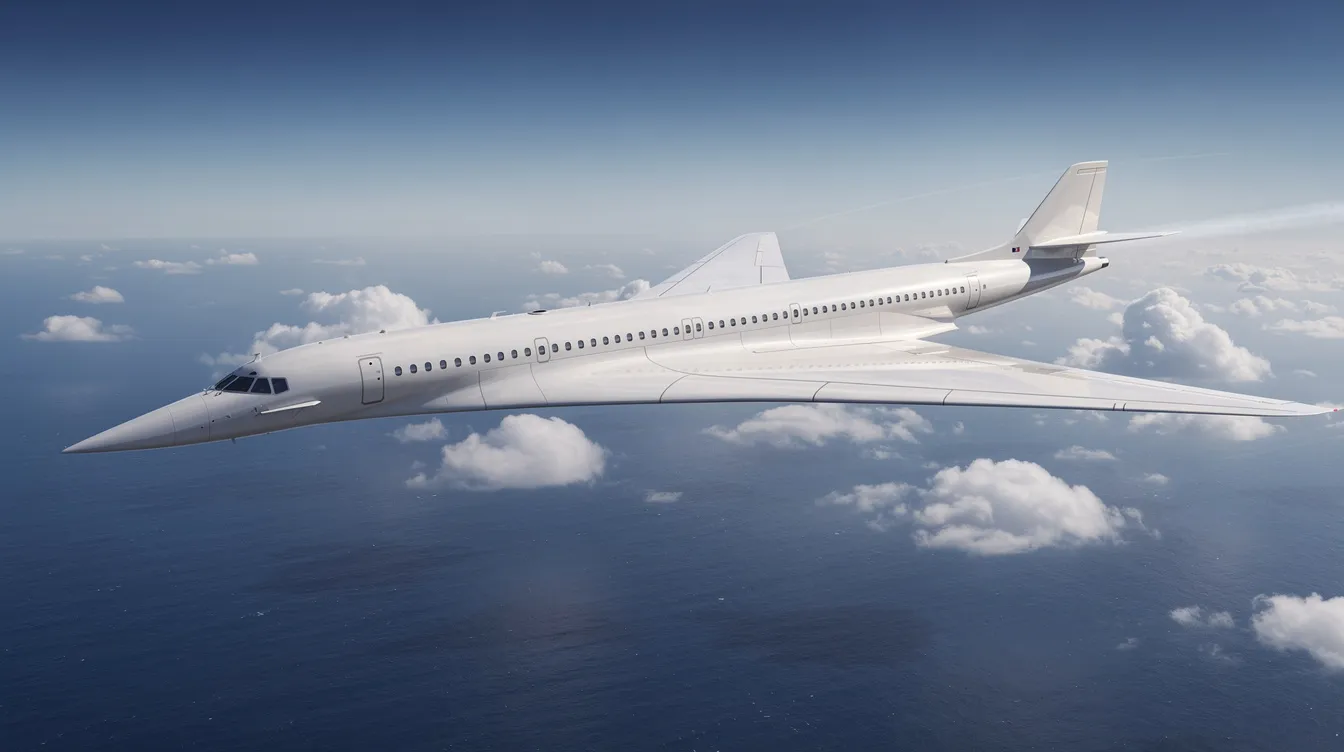
While military aircraft chased Mach 3 and beyond, one aircraft brought supersonic speeds to paying travelers. The Concorde achieved speeds of Mach 2.04 (~1,354 mph / 2,179 km/h) at approximately 60,000 feet, cutting transatlantic flight times in half. A London-to-New York crossing that takes seven hours on a conventional airliner took just under three and a half hours on Concorde.
The Concorde achieved speeds of Mach 2.04, redefining air travel for an exclusive clientele of business leaders, celebrities, and heads of state. Commercial airlines reduced transcontinental flight times to hours, but Concorde did it in style - with champagne, fine cuisine, and the knowledge that you were crossing the Atlantic faster than any other passenger aircraft in history.
But supersonic flight proved economically and environmentally challenging:
Sonic boom restrictions prevented supersonic flight over land, limiting routes to overwater corridors.
Fuel consumption was roughly four times higher per passenger than subsonic jets, requiring more fuel on every flight.
Maintenance costs were extreme - the thermal cycling at Mach 2 expanded and contracted the airframe by several inches each flight.
Air resistance at transonic and supersonic speeds created enormous drag penalties.
Concorde retired in 2003. But the dream persists. Companies like Boom Supersonic are developing the Overture, a Mach 1.7 airliner designed to run on 100% sustainable aviation fuel with a quieter sonic boom. NASA's X-59 QueSST program is testing "quiet supersonic" technology that could open overland supersonic corridors by 2027.
Hypersonic Speeds and the Future of Military Aviation
Hypersonic speeds - Mach 5 and above - represent the next frontier. Vehicles like the X-15 and X-43A pioneered this regime, and modern programs are building on their legacy.
Beyond known programs, uncrewed vehicles like the DARPA HTV-2 have reached speed estimates of Mach 20 during test flights, making the fastest uncrewed hypersonic vehicle the DARPA HTV-2 at Mach 20 - though its flight duration was extremely brief before control was lost. For comparison, the fastest spacecraft during reentry is the space shuttle at approximately Mach 25, and the Apollo 10 spacecraft reentered Earth's atmosphere at approximately Mach 36. The fastest confirmed speed reached by a human-made object is by the Parker Solar Probe at over Mach 500 - though that's deep space, not atmospheric flight. These numbers make even the idea of worm holes seem like a reasonable next step for physicists pondering faster-than-light travel.
Engineering challenges at these various speeds remain formidable:
Extreme heating: Plasma sheaths form around vehicles above Mach 15, blocking radio communications.
Control: At hypersonic speeds, conventional flight control surfaces become ineffective; reaction control systems or body flap designs are required.
Materials: Leading edges must survive temperatures exceeding 3,000°F for sustained periods.
Lessons from hypersonic research are already feeding into next-generation air force capabilities - from rapid global strike platforms to advanced reconnaissance systems that could eventually enable reaching speeds once thought impossible outside of science fiction.
How Pilots and Engineers Chase Speed Records
Most absolute speed records are set by highly trained test pilots working within military or space agency programs, using heavily instrumented test ranges and meticulously planned flight campaigns.
The process of setting speed records typically follows a rigorous sequence:
Ground tests and simulations: Extensive wind-tunnel testing and computational modeling predict aerodynamic behavior at target Mach numbers.
Incremental envelope expansion: Test pilots push the aircraft a little faster on each flight, collecting data at every step.
Instrumented test ranges: Facilities like NASA's Armstrong Flight Research Center (formerly Dryden) and the U.S. Air Force Test Center at Edwards AFB provide tracking, telemetry, and emergency support.
Strict safety protocols: Each flight involves detailed briefings, abort criteria, chase aircraft, and rescue assets on standby.
Consider the SR-71's 1976 record campaign: the aircraft flew a precisely measured straight course at maximum speed while FAI observers recorded time, altitude, and atmospheric conditions. Nothing was left to chance. The aircraft had already demonstrated its capability hundreds of times in operational missions - the record flight was simply the formal, witnessed confirmation.
This disciplined approach to flight research - combining simulation, incremental testing, and data collection - is the same philosophy that underpins safety in modern private aviation.
Fastest Private Jets vs Record-Setting Experimental Aircraft
There is an enormous gap between experimental speed records and the cruise speeds of modern business jets - and that gap exists by design.
Category | Representative Aircraft | Cruise Mach | Purpose |
|---|
Experimental (unmanned) | X-43A | 9.6 | Scramjet research |
Experimental (crewed) | X-15 | 6.72 | Hypersonic research |
Military (operational) | SR-71 | 3.3 | Reconnaissance |
Private jet (modern) | Gulfstream G700 | ~0.935 | Business travel |
Private jet (modern) | Bombardier Global 8000 | ~0.94 | Long-range luxury |
Private jet (modern) | Cessna Citation X+ | ~0.935 | High-speed midsize |
Record aircraft are single-purpose, risky, and experimental - designed for a handful of flights under extreme conditions. Modern private jets are the opposite: repeatable, safe, and optimized for the sweet spot of speed, range, comfort, and fuel efficiency that makes them practical for thousands of flights per year.
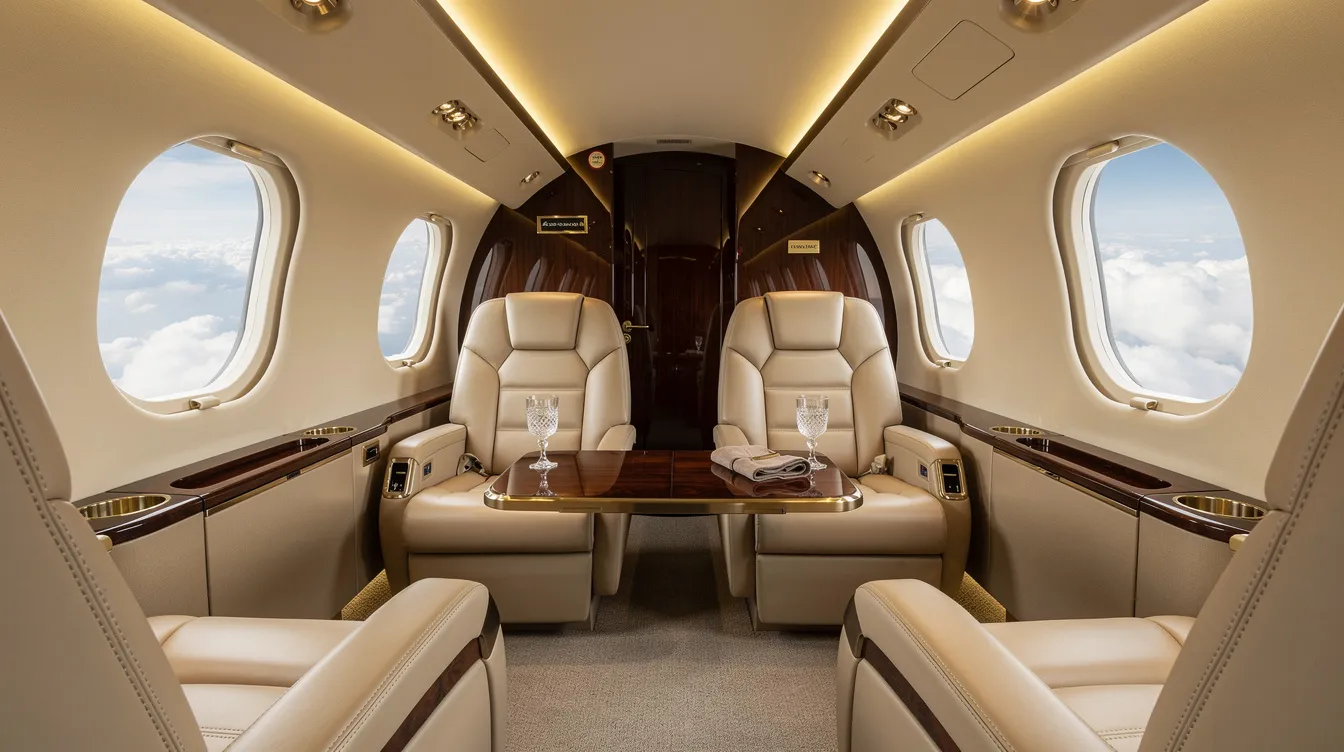
A Gulfstream G700 at Mach 0.925 crosses the Atlantic in about seven hours - not three like Concorde, but in a cabin that rivals a five-star hotel suite, with none of the sonic boom restrictions, extreme maintenance costs, or fuel penalties.
How High-Speed Innovation Filters Into Private Aviation
Nearly every technology that makes modern private jets safe, efficient, and comfortable traces its lineage to high-speed military and experimental programs.
Supercritical wings: Developed from NASA research into transonic aerodynamics, these wing profiles delay the onset of shock waves, allowing jets to cruise efficiently at higher subsonic speeds.
Advanced materials: Titanium alloys first proven in the SR-71's thermal protection system are now standard in jet engine components. Composite materials descended from hypersonic research reduce weight and improve fuel efficiency.
Fly-by-wire controls: Digital flight control systems - essential for stability at various speeds in unstable airframes like the F-16 - now provide the smooth, precise handling that passengers experience in modern business aircraft.
Cabin pressurization: Technologies developed to protect pilots at extreme altitudes in aircraft like the X-15 and SR-71 evolved into the pressurization systems that maintain sea-level comfort at 45,000 feet in today's large-cabin jets.
While private jets don't reach Mach 3, they benefit from decades of research aimed at surviving and controlling transonic regimes safely - research conducted at the edge of human capability.
BlackJet's Perspective: High-Speed Travel as a Strategic Advantage
For BlackJet clients, speed is not measured in Mach numbers alone. The real competitive advantage is time - specifically, the hours reclaimed on every trip compared to commercial alternatives.
Consider this scenario: a corporate executive needs to travel from New York to London for a board meeting, evaluating not only full-aircraft charter but also options to buy a seat on a private jet. On a commercial airline, including check-in, security, boarding, flight time, customs, and ground transport, the door-to-door journey takes approximately 12–14 hours. Using a BlackJet large-cabin jet cruising at Mach 0.85–0.90, the same executive departs from a private terminal with no security line, boards in minutes, flies nonstop, and clears customs through a dedicated facility—an experience that mirrors the comfort of top 16-seat private jet options and even 20-passenger or 50-passenger private jet configurations for larger groups. Total door-to-door time: roughly 8–9 hours - with a productive, private cabin throughout.
That's not Mach 9.6. But it is practical air superiority in the business sense:
Schedule control: Depart when you want, not when the airline's timetable dictates.
Point-to-point access: Reach secondary airports closer to your final destination, skipping congested hubs.
Minimal ground time: No two-hour pre-departure buffers, no baggage carousels, no connection risks.
Multiple cabin classes: BlackJet offers access to light, midsize, and large-cabin jets - matching the aircraft to the mission and reflecting the full range of types of private jets for every traveler.
Speed advancements in aviation have influenced global travel dynamics for over a century. BlackJet brings that legacy to every flight: curated fleet access, 24/7 support, and around-the-clock digital booking that makes high-speed private travel seamless, supported by clear insights into Jet Card cost per hour.
Jet Cards vs Ownership and Charter: The Smart Way to Fly Fast
A Jet Card is a prepaid block of flight time - typically 25 or 50 hours - that provides guaranteed access to specific aircraft categories at fixed hourly rates. It's the most efficient way to access private aviation without the capital commitment and operational burden of owning a jet.
How it compares:
| Jet Card | Full Ownership | On-Demand Charter |
|---|
Capital outlay | Prepaid hours only | $5M–$75M+ aircraft purchase | Pay per trip |
Availability | Guaranteed | Always available (your asset) | Subject to market availability |
Maintenance burden | None (operator handles) | Full responsibility | None |
Pricing predictability | Fixed hourly rate | Variable (fuel, crew, hangar, insurance) | Variable (market-driven) |
Flexibility | Multiple aircraft types | One aircraft type | Broad, but less consistent |
BlackJet's Jet Card programs - including the 25-hour and 50-hour options - let clients enjoy high-speed private travel on their terms, similar in structure to many leading Jet Card cost and membership pricing models and curated lists of the best Jet Cards for frequent flyers. Whether it's frequent regional business trips at short notice, multi-city international itineraries, or last-minute leisure getaways, the model delivers predictability without asset risk.
For a detailed breakdown of how pricing works across cabin classes, see our guide to Jet Card pricing.
Safety at High Speed: Why Protocols Matter More Than Mach Numbers
As speeds and altitudes increase, the margin for error narrows - and the importance of rigorous safety protocols grows proportionally. This is true at Mach 9.6 in an experimental scramjet, and it's equally true at Mach 0.90 in a business jet carrying passengers.
In private aviation, safety standards include:
ARG/US and Wyvern ratings: Third-party auditing organizations that evaluate operators on pilot experience, maintenance practices, safety management systems, and operational history.
IS-BAO certification: The International Standard for Business Aircraft Operations, a globally recognized code of best practices.
Continuous monitoring: Real-time flight tracking, weather analysis, and operational oversight throughout every journey.
BlackJet goes further. Every operator, aircraft, and crew in the BlackJet Certified program undergoes rigorous vetting - exceeding industry minimums. The result is not just compliance, but confidence: clients experience efficient, conservatively managed high-speed travel with safety as the non-negotiable foundation.
The same disciplined approach that allows test pilots to push experimental aircraft to Mach 6 and return safely - simulation, data analysis, redundancy, and relentless attention to process - is the philosophy that protects every private aviation passenger on every flight.
Sustainability and High-Speed Flight
There is an inescapable physical relationship between speed and fuel burn: aerodynamic drag increases roughly with the square of velocity, and the energy required to overcome air resistance grows accordingly. This is why hypersonic aircraft will always be niche applications - the energy and environmental costs are enormous.
For business aviation operating in the subsonic regime, the equation is more favorable but still demands attention:
Sustainable aviation fuel (SAF): Drop-in biofuels that reduce lifecycle carbon emissions by up to 80% compared to conventional jet fuel. Adoption is growing as production scales up.
Lightweight composites: Modern airframes use carbon-fiber structures that reduce weight and require less fuel - consuming less more fuel per mile than older metal designs.
Route optimization: Advanced flight planning software identifies the most efficient altitude, speed, and routing for each trip, minimizing unnecessary fuel burn.
Carbon offsets: Verified programs that neutralize remaining emissions through forestry, renewable energy, and carbon capture projects.
BlackJet ensures every journey is carbon neutral - at no extra cost to clients, while our overview of the private jet price list helps travelers align speed, comfort, and budget. By integrating verified carbon offsets, encouraging SAF adoption where available, and optimizing routes, BlackJet reconciles the demand for speed with environmental responsibility. As future concepts like Boom Overture's 100% SAF ambition demonstrate, the industry is moving toward a model where faster travel and sustainability are not mutually exclusive.
Technology Behind Seamless High-Speed Private Travel
The same spirit of innovation that produced scramjet engines and fly-by-wire controls powers the digital infrastructure behind modern private aviation. BlackJet's technology platform is designed to make every trip effortless:
Mobile booking: Reserve aircraft across multiple cabin classes from your phone, with real-time availability and instant confirmation.
Live itinerary updates: Receive dynamic routing, weather, and schedule information throughout your journey.
24/7 support: Dedicated aviation specialists available around the clock - not a call center, but experienced professionals who understand high-speed private travel.
Integrated safety and weather data: Every booking incorporates real-time safety assessments, ensuring optimal conditions for departure and arrival.
The contrast with commercial air travel is stark: no long security lines, no gate changes, no connection anxiety. The booking-to-boarding experience mirrors the precision engineering of the aircraft themselves - streamlined, reliable, and built for people who value their time.
Frequently Asked Questions About Mach, Fastest Planes, and Private Jets
What is the highest Mach ever reached by any aircraft?
The X-43A reached Mach 9.6 on November 16, 2004 - the highest speed ever achieved by an air-breathing aircraft in the atmosphere. If you include non-air-breathing vehicles, the DARPA HTV-2 briefly reached an estimated Mach 20 during testing.
What is the fastest crewed aircraft?
The North American X-15 reached Mach 6.72 (4,520 mph) on October 3, 1967, piloted by William J. "Pete" Knight. It remains the fastest crewed vehicle in atmospheric flight.
What is the fastest jet aircraft in regular service?
Historically, the SR-71 Blackbird at Mach 3.3 (2,193 mph). No comparable aircraft is in active service today. Among current operational military aircraft, the MiG-31 Foxhound (Mach 2.83) is among the fastest.
What is the fastest private jet?
The Cessna Citation X+ and Gulfstream G700 lead with maximum operating speeds around Mach 0.935 - roughly 715 mph. The Bombardier Global 8000 approaches similar cruise performance. You can explore available aircraft at BlackJet's aircraft categories.
How fast do BlackJet flights typically cruise?
Around Mach 0.80–0.90 depending on the aircraft type and mission. This represents the optimal balance of speed, fuel efficiency, and passenger comfort for business aviation.
Is Mach 1 always the same speed?
No. The speed of sound - and therefore Mach 1 - varies with altitude, temperature, and atmospheric conditions. At sea level, Mach 1 is approximately 767 mph. At 40,000 feet, it drops to around 660 mph.
The Legacy of High-Speed Flight - and What It Means for You
From Chuck Yeager shattering the sound barrier at Mach 1.06 in 1947 to the X-43A touching Mach 9.6 over the Pacific Ocean in 2004, every speed record has advanced the technology, materials, and safety systems that make modern flight possible. The X-15 gave us data for the Space Shuttle. The SR-71 proved that sustained Mach 3 flight was operationally viable. Concorde showed that supersonic flight could carry passengers in comfort. And scramjet-powered vehicles like the X-43A opened the door to a future where air-breathing engines could one day achieve near-orbital velocity.
Only a handful of experimental aircraft have ever reached extreme Mach numbers. But the knowledge generated by those flights influences every modern jet - from fifth-generation stealth fighters to the business aircraft that carry executives across oceans at Mach 0.90.
BlackJet stands at the intersection of that cutting-edge heritage and everyday strategic travel. Our clients experience the most practical version of "speed" - not hypersonic velocity, but the hours reclaimed through seamless scheduling, point-to-point flexibility, carbon-neutral performance, and uncompromising safety on every flight.
Elevate your travel - effortlessly. With BlackJet, private flight isn't reserved for a few - it's accessible on your terms through our Jet Card programs, complete with rigorous safety, carbon-neutral performance, and unmatched flexibility. Explore our Jet Card programs and discover how refined, meaningful travel becomes your new standard.


 Sign up with google
 Sign up with Apple