Every modern jet aircraft, from a Gulfstream G650 to a Boeing 787, burns a specific category of fuel refined to strict performance standards. Understanding what that fuel is called and why different names exist gives private jet travelers a clearer picture of range, safety, and reliability on every flight.
Quick Answer: What Is Jet Fuel Called?
Most modern jets, including the charter aircraft in BlackJet's fleet, run on a kerosene-based fuel. Jet fuel is a specialized petroleum-based aviation turbine fuel designed for gas-turbine engines. It is commonly referred to as aviation turbine fuel, or avtur.
The standard jet fuel used in commercial aviation and most private jets is called Jet A or Jet A-1, depending on the region. But "jet fuel" is actually a family name covering several grades: Jet A, Jet A-1, Jet B, and a range of military grade jet fuel and specialized jet fuels. Jet A and Jet A-1 are kerosene-based jet fuels, while Jet B is a kerosene gasoline mixture designed for extremely cold environments.
Why does this matter? Because fuel type determines how far a jet aircraft can fly, whether its fuel systems will perform at cruise altitude, and whether the aircraft's fuel system is protected from icing and contamination. For private aviation operators and their clients, the distinction is not academic; it affects every departure.
Why Jet Fuel Names Matter for Private and Commercial Aviation
A Gulfstream G550 or Bombardier Challenger 350 loaded with the wrong fuel specification cannot legally or safely depart. Aircraft engines are certified for specific types of jet fuel, and deviation voids insurance, warranty, and airworthiness.
Fuel type affects how jet engines run, fuel efficiency, range, and cold-weather performance on long-haul and polar routes. Jet fuel has lower volatility and a higher flash point than gasoline, which is central to aviation safety during ground handling, storage, and flight. For flight operators managing international flights, the fuel available at each stop determines whether an aircraft can complete the next leg without diversion.
BlackJet's flight planning team factors fuel type and availability into every routing decision, whether the trip is New York to London or Aspen to Van Nuys. Both private aviation and commercial aviation operations rely on the same core fuel grades. The difference is that private fleets often land at smaller airports where fuel specs and supply quality must be verified individually by dispatch.
Regulators, including the FAA, EASA, and ICA, define fuel standards that flight operators must comply with. Fuel naming ties directly to certification, safety, and whether powered aircraft are cleared to fly.
Core Kerosene-Based Jet Fuels: Jet A and Jet A-1
Kerosene-based jet fuels are the global standard for turbine engines, powering business jets, commercial aircraft, turboprop private jets, and many military aircraft. Jet A and Jet A-1 are the primary international standards for commercial aviation.
Both fuels are clear or straw-colored liquids refined from crude oil through distillation and hydrotreating. Their hydrocarbon chains cluster around C9 to C16, delivering high energy density and improved thermal stability. Jet A is primarily used in civilian aviation in the United States, while Jet A-1 is the most widely used jet fuel worldwide, serving as the international standard across Europe, Asia, the Middle East, and Australasia. Jet A-2 is mainly used in Europe and Asia as an alternate designation in some regional contexts.
These fuels dominate civil aviation and private jets because they balance a higher flash point (safer ground handling), a low freezing point (reliable high-altitude performance), and cost-effective production. All BlackJet flights are planned around these standard fuels to ensure global compatibility and predictable aircraft performance, reflecting the broader spectrum of types of jet fuel used in aviation.

Jet A vs Jet A-1: What's the Difference?
Both are kkerosene-basedfuel grades for turbine engines, but they diverge in cold-weather operations and additive requirements.
The core difference is freezing point:
Property | Jet A | Jet A-1 |
|---|
Maximum freezing point | -40°C (-40°F) | -47°C (-52.6°F) |
Minimum flash point | 38°C (100°F) | 38°C (100°F) |
Primary region | United States | International (Europe, Asia, Middle East) |
Static dissipator additive (SDA) | Not always required | Required in many jurisdictions |
Jet A has a maximum freezing point of -40°C, which is sufficient for most domestic U.S. routes. Jet A-1 has a lower maximum freezing point of -47°C (-52.6°F), providing a wider margin for turbine-powered aircraft cruising at FL350 to FL450, where ambient temperatures drop to -50°C or colder. That seven-degree difference matters on very long-range and polar routes.
Jet A-1 includes static dissipator additives for safety, reducing the risk of static discharge during fueling. Jet A-1 contains these static dissipator additives because high-speed fuel transfer can generate static buildup in wing tanks, and a spark in a fuel-vapor environment is catastrophic.
A practical example: a BlackJet client flying from New York to London will typically uplift Jet A in the U.S. for departure, then take on Jet A-1 in London for the return. The lower freezing point of Jet A-1 ensures optimal performance for the transatlantic cruise leg, where fuel freezing is a real operational risk at high altitude.
What Is Jet B and When Is It Used?
Jet B is a wide-cut fuel; a kerosene-gasoline blend jet fuel designed for aircraft operating in extreme cold. Jet B is a wider-cut blend of kerosene and gasoline for cold-weather performance. Jet B is composed of approximately 30% kerosene and 70% gasoline, which shifts its physical properties compared to conventional jet fuel.
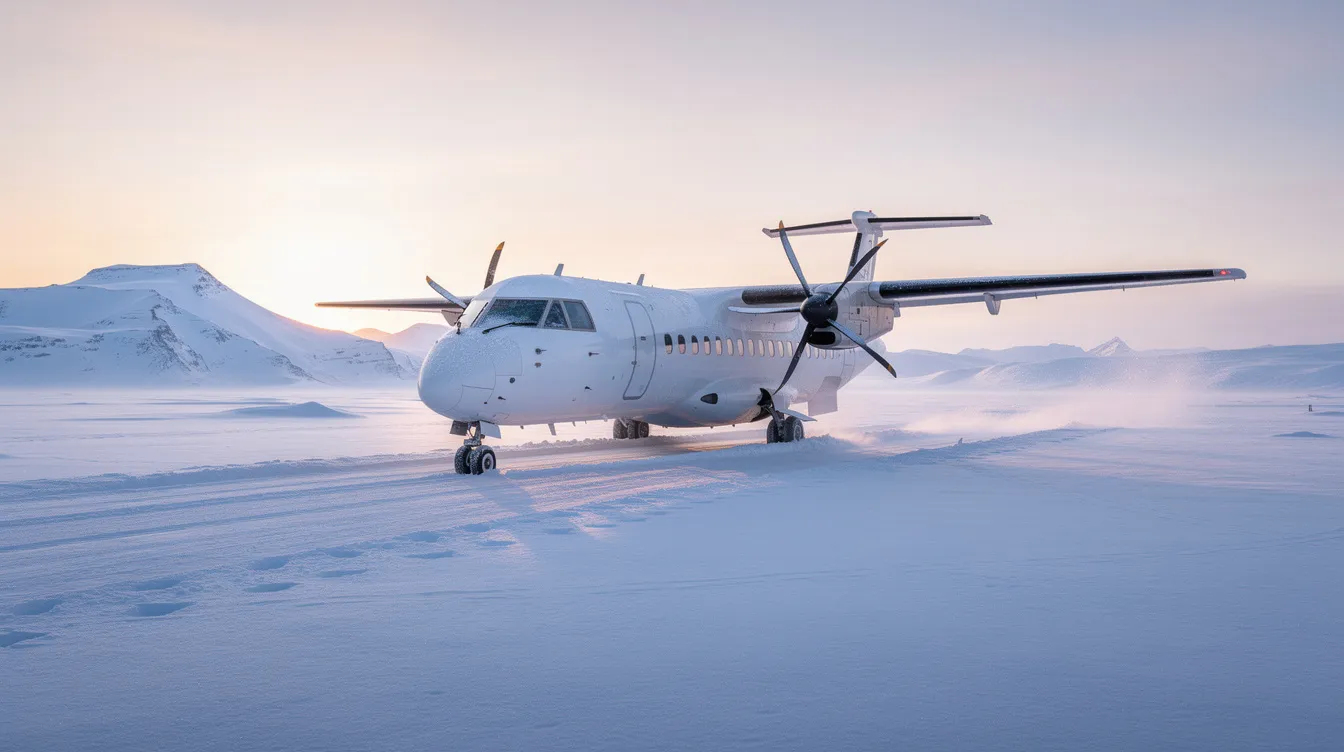
Jet B has an exceptionally low freezing point of -72°C (-97.6°F). That very low freezing point allows aircraft operations in harsh Arctic and sub-Arctic climates where Jet A-1 could approach its limits. Jet B is known for its enhanced cold-weather performance, and it remains the go-to fuel type in parts of northern Canada, Alaska, and Siberia. Jet B is primarily used in very cold climates like northern Canada.
The trade-off: Jet B's flash point is 20°C, making it more volatile and harder to handle safely than Jet A-1. That lower flash point increases fire risk during ground operations, fueling, and storage. Only aircraft whose fuel system is certified for wide-cut fuel can legally use Jet B, because seals, tanks, and vapor management must tolerate its higher vapor pressure.
Most BlackJet Jet Card flights will not encounter Jet B. But for trips into extremely cold environments or remote fields, understanding its role helps when assessing airport capabilities, affordable private plane options for these missions, and cold-weather operations planning.
Other Specialized Jet Fuels Around the World
Beyond Jet A, Jet A-1, and Jet B, several regional and military-specific fuels follow similar principles under different specifications of jet fuel standards.
TS-1 (Russia and CIS states). TS-1 is a kerosene-based fuel widely used in Russia and CIS nations. TS-1 meets the Russian standard GOST 10227 and is primarily used in Russian-built aircraft. TS-1 has a freezing point below -50°C (-58°F), which is lower than Jet A-1's -47°C limit. TS-1 is designed for enhanced cold-weather performance in the vast, cold Russian operating environment. TS-1 has higher volatility than Jet A-1 and a flash point near 28°C, which means handling protocols differ from Western standards.
JP-8 (NATO military). JP-8 is a military-grade jet fuel used by NATO forces under specification MIL-DTL-83133. It is essentially Jet A-1 with a few additives layered on top: corrosion inhibitors in JP-8 protect fuel system components, while fuel system icing inhibitors prevent ice formation in fuel lines. The freeze point matches Jet A-1 at -47°C. The United States military adopted JP-8 in the 1990s as its primary land-based turbine fuel, replacing the older wide-cut JP-4.
JP-5. Used aboard aircraft carriers, JP-5 has a minimum flash point of about 60°C, reducing fire risk on hot flight decks. It is one of the most commonly used fuels in naval aviation.
Other regional names exist. Chinese RP-3 and certain former Soviet designations (No. 1 Jet Fuel) are essentially equivalents to Jet A-1 under local naming conventions. When BlackJet positions an aircraft internationally for a worldwide charter, dispatch teams cross-check these local fuels against the aircraft's approved fuel list to maintain safety and warranty compliance, a key factor within any comprehensive private jet price analysis.
How Jet Fuel Differs from Aviation Gasoline (Avgas)
Jet fuel and aviation gasoline (avgas, sometimes called aviation gas) are not interchangeable. They serve different aircraft engines and aircraft categories, which is central when evaluating the best small private aircraft for different missions.
Avgas is a leaded, high-octane gasoline used in small piston-engine airplanes. The most common grade, Avgas 100LL, contains tetraethyl lead (TEL) as an anti-knock additive. It powers reciprocating piston engines found in training aircraft, crop dusters, and light general-aviation planes.
Jet fuel is not leaded and is designed for turbine engines, unlike aviation gasoline. The key property contrasts:
Property | Jet Fuel (Jet A/A-1) | Avgas (100LL) |
|---|
Engine type | Turbine (jet, turboprop) | Piston |
Base | Kerosene | Gasoline with TEL |
Flash point | ~38°C | Much lower (~-40°C) |
Volatility | Lower | Higher |
Lead content | None | Contains TEL |
Using the wrong fuel, jet fuel in a gasoline piston engine or avgas in a turbine, can cause catastrophic engine failure. Fueling discipline at FBOs is a core safety practice in private aviation.
The aviation industry is trending toward unleaded avgas and sustainable aviation fuel for piston fleets. BlackJet's turbine fleet relies on kerosene-based jet fuels (Jet A and Jet A-1) only, so avgas is irrelevant to turbine-powered jet operations.
Key Characteristics That Define Jet Fuel Performance
Fuel specifications are built around a handful of critical physical and chemical properties. The ASTM D1655 is the standard specification for aviation turbine fuels, and it defines limits for each.
Energy content. Jet A and Jet A-1 deliver a minimum net heat of combustion of about 42.8 MJ/kg. This figure directly drives fuel efficiency, range, and payload. Higher energy per kilogram means longer nonstop legs for the same fuel weight.
Flash point. The minimum flash point of 38°C for Jet A and Jet A-1 ensures safe storage, transport, and ramp handling. Fuels with a lower flash point (like Jet B at 20°C or TS-1 at 28°C) require stricter protocols.
Freezing point. At cruise altitudes of FL350 to FL450, ambient temperatures can reach -56°C. Fuel must remain liquid in cold-soaked wing tanks. A higher freezing point fuel risks fuel freezing, filter clogging, and engine flame-out.
Thermal stability. The fuel's ability to resist breakdown at high temperatures protects injectors and combustion chambers. Tests like the JFTOT (Jet Fuel Thermal Oxidation Test) measure deposit formation after heating fuel at 260°C for 2.5 hours. Enhanced thermal stability reduces maintenance costs.
Additives. Additives prevent harmful deposits from forming in jet fuel. Additives also ensure jet fuel remains free from microbial growth, which can clog filters and corrode tanks. Light petroleum distillates carry trace contaminants; additives manage them.
Density. Jet fuel density at 15°C ranges from 0.775 to 0.840 kg/L, affecting weight-and-balance calculations. You can read more about how much Jet A fuel weighs and why it matters for dispatch.
How These Fuel Types Affect Private Jet Range, Comfort, and Scheduling
For BlackJet clients, fuel type quietly influences how far they can fly, how quickly they arrive, and how reliably their itinerary holds, alongside financial considerations like jet card cost per hour.
Higher energy content and optimized kerosene-based jet fuels translate into longer nonstop legs. A Bombardier Global 7500 burning Jet A-1 can fly from New York to London, or Los Angeles to Tokyo, without a refueling stop. The fuel's energy density is one reason long-range private jets can cover 7,000+ nautical miles on a single fill, including large-cabin options when selecting the best private jet for 20 passengers.
Correct freezing point margins let jets cruise higher, above weather and commercial traffic, improving comfort, fuel efficiency, and on-time performance. When fuel flow remains uninterrupted at -55°C ambient, pilots hold optimal cruise altitude instead of descending into turbulence or congestion.
Fuel choices and uplift locations are part of BlackJet's behind-the-scenes planning. Dispatch balances cost, fuel type, local fuel stability, and environmental impact at each stop. Advanced digital scheduling tools account for local fuel availability and quality at smaller FBOs and international fields, so Jet Card members experience consistent aircraft operations rather than last-minute delays caused by fuel sourcing issues. For a deeper look at how fuel cost affects hourly rates, see BlackJet's guide to understanding fuel surcharges and our broader overview of jet card pricing structures and benefits.
Technology, Safety, and Fuel Quality in BlackJet Operations
Jet fuel is a safety-critical element. A single batch of contaminated fuel can ground an aircraft or, worse, cause an in-flight emergency. BlackJet enforces strict supplier and quality standards across its partner network as part of its broader premium private jet card and membership programs.
All partner operators must meet or exceed international fuel standards, including ASTM D1655 for Jet A and DEF STAN 91-091 for Jet A-1. At the aircraft, rigorous filtration and testing catch water, particulates, and microbial contamination before fuel enters the engines.
Onboard fuel system components: filters, water separators, and fuel heaters; keep contaminants out of aircraft engines. Proper fuel choice supports improved thermal stability and cleaner combustion, reducing deposit buildup on injectors and turbine blades. Fuel system icing inhibitors prevent ice formation in fuel lines during high-altitude flight operations, while specialized additives ensure fuel remains free from microbial growth that could clog filters.
BlackJet's real-time flight support verifies fuel type, batch quality, and any required additives (anti-icing agents, biocides, static dissipators) on each leg, complementing the predictability and access guarantees offered by the best jet cards for frequent flyers. This verification is especially important at smaller FBOs and international fields where fuel stability and supply chain transparency can vary.
These measures protect both safety and asset value. Engines, fuel pumps, and injectors last longer when fed clean, spec-compliant fuel, which in turn ensures reliability and consistency for Jet Card members and supports accurate tracking for Jet Card tax deductions.
Sustainable and Specialized Jet Fuels: Beyond Traditional Kerosene
Sustainable Aviation Fuels (SAF) are produced from renewable resources, including waste oils, agricultural biomass, and synthetic pathways. SAF is certified as a drop-in replacement for conventional jet fuel, meaning it meets the same ASTM D1655 and DEF STAN 91-091 performance benchmarks as fossil fuels.
SAFs have similar properties to fossil jet fuel: matching energy density, flash point, and freezing point specifications so that existing fuel systems, engines, and handling processes work without modification. In practice, SAF is often blended at 30% to 50% with conventional jet fuel to maintain identical flight characteristics while stretching limited supply. Blended SAF is being researched as a sustainable alternative in aviation, with trials pushing toward higher blend ratios.
The carbon emissions reduction potential is substantial. Biofuels could reduce flight-related greenhouse gas emissions by 60 to 80 percent on a lifecycle basis, accounting for feedstock growth, production, and combustion. The aviation industry is actively pursuing sustainable alternative fuels to meet net-zero targets set for 2050.
Research into hydrogen propulsion, electric aircraft, and synthetic fuels continues, but none of these alternative fuels are ready for mainstream business aviation operations today. High-performance jet fuels based on kerosene will remain the standard for private and commercial aircraft for at least the next two decades.
BlackJet's commitment to carbon-neutral flights includes prioritizing SAF where available and investing in verified carbon offset programs when supply is limited, even for travelers focused on the cheapest private jet options. Sustainable jet fuels are part of a broader strategy to reduce air pollution and improve air quality without compromising the performance that Jet Card members expect.
Frequently Asked Questions About Jet Fuel Names
Is jet fuel the same everywhere? Not exactly. Jet A dominates in the United States. Jet A-1 is the standard for most of the rest of the world. TS-1 is used across Russia and CIS countries. All three are kerosene-based fuels with broadly similar properties, but they differ in freezing point, flash point, and additive requirements. Flight operators must verify which grade is available at each airport.
Can jet engines run on diesel fuel or gasoline? Some turbine engines can operate on approved diesel-type fuels in emergencies because diesel fuel and kerosene share similar hydrocarbon ranges. Standard practice, however, requires certified aviation turbine fuel only. Gasoline is never approved for turbine engines due to its low flash point and high volatility.
What fuel do private jets use? Nearly all modern business jets use Jet A or Jet A-1, aligned with local availability. These are the most commonly used fuels across commercial and private fleets. Jet B may appear at remote Arctic fields, but it is rare in typical private jet use.
Does jet fuel choice affect Jet Card pricing? Fuel price and fuel type influence hourly rates and surcharges. Jet fuel use at remote or international airports with limited supply can cost more per gallon, which is especially relevant when comparing entry-level options like a 225-hourjet card program. BlackJet smooths this variability with predictable Jet Card pricing, whether you're evaluating a 100-hour jet card cost structure, so members avoid surprise cost swings tied to fuel markets.
How Jet Fuel Choice Fits Into the BlackJet Experience
Knowing what jet fuel is called explains how your private jet achieves its range, speed, and reliability. Jet A, Jet A-1, Jet B, TS-1, and JP-8: each grade exists because aircraft operating in different climates, altitudes, and mission profiles need fuel matched to those conditions.
BlackJet manages all fuel-related complexity — fuel type, sourcing, quality control, and sustainability — behind the scenes. Jet Card members benefit from optimized fuel efficiency and routing, which supports consistent flight times and carbon-neutral flight operations without extra effort on their part through programs like the BlackJet 25+ Hour Jet Card.
If you fly regularly for business or leisure and want the precision of private aviation without the operational burden, explore BlackJet's Jet Card programs, consider options to buy a seat on a private jet, or speak with an aviation advisor about how private jet access can simplify your regular routes.


 Sign up with google
 Sign up with Apple