The word "vaunt" means to boast or brag with deliberate showiness, and it can work as both a verb—someone can vaunt an achievement—and a noun for the act of boasting itself. It sits at the intersection of language and aspiration, equally at home in a dictionary entry and a luxury brand campaign.
Understanding how and when to use "vaunt" helps business travelers, marketers, and luxury brand professionals communicate prestige and credibility without crossing into empty boasting.
What "Vaunt" Means Today (Answer the Query Fast)
To vaunt means to brag or boast about something with a deliberate sense of showiness. As a verb, it describes speaking proudly-often with exaggerated flourish-about achievements, possessions, or qualities. As a noun, it refers to the act of boasting itself. Merriam Webster records both senses and positions "vaunt" as more formal and rhetorical than its near-synonyms.
In modern English, vaunt appears in headlines ("the much-vaunted safety record"), marketing copy for luxury goods, sports commentary, and travel branding. The adjective "vaunted" describes something widely praised but implies this praise is excessive, and vaunted is often used ironically to signify undeserved praise. Common synonyms for vaunt include brag, boast, and flaunt-but each carries different weight. To vaunt feels elevated and performative; to boast is more neutral, sometimes justified by evidence; to brag is casual and frequently negative, suggesting arrogance without polish. Vaunt often implies excessive pride or self-promotion, while vaunt can also carry a negative undertone suggesting arrogance or inflated claims. It is used more frequently in formal writing than in everyday conversation, which is precisely why brands reaching for prestige gravitate toward it. Vaunt can describe not only self-promotion but also the praise of objects or achievements-a critical nuance for marketers.
Origins and Etymology of "Vaunt"
Etymology reveals why a word carries the emotional charge it does-an essential consideration for anyone crafting premium brand messaging.
"Vaunt" entered English through Middle English and Anglo-French forms like vanter and avaunter, both traceable to late Latin vānitāre, meaning "to make vain or empty." That Late Latin verb derives from Latin vānus-"empty," "foolish," "vain"-the same root behind the English word "vanity." Vaunt is derived from the Latin term meaning vain or empty, which explains the whisper of hollowness the word still carries. In its earliest recorded uses-the noun attested since the 14th century, the verb since the 15th-vaunting was close to vain display, suggesting that whatever was being praised might not deserve the attention.
Historical usage of vaunt often involves boasting about military might or strength: medieval chronicles described knights who vaunted their prowess before battle. Over the centuries, however, the meaning softened. By the 18th and 19th centuries, to vaunt could simply mean to flaunt success rather than to trumpet emptiness. That evolution-from hollow pride to confident presentation-is exactly what makes the word attractive to modern brands in sports, travel, and media, provided they have the substance to justify the claim.
Nuances: "Vaunt" vs. "Boast" vs. "Brag" in Real Usage
For executives, copywriters, and high-end brands, selecting the right word is the difference between sounding confident and sounding crass. Each synonym of "vaunt" occupies a distinct register.
A national government might vaunt its economic growth in an investor deck, projecting authority and pomp befitting a formal audience. A boutique hotel could boast an award-winning sustainability program-credible, neutral, appropriate for marketing collateral. A fan might brag that their team clinched the championship for the tenth consecutive season-casual, sometimes grating, but authentic in social conversation. "Vaunt" works best in editorial or narrative contexts: "the much-vaunted carbon offset program" carries gravitas that "bragged-about program" never could. It is more often used transitively-you vaunt achievements, records, technology-though intransitive literary uses persist. Derivatives like "vauntingly" and "vaunter" amplify a tone of theatrical pride, sometimes tipping into skepticism if overused. For luxury brands communicating to discerning customers, "vaunt" signals ambition; "boast" signals proof; "brag" signals informality. Choose accordingly.

"Vaunt" in Private Jet Travel: From Name to Experience
The concept of proud display maps naturally onto private jet travel, where every flight is a statement about priorities, time, and life on one's own terms. In the mid-2020s, a wave of "Vaunt-style" private jet memberships emerged, built around app-based access, one-way flights, and a single flat membership fee covering an entire year of potential travel.
These models tap into repositioning flights-aircraft that must fly empty to reach their next scheduled departure or return to base. Rather than letting that capacity go to waste, operators began surfacing these legs through consumer-friendly apps, turning logistical necessity into adventure. Members could sign up, browse available routes, and potentially board a private jet at a fraction of typical charter costs. Vaunt-style flights focus on last-minute, one-way travel, and private jet memberships can save 30–70% on typical charter rates. Private jets are fully reserved for selected members only, and members can bring friends and pets on private flights-making it easy to share the moment with companions.
Picture a traveler in Los Angeles who spots a last-minute one-way flight to Aspen on a Friday morning. By afternoon, they're airborne, phone in hand, posting the experience for their network. That's the kind of story these memberships were designed to generate.
From BlackJet's perspective, such models deserve credit for making private flights more visible to a broader audience, much like other unlimited private jet membership programs that trade higher flexibility for schedule uncertainty. However, our jet card programs serve travelers who need planned, reliable access-not just spontaneous departures.
Flat Membership Fees and One-Way, Last-Minute Flights Explained
Here's how the typical Vaunt-style structure works: members pay a flat fee of $2,995 annually, which unlocks the ability to view and request possible flights throughout the year. There are no per-flight fees or hidden charges beyond the membership itself. New flights are posted daily in the app, and members join waitlists for specific flights via the app, selecting routes and dates that match their schedule.
Confirmation arrives roughly 24 hours before departure-last-minute flights are confirmed about 24 hours before departure, so flexibility is essential. Each member can use one priority upgrade per year to jump ahead on a waitlist for a high-demand leg. Members receive flight confirmations 24 hours before departure, and concierge services manage flight details for members who prefer a hands-off experience. Real-time support is available through a mobile app for users who need to adjust plans. Jet cards in this model offer unlimited flights with one annual membership, and jet card programs provide fully private flights for members.
The benefits are tangible: lower costs per trip compared with traditional private jet chartering, the ability to fly solo or bring friends along, and access to the entire plane rather than a single seat. Private jets can accommodate friends, family, and pets. Last-minute flights can save 30–70% compared to traditional charters.
The trade-offs are equally real. Members must arrange a return flight separately since flights are one-way. If a preferred route isn't available, there's no guarantee of alternatives. Users should expect limited control over dates and aircraft, and the possibility that flights cancel if repositioning needs change. New flights are added daily for member access, but availability fluctuates with operator schedules and seasonal demand.
BlackJet's jet card membership model works differently: prepaid flight hours-25-hour, 50-hour, or custom-deliver predictable pricing and full control over round trips, multi-leg itineraries, and aircraft selection, aligning with what many travelers look for when comparing jet card cost and membership pricing across providers.
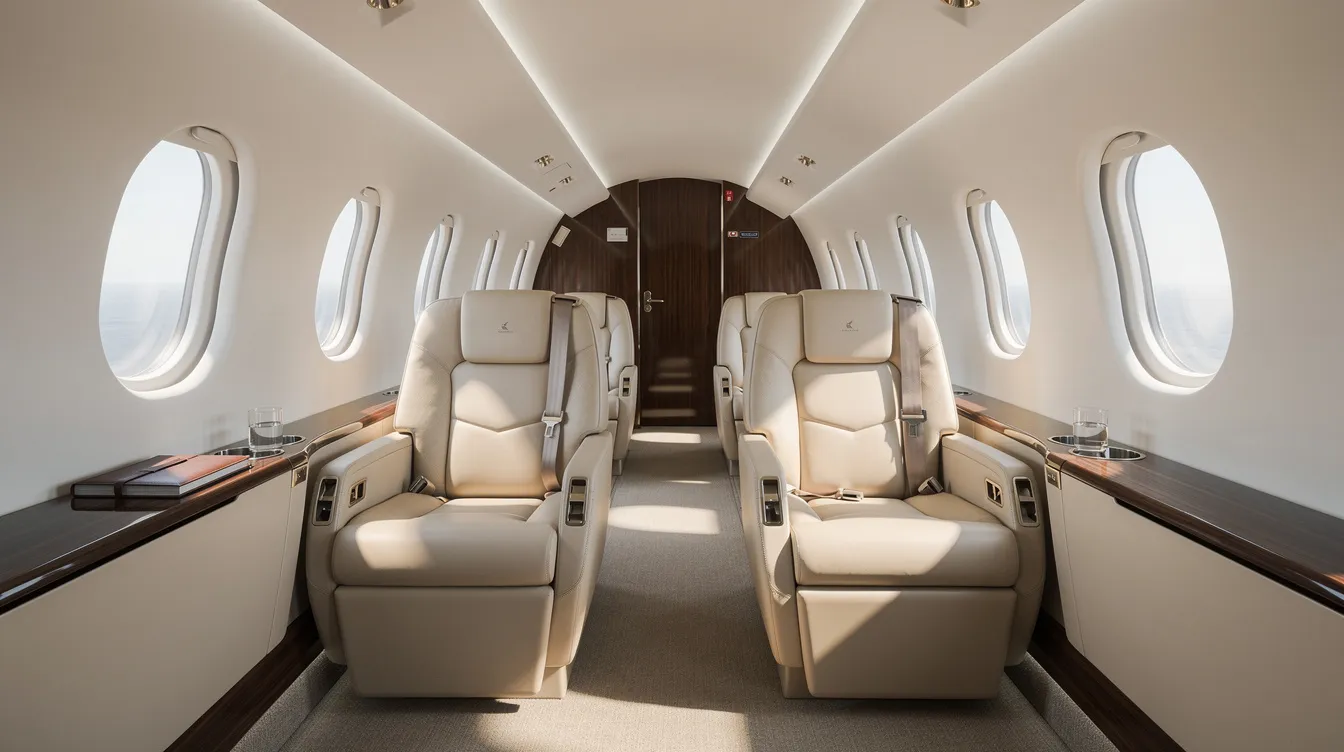
BlackJet vs. Vaunt-Style Memberships: Control, Safety, and Sustainability
Both models promise access to a private jet, but they serve different traveler profiles. Vaunt-style programs attract those who prize spontaneity and are willing to accept schedule uncertainty. BlackJet serves customers who need to book with confidence, schedule round trips, and secure specific aircraft categories-from turboprops to large-cabin jets.
Safety is where the difference sharpens. BlackJet's safety certification standards include rigorous operator vetting aligned with ARG/US ratings and independent auditing, reflecting the broader realities outlined when assessing how safe private jets really are. Private jet charters through BlackJet offer fully private flights for members aboard a fleet that spans the HondaJet Elite (accommodating approximately 4 passengers), the King Air 350 (carrying about 8 passengers), and the Citation CJ3/XLS (ideal for 6 to 8 passengers). The Citation Excel is also part of the luxury jet fleet, giving travelers access to cabin classes matched precisely to their needs.
On sustainability, carbon-neutral flights are offered by private aviation companies like BlackJet at no additional cost to members. Our carbon offset approach covers every trip, while Vaunt-style programs argue that filling repositioning flights inherently reduces waste-a valid but narrower claim.
Technology also diverges. Vaunt-style apps surface last-minute deals; BlackJet's digital platform provides 24/7 trip planning, real-time support, and transparent details across every aircraft class. For private travel that demands reliability, the distinction matters. Contact our team any time for specifics.
Private Jets, Repositioning Legs, and the Economics Behind the "Vaunt"
About 30% of private jet flights are flown empty-aircraft repositioning to their next departure point or returning to base without passengers on board. That inefficiency represents a massive economic opportunity. Operators discount these empty legs because any revenue covering fuel and crew costs outperforms flying an empty ride with zero return.
Vaunt-style platforms aggregate these legs into a browsable marketplace. One-way repositioning flights can save 30–70% compared to charters booked at standard rates, and repositioning flights can save 30–70% compared to typical charters-making the savings real for flexible travelers.
Consider a light jet repositioning from Miami to New York in March after dropping off spring-break travelers, or a midsize aircraft deadheading from Dallas to Las Vegas before a major conference weekend. These trips, which would otherwise generate no revenue, become accessible to members who can adjust their plans on short notice. Industry data from April 2026 recorded nearly 14,000 new empty-leg listings across 127 operators, with average asking prices around $12,326-illustrating the scale of the market.
BlackJet also leverages fleet efficiencies and network optimization, but channels those benefits into predictable jet card pricing and reliable access to premier destinations rather than only opportunistic deals, an approach that becomes clearer when you understand jet card cost per hour and how it compares to ad-hoc charter. The flight time you purchase is yours to use on your terms-no waitlists, no crossed fingers.
"Vaunt" Beyond Aviation: Sports, Media, and Modern Branding
"Vaunt" has earned a top spot as a brand name across sectors that trade in confidence and spectacle. In sports and entertainment, a venture co-founded by former NBA player and executive Roger Mason Jr. adopted "Vaunt" for a company focused on helping athletes and creators showcase off-court talents, produce events, and connect directly with fans. The venture raised $5 million in Series A funding in 2022, signaling investor confidence in the brand's premise: that athletes deserve platforms to vaunt their full range of skills, not just their game-day highlights.
Across tech, media, and travel, brands adopt "vaunt" or "vaunted" language to encourage customers to share stories-turning individual pride into social proof. A fitness brand might run a campaign around "vaunt your progress"; a travel company might headline "the much-vaunted route to Patagonia," just as an aviation brand might spotlight the best features of a 20 million dollar private jet to signal status and spectacle. These uses are legally and operationally unrelated across the country, linked only by a word that connotes confidence, showmanship, and the desire to explore new territory.
How to Use "Vaunt" Effectively in Writing-and When to Avoid It
If you write for luxury, travel, or sports audiences, note that "vaunt" works best in formal or editorial contexts. A journalist praising "a much-vaunted safety record" deploys it perfectly. A brand highlighting "a vaunted fleet of carbon-neutral private jets" backs the word with substance and a transparent private jet price list of costs and options, making the future promise credible rather than hollow.
The risk sits in the word's DNA. Because of its historical connection to vanity and empty pride, "vaunt" can imply overstatement or skepticism-especially when used ironically. Careful brands should prefer "vaunt" in narrative copy, use "boast" or "highlight" in direct marketing where warmth matters, and leave "brag" for casual social channels where authenticity outweighs polish.
At BlackJet, we aim to earn what clients could vaunt about-rigorous safety standards, seamless technology, and carbon-neutral operations-without resorting to hollow claims, all anchored in our broader offering of premium private jet cards and jet card programs. The goal isn't louder language; it's a better experience that speaks for itself.
Conclusion: From Words to Flights Worth Talking About
"Vaunt" means to boast with deliberate flourish-a word that now surfaces in dictionaries, sports media, and private jet travel models built around flat membership fees and spontaneous flights. It captures something real about how people want to share their experiences, from last-minute one-way private flights to curated membership adventures.
The distinction that matters, though, is between a story worth telling and a promise worth keeping. BlackJet's jet card programs deliver safety certification, carbon-neutral operations at no additional cost, and technology that gives clients control-not just last-minute options. Whether you fly for business or leisure, the journeys worth vaunting are the ones built on substance.
Explore how BlackJet can reshape your next trip into something you'll be proud to talk about-no empty vaunts required. Discover premium jet card access today.


 Sign up with google
 Sign up with Apple