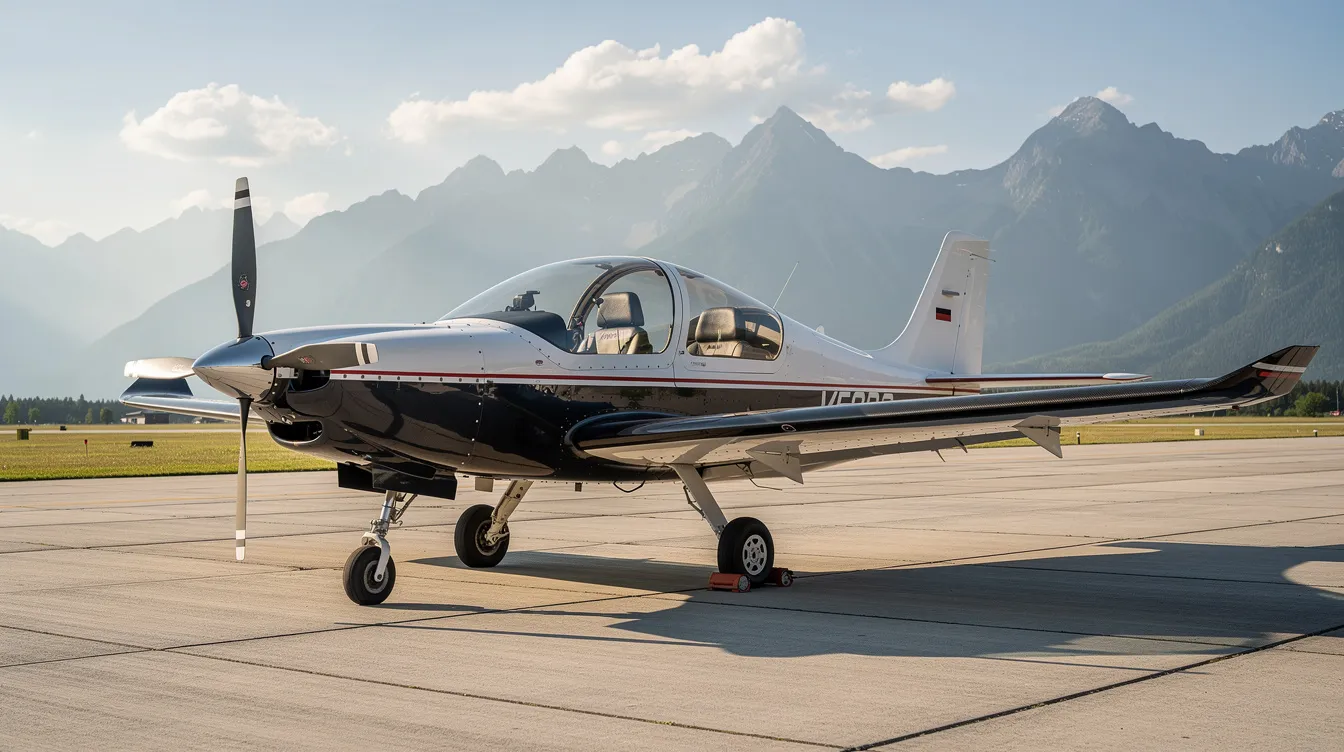
Few aircraft configurations reveal as much about a pilot's priorities as the tandem seat aircraft. Whether you are drawn to aerobatics, building stick-and-rudder proficiency, or simply appreciate the aerodynamic elegance of a narrow fuselage slicing through the air, tandem seating occupies a distinct and respected place in aviation. This guide explores the performance, training value, and practical ownership considerations of tandem aircraft-and explains how they fit alongside professionally crewed private jets for travelers who demand the best of both worlds.
Why Tandem Seat Aircraft Matter for Discerning Pilots and Travelers
Tandem seating places two occupants in line along the airplane's longitudinal axis-one behind the other-rather than side by side. The layout matters because it directly shapes the aircraft's drag profile, visibility, and control characteristics. For aviation enthusiasts who value precision and performance, this is not a minor detail; it defines the entire flying experience.
Consider the difference between a Pitts S-2C biplane and a typical side-by-side trainer. The Pitts delivers roughly 2,900 ft/min climb rates and crisp roll response partly because its narrow fuselage sheds parasitic drag. The Extra 300L, another tandem design, cruises at approximately 169 KTAS and handles ±8 G in dual aerobatic mode. Meanwhile, the homebuilt Vans RV-8 picks up an estimated 10–15 knots over its side-by-side sibling, the RV-7, largely due to its slimmer cross-section.
For affluent pilot-owners, understanding these trade-offs is a strategic advantage. A tandem aircraft is the prime choice for weekend sport flying, advanced flight training, and sharpening airmanship within a few hundred nautical miles of home. But for time-sensitive business trips, multi-passenger comfort, or international routes, the mission shifts entirely. That is where BlackJet's Jet Card programs deliver professionally crewed jets, carbon-neutral flights, and 24/7 digital booking that complement the hands-on fun of a personal tandem plane.
What Is a Tandem Seat Aircraft?
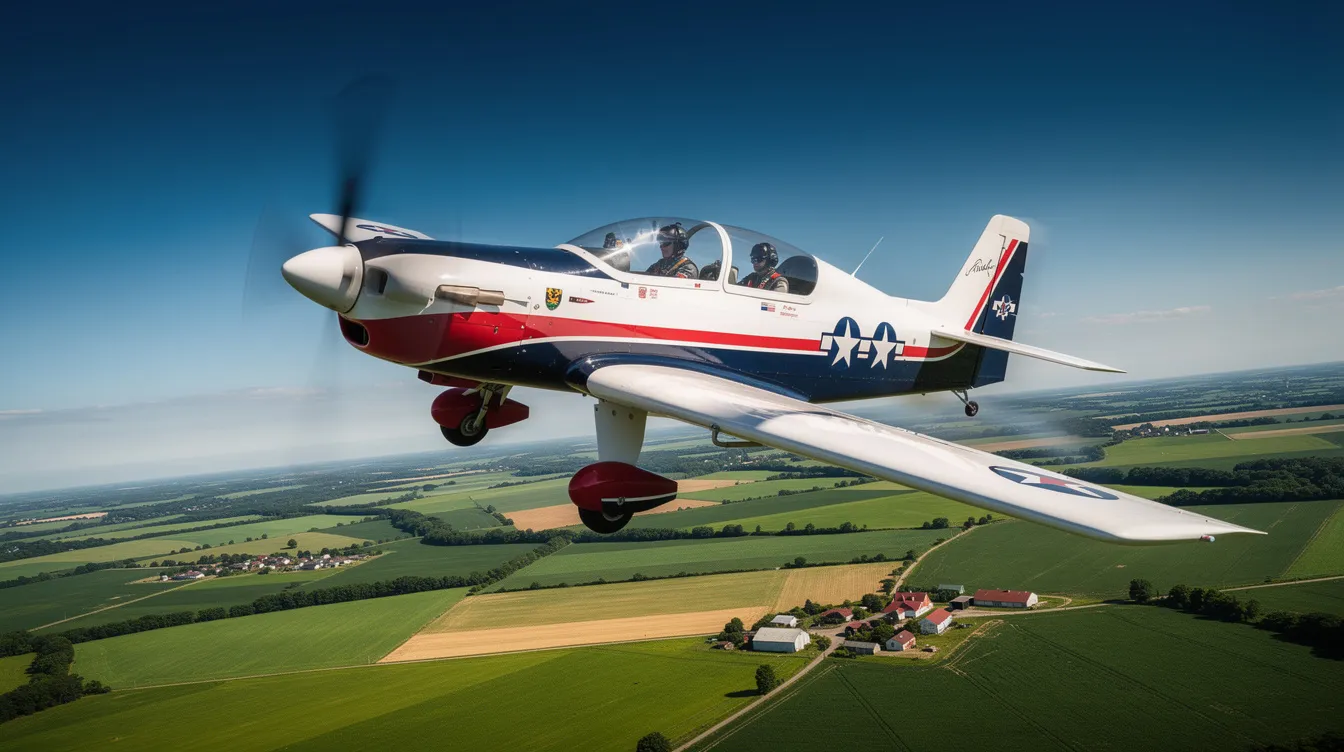
A tandem seat aircraft seats its occupants fore and aft on or near the centerline, with the front seat typically occupied by the pilot or student and the rear seat by an instructor, observer, or passenger. This contrasts with side-by-side configurations where occupants share lateral cabin space. Two-seater planes are commonly used for flight training and aerobatics, and the tandem layout is especially prevalent in these roles.
Homebuilt and sport aircraft – Vans RV-8, RV-4, and similar designs built for speed and aerobatic ability.
Aerobatic trainers – Pitts S-2 series, Extra EA-200/300 family, optimized for high-G maneuvers and competition.
Military trainers – Pilatus PC-21, Textron T-6 Texan II, designed for basic through advanced pilot instruction.
Bush and utility types – Piper PA-18 Super Cub, Aviat Husky, where forward visibility over the nose is critical for short-field and backcountry operations.
Gliders – Tandem-seat configurations are common in gliders like the Grob G 103 to minimize drag while providing dual instruction capability.
Each category leverages the tandem layout for a specific reason-whether that is aerodynamic efficiency, visibility, or weight distribution along the centerline.
History and Evolution of Tandem Seating in Aviation
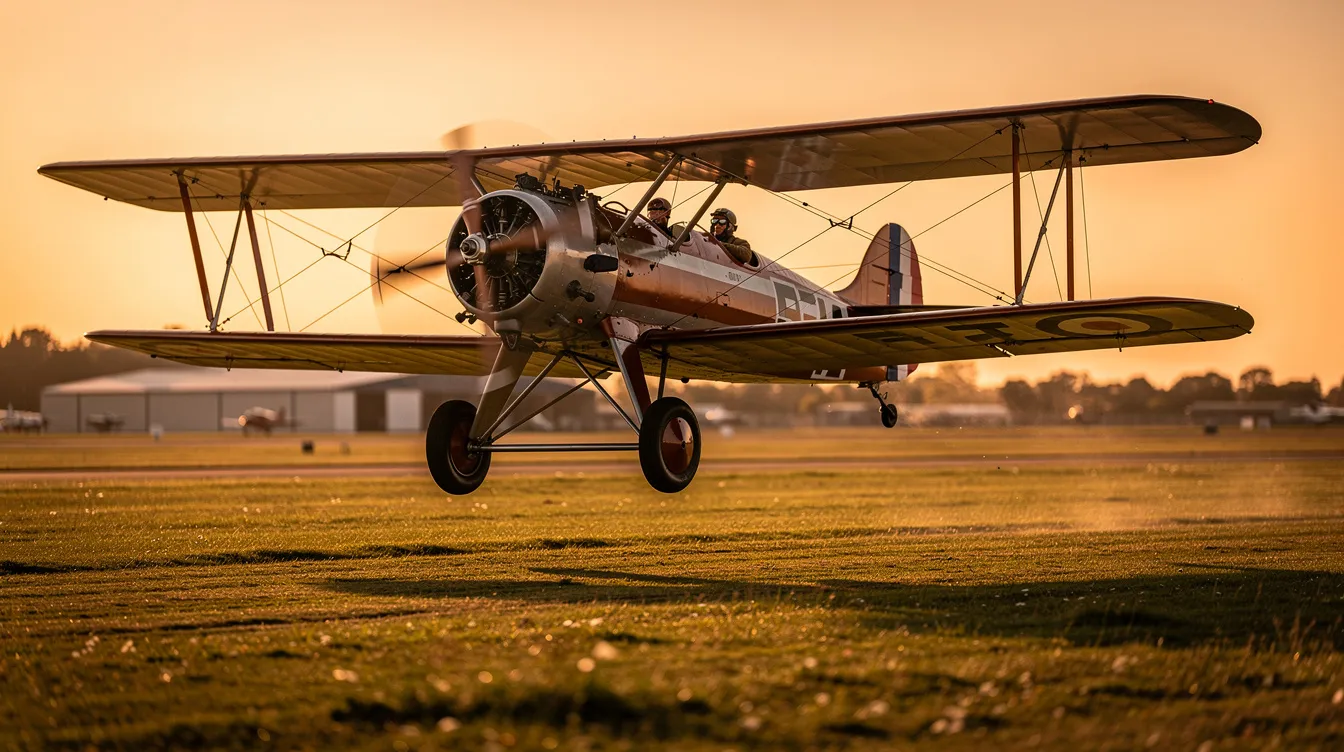
The tandem cockpit is as old as practical flight training itself. In the earliest days of powered aviation, open-cockpit biplanes had narrow wooden or steel-tube fuselages that simply could not accommodate two people side by side.
1910s–1930s: The Curtiss JN-4 "Jenny" (1915–1918) became one of the world's most recognized tandem trainers. Its fore-and-aft seating was a natural consequence of the slender airframe. Thousands of military pilots earned their wings in tandem biplanes during World War I and the interwar years.
1940s: World War II cemented tandem seating in military training. The North American T-6 Texan trained Allied pilots across multiple theaters, while early Yakovlev and Hawker designs used tandem cockpits for development and operational conversion. Instructors sat behind students, monitoring control inputs and intervening when necessary.
1960s–1970s: The jet age preserved the tradition. The Aero L-39 Albatros (first flight 1968) and BAE Systems Hawk (1974) both adopted stepped tandem cockpits with ejection seats, allowing instructors to watch over students while preserving the narrow fuselage critical for jet-speed aerodynamics.
1950s–present: Civil tandem aircraft evolved in parallel. Sport and aerobatic types-Pitts, Decathlon, Citabria-gained popularity from the 1950s onward. Modern composite designs, bush aircraft like the American Legend Cub, and advanced military trainers such as the Pilatus PC-21 continue the lineage into the 2020s.
Key Aerodynamic Advantages of Tandem Seat Aircraft
Tandem seating minimizes drag and enhances performance through several interconnected aerodynamic mechanisms.
Reduced frontal area. A narrower fuselage presents less surface to the oncoming air. Comparing the Vans RV-8 (tandem) with the RV-7 (side-by-side), the RV-8 consistently cruises faster for comparable engine power-the Vans RV-7 achieves speeds of 140–175 knots, while the RV-8 typically sits at the upper end or slightly above that range, thanks to its slimmer profile.
Unobstructed forward visibility. Tandem aircraft provide unobstructed forward visibility for pilots, which is critical during aerobatics, formation work, and bush operations where seeing over the nose determines safety.
Centerline weight distribution. Because both occupants sit on the longitudinal axis, tandem configurations allow for a greater range of center of gravity locations without asymmetric loading. This produces more balanced control feel, and weight shifts in tandem aircraft can significantly affect balance and control, making proper loading essential but also giving designers more latitude.
Improved spin and aerobatic behavior. Aerobatic aircraft benefit from tandem seating for enhanced maneuverability. Roll inertia is more uniform, yaw coupling is reduced, and spin recovery is more predictable-all reasons why competition aerobatic schools favor the layout.
Structural efficiency. Tandem wings and narrow fuselage structures reduce bending stresses on the fuselage structure, contributing to lighter airframes and longer fatigue life.
The practical result: lower fuel burn per knot at cruise, which can modestly reduce operating costs over time for owner-pilots who fly regularly.
Tandem Seating vs Side-by-Side: Layout, Comfort, and Use Cases
Choosing between tandem and side-by-side is ultimately a mission decision. Neither layout is universally superior; each excels in specific roles.
Tandem seating strengths:
Superior forward and downward visibility, especially in high nose-attitude maneuvers and backcountry approaches.
Narrower fuselage translates to measurably less drag-an advantage for sport, aerobatic, and military training aircraft.
Communication in tandem-seat aircraft is more challenging due to the seating arrangement, requiring intercom systems and deliberate crew coordination. Some instructors view this as a benefit: it forces students to develop self-reliance rather than relying on constant verbal cues.
Side-by-side strengths:
Easier conversation and shared instrument panel scanning, which is valuable for initial flight training and cross-country touring.
More shoulder and hip room; trainers like the Cessna 172 and Diamond DA40 provide wider cabins suited to longer flights.
Better for tasks that involve maps, tablets, or collaborative cockpit management.
Comfort trade-offs in tandem cockpits:
Lateral space is tighter, though vertical headroom is often generous under a bubble canopy.
Rear-seat occupants may have a partially obstructed forward view behind the pilot's head and helmet.
Acoustic and thermal insulation tends to be minimal compared with enclosed side-by-side cabins.
For BlackJet clients-executives and frequent travelers who prioritize multi-passenger capacity, stand-up cabins, and in-flight productivity-tandem cockpits are clearly not the answer for business travel. They are, however, an exceptional tool for the person who values hands-on flying as a separate pursuit.
Flight Training in Tandem Aircraft
Tandem seating is advantageous for military and flight training environments, and it has been that way since the Jenny era. The layout persists because it works: the student up front focuses on instruments and the outside world, while the instructor monitors from behind.
Tailwheel and bush training: The Piper PA-18 Super Cub remains a go-to bush airplane for earning a tailwheel endorsement and developing stick-and-rudder feel.
Aerobatic instruction: The Extra 300L and Pitts S-2B/C are standard equipment at advanced aerobatic schools, where climb rates exceeding 3,200 ft/min and load limits of ±8 G (dual) build the confidence and muscle memory that define skilled pilots.
Military pipelines: The PC-21 and T-6 Texan II serve as primary-through-advanced trainers for air forces worldwide.
The Cessna 152 is a popular two-seater trainer aircraft for initial instruction, though it uses a side-by-side layout. Students often transition from it to tandem types as they advance. Transitioning between aircraft types requires checkouts with a qualified instructor.
Instructor visibility can be limited in the rear seat of tandem aircraft, which is why many designs use a stepped cockpit, raising the rear seat a few inches for better sightlines. Despite this compromise, tandem seat arrangements help develop independent flying skills in students, since the trainee cannot simply glance sideways for reassurance.
Flying two-seater planes requires proper licensing and recurrent training. Typical pilot licenses include PPL, LAPL, and Sport Pilot, each with different privileges and qualification requirements. A private pilot license remains the most common pathway for recreational tandem flying.
Many BlackJet clients are rated pilots who built their skills in small tandem trainers. They now split their time commitment between personal sport aircraft for proficiency and professionally crewed jets for business, often leveraging the best jet cards for frequent flyers to keep costs predictable. It is a practical balance that serves both passion and productivity.
Popular Tandem Aircraft Models and Their Roles
The tandem aircraft world spans everything from fabric-covered taildraggers to turboprop military platforms. Here are the models most relevant to today's pilot-owners and aviation enthusiasts.
Civil sport and aerobatic:
Extra EA-200/300 series – cruise ~169 KTAS, range ~500 nm, ±8 G dual. The benchmark for unlimited aerobatic competition and upset recovery training.
Pitts S-2B/C – cruise ~145–150 KTAS, range ~240–300 nm, climb ~2,900 ft/min. The classic biplane for airshow and sport flying.
Vans RV-4/RV-8 – homebuilt tandem monoplanes offering sport aircraft performance at accessible build costs.
Blackshape Aircraft Prime – a carbon-fiber tandem trainer designed for both civil and military screening, featuring modern avionics and an aerobatic-capable airframe.
Shark UL – an efficiency-focused ultralight with retractable gear; the Shark aircraft features ergonomic HOTAS sidestick controls for intuitive handling.
Bush and utility:
Piper PA-18 Super Cub – cruise ~90–110 knots, ideal for backcountry strips and float operations.
Aviat Husky A-1 – similar mission, with a slightly more refined cabin and updated panel options.
American Legend Cub – modern production versions of the classic Cub layout, popular for both training and recreation.
Military trainers:
Beechcraft T-34 Mentor (1950s) – piston-powered tandem trainer that served dozens of air forces.
Aero L-39 Albatros – Cold War–era jet trainer, now a popular warbird. Cruise ~375 KTAS, range ~600+ nm.
Pilatus PC-9/PC-21 – the PC-21 delivers ~330 KTAS cruise, 720 nm range, a pressurized stepped tandem cockpit, and ejection seats.
Textron T-6 Texan II – turboprop military trainer used by the USAF and allied nations.
Light Sport Aircraft can weigh up to 1,320 lbs under FAA rules, placing many of the lighter tandem designs in the LSA category with streamlined certification.
Performance Metrics: Speed, Range, and Payload in Tandem Aircraft
Performance is where tandem aircraft earn their reputation-and where their limitations become clear. Here are the numbers a buyer, student, or pilot-owner should know.
Speed:
Cruise speed for trainers is 90–120 knots (Super Cub, basic LSA types).
Cruise speeds for two-seater planes range from 90 to 175 knots across the piston-powered spectrum.
High-performance turboprop trainers like the PC-21 exceed 330 KTAS.
Range:
Typical range for two-seater planes is 400–800 nautical miles, depending on fuel capacity and power setting.
Aerobatic-focused designs sacrifice range for weight savings: the Pitts S-2C offers ~240–300 nm; the Extra 300L reaches ~500 nm.
Climb:
Climb rates for training aircraft range from 600 to 1,200 ft/min.
High-performance two-seaters can exceed climb rates of 1,500 ft/min-the Extra 300L reaches ~3,200 ft/min, and the PC-21 tops 4,000 ft/min.
Weight and payload:
Two-seater planes typically weigh between 450 and 1,000 kg empty.
Useful load for a Pitts S-2C is approximately 545 lbs; the Extra 300L carries ~452 lbs useful load, though full-fuel payload drops to around 190 lbs.
Instrument capability:
Contrast with private jets:
BlackJet's fleet routinely cruises above 400 knots with ranges exceeding 2,000 nm, pressurized cabins, and useful loads measured in thousands of pounds. For short hops under 300 nm, a tandem aircraft makes sense economically. Beyond that distance-or when carrying more than one passenger-a private jet is the practical choice, especially when you understand jet card cost per hour and how it compares to owning or chartering outright.
Operating Costs and Ownership Considerations
Owning a tandem aircraft is far more accessible than owning a jet, but it is not free. Understanding the cost structure helps you decide where personal flying ends and professional jet access begins.
Acquisition:
Ownership costs start at $20,000 for used aircraft-older Pitts models, project-stage RV kits, or vintage Cubs can be found at this entry point.
New two-seater LSAs typically cost between $150,000 and $300,000, depending on avionics and engine choice, which some owners compare to simply buying a seat on a private jet when they need to travel.
Annual fixed expenses:
Annual fixed expenses often run $20,000–$35,000 regardless of usage, covering hangar, insurance, annual inspection, and engine reserves—figures that many compare against the economics of a 100-hour jet card program.
Operating costs for two-seaters include insurance from $1,500 to $4,000, higher for aerobatic-rated airframes, and should be weighed against the transparent jet card pricing structures available in private aviation.
Fuel costs for two-seaters range from $2,500 to $4,000 annually at moderate usage.
Hourly reality:
A pilot flying 50 hours yearly may spend $400–$700 per hour when all fixed and variable costs are allocated. Fly more hours and the per-hour figure drops; fly fewer, and it climbs, inviting comparison with a 50-hour jet card structure.
Engine overhaul reserves add a steady background cost-a Lycoming AEIO-540 overhaul runs approximately $52,000 at its 1,600-hour TBO.
The BlackJet alternative:
Unlike plane ownership, a Jet Card member pays only for flight time used, with no capital tied up in maintenance, hangar leases, or insurance renewals.
The typical use pattern among pilot-owners who also hold Jet Cards: the tandem plane handles local fun and proficiency flights, while BlackJet covers time-sensitive business or family trips beyond a few hundred miles.
For a deeper look at what personal airplane ownership costs across categories, see our comprehensive pricing guide and this breakdown of how much it costs to rent a private jet.
Safety, Certification, and Technology in Tandem Aircraft Operations
Safety in tandem aircraft is primarily the owner-pilot's responsibility, and the regulatory framework varies significantly depending on certification category.
Certification types:
Certified tandem aircraft (FAR Part 23 or equivalent) follow standard maintenance and inspection regimes with mandatory Airworthiness Directives.
Experimental/amateur-built aircraft-common among homebuilt tandem designs like the RV-8-carry owner-performed maintenance privileges but face restrictions on commercial operations and, in some cases, IFR flight.
Modern safety technology:
Modern two-seaters may include ADS-B transponders for improved safety, along with traffic awareness displays that show nearby aircraft in real time.
Angle-of-attack indicators, G-meters, and stall warning systems are standard in aerobatic tandem types.
Select LSA models now offer 3-axis autopilots and whole-aircraft parachute systems.
Professional operations vs. owner-pilot risk:
An owner-pilot carries full responsibility for airworthiness, weather decisions, and risk management. There is limited operational oversight compared to professional charter.
BlackJet's approach layers multiple safeguards: vetted operators audited to ARGUS or Wyvern-equivalent standards, two-pilot crews, standardized safety management systems, and real-time flight support that monitors weather, routing, and ground conditions on every mission—standards that also underpin top-tier private jet options worldwide.
The difference is not that general aviation is unsafe-it is that professional jet operations apply systematic, redundant safety processes that a single owner-pilot simply cannot replicate alone.
Sustainability and Environmental Considerations
Light tandem aircraft burn far less fuel per hour than jets-an Extra 300 consumes roughly 13–14 gallons per hour versus hundreds for a mid-size jet. But per-passenger emissions depend heavily on load factor and distance. A two-seat tandem aircraft carrying one person on a 200 nm training flight may produce higher emissions per passenger-mile than a right-sized jet carrying six executives over 1,500 nm.
Emerging efficiency trends:
Rotax-powered LSAs can run on unleaded mogas, reducing both cost and lead emissions.
Bye Aerospace's eFlyer 2, an electric two-seat trainer, has received FAA approval for flight testing, signaling a future where training flights produce near-zero local emissions.
Efficiency-focused designs like the Shark UL push the boundaries of fuel economy through retractable gear and composite construction.
BlackJet's sustainability commitment:
Every BlackJet flight is carbon neutral through verified offsets at no extra cost. Aircraft selection is optimized by mission to minimize fuel burn, and routing algorithms reduce unnecessary mileage, aligning well with more affordable private jet options that balance cost, efficiency, and sustainability.
For long-range, multi-passenger trips, a right-sized jet booked through BlackJet can deliver better per-passenger efficiency than multiple small piston flights covering the same total passenger-miles.
How Tandem Aircraft Fit Into the Broader Private Aviation Journey
The world of tandem aircraft and the world of private jet travel are not competitors-they are complementary layers of the same aviation lifestyle.
Consider a common customer profile: an entrepreneur who flies an RV-8 or Extra 300 on the weekend for sport, proficiency, and pure fun, then relies on a BlackJet Jet Card for a Monday-morning flight from New York to Miami or a same-day multi-city business itinerary. The tandem plane delivers the immersive, stick-and-rudder flying experience that no jet cabin can replicate. BlackJet delivers the speed, quiet workspace, in-flight connectivity, and the ability to bring a team or family along in pressurized comfort aboard 16-seat private jet options and other large-cabin aircraft.
Tandem aircraft excel at building and maintaining pilot skill within a few hundred nautical miles of home base. They are the ground truth of aviation-raw, engaging, and deeply personal. But when the mission demands range, passenger capacity, or arriving fresh for a boardroom presentation, a multi-cabin jet operated by professionals—such as private jets optimized for 20 passengers—is the only tool that makes sense.
For many discerning owners, the ideal solution is not either/or. They keep the tandem plane for passion and proficiency and use BlackJet for strategic, time-critical travel, often via a BlackJet 25+ Hour Jet Card that locks in fixed rates across multiple cabin sizes.
Frequently Asked Questions About Tandem Seat Aircraft and Private Travel
Is tandem seating harder for beginners in flight training?
Not inherently. Many students find the tandem layout encourages independent decision-making because they cannot glance sideways at the instructor. However, communication requires deliberate use of the intercom, which adds a learning curve compared with side-by-side trainers like the Cessna 152. Most flight schools use side-by-side aircraft for initial instruction and introduce tandem types during aerobatic or tailwheel endorsements.
Can tandem aircraft be used for commercial charter?
Generally, no. Most tandem aircraft are either experimental-category (which prohibits commercial operations) or certified types with only two seats and minimal baggage capacity. Charter regulations require aircraft operated under Part 135 or equivalent, with professional crews and approved maintenance programs-criteria that almost no tandem sport aircraft meet, making traditional private jet rental or membership models a more practical path.
How do operating costs compare with booking a private jet for business travel?
Direct hourly costs for a tandem piston aircraft are far lower-fuel, maintenance, and reserves might total $150–$300 per flight hour. But once you factor in annual fixed expenses, the per-hour cost for an owner flying 50 hours a year can reach $400–$700. A BlackJet Jet Card, by contrast, offers predictable hourly rates for jet-class speed and comfort with no fixed overhead. For any trip beyond a few hundred miles or involving more than one person, the jet card delivers superior value per passenger-mile, especially with flexible 225-hourjet card options.
When does it make sense to fly yourself vs. book a BlackJet flight?
If the mission is recreational-a weekend aerobatic session, a backcountry landing strip adventure, or a proficiency flight-the tandem plane is the right answer. If the mission involves time-critical business, multiple passengers, distances over 400 nm, or the need to arrive rested and productive, BlackJet's professionally crewed jets are the clear choice.
Are tandem planes suitable for cross-country family trips?
Realistically, no. With only two seats, limited baggage capacity, no pressurization, and VFR-only capability in many cases, tandem aircraft are impractical for family travel. They are purpose-built for pilot development and aerial sport, while larger private jets for 30 passengers or more handle true group and family itineraries.
Both GA flying and private jet charter coexist safely and responsibly when each is matched to the right mission, maintained to standard, and operated within its design envelope, whether through ad hoc charter or unlimited private jet membership programs.
Choosing Between Flying Tandem and Flying with BlackJet
Tandem seating shines where precision, visibility, and aerodynamic efficiency matter most: flight training, aerobatics, backcountry exploration, and the pure, undiluted experience of flying an airplane with your hands on the stick and your feet on the rudder. These are aircraft built for the pilot who wants to feel every knot of air and every degree of bank.
Professionally crewed jets shine everywhere else-speed, comfort, multi-passenger missions, international routes, and the ability to work, rest, or host clients at 40,000 feet. BlackJet's Jet Card programs deliver predictable hourly rates, carbon-neutral performance, and 24/7 digital booking for travelers who already understand the value of aviation and refuse to compromise on safety or flexibility.
The most practical scenario is also the most rewarding: fly your tandem aircraft locally for the love of aviation, then step onto a BlackJet-arranged mid-size jet for a same-day business itinerary across three cities. Two kinds of flight, one unified commitment to excellence in the air.
Elevate your travel-effortlessly. Explore BlackJet's Jet Card programs and discover how dedicated private jet access complements your passion for performance-oriented aircraft like tandem-seat designs.


 Sign up with google
 Sign up with Apple