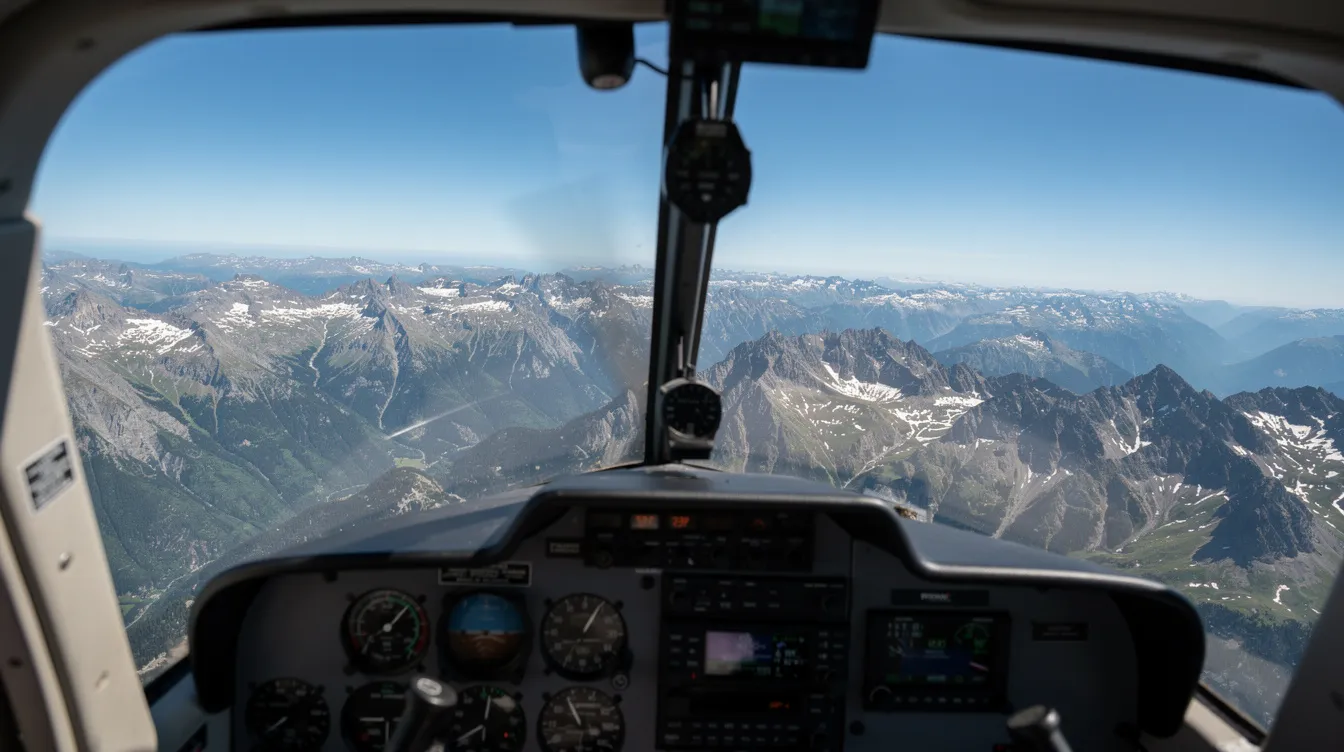
For aviation enthusiasts, prospective owners, and executives evaluating private travel options, the question of small plane range is more than academic-it determines whether you arrive refreshed and on schedule or spend a day hopping between fuel stops. Here's what the numbers actually look like, and when it makes sense to step up to a jet.
Immediate Answer: How Far Can a Typical Small Plane Fly?
A typical Cessna 172-the world's most popular flight training aircraft-has a realistic maximum range of about 400 to 550 nautical miles per leg under conservative fuel planning. High-performance single-engine planes like the Cirrus SR22T push that figure to roughly 900 to 1,100 NM when conditions and payload cooperate. These numbers account for mandatory fuel reserves, moderate wind conditions, and practical passenger count-not the idealized figures printed in brochures.
Compare that with a light jet. The HondaJet Elite II, for instance, covers approximately 1,547 NM nonstop with four occupants and full IFR reserves, cruising above 420 knots at altitudes where weather rarely interferes.
The difference plays out in real itineraries. A private pilot flying a Cessna 172 from Los Angeles to San Francisco-roughly 300 NM-makes the trip comfortably on one tank. But stretch that to Los Angeles–Denver (about 690 NM), and the same small plane needs at least one fuel stop and most of a day. A light jet covers New York to Miami-around 950 NM-nonstop in under three hours, turning a multi-stop piston adventure into a productive business travel morning.
One critical rule of thumb: the brochure maximum range is an engineering number. Professional operators and experienced aircraft owners plan on 70 to 80 percent of that figure, building in reserves for headwinds, diversions, and regulatory requirements. That margin is what separates safe, repeatable operations from wishful thinking.
Small Plane Range Basics: Range vs Endurance vs Flight Distance
Understanding a small plane's range starts with three definitions that marketing materials often blur together.
Range is the maximum distance a small aircraft can fly without refueling under specified conditions: a particular cruise power setting, standard atmospheric conditions, required fuel reserves, and a stated payload. Change any of those variables, and the number moves.
Endurance is how long a light aircraft can stay airborne on a given fuel load. Multiply endurance by cruising speed, and you get range. A plane that can fly for five hours at 120 knots has a theoretical 600 NM reach before reserves, but regulatory requirements and safety margins always trim that.
Flight distance is the actual distance between two airports along the route you'll really fly. Airspace restrictions, terrain, weather deviations, and ATC routing often stretch the actual distance well beyond the straight-line "great circle" path. A 400 NM direct route may become 440 NM once you factor in airway segments and approach procedures.
Here's a simple numeric example. A Cessna 172 burning roughly 9 gallons per hour with about 53 gallons of usable fuel at 115 knots has approximately 5.9 hours of raw endurance. At 115 knots, that's around 675 NM in theory. Subtract 45 minutes of reserve fuel (required for IFR operations), and your planning endurance drops to roughly 5.1 hours, yielding a realistic planning range near 590 NM before you account for climb, descent, and routing. In practice, conservative pilots plan for 400 to 550 NM legs.
Range figures for both light aircraft and private jet categories are quoted in nautical miles and assume fuel reserves that professional operators-including BlackJet's network partners-treat as minimums, never as targets.
Typical Ranges of Popular Light Aircraft Models
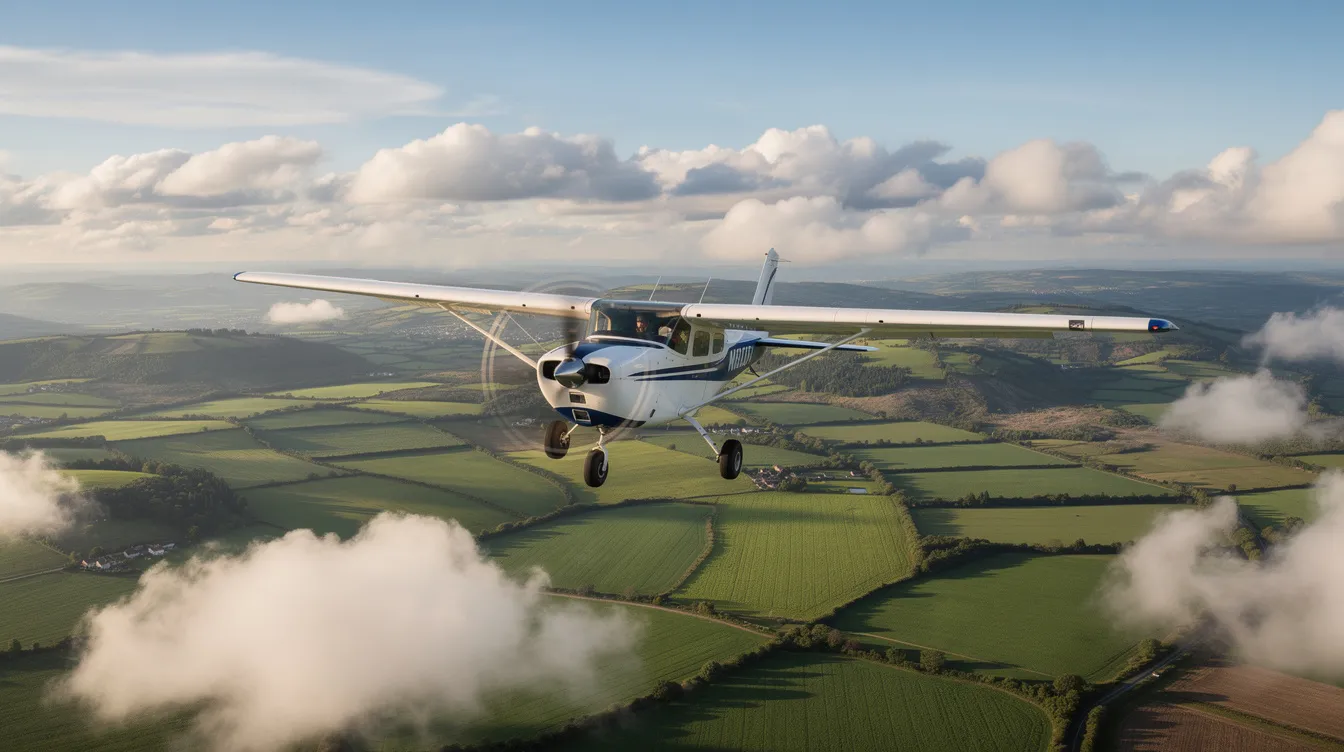
The term "small plane" covers everything from a four-seat trainer to a sleek, turbocharged personal aircraft capable of longer flights across entire regions. Here's how different aircraft models stack up.
Aircraft Model | Typical Cruise Speed (knots) | Usable Fuel Capacity (gallons) | Realistic Planning Range (NM) | Seating Capacity | Notes |
|---|
Cessna 172 Skyhawk | ~120 | 40-53 | 400-550 | 4 | Most-produced trainer, stable handling |
Piper Archer (PA-28) | ~128 | ~48 | 450-550 | 4 | Popular for training and cross-country |
Cirrus SR22T | 180-210 | 92 | 900-1,100 | 4 | Turbocharged, CAPS parachute system |
Beechcraft Bonanza G36 | ~176 | 74 | ~740 (typical) / 920 (ferry) | 6 | High-performance, six-seat single-engine |
Pilatus PC-12 NGX | ~285 | Jet-A fuel, large capacity | ~1,803 | 6-8 | Single-engine turboprop, pressurized cabin |
Daher TBM 960 | ~330 | Jet-A fuel | ~1,730 | 4-6 | Fastest single-engine turboprop |
HondaJet Elite II | 420+ | Jet-A fuel | ~1,547 | 4 | Light jet, high speed, and range |
Key Factors That Affect Small Plane Range in the Real World
Real-world range is almost always 10 to 30 percent less than brochure numbers because multiple factors stack against you simultaneously. Here are the key factors every aircraft owner and traveler should understand.
Fuel capacity and usable fuel. Every fuel tank has a small amount of unusable fuel trapped below the pickup lines. A Cessna 172's 56-gallon total drops to about 53 gallons usable-a difference that shaves roughly 30 NM off theoretical range. Always plan on usable fuel, never total capacity.
Fuel burn at different power settings. Economy cruise at 55 to 65 percent power uses significantly less fuel per hour than high-speed cruise at 75 percent or above. For the SR22T, the difference between 75 percent and 55 percent power can mean burning 22 gallons per hour versus 15, translating to hundreds of nautical miles of additional range when you choose fuel-efficient settings. Good engine management is the single cheapest way to extend your legs.
Aircraft weight and passenger count. More passengers and baggage increase induced drag and fuel consumption. Swapping one passenger for additional fuel in a Bonanza can add 50 to 100 NM of range. This payload-versus-fuel tradeoff is central to every serious flight planning decision, and range depends heavily on how you load the airplane.
Altitude and mixture management. Flying at optimal cruise altitudes-typically 6,000 to 10,000 feet for pistons-and leaning the mixture properly can improve fuel efficiency by 5 to 15 percent. Jets benefit even more: a service ceiling above 40,000 feet means thinner air, less drag, and efficient performance over long distances.
Wind conditions. A 25-knot headwind reduces ground speed and can cut a planned 500 NM leg down to a safe 350 to 400 NM plan. Tailwinds, conversely, are a gift. Smart fuel management always accounts for forecast winds aloft.
Airframe condition and maintenance. Rough paint, accumulated bugs, or mis-rigged control surfaces add drag and increase fuel burn. Professional operators and diligent aircraft owners keep airframes clean and control surfaces properly rigged to preserve aircraft capabilities.
Fuel Capacity, Fuel Consumption, and Practical Leg Lengths
How far can you actually go between fuel stops? The answer comes down to a straightforward calculation: usable gallons divided by fuel burn per hour, multiplied by cruising speed, minus a mandatory reserve.
Cessna 172 worked example. Start with 53 gallons of usable fuel. At an economy cruise burning 9 gallons per hour at 115 knots, you have about 5.9 hours of raw endurance. Subtract 45 minutes for IFR reserves, and you're planning on roughly 5.1 hours of cruise. That gives you approximately 585 NM in still air, but after accounting for climb fuel, routing, and a sensible margin, most experienced pilots plan legs of 400 to 450 NM. That's a comfortable flight time of about 3.5 to 4 hours.
Cirrus SR22T worked example. With 92 gallons usable and a long-range cruise burn near 17 gallons per hour at 180 knots, raw endurance is about 5.4 hours. After reserves, plan on roughly 4.5 hours of cruise, yielding 700 to 810 NM conservatively. Push to lighter loads and favorable winds, and 1,000+ NM is achievable-though rare in routine operations. Some owners have ferry tanks installed for extreme-distance repositioning, but for typical missions, 700 to 800 NM is the realistic planning number.
Training flights plan even shorter legs-often 100 to 250 NM-to allow for pattern work, diversions, and learning exercises, regardless of the aircraft's theoretical maximum range.
For BlackJet's light jet fleet, the math works differently. Higher fuel capacity, more fuel-efficient turbofan engines, and optimized cruise profiles allow 1,200 to 1,800 NM nonstop legs, converting what would be a multi-stop piston itinerary into a single, productive business flight with no fuel stops.
Flight Planning: Turning Maximum Range into Safe, Real Itineraries
Professional pilots and high-net-worth travelers don't care about squeezing every last mile from a fuel tank. They care about arriving safely, on time, every time. Smart flight planning is what makes that happen.
U.S. FAA regulations require trip fuel plus 30 minutes of reserve for daytime VFR, 45 minutes for night VFR, and additional fuel to reach alternate airports under IFR. These aren't suggestions-they're legal minimums. Most safety-conscious operators add margins beyond that.
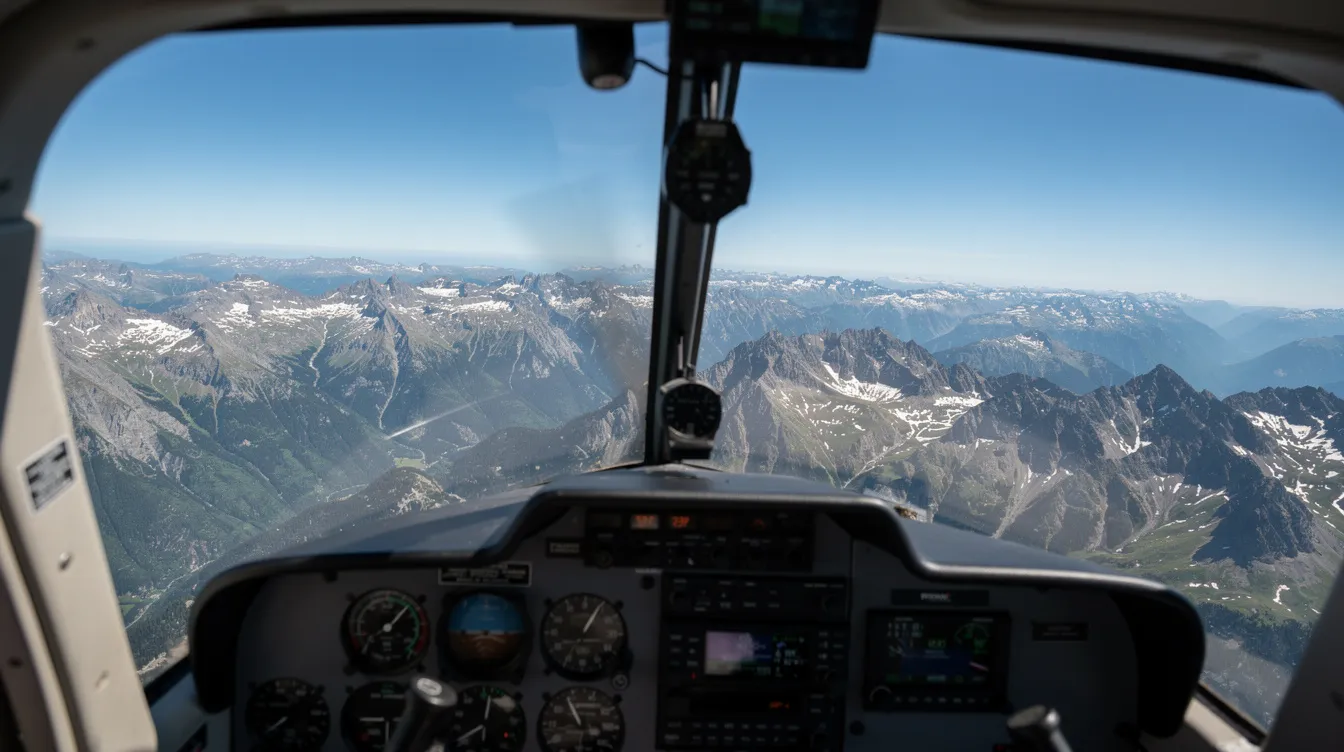
Real route planning also considers terrain, airspace restrictions, and weather. A 500 NM "max range" leg across the Rocky Mountains with strong headwinds might be planned as a 350 to 400 NM segment with a fuel stop in a valley airport, because the consequences of getting it wrong over high terrain are unforgiving.
Consider two scenarios. A student pilot completing a 200 NM cross-country for pilot training plans generous reserves, picks alternate airports along the route, and builds in time for weather deviations-even if the Cessna 172 could theoretically fly twice that far. Meanwhile, an owner-pilot planning a 700 NM business trip in a Cirrus aircraft studies winds aloft, identifies one weather-related fuel stop, and files an IFR flight plan with performance-calculated fuel requirements.
Serious operators and platforms like BlackJet use flight planning software, performance databases, and real-time weather feeds to determine whether a private jet can safely cover a route nonstop-or whether a technical fuel stop represents intelligent risk management rather than inconvenience.
The takeaway: sophisticated flight planning, not just maximum range, is what turns different aircraft into dependable business tools and safe training platforms.
Can Small Planes Handle Long-Distance Flights and Cross-Country Trips?
Many new pilots and prospective private aviation clients wonder whether light aircraft can truly manage long-distance flights. The answer is yes-with caveats about time, comfort, and practicality.
Cross-country flights in piston trainers like the Cessna 172 typically fly legs of 250 to 400 NM, with fuel and rest stops every three to four hours. It's an excellent way to build a flying experience and see the country, but it's time-consuming for anyone on a business schedule.
The numbers illustrate the gap. Los Angeles to Denver-about 690 NM-in a Cessna 172 requires two to three stops and most of a day. The same route in a PC-12 turboprop or light jet takes a single nonstop leg of roughly two to three hours, door to door.
High-performance pistons like the Cirrus SR22T, Beechcraft Bonanza, and Diamond DA50 RG make regional long-distance flights of 600 to 1,000 NM more practical for owner-pilots who have time flexibility. These aircraft offer more fuel, faster cruise, and modern avionics that reduce pilot workload.
Light jets and turboprops extend small aircraft capability to serious business travel: New York to Chicago, London to Berlin, or Dubai to Istanbul nonstop with professional crews, pressurized cabins, and genuine workspace productivity, provided you choose the right private jet size for your passenger count and luggage.
Many BlackJet members started as owner-pilots flying 300 to 600 NM trips in their own personal aircraft, then began relying on Jet Card access to light jets for longer flights, tighter schedules, or routes where weather conditions made single-engine aircraft impractical, ultimately leveraging premium private jet card programs to match aircraft range and cabin class to each mission.
From Flight Training Aircraft to Light Jet: When Range and Speed Start to Matter More
Most pilots-and many private jet captains-start in small training aircraft. But travel needs eventually exceed what light aircraft range and speed can deliver.
Classic trainers like the Cessna 172 and Piper Archer are ideal for 100 to 250 NM legs that teach fuel management, small plane range judgment, weather decision-making, and the fundamentals of flying style that carry through an entire aviation career. Their slower cruising speed and shorter range are features, not bugs, in the training context.
As a private pilot gains experience, many graduate to higher-performance single-engine aircraft-the Cirrus SR22T with its synthetic vision and CAPS system, the Diamond DA40 or DA50 RG with fuel-efficient diesel engines, or the Beechcraft Bonanza for six-seat utility. These aircraft handle regional and moderate-distance business trips well, with ranges from 700 to 1,100 NM.
But non-pilot executives and families often skip aircraft ownership entirely. Instead of investing in hangar space, maintenance, insurance, and a single aircraft type that fits some trips but not others, they opt for private jet charter or Jet Card programs that provide access to the right aircraft for every mission.
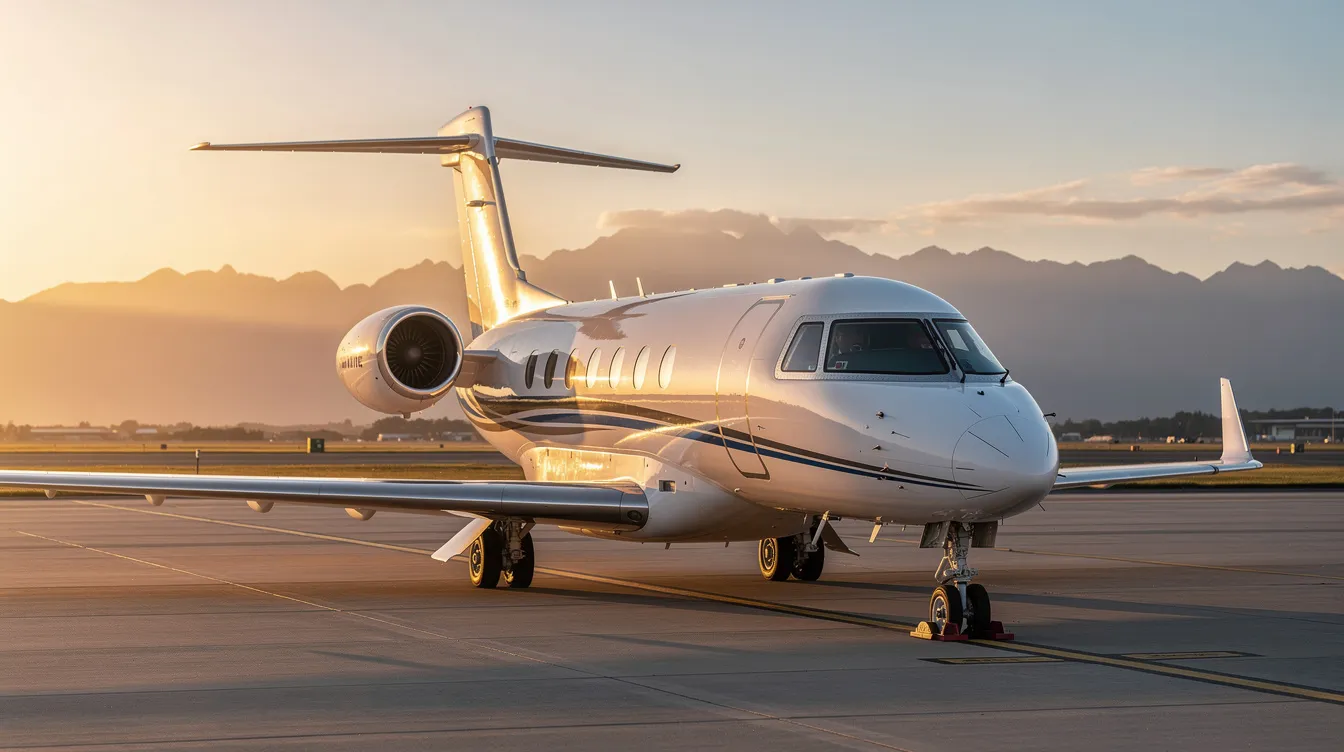
Consider a founder commuting regularly between Austin and San Francisco-about 1,300 NM. Initially feasible in a Cirrus with one stop and six-plus hours of travel, the same trip in a HondaJet Elite II accessed via BlackJet's Jet Card takes roughly three hours nonstop. The difference in productivity and energy is transformative, and for travelers with similar but less frequent needs, a 25-hour jet card program can balance flexibility with commitment.
Jet Cards provide prepaid hours at fixed hourly rates and guaranteed aircraft class availability, solving the range and schedule gap between what a personal aircraft can do and what serious business travel demands; a detailed guide to jet card costs and benefits can help clarify when this model makes sense versus charter or ownership.
Small Plane Range vs Private Jet Range: Choosing the Right Tool for the Mission
Range is one of the clearest distinctions between a small plane and a private jet-and for time-sensitive travelers, it's often the deciding factor.
Training pistons typically fly 400 to 700 NM per leg. High-performance pistons stretch to 900 to 1,100 NM. Turboprops like the PC-12 NGX and TBM 960 cover roughly 1,700 NM. Light jets reach 1,200 to 1,800 NM. Each step up in aircraft type brings not just more fuel and range, but higher cruising speed, pressurized cabins, and greater payload flexibility. For a deeper comparison across categories, BlackJet's guide to private jets with the longest range provides additional context.
For flights under 300 to 400 NM, light aircraft can be efficient and enjoyable-a short hop where the flying experience itself is part of the appeal. But trips in the 600 to 1,200+ NM range increasingly favor turboprops or light jets. Multiple fuel stops add hours, fatigue, and weather risk to what should be a straightforward journey.
Cabin comfort compounds the advantage. Light jets flying at FL400 or above avoid the turbulence and weather that slow small planes at lower altitudes, preserving both planned range and schedule reliability. Pressurization means passengers arrive without the fatigue of hours spent at oxygen-thin altitudes.
A concrete example: New York to Miami, approximately 950 NM. This route is a stretch for most light pistons, requiring at least one stop and five-plus hours, but routine for a light jet. In a BlackJet-sourced aircraft, it's a two-hour, 20-minute nonstop flight with full connectivity and cabin service, assuming you select from the appropriate types of private jets for that mission profile.
BlackJet's Jet Card model lets members right-size aircraft range and cabin class to each mission. Rather than owning an airplane that handles some trips well and others poorly, members access two aircraft categories-or five-depending on what each route requires. No compromise, no wasted capital, and the ability to choose among the best jet cards for frequent flyers based on route length and usage patterns.
Safety, Technology, and Sustainability: Extending Effective Range Smartly
Modern avionics, safety systems, and sustainability initiatives don't just make flights safer-they make effective small plane range more predictable and responsible.
Advanced light aircraft and jets now feature synthetic vision systems that project terrain and obstacles on glass cockpit displays, terrain awareness and warning systems, envelope protection, and whole-airframe parachutes. The Cirrus airframe parachute system, or CAPS, has saved hundreds of lives and gives Cirrus pilots an additional option when other aircraft would face catastrophic outcomes. These technologies support better go/no-go and diversion decisions, keeping pilots from pushing range limits into dangerous territory.
Datalink weather, performance monitoring, and modern autopilots help pilots adjust power settings and routing in real time to conserve fuel and preserve range margins. The result is more fuel use predictability and fewer surprises en route.
On sustainability, fuel efficient diesel engines in aircraft like the Diamond DA40 NG, high-efficiency turboprops like the TBM 960, and growing adoption of Sustainable Aviation Fuel on business aviation routes are reducing the carbon footprint of every flight. BlackJet reinforces this commitment: every Jet Card flight is carbon-neutral, offset or supported with SAF where available, so clients can choose aircraft classes for optimal range and speed without compromising sustainability values.
Partnering with audited, safety-certified operators holding FAA certification standards and credentials from organizations like ARGUS, Wyvern, and IS-BAO ensures that range decisions are made conservatively and professionally-never pushed to the edge of the envelope, even on complex missions such as choosing the best private jet for 20 passengers on longer routes.
Business Travel Use Cases: Matching Range to Real Routes
For executives, entrepreneurs, and high-net-worth families, small plane range becomes a strategic planning variable for specific, recurring routes. Here's how different aircraft models match real missions, and how a clear private jet price list overview helps compare those options against pistons and turboprops.
300–400 NM regional loop. A Dallas–Houston–Austin–Dallas day circuit is easily achievable in high-performance pistons or turboprops, but significantly more relaxing and productive in a light jet with Wi-Fi and a quiet cabin. Flight time per leg: roughly 45 to 75 minutes. One engine turboprops handle this well, but a light jet delivers a more polished flying experience.
700–900 NM day trip. New York to Nashville or London to Prague-routes where other aircraft in the piston class would require fuel or weather stops. A light jet in the BlackJet program can fly nonstop, enabling same-day out-and-back meetings that would be impossible with a shorter-range small plane.
1,200+ NM scenario. Los Angeles to Austin or Toronto to Miami. Even advanced pistons are at or beyond sensible range for these legs. Turboprops and light jets become the natural-and only practical-choice, while ultra-long-range missions may call for the best long-range private jets for sale. This is where the aircraft offers from BlackJet's Jet Card programs provide their clearest value.
BlackJet uses member travel histories to recommend the optimal mix of aircraft categories-light jet, midsize, turboprop-so each route is flown at the right balance of range, cost per hour, and cabin comfort. This mission-matched approach often makes Jet Card access more cost-effective than outright ownership of a single small aircraft that doesn't match all trips, even when compared with well-known providers-a perspective that becomes clearer when you understand NetJets jet card costs and structures. No more choosing between the plane you own and the plane you need.

Frequently Asked Questions About Small Plane Range
Prospective pilots and private aviation clients tend to ask similar questions about how far light aircraft and light jets can really go. Here are the most common, answered directly.
How far can a small plane like a Cessna 172 fly on one tank? A typical Cessna 172 with full fuel and moderate payload has a realistic planning range of 400 to 550 NM-roughly four to five hours of flight time at economy cruise, with required safety reserves included. Wind conditions, altitude, and aircraft weight can shift that number up or down by 50 to 100 NM.
What factors most affect a small plane's maximum range? The primary factors that affect range include fuel capacity (how much usable fuel you can carry), fuel burn rate at your chosen power setting, total aircraft weight including passengers and baggage, and winds aloft. Flying at optimal altitude with proper mixture leaning and choosing fuel-efficient power settings are the most controllable variables for maximizing range.
Can small planes fly cross-country? Absolutely. Coast-to-coast trips across North America or multi-country flights across Europe are feasible in single-engine aircraft with careful flight planning and multiple fuel stops. A typical route might look like: Los Angeles → Phoenix → El Paso → Dallas → Atlanta → destination, with three-to-four-hour legs and rest breaks. It's an adventure more than a commute.
When should I choose a light jet over a light aircraft for business travel? If you frequently fly routes beyond 500 to 600 NM, operate on tight schedules, or need to work productively onboard, a light jet via BlackJet's Jet Card is the more practical option. The speed, range, and cabin environment eliminate the compromises that make longer flights in piston aircraft exhausting.
Are manufacturer range maps 100 percent accurate? No. Manufacturer range maps assume ideal conditions-standard atmosphere, optimal altitude, calm winds, and light payload. Professional operators use performance tools and conservative reserves to build shorter, safer legs. Treat published numbers as a ceiling, not a plan.
BlackJet advisors can review your typical routes and help you choose the aircraft type whose range best fits your lifestyle and business needs, whether that means full aircraft charter, a Jet Card, or simply buying a seat on a private jet for occasional longer legs.
Conclusion: Understanding Small Plane Range and Unlocking More with BlackJet
Small plane range is shaped by fuel, aircraft type, weather conditions, and disciplined flight planning-never a single brochure figure. Training pistons like the Cessna 172 and Piper Archer deliver practical ranges of 400 to 700 NM. High-performance single-engine planes like the Cirrus SR22T reach 900 to 1,100 NM under favorable conditions. Turboprops and light jets push to 1,200 to 1,800+ NM, all under realistic, conservative planning assumptions.
For flight training and personal flying, light aircraft offer unmatched accessibility and skill-building. For time-critical regional and national business travel, light jets and turboprops provide the nonstop range, speed, and cabin environment that make same-day productivity possible.
BlackJet's Jet Card model gives members prepaid, carbon-neutral access to multiple aircraft categories, so each trip's distance, passenger count, and schedule can be matched to the right cabin class-without the capital commitment, maintenance burden, or hangar space of owning a jet.
Explore how BlackJet can analyze your most frequent routes and design a tailored private aviation strategy built around range, safety, and sustainability. Discover BlackJet's Jet Card programs and elevate the way you travel.


 Sign up with google
 Sign up with Apple