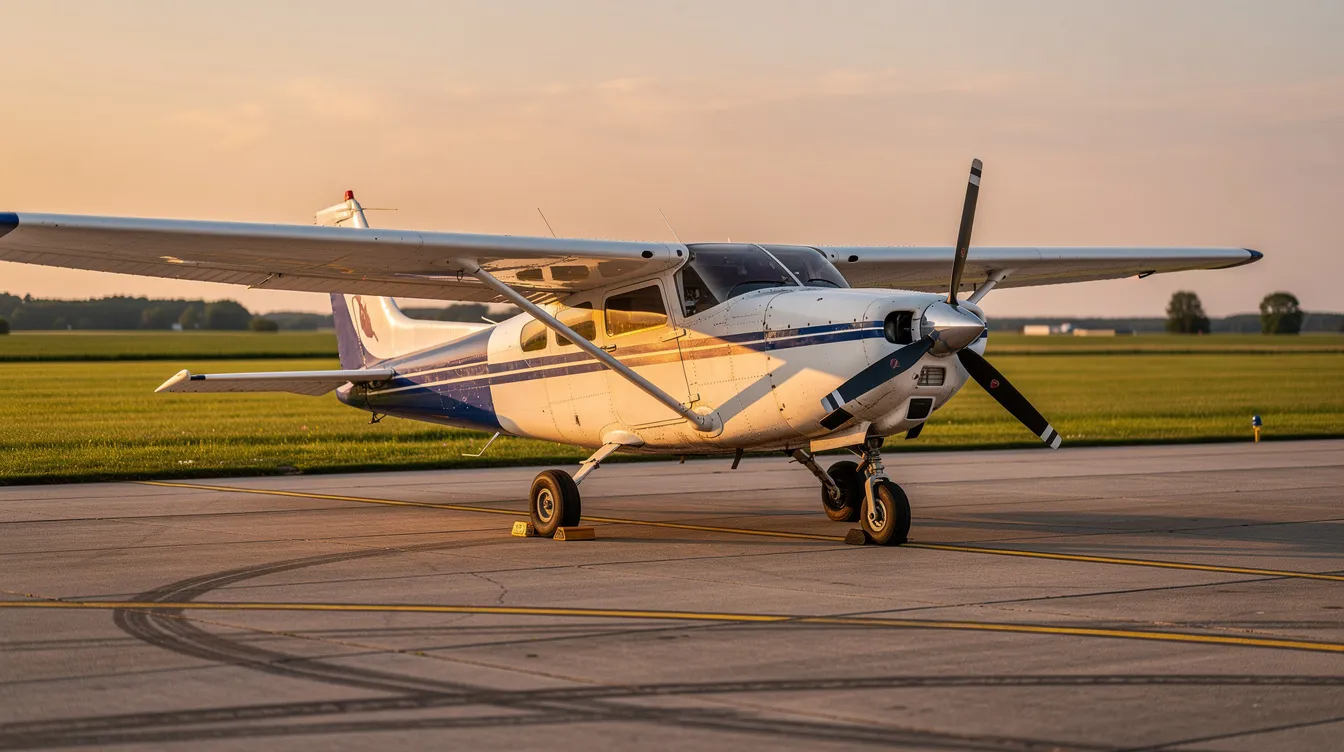
Many buyers searching "small plane for sale" in 2026 discover something surprising: the right answer is not always buying an aircraft, but comparing the full cost, use case, and flexibility of ownership against on-demand private access. For first-time aircraft buyers, pilots, and frequent business or high-net-worth leisure travelers, that decision now hinges less on sticker price and more on how often you fly, what missions you need to cover, and whether tying capital to a piston aircraft - say a 1978 Cessna 172N or even a 2022 Cirrus SR22 G6 - makes more sense than using a jet card like BlackJet for regional trips (New York–Miami, Dallas–Aspen, London–Nice) without locking money into a depreciating airframe.
Consider the data:
The average U.S. GA owner flies just 80–120 hours per year - barely two hours per week.
Jet Card members typically optimize 25–50 hours annually, paying only for time aloft, with no capital lock-up.
Purchasing a small airplane involves fixed and variable costs beyond the acquisition price that many first-time buyers underestimate.
This article walks through the small planes available for sale, what they really cost to buy and operate, how aircraft sales and pre-purchase inspections work, and the safety, training, avionics, sustainability, and ownership economics buyers need to evaluate before making a decision. It also compares small plane ownership with BlackJet membership as a practical alternative when flexible private aviation access delivers better ROI, convenience, and control than owning an aircraft that may sit idle most of the year.
Types of Small Planes for Sale in 2026
A small plane in the general aviation context typically means a piston or light turboprop aircraft seating 2–8 people, under approximately 12,500 lbs maximum takeoff weight. Four-seater aircraft include jets, airplanes, and helicopters, but the vast majority of listings in 2026 are fixed-wing propeller-driven models. Single-engine piston aircraft are versatile and commonly used for private aviation, and defining typical trip requirements is essential when choosing an aircraft.
Here are the categories buyers will encounter, with concrete examples, and many shoppers also compare these choices against the best small private aircraft for different missions:
Single-engine piston: 2026 Cessna 172S Skyhawk, 2019 Cirrus SR20. Ideal for flight training, weekend trips, bush flying, and local hops. Popular four-seater aircraft brands include Cessna and Cirrus.
Twin-engine piston: 2015 Beechcraft Baron G58. Better redundancy, improved climb performance in hot or high-altitude conditions, suited for instrument flying.
Very light jet (VLJ): 2014 Embraer Phenom 100E. Cruise speeds above 350 knots for fast regional business hops, limited seats and cabin space.
Small turboprop: 2018 Pilatus PC-12 NG. Access to short runways, high-altitude airports, remote destinations. Large cabin, strong range.
Four-seater aircraft can be used for personal and business travel, and they are available for purchase worldwide - from regional airports across the United States to dealers in France and Mexico. Currently, 1,887 single-engine piston aircraft are listed for sale across major marketplaces. BlackJet members often begin with small planes but step up to light, midsize, or super-midsize jets as their mission profile or passenger count grows.
How Much Does a Small Plane Really Cost in 2026?
The price range for a small plane for sale in 2026 stretches from under $20,000 to well over $1 million. Small airplanes can vary widely in price based on configuration and condition, and buyers focused on budget will often start by researching the cheapest new plane options for aspiring pilots. Here is a realistic spectrum with current examples:
ERCO Ercoupe: Priced under $20,000 in 2026; the cheapest Ercoupe is listed for $24,950 in the US.
Grumman American AA-1: Sells for under $25,000 and frequently appears in guides to the best options for the cheapest plane.
Aeronca Champion: Can be found for under $30,000.
Cessna 150: Prices are typically under $30,000. A good-quality used Cessna 150 costs around $30,000, with some Cessna 150s available for as low as $30,000, making it a staple in many rundowns of the best cheapest planes for new owners.
Stinson 108: A four-seater aircraft priced from $54,000, often mentioned alongside other models in analyses of the cheapest private aircraft for budget flyers.
1975 Piper Cherokee 140: $40,000–$70,000 depending on engine time and avionics.
2006 Cirrus SR22 G2: $260,000–$330,000 on the pre-owned market.
2024 Diamond DA40 NG (factory-new): Around $550,000–$650,000 list price.
"Asking price" on listings and actual transaction price often diverge. Expect a 5–15% negotiation band depending on age, engine hours, avionics, market cycle, and brand, all of which also shape aircraft valuation. First-time buyers should understand total ownership costs beyond the purchase price: acquisition is only 40–60% of the total 5-year cost once maintenance, hangar, insurance, and upgrades are factored in.
By contrast, a BlackJet Jet Card requires no acquisition cost. Your funds stay liquid, and you only pay for flight hours plus applicable fees, with predictable jet card membership pricing structures that simplify budgeting.
New vs Pre-Owned Small Planes: Pros, Cons & 5-Year Math
Most buyers searching for a small plane for sale quickly face the new versus pre-owned decision. Each path carries distinct financial and operational trade-offs.
Benefits of factory-new aircraft:
Custom 2026 avionics suites: Garmin G1000 NXi, integrated ads b, synthetic vision, envelope protection.
Full manufacturer warranty, typically 2–5 years.
Higher dispatch reliability and the latest safety updates from the manufacturer.
Why many buyers choose pre-owned:
Acquisition cost is 30–60% lower on a 10–20 year-old piston.
Depreciation curve flattens after year 10, preserving more residual value.
Large pool of 1970s–2000s Cessna, Piper, and Beechcraft airframes, giving buyers strong negotiating leverage.
Consider two scenarios flying 100 hours per year. Buyer A purchases a factory-new DA40 NG at roughly $600,000. With depreciation of 5–8% annually in the first three years, plus hangar, insurance, and maintenance reserves, the 5-year total cost can reach $800,000–$1,000,000 - averaging $1,600–$2,000 per flight hour. Buyer B selects a well-maintained 2010 DA40 at $250,000. Five-year total may land around $500,000–$700,000, but with less predictable maintenance and potential downtime. Factory backlogs for new aircraft from Cirrus and Diamond can mean months of waiting, while pre-owned aircraft offer near-immediate availability.
Some clients avoid this calculus entirely by choosing jet card access, sidestepping asset management while gaining on-demand flexibility, and then diving deeper into jet card pricing and typical cost drivers before committing.
Understanding Piston Aircraft vs Turboprops & Light Jets
Piston aircraft use reciprocating engines turning a propeller, burning avgas. Turboprops use a turbine engine driving a propeller on Jet-A fuel. Light jets employ jet turbines for higher speed and altitude. The differences define what each aircraft can realistically accomplish.
Piston aircraft:
Fuel burn: 5–18 gph depending on engine and model.
Cruise speed: 100–180 knots.
Range: practical missions under 500 nm.
Example models: 2025 Cessna 182T Skylane, 2017 Cirrus SR22T.
Small turboprops:
Fuel burn: 30–60 gph on Jet-A.
Cruise speed: 250–300 knots, range 1,000+ nm.
Short and unimproved runway access.
Example models: 2019 King Air C90GTx, 2018 Pilatus PC-12 NG.
Light jets:
340–400+ knots cruise, FL410 ceiling, true city-pair flexibility (LA–Houston nonstop, for example).
Example models: 2020 Citation M2, 2016 Embraer Phenom 100EV.
Multiple engines, advanced weather avoidance, pressurized cabins with seats designed for productivity.
Safety and redundancy differ sharply. Single-engine planes carry inherent risk if the engine fails. Twin turboprops and jet aircraft offer redundancy that directly impacts insurance premiums and mission planning. BlackJet typically provides access to turboprops and jets - not owner-flown pistons - giving members higher speed, weather capability, and cabin comfort on every flight, and many cost-conscious flyers also explore the cheapest private jet categories before deciding how to structure their access.

Operating Costs: What Your Budget Really Looks Like Per Year
Serious buyers must think beyond the sticker price. Purchasing a small airplane involves fixed and variable costs that add up relentlessly, and owning a small plane typically incurs $8,000 to $12,000 in annual expenses at a minimum. Fixed annual costs for aircraft ownership typically range from $15,000 to $40,000 depending on the aircraft type.
Example 1: 1978 Cessna 172N, 100 hours/year, mid-sized U.S. airport
Hangar or tie down: $3,000–$5,000/year. Choosing tie-down versus hangar storage changes what owners spend over the course of a year, and hangar availability is often tight at regional airports.
Insurance: $1,200–$2,500/year depending on pilot experience.
Fuel: 8 gph at $6/gal over 100 hours ≈ $4,800/year. Fuel costs for small planes can reach $2,500 to $5,000 annually.
Maintenance and annual inspection: $2,000–$5,000 (higher if catching up deferred items). Annual inspections for small planes range from $750 to $2,000.
Miscellaneous (charts, subscriptions, unexpected repairs): $1,000–$2,000.
Total: roughly $12,000–$19,000/year for a "simple" single-engine piston, underscoring why many pilots compare these annual figures with owning the best options for the cheapest plane or using alternative access models.
Example 2: 2012 Cirrus SR22T, 150 hours/year
Fuel burn climbs to 16–18 gph, pushing fuel cost alone past $12,000 per year. Add higher insurance ($4,000–$8,000+), CAPS repack accrual, premium hangar fees, and turbocharged engine maintenance, and annual ownership expenses can reach $30,000–$50,000.
With a BlackJet Jet Card, there are no fixed maintenance costs, no hangar fees, no crew expenses, and no insurance burden. You pay only when you fly, with transparent hourly rates that already include fuel surcharges and federal excise tax, and frequent travelers can benchmark this against a detailed breakdown of 100-hour jet card cost and value.
Pre-Purchase Inspections: Your Best Insurance Policy
A thorough pre-purchase inspection is the single most important step for any buyer evaluating a small plane for sale - even listings advertised as "low-time" or "fresh annual." A pre-purchase inspection is crucial when buying an airplane, and skipping one is the fastest way to inherit someone else's deferred money pit.
A proper PPI typically includes:
Detailed logbook and AD/SB compliance review. Complete logbooks are mandatory for preserving an aircraft's resale value, and logbook integrity can significantly affect an aircraft's value.
Compression checks and borescope examination of cylinders.
Corrosion inspections of wing spars, control surfaces, tailcone, and cabin floor. Pre-purchase inspections should include engine condition and airframe corrosion assessments.
Functional testing of avionics, autopilot, and IFR systems.
Consider this example: a buyer evaluates a 1973 Piper Arrow II listed at $105,000 near Virginia. During PPI at a neutral shop, inspectors discover hidden spar corrosion under the wing skin and an engine approaching mandatory overhaul. Those findings shift the true cost by $40,000–$60,000, transforming what looked like a bargain into a costly project.
Always use an independent A&P/IA mechanic - not the seller's regular maintenance provider - and conduct inspections at a neutral facility. Typical PPI costs in 2026 run $1,500–$4,000 for single engine planes, more for complex twins, plus possible ferry and shop fees.
Commercial jet providers like BlackJet use strict third-party safety audits - comparable to ARG/US and Wyvern-style standards - as an institutionalized form of "PPI" applied to every aircraft in the network, every day, which is a core pillar of BlackJet’s premium private jet card programs.
Key Steps in the Aircraft Sales Process (Buyer & Seller)
A typical general aviation aircraft sales timeline runs four to twelve weeks: search, offer, escrow, PPI, closing, and registration. Common options for buying small planes include brokers, dealers, and private sellers.
For buyers:
Define your mission and budget: range, seats, avionics requirements, and whether you need IFR capability. Defining typical trip requirements is essential when choosing an aircraft.
Shortlist aircraft for sale via brokers, online marketplaces, and owner forums. Market listings can be tracked on aviation marketplaces like Controller and Trade-A-Plane, and AirMart features thousands of small planes for sale.
Submit a Letter of Intent (LOI) with a deposit into escrow.
Conduct a pre purchase inspection and negotiate based on findings.
Close via an aviation escrow company; file FAA registration and proof of insurance.
For sellers:
Prepare the aircraft: maintenance current, cosmetic touch-ups, all inspections documented.
Assemble complete logs, 337 forms, and STC documentation.
Price based on recent comps from sources like Vref, Aircraft Bluebook, or Controller listings.
Manage showings, demo flights, and contract terms.
Title searches, lien releases, and international export/import considerations (EU, UK, Canada) are critical legal steps. With BlackJet, members skip the entire asset-management process and simply book aircraft on demand via app or 24/7 concierge, with all compliance and logistics handled, instead of navigating the full spectrum of private jet price list considerations tied to ownership.
Safety, Training & Insurance: Owning vs Flying with a Jet Card
Safety is the non-negotiable core of every decision in private aviation - whether you are pilot-in-command of a small plane or a passenger aboard a chartered jet. New pilots considering ownership face substantial training investment and ongoing proficiency requirements. Insurance premiums for airplanes depend on the pilot's experience and aircraft type.
Pilot training requirements:
A Private Pilot License in 2026 typically costs $13,000–$22,000 in the U.S. for 60–70 hours of training, including ground school and flight training.
An Instrument Rating adds $8,000–$15,000.
Ongoing recurrency includes flight reviews every 24 months, instrument proficiency checks, and type-specific training for complex or high-performance aircraft. Pilots must maintain situational awareness in all phases of flight, especially in challenging conditions like mountain flying in Tennessee or Minnesota winter weather, and during landing at unfamiliar airports.
Training level and recent experience directly impact insurance premiums. A low-time pilot may pay double the premium of a seasoned aviator, and some insurers won't cover certain operations - night IFR, mountain approaches, overwater legs - without minimum hour thresholds.
BlackJet's approach differs fundamentally. Every flight uses commercially rated, highly experienced crews operating under rigorous Part 135 or equivalent standards, with strict duty limits, standardized operating procedures, and third-party safety vetting, and travelers compare this structure with traditional private jet rental costs and considerations when deciding how to fly.
The mental load contrast matters: an owner-pilot personally manages weather go/no-go decisions, fatigue, and traffic avoidance. A BlackJet member relies on professional dispatch, certified crews, and institutional safety culture - removing the operational burden while preserving the benefit of private air travel.
Sustainability & Carbon-Neutral Private Flights
Environmental impact is a genuine concern for many high-net-worth travelers and owner-pilots in 2026. The aviation industry faces increasing scrutiny, and private aviation is no exception.
Small piston aircraft burn 100LL avgas or newer unleaded variants, producing significant emissions per gallon. Modern turboprops and business jets burning Jet-A at high altitude operate on different efficiency curves - though they consume more fuel per hour, they often deliver more productivity per unit of fuel over longer distances.
How individual owners can mitigate impact:
Enroll in voluntary carbon-offset programs through verified reforestation or renewable energy projects.
Fly lean-of-peak where the POH and engine allow, reducing fuel consumption.
Upgrade to modern engines and propeller configurations with improved specific fuel consumption.
BlackJet's approach is more systematic. Since 2021, every flight by Jet Card members is carbon-offset at no extra cost, providing a clear sustainability narrative without requiring owners to manage offsets trip by trip, even when they opt for the cheapest private aircraft on shorter missions. The shift toward sustainable aviation fuel (SAF) at major business aviation hubs - Van Nuys, Teterboro, Farnborough - is accelerating, and charter and jet card platforms can aggregate demand for SAF supply more effectively than individual owners can.
Technology & Avionics: From Vintage Panels to Connected Cabins
Avionics upgrades have transformed the small plane market and are now a decisive factor when comparing any aircraft for sale. A vintage six-pack panel and a modern glass cockpit represent entirely different safety, capability, and resale propositions.
Common upgrade paths and approximate costs:
Garmin G5 attitude indicator and HSI retrofit: ~$6,000–$10,000 installed.
Full glass cockpit (Garmin G3X, G500 TXi) with WAAS GPS: $30,000–$70,000.
ADS-B Out/In transponder with traffic and weather integration: $4,000–$8,000.
Upgrading avionics can cost between $10,000 and $50,000, depending on scope and equipment selected.
Many buyers specifically seek aircraft equipped with modern IFR-capable avionics - WAAS approaches, synthetic vision, digital autopilot - because these accessories improve both safety and resale value. A model with current avionics will sell faster and at a premium over other aircraft with dated panels.
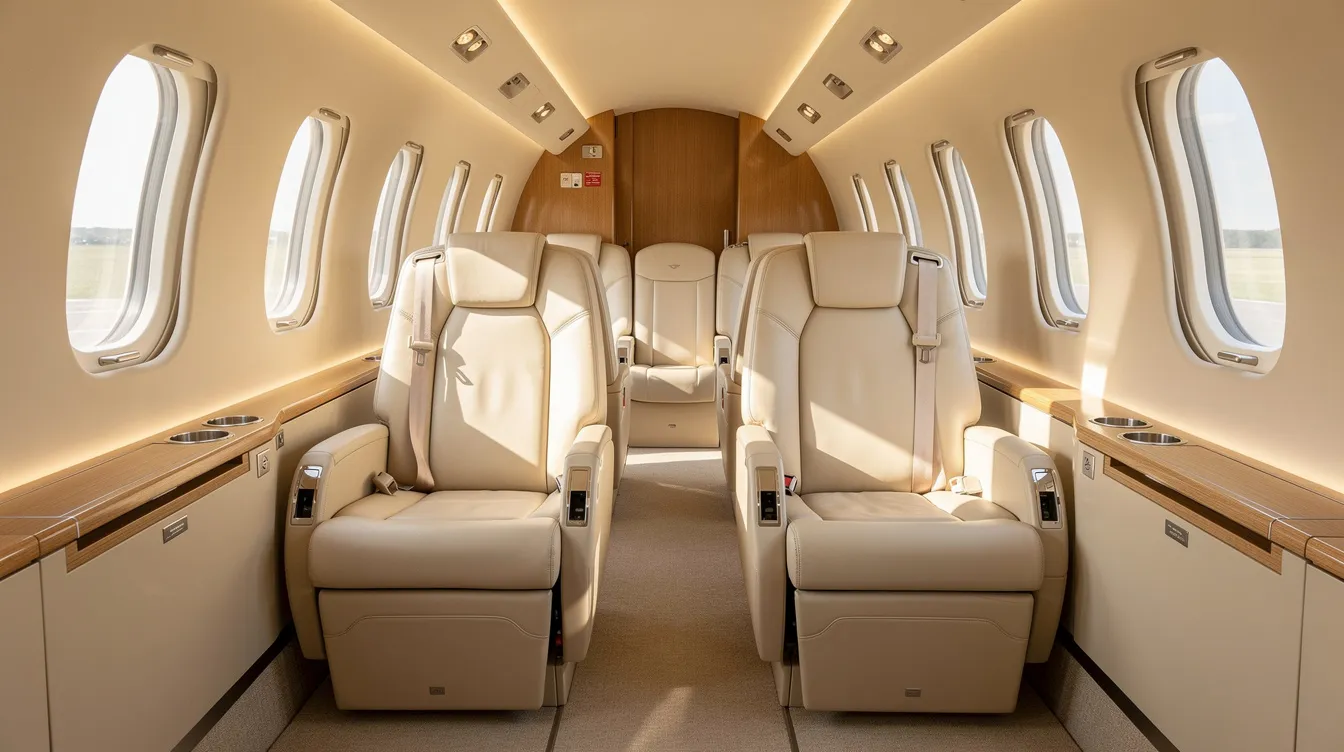
Now contrast that with the cabin and connectivity experience on modern charter and jet card fleets: Wi-Fi, in-flight productivity tools, quiet cabins, and spacious interiors on aircraft like a 2023 Citation CJ4 Gen2 or 2022 Praetor 500, which sit closer to the 10–12 seat category covered in guides to 12 seater private jet costs and options.
Here is the reality check: upgrading a 1972 Cessna 182P panel to modern IFR standard can cost 40–60% of the airplane's market value. Meanwhile, every flight on a professionally equipped BlackJet partner aircraft gives you top-tier avionics, connectivity, and performance - without a single dollar spent on installation or certification.

Should You Buy a Small Plane or Choose a Jet Card? Decision Framework
This is the practical decision point. If you have been browsing small planes for sale and simultaneously considering membership-based access, the right answer depends on your mission, not your emotions.
Key questions to evaluate:
How many flight hours per year do you realistically expect - 50, 100, 200+? Below 150 hours, jet card economics typically win.
Do you insist on personally piloting, or is your goal comfort, privacy, and productivity?
Are your typical trips under 250 nm or often 800–1,500 nm? Longer legs favor turboprops and jets.
How critical is short-notice availability versus flying when the weather cooperates?
Scenarios where ownership makes sense:
A pilot in texas flying a 1979 Beech Bonanza F33A 120 hours per year for mostly regional personal trips, with occasional hops to north dakota for hunting or bush flying.
Someone who genuinely enjoys maintenance decisions, hangar visits, and flight planning as part of the hobby - and who has the budget to absorb $15,000–$40,000 in annual fixed expenses.
Scenarios where a BlackJet Jet Card fits better: travelers in these situations often look closely at the structure of the BlackJet 25+ Hour Jet Card and similar products.
An executive flying New York–Chicago and LA–San Jose twice per month, needing Wi-Fi, quiet cabins, and guaranteed availability, for whom a 50-hour jet card cost and value analysis can clarify whether pre-purchased hours beat ad hoc charter.
A family splitting time between London and the Mediterranean (france, Nice, Ibiza) who value seamless, carbon-neutral trips more than sitting in the left seat.
Many clients blend strategies: owning or renting a small piston locally while using BlackJet for longer, time-critical, or international segments. This hybrid approach captures the joy of flying without the compromise of using a limited aircraft for missions it was never designed to operate and often competes directly with private jet leasing programs in terms of flexibility and commitment.
How BlackJet Complements (or Replaces) Small Plane Ownership
BlackJet's jet card programs - including the 25-hour and 50-hour cards - give members prepaid, priority access to a curated fleet spanning multiple cabin classes. It is not an either/or proposition, and some frequent flyers also compare these options with unlimited private jet flight memberships. Many members already own or co-own a small plane and use BlackJet to fill capability gaps.
How membership works in practice:
Fund hours in advance at transparent, fixed rates per cabin type. Rates are locked for the card duration, with non-expiring flight hours.
Use the mobile app or 24/7 concierge to request flights in real time.
Receive confirmations, aircraft details, and ground logistics support - from FBO coordination to ground transport.
How BlackJet pairs with small-plane ownership:
An owner-pilot uses their 1976 Piper Archer for local hops but relies on BlackJet for winter trips to Aspen or summer trips to Nantucket with the family.
A business owner keeps a share in a piston aircraft for weekend flying but uses BlackJet when meetings stack up, and same-day multi-city itineraries are required.
Benefits relative to traditional ownership:
No capital risk, no maintenance surprises, no downtime while the aircraft is in annual or awaiting parts.
Access to multiple aircraft categories: light jets for short hops, midsize for coast-to-coast, large-cabin for transatlantic, as well as flexibility for travelers who may sometimes prefer simply buying a seat on a private jet rather than booking the whole aircraft.
Every flight meets BlackJet's safety certification standards, with carbon-neutral offsets included at no additional cost.
Technology-driven booking and real-time flight support replace the logistical burden of being an aircraft owner and asset manager.
Explore how a BlackJet Jet Card can sit alongside - or completely replace - your plan to buy a small plane. Discover premier jet card access.

FAQ: Buying a Small Plane vs Jet Card Access
This FAQ addresses the most common questions from readers who have been browsing small planes and weighing alternatives like jet card membership, which many compare directly with NetJets jet card costs and structures.
How many hours per year justify owning a small plane? Ownership economics generally require 150–250 flight hours annually to compete with charter or jet card access on a per-hour basis. Below that threshold, the fixed expenses - hangar, insurance, inspections - erode value quickly. Many owner-pilots average just 80–120 hours per year.
Can I still fly as PIC if I use BlackJet? BlackJet flights are professionally crewed, so you fly as a passenger. However, many members still rent, co-own, or purchase pistons separately for hobby flying, keeping their pilot currency active while relying on jet card access for business and family travel.
What financing options exist for small planes? Specialty aviation lenders offer 10–20-year aircraft loans with down payments of 15–25%. Interest rates and terms depend on aircraft age, model, and buyer credit profile. Boeing Capital and regional aviation lenders are common sources.
Are small planes safe? Well-maintained aircraft, solid pilot training, and conservative aeronautical decision-making yield strong safety records. That said, single-engine piston operations carry higher statistical risk than commercially operated jets. You can learn more about why small planes crash and how to mitigate those risks.
How soon can I fly after buying? New owners typically need time for training (if transitioning to a new model), insurance approval, and familiarization flights - often 2–6 weeks. A jet card provides near-immediate access after account funding.
Does BlackJet serve international routes? Yes. BlackJet serves common business and leisure city-pairs within typical business jet ranges, including transatlantic routes and popular destinations across Europe, Mexico, the Caribbean, and beyond.
Where should I contact sellers? Start with established marketplaces like Controller, Trade-A-Plane, and AirMart. Work with a reputable broker who can help you sell or purchase efficiently, and always request full documentation before committing dollars to any sale, especially if you are considering a premium UK private jet for sale or other international transactions.
Conclusion: Making the Smart Choice in Small Plane Ownership and Private Jet Access
Choosing between purchasing a small plane and leveraging private jet access through a program like BlackJet’s Jet Card ultimately depends on your unique travel needs, budget, and lifestyle priorities. While owning a small aircraft offers the joy of piloting and personal control, it comes with high fixed costs, maintenance responsibilities, and operational complexities that many first-time buyers underestimate. Conversely, BlackJet’s membership model delivers effortless, safe, and carbon-neutral private flights without the burden of ownership, providing flexibility and access to a diverse fleet tailored to your mission.
For travelers flying fewer than 150 hours annually or valuing convenience, technology, and guaranteed availability, a BlackJet Jet Card offers unmatched value and peace of mind. For pilots and enthusiasts who relish hands-on flying and regional missions, owning a well-maintained piston or light turboprop can be rewarding—especially when balanced with professional jet access for longer or time-critical trips.
By carefully weighing your flight hours, mission profiles, and total cost of ownership, you can make an informed decision that elevates your private aviation experience. Explore how BlackJet can complement or replace traditional ownership and discover a smarter way to fly with premier jet card access designed for discerning travelers.


 Sign up with google
 Sign up with Apple