Private aviation offers a strategic advantage that goes far beyond luxury: time reclaimed, itineraries on your terms, and access to thousands of airports commercial airlines never touch. This article is intended for private fliers, business travelers, and anyone considering general aviation as a travel option. But not all private flying carries the same risk. Knowing the reasons behind small plane accidents can help travelers make safer choices and reduce personal risk. Understanding why small planes crash so often is essential for any discerning traveler choosing between self‑flown general aviation, charter flights, and professionally managed jet card programs.
Overview: Are Small Plane Crashes Really "More Common"?
The short answer is yes. Small aircraft have higher accident rates than large commercial airliners, and the gap is significant.
Small planes have a fatality rate of 2.3 per 100,000 hours, while commercial planes have fewer than 0.01 fatalities per 100,000 flight hours. That difference is not marginal - it is roughly 200 to 1.
In 2022, 358 people died in fatal general aviation crashes in the U.S., while major U.S. commercial airlines recorded zero onboard passenger fatalities in scheduled service.
Small planes average five accidents per day in the U.S., many of which never receive as much media attention as major airliner crashes involving commercial airliners.
Even so, flying remains far safer per mile than driving. The goal of this article is not to alarm, but to help private fliers understand where risk concentrates - and how to avoid it through smarter choices, including vetted charter and jet card solutions.
What Counts As a "Small Plane" – And How Is It Different From Commercial Aircraft?
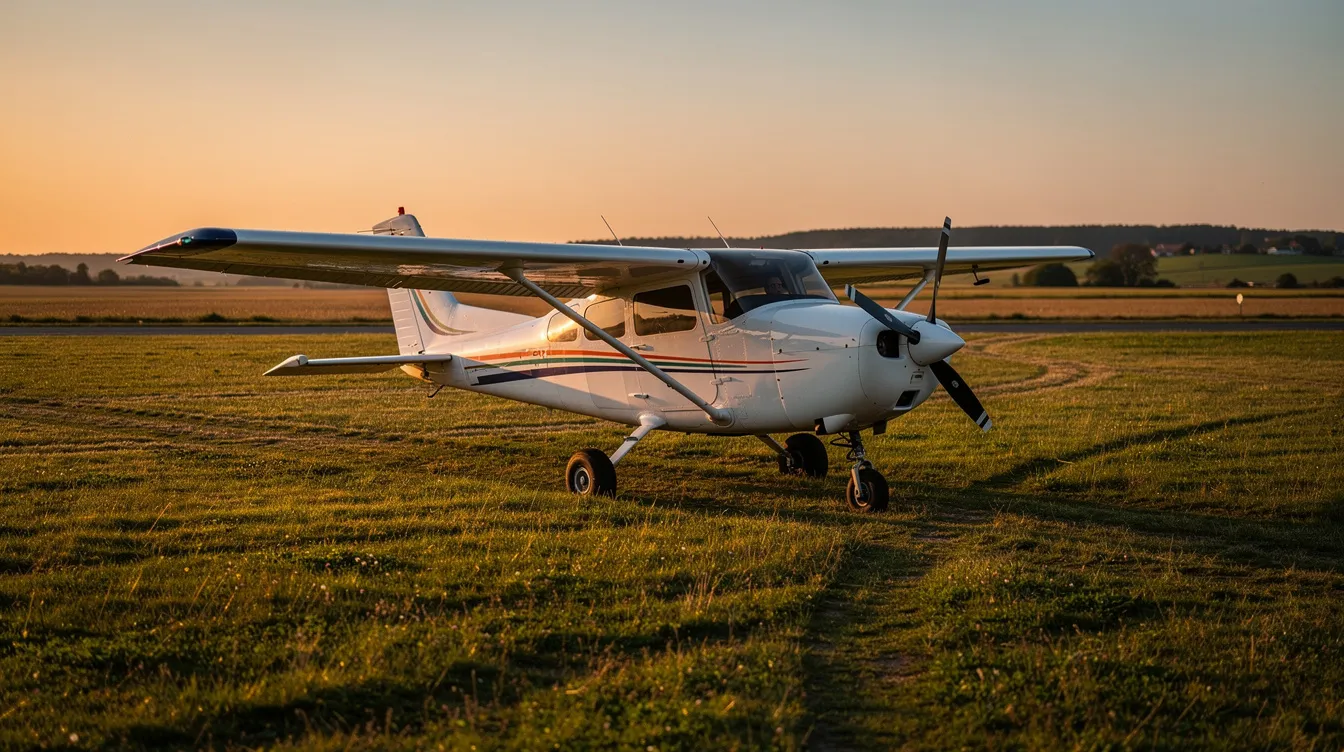
General aviation refers to all civil aviation operations other than scheduled commercial airline service, including personal, instructional, and business flying. The federal aviation administration faaFederal Aviation Administration (FAA), with a maximum certificated takeoff weight of 12,500 lbs or less, typically seating 1–10 passengers. Think Cessna 172, Piper PA‑28, Beechcraft Bonanza, or Cirrus SR22.
General aviation covers everything outside scheduled airline service: personal recreation, flight training, aerial work, and business flying. Commercial flights operate under Part 121 with large commercial aircraft, fixed routes, and strict oversight.
Regulatory differences matter enormously. Part 135 charter operations require operator certificates, stricter pilot qualifications, and formal maintenance programs. Part 91 - which governs most smaller private planes - is far less prescriptive on duty times, rest rules, and equipment.
Private pilots often lack co-pilots during flights. A single pilot manages navigation, radios, weather decisions, and checklists simultaneously. Commercial aircraft always fly with at least two crew members, supported by dispatch and continuous air traffic control monitoring.
BlackJet operates within the higher‑standard Part 135 framework, using multi‑layer safety vetting and professional crew requirements that most individual aircraft owners cannot match, and leverages the ability of private jets to cruise higher than commercial flights to further enhance comfort and safety.
How Often Do Small Planes Crash Compared To Commercial Flights?
The national transportation safety boarNational Transportation Safety Board (NTSB) and the Federal Aviation Administration. The numbers tell a clear story.
In 2023, general aviation recorded 1,097 total accidents, 186 of them fatal - roughly one fatal accident every two days. Scheduled commercial airlines had zero onboard fatalities that year.
Small planes conduct over 23 million flight hours annually. The GA fatal accident rate in recent years has ranged from 0.65 to 1.05 per 100,000 flight hours. Commercial crashes yield a rate effectively at zero.
Risk is measured per 100,000 flight hours rather than per mile because it accounts for time exposed to hazard phases like takeoff, climb, and landing - where most small airplane crashes occur.
Geographic dispersion masks the scale: states like Texas, Florida, and Washington each see over 100 small aircraft accidents in a two‑to‑three‑year span, but a single small plane accident rarely draws national coverage.
Accident Rates Comparison Table
Metric | Small Planes (General Aviation) | Commercial Airlines |
|---|
Fatality Rate (per 100,000 flight hours) | 2.3 | <0.01 |
Annual Flight Hours | 23 million+ | Higher but with lower risk |
Total Accidents (2023) | 1,097 | Significantly fewer |
Fatal Accidents (2023) | 186 | 0 onboard fatalities |
Common Accident Causes | Pilot error (75%), mechanical, and weather | Rare, multiple redundancies, and professional crews |
Crew | Often, a single pilot | Minimum two pilots |
Regulatory Oversight | Part 91 (less strict) | Part 121 (strict) |
Pilot Error: The Leading Cause Of Small Plane Crashes
Pilot error refers to mistakes or misjudgments made by the person flying the aircraft, including errors in judgment, skill, or procedure.
Pilot error accounts for approximately 75% of small plane accidents. It is, by a wide margin, the leading cause of fatal accidents in general aviation.
Loss of control in‑flight is the leading cause of fatal general aviation accidents, according to the FAA's Fly Safe campaign. Controlled flight into terrain occurs when pilots lose spatial awareness in poor visibility, adding another lethal category.
Private pilots only need a minimum of 40 flight hours for certification. Commercial pilots require at least 250 flight hours, and airline pilots serving as captains under Part 121 typically hold thousands of hours plus recurrent simulator training.
Many GA pilots are hobbyists accumulating only 50–100 flight ho, urs per year, barely enough to maintain sharp piloting skills. Skill fade, overconfidence, and slower emergency reactions follow.
The most dangerous phases: takeoff, climbout, approach, and landing. Misjudged runway length, unstable approaches, and failure to execute a go‑around are recurring scenarios.
Cognitive factors compound the problem: task saturation in single‑pilot operations, distraction from unfamiliar avionics, and "get‑there‑itis" - pressure to complete a trip despite marginal conditions.
BlackJet‑vetted crews are career professionals with type ratings, extensive training, strict duty and rest standards, and regular proficiency checks, dramatically lowering the pilot‑error risk that defines most private plane crashes.
Training Gaps: Inexperience, Flight Schools, And Risky Decision‑Making
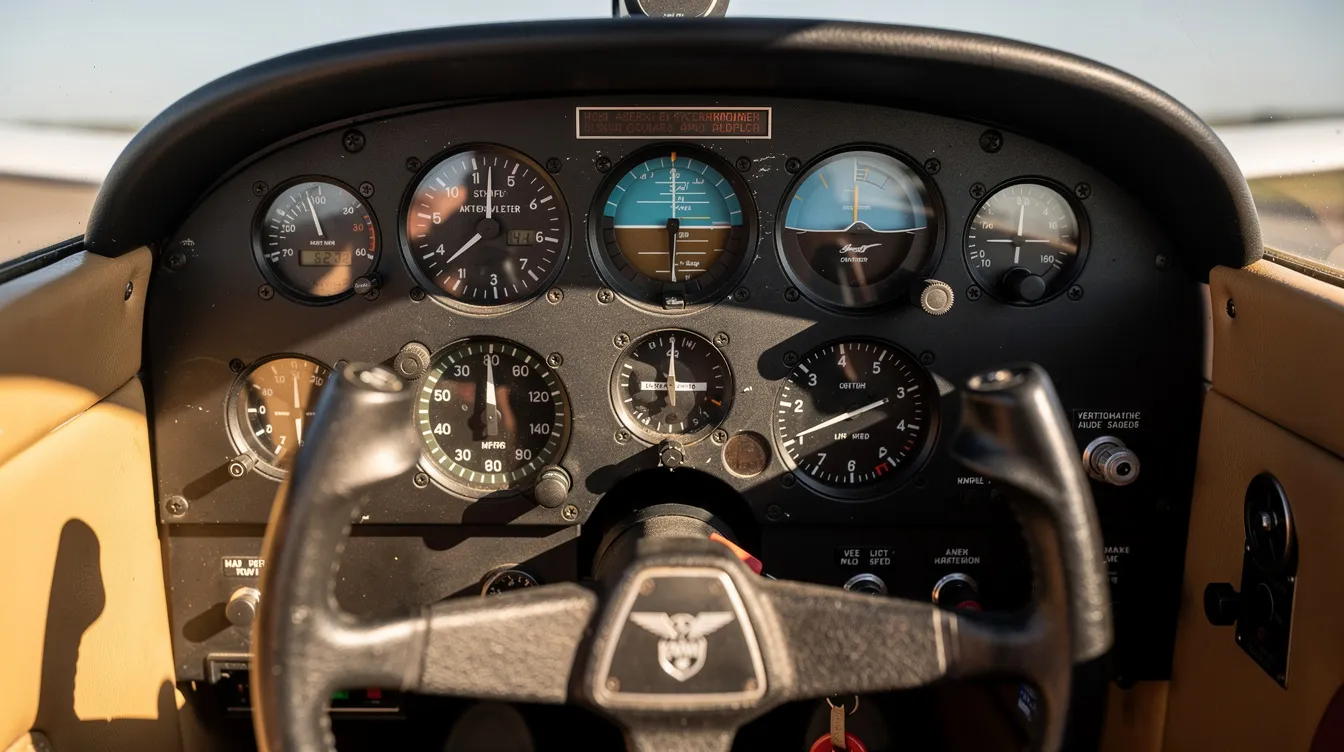
Inexperienced pilots contribute significantly to small plane crashes. The training pipeline for a private pilot versus a commercial or airline transport pilot reveals why, and it also underscores why selecting the best small private aircraft for your needs is only one part of building a safer flight profile.
A private pilot certificate requires roughly 40 flight hours. An ATP certificate - mandatory for Part 121 airline captains - demands 1,500 hours, simulator sessions, and rigorous check rides. Even commercial pilots require at least 250 flight hours for certification, far exceeding the amateur flight licenses many GA pilots hold.
Many flight schools train students in older small general aviation aircraft, and then those pilots transition to faster, more complex planes with little structured mentoring. The air force, by contrast, invests years of progressive training before pilots touch operational aircraft - a model closer to airline practice than to GA.
Common inexperience‑linked errors include poor energy management, mishandled stalls and spins, and inadequate preflight planning - itself a common cause of small plane crashes. Weight‑and‑balance miscalculations, skipped weather briefings, and fuel planning oversights appear repeatedly in NTSB case files.
The "old certificate, low current hours" problem: a pilot licensed years ago with only a few dozen recent hours may appear experienced on paper, but is functionally rusty. More pilots fall into this category than most travelers realize.
Small planes are often flown by less experienced pilots. Inexperienced pilots often lack sufficient flight hours for safety, and the gap widens when they encounter crosswinds, short runways, or night approaches for the first time.
For high‑net‑worth travelers who value private access without the burden of becoming pilots themselves, programs like BlackJet's Jet Card offer career crews and audited operators - removing the training‑gap variable entirely.
Weather, Visibility, And Why Small Planes Are More Vulnerable
Weather‑related issues are a primary cause of small plane crashes. Adverse weather conditions contribute to about 12% of small plane crashes overall, yet those accidents are disproportionately fatal.
Most smaller aircraft cruise between 3,000 and 12,000 feet - squarely in the zone of convective weather, icing layers, and low‑level turbulence. Larger planes and commercial airliners cruise above most of this hazard.
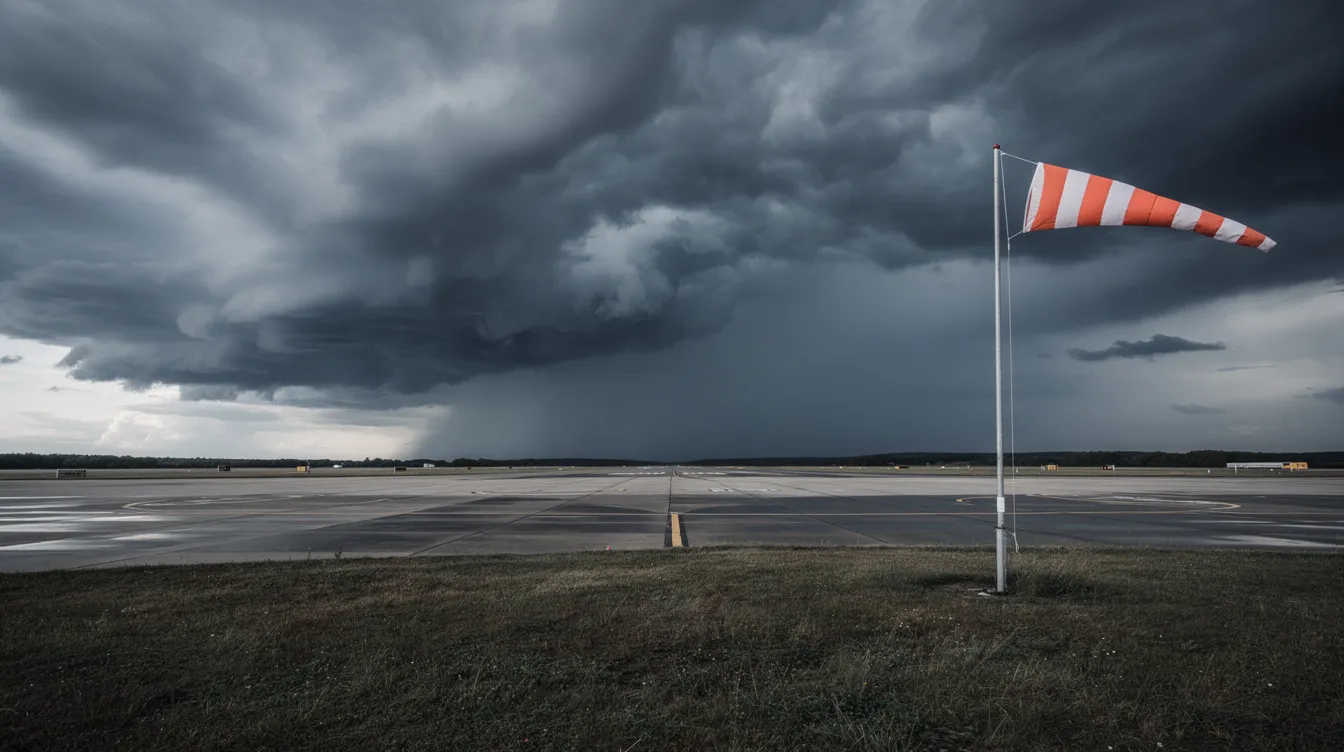
Bad weather degrades safety through poor visibility, loss of horizon reference in poor light, icing on wings, strong crosswinds, microbursts, and other natural hazards. Poor weather at night is especially lethal for VFR‑only pilots.
Spatial disorientation is a silent killer. "Black hole" approaches over unlit terrain, or a VFR pilot inadvertently entering clouds, can result in total loss of control within minutes. Data shows IMC‑related GA accident fatality rates approach 67%, compared to roughly 16% for accidents in clear conditions.
Small private planes often lack sophisticated safety equipment: no weather radar, limited or no de‑icing, and minimal dispatch support. Commercial aircraft carry real‑time weather uplinks, anti‑icing systems, and are rerouted by professional dispatchers.
Professionally managed private jet operations enforce stricter weather minimums, employ 24/7 flight support, and will cancel or delay rather than pressure a crew into marginal conditions, while also matching each trip to the appropriate private jet size for performance and safety.
Fuel Mismanagement And Poor Maintenance: When Planes Crash For Preventable Reasons
Running out of fuel causes over three small plane accidents weekly in the U.S. - a staggering number for something entirely preventable, especially when compared with the disciplined planning behind typical private jet pricing and access models.
Fuel exhaustion (tanks empty) and fuel starvation (fuel available but not reaching the engine due to selector or pump errors) are distinct failures. Both stem from fuel exhaustion or improper fuel management, which are common mistakes in small planes with counterintuitive manual tank‑switching systems.
Mechanical errors are often due to poor maintenance practices. Engine failures in small planes can result from poor maintenance or defective parts - neglected inspections, worn control cables, contaminated fuel, and corroded fittings. Equipment failure accounts for roughly 8% of GA mishaps as the initiating event, per MDPI research, but poor maintenance amplifies that number.
Many private aircraft sit as "hangar queens," flown infrequently, accumulating deferred repairs. When they do fly, critical failures surface without warning. Keeping an aircraft airworthy requires disciplined, scheduled attention that many individual aircraft owners underestimate.
Commercial planes have more stringent maintenance regulations: scheduled A, B, C, and D checks, rigorous logbook tracking, and oversight from both the operator and regulators. The difference in mechanical error rates is not accidental, and it mirrors the gap between lesser‑known operators and top private jet companies noted for safety and service.
BlackJet only partners with operators meeting or exceeding third‑party safety audits (ARG/US, Wyvern, IS‑BAO), ensuring maintenance standards far beyond the typical individually owned private plane.
Other Hidden Risks: Wildlife Strikes, Runways, And Air Traffic Control
Beyond pilot error and weather, several lesser‑known hazards disproportionately affect smaller aircraft, particularly when compared with the way 16‑seat private jets designed for group travel operate from longer, better‑equipped runways.
Wildlife strikes are a risk for small planes flying at lower altitudes. The FAA's National Wildlife Strike Database logs hundreds of damaging events yearly - bird strikes on propellers and windshields, deer incursions on rural runways, and impacts that can damage the powerplant and cause engine failure. When birds fly into a small airplane's propeller on takeoff, the consequences can range from a forced landing to a fatal airplane crash, especially during takeoff or landing when small aircraft have little time or altitude to recover.
Many small airports feature short, sloped, or unpaved runways with obstacles and weak lighting. A small plane accident on a 2,500‑foot grass strip with trees on the threshold leaves almost no margin for error - a scenario that would never arise at a major commercial hub, or with structured private plane rideshare services using vetted airports.
Air traffic control coverage differs starkly. GA pilots at non‑towered fields self‑announce and rely on see‑and‑avoid, while commercial flights operate under radar separation with professional ATC oversight. Runway incursions are more frequent where a single pilot juggles navigation, radios, and checklists without a co‑pilot.
BlackJet flights typically use better‑equipped airports with professional crews trained in standardized procedures, reducing the chance that minor ATC or runway issues escalate.
Why Commercial Planes And Professionally Managed Private Jets Are Safer
Commercial planes maintain a safety record that is the envy of every transportation mode. Commercial aircraft have multiple redundant systems for safety - numerous backup systems for hydraulics, electrics, navigation, and flight controls.
Two‑pilot crews trained in crew resource management, strict standard operating procedures, and continuous regulatory oversight define the airline model. Commercial airline pilots undergo recurrent simulator training, stringent check rides, and have as many flight hours as some GA pilots accumulate in a lifetime, similar to the standards behind the world’s top private jets, combining luxury and performance, and the best small private aircraft for different missions.
Commercial planes are subject to more rigorous maintenance standards than small aircraft, with scheduled inspections and company maintenance control eliminating the dangerous designs and deferred‑repair culture common in GA.
Leading business jet operators - including those accessible through BlackJet's programs and its broader premium private jet card services - mirror airline‑level safety cultures: recurrent training, standardized SOPs, terrain awareness systems, traffic collision avoidance, and real‑time weather uplinks.
Not all private aviation is equally risky. A casually maintained, owner‑flown piston aircraft under Part 91 occupies a fundamentally different risk category than a modern business jet with professional crews, sophisticated safety technology, and third‑party auditing, even when that jet is chosen from more affordable private jet options designed to control costs without compromising safety.

How To Fly Private More Safely: Practical Steps For Travelers
Verify Operator Credentials
Verify operator credentials: Before booking any private aircraft, check operator certificates, pilot experience levels, and third‑party safety audits. Ask about crew duty times, last major inspection dates, and whether the operator maintains a safety management system.
Avoid Self-Flown Trips in Poor Weather
Choose Structured Programs
Look for Modern Safety Markers
Look for sustainability and technology: Choose operators offering carbon‑neutral flights, real-time tracking, and instant access to support teams during disruptions as modern markers of operational quality.
Insist on Commercial-Grade Standards
FAQ: Small Plane Crashes, Safety, And Private Jet Options
Why do small planes crash so often compared to commercial flights?
Small general aviation aircraft face a combination of less experienced pilots, simpler equipment, fewer redundant systems, and lighter regulatory oversight.
Pilot error accounts for approximately 75% of small plane accidents, while commercial airline pilots benefit from thousands of hours, simulator recurrency, and two‑crew operations.
Are private jets safer than small piston planes?
Yes. Professionally managed business jets under Part 135 operate with airline‑style safety cultures, including multi‑pilot crews, advanced avionics, and rigorous maintenance.
Their safety record is dramatically closer to commercial aviation than to typical GA hobby flying.
Is mechanical error or pilot error more common?
Human factors dominate—roughly 75% of crashes trace to pilot decisions.
However, mechanical error linked to poor maintenance remains a hidden contributor, and negligence claims are common after small plane crashes.
Liability can involve pilots, owners, and maintenance crews.
An experienced attorney or law firm specializing in aviation can assist with determining liability, just as travelers weighing risk and value must understand the full cost structure of a 50‑hour jet card before committing to long‑term access.
Can a family member file a lawsuit after a crash?
Wrongful death lawsuits can be filed by family members, and product liability claims can target manufacturers of defective aircraft or dangerous designs.
In Washington, you have three years to file a lawsuit.
Compensation may cover medical bills, lost wages, severe burns, traumatic brain injury, and other damages.
An insurance company may also be involved, though an attorney-client relationship is advisable.
How does a jet card like BlackJet's improve safety?
BlackJet's Jet Card guarantees access to operators who pass independent safety audits, employ career pilots with as many flight hours as senior airline captains, and maintain aircraft to standards exceeding Part 91 minimums.
Combined with carbon‑neutral flights and 24/7 digital support, members enjoy private access without the risks tied to self‑flown or casually managed smaller aircraft.
The dedicated BlackJet 25+ Hour Jet Card further formalizes this model with fixed rates and clearly defined aircraft categories.
The pilots' association and industry bodies increasingly recognize such programs as the benchmark for private aviation safety.
How do flight schools factor into long‑term safety?
Flight school quality varies widely.
GA pilots who pursue only minimal‑hour certifications may never develop the proficiency needed for complex conditions.
Occasional flyers are often better served by hiring professionals through reputable charter or jet card providers than pursuing amateur flight licenses with limited ongoing training, much as they would compare NetJets jet card costs and structures before deciding how to access private flying safely.
Ready to elevate your travel?
Conclusion: Elevating Safety in Private Aviation Through Informed Choices
While small planes inherently carry higher risks than commercial airliners due to factors like pilot experience, regulatory differences, and operational environments, these risks are not insurmountable. Understanding the root causes — from pilot error and training gaps to weather vulnerabilities and maintenance challenges — empowers travelers to make smarter decisions.
Choosing professionally managed private jet programs like BlackJet’s Jet Card offers a strategic advantage, delivering airline-level safety standards, career crews, rigorous maintenance, and advanced technology. This approach transforms private aviation from a risky gamble into a reliable, efficient, and luxurious travel solution.
For discerning travelers, the key to safer private flying lies in selecting operators who prioritize certification, sustainability, and continuous training. With these pillars in place, private aviation becomes not just a symbol of luxury but a strategic asset that elevates your travel experience while minimizing risk.
Discover how BlackJet’s curated network and commitment to excellence can redefine your journey. Explore our Jet Card programs and safety standards to fly with confidence and peace of mind.


 Sign up with google
 Sign up with Apple