Private jet access offers unmatched control over your schedule—but that control depends entirely on rigorous maintenance. This guide is designed for private jet owners, Jet Card users, and anyone considering private aviation, helping you understand the essential role of maintenance in safety, cost management, and asset value. Whether you own, share, or access aircraft through a Jet Card, understanding how private plane maintenance works empowers you to make smarter decisions about your travel strategy. This guide breaks down maintenance costs, inspection cycles, and how BlackJet removes maintenance headaches for discerning travelers, whether they’re chartering intrastate in markets like Karachi’s private jet corridor or flying transatlantic.
Key Takeaways
Private jet maintenance commonly runs from low six figures annually for light jets ($250,000–$500,000) to well over $1 million for large-cabin aircraft, with high-utilization or older airframes reaching $1.5–$4 million
Private jets follow structured inspection programs (A/B/C/D checks), with major C and D inspections grounding aircraft for weeks and driving substantial maintenance expenses
Private jet ownership requires owners to budget for both scheduled and unscheduled maintenance, as well as operational costs like hangar space, crew salaries, insurance, and fuel—often totaling $1–$2 million annually for a midsize jet
Many high-net-worth travelers choose BlackJet Jet Cards instead of whole ownership to access well-maintained aircraft without carrying maintenance risk on their own balance sheet
Leveraging technology, professional management, and predictive maintenance programs reduces downtime and improves safety—a core element of BlackJet’s operating philosophy
Why Private Plane Maintenance Matters for Strategic Travelers
Commercial aviation’s unpredictability costs executives dearly. With average delays of 45–60 minutes per U.S. domestic flight, a simple round-trip erodes hours of productivity. Consider a New York-to-London executive on a well-maintained Gulfstream G650ER—a model often featured among the world’s top luxury private jets: they save 4–6 hours compared to commercial first class once you factor in check-in, security, and connections. For a C-suite leader valuing time at $200+ per hour, that translates to $50,000 or more in recovered productivity per trip.
But this strategic advantage hinges entirely on one factor: the aircraft’s reliability. Private jet maintenance is essential for safe operation, legal compliance, and aircraft longevity, ensuring that the aircraft is in top shape for reliable performance. Aircraft maintenance encompasses comprehensive, regulated servicing—including scheduled inspections, expert repairs, and safety equipment upkeep—to ensure safety, efficiency, and compliance with aviation authorities. Routine maintenance ensures jets remain safe, providing pilots, crews, and passengers with dependable transportation.. Beyond safety, disciplined maintenance preserves asset value—properly maintained jets retain 70–80% of their value after 10 years versus 50% for neglected airframes.
BlackJet exists to deliver this reliability without the administrative burden. Through Jet Card membership, clients access a rigorously maintained fleet without directly managing maintenance tasks, crews, or inspection schedules. Frequent flyers often evaluate the best jet cards for regular travelers to find programs that combine this maintenance assurance with predictable pricing. This article covers maintenance plans, maintenance costs, inspection cycles, including the comprehensive D inspection, and how using a Jet Card model shifts operational and maintenance risk away from the traveler.
What Drives Private Jet Maintenance Costs?
Annual private jet maintenance costs typically range from about $250,000 for a lightly used light jet to over $1 million for high-utilization large-cabin aircraft. For buyers considering more economical options, understanding the cheapest private aircraft and budget-friendly categories helps put these maintenance ranges into context. Annual maintenance expenses for private jets generally fall between $500,000 and over $1 million, influenced by factors such as the aircraft's size, age, and frequency of use.
Private jet maintenance costs are influenced by several key factors:
Factor | Impact on Maintenance Costs |
|---|
Aircraft Size and Type | Light jets average ~$300,000 annually; super-midsize jets ~$700,000; large-cabin aircraft exceed $1 million. |
Aircraft Age and Condition | Older airframes add 20–30% due to corrosion and parts sourcing challenges. |
Flight Hours and Cycles | Costs scale 1.5–2x with higher utilization and cycles. |
Systems Complexity | Avionics updates cost $50,000–$150,000 biennially; custom interiors require $100,000+ refurbishments every 5 years. |
Maintenance Provider Selection | OEM centers charge 20–50% premiums but ensure genuine parts and faster turnarounds. |
Twin Rolls-Royce BR710 engines on a Gulfstream G550, for example, require overhauls costing $300,000–$500,000 each, illustrating the high expense of major components.
Scheduled vs Unscheduled Maintenance: How the System Really Works
Scheduled maintenance is proactive and includes routine inspections, preventive maintenance, and system checks, which are essential for ensuring the aircraft’s airworthiness, safety, and optimal performance. Maintaining a private plane requires a structured combination of routine inspections, specialized system care, and adherence to strict regulatory standards. This planned work comprises 70–80% of annual maintenance budgets.
Unscheduled maintenance refers to unexpected repairs due to unforeseen issues or malfunctions. Picture this: a hydraulic leak discovered during a New York–Miami turnaround triggers an Aircraft on Ground event, halting operations for 24–72 hours and generating $20,000–$100,000 in expedited repairs. These AOG situations create more stress for jet owners relying on a single aircraft.
Preventive maintenance reduces the need for extensive repairs by allowing technicians to catch malfunctions and small repair needs before they escalate, which is crucial for maintaining aircraft reliability. A robust maintenance plan includes contingencies and budgeting for unscheduled events—typically 20–30% reserves beyond predictable costs.
This unpredictability explains why many travelers prefer Jet Card solutions. Many compare overall jet card costs and membership pricing against whole ownership to balance flexibility with budget. BlackJet coordinates 24/7 support and rapid access to approved maintenance facilities to minimize disruption to member itineraries, dispatching alternatives within hours when needed.
Understanding Maintenance Intervals: From Daily Checks to D Inspections
The aviation industry uses a lettered check system (A, B, C, D) to categorize maintenance inspections, with A Checks occurring every 200-600 flight hours, B Checks every 750 flight hours, C Checks every 3,000 flight hours, and D Checks every 20,000 flight hours.
Private jets follow scheduled maintenance routines established by the aircraft manufacturer and regulatory bodies.The aviation industry uses a lettered check system (A, B, C, D) to categorize maintenance inspections, with exact intervals varying by type certificate and manufacturer. Progressive Checks (A, B, C, D) allow for dividing the annual inspection into smaller segments while ensuring the entire aircraft is covered within 12 months.
Routine line inspections and ground transit inspections are the most frequent maintenance requirements for private jets, typically involving pre-flight checks, overnight inspections, and daily or weekly maintenance checks. Pre-Flight Inspections involve a visual walk-around to check the fuselage, wings, control surfaces, tire pressure, and fluid levels. Pre-Flight Inspections are essential for determining if the aircraft is safe for flight through a standard walk-around and systems check.
Inspection Type | Flight Hours Interval | Description | Downtime | Typical Cost |
|---|
Pre-Flight | Daily/Before Flight | Visual walk-around, control surfaces, tires, and fluids check. | Minimal | Included in routine |
100-Hour | 100 | Mandatory for hire aircraft, similar in scope to an annual inspection. | 1–2 days | Variable |
Annual | 12 months | Comprehensive engine, airframe, and avionics check per FAA regulations. | 1–3 days | Variable |
A Check | 120–150 | General condition visual checks, lubrication, filter changes, and basic systems verification. | 8–24 hours | $5,000–$20,000 |
B Check | 750 | More detailed checks beyond visual inspections, including servicing fluids and lubricating moving parts. | 1–3 days | $20,000–$50,000 |
C Check | ~3,000 | Extensive structural and systems checks, NDT scans, and avionics calibration. | 1–4 weeks | $100,000–$500,000 |
D Check | ~20,000 | Complete overhaul, cabin interior removal, structural inspection, and paint stripping. | 30–60+ days | $1–$5 million |
Proper record-keeping for each inspection cycle is essential. Every maintenance task, repair, and inspection must be logged in the aircraft’s official logbooks to prove airworthiness. Complete maintenance records can add 10–15% to resale values.
What’s Actually Done During Private Jet Maintenance Tasks?
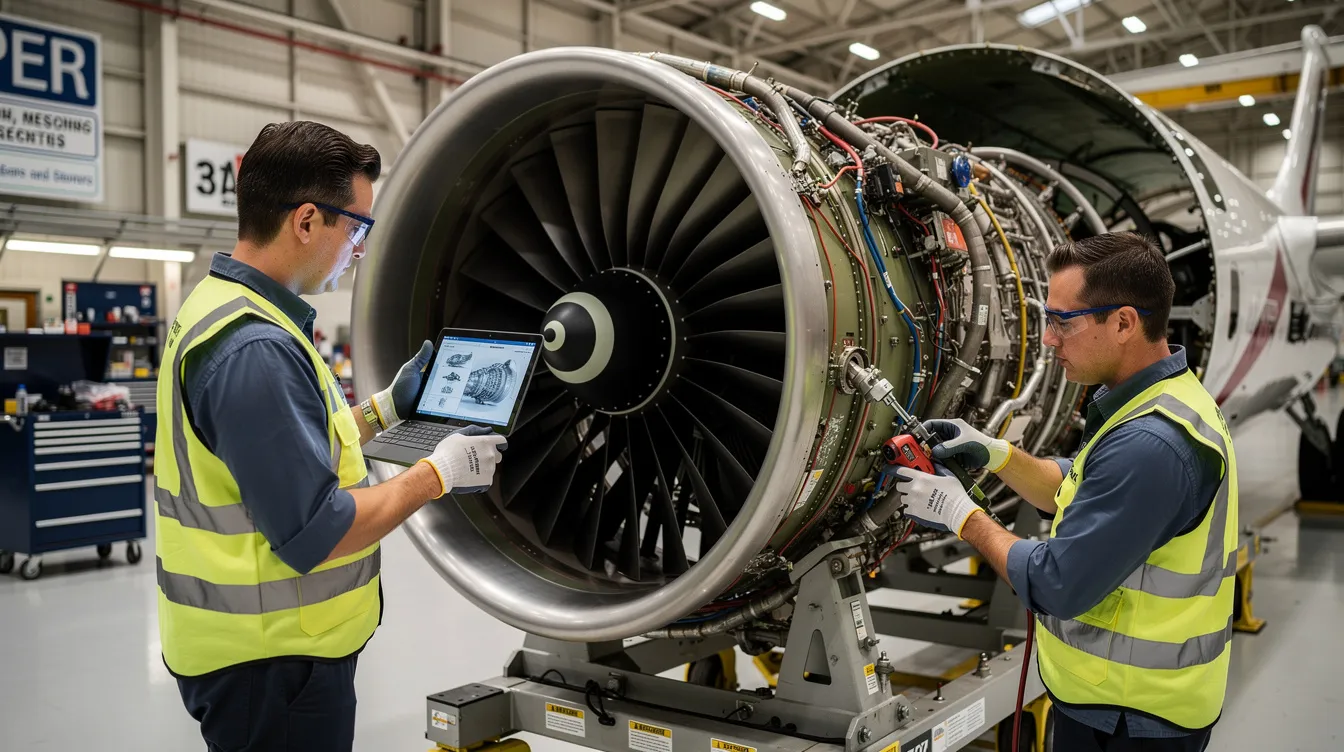
Private jet maintenance covers engines, avionics systems, landing gear, cabin, and safety equipment, each requiring specialized expertise and skilled technicians.
Engine care remains the top priority. Engine Health is a top priority, requiring oil changes every 25–50 flight hours and regular replacement of spark plugs and air filters. Engine oil analysis reveals engine performance trends. Routine borescope inspections examine internal components, while hot-section inspections occur every 1,800–3,000 hours. Full overhauls at 5,000 cycles can cost $500,000–$2 million, ensuring peak efficiency for key components.
Landing gear and brake maintenance involves inspection of struts, tires, brake packs, and hydraulics. Aircraft doing frequent short-leg city pairs accumulate many cycles, accelerating wear. Gear overhauls every 10 years or 10,000 cycles run $200,000–$800,000, while tires cost $2,000–$15,000 each.
Avionics and electrical systems require constant attention. Technicians must regularly update software for navigation and communication systems to meet air traffic control requirements. Component replacements and troubleshooting of flight management systems by the maintenance team ensure proper operation.
Cabin and interior maintenance preserves the cabin experience. Regular deep cleaning, upholstery repair every five years, galley and lavatory servicing maintain luxury standards throughout calendar time intervals.
Safety equipment maintenance follows strict cycles. Emergency Gear, like fire extinguishers, requires pressure checks and periodic hydrostatic testing, usually every 5–6 years. Testing and recertification of oxygen systems, life rafts, and AEDs occur on 3–5 year cycles per FAA and manufacturer guidance.
Budgeting for Maintenance Costs and Overall Operational Costs
In practice, aircraft owners should expect maintenance to represent a significant portion of total operational costs alongside crew salaries, fuel, hangar, and insurance. The expenses involved in maintaining a private jet can accumulate rapidly, encompassing everything from routine inspections and preventive upkeep to significant overhauls and unforeseen repairs.
A good rule of thumb for budgeting annual maintenance costs is to allocate between 5% and 10% of the aircraft’s total value each year. For a $40 million Gulfstream G450, that means $2–$4 million annually toward maintaining optimal condition, pushing some buyers instead toward the cheapest private jet options and operating profiles that better align long-term maintenance exposure with their budget.
Common maintenance plan structures include:
Maintenance Plan Type | Benefits | Drawbacks |
|---|
Power-by-the-hour (e.g., CorporateCare) | Predictable costs covers 100% of engine repairs | High upfront enrollment, hourly rate $600–$1,200 |
Fixed-price contracts | Budget certainty, simplified planning | May overpay during low-utilization years |
Pay-as-you-go | Lowest short-term cost for light users | Highest exposure to unexpected repairs |
Related operational costs interact with maintenance planning: understanding the full cost of crew, including private jet pilot salaries and training expenses, is essential when modeling total ownership outlay.
Operational Cost Component | Typical Annual Cost Range |
|---|
Hangar Space | $36,000–$96,000 |
Crew Salaries | $200,000–$500,000 |
Insurance | $30,000–$150,000 |
Fuel | $1,500–$4,000 per flight hour |
Training | $30,000–$80,000 |
Well-planned scheduled maintenance reduces long-term maintenance expenses by catching issues early. BlackJet Jet Card members effectively outsource these budgeting complexities, paying a predictable hourly rate while partners manage overall budget requirements behind the scenes through offerings like the BlackJet 25+ Hour Jet Card.
Leveraging Technology and Professional Management for Better Maintenance Outcomes
Modern private jet maintenance increasingly depends on data, connectivity, and specialized aircraft management to minimize downtime and keep your aircraft safe.
Operators use digital maintenance tracking systems and OEM portals to monitor flight hours, cycles, and calendar limits, automatically flagging upcoming maintenance tasks. Platforms like GE OnPoint and Rolls-Royce rt360 analyze over one million data points to predict failures 30–60 days in advance.
Predictive maintenance leverages technology, including engine health monitoring, trend data analysis, and fault-code reporting. Certified professionals schedule work before components fail, slashing AOG events by 20–40% and maintaining peak performance.
Professional aircraft management companies coordinate maintenance schedules, negotiate with MROs, and ensure FAA/EASA compliance with FAA regulations, freeing owners from day-to-day oversight. Many of the top private jet companies in the market differentiate themselves through the strength of their management and maintenance programs. A good maintenance provider should not only meet FAA certification standards but also strive to exceed them by investing in continuous training for their technicians and utilizing the latest diagnostic tools.
BlackJet uses technology-enabled scheduling and vetted maintenance partners, so Jet Card members enjoy reliable dispatch and carbon-neutral flights without personally dealing with inspection bookings or AOG logistics, while still being able to benchmark offerings against major jet card providers like NetJets.
Ownership vs Jet Cards vs On-Demand Charter: Who Really Carries the Maintenance Burden?
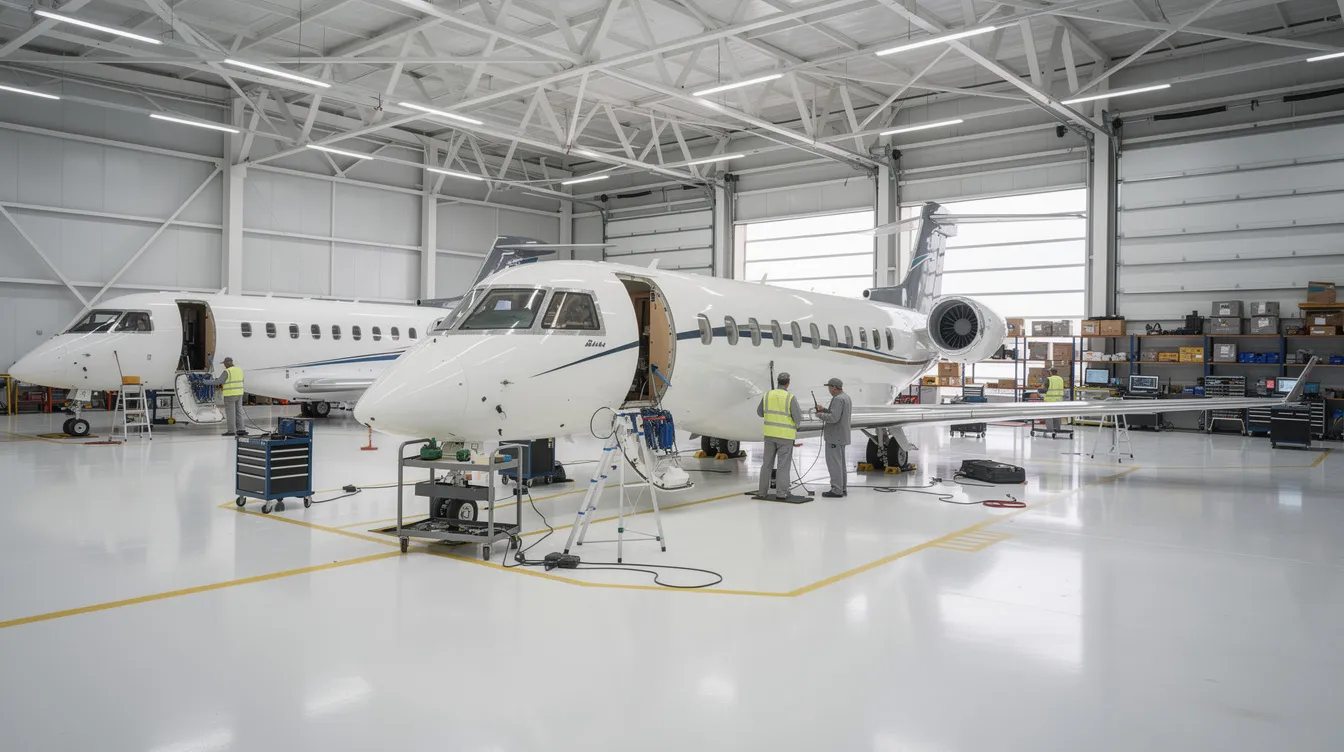
Private jet ownership involves comprehensive responsibilities and costs, including not only the initial purchase but also ongoing private plane maintenance, operational expenses, and long-term planning. Travelers evaluating these commitments often review a detailed private jet price list and ownership costs before deciding whether to buy, charter, or use Jet Cards. The fundamental difference between private aviation access models is who holds the asset—and therefore who pays for and manages private jet maintenance.
Access Model | Maintenance Responsibility | Pros | Cons |
|---|
Whole Ownership | Owner responsible for all scheduled & unscheduled maintenance | Full control over configuration and availability | High cost, risk of unexpected repairs |
Fractional Ownership | Shared maintenance expenses; the management company handles scheduling | Shared costs, professional management | Monthly fees, less control |
On-Demand Charter | The operator handles all maintenance | No maintenance cost or responsibility | Less control, availability varies |
Jet Card Programs | Provider manages maintenance & operational risk | Predictable costs, guaranteed access, no maintenance burden | Hourly fees may be higher than ownership fees |
Consider this scenario: A CEO flying 100–150 hours annually could spend $1.5 million owning a Citation X (including unexpected costs for engine work and a C inspection). With a BlackJet Jet Card, they access comparable aircraft at predictable hourly rates similar to a 100-hour private jet card program, avoiding surprise maintenance bills while certified technicians with specialized knowledge handle every service need.
Safety, Certification, and Sustainability in Maintenance
Serious private aviation operators treat maintenance as the backbone of safety and a lever for more sustainable operations.
Compliance with FAA regulations is a critical aspect of private jet maintenance, as it ensures that aircraft meet legal requirements for safe flight and operational standards. Private jet maintenance providers must be staffed by FAA-certified Airframe and Powerplant (A&P) technicians to ensure compliance with federal regulations and safety standards. FAA certification through Part 145 repair stations ensures maintenance tasks meet manufacturer and regulatory standards. Airworthiness Directives (ADs) are legally enforceable rules issued by the FAA to correct unsafe conditions, and owners must ensure compliance.
Consistent, high-quality maintenance supports operational safety metrics—incident-free flight records differentiate premium operators from casual charter providers. It’s essential to select a maintenance provider that offers 24/7 support and rapid response for Aircraft on Ground situations to minimize downtime and ensure safety.
Well-maintained engines and airframes also improve fuel efficiency, reducing operational costs and emissions per flight hour. Choosing a maintenance provider that specializes in your specific aircraft model can lead to more efficient and accurate service, as they will be familiar with the unique systems and common issues of that jet.
BlackJet pairs rigorous maintenance standards with carbon-neutral flight programs, offsetting emissions through Gold Standard credits at no additional cost to members—ensuring safety and environmental responsibility travel together.
How BlackJet Protects You From Maintenance Headaches
BlackJet delivers private jet access without ownership-level maintenance risks or administrative burden. Rather than managing regular inspections, coordinating with service centers, or budgeting for unexpected repairs, members access fleets maintained to the highest standards.
BlackJet partners with top-tier operators whose fleets adhere to strict maintenance programs, safety audits, and third-party certifications like ARGUS Platinum and Wyvern Wingman. Members step onto aircraft that are continuously cared for by maintenance teams with specialized expertise.
BlackJet’s 24/7 digital booking tools and real-time flight support enable rapid re-routing or re-sourcing if unscheduled maintenance or AOG events occur. Crew salaries, hangar arrangements, scheduled maintenance, unscheduled maintenance, and D inspection planning are all handled behind the scenes—bundled into transparent hourly Jet Card pricing.
Elevate your travel—seamlessly. With BlackJet, private flying is no longer exclusive; it’s available on your terms through our Jet Card programs, featuring stringent safety standards, carbon-neutral flights, and exceptional flexibility. Discover BlackJet’s Jet Card offerings and experience how sophisticated, purposeful travel becomes your everyday reality.

Frequently Asked Questions About Private Plane Maintenance
These FAQs address common maintenance questions that go beyond the main sections, especially for prospective jet owners and Jet Card users considering their options.
How long is a private jet typically grounded for major maintenance like a D inspection?
A D inspection or equivalent heavy maintenance visit can ground an aircraft for 30–60 days or more, depending on the aircraft’s size, findings during disassembly, and parts lead times. For a Boeing BBJ-class aircraft—commonly used as a private jet solution for 50 passengers—downtime may extend further if corrosion or structural issues require additional work. Owners must plan 12 months ahead for this downtime, coordinating lift coverage and scheduling around travel needs.
Can an owner or pilot perform any of their own maintenance on a private jet?
In the United States, only limited preventive maintenance tasks outlined in 14 CFR Part 43 Appendix A may be performed by appropriately certificated individuals. Most work—including inspections, repairs, and component replacements—must be completed by FAA-certified A&P mechanics or Part 145 repair stations to preserve airworthiness certificates and insurance coverage. Attempting unauthorized maintenance voids both.
How does heavy maintenance affect charter or Jet Card availability?
When one aircraft enters scheduled or unscheduled maintenance, reputable operators and Jet Card providers like BlackJet substitute another aircraft from their approved fleet to maintain availability. Travelers who only need the occasional seat may instead opt to buy a seat on a private jet through shared services, trading guaranteed aircraft choice for lower commitment. This fleet flexibility is a major advantage over owning a single jet, where your only aircraft sitting in a maintenance hangar means zero availability until work is completed.
Does better maintenance really improve the resale value of a private jet?
Absolutely. A complete, well-organized maintenance history with on-time inspections and OEM or Part 145 work significantly boosts buyer confidence. Aircraft with documented adherence to manufacturer maintenance schedules command 15–25% higher resale prices and sell faster than those with incomplete or inconsistent records.
How far in advance should major inspections be scheduled?
Owners and operators typically start planning C and D-level events 6–12 months ahead. This lead time allows coordination with MRO facilities (which book up quickly), alignment with quieter travel periods, and arrangement of substitute lift coverage if the aircraft serves charter or Jet Card programs. Last-minute scheduling often results in extended downtime and premium pricing.
Conclusion
Private plane maintenance is the cornerstone of safe, reliable, and luxurious private aviation. For high-net-worth individuals and discerning travelers, understanding the complexities of maintenance costs, inspection schedules, and operational demands is essential to preserving both safety and asset value. BlackJet’s Jet Card programs offer an elegant solution by removing the burdens of ownership-level maintenance while delivering access to meticulously maintained aircraft fleets. Through rigorous certification standards, cutting-edge technology, and expert management, BlackJet ensures every flight meets the highest safety and sustainability benchmarks. Elevate your travel experience with BlackJet’s seamless, carbon-neutral private jet access—where maintenance headaches become a thing of the past, and refined travel is always within reach.
Discover how BlackJet can transform your private aviation experience by visiting blackjet.com. Join the Jet Card program today and enjoy unparalleled flexibility, safety, and sophistication on your terms.


 Sign up with google
 Sign up with Apple