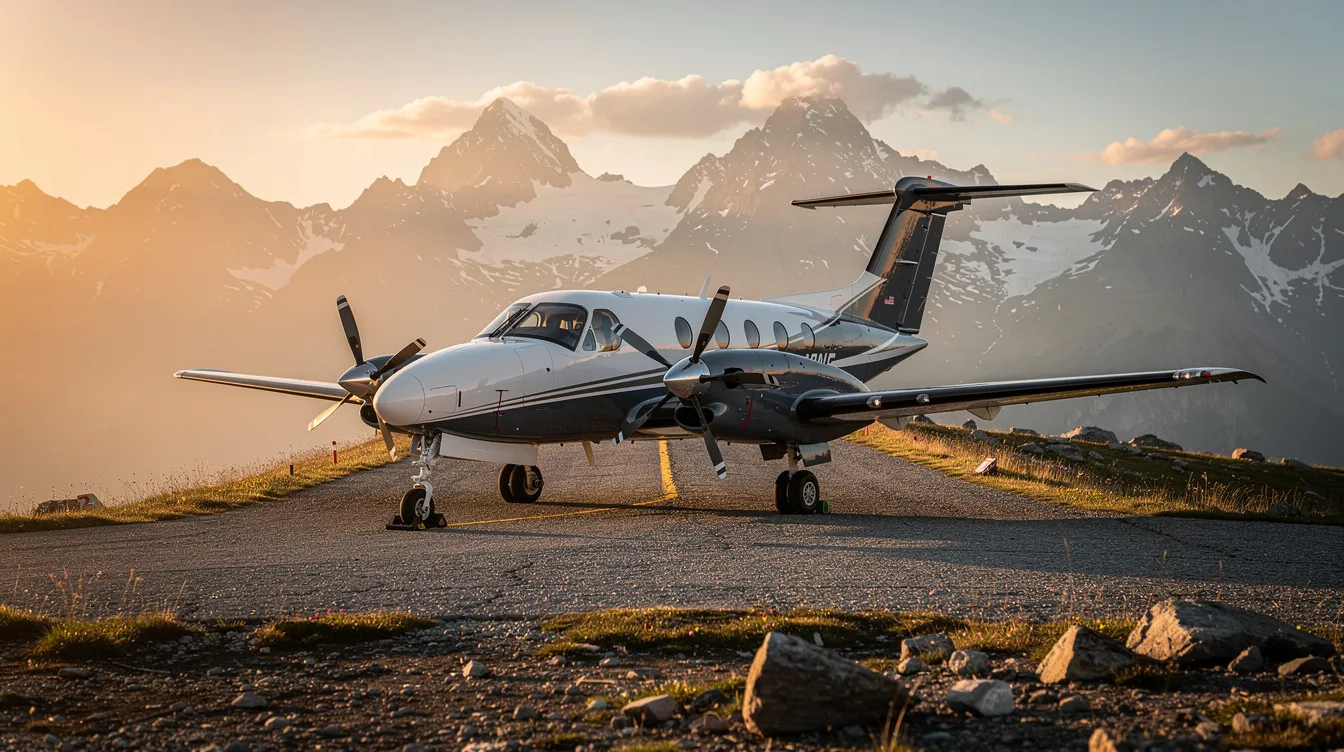
For high-net-worth individuals, corporate travelers, and flight advisors, selecting the right aircraft is a strategic decision that impacts productivity, access, and cost. Single-engine planes, once associated strictly with flight schools and weekend hobbyists, have evolved into serious tools for regional business aviation and luxury travel. This guide covers the advantages, limitations, types, costs, and best use cases for single-engine planes in private aviation, helping business and luxury travelers make informed decisions in the context of BlackJet's premium private jet card and charter programs. Whether you are a private jet traveler seeking efficiency, a business traveler optimizing for cost and access, or a flight advisor guiding clients, this comprehensive resource will help you identify when a single-engine turboprop is the intelligent choice and how BlackJet makes that choice effortless.
Why Single-Engine Planes Matter in Modern Private Aviation
The world of private aviation rewards precision. Selecting the right aircraft for each mission, rather than defaulting to the largest jet available, is akin to any sound business decision: it optimizes resources while maximizing outcomes.
Consider a New York–Boston hop. A fast single-engine turboprop covers the flight in roughly 90 minutes, with total door-to-door time often under 2.5 hours thanks to access to smaller airports with no security lines. Commercial first class on the same route regularly exceeds 3.5 hours when you account for check-in, boarding, and ground transfers. A similar contrast emerges on a London–Geneva route, where a turboprop can use regional airfields that cut ground transit dramatically.
Modern single-engine planes are not entry-level toys. They feature pressurized cabins, digital engine controls, autoland systems, and advanced avionics technologies that place them firmly in the business-travel category. BlackJet arranges access to vetted single-engine aircraft through our Jet Card program and on-demand charter, with safety certification, sustainability, and technology at the core.
Key benefits at a glance:
Safety: Rigorous operator vetting and next-gen avionics
Cost-efficiency: 30–40% lower hourly rates than comparable light jets
Airport access: Shorter runways, closer destinations, less ground time
What is a single-engine plane? Understanding the Single Adjective
A single-engine plane is an aircraft powered by exactly one engine, a piston or turboprop, driving a propeller. The term refers exclusively to engine count, not passenger capacity. It is not about a single person or a single serving flight; many of these aircraft comfortably carry six to nine passengers.
Single-engine aircraft are the industry standard for flight training and are widely available for that purpose. They allow for a gentler learning curve for pilots, provide a direct learning path to mastering flight fundamentals, and reduce cognitive load during initial training. Fewer systems in single-engine planes simplify pilot workload, and simplified cockpit management is a key benefit. They are also easier to fly for beginner pilots, and are designed for stability during basic maneuvers.
Well-known examples include:
Cessna 172: The most popular single-engine plane in the world, a four-seat trainer cruising at roughly 120–130 knots
Piper PA-28: Known for its versatility and performance across training and personal missions
Cirrus SR22: Features advanced avionics and safety systems, including the CAPS ballistic parachute, cruising at ~183 knots with ~1,000 nm range
Mooney M20: Recognized for its speed and efficiency among piston singles
Diamond DA40: Popular for flight training and personal use, with a loyal following worldwide
These examples span the spectrum from basic trainers to high-performance platforms. For private travel, the category that matters most is the turboprop single, a separate class entirely from training aircraft within the broader landscape of private jet types for every traveler.
Key Types of Single-Engine Aircraft Used in Private Travel
Not all single-engine planes serve the same audience. The gap between a training aircraft and a premium turboprop is substantial, and understanding it helps you talk confidently with your flight advisor.
Single-engine piston planes (Cessna 172, Cirrus SR22, Piper PA-28):
Range: typically 500–1,000 nautical miles
Passengers: 2–4 comfortably
Best for short hops, owner-pilots, and leisure flying
Single-engine planes are suitable for short trips under 1,000 nautical miles
Single-engine turboprops (Pilatus PC-12, Daher TBM 960, Cessna Caravan):
Range: 1,400–1,900 nm
Passengers: 5–9 depending on configuration
Pressurized cabins, higher speeds (280–330 knots), executive interiors
These are the turboprop private planes BlackJet typically sources for members
In contrast to piston singles, turboprops rival light jets in cabin comfort for flights under two hours, with club seating, work surfaces, and generous luggage capacity.
Comparison Table: Single-Engine Piston vs. Single-Engine Turboprop
Feature | Single-Engine Piston Planes | Single-Engine Turboprops |
|---|
Typical Range | 500–1,000 nautical miles | 1,400–1,900 nautical miles |
Passenger Capacity | 2–4 passengers | 5–9 passengers |
Cabin Pressurization | Usually unpressurized | Pressurized cabins |
Cruise Speed | ~120–183 knots | 280–330 knots |
Use Case | Flight training, short leisure flights | Regional business travel, luxury access |
Maintenance | Simpler, lower cost | More complex, higher cost, but still less than jets |
Operational Cost | Lower hourly cost | Moderate hourly cost (30–40% less than light jets) |
Airport Access | Suitable for smaller airports | Can access short and remote runways |
Safety Features | Basic avionics, some with ballistic parachutes | Advanced avionics, autoland systems, and de-icing |
Pilatus PC-12: The Benchmark Single-Engine Business Aircraft
The PC-12 is often called the debut single choice for corporations transitioning from chartering light jets. Produced by Swiss manufacturer Pilatus since 1991, it has built a record of reliability that reads like a chronicle of modern turboprop excellence.
Key specifications:
Cruise speed: 280–300 knots true airspeed
Range: up to ~1,800 nautical miles
Seating: 6–9 passengers with generous baggage space
Runway performance: operational on strips under 3,000 feet
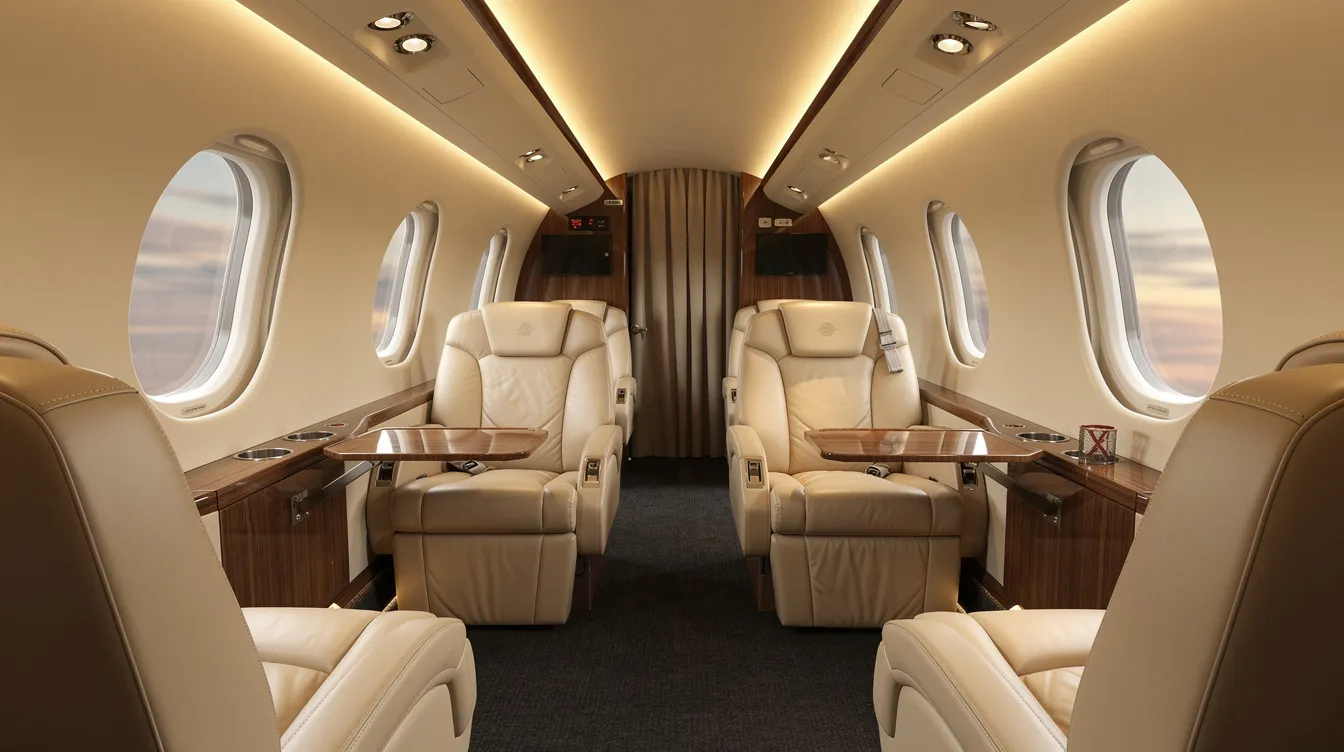
The cabin features leather finishes, quiet insulation, de-icing protection, and optional Wi-Fi-a foundation for productive flights. BlackJet frequently recommends the PC-12 for single-day out-and-back missions such as Dallas–Santa Fe (~450 nm) or Geneva–Olbia (~325 nm) with 4–6 passengers.
Other Notable Single-Engine Models for Private Use
Daher TBM 960: This French-produced flagship cruises at approximately 330 knots with a range of ~1,730 nm. Its HomeSafe autoland system and digital engine controls make it ideal for executive pairs or small teams who prioritize speed.
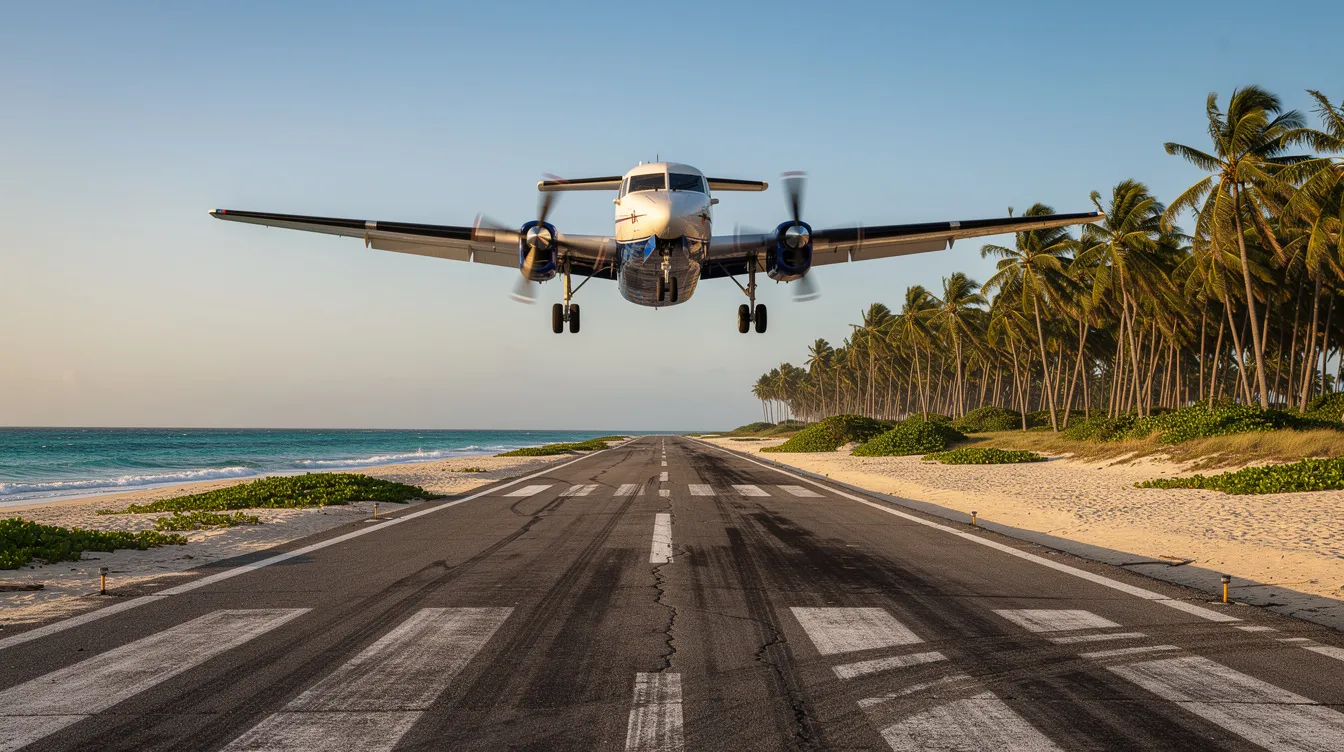
Cessna Caravan / Grand Caravan EX: Rugged, with 9+ seats and outstanding short-field capability. Popular for resort access in the Caribbean or mountain strips, think island hops where a jet simply cannot land.
Cirrus Vision Jet: Technically a single-engine jet rather than a turboprop, it bridges the gap between high-performance singles and multi-engine aircraft. A useful option within BlackJet's fleet access for missions that exceed turboprop capability but don't require a full jet.
Safety and Certification: How Safe Is a Single-Engine Plane? (As Reported by the New York Times)
Sadly, many travelers assume that "single engine" implies greater risk. The truth is more nuanced. Under commercial operations-FAA Part 135 in the United States or EASA in Europe-single-engine turboprops face rigorous oversight covering maintenance, pilot training, and operational standards that mirror light-jet requirements.
Single-engine aircraft generally have higher operational reliability thanks to simpler mechanical systems and focused maintenance protocols. They are, however, less stable in adverse weather conditions than larger multi-engine aircraft, which is why conservative weather minimums and careful route planning are standard practice.
Modern safety technologies include:
FADEC/digital engine and propeller controls for optimized performance
De-icing and anti-icing systems enabling flight into known icing conditions
Terrain awareness, weather radar, and advanced autopilot
Ballistic parachute systems (Cirrus CAPS has saved over 250 lives)
BlackJet's safety standards require third-party audits through organizations like ARGUS, Wyvern, and IS-BAO. Every operator in our network must demonstrate a strong safety score, current certification, and professionally trained crews with recurrent simulator training.
Engine Reliability and Redundancy Beyond "Number of Engines"
The Pratt & Whitney PT6 turbine family, used in the PC-12, TBM series, and many other turboprops, has an exceptionally low in-flight shutdown rate. Thinking of engine reliability as purely a game of plural engines versus one misses the point.
Redundancy in modern single-engine planes extends well beyond the powerplant:
Dual electrical systems and backup instruments
Dual avionics with independent navigation sources
Strict maintenance intervals with engine trend monitoring
Conservative route planning that avoids extended flight over unlandable terrain
BlackJet's operations team continuously monitors weather and NOTAMs and retains authority to reroute or delay if conditions fall below standards. This is not a one-player effort-it involves dispatchers, meteorologists, and crew working in concert.
Single-Engine Plane vs Multi-Engine Jet: Which Fits Your Mission?
This is a practical decision, not a philosophical one. The right aircraft depends on your mission profile.
When a single-engine turboprop fits best:
Legs under 800–1,000 nm with 2–5 passengers
Destinations with shorter runways or remote airfields
Frequent regional travel where the cost per hour matters
Cross-country hops (e.g., LA–Napa, Paris–Zurich, Toronto to destinations across Canada)
When to step up to a multi-engine jet: if your mission profile points toward a larger cabin class, it helps to understand the different private jet sizes and categories.
Hourly operating costs for single-engine turboprops typically fall in the $2,000–$4,000 range-roughly 30–40% lower than comparable light jets. For a frequent traveler, those savings compound fast. Single-engine planes are generally less expensive to operate, require less maintenance compared to multi-engine planes, and have lower fuel consumption rates.
Jet Card Use Case: Choosing a Single-Engine Plane with BlackJet
Consider Steve, a BlackJet 25-hour Jet Card member based in Miami who plans monthly trips to Nassau and Key West with 3–4 passengers. His flight duration on each leg is under 90 minutes, and the island airstrips favor turboprops.
By selecting a single-engine turboprop for these short hops, rather than defaulting to a light jet, Steve stretches his Jet Card hours significantly. He uses the BlackJet mobile platform to view real-time availability, selects the turboprop category, and confirms in a few taps. When a longer trip or special occasion arises (a march down to Cartagena, perhaps, or a week in Aspen with a larger group), his flight advisor recommends upgrading to a light jet, keeping regional flights efficient and reserving premium hours for missions that demand more aircraft.
Comfort, Cabin Experience, and the "Single Person" Misconception
The word "single" in this context is purely an adjective describing engine count, not a comment on cabin size, luxury, or capacity. A single-engine plane is not a single room in the sky. Premium turboprops comfortably host small teams, married couples on getaways, women executives on roadshows, or families with sports gear and luggage.
Cabin features in modern turboprops include:
Leather club seating with fold-out work surfaces
In-cabin power and optional Wi-Fi
Quiet cabins with active noise reduction-the audio environment is remarkably refined.
Bespoke amenities arranged by BlackJet on request (catering, magazines, specific beverages)
Layouts can be optimized for work, two executives facing each other with laptops, as if sharing a private office, or for leisure, with a family of four plus ski bags. The sound levels are lower than many travelers expect, producing an environment where you can talk, read, or simply rest.
Real-World Single Room Trip Examples from BlackJet Members
Weekend leisure: A family of four flies a Pilatus PC-12 from London to Chambéry (serving Courchevel) for a ski weekend. The alpine runway is too short for most jets, but the PC-12 handles it with ease. Flight duration is approximately two hours. Ski equipment goes in the generous cargo hold. BlackJet's concierge arranges ground transfers from the airfield to the resort, and edited itineraries are updated in real time via the app when weather shifts the return by a few hours.
Business roadshow: A founding team of three departs San Francisco early morning, hitting Fresno, Santa Barbara, and Palm Springs in a row before returning the same evening. Three legs, each under an hour, using a turboprop that accesses regional fields commercial airlines don't serve. No overnight stays, no dead time in terminals. The team stays on the same page throughout the day, with the BlackJet operations team managing schedule changes and catering between stops.
Costs, Jet Cards, and When a Single-Engine Plane Makes Financial Sense
Jet Card pricing for turboprop categories typically runs $3,000–$4,500 per hour all-in, as opposed to light jets at $5,000–$8,000 per hour. A 25-hour turboprop block can cost $85,000–$100,000, while an equivalent light jet card often exceeds $125,000–$175,000.
Example calculation: If a member allocates 10 of 25 Jet Card hours to short regional flights on a turboprop, the per-hour savings of $2,000–$3,000 free up budget for longer jet missions later. The value stretches considerably. Single-engine planes generally have lower insurance premiums than multi-engine planes, which further reduces the operator's cost structure, savings that flow through to members exploring the cheapest private aircraft and access models.
Pre-purchased hours also offer budgeting advantages: predictable costs each week and month, no surprise charter invoices, and no capital commitment.
Single Engine Ownership vs BlackJet Access
Owning a single engine aircraft means absorbing acquisition cost, hangar fees, insurance, maintenance, crew salaries, and regulatory compliance—considerations that also apply when evaluating private jets for sale under 10 million dollars. Annual fixed costs for a privately operated PC-12 can reach $180,000–$280,000 before you fly a single hour. The aircraft has sold well globally, over 1,900 units delivered, but ownership makes financial sense only above roughly 200–250 flight hours per year; below that threshold, cheaper single-engine planes for budget-conscious pilots or on-demand access may be more rational.
Single-engine aircraft have simpler maintenance requirements than multi-engine planes, yet ownership still demands constant attention. For travelers logging 25–75 hours annually, a Jet Card membership eliminates depreciation risk, hangar logistics, and maintenance surprises while offering flexible access to turboprops, light jets, or larger aircraft per trip, whether you charter an entire aircraft or simply buy a seat on a private jet.
Sustainability and Technology: Modernizing the Single-Engine Experience
Single-engine turboprops are inherently fuel-efficient platforms, and many of the world's best private jets now integrate similar efficiency and sustainability features at larger scales. The TBM 960 burns approximately 57 US gallons per hour at fast cruise, a fraction of what a light jet consumes. Lower fuel consumption rates translate directly to lower emissions per passenger mile, particularly on well-loaded regional legs.
BlackJet ensures every journey is carbon-neutral at no extra cost to you, aligning even more carbon-intensive categories, such as affordable entry-level private jets, with modern sustainability expectations. All flights, including single-engine missions, are automatically offset via verified carbon projects. Sustainable Aviation Fuel (SAF) adoption is expanding, and turboprops-with their lower fuel volumes-are likely to be among the first category where SAF blends become routine.
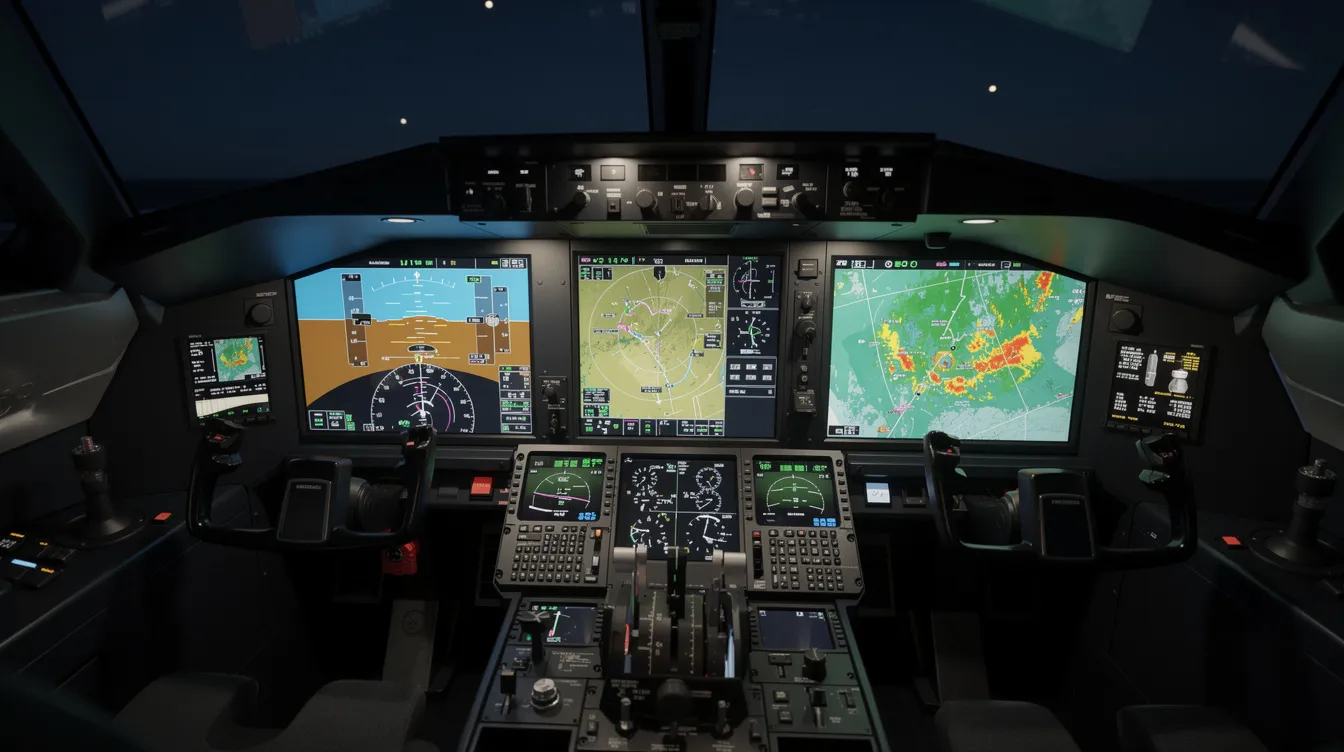
On the technology front, next-gen glass cockpits (Garmin G3000 suites), satellite weather, and emergency autoland systems like the TBM 960's HomeSafe represent a new page in the evolution of these aircraft.
BlackJet's Digital Platform and Real-Time Support
BlackJet's app lets members browse aircraft categories-including single-engine options-compare estimated flight times, and view real-time availability. Instant pricing, route optimization, and the ability to request specific models like the PC-12 or TBM series are built in.
Our 24/7 operations team handles weather re-routes, schedule changes, and last-minute additions (a fifth passenger, extra luggage) seamlessly. Members can track flights, view crew profiles, and access safety documentation digitally before departure. It is a system designed to put every relevant detail at your fingertips, not buried in email chains.
FAQ: Single-Engine Planes and BlackJet Membership
Are single-engine planes safe for business travel?
Yes. When operated under commercial certification (Part 135 or EASA equivalent), with modern turbine engines, professional crews, and advanced avionics, single-engine turboprops meet demanding safety standards. BlackJet vets every operator through third-party audits.
How many passengers can a single-engine plane carry comfortably?
Turboprops: 5–9 passengers (PC-12, TBM 960). Piston singles: 2–4. The audience for each category differs by mission.
What routes are best suited to single-engine aircraft?
Regional trips under 1,000–1,500 nm, airports with shorter runways, and itineraries with multiple legs. Think Miami–Nassau, not New York–London.
Is "single" here a single adjective for engines only, or does it relate to a single person?
"Single engine" uses "single" purely as an adjective, a modifier describing how many engines the aircraft has. It functions the same way whether used as a noun phrase or with synonyms like "one-engine." In aviation, the word is never a verb or a reference to passenger count. Across languages-german, Japanese, Korean, Dutch, Swedish, French, and others-the concept translates the same way: one power plant. Published industry references in June 2026 confirm this is standard terminology worldwide.
Can I specify "no single engine" on my BlackJet profile? Absolutely. Our platform supports aircraft preferences. The trade-off is potentially higher cost or longer lead times on certain routes.
Are single-engine flights more environmentally efficient than jets? Generally yes. Lower fuel burn, smaller airframes, and higher load factors on regional legs mean lower emissions per passenger mile. Offsetting and SAF use improve the picture further.
How do I speak with an advisor? Contact BlackJet directly through the app or website, or compare top private jet companies if you're still exploring the broader market. Our flight advisors will map your typical routes to optimal aircraft types, helping you identify where single-engine turboprops fit-or don't.
How to Decide If a Single-Engine Plane Is Right for Your Next Trip
Use this checklist to identify whether a single-engine turboprop fits your next mission:
Distance: Under 1,000 nm? Turboprop territory.
Passenger count: 2–6 passengers? Ideal. For significantly larger groups, 30-passenger private jet options may be a better fit than any single-engine solution.
Luggage: Moderate bags, ski gear, or golf clubs? Most turboprops handle this well, like a batter stepping up with the right equipment for the hit.
Runway: Is your destination served by a shorter or remote field? Turboprops excel here.
Budget: Want to stretch your Jet Card hours? Turboprops deliver more flights per dollar.
Time sensitivity: For durations under two hours, door-to-door time often beats jets thanks to closer airports.
When the route extends beyond 1,200 nm, the group exceeds six, or you need a stand-up cabin, it's time to step up to a light or midsize jet, or even consider 50-passenger private jet charters for very large parties. Think of it like choosing between a precision short game in tennis and a power serve-each has its place, and the best players (and travelers) know when to deploy each.
BlackJet's role is advisory as well as operational, whether you're evaluating on-demand access or exploring premium UK private jets for sale. You are not expected to be an aircraft expert. We translate your plans into the right aircraft selection, whether that means a single-engine turboprop to a mountain strip or a midsize jet across the Atlantic. Among other things, our flight advisors have played a central role in helping members across every category-from first-time flyers to those who have been in the private aviation game for decades-find the right match for every trip, every week.
Conclusion: Elevate Your Travel Strategy with Single Engine Planes
Single-engine planes represent a strategic asset in modern private aviation, blending efficiency, safety, and cost-effectiveness without compromising comfort or performance. For discerning travelers and business executives, these aircraft offer a nimble, sustainable option for regional missions that demand flexibility and precision. By integrating advanced technology, rigorous safety standards, and BlackJet’s seamless booking platform, single engine turboprops redefine what it means to travel smart.
Choosing the right aircraft is more than a preference—it’s a tactical decision that can save time, reduce environmental impact, and optimize your travel budget. Whether you’re flying a quick executive roadshow, a family weekend getaway, or accessing remote destinations such as private jet charters in Karachi, single-engine planes deliver an unmatched combination of reliability and sophistication. Discover how BlackJet’s curated fleet and expert advisors can tailor your private aviation experience, ensuring every journey is effortless, secure, and perfectly suited to your needs.
Elevate your travel with BlackJet—explore premium single-engine jet access and unlock a new realm of private aviation possibilities.


 Sign up with google
 Sign up with Apple