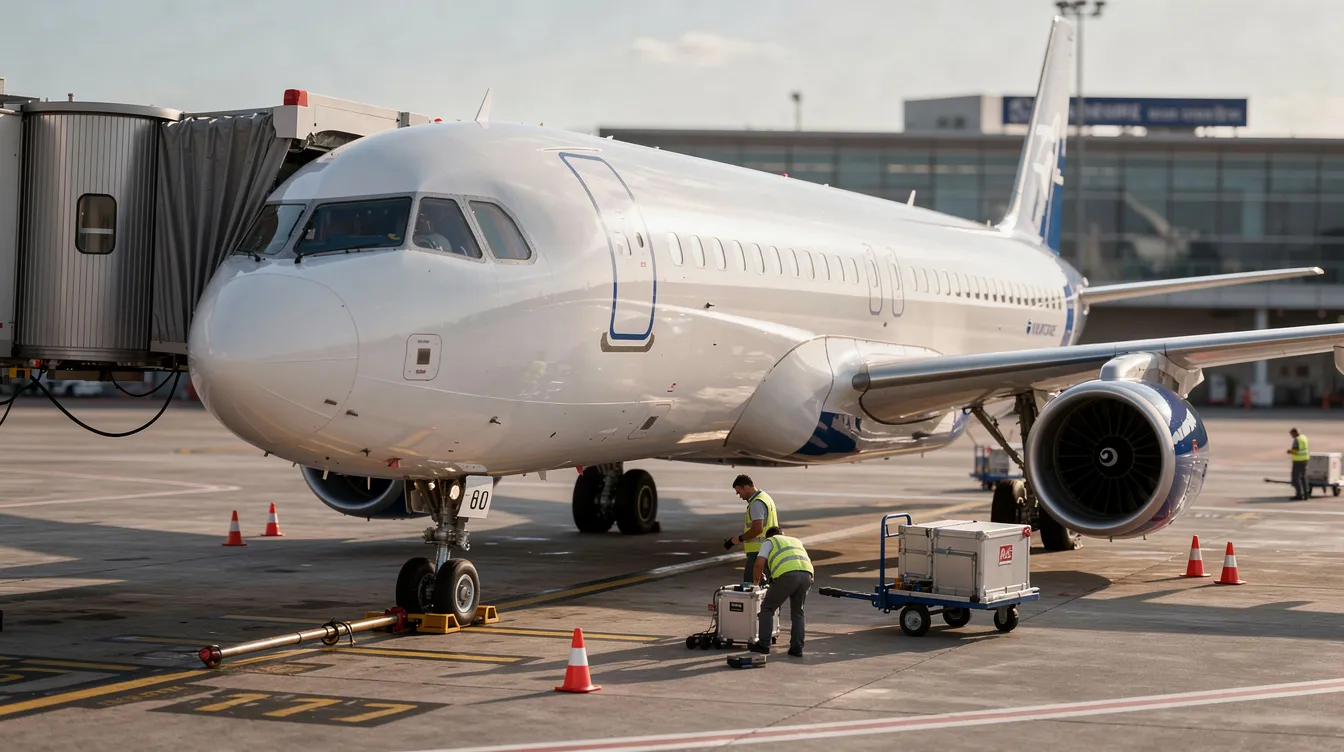
The Boeing 737 MAX is the most-ordered narrowbody aircraft in aviation history, with over 7,000 firm orders worldwide and more than one million passengers flying on the type daily. This guide is designed for corporate travelers, aviation professionals, and anyone comparing commercial airline range to private jet options. But how far can each variant actually take you? For corporate travelers and high-net-worth individuals planning multi-city itineraries, the answer is more nuanced than a single number — and it shapes when scheduled airlines make sense and when private jet access becomes the strategic advantage. Knowing the true range of each 737 MAX variant helps travelers and planners make informed decisions about route selection, nonstop flight feasibility, and when private jet travel may be advantageous.
Quick Answer: Real-World Range of the Boeing 737 MAX Family
The 737 MAX series includes four variants: MAX 7, 8, 9, and 10. The Boeing 737 MAX family has a maximum range of approximately 3,100 to 3,800 nautical miles, depending on the variant. Range refers to the maximum distance the aircraft can fly without refueling under standard conditions.
Those figures, however, are "brochure" numbers. They assume standard atmospheric conditions, zero headwinds, and optimal load — conditions that real airline operations rarely encounter. Once you factor in regulatory fuel reserves (typically 45–60 minutes of holding fuel under FAA Part 121), contingency fuel, alternate-airport planning, and realistic passenger loads, usable range drops roughly 5–10% below the published ceiling.
For route planners, dispatchers, and travelers who care about whether a flight actually operates nonstop, the realistic range band matters far more than the marketing figure.
Variant | Typical Seating | Maximum Takeoff Weight | Engines | Advertised Range | Realistic Range |
|---|
MAX 7 | 138–172 | ~80,280 kg (177,000 lbs) | CFM International LEAP-1B | 3,800 nmi (7,040 km) | ~3,400–3,600 nmi |
MAX 8 | 162–178 | ~82,640 kg (182,200 lbs) | CFM International LEAP-1B | 3,550 nmi (6,570 km) | ~2,500–3,200 nmi |
MAX 9 | 175–195 | ~88,310 kg (194,700 lbs) | CFM International LEAP-1B | 3,300 nmi (6,110 km) | ~3,000–3,200 nmi |
MAX 10 | 188–230 | ~89,760 kg (197,900 lbs) | CFM International LEAP-1B | 3,100 nmi (5,740 km) | ~2,800–3,000 nmi |
For context, typical super-midsize and large-cabin private jets used in networks like BlackJet's offer 3,000–4,500+ nautical miles nonstop, with several aircraft types exceeding 6,000 nmi. For executive groups of 4–12 travelers, a private jet often matches or exceeds the practical nonstop reach of a 737 MAX — without the constraints of airline schedules, hub routing, or fixed departure times.
Knowing exact range matters. Whether you're mapping a deal-making itinerary across three cities in a single day or deciding if that coast-to-coast flight will operate nonstop in winter headwinds, the difference between published and real-world range is the difference between a seamless trip and an unplanned connection.
How the Boeing 737 MAX Range Compares Within the 737 Family
The Boeing 737 has been the backbone of commercial aviation for over five decades, and the MAX represents its next-generation evolution. Boeing designed the four variants to cover regional routes through medium haul missions with better economics than any previous 737.
Compared to the Boeing 737 Next Generation models (737-700, -800, -900ER), the MAX series delivers 14–20% better fuel burn per seat thanks to LEAP-1B engines, advanced aerodynamics, and higher MTOW options. The MAX 8 replaces the 737-800 with more range and lower fuel consumption. The MAX 9 supersedes the 737-900ER with greater seating capacity and comparable legs. Airlines like Southwest Airlines, American Airlines, United Airlines, and Alaska Airlines migrated to the MAX for precisely these operating economics — more passengers per gallon, across the same or longer routes.
That said, the MAX family serves medium-haul routes, not intercontinental missions. Coast-to-coast U.S. flights, intra-European sectors, and intra-Asia connections sit comfortably within its envelope. Flights beyond 3,500 nmi with full payload push against real limits — territory where widebody aircraft or ultra-long-range private jets for global missions take over. For a broader look at how commercial plane models compare, range is one of the most decisive differentiators, just as understanding different private jet sizes is critical when you’re matching aircraft to specific mission profiles.
Engineering Foundations: What Gives the 737 MAX Its Range?
Range on the Boeing 737 MAX is fundamentally a function of four variables: engine technology, aerodynamic efficiency, fuel capacity, and weight limits. Each variant balances these differently, but the engineering principles are shared across the MAX family.
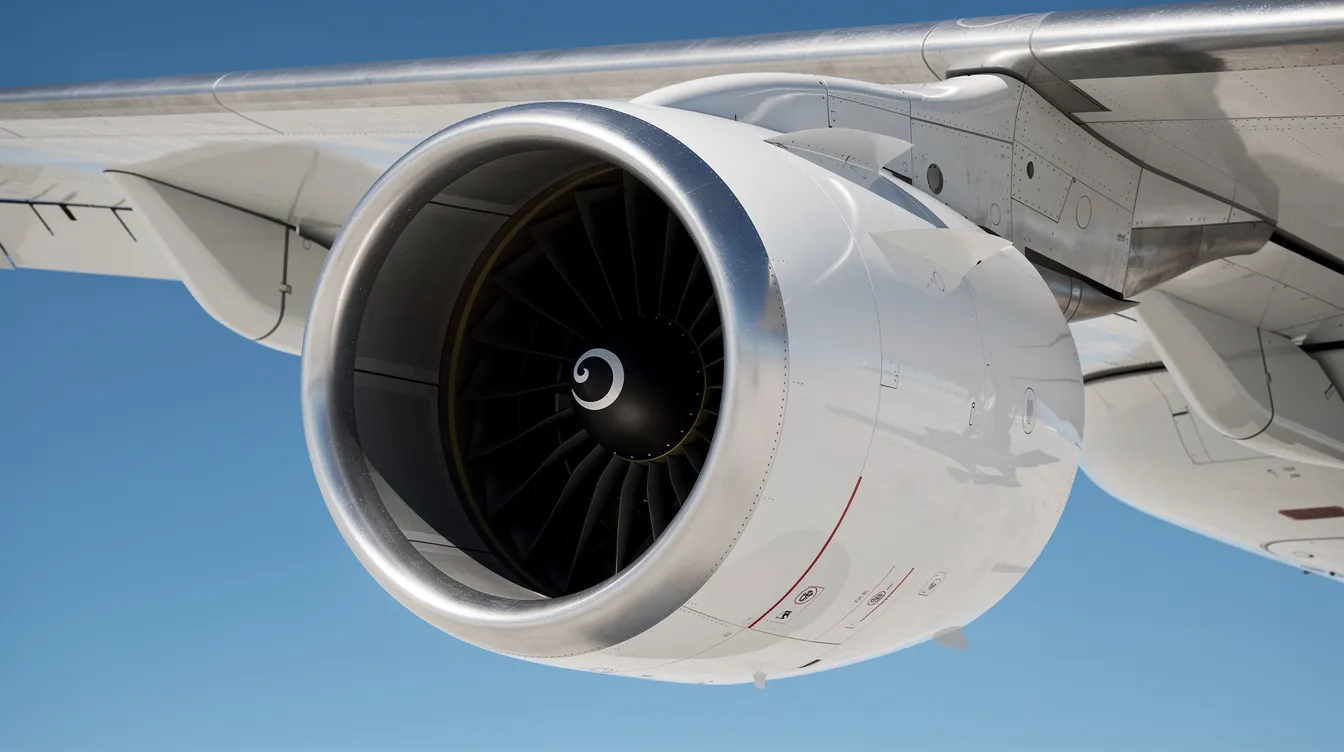
The LEAP-1B engines from CFM International are the single biggest contributor to the MAX's improved performance. With a larger fan diameter, higher bypass ratio, and advanced materials including ceramic matrix composites, the LEAP-1B engines reduce specific fuel consumption by 15% compared to the CFM56 engines on earlier Boeing 737 models. That translates directly into either more range on the same fuel load or lower fuel consumption on identical routes.
Aerodynamically, the MAX uses split-tip winglets and a refined wing profile to cut drag at typical cruise speeds of Mach 0.79–0.80. These advanced aerodynamics work continuously over every nautical mile, compounding savings across longer sectors.
Higher MTOW options allow airlines to carry more fuel for extended missions, but demand stronger structure and greater main landing gear load capacity. The key range drivers are:
LEAP-1B engines (15% SFC reduction over CFM56)
Split-tip winglets and drag-optimized wing design
Higher MTOW ratings enabling greater fuel carriage
Fuel volume matched to mission profiles per variant
737 MAX Range by Variant: MAX 7, 737 MAX 8, MAX 9, and 737 MAX 10
Each 737 MAX variant trades range, fuel efficiency per seat, and passenger capacity differently, shaping where airlines deploy them and which routes they serve.
The MAX 7 is the smallest variant and the longest-leg performer. With a range of 3,800 nautical miles — the maximum range in the family — and fewer seats (roughly 138–172 in a two class configuration or single-class layout), it excels on thinner routes where demand doesn't fill a larger aircraft but distance requires endurance. Think Dallas–Bogotá or London–Moscow: routes where several carriers need reach without high density capacity.
The 737 MAX 8 is the workhorse. The first aircraft in the family to enter active service, it has a range of 3,550 nautical miles and the 737 MAX 8 typically seats 162 to 178 passengers in standard configurations. It dominates medium-haul missions for airlines worldwide - New York–Los Angeles, London–Istanbul, Tokyo–Seoul. Lion Air was a notable launch customer, and Gol Linhas Aéreas operates one of the longest scheduled MAX 8 routes: Brasília to Orlando at roughly 3,282 nmi. Southwest Airlines, low-cost carriers, and full-service airlines alike rely on the MAX 8 as their fuel-efficient single-aisle backbone.
The MAX 9 stretches fuselage length while preserving similar range — the 737 MAX 9 has a range of 3,300 nautical miles — via auxiliary fuel capacity and higher MTOW. It offers more seats (up to ~220 in high-density layouts) with additional emergency exits required by the longer fuselage. Airlines like Alaska Airlines deploy it on routes such as Seattle–Honolulu, where capacity matters as much as range.
The 737 MAX 10 is the largest variant, with a maximum capacity of 230 passengers. Its design range of approximately 3,100 nautical miles makes it the shortest-legged member, but its per-seat economics are unmatched on dense, medium-distance routes. Real-world range for the MAX 10 is about 2,800 to 3,000 nautical miles. The MAX 10 is designed for high-density domestic routes like Chicago–San Francisco or Tokyo–Bangkok, where filling more seats matters more than stretching range. United Airlines and other major operators hold substantial firm orders for this variant.
Real-World Factors That Reduce or Extend 737 MAX Range
The operational range of a Boeing 737 MAX varies based on aircraft design and flight conditions — and the gap between brochure and reality can be significant.
Payload weight inversely affects the operational range of the Boeing 737 MAX. A MAX 8 carrying 170 passengers with baggage and cargo at near-max payload may see usable range drop to approximately 2,500–3,000 nmi after subtracting regulatory reserves, contingency fuel, and alternate-airport requirements. On a U.S. transcontinental route of ~2,600 nmi with 30–50 knot headwinds, the effective fuel margin narrows considerably compared to the 3,550 nmi advertised figure.
Headwinds negatively impact the ground range of the Boeing 737 MAX - particularly on eastbound winter transatlantic attempts or westbound Pacific sectors. The altitude at which the 737 MAX operates also affects its fuel efficiency and range; climbing to optimal cruise altitude takes time and fuel, and ATC routing often prevents ideal profiles.
Airline schedule pressures, turnaround requirements, and conservative dispatch policies (extra fuel for weather contingency, for example) further compress practical range. Many operators plan sectors 200–400 nmi below the aircraft's theoretical maximum to maintain schedule reliability and safety margins.
The Role of Main Landing Gear, Weight, and Aerodynamics in MAX Range
Fuselage length, weight distribution, and main landing gear geometry are interconnected factors that shape what each MAX variant can achieve in terms of range and performance.
On the stretched MAX 9 and 737 MAX 10, the longer fuselage creates a greater tail strike risk during takeoff rotation. Boeing addressed this with modified semi-levered main landing gear on the MAX 10, allowing steeper rotation angles without requiring entirely new wing or airport infrastructure. The MAX 10's overall length demands this engineering solution for safe takeoff at higher weights.
These landing gear changes add structural weight - a slight penalty to range - but enable the aircraft to operate at higher MTOW with more passengers aboard, improving revenue economics on medium-haul routes. The aerodynamic penalty of the longer fuselage (more wetted area, more drag) actually has a larger impact on range than the gear modifications themselves. This is the core reason the MAX 10 delivers less range than the MAX 8, despite sharing the same CFM International LEAP-1B engines and wing design.
Fuel Efficiency and Cost per Seat: Why Airlines Love the 737 MAX
Fuel efficiency is the central commercial argument for the Boeing 737 MAX. The max series offers 14–20% better fuel burn per seat compared to older 737NG aircraft, translating directly into lower emissions and stronger margins for airlines operating medium-haul routes.
The economics hinge on cost per available seat mile. Adding seats on the MAX 9 and 737 MAX 10 spreads fixed costs—crew salaries, landing fees, lease payments — across more passengers. The MAX 10's per-seat fuel efficiency can exceed the MAX 8, even though total fuel consumption is higher, because those costs are divided among up to 230 travelers.
Airlines often accept a shorter maximum range in exchange for dramatically improved seat economics on the 1,000–2,500 nmi markets that generate most of their revenue. Low cost carriers like Southwest Airlines and Scat Airlines optimize for exactly this trade-off.
This logic differs fundamentally from private aviation, where economics revolve around premium service, flexibility, and smaller passenger counts rather than CASM alone. A BlackJet client isn't buying a seat — they're buying time, privacy, and direct routing.
Typical 737 MAX Route Profiles Around the World
Each MAX variant matches specific route lengths and demand patterns across major hubs worldwide.
In the 500–1,500 nmi band, the MAX operates regional routes like Paris–Rome, Dallas–Denver, or Tokyo–Seoul - short sectors where frequency and seating capacity drive profitability. The 1,500–2,500 nmi range covers workhorses like New York–Cancún, London–Cairo, or Singapore–Mumbai. Beyond 2,500 nmi, routes like Vancouver–Honolulu or Brasília–Orlando test the aircraft's upper limits.
Certain missions — London–New York westbound with winter headwinds, or Los Angeles–Honolulu with max payload — push beyond comfortable 737 MAX operational envelopes, where precise planning with a private jet flight time calculator becomes essential for executives optimizing tight schedules. Some airlines have experimented with longer 737 MAX 8 routes connecting Northern Europe to Northeast U.S. cities, but these tend to be tightly performance-managed and weather-sensitive. The A321neo LR, a competitor, can fly up to 4,000 nautical miles, making it a preferred choice for some of these stretched sectors.
Consider a corporate traveler flying New York to Denver on a MAX 8 — a routine 1,620 nmi sector. From Denver, they need same-day meetings in Aspen and Santa Fe, neither served by 737 operations. This is precisely where a BlackJet private jet, whether through full charter or simply buying a seat on a private jet, transforms the itinerary from a two-day ordeal into a single productive day.
Range, Safety, and Traveler Perception After the MAX Grounding
The worldwide grounding of the 737 MAX fleet following two MAX 8 accidents in late 2018 and early April 2019 marked one of the most significant episodes in aviation history. The revised MCAS software, enhanced pilot training protocols, and system redesigns that followed fundamentally reshaped how the aircraft operates.
The 737 MAX 8 gained FAA certification on March 8, 2017, and the MAX series logged over 41,000 flights in its first year of service. After the grounding, the FAA rescinded the grounding order on November 18, 2020, and the 737 MAX fleet returned to service in late 2020. Since then, the 737 MAX 8 has accumulated millions of flight hours, and safety records across the family have shown proven reliability under the enhanced certification framework.
While range figures remain largely unchanged, some operators now plan more conservative dispatch policies — stricter fuel reserves and route selections — that indirectly reduce day-to-day range utilization. For premium travelers, perception still matters. BlackJet positions safety as non-negotiable: we use only audited, safety-certified operators with rigorous pilot experience standards and transparent safety data, offering an alternative for travelers who prefer full control over their aircraft selection.
Sustainability, Fuel Efficiency, and Carbon Strategy: 737 MAX vs Private Jets
The 737 MAX family's improved fuel efficiency and higher seating density reduce CO₂ emissions per passenger-kilometer compared to older narrowbodies — a meaningful gain on sectors close to optimal range, resulting in lower emissions across the global fleet.
Airlines operating the MAX increasingly blend sustainable aviation fuel and carbon offset programs into their sustainability strategies, while private flyers weigh these choices alongside the broader private jet price list and access options. Several carriers have committed to SAF adoption targets over the coming decade.
Private aviation presents a different equation, with options ranging from ultra-long-range flagships to more affordable private jet solutions that still outperform commercial in flexibility. Per-passenger emissions can be higher in a lightly loaded private jet, but direct routing, uncongested airports, and elimination of multi-leg hub itineraries can reduce total fuel burn versus complex commercial connections. When a single direct flight replaces two connections and ground transfers, the emissions math shifts, especially if you choose budget-friendly private aircraft options sized correctly for your group.
BlackJet ensures carbon-neutral private flights by default through verified offsets and SAF participation where available, even when clients select top-tier long-range private jets for intercontinental missions. Clients can understand and actively manage their carbon footprint while retaining the range and flexibility that commercial schedules cannot match.
737 MAX Range Versus Private Jet Range: When to Choose Which
The comparison is straightforward in data: the MAX 10 at ~3,100 nmi, the MAX 8 at ~3,550 nmi, versus popular super-midsize business jets at 3,000–4,500+ nmi and ultra-long-range jets beyond 6,000 nmi. For a corporate team of 150+ people, the Boeing 737 MAX is unmatched on cost per seat, though specialized private jets for groups up to 50 passengers can outperform airlines on bespoke schedules and routing. For an executive group of 4–12 travelers needing nonstop access to multiple cities in a day, a private jet delivers better total time savings, and larger teams can leverage private jets tailored for around 15 passengers to keep everyone together.
Consider a London–Riyadh itinerary (~2,600 nmi) followed by a same-day meeting in Jeddah. A 737 MAX gets you to Riyadh — on an airline schedule, through a major hub, with ground transport from a large commercial airport. A chartered private jet flies direct, lands closer to the business district, and repositions to Jeddah within the hour, with options scaling up to private jets configured for 20 passengers when leadership teams and advisors travel together.
Private cabins, in-flight connectivity, confidential discussions, and the ability to work or meet en route — these benefits, delivered through BlackJet’s premium private jet services, matter more than raw nautical miles for many travelers. The question isn't which aircraft flies farther; it's which gets you there more effectively.
How BlackJet Jet Cards Turn 737 MAX Gaps Into Strategic Advantage
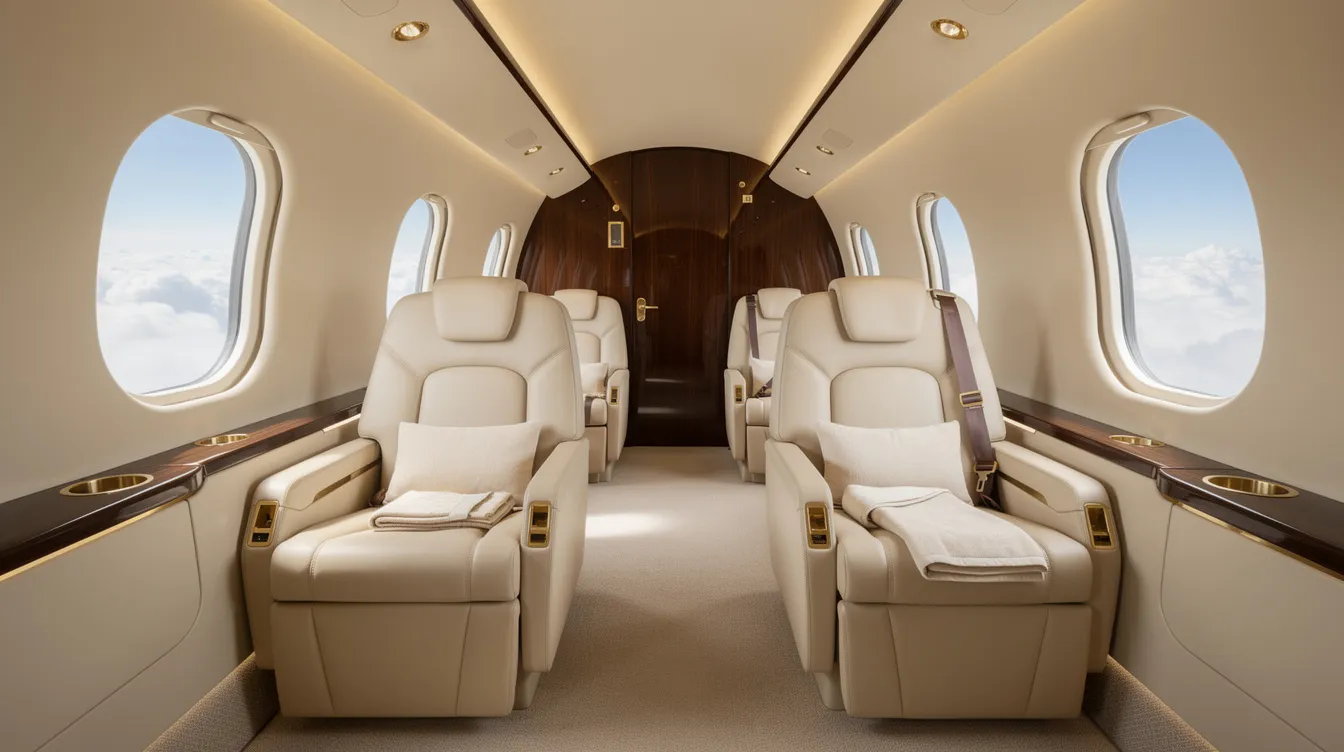
Many BlackJet clients use commercial airlines, including the 737 MAX, for high-volume routes where they operate efficiently. But they rely on Jet Cards to fill the gaps — where range limits, schedules, or airport access make airlines insufficient.
A BlackJet 25-Hour Jet Card, the BlackJet 25+ Hour Jet Card, or 50-Hour program provides prepaid access to multiple aircraft categories: light jets for 500 nmi hops, super-midsize jets for 2,500 nmi sectors, and large-cabin jets for long-range missions beyond 4,000 nmi. This flexibility, similar to other top jet card programs for frequent flyers, complements commercial travel precisely where the 737 MAX falls short.
A business leader flies New York–Los Angeles on a MAX 8, then uses BlackJet for Los Angeles–Aspen–Santa Fe in a single afternoon. A family skips complex connections by flying direct from a local executive airport to a Mediterranean island that lacks 737 operations. These are not hypotheticals — they're the daily reality of Jet Card holders who understand jet card cost per hour and blend commercial and private travel strategically.
BlackJet delivers 24/7 digital booking tools, real-time flight support, carbon-neutral flights, and strict safety certification through programs like ARGUS Platinum and Wyvern Wingman standards, competing directly with top private jet companies worldwide on safety and service.
Discover how BlackJet can reshape your travel. Speak with a BlackJet advisor to map your most frequent routes and identify where private jet access can unlock more time, privacy, and reach than commercial range alone.
Key FAQs About 737 MAX Range and Private Jet Alternatives
Can a Boeing 737 MAX fly transatlantic routinely? Only on shorter transatlantic routes with favorable winds. A MAX 8 at 3,550 nmi can handle sectors like New York–Reykjavik (~2,600 nmi) or Boston–Shannon (~2,800 nmi), but westbound London–New York (~3,000 nmi with headwinds) pushes against realistic limits with full payload.
How far can a 737 MAX 8 fly with a full passenger load? At max payload, realistic range drops to approximately 2,500–3,200 nmi depending on conditions, well below the 3,550 nmi design figure.
Does higher MTOW always mean longer range? Not necessarily. Higher MTOW allows more fuel or payload, but increased weight raises fuel burn. The MAX 10 has a higher MTOW than the MAX 8 but delivers less range because additional structural weight and drag from the longer fuselage offset the fuel advantage.
How do LEAP-1B engines impact real-world fuel efficiency and range? The LEAP-1B delivers roughly 15% lower specific fuel consumption than the CFM56, extending practical range and reducing operating costs across the max variants.
When does a private jet offer better total travel time than a 737 MAX? Whenever your itinerary involves secondary airports, multi-city same-day schedules, or routes under 2,000 nmi where commercial connections add hours. For groups under 12, the door-to-door advantage of private aviation frequently outweighs any airline ticket savings, especially for those flying enough hours annually to justify evaluating a 100-hour jet card program.
How does BlackJet keep long-range private flights carbon neutral? Through verified carbon offset programs and sustainable aviation fuel participation where available, included at no additional cost to clients. Every BlackJet flight is carbon-neutral by default.
Which MAX variant offers the most range? The 737 MAX 7 offers the longest range at 3,800 nautical miles — the smallest variant with the lightest empty weight and fewest seats, leaving more room for fuel.
Share your most common routes with a BlackJet specialist, and we'll recommend the optimal mix of commercial and private jet segments to maximize your time and reach, including guidance if you’re considering purchasing a private jet in the UK for even greater control over long-range travel.
Conclusion: Strategic Range Decisions for the Discerning Traveler
Understanding the range capabilities of the Boeing 737 MAX family is essential for high-net-worth individuals, corporate travelers, and aviation professionals seeking to optimize their travel strategies. While the MAX series offers impressive fuel efficiency and capacity tailored to medium-haul, high-density routes, practical range limitations and operational factors often necessitate a nuanced approach.
For many, the 737 MAX variants provide excellent value on scheduled flights within their realistic range envelopes, but when itinerary complexity, airport access, and time savings take priority, private jet travel emerges as a clear strategic advantage. BlackJet’s Jet Card programs offer flexible prepaid access to a diverse fleet of private jets, enabling seamless point-to-point travel beyond the constraints of commercial schedules and hub airports.
By blending commercial 737 MAX flights with private jet solutions, travelers can unlock unparalleled convenience, privacy, and efficiency—all while benefiting from rigorous safety standards and carbon-neutral commitments. Whether navigating dense domestic corridors or planning multi-city international missions, the right aircraft choice transforms travel from a logistical challenge into a competitive edge.
Explore how BlackJet can tailor your travel experience to maximize range, safety, and sustainability, empowering you to move with confidence and purpose on every journey. Learn more about our Jet Card programs, discover the benefits of carbon-neutral private flights, understand how private aviation safety standards exceed commercial norms, and explore our insights on private jet range to compare with commercial aviation.


 Sign up with google
 Sign up with Apple