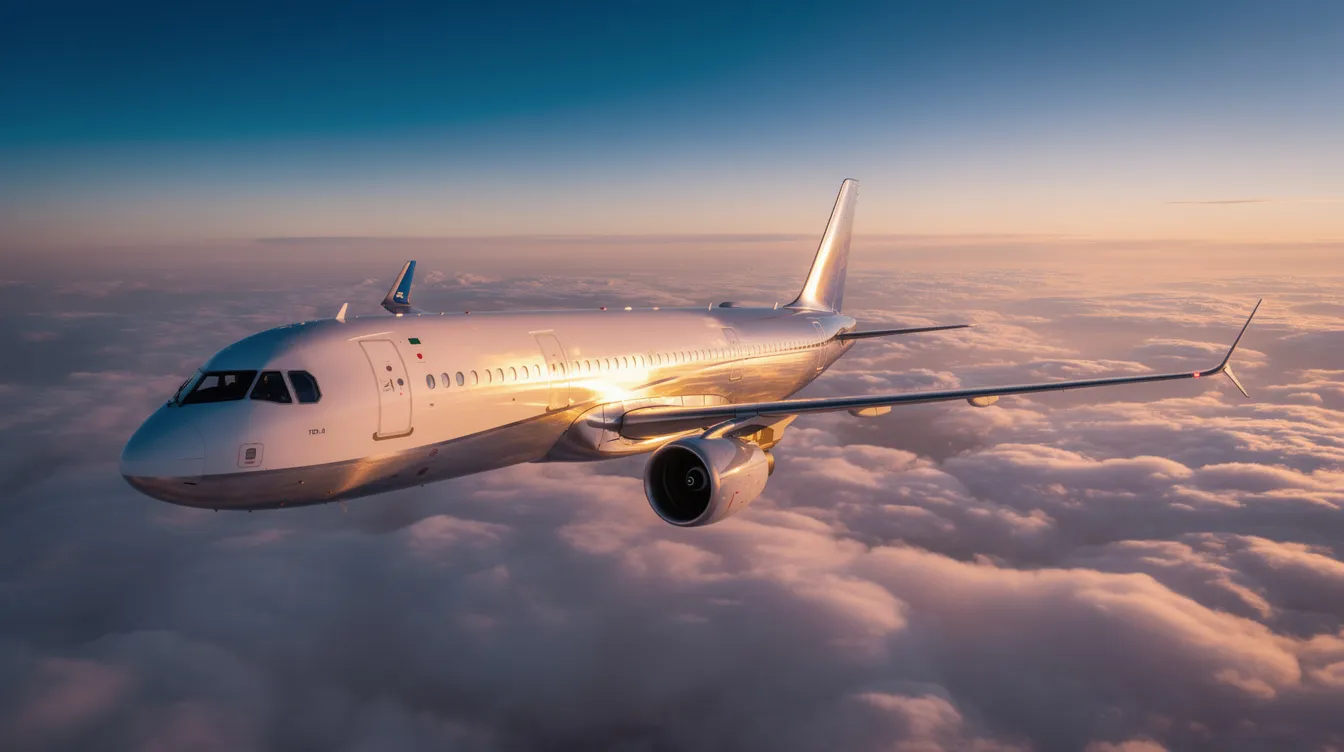
The Boeing 737 is the world's most-produced commercial jetliner, with Boeing having delivered over 10,700 aircraft in total as of 2023. Chances are, if you've flown commercially in the past decade, you've sat in one. But how far can this narrow-body airliner actually take you — and how does that capability stack up against the flexibility of private aviation? This guide breaks down the range of the Boeing 737 across every generation, explores the technical and operational factors that shape real-world performance, and shows where private jet access through a Jet Card program delivers a fundamentally different travel experience.
Quick Answer: Typical Boeing 737 Ranges (NG and MAX)
Range variations across Boeing 737 generations span from roughly 1,500 to 3,850 nautical miles. The older Original series topped out around 1,700–2,650 nm, while the Classic improved to roughly 2,700–3,300 nm. The next generation 737-800 — the most common variant flying today — has a maximum range of 3,377 nautical miles (approximately 6,255 km). The maximum range of a Boeing 737 family aircraft reaches up to 3,800 to 3,850 nautical miles with the latest 737 MAX 7.
These numbers shift significantly based on passenger load, baggage weight, route conditions, and how many countries operate the aircraft under different configurations. United Airlines, for example, flies its 737-800 fleet in a two-class layout that carries fewer passengers than a low-cost carrier packing in 189 seats — and that choice directly affects usable range.
For context, here's how 737 ranges compare with the private jets typically accessed through BlackJet:
Aircraft | Typical Max Range | Passenger Capacity |
|---|
737-800 NG | ~3,377 nm (6,255 km) | 162–189 |
737 MAX 8 | ~3,500 nm (6,480 km) | 162–210 |
Light Private Jet | ~1,500–2,000 nm | 6–8 |
Midsize Private Jet | ~2,000–3,000 nm | 8–10 |
Large Cabin Private Jet | ~3,500–6,000+ nm | 10–16 |
What "Range" Actually Means for a Boeing 737
Maximum range isn't a fixed number — it varies based on payload and operational conditions. When Boeing publishes a figure like 3,377 nm for the 737-800, that assumes standard atmosphere (ISA) conditions, no wind, full fuel tanks, specific payload weight, and legally required fuel reserves.
In practice, several factors chip away at that theoretical ceiling:
Headwinds significantly lower ground speed and increase total fuel burn during flights. A strong North Atlantic headwind can reduce effective range by hundreds of miles.
Airline operations require fuel reserves for safety mandates, reducing usable fuel for distance. Operators must carry enough fuel to reach an alternate airport and hold in a pattern.
Actual operational range depends heavily on payload weight and external conditions. A full cabin with heavy baggage is a different mission than a lightly loaded repositioning flight.
Weather conditions such as temperature affect aircraft performance and effective range. Hot and high airports force longer takeoff rolls and less efficient climbs.
Consider the difference between a 737-800 flying New York to Los Angeles (~2,150 nm) versus New York to Reykjavik (~2,600 nm). The LA route leaves comfortable fuel margins. The Iceland route, flown into typical headwinds, may require careful payload management and full tanks. Both are within published range, but the operational reality is very different.
"Ferry range" - the distance an empty aircraft can travel - is always higher than revenue-service range, sometimes by 500 nm or more, because payload weight is effectively zero.
The Boeing 737 Family Overview: Generations and Mission Profile
The Boeing 737 first flew in April 1967 from Boeing Field and has evolved through four generations over nearly six decades. Each generation series brought meaningful improvements in range, fuel efficiency, and passenger capacity.
The Original series (-100 and -200) entered service in the late 1960s, with the -100 making its maiden flight in 1967. These aircraft were designed for short hops and thin routes, with ranges typically under 2,700 nm. The -200 saw its first delivery to airlines in the early 1970s and remained in widespread use for decades - Aloha Airlines famously operated the type in Hawaiian island-hopping service.
The Classic series (-300, -400, -500) replaced the older JT8D engines with CFM International CFM56-3 powerplants, pushing ranges into the 2,700–3,300 nm band and improving fuel consumption meaningfully. Many airlines transitioned their fleets during this era.
The next generation series (-600, -700, -800, -900ER), launched in November 1993, represented the largest leap, with launch customer Southwest Airlines leading the 737-700 introduction. Its first flight marked a key development milestone. A redesigned wing with greater span, CFM56-7B engines, and a modern flight deck pushed range past 3,000 nm and made the 737-800 the dominant short-to-medium-haul aircraft globally. The 737 Next Generation series was launched in November 1993, and the -800 became the best-selling variant.
The 737 MAX family (-7, -8, -9, -10) brought LEAP-1B engines and advanced technology aerodynamics to achieve another 14–20% gain in fuel efficiency, enabling even longer sectors. 737 variants are optimized for different market needs like high-volume domestic operations or long-distance travel on thinner international routes.
Range of the 737 Next Generation (NG): 737-600, 700, 800, 900ER
The NG family established the Boeing 737 as a true medium-range workhorse. Here are the typical maximum ranges under standard conditions:
737-600: approximately 2,900 nm (5,370 km) - the shortest fuselage, lightest variant
737-700: the 737-700 typically has a maximum range of about 3,200 to 3,400 nautical miles, making it ideal for longer thin routes with fewer passengers
737-800: maximum range of 3,377 nautical miles (6,255 km), with a cruising speed of approximately 453 knots and a maximum altitude of 41,000 feet
737-900ER: extended range variant reaching over 3,100 nm with an extended fuselage and extra exit doors for higher seating capacity
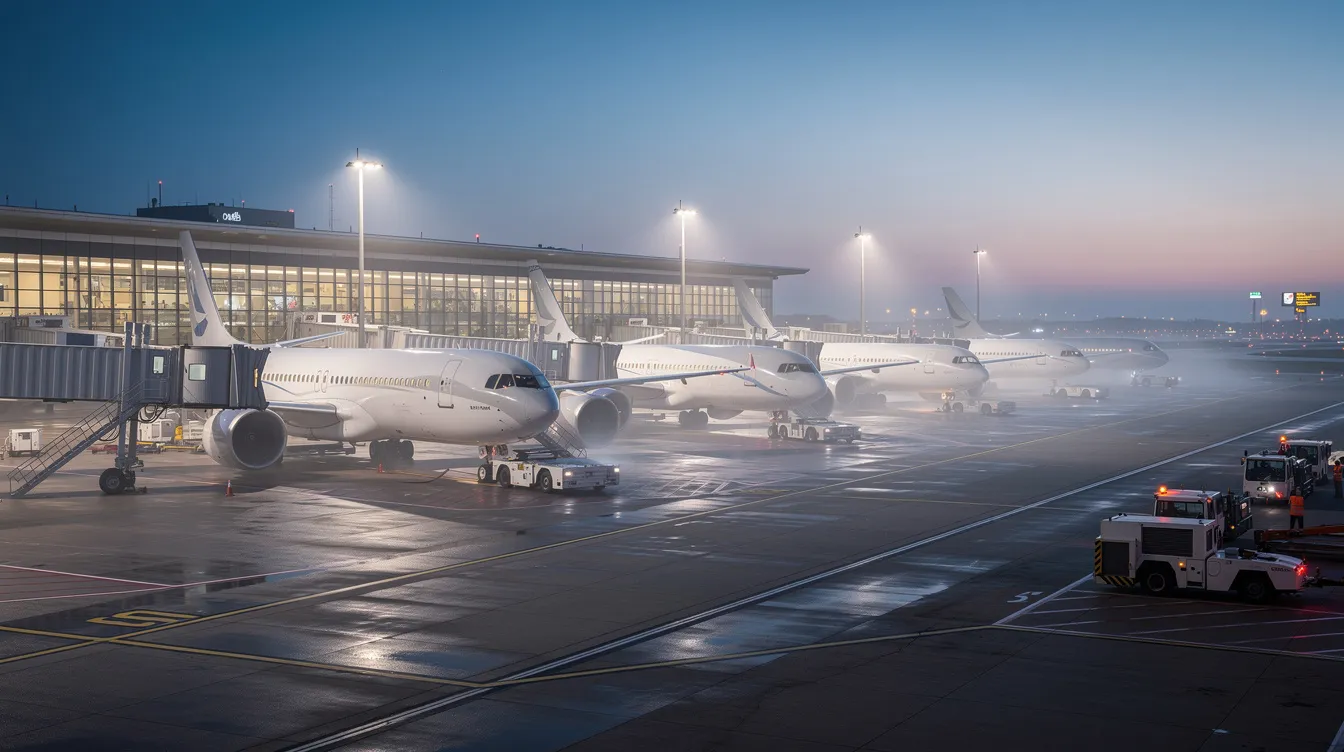
The 737-800 entered commercial service in April 1998 and quickly became the backbone of commercial aviation worldwide. It can seat between 162 and 189 passengers depending on airline configuration - from a comfortable two-class business class and economy layout to high-density six-abreast seating configurations favored by low-cost operators. The 737-800 is the best-selling variant of the next generation series, and for good reason: it strikes the optimal balance between cabin space, range, and operating economics for many routes.
The NG's range improvements over the Classic came primarily from a larger wingspan, increased total fuel capacity, and the more fuel-efficient CFM56-7 B engine. These aircraft flew countless routes that previously required larger, more expensive widebodies.
Range of the 737 MAX: MAX 7, 8, 9, and 10
Fuel efficiency improvements in the 737 MAX series enable longer operational ranges compared to the NG generation. The 737 MAX series features upgraded CFM LEAP-1B engines that deliver substantially lower fuel burn and CO₂ emissions.
Here are the published ranges from Boeing:
Variant | Maximum Range | Key Differentiator |
|---|
737 MAX 7 | ~3,800 nm (7,040 km) | Longest range in the family |
737 MAX 8 | ~3,500 nm (6,480 km) | Most popular variant |
737 MAX 9 | ~3,300 nm (6,110 km) | Stretched version, more seats |
737 MAX 10 | ~3,100 nm (5,740 km) | Highest seating capacity |
The maximum published range of the 737 MAX 7 is approximately 3,800 nautical miles — enough to connect cities that previously required widebody equipment. The MAX 7 received FAA certification in August 2026, and Boeing positions it as the longest-range member of the family, making it attractive for airlines seeking to open new point-to-point markets.
The 737 MAX offers a 14–20% fuel efficiency improvement over the NG, achieved through the LEAP-1B engines from CFM International, advanced technology split-tip winglets that reduce drag, and aerodynamic refinements across the airframe. Higher engine thrust from the LEAP-1B also improves performance at challenging airports.
For context, the Airbus A321neo LR and XLR target similar or slightly longer ranges (up to 4,700 nm for the XLR), but the 737 MAX family remains the dominant single-aisle platform for many airlines operating routes between 1,500 and 3,500 nm.
Fuselage Length, Payload, and How They Influence Range
The relationship between fuselage length, payload, and range is one of constant trade-offs:
The Boeing 737-800 is 129 feet 6 inches long (39.47 m). The 737-800's overall length is 129 feet 6 inches. The MAX 8 is nearly identical at approximately 39.52 m. Longer variants like the MAX 9 and MAX 10 stretch further, adding seats but also adding empty weight and drag.
Passenger and cargo weight influence an aircraft's fuel consumption and range capabilities directly. A fully loaded 737-800 with 189 passengers, their baggage, and cargo may not be able to carry enough fuel to reach its theoretical 3,377 nm limit without exceeding maximum takeoff weight.
Airlines often choose shorter variants for long, thin routes — a 737-700 carrying fewer passengers on a 3,000+ nm sector — while deploying the 737- 800 on high-demand trunk segments where maximum passenger capacity matters more than maximum range.
The extended fuselage of the 737-900ER and MAX 9/10 increases revenue potential per flight but narrows the operational envelope for the longest missions. Carriers must balance how many passengers they need to carry against how far they need to fly.
In practice, a 737-800 operating a 2,000 nm domestic route at near-full capacity is among the most efficient revenue-generating missions in commercial aviation. Stretch that same aircraft to a 3,200 nm international sector, and the airline may need to reduce passenger load or cargo to keep within landing gear weight limits—you cannot simply land overweight without consequences.
Fuel Capacity, Fuel Efficiency, and Their Role in 737 Range
Standard variants hold roughly 6,800 to 7,800 gallons of fuel across wing tanks and center tank configurations. This total fuel capacity sets the theoretical ceiling for how far the aircraft can fly at a given weight.
What transformed the 737's range capability across generations wasn't just bigger tanks — it was how efficiently each gallon was burned:
The 737-800 features advanced-technology blended winglets that reduce drag during cruise, extending range without adding fuel. These winglets alone can improve fuel burn by several percent on longer sectors.
The 737-800 reduces fuel consumption by 7 percent compared to the Classic variants it replaced, primarily through the CFM56-7B engine and improved aerodynamics.
Advanced winglets reduce drag and improve fuel burn efficiency during cruise phases, which is where the aircraft spends the majority of its flight time.
Fuel burn on the 737-800 is about 4.88 US gallons per seat per hour — a figure that makes it one of the most fuel-efficient airplanes in its class when operated at high load factors.
The 737 MAX further improves this equation. Carbon brakes on the MAX reduce weight compared to steel brakes, and the LEAP-1B engine's advanced airfoil section and higher bypass ratio deliver markedly better specific fuel consumption.
The result: the same fuel load carries a MAX 8 meaningfully farther than an NG 800 on an identical route - or allows the same range with a lighter fuel load, freeing up weight for revenue payload.
Real-World Longest 737 Routes (NG and MAX)
Newer airplane models like the 737 MAX can operate nonstop on surprisingly long routes that would have been unthinkable for earlier generations. Here are some of the longest scheduled 737 operations:
GOL Airlines: Brasília (BSB) to Orlando (MCO) - approximately 3,282 nm, roughly 8 hours block time, operated by 737 MAX 8
Lion Air: various long-haul sectors across Southeast Asia and to the Middle East using MAX 8 aircraft delivered in recent years
Alaska Airlines: transcontinental and Hawaii routes using 737-800 and MAX 9, with sectors reaching 2,700+ nm
Kenya Airways and other carriers in countries that operate 737 NG variants, including South Korea, on regional routes exceeding 2,500 nm across Africa
Most 737 fleets, however, spend the majority of their service lives on flights between 1 and 4 hours. Airlines leverage long-range 737 variants for thin international routes where widebody economics don't work, but the bread and butter remains high-frequency short-haul flying where turnaround time and schedule density drive profitability.
Block times on the longest MAX 8 sectors can exceed 8 hours — a significant endurance test for passengers in six-abreast seating with limited mid-cabin space, larger overhead bins notwithstanding.
How Airlines Use 737 Range: United Airlines and Other Major Operators
United Airlines operates one of the world's largest 737 fleets, deploying both 737 800 and MAX 8 aircraft across its domestic network, Caribbean routes, and selected transcontinental sectors. Typical stage lengths range from 800 nm (regional hops) to 2,500+ nm (coast-to-coast or to Alaska). United configures its 737s with a business class cabin, extra space sections, and economy, carrying fewer passengers than a low-cost carrier but generating higher per-seat revenue.
Southwest Airlines was the launch customer for the 737-300 and has built its entire network around 737 variants for decades. Southwest Airlines operates E737s exclusively, favoring the -700 and MAX 8, with average stage lengths around 1,000–1,500 nm — shorter segments where frequency and point-to-point access drive the model.
International carriers like GOL and Arajet push the MAX 8's range limits on routes connecting South America and the Caribbean to the United States. These operators often fly in higher-density configurations to make the economics work on competitive long sectors.
Key differences in how carriers deploy the same aircraft:
United: two-class layouts, 150–170 passengers, moderate stage lengths, hub-and-spoke network
Southwest Airlines: all-economy, 143–175 passengers, shorter stages, point-to-point
GOL / Arajet: high-density, 170–186 passengers, pushing toward maximum range on thin international routes
Schedule frequency and airport slot constraints often matter more than squeezing out the last 100 nm of theoretical range. An aircraft that departs every two hours generates more revenue than one that flies one ultra-long sector per day.
Business and VIP Variants: Boeing Business Jet (BBJ) Range
The Boeing Business Jet family transforms the 737 airframe into something entirely different: a long-range VIP transport that competes with purpose-built large cabin business aircraft.
Key BBJ configurations and ranges:
BBJ1 (based on 737-700 fuselage with 737-800 wing and landing gear): up to approximately 6,200 nm with auxiliary belly fuel tanks and a small passenger complement of around 8 passengers
BBJ2 (based on 737-800): extra space for larger cabin layouts with similar extended range capability
BBJ MAX 7: approximately 6,600 nm range under NBAA mission rules
BBJ Select (latest variant): up to 6,450 nm with 8 passengers
These aircraft are operated by heads of state (including various US Air Force VIP transport variants), ultra-high-net-worth individuals, and corporations. The US Navy and other military branches also operate 737 derivatives for specialized missions. BBJ interiors typically feature full staterooms, conference areas, showers, and lounge seating - a far cry from the left-side boarding door of a standard airline 737 800.
The Boeing company positions BBJs above even the largest purpose-built business jets in terms of cabin volume and customization. Spirit AeroSystems manufactures the fuselage sections that form the basis of these VIP aircraft. While BBJ range and cabin space are extraordinary, they represent the very top of the market. For most private travelers, large cabin jets in the Bombardier Global or Gulfstream G650 class offer comparable range with significantly lower operating costs, including configurations ideal as the best private jet for 15 passengers, 20 passengers, or even 50 passengers.
Comparing 737 Range with Private Jets in the BlackJet Ecosystem
The 737-800 or MAX 8 can cover a route like New York to Los Angeles (approximately 2,150 nm) with 170+ passengers. A super-midsize private jet covers the identical sector nonstop with 8–10 passengers, departing from a private terminal at Teterboro and landing at Van Nuys — saving roughly two hours of airport processing time on each end.
Here's how the platforms compare:
Range: A 737 MAX 8 reaches 3,500 nm. A large cabin private jet can reach 5,500–6,000+ nm. Light jets cover 1,500–2,000 nm, and midsize jets span 2,000–3,000 nm. The longest-range private jets and other long-range private jets for sale surpass even the BBJ.
Airport access: 737s require runways of 6,000+ feet and operate from major commercial airports. Private jets access 5,000+ airports in the US alone, many with runways under 5,000 feet, spanning the full spectrum of private jet sizes.
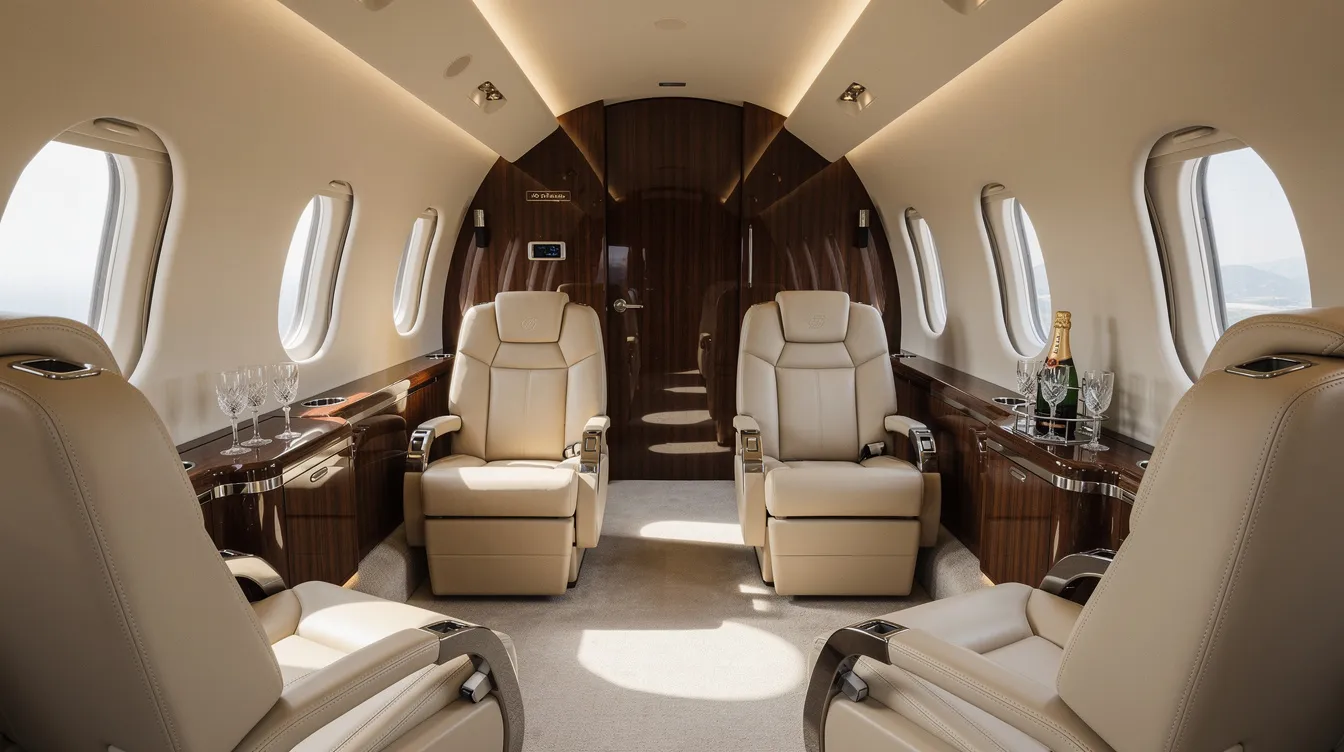
Cabin experience: six-abreast seating at 30–32 inches of pitch versus club-style seating with 50–80+ inches of effective legroom.
Scheduling: 737s run on fixed airline schedules. A BlackJet Jet Card provides on-demand departure times with as little as a few hours' notice.
Consider an executive team flying London to Dubai (approximately 2,990 nm). A 737 MAX covers this sector on a scheduled flight with hundreds of other passengers. A large cabin jet covers the same distance with a private briefing room, lie-flat beds, and a direct arrival at Al Maktoum or Dubai South — not the congested main terminal.
Range, Airport Access, and Operational Flexibility
Even when a 737's published range technically covers a route, real-world airport constraints often tell a different story:
Runway length requirements for a fully loaded 737-800 or MAX 8 typically exceed 7,000 feet. Many regional and executive airports have runways of 4,000–5,500 feet — perfectly suited for private jets but completely inaccessible to a 737.
Airport altitude and temperature compound the challenge. A hot day at a high-altitude airport like Mexico City or Denver can require payload restrictions that reduce the number of passengers or cargo carried, effectively shortening usable range or requiring a fuel stop.
Maximum speed differences between aircraft types rarely matter as much as ground-side logistics. A 737 may cruise at 453 knots and land at a major hub, but the 90-minute transfer through a crowded terminal erases any airborne time advantage over a private jet landing at a closer, smaller airport.
Imagine a traveler heading from New York to Aspen. A 737 route goes through Denver, adds a connection and ground transfer — easily 8+ hours door to door. A BlackJet customer departs Westchester County Airport on a midsize jet and lands at Aspen-Pitkin County Airport roughly 4.5 hours later, steps off, and is at the resort in 15 minutes. The same logic applies to travelers using private jet charters in Karachi to bypass congested commercial hubs. Same continent, same range capability, entirely different experience. Ken Higgins, a former Boeing executive, once noted that the 737 was designed for airline networks — not for the kind of point-to-point precision that modern travelers increasingly demand.
Range, Fuel Efficiency, and Sustainability
The 737 MAX's improved fuel efficiency translates directly into lower CO₂ emissions per seat on longer sectors — when the aircraft is full. Boeing claims the MAX produces approximately 20% lower CO₂ emissions than the aircraft it replaces, thanks to the LEAP-1B engines and aerodynamic improvements including the advanced flight controls and split-tip winglets.
But sustainability in aviation isn't just about per-seat metrics:
A half-empty 737 on a long sector dilutes those per-passenger efficiency gains significantly. Load factor is the critical variable.
Private jet missions tend to be shorter and more direct, avoiding the connecting flights and repositioning that add fuel burn to a commercial itinerary.
BlackJet incorporates carbon-neutral flights as standard across its Jet Card programs, offsetting emissions at no additional cost to members. This commitment extends to supporting sustainable aviation fuel (SAF) adoption where available, even for travelers exploring the cheapest private aircraft options or the most affordable private jets.
Optimized routing on private missions — flying direct rather than through hubs — can partially offset the higher per-seat fuel consumption of a smaller aircraft.
The honest calculus: a full 737 MAX 8 is more fuel-efficient per passenger mile than any private jet. But when measuring total environmental impact including connections, ground transport, and the emissions generated by two aircraft (commercial segments) versus one direct private flight, the gap narrows meaningfully.
How Range Influences Cabin Experience on the 737 vs Private Jets
A 737-800 or MAX 8 flying a 3,000+ nm sector translates to 6–8 hours of sitting in a cabin designed for short-to-medium-haul missions. The Boeing Sky Interior and larger overhead bins improve the atmosphere, but the fundamental constraints remain: six-abreast seating, pitch typically between 28 and 32 inches in economy, limited recline, and shared lavatories.
How the experience compares on a transcontinental or long-range mission:
Factor | 737-800 / MAX 8 | BlackJet Private Jet |
|---|
Seating layout | 3-3 abreast | Club or conference style |
Effective legroom | 28–32 inches | 50–80+ inches |
Privacy | Minimal | Complete |
Wi-Fi/connectivity | Varies by airline | Standard on most aircraft |
Boarding process | 45–90 minutes | 10–15 minutes |
On a two-aircraft comparison for a New York–San Francisco mission: the 737 offers economy, extra-legroom economy, and possibly a small business class section. A private jet experience on the same route provides lie-flat capability, a working environment, and arrival at a general aviation terminal with no crowds. Range alone doesn't define passenger comfort — seat density, noise levels, and personalized service are the differentiators on any flight over three hours.

Safety, Certification, and Range-Related Considerations
Every Boeing 737 variant — from the NG to the MAX — and every private jet in BlackJet's network must meet stringent Federal Aviation Administration and EASA safety and performance criteria for their certified ranges. These certifications cover structural integrity, systems redundancy, and flight controls across the entire operating envelope.
For extended-range operations over water, ETOPS (Extended-range Twin-engine Operational Performance Standards) rules require additional maintenance checks, backup systems, and crew procedures. Airlines flying 737 MAX 8s on routes like Brasília to Orlando must comply with these regulations.
The 737 MAX grounding following the Lion Air and Ethiopian Airlines accidents led to comprehensive redesign of the MCAS system, additional sensor redundancy, and enhanced pilot training requirements. The aircraft flew again commercially after thorough recertification, and the current MAX fleet operates under heightened regulatory oversight.
BlackJet applies similarly uncompromising safety standards to its private jet network, including third-party audits, operator vetting, and crew experience requirements that meet or exceed airline-level protocols, echoing broader insights on how safe private jets are. Safety is not a feature - it's the foundation.
Strategic Use Cases: When 737 Range Makes Sense vs a BlackJet Jet Card
The Boeing 737 excels in certain scenarios, and a Jet Card excels in others. Understanding when each platform delivers the most value is the mark of a sophisticated traveler:
737 makes sense for: large group travel (50–189 passengers), cost-sensitive corporate shuttles on fixed schedules, dense leisure routes like New York–Miami or London–Barcelona where 2–5 hour flight times align with the aircraft's sweet spot
BlackJet Jet Card is superior for: multi-city roadshows covering three meetings in one day, last-minute schedule changes, direct point-to-point flights between secondary cities (like Westchester to Hilton Head), and any mission where chartering a private jet is clearly worth it because two aircraft connections on commercial routes consume more time than a single direct private flight
Hybrid itineraries deliver the best of both: a client flies a 737 MAX from London Heathrow to a major European hub, then connects via BlackJet to a smaller regional airport closer to a factory, resort, or private residence
A Jet Card program — whether 25 hours or 50 hours — monetizes time saved rather than distance flown. For an executive whose hour is worth more than the cost differential between commercial and private, even a short 400 nm private leg can deliver more value than saving on a 2,500 nm commercial fare. Comparing jet cards versus traditional charter often reveals that prepaid access provides both cost predictability and scheduling freedom, and dedicated resources on 100 hour jet card cost, hourly jet card pricing, overall jet card cost, the best jet cards for frequent flyers, NetJets jet card pricing, and jet card pricing structures can help refine the right program choice.
FAQs About Boeing 737 Range and Private Travel
How far can a 737-800 fly?
The 737-800 has a maximum range of 3,377 nautical miles (approximately 6,255 km) under optimal conditions. In typical airline service with full passenger load, practical range is closer to 2,800–3,100 nm. The 737-800 can cruise at 41,000 feet altitude and achieves a cruising speed of approximately 453 knots.
What is the range of the 737 MAX 8?
The 737 MAX 8 can fly up to approximately 3,500 nautical miles (6,480 km) with a standard passenger configuration. This is enough to connect cities like Brasília and Orlando nonstop — a flight of roughly 8 hours.
Can a 737 fly transatlantic?
Yes, certain 737 MAX variants can operate transatlantic routes. The MAX 7, with its 3,800 nm range, can connect the US East Coast with parts of Western Europe. However, headwinds on westbound crossings can push fuel requirements beyond comfortable margins, and most airlines prefer widebodies for these sectors.
How does a 737's range compare with a large cabin private jet?
A 737 MAX 8 reaches approximately 3,500 nm. A large cabin private jet like a Gulfstream G650 or Bombardier Global 7500 can fly 6,000–7,700 nm — nearly double. However, the 737 carries 15–20 times more passengers per flight.
What affects 737 range most: passengers, fuel, or weather?
All three interact. Higher passenger load means more weight, which requires more fuel, leaving less range margin. Headwinds can reduce effective range by 300–500 nm on long sectors. Temperature and altitude affect takeoff performance and climb efficiency.
Is flying commercial on a 737 more fuel efficient than a private flight?
Per passenger, yes — when the 737 is near full capacity. At 4.88 US gallons per seat per hour, a full 737-800 is extremely efficient. Private jets consume more fuel per passenger but eliminate connection inefficiencies and ground transport emissions.
When does a Jet Card start making sense for someone who usually flies on 737s?
When your commercial itineraries involve connections, long layovers, or airports far from your final destination. If you're spending 4+ hours in airports and ground transport for what should be a 2-hour flight, a Jet Card converts that lost time into productivity and comfort. The economics shift further when traveling with a small group and splitting the cost per seat.
How BlackJet Enhances Your Long-Range Travel Strategy
The Boeing 737 — from the NG to the MAX — represents an extraordinary engineering achievement. Aircraft delivered across four generations have connected cities, opened new markets, and made air travel accessible to billions. With the MAX 7's 3,800 nm range and improved fuel efficiency, the 737 continues to push the boundaries of what a single-aisle aircraft can accomplish.
But range is only one dimension of travel. For the executive or high-net-worth traveler, the question isn't whether a 737 can reach your destination — it almost certainly can. The question is whether the journey itself matches the value of your time and the standard you expect.
BlackJet exists to fill that gap. Every flight is carbon neutral. Every aircraft in the network meets rigorous safety certification standards. Every booking — made through a 24/7 digital platform or with a dedicated aviation advisor — is designed to eliminate friction and deliver seamless, door-to-door travel on your schedule.
The Boeing 737 covers impressive distances for the masses. BlackJet covers the distances that matter most — on your terms. Explore BlackJet's Jet Card programs and discover how private aviation can complement, elevate, or replace the commercial segments in your travel life. Learn more about our commitment to carbon-neutral flights and why private jet safety is foundational to every journey with BlackJet.


 Sign up with google
 Sign up with Apple