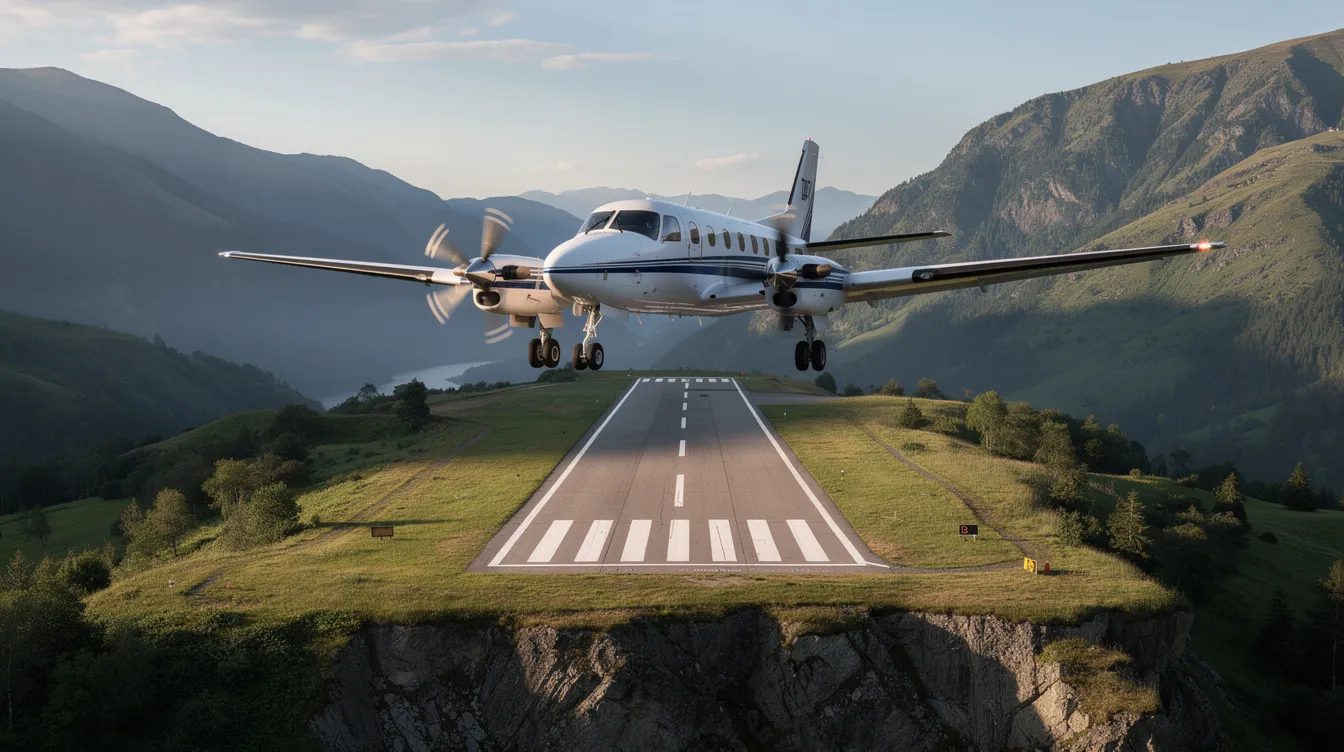
Aircraft propellers remain central to modern aviation-far beyond the nostalgic image of wood blades spinning on vintage biplanes. For the discerning private traveler, understanding propellers for aircraft is not academic trivia; it is the key to unlocking shorter routes, lower costs, and access to airports that jets simply cannot reach.
Why Aircraft Propellers Still Matter in Modern Private Aviation
In a world where supersonic jets capture headlines, aircraft propellers quietly deliver a strategic advantage that matters most on the missions private travelers fly most often: regional hops under 700 nautical miles, approaches into short-field destinations, and multi-stop itineraries where ground transfer time can exceed time in the air. Turboprops and high-performance piston aircraft equipped with advanced propeller systems remain essential equipment in any serious private aviation fleet.
The numbers tell a compelling story. A single-engine turboprop like the Pilatus PC-12 cruises at roughly 280–320 knots and burns about 55–75 gallons per hour of Jet-A. A comparable light jet cruises faster at 400–480 knots but consumes 120–200 gallons per hour - two to three times the fuel burn. On the runway, propeller planes can take off from shorter runways than jets: the PC-12 NGX needs approximately 2,650 feet for takeoff, while many light jets require 3,500–4,000 feet or more. That difference means hundreds of additional airports become accessible. Jet engines are generally more expensive and maintenance-intensive than prop engines, making turboprops a cost-effective option for the right missions.
For BlackJet members, this means direct access to mountain strips, island runways, and private estates that commercial aircraft and even most jets cannot serve. Rather than flying into a congested hub and enduring a lengthy ground transfer, a turboprop delivers you closer to your destination-often saving an hour or more door-to-door. Throughout this article, we will explore the different types of propeller systems-from the simplest fixed-pitch propeller to advanced constant-speed propellers- and how propeller pitch management shapes every phase of flight.
How Aircraft Propellers Work: The Fundamentals
At the most fundamental level, aircraft propellers convert engine power into thrust by accelerating air backward. Each blade acts as a rotating wing: as it spins through the air, it generates lift perpendicular to the relative airflow, and a component of that lift vector becomes forward thrust while the remainder becomes drag. The angle at which a blade meets the oncoming air-its angle of attack-determines how much thrust the propeller can produce and how efficient that conversion is.
Blade geometry must vary from root to tip to compensate for differences in rotational speed. Propeller blades rotate faster at the tips than at the root, so engineers twist each blade with a larger pitch angle near the hub and a smaller angle toward the tip. This twist maintains an optimal angle of attack along the full span. A larger diameter propeller is generally more efficient at converting engine torque into thrust, but propeller diameter affects efficiency and is limited by ground clearance and structural design. Similarly, tip speed must typically stay below Mach 0.85–0.90 to avoid shock waves and excessive noise, which means RPM and diameter exist in careful balance. Diameter, pitch angle, and material are critical factors in determining propeller performance. High-speed aircraft require propellers that remain efficient at higher speeds, so modern designs sculpt blades to manage compressibility effects near the tip.
Propeller pitch determines the theoretical forward distance covered in one complete revolution-think of it as a screw advancing through air. Low pitch is like first gear in a car: more thrust per revolution, ideal for takeoff. High pitch is like top gear: more speed per revolution, ideal for cruise. In a typical turboprop cruising at FL250 and 275–320 KTAS, the blades are pitched to a high angle while RPM is governed to maintain efficiency and control noise.
Fixed Pitch Propellers and Ground-Adjustable Designs
A fixed pitch propeller has its blades set to a single angle at manufacture, tuned as a compromise between climb and cruise performance. Fixed-pitch propellers cannot change blade pitch in flight. Early Cessna 172 models and trainers like the Cessna 152 commonly use this design. Fixed-pitch propellers compromise performance for simplicity, making them the stock choice for training fleets and club aircraft.
Key characteristics include:
Simplicity and low cost. Fewer moving parts mean a lower purchase price, reduced maintenance, and minimal complexity in installation and operation.
Performance trade-off. A prop set for climb delivers strong low-speed thrust but sacrifices cruise efficiency; a cruise-optimized prop does the reverse. Neither setting is correct for every flight phase.
Typical materials. Wood is a traditional propeller material that is lightweight but susceptible to environmental damage. Metal (forged aluminum) and basic composite blades also exist in this category. The material of a propeller affects its weight, durability, and cost.
Ideal for training. Propeller aircraft are better suited for training and surveillance roles where simplicity and ruggedness matter more than peak performance.
Ground-adjustable propellers allow pitch tuning on the ground using simple tools, letting a pilot or mechanic adjust blade pitch before flight to match a specific mission-heavier loads, shorter runway, or different cruise altitude. Once airborne, they behave identically to fixed props. These designs are common on ultralight aircraft, light sport aircraft, and experimental homebuilts, including many airframes powered by Rotax engines. Even powered parachutes and certain recreational aircraft use ground-adjustable props to dial in performance without the weight or complexity of in-flight adjustment. Ground-adjustable propellers allow pitch tuning for maximum thrust on short-field operations.
For professional charter and jet card operations, however, the limited ability of these systems to adapt mid-flight means they are rarely used. The demands of commercial charter and premium private aviation call for something far more capable.
Variable Pitch and Constant Speed Propellers
Variable-pitch propellers allow the pilot or an automated system to adjust blade pitch during flight, matching the propeller's bite to changing airspeed and power conditions. Constant-speed propellers take this a step further: they automatically adjust pitch during flight to maintain a selected RPM, regardless of changes in airspeed, altitude, or power setting. This distinction is the middle ground between manual flexibility and fully automated optimization. Variable-pitch systems help maintain effective blade angles during varying flight conditions, ensuring the engine operates near peak efficiency at all times.
The hardware behind a constant speed system typically includes a propeller governor that senses RPM and modulates blade angle using engine oil pressure or hydraulic actuators. In-flight pitch adjustments require electric motors or oil pressure to physically twist the blades within the hub. Counterweights and springs assist the mechanism, and the entire assembly adds a bit of complexity and weight compared to fixed props-but the performance gains are substantial.
Consider a Beechcraft Bonanza or Cirrus SR22: at takeoff, the pilot sets the prop lever forward to low pitch (high RPM, around 2,500–2,700 RPM), maximizing thrust. As the airplane accelerates into climb, the governor increases blade pitch to maintain the set RPM while engine torque stays within limits. In cruise, RPM may settle at 2,400 RPM with high pitch, reducing drag and fuel burn. Constant-speed propellers adjust pitch to maintain engine RPM across these phases seamlessly.
Operational advantages of constant-speed systems:
Better takeoff and climb performance through optimized low pitch and maximum thrust
Lower fuel burn and quieter cruise at high pitch
Reduced engine stress and improved longevity
Enhanced safety margins on short or hot-and-high runways
Advanced features extend these benefits further. Feathering propellers stop windmilling to reduce drag when an engine fails on a multi-engine aircraft-a critical safety feature. Reversing propellers apply engine power for braking during landing, with reversible propellers able to create thrust in both forward and reverse directions using negative pitch. This ability to operate in a beta range allows turboprop pilots to shorten landing rolls significantly and even maneuver on the ground during taxi, delivering runway performance that jets cannot match.
Blade Pitch Management in Flight Operations
From the pilot's perspective, propeller pitch control depends on the aircraft type. In constant speed piston aircraft, a blue propeller control lever in the cockpit sets the desired RPM independently of the throttle. Manual pitch adjustment is done using a lever in the cockpit. On FADEC-equipped turboprops like the Pilatus PC-12 or King Air 350, a single power lever integrates fuel flow, torque, and propeller pitch management-the system handles the complexity so the pilot can focus on flying the plane.
The standard power change technique protects the engine and drive gears: when adding power, adjust the prop lever first (increase RPM), then advance the throttle. When reducing power, reverse the sequence-throttle back first, then prop control. This workflow prevents over-speed conditions and shock loads.
Propeller pitch affects takeoff and climb performance significantly. Here is what happens during a typical flight:
Takeoff: Prop set to low pitch (full fine), producing maximum thrust. Power at takeoff is limited until obstacles are cleared.
Climb: RPM maintained at takeoff setting initially; as safe altitude is reached, pitch begins to increase, and the governor holds RPM steady while the plane accelerates.
Cruise: RPM set to manufacturer-recommended cruise value. The governor lets pitch adjust automatically as density altitude and airspeed change. Suboptimal blade pitch can reduce thrust and waste power, which is why the governor's automatic adjustment is so valuable.
Descent: Power reduced first, then RPM decreased. On turboprops, the propeller may move toward idle or low pitch settings to manage speed.
Professional crews operating under Part 135 regulations follow manufacturer power charts and company SOPs rigorously. This discipline-compared to some owner-flown general aviation practices-ensures engine health, safety, and consistent performance on every flight.
Propeller Types Across Aircraft Categories
Aircraft propellers are categorized based on pitch control, blade configuration, and operational design. Each type of propeller is optimized for specific flight regimes,s balancing fuel efficiency and performance. Here is a high-level survey across the aviation spectrum:
Ultralight and recreational: Fixed pitch or ground-adjustable props dominate. Low weight and simplicity matter more than peak efficiency. Wood and basic composite blades are common, often paired with Rotax engines on light sport and ultralight platforms.
Training and GA singles: A mix of fixed pitch (Cessna 152) and constant speed (Diamond DA40, Cirrus SR22). Training operations value ruggedness; higher-performance singles demand the flexibility of constant speed systems.
High-performance pistons: Typically constant speed, two- or three-blade props, commonly with composite blades. These aircraft operate across varied missions and need the ability to optimize for climb, cruise, and short-field performance.
Single-engine turboprops: Almost universally constant speed with feathering and reversing capability. The TBM 960 and PC-12 use four- to five-blade systems to absorb high engine power within a limited diameter. STOL aircraft prioritize thrust for short takeoffs and need compatible propeller designs-many backcountry turboprops use specialized high-lift props.
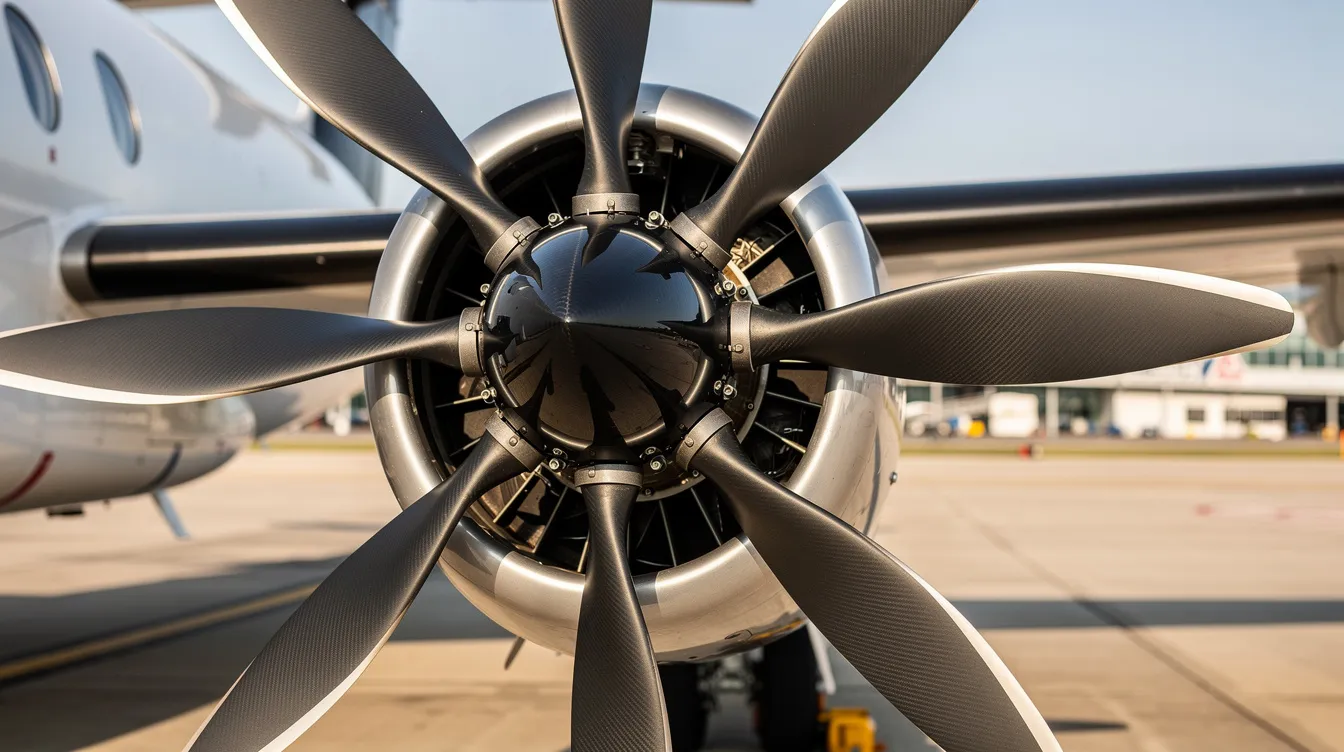
Heavy transport and tactical turboprops: Large multi-blade composite systems (five to six blades) on aircraft like the C-130J and ATR 72. More blades on a propeller allow it to absorb more engine power within a limited diameter, and the trend toward higher blade counts continues for noise reduction, smoother operation, and improved climb performance. Turboprops are typically more tolerant of sandy environments than turbofans, making them preferred for remote and austere operations worldwide.
Materials, Design, and Innovation in Modern Aircraft Propellers
Propeller materials have evolved dramatically. Early aviation relied on laminated wood-lightweight and easy to shape but vulnerable to moisture, wind erosion, and impact. Metal forging (aluminum alloys) became the standard for general aviation and smaller turboprops, offering durability and consistent performance. Today, advanced composites such as carbon fiber and glass-reinforced polymers represent the leading edge. Composite propellers offer high strength-to-weight ratios and advanced aerodynamic designs, enabling manufacturers to produce blades that are lighter, stronger, and more fatigue-resistant than metal alternatives.
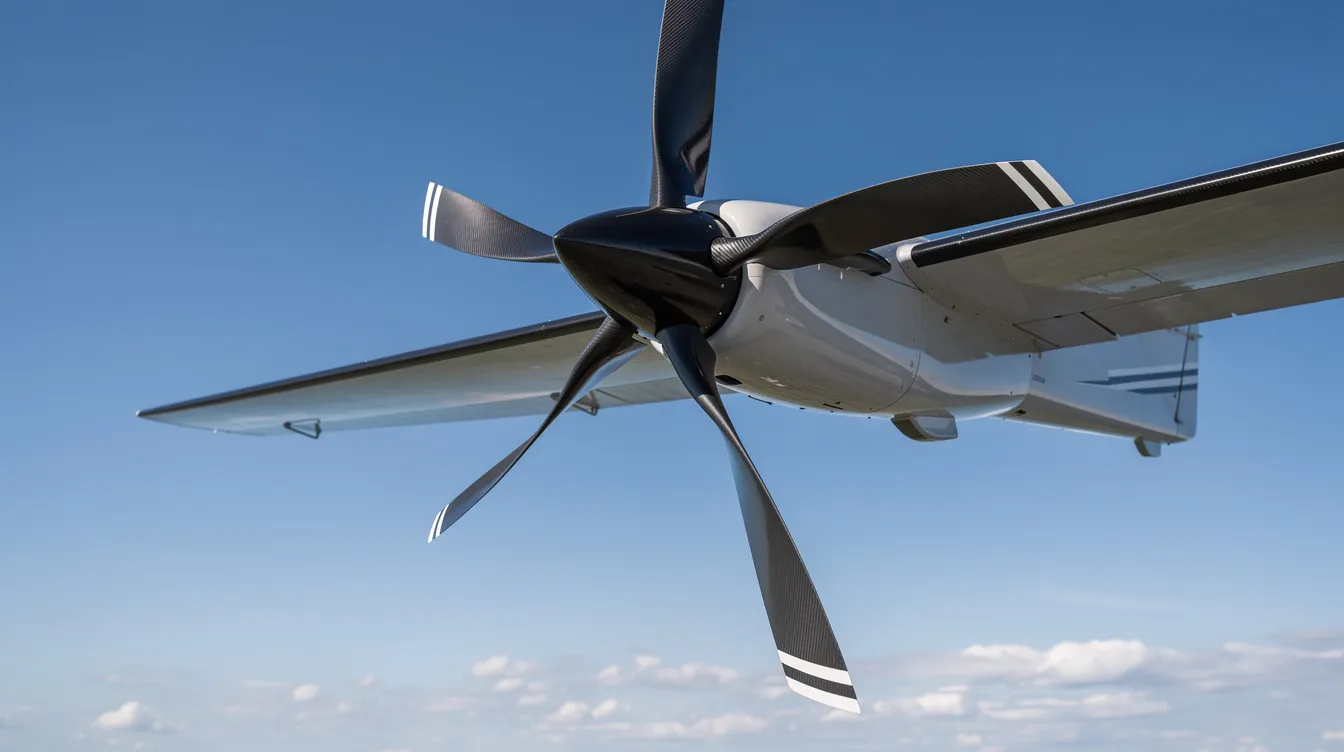
Blade planform innovation has been equally transformative. Scimitar propellers feature curved blades to reduce noise and improve efficiency at high speeds, with swept tips angled 30°–45° that lower shock-induced noise at high tip Mach numbers. Twist distribution is optimized from root to tip using computational fluid dynamics, while leading-edge protection strips of nickel or titanium guard against hail, rain, and foreign object damage. Manufacturers like Hartzell now offer five-blade composite props for aircraft such as the King Air 350 and TB series, delivering more thrust within a smaller diameter while keeping vibration and noise to a minimum.
Key material and design advantages:
Lighter weight reduces centrifugal loads and improves throttle response
Higher fatigue tolerance extends service life and reduces overhaul frequency
Increased blade counts enabled without excessive weight or diameter penalties
Optimized planform and twist improve aerodynamic efficiency across all flight phases
Swept-tip designs allow quieter approaches into noise-sensitive airports commonly used in private travel
Restorable composite blades reduce waste during overhaul, supporting sustainability goals
Propeller efficiency varies with design factors such as pitch, diameter, and blade count, making propeller selection a precise engineering exercise rather than a one-size-fits-all decision. Choosing the right propeller involves balancing aerodynamics, engine specifications, and mission profiles.
Safety, Reliability, and Maintenance of Propeller Systems
Propeller integrity is a primary safety concern. An undetected crack, imbalance, or eroded leading edge can produce severe vibration, damage engine mounts and gearboxes, degrade performance, or in the worst case lead to catastrophic failure. Professional operators treat propeller maintenance with the same rigor applied to engines and airframes.
Typical overhaul intervals for constant speed propellers on piston aircraft fall around 2,000–2,400 flight hours or five to six calendar years, whichever comes first. Turboprop propeller systems often operate on longer cycles-3,000–4,000 flight hours-but still require periodic non-destructive testing and dynamic balancing. Every overhaul includes detailed inspection of blades, hubs, governors, and pitch-change mechanisms.
What a safety-focused traveler should expect from a reputable provider:
Preflight visual inspection of blades, spinners, and leading edges before every departure
Verification that feathering and pitch-change systems cycle correctly
Overhaul and inspection intervals tracked and enforced per manufacturer specifications
Non-destructive testing (dye penetrant, eddy current) at prescribed intervals
Use of FAA- or EASA-certified maintenance providers and manufacturer-approved service centers
Operator audits through programs like ARG/US, Wyvern, or IS-BAO
BlackJet works exclusively with operators who meet these standards, ensuring that every propeller-equipped aircraft in its network is maintained to the highest level. For members, this means the safety of a turboprop flight is held to the same uncompromising benchmark as any jet in the BlackJet fleet, and that they benefit from premium private jet card and membership programs designed around safety, comfort, and sustainability.
Efficiency, Performance, and Sustainability in Propeller Aircraft
Turboprops are more efficient at slow speeds and lower altitudes, which makes them the superior choice on sectors up to roughly 500–700 nautical miles. On a 500-nautical-mile trip, a PC-12 might cruise at 275 knots, burn about 60 gallons per hour, and complete the flight in approximately 1 hour 50 minutes. A light jet covers the same distance roughly 40 minutes faster but burns nearly double the fuel. For many missions, the airplane that burns less fuel is the smarter strategic choice.
This efficiency advantage translates directly into lower carbon emissions per passenger-kilometer. When BlackJet deploys a turboprop on a short regional hop, the reduced fuel burn means less CO₂ to offset. For travelers comparing options, understanding the cheapest private jet and other affordable entry-level choices alongside turboprops is key. Combined with BlackJet's carbon-neutral commitment-which includes verified offset projects such as forestry restoration and renewable energy development-members can fly privately with a meaningfully smaller environmental footprint.
Modern composite propeller materials further support sustainability through longer service lives, fewer scrap losses during overhaul, and increasingly recyclable material systems. The result is a lifecycle impact that aligns with the priorities of travelers who expect their service providers to operate responsibly, not just luxuriously.
Propeller Aircraft in the BlackJet Experience
Propeller-equipped aircraft are not a compromise within BlackJet's ecosystem-they are a precision tool selected when the mission profile demands their strengths. Consider an executive team flying from Zurich into Courchevel, where the snow-packed mountain strip measures barely 1,800 feet and sits at nearly 6,600 feet elevation. No jet can land there. A pressurized turboprop with advanced constant-speed props delivers the team safely, directly, and in comfort-eliminating the two-hour ground transfer from Geneva.
Or picture a family weekend from Dallas to Santa Fe, where the regional airport's moderate runway length and high elevation favor a turboprop private plane. Modern six-blade composite propellers have closed much of the cabin noise gap that once separated props from jets, and on sectors under 90 minutes, cruise speed differences are negligible once taxi, boarding, and ground transfers are factored into total door-to-door time.
BlackJet's platform uses algorithms and dedicated advisors to surface the optimal aircraft category for each trip-considering runway length, party size, luggage volume, schedule, and member preferences- supported by an advanced private jet flight time calculator for precise planning. The traveler does not need to understand governor mechanisms or blade pitch angles; they simply receive a recommendation that balances time, cost, comfort, and sustainability for their specific itinerary.
Choosing Between Jets and Propeller Aircraft for Your Missions
Propeller selection requires consideration of mission profiles, performance targets, and operating environments. When evaluating whether a turboprop or jet best serves a particular trip, several factors come into play:
Route length: Flights under approximately 600 nautical miles generally favor turboprops on total cost and efficiency. Beyond that, jets begin to recoup their higher operating cost through meaningful time savings.
Runway and airport access: Destinations with runways under 4,000 feet, unpaved surfaces, or challenging approaches (think mountain, island, or estate strips) often require propeller aircraft.
Passenger count and luggage: Ski gear, golf clubs, or a hurricane evacuation bag for the family? Turboprops like the PC-12 offer generous cargo holds that rival or exceed many light jets, while larger parties may be better served by 16-seat private jet options that prioritize cabin space and comfort.
Budget and sustainability priorities: Lower hourly rates and reduced emissions make turboprops the cost-effective and environmentally conscious option on suitable sectors. Travelers focused on cost can also explore the cheapest private aircraft and other budget-friendly options alongside turboprop charter rates for a deeper comparison.
Illustrative itineraries:
London to Geneva (~300 nm): A turboprop may add only minutes versus a jet once taxi and transfers are factored, while cutting cost and emissions substantially.
Miami to Nassau (~185 nm): A turboprop costs less per hour and can access smaller island airfields that jets cannot use-ideal for a weekend getaway.
Milan to Cannes or Madrid to Barcelona: Intra-European hops where prop aircraft unlock city-center small airports with shorter ground transfers, offsetting any speed difference.
BlackJet advisors and digital tools interpret these trade-offs on your behalf. You do not need deep knowledge of propeller systems to receive an optimized solution-our Jet Card programs and this guide to understanding jet card cost and pricing structures ensure the right aircraft meets you at the right airport, every time.
FAQs: Aircraft Propellers and Private Jet Card Travel
Are propeller planes less safe than jets? No. Modern turboprops and constant-speed propeller aircraft operate under the same regulatory, maintenance, and safety-audit frameworks as jets. With certified components, audited maintenance providers, and professionally trained crews, safety standards are comparable. BlackJet verifies every operator in its network against rigorous certification benchmarks.
How noisy are modern turboprops inside the cabin? Significantly quieter than their predecessors. Advances in composite blade materials, five- and six-blade designs, swept tips, and optimized RPM management have reduced cabin noise substantially. Passengers aboard top-tier turboprops like the PC-12 NGX or TBM 960 report comfort levels that were once exclusive to jets.
When will BlackJet recommend a turboprop over a jet? Typically when the destination has a shorter runway, the mission leg falls under 600–700 nautical miles, sustainability is a priority, or when proximity to a smaller regional airport reduces total door-to-door time. BlackJet's platform evaluates these factors automatically.
How do propeller aircraft fit into carbon-neutral flight programs? Their lower fuel burn per mission reduces baseline CO₂ emissions. BlackJet offsets the remainder through certified carbon-offset projects-meaning a turboprop trip starts with a smaller footprint and requires fewer offsets to achieve carbon neutrality.
What is the difference between a fixed pitch propeller on a trainer and a constant speed propeller on a charter turboprop? A fixed pitch propeller has one blade angle set at manufacture-simple and robust, but unable to optimize for different flight phases. A constant speed propeller adjusts blade pitch automatically throughout flight to maintain optimal RPM, delivering superior performance in takeoff, climb, and cruise while reducing fuel consumption, noise, and engine stress. Elevate your travel-effortlessly. Whether your next mission calls for a turboprop into a mountain strip or a light jet across the continent, BlackJet ensures every detail is optimized for safety, sustainability, and your time. Explore our Jet Card programs and discover how the right aircraft-prop or jet-reshapes the way you fly.
Conclusion: The Strategic Value of Propellers in Private Aviation
Aircraft propellers remain a cornerstone of efficient, flexible, and sustainable private aviation. Far from being relics of a bygone era, modern propeller systems—especially constant speed and advanced composite designs—offer unparalleled advantages for regional and short-field missions that define much of private jet travel. They unlock access to remote and challenging airports, reduce fuel consumption and carbon emissions, and deliver a quieter, smoother ride than ever before.
For the discerning traveler, understanding the nuances of propeller technology is less about technical detail and more about appreciating how these innovations translate into real-world benefits: time saved, destinations reached, and a smaller environmental footprint. BlackJet’s commitment to safety, sustainability, and seamless service ensures that whether you fly a turboprop or jet, your journey is elevated to the highest standards.
In an industry often focused on speed and size, propeller aircraft remind us that precision, efficiency, and mission fit are the true measures of premier private air travel. Explore BlackJet’s Jet Card programs to experience firsthand how propeller-powered aircraft can redefine your travel with effortless access, unmatched flexibility, and a commitment to responsible luxury. Learn more about turboprop private planes and their advantages, or discover the benefits of carbon-neutral flights within private aviation. For insights on safety standards, visit our private jet safety page. Finally, understand the operational edge with our private jet flight time calculator to plan your next journey with precision.


 Sign up with google
 Sign up with Apple