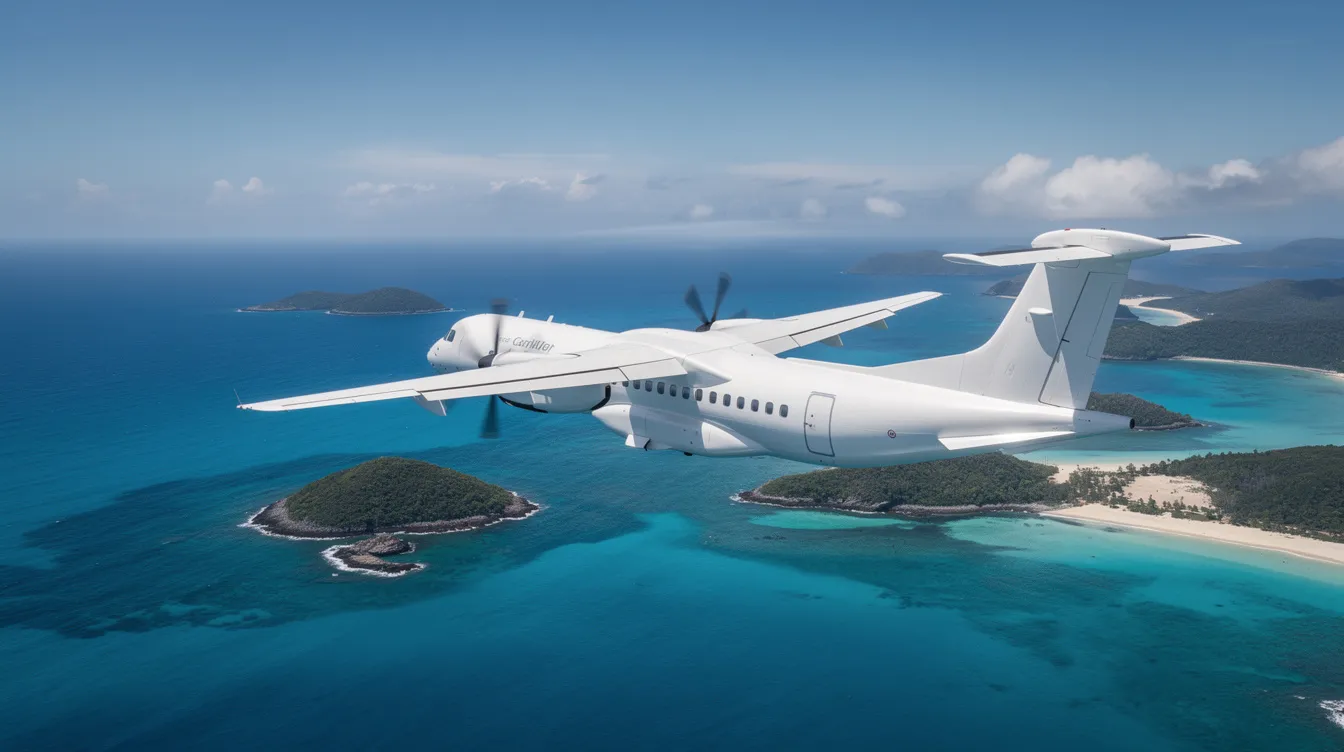
The propeller jet is not a relic of aviation's past. It is a precision instrument - purpose-built for regional missions where speed alone does not determine who arrives first. For the discerning private aviation traveler, understanding when and why a turboprop aircraft outperforms a light jet is a genuine strategic advantage.
Why Propeller Jets Still Matter for High-End, Time-Sensitive Travel
Consider an executive flying from Dallas to Houston - roughly 225 nautical miles. A light jet cruises faster, but once you factor in drive time to a major airport, taxi delays, longer runway requirements, and ground transfer at the other end, the door-to-door difference shrinks to as little as ten to fifteen minutes. Now, the cost factor: a modern turboprop burns approximately 55 to 70 US gallons per hour versus 180 to 220 for a comparable light jet. That is not a marginal difference. Turboprop engines burn up to 50 percent less fuel than jets on sectors like these.
Turboprop aircraft typically cruise at around 300 knots - roughly 550 km/h. Light jets operate at higher speeds, typically 430 to 470 knots. But on segments under 800 to 1,000 nautical miles, climb, descent, and taxi consume a disproportionate share of total mission time, compressing the real-world speed gap dramatically.
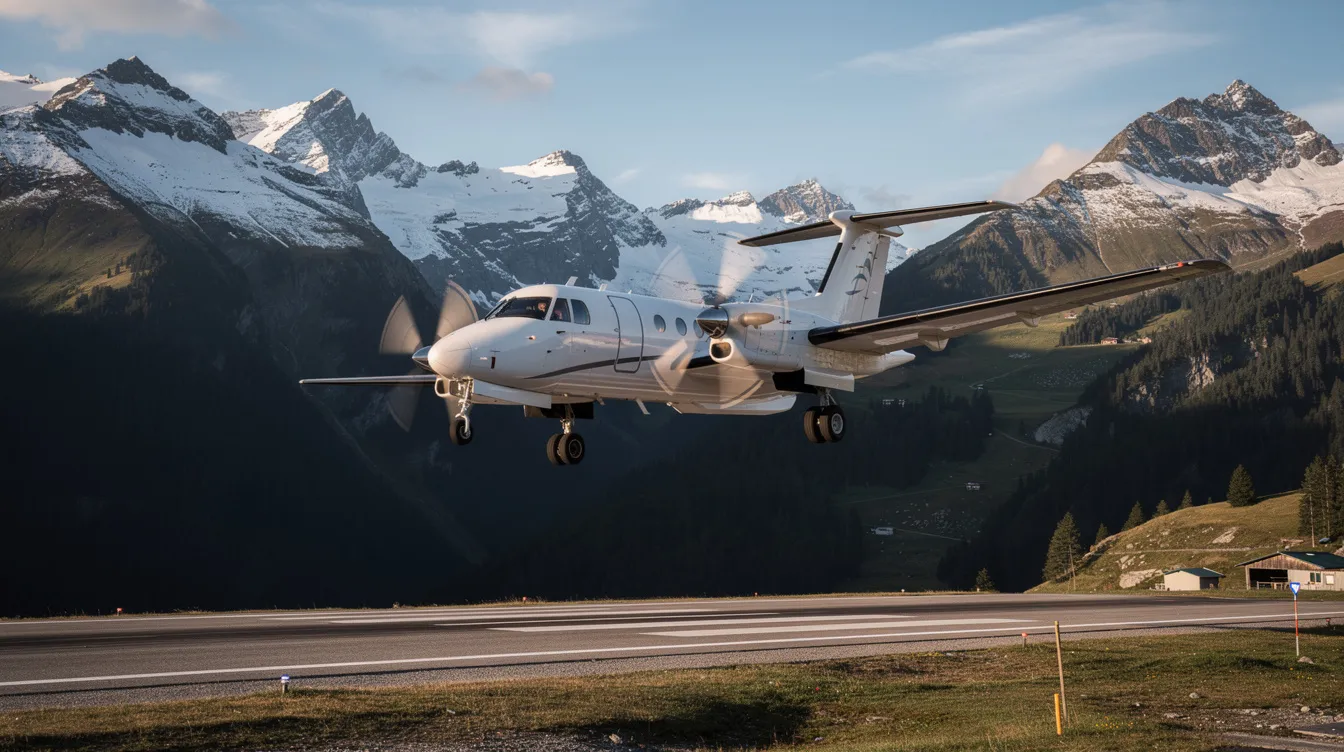
The operational reach is equally compelling. Turboprops can operate from runways as short as 1,100 meters, opening access to mountain strips, island airports, and fields that many jets cannot safely use. Approximately 34 percent of airports globally rely on turboprops for scheduled or charter service - airports where jets simply do not go. Turboprops are ideal for operations out of smaller regional airports, giving travelers a closer starting point and a shorter last mile.
At BlackJet, we integrate turboprop aircraft into Jet Card trip design as a strategic tool. When a turboprop delivers better door-to-door time, lower cost, or access to a runway that a jet cannot reach, our operations team recommends it. The result: members save time, reduce emissions, and unlock destinations that would otherwise require lengthy ground transfers.
What Is a Propeller Jet? Turboprop Engines vs Traditional Jet Engines
A propeller jet - technically a turboprop - is a type of powered aircraft where a gas turbine engine drives a propeller through a reduction gearbox. Propeller-driven aircraft use a gas turbine engine to turn a propeller, with turboprop engines producing about 85 to 90 percent of thrust from the propeller disc and the remaining 10 to 15 percent from residual exhaust gases.
This distinguishes turboprops from pure jet engines. Turbojet engines compress air, ignite it, and accelerate exhaust to produce thrust - nearly all propulsion comes from high-velocity exhaust. Turbojet engines are best for long-range, high-speed flights and are capable of high-subsonic or supersonic speeds. Turbofan engines, common on modern jets, add large fan blades for bypass airflow but still rely on accelerated gas rather than propeller propulsion.
Key examples of turboprop aircraft in private aviation and regional service:
Regional / commuter: ATR 42/72, De Havilland Canada Dash 8 Q400
Executive / private: Beechcraft King Air 350i, Pilatus PC-12 NGX, Cessna Grand Caravan EX
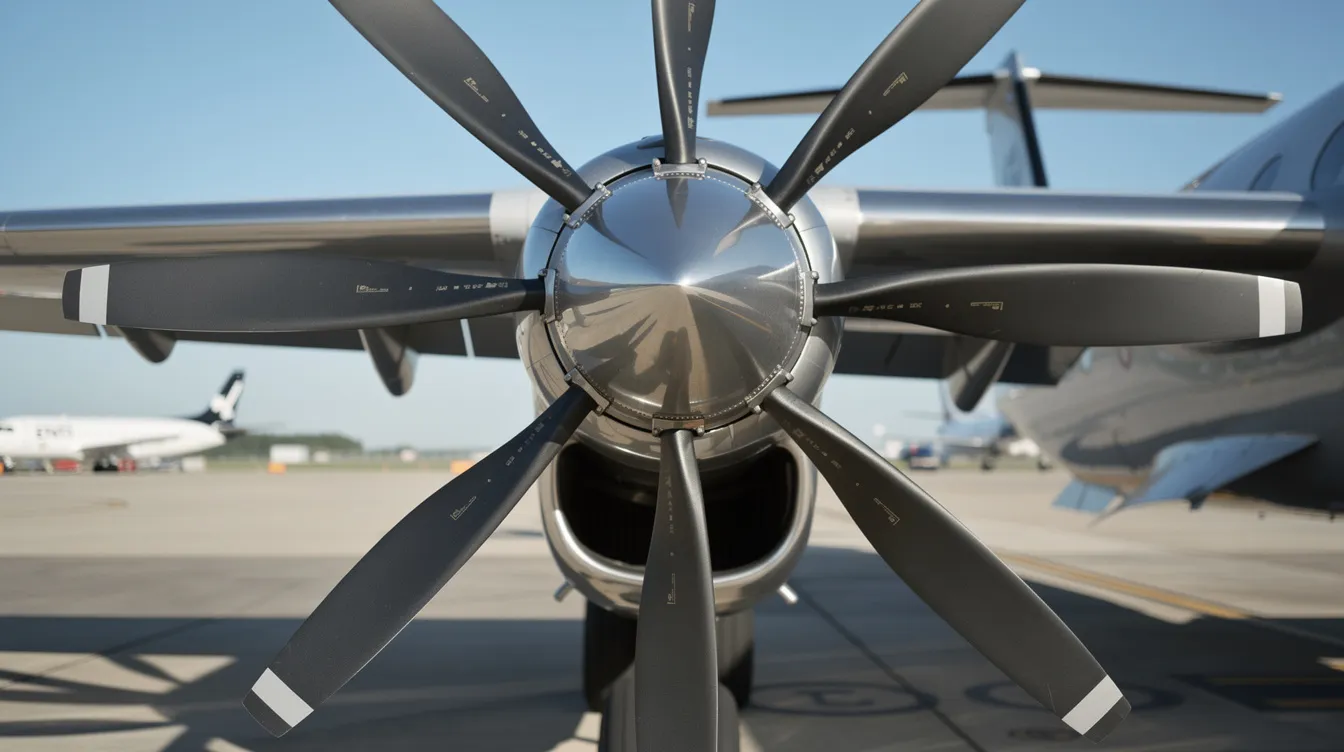
In private aviation, terms like "propeller jet," "propjet," or "executive turboprop" all refer to business turboprop private planes - pressurized, well-appointed aircraft with modern avionics and turbine engines certified for commercial operation. These airplane types typically mount engines on the wing (twins) or in the nose (singles), use multi-blade composite propellers, and cruise at 20,000 to 30,000 feet - lower than jets, which operate around 35,000 to 45,000 feet.
How Turboprop Engines Work: From Jet Core to Propeller Thrust
At its core, every turboprop consists of the same fundamental propulsion system found in any gas turbine - but with a critical mechanical addition. Here is the step-by-step path from air intake to thrust:
Air intake and compression: Ambient air enters the engine and passes through axial or centrifugal compressor stages, where it becomes compressed air at high pressure and temperature.
Combustion: Fuel is injected into the combustion chamber and ignited. Hot combustion gases expand rapidly, releasing enormous energy.
Turbine extraction: The hot combustion gases drive turbine stages that extract mechanical power. In free-turbine designs, a dedicated power turbine - mechanically independent from the gas generator - captures the energy needed to spin the propeller.
Reduction gearbox: The engine core operates at tens of thousands of RPM, but propeller blades must turn at roughly 1,000 to 1,500 RPM to maintain high efficiency and keep blade tips below supersonic speeds to reduce noise. A reduction gearbox bridges this gap.
Variable-pitch propeller: The blades automatically adjust their angle - steeper for climb, flatter for cruise - maintaining constant speed while matching engine power to flight conditions. Features include feathering (aligning blades with airflow to minimize drag after engine failure in twins) and reverse pitch for short-field landing.
Turboprop engines are more efficient in the dense air found below 30,000 feet, and modern turboprops can fly as high as 30,000 to 35,000 feet. They are highly efficient at low to medium speeds and altitudes, which is precisely why they dominate regional routes.
Prominent engine examples include the Pratt & Whitney Canada PT6 family - over 26,000 units produced since the 1960s, with power generated ranging from 350 to over 2,000 shaft horsepower. The latest PT6E variant adds full-authority digital engine control (FADEC), electronic propeller management, and time-between-overhaul intervals reaching 6,000 hours. The Honeywell TPE331 serves commuter and cargo roles, while the PW127XT powers the ATR 72-600 with improved fuel efficiency and lower maintenance costs.
Historical Evolution of Propeller Jets: From 1930s Concepts to Modern Turboprops
Long before human-powered aircraft concepts captured public imagination, engineers were pursuing the idea of harnessing a gas turbine to drive a propeller. The timeline reveals how far the technology has traveled:
Late 1930s–1940s: Hungarian engineer György Jendrassik developed the Cs-1, widely regarded as the first turboprop engine concept, intended for the Varga RMI-1 aircraft. Though never mass-produced, it established core design principles.
1945: The first practical British turboprop, the Rolls-Royce RB.50 Trent - a modified Derwent II turbojet fitted with reduction gearing and a propeller - flew on a Gloster Meteor testbed, marking the first turboprop aircraft to take flight.
1948–1953: The Vickers Viscount, powered by Rolls-Royce Dart engines, became the first commercially successful turboprop airliner. Entering service with British European Airways, it offered quieter, more efficient regional travel than piston engines could deliver. A total of 445 were built, proving that propeller planes powered by turbine technology could compete as small airliners.
Late 1950s: The Soviet Tupolev Tu-95, equipped with Kuznetsov NK-12 contra-rotating turboprops, demonstrated that turboprops could achieve remarkable speeds - cruising near 400 knots - for long-range strategic missions.
1960s onward: The rise of the American turboprop engine market, led by Pratt & Whitney Canada's PT6 series and General Electric's earlier XT31 program (tested 1945), cemented turboprops in business and utility aviation. These powerplants replaced internal combustion engines and piston-driven designs across thousands of small subsonic aircraft.
Today's prop planes - the ATR 72-600, King Air 350i, Pilatus PC-12 NGX - are direct descendants of these milestones, refined over previous generations into aircraft that anchor regional private aviation worldwide.
Performance: Turboprop Aircraft vs Jets for Private Aviation Missions
Performance in private aviation is multidimensional. Raw speed is one variable; runway access, cost, range, and environmental impact are equally decisive, especially when you compare small private aircraft across categories for specific mission profiles.
Speed and range: Modern turboprops cruise at around 300 knots (550 km/h) with practical ranges of 500 to 1,800 nautical miles depending on payload. Light jets typically fly faster - 400 to 470 knots - with ranges of 1,000 to 2,200 nautical miles. Turbojet engines are efficient at high altitudes, but turbojets suffer high fuel consumption at lower speeds and altitudes, making them less economical on short segments.
Runway access: Turboprop aircraft can operate from runways as short as 1,100 meters and can land on unpaved runways like grass or gravel. Many jets require paved runways of 1,500 meters or more. Turbojets generally require longer runways for takeoff and landing due to their reliance on exhaust thrust. This distinction is decisive at destinations like Courchevel, Aspen, or remote areas across the Greek islands.
Altitude and weather: Turboprops operate efficiently at FL200 to FL270 (roughly 20,000–27,000 feet), while jets optimize around FL370 to FL430. Jets fly above more weather; turboprops at lower altitudes may encounter more turbulence but spend less fuel in climb and descent phases.
Economics: Turboprop charter rates typically fall between $2,000 and $3,500 per hour, compared to $4,000 to $6,000 for light jets. Fuel consumption differences of 40 to 50 percent drive much of this gap and mirror the broader dynamics you see when analyzing jet card cost per hour across different aircraft categories. Turboprop engines provide excellent performance in hot and high conditions, maintaining engine power where jet performance degrades. Turboprop engines are ideal for short to medium-range flights.
Metric | PC-12 NGX (Turboprop) | King Air 350i (Turboprop) | Phenom 300E (Light Jet) |
|---|
Cruise speed | ~285–315 kt | ~300–320 kt | ~420–450 kt |
Range | ~1,400–1,800 nm | ~1,500–1,700 nm | ~1,700–2,000 nm |
Typical runway | 2,500–3,000 ft | ~3,300 ft | ~4,500–5,000 ft |
Hourly cost | ~$2,000–$2,500 | ~$2,500–$3,500 | ~$4,500–$6,000 |
Fuel burn | ~55–70 gph | ~90–110 gph | ~180–220 gph |
Scenario - New York to Nantucket (~220 nm): A BlackJet member departing from a secondary airport near Manhattan in a PC-12 can land directly at Nantucket Memorial. A light jet departing Teterboro arrives marginally earlier in the air but adds ground transfer time. The turboprop uses less fuel, costs less, and may even deliver a shorter total journey. Turboprops are ideal for regional routes under 1,500 km where this arithmetic consistently favors the propeller.
Cabin Experience in Modern Turboprops
Modern turboprop cabins bear little resemblance to their predecessors. The airframe and interior design of today's executive turboprops deliver a passenger experience that rivals many light jets - particularly on flights under two hours.
Layouts: Single-engine turboprops like the Pilatus PC-12 NGX seat six to nine passengers in club configurations with fold-out tables. Twin turboprops like the King Air 350i accommodate eight to eleven with similar arrangements.
Noise and vibration: Turboprops are generally quieter than many travelers expect. Modern designs with scimitar-shaped blades and advanced cabin insulation reduce noise to approximately 78 to 85 dB, only marginally above some light jets. Composite blades and careful propeller balancing further reduce noise and vibration from previous generations of propeller passenger planes.
Pressurization: Cabin altitudes of 6,000 to 8,000 feet during cruise - comparable to many light jets on short flights. The PC-12's flat-floor cabin makes movement easy; the King Air's quiet-cabin program enhances comfort further.
Baggage: Large cargo doors on aircraft like the PC-12 accommodate skis, golf bags, or bulky equipment that would not fit in many jet baggage compartments.
Connectivity and service: Wi-Fi availability, catering options, and bespoke service standards through BlackJet's vetted partner operators ensure the experience aboard a turboprop meets the expectations of discerning travelers.
Safety, Training, and Operational Standards for Propeller-Driven Aircraft
Safety in turboprop operation is a function of certification rigor, crew training, and operational discipline - not engine count alone.
Certification: Modern turboprop aircraft, including single-engine models like the Pilatus PC-12 and Daher TBM series, are certified under FAA Part 23/25 and EASA CS-23/25 standards. These are the same regulatory frameworks governing the safest private jets in the industry.
Safety data: The PC-12 has accumulated over ten million flight hours with an accident rate near 1.6 per million flight hours - comparable to or better than many light-twin and very light jet categories under similar operation profiles.
Engine reliability: The PT6 family documents in-flight shutdown rates of approximately one per 650,000 flight hours, reflecting exceptional reliability. Proper training for engine failure scenarios - including feathering, asymmetric thrust management, and single-engine approach procedures - is standard for all turboprop crews.
Twin vs. single: Twin turboprops provide engine redundancy. Single-engine turboprops are widely accepted for commercial operations when paired with rigorous maintenance, conservative operational limits, and highly reliable engines.
BlackJet standards: We work exclusively with operators holding top-tier third-party safety ratings - ARGUS, Wyvern, or equivalent - and require modern avionics suites (Garmin G1000/G3000 or Collins Pro Line Fusion), engine health monitoring, digital flight following, and real-time weather integration on every turboprop mission.
Sustainability and Efficiency: Turboprops in a Lower-Carbon Private Aviation Strategy
Turboprop aircraft emit fewer CO₂ emissions than regional jets on comparable routes. The reasons are structural, not incidental.
Fuel efficiency: Turboprop engines burn up to 50 percent less fuel than jets on short to medium sectors. Propeller efficiency peaks below Mach 0.6 to 0.7, precisely the speed regime where turboprops operate. On a 300 to 400 nautical mile segment, switching from a light jet to a turboprop can reduce fuel burn and emissions by 30 to 50 percent.
Contrails and altitude: Turboprops reduce contrail formation by cruising at lower altitudes, where atmospheric conditions are less conducive to persistent contrail development.
Engine improvements: Modern turboprop engines improve fuel efficiency by 3 percent over previous models, compounding savings across thousands of flight hours annually.
SAF compatibility: Many current turboprop engines, including PT6 variants, are compatible with Sustainable Aviation Fuel blends, further reducing lifecycle carbon when SAF is available at departure airports.
BlackJet's commitment: Every flight arranged through BlackJet - including turboprop segments - is carbon neutral, backed by high-quality, verified offset projects at no additional cost to members. Corporate clients receive clear emissions reporting for sustainability tracking.
Future technology: Hybrid-electric and fully electric propulsion concepts are being tested first on turboprop-scale platforms, making this category a likely early adopter of next-generation low-carbon aviation technology.
When a Propeller Jet Is the Right Choice for Your BlackJet Trip
The decision framework is straightforward: route length, runway constraints, passenger count, luggage profile, schedule flexibility, and environmental priorities.
Scenario 1 - Executive commute, Boston to Nantucket: A 120-nautical-mile hop. The turboprop departs from a closer secondary field, lands directly at Nantucket, and costs roughly half what a light jet would. Door-to-door time is virtually identical. The plane uses less fuel and accesses a short runway with ease.
Scenario 2 - Family ski trip to Courchevel: The destination airport demands short runways, steep approaches, and aircraft designed for challenging terrain. A turboprop handles this operation confidently; most jets cannot.
Scenario 3 - Multi-leg international itinerary: Fly overnight from New York to Geneva on an ultra-long-range jet, then switch to a turboprop for the final regional hop to a Mediterranean island. The jet handles the oceanic leg efficiently; the turboprop delivers the last mile to remote areas no jet can reach.
Addressing common concerns:
"Too slow?" On sectors under 500 nautical miles, the real-world time difference is often ten to twenty minutes. Jets may fly faster, but turboprops frequently arrive sooner when total journey time is measured.
"Basic cabin?" Modern turboprop cabins match light jets in comfort, pressurization, and amenity standards for flights under two hours.
"Single-engine safe?" With accident rates at or below light-twin averages and PT6 reliability measured in hundreds of thousands of hours between events, single-engine turboprops meet rigorous commercial safety standards.
Compared to jet ownership or ad-hoc charter, a Jet Card provides predictable access to both jets and turboprops - no capital commitment, no fleet limitations, and the flexibility to match the right aircraft to every mission, especially when you understand overall jet card cost structures and how they align with your flight profile.
BlackJet Jet Cards, Technology, and Seamless Access to Turboprop and Jet Fleets
Jet Card structure: BlackJet offers 25-hour and 50-hour programs where members select cabin classes across jet categories - and can integrate turboprop segments when they deliver superior value or access, with the BlackJet 25+ Hour Jet Card providing fixed-rate access to mid, super-mid, and large cabin jets.
Digital platform: 24/7 app and web access providing real-time pricing guidance, aircraft category recommendations, and integrated itinerary planning. When a turboprop is the smarter choice for a leg, the platform surfaces that option transparently.
Operations support: Behind every booking, our team monitors weather, runway conditions, and fleet availability - ready to shift between jet and turboprop if conditions change. This is private aviation built around operational intelligence, not rigid fleet assignments.
Safety parity: Every partner operator providing turboprop aircraft meets the same vetting standards applied to light, midsize, and large-cabin jets in our network - third-party audits, modern avionics, and documented maintenance regimes.
Carbon-neutral flights: All flights - turboprop and jet - are carbon neutral, with verified offsets and transparent emissions reporting for every member.
Frequently Asked Questions About Propeller Jets (Turboprops)
Q: What is the main difference between a turboprop engine and a traditional jet engine?
A: A turboprop engine uses a gas turbine to drive a propeller through a reduction gearbox, generating most thrust from the propeller. In contrast, traditional jet engines (turbojets and turbofans) produce thrust primarily from high-velocity exhaust gases.
Q: Are turboprop aircraft slower than jets?\
A: Yes, turboprops typically cruise around 300 knots, while light jets cruise between 430 and 470 knots. However, on short routes under 800 nautical miles, the door-to-door time difference often shrinks due to shorter runway and ground handling times.
Q: Can turboprops operate from shorter or unpaved runways?\
A: Absolutely. Turboprops can use runways as short as 1,100 meters and can operate safely on unpaved surfaces like grass or gravel, enabling access to remote or regional airports inaccessible to jets. Learn more about runway accessibility.
Q: Are single-engine turboprops safe for private travel?\
A: Yes. Modern single-engine turboprops like the Pilatus PC-12 have excellent safety records and meet rigorous certification standards, supported by advanced avionics and highly trained crews.
Q: How do turboprops contribute to sustainability in private aviation?\
A: Turboprops burn up to 50% less fuel than comparable jets on regional routes, emit fewer CO₂ emissions, and reduce contrail formation by flying at lower altitudes. Many turboprop engines are also compatible with Sustainable Aviation Fuels (SAF).
Q: Does BlackJet’s Jet Card program include turboprop access?\
A: Yes. While BlackJet primarily offers jet access, turboprop aircraft are integrated strategically when they provide better time efficiency, cost savings, or access to airports jets cannot reach, all under the same rigorous safety and service standards.
Q: How noisy are turboprop cabins compared to jets?\
A: Modern turboprops feature advanced propeller designs and cabin insulation that reduce noise and vibration. While jets generally have quieter cabins, turboprops are comfortable for flights under two hours with noise levels comparable to some light jets. See our section on cabin experience in modern turboprops.
Q: What types of missions are best suited for turboprops?**\
A: Turboprops excel on regional routes under 1,500 km, short-field operations, remote airport access, and missions where fuel efficiency and lower emissions are priorities.
Conclusion: Elevate Your Travel Strategy with Propeller Jets and BlackJet
Propeller jets, or turboprops, remain a vital component of modern private aviation, offering unmatched versatility, efficiency, and access for regional and remote travel. Their ability to operate from shorter and unpaved runways, combined with significantly lower fuel consumption and emissions, positions them as a strategic choice for discerning travelers prioritizing time, cost, and sustainability.
At BlackJet, we recognize that true luxury in aviation is about seamless, tailored access to the right aircraft for every mission. By integrating turboprops into our Jet Card programs alongside jets, we empower members to unlock destinations beyond the reach of traditional jets without compromising safety or service. Whether flying an executive commute, a family vacation, or a complex multi-leg itinerary, turboprops offer a refined, efficient solution that complements the speed and range of private jets.
Elevate your regional and short-haul travel with BlackJet’s curated fleet access, rigorous safety standards, and commitment to carbon-neutral flights. Discover how propeller jets can enhance your private aviation experience—effortlessly, sustainably, and on your terms.


 Sign up with google
 Sign up with Apple