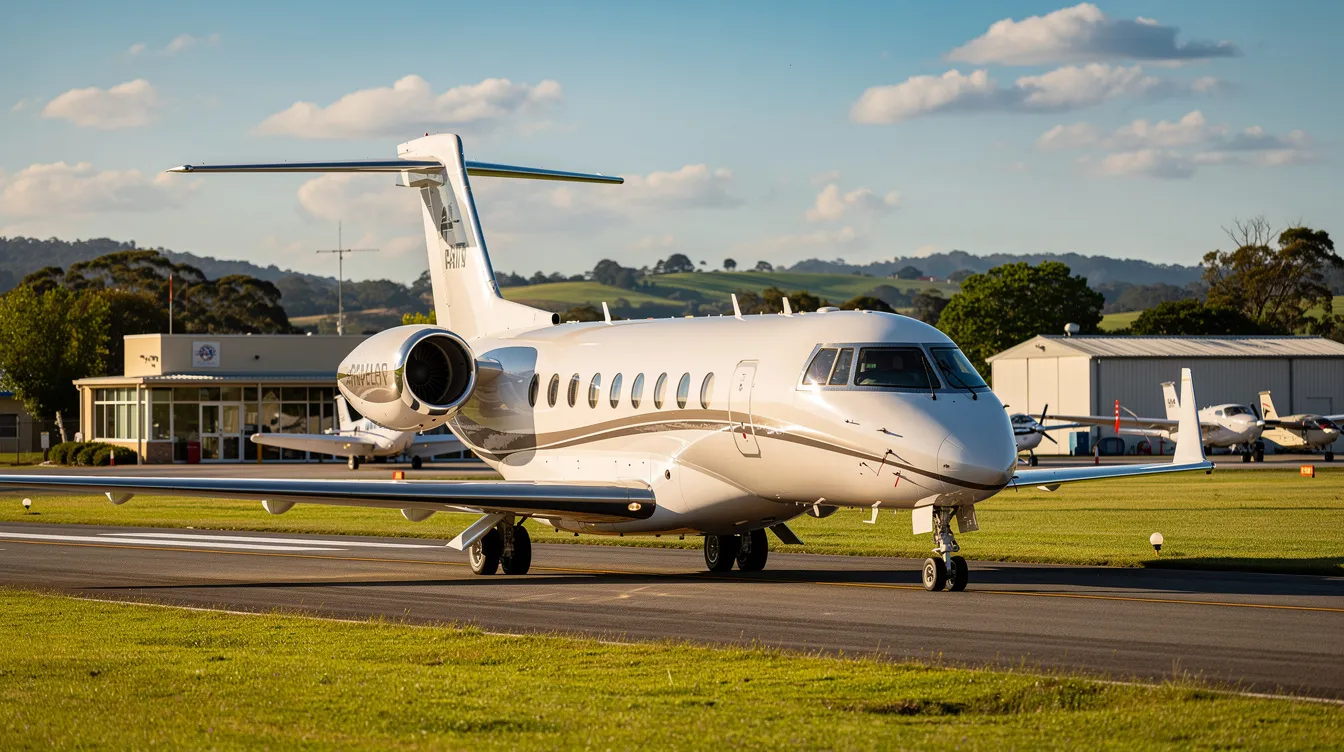
For high-net-worth and executive travelers, the hourly rate of a private jet is only part of the equation. Landing fees, handling fees, parking charges, and fuel surcharges can quietly add thousands of dollars to a single trip-yet they rarely appear in the headline price you see when shopping for a charter flight.
Private aviation delivers undeniable advantages over commercial alternatives: skip congested hubs like JFK or ORD, depart from Teterboro or Farnborough with minutes of ground time instead of hours, and arrive closer to your final destination. But these premier airports carry their own fee structures, and understanding them is essential for anyone who wants to budget accurately.
Landing fees are charges assessed by an airport every time your aircraft touches down, entirely separate from the hourly aircraft cost. They affect both on-demand charter quotes and Jet Card programs. With BlackJet's fixed hourly Jet Card pricing, many airport-related costs at frequently used general aviation airports are either included or clearly disclosed before you book.
This article covers what private plane landing fees are, typical ranges across the US and Europe as of 2025–2026, and how BlackJet helps members avoid unexpected expenses.
What Are Private Plane Landing Fees?
Landing fees are per-operation charges levied by the airport authority or municipality each time a private aircraft lands. They are distinct from fuel costs, crew expenses, or catering, and they exist to fund critical airport facilities, including runway maintenance, lighting, navigation aids, and fire-and-rescue services.
Landing fees are usually based on aircraft weight, specifically Maximum Take-Off Weight (MTOW) or Maximum Gross Landing Weight, priced per 1,000 lbs in the US or per metric ton in Europe.
Landing fees for private aircraft usually range from $100 to over $5,000 per landing, depending on the airport and aircraft size.
Landing fees are common at larger airports; many small publicly owned airports do not charge landing fees at all, relying instead on ramp or parking fees.
Airport fees cover costs for using airport facilities-runways, taxiways, aprons, approach systems, and safety infrastructure.
In practice, private travelers see these fees passed through via the operator or fixed baseoperator'ss invoice, which may be paid by card, check, or cash when accepted by the airport or FBO.
Different airports set their own landing fee structures based on various factors, and some charges are subject to local rules and airport-specific policies, which is why a single trip can incur dramatically different ground costs depending on where you land.
How Private Plane Landing Fees Are Calculated
The standard formula is straightforward: multiply the airport's fee rate (per 1,000 lbs or per metric ton) by the aircraft weight (MTOW). Heavier aircraft generally pay more in landing fees due to increased runway wear and infrastructure demand.
Simple examples:
A light jet with an MTOW of 10,000 lbs at an airport charging $5/1,000 lbs pays a $50 landing fee.
A large-cabin jet at 75,000 lbs at the same rate pays $375.
2025–2026 US benchmarks:
Fees are influenced by airport location, local demand, and time of day. Night operations, curfew arrivals, noise category, and international versus domestic status all modify the final bill. For the practical traveler, the takeaway is simple: premium infrastructure equals premium landing fees.
Scenario: Consider a New York–Miami business trip on a super midsize jet (MTOW ~50,000 lbs). Landing at Teterboro at roughly $4/1,000 lbs costs about $200. The same jet arriving at JFK at $8.47/1,000 lbs owes approximately $425-more than double, before handling is even added.
Typical Private Landing Fees by Region and Aircraft Type
Landing fees vary significantly by airport and aircraft size. Here are approximate ranges for the aircraft categories BlackJet members typically fly, based on 2025–2026 data. For context, Very Light Jets cost $5,000–$6,000 per hour, Light Jets run $6,500–$8,000, Midsize Jets range from $7,500–$9,500, Super Midsize Jets cost $8,500–$10,000, Large Jets charge $9,000–$12,000, and Ultra Long Range Jets cost $10,000–$15,000 per hour. Landing fees on top of these hourly rates can meaningfully shift total trip cost, and for larger aircraft, those costs are not capped by any universal limit but depend on the airport's published schedule, which is why understanding the broader private jet price list and access options is essential for accurate budgeting.
Region/Aircraft Type | Typical Landing Fee Range (USD or EUR) | Notes |
|---|
US Regional GA Airports | $75–$300 | Light to midsize jets |
Large US International Airports | $300–$1,000+ | Midsize and larger aircraft |
Smaller GA Airports | Often,n no formal landing fee; ramp or parking fees apply | Varies widely |
Paris Le Bourget (Light Jet) | €800–€1,200 | Business airport |
Paris CDG (Light Jet) | €3,500–€5,000 | Major international airport |
Paris Le Bourget (Midsize Jet) | €1,800–€2,500 | Business airport |
Paris CDG (Midsize Jet) | €5,000–€6,000 | Major international airport |
Landing fees for international destinations can climb significantly due to additional charges for customs, immigration, and security. BlackJet's Jet Card program standardizes and includes many of these ranges within fixed hourly pricing at preferred FBOs, reducing per-flight variability for members choosing the right fleet.
Beyond Landing Fees: Handling Fees, FBO Services & Other Airport Charges
The total on-the-ground cost for a private flight extends well beyond the landing fee. Handling fees, parking, de-icing, fuel surcharges, and other fees can appear as separate line items on a charter invoice-sometimes adding 20–40% to the base trip price- and they sit alongside the core private jet charter pricing structure that covers aircraft and crew. Some airports charge extra for services beyond landing, making it critical to understand the full picture.
Handling Fees and FBO Services
Handling fees cover services like baggage handling, marshalling, passenger and crew lounges, lavatory servicing, GPU usage, and arranging ground transport or catering. At many airports, these are charged by fixed base operators rather than the airport itself.
Small US regional FBOs: $150–$400 per stop
Major US FBO services at top airports (Signature, Atlantic, Million Air): $400–$1,500+
Premium European FBOs (London, Geneva, Nice): €600–€2,500+ per turn, depending on aircraft size and service level, in addition to underlying operational costs such as private jet pilot compensation and training
Landing fees can be waived with fuel purchases at some airports. Operators meeting minimum fuel purchase requirements often see handling or ramp fees reduced or waived entirely.
BlackJet pre-selects FBO partners based on safety oversight, service quality, and transparent fee structures, often negotiating preferred terms thatbenefit thet cardholder.s
Core FBO services relevant to BlackJet guests include private lounges with more amenities than commercial terminals, dedicated ramp access for chauffeured vehicles, crew rooms, and on-demand catering coordination.
Parking, Overnight & Other Ground Fees
Parking or ramp fees apply when an aircraft remains on the ground beyond a quick turnaround. These are usually calculated per hour or per 24-hour period and influenced by aircraft size, similar to how small private plane charter costs scale with aircraft category and mission profile.
Overnight ramp parking for a midsize jet at a busy US airport: $150–$400 per night
Overnight fees apply for parking aircraft overnight; hangar and tie-down fees vary widely by airport, with heated hangarage in winter climates reaching $400–$2,000+ per night for larger aircraft.t
Out-of-hours opening charges at European airports (arrivals after 22:00 local): €180–€450
Security or escort fees at high-security airports: variable, sometimes several hundred dollars
Customs and immigration fees for international arrivals outside standard hours vary by country, with French after-hours customs running €180–€450
Additional charges may include ramp fees, overnight parking, and customs fees, all of which can appear on the final bill.
BlackJet's Jet Card pricing bundles or caps many of these predictable charges, so members rarely face surprise ground costs, and aligns closely with broader jet card pricing structures and benefits seen across the market.
Fuel Surcharges and How They Interact With Airport Fees
Fuel surcharges are variable fees that operators apply when jet fuel prices exceed a certain index. They are separate from airport landing and handling fees and represent an operator-driven cost rather than an airport-driven one.
Airports set fuel base prices and occasionally charge small fuel infrastructure fees; fuel service fees are charged per gallon of fuel at the point of sale.
Operators who purchase fuel at one airport versus another may face very different per-gallon rates-the price totally depends on region, local taxes, and supply.
Some brokers separate the base hourly rate and fuel surcharges on invoices, making the total trip cost less predictable during volatile fuel markets.
BlackJet Jet Card programs use fixed hourly jet card rates per hour that already incorporate fuel and typical surcharges, shielding members from day-to-day fuel price swings on most missions.
The distinction matters: landing and parking are airport-controlled; fuel surcharges and repositioning are operator-controlled. Understanding both helps you plan and budget more accurately.
Commercial Airports vs. General Aviation Airports: Fee Differences
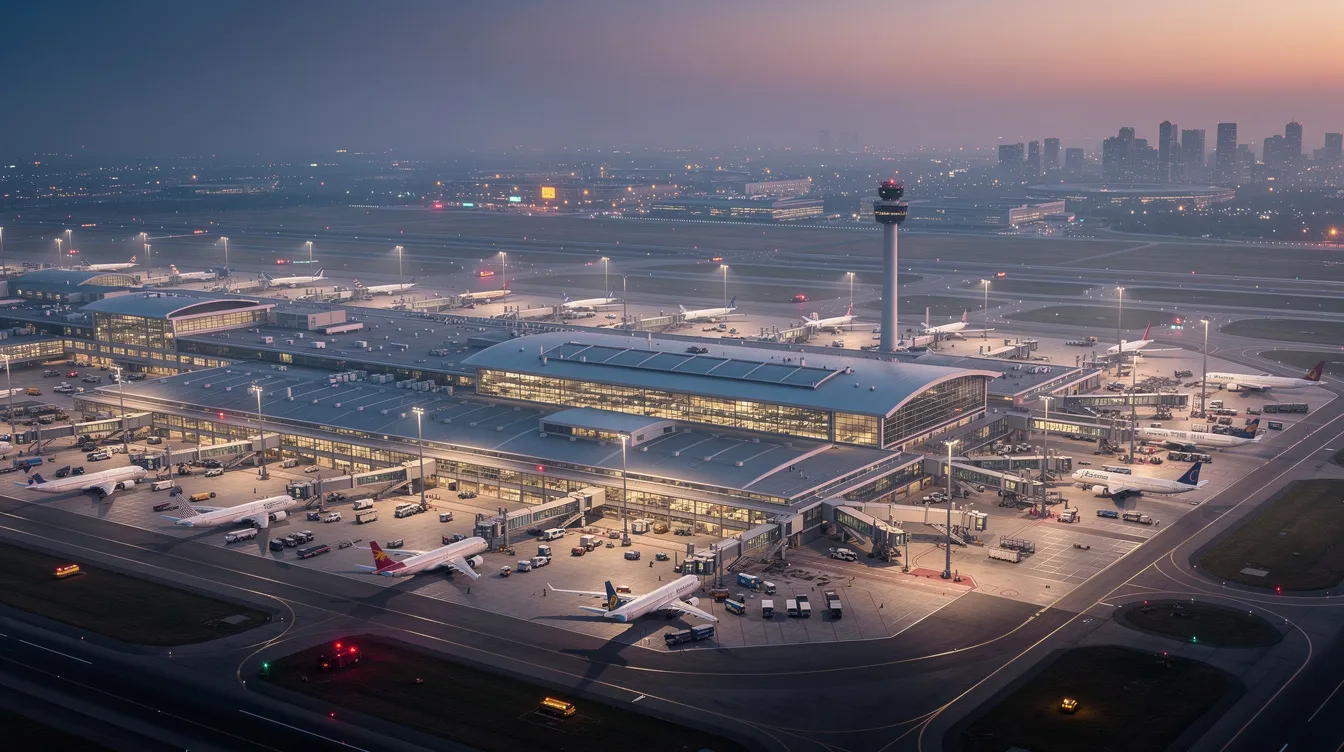
Major commercial airports charge premium landing fees to manage congestion and offset higher operating costs. Slot controls, security requirements, terminal usage fees, and noise restrictions at hubs like JFK, LAX, or London Heathrow result in significantly higher fees for private jets compared to dedicated private airports, even though both types of facilities support high-altitude private jet operations well above typical airline cruising levels.
Premium airports often have higher operating costs, leading to higher fees, while a small airport serving general aviation may charge a fraction of the price-or nothing at all. For instance, one airport in the New York area (Teterboro) delivers a dramatically different fee experience than JFK, despite serving the same city.
Executive scenario: A business traveler flying New York–London with BlackJet departs Teterboro and arrives at Farnborough. Compared to departing JFK and arriving Heathrow, this routing avoids higher commercial-airport fees, long airline-style immigration lines, and ground delays-while maintaining similar block time. The convenience of a purpose-built GA facility, combined with lower landing and handling costs, makes this a strategic advantage, not just a luxury.
Many BlackJet itineraries favor specialized general aviation airports and premium FBOs near major cities for exactly this reason: lower fees, faster processing, and a superior passenger experience.

How Jet Card Programs (Like BlackJet's) Handle Landing & Handling Fees
On-demand charter often quotes an attractive base hourly rate, then layers on landing fees, handling fees, fuel surcharges, and other factors on the final invoice. Jet card programs offer fixed hourly rates for frequent flyers, which fundamentally changes the economics.
BlackJet's 25-hour and 50-hour Jet Cards either include standard landing and handling fees at preferred airports or cap them within known limits.
Standard FBO handling, typical overnight fees, and landing at common business aviation airports are generally included in the fixed price.
Extraordinary items-de-icing, special security at high-threat locations, or remote repositioning-are disclosed separately before departure
BlackJet's technology platform presents members with all-in estimated trip costs before booking, incorporating known airport charges for the specific route and aircraft category.
Empty leg flights can save 50–75% off regular prices, and sharing a private jet charter can significantly reduce costs for travelers with flexible schedules.
The result: predictable payment, no hidden money traps, and a clear plan for every flight—exactly the type of value emphasized in independent reviews of the best jet cards for frequent flyers.
Safety, Certification & Sustainability Implications
A portion of every landing fee supports safety-critical infrastructure-runway inspections, ARFF fire and rescue, approach lighting, and air traffic control. These are non-negotiable costs that enable safe operations at every location.
BlackJet partners only with operators meeting rigorous safety and maintenance standards (ARG/US, Wyvern, IS-BAO equivalents), reflecting the wider reality that private jets are highly safe when properly regulated. Paying required airport fees is part of operating within this regulated, certified environment. BlackJet also offsets carbon emissions for every member flight, including climb and descent phases around airports, making all journeys carbon neutral without additional cost to the traveler. These aren't just fees on a bill-they're investments in the safety, reliability, and sustainability of every departure and arrival.
Frequently Asked Questions About Private Plane Landing Fees
Q1: What factors most influence private plane landing fees?
Landing fees primarily depend on the aircraft's weight and the airport's fee structure. Larger, heavier jets pay higher fees, and premium or busy airports charge more due to infrastructure and congestion costs. Time of day, noise restrictions, and international status also affect fees.
Q2: Are landing fees included in BlackJet’s Jet Card pricing?
Yes. BlackJet’s Jet Card programs typically include or cap standard landing and handling fees at preferred airports, providing members with predictable, all-in pricing and minimizing surprise charges.
Q3: Can landing fees be waived or reduced?
At some airports, landing or handling fees may be waived or reduced if the operator purchases a minimum amount of fuel or uses specific FBO services. BlackJet negotiates preferred terms with FBOs to help reduce these costs for members.
Q4: How do landing fees at commercial airports compare to general aviation airports?
Commercial airports generally have significantly higher landing fees due to congestion management, security, and higher operating costs. In contrast, general aviation airports often charge lower fees or none at all, making them strategic choices for private jet travelers.
Q5: What additional airport fees should private jet travelers expect beyond landing fees?
Handling fees, parking or overnight fees, customs and immigration charges, de-icing fees, and fuel surcharges are common additional costs. BlackJet’s transparent pricing and technology platform help members understand and manage these expenses before booking.
How to Estimate and Control Airport-Related Costs on Your Next Private Flight
Controlling airport-related expenses comes down to four steps, and fits into the broader question of whether chartering a private jet is worth it once all time and cost factors are considered:
Choose the right airport. Flying into White Plains instead of LaGuardia for Westchester meetings, or Le Bourget instead of CDG for Paris, can cut landing fees by half or more. Contact your provider to discuss alternatives.
Understand likely fee ranges. Know your aircraft's weight category and the average fee schedule at your departure and arrival airports. Even a general sense of whether you're at a $200 or $1,200 location changes your budget, just as knowing how much it costs to rent a private jet overall clarifies your total trip exposure.
Consider timing and season. Traveling off-peak can lead to lower private jet costs. Avoid out-of-hours surcharges by scheduling around curfews; winter operations at cold-weather fields may require de-icing ($500–$2,000+ depending on aircraft size), and smart timing also helps when seeking the cheapest private jet options or discounted empty legs.
Confirm inclusions with your provider. Before every flight, verify which ground fees-landing, handling, parking, customs-are included in your quoted price. Ask for all-in estimates, not just the hourly rate, and compare them to typical jet card cost structures and inclusions.
BlackJet's flight support team proactively proposes routing and airport options that balance time savings, ground access, and total fee exposure for each mission, whether it's a short-hop small plane charter within one country or a longer itinerary where understanding private jet pricing in rupees for Indian routes becomes relevant. Whether you're flying pilots into a regional hub or routing an executive across the Atlantic, the right airport choice is often worth more than any single fee negotiation.

Private plane landing fees are not a mystery-they're a manageable, strategic variable, especially when you pair them with budget-friendly private aircraft choices that keep hourly costs in check. The difference between an informed traveler and a surprised one often comes down to a few well-placed questions and the right aviation partner.
Discover how BlackJet's Jet Card programs deliver predictable, all-in pricing-including landing and handling fees-so you can focus on what matters most. Explore the best Jet Card programs, review BlackJet's premium private jet card offerings, or look specifically at the BlackJet 25+ Hour Jet Card to speak with an advisor and reshape the way you fly.


 Sign up with google
 Sign up with Apple