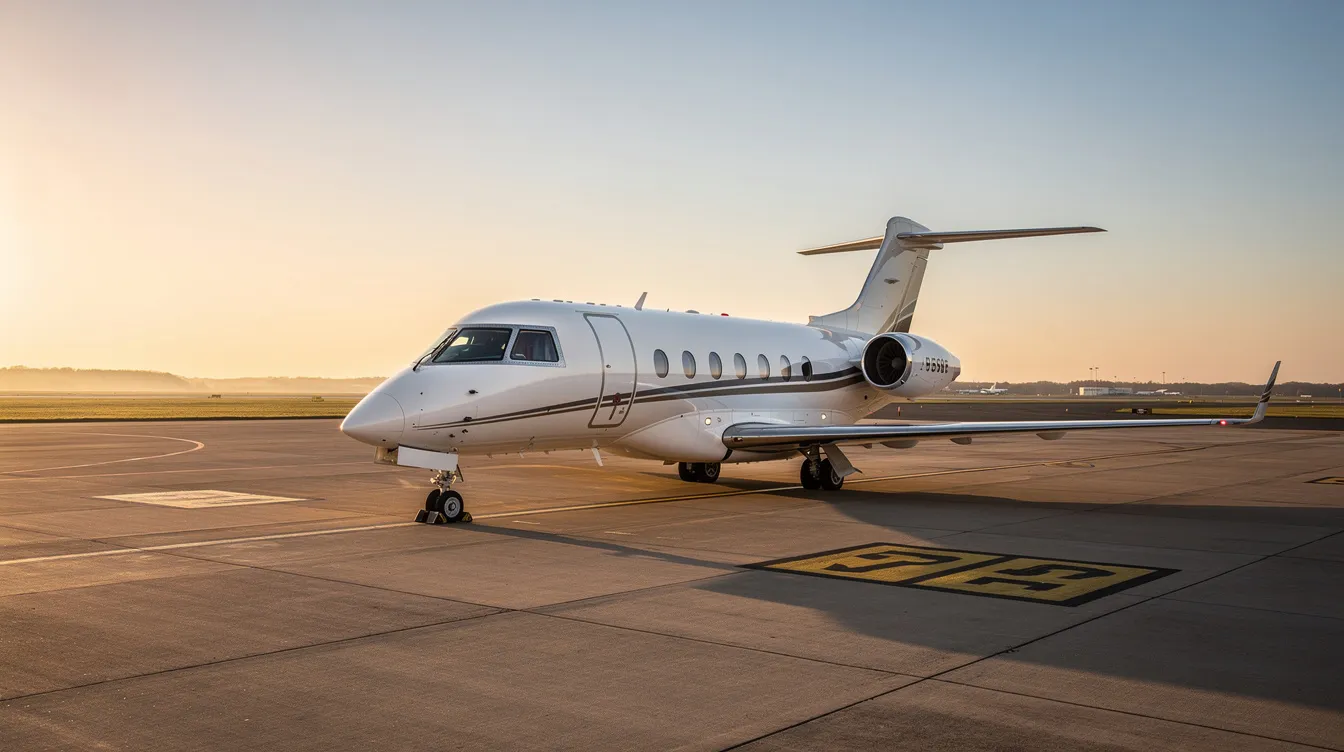
Private jet investment means choosing the access model that best fits your travel pattern and financial goals, whether that is full aircraft ownership, fractional ownership, a jet card, or on-demand charter. For frequent business travelers and high-net-worth leisure flyers who need private, flexible, safe, and luxurious travel multiple times a year, the decision is no longer just whether you can afford a plane, but which option delivers the strongest return on your time, capital, and operational flexibility.
This guide compares every major path into private aviation — from whole aircraft ownership and fractional private jet ownership to jet cards and charter services — so you can match the right model to your flight hours, routes, and liquidity needs. It also covers aircraft categories and cabin classes, financial tradeoffs, time and productivity ROI, tax considerations, sustainability and safety, and where BlackJet's Jet Card can fit into a practical private aviation strategy.
Private Jet Investment in 2026: Strategic Asset, Not Just a Status Symbol
Private jet travel has always been associated with luxury, but in 2026 the strategic case is stronger than the status case. Consider a routine business trip: a midsize private jet covers New York to Chicago in roughly two hours of flight time, with about fifteen minutes to board - total door-to-door time of approximately 3.5 hours. The same trip via commercial airlines, factoring in the drive to LaGuardia, lengthy security lines, potential connections, and ground transit on arrival, stretches to five or six hours. For business executives running same-day regional itineraries, private aviation eliminates the hidden tax on productivity that crowded airports and commercial flights impose.
The private aviation industry reflects this demand. Honeywell's latest Global Business Aviation Outlook forecasts delivery of roughly 8,500 new business jets over the next decade, valued at about $283 billion — the highest projection in the survey's 34-year history. Over 90% of global operators expect to fly as much or more in 2026 as they did the year prior.
But "private jet investment" doesn't mean you need to sign a check for several million dollars and park an aircraft in a hangar. Private aviation investment models include whole aircraft ownership, fractional ownership, and jet cards - each suited to different usage profiles. Private jet cabins can serve as secure mobile offices for corporate discussions, and private jets allow bypassing commercial airline schedules and long security lines, regardless of which model you choose.
BlackJet sits at the strategic center of these private aviation options, offering premium Jet Card memberships — prepaid hour blocks across multiple cabin types — with digital booking, real-time support, and carbon-neutral flights. This article will help you decide whether full ownership, fractional jet ownership, or a jet card is the smartest investment for your travel schedule and liquidity profile.
How Private Jet Fractional Ownership Works
Fractional ownership sits between chartering flights one at a time and bearing the full financial burden of owning an entire aircraft. When you buy into a fractional ownership program, you purchase an ownership share of a specific aircraft or managed fleet and receive a guaranteed annual allocation of flight hours.
Fractional ownership shares typically range from 1/16 to 1/2 of an aircraft. A 1/16 share generally provides around 50 flight hours per year; a 1/8 share yields roughly 100 hours; a 1/4 share approximately 200; and a 1/2 share about 400. Owners typically purchase shares ranging from 1/16 to 1/2 based on how often they fly. Fractional ownership allows sharing costs among multiple owners — from the initial investment to ongoing maintenance expenses — and fractional owners benefit from shared ongoing maintenance expenses that would otherwise fall on a single buyer.
In practice, you book trips through the provider's operations center, usually with 8–24 hours of lead time. Contractual terms typically run three to five years, and monthly fees and hourly charges are among the key factors buyers should review, along with rules governing peak-day availability and short-notice bookings. Many fractional ownership programs also allow fleet access beyond your "home" aircraft type, which appeals to private jet owners who want flexibility across aircraft categories. Fractional owners can purchase additional flight hours beyond their allocation as needed, and fractional ownership allows access to a fleet of jets rather than a single airframe.
Can You Make Money With a Private Jet? Reality vs Expectation
Private jets are viewed as depreciating capital assets, not income-generating investments comparable to real estate or equities. Private jets rapidly lose value in the first few years after purchase, and private jets depreciate about 5–10% of their value each year after that. Investing in private jets is considered a capital-intensive venture, and any expectation of net profit needs to be tempered by reality.
Chartering out a wholly owned jet can generate revenue, but charter revenue can partially offset ownership costs — it may not cover all expenses. Consider a midsize jet purchased for $12 million in 2024. Annual fixed costs (crew salaries, insurance, hangar costs) might total $1.5–2 million. Variable costs add $2,500–$5,000 per flight hour. Even if the owner charters 400 hours per year at competitive rates, the combination of depreciation, operational expenses, management fees, and idle-time losses usually leaves little to no net cash profit.
Utilization risk is significant in private aviation investments: the aircraft depreciates whether it flies or not. Most fractional ownership programs do not share charter revenue in a way that produces a true financial return - the upside is primarily utility value, potential tax advantages, and time savings. For a deeper look at how depreciation affects these models, see how fractional jet ownership depreciation works. Contrast this with a jet card like BlackJet's, where the goal is to optimize cost per productive hour rather than chase yield from an asset that loses value every year.
Financial Considerations: Comparing Full Ownership, Fractional, Jet Cards, and Charter
This section quantifies the main models side by side. The key financial considerations to compare include upfront capital, ongoing costs, variable hourly rates, minimum flight hours, and exit liquidity.
Full ownership demands the heaviest financial commitment. Private jets can cost from $3 million to over $100 million. A 2018 Gulfstream G500 lists around $35 million; a 300-hour annual user faces $2.5–3 million or more in fixed costs covering crew salaries, pilot salaries, hangar fees, insurance, and maintenance reserves. Annual maintenance costs can reach about 10% of the purchase price — meaning maintenance can cost around $1 million annually for a $10 million jet. Buyers should also plan for additional costs such as customization, upgrades, and major inspections. Operating costs typically range from $2,000 to $5,000 per flight hour. Fixed operating costs can run into millions annually regardless of usage for whole ownership, and whole ownership is more financially viable with an annual flight utilization exceeding 200 hours.
Fractional ownership reduces upfront costs compared to full ownership. A 1/8 share in a super-midsize jet might require $1.5–3 million in acquisition, with monthly management fees in the tens of thousands and occupied hourly rates of several thousand dollars. All-in effective costs often land between $8,000 and $12,000 per flight hour depending on cabin class and utilization. Fractional ownership offers a more affordable entry point — though it still represents a significant financial commitment.
Jet cards eliminate aircraft ownership entirely. Jet cards offer prepaid access to private jets through flexible flight-hour packages — typically 25-hour or 50-hour blocks — with fixed hourly pricing by aircraft type or cabin class. If you're evaluating overall jet card membership pricing, it's important to compare hourly rates, fees, and service levels across providers. Jet card programs provide flexible flight-hour packages. Users can book flights without ownership responsibilities using jet cards, and jet card programs typically include 24/7 digital booking tools. Jet cards allow access to multiple cabin types, so you're never locked into a single aircraft.
Charter services involve one-off bookings with no commitment. A private jet charter flight might cost $4,000–$12,000 per hour depending on aircraft types and route positioning.
The flight hours you fly annually drive which model represents the most efficient investment. Under 50 hours, charter or a jet card is typically most cost-efficient. Between 50 and 150 hours, a jet card or fractional share starts making sense. Above 200 hours, consider full or fractional ownership — but remember that liquidity risk and depreciation are concentrated in those models.
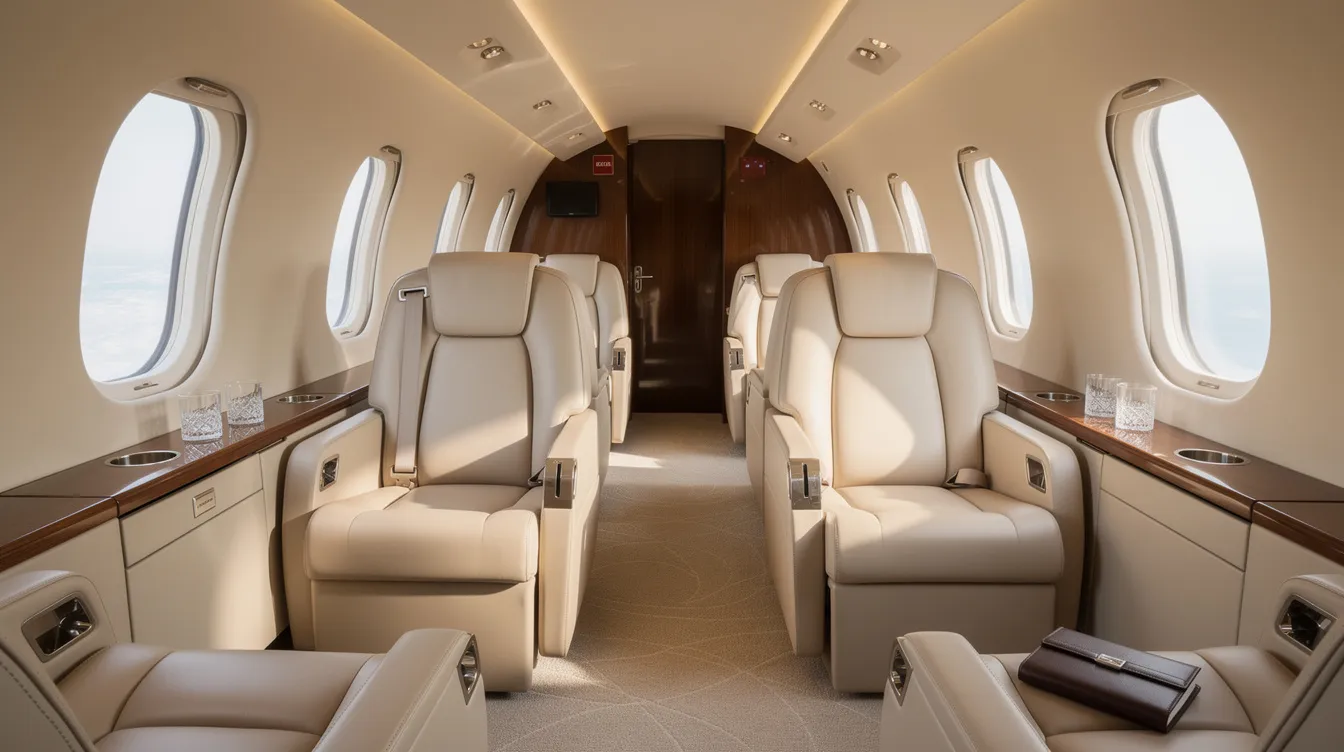
Is Fractional Jet Ownership Worth It? Who It Fits and Who It Doesn't
Fractional jet ownership is best evaluated against consistent usage patterns, predictable routes, and a willingness to accept medium-term capital commitment. Understanding the tax benefits of fractional jet ownership is also key to seeing its full economic picture. It isn't universally the right answer.
The ideal profile is someone flying 50–200 flight hours per year on similar city pairs — say, New York–Miami or London–Geneva — who values guaranteed availability and a specific aircraft type more than maximum mission-by-mission flexibility. A dedicated advisory team is important for successful private aviation investments, and fractional programs provide managed operations: crew, maintenance, and scheduling are handled by the provider.
Core pros: Lower initial investment than whole aircraft ownership, predictable aircraft access, professional fleet management, and shared ongoing expenses.
Core cons: Long-term contracts (three to five years), exposure to aircraft depreciation, ongoing monthly fees even during unused hours, and less day-to-day flexibility than jet cards or pure charter.
Consider a CEO headquartered in Los Angeles who flies to Dallas twice a month (round trip) plus makes quarterly trips to Europe. That's roughly 80–100 flight hours annually. Fractional ownership in a super-midsize jet would give dedicated hours but with high fixed costs. A BlackJet Jet Card—with the ability to select a light or midsize jet for domestic hops and a long-range aircraft for international travel — could deliver lower total cost, greater flexibility, and zero ownership responsibilities. Full ownership of a private aircraft guarantees availability on demand, but at a price most frequent flyers don't need to pay.
Tax Benefits and Depreciation: Can You Write Off Private Jet Investment?
Tax treatment of private jet ownership changes regularly. Readers must consult a qualified tax professional before making decisions. This section covers general concepts only.
For full aircraft ownership and fractional ownership shares used primarily for qualified business purposes, depreciation is a meaningful benefit. Owners using jet cards for business travel should also understand how to maximize jet card tax deductions within current IRS rules. Starting January 1, 2025, Congress reinstated 100% bonus depreciation for qualified new or used business aircraft placed into service that meet business-use thresholds. Business owners can qualify for substantial depreciation deductions on private jets, potentially writing off the entire purchase price in the first year if the aircraft satisfies IRS requirements for substantial business use.
Fractional jet ownership spreads sales tax and certain fees among multiple owners, lowering individual exposure compared to buying an entire plane. However, changing tax laws, tax implications, and regulatory compliance can heavily impact private jet ownership. Owners must navigate regulatory and compliance obligations associated with aircraft, as private jets are subject to extensive regulatory frameworks by agencies such as the FAA. Substantiating deductions requires tracking business versus personal flight hours, maintaining detailed logs, and aligning with IRS and aviation regulations — particularly Section 280F limitations on personal use.
Jet cards and charter services are usually treated as straightforward business travel expenses rather than capital assets, which can simplify accounting for businesses seeking predictable operational costs. There's no depreciation to track, but also no large upfront deduction.
Ownership Options: Full Ownership, Fractional, Leases, Jet Cards, and Charter Services
The full spectrum of private aviation options ranges from maximum commitment to maximum flexibility. Here's where each model fits — and where BlackJet's Jet Cards sit.
Full ownership gives complete control over your aircraft, cabin configuration, and travel schedule. It also means very high upfront capital, full exposure to maintenance, market demand fluctuations, and resale value risk. Selling a private jet can take many months or years, affecting liquidity. High fixed and variable operating costs are associated with private jet ownership at this level.
Fractional ownership and fractional jet leasing split capital and flight hours among owners through medium-term commitments of two to five years. Monthly and hourly fees are managed by a program provider. Fractional ownership opens access to aviation for those who can't justify — or don't want — the full financial burden of owning a jet outright.
Jet cards represent purchasing a block of flight hours with no aircraft equity. BlackJet focuses on this model to preserve client liquidity. A jet card provides prepaid blocks — 25-hour and 50-hour programs — with fixed hourly rates by cabin class, guaranteed availability windows, and personalized service. If you're flying in that range, a detailed breakdown of 50-hour jet card cost and value can clarify how it compares to other access models. It's the strongest fit for flyers logging 25–150 annual hours who want transparent pricing without ownership responsibilities.
On-demand charter is best for under 25–40 flight hours per year or highly irregular travel plans. No commitment, but generally the highest per-hour cost and least schedule predictability.
Aircraft Type, Cabin Class, and Matching the Right Jet to Your Mission
Aircraft type selection directly affects cost, range, comfort, and airport access — making it a critical variable in any private jet investment decision.
The main categories span a wide range, and understanding the types of private jets for different travelers helps align missions and budgets:
Turboprops (e.g., Pilatus PC-12, King Air 350): regional hops, shorter runways, lower hourly cost — often the most efficient choice among the best small private aircraft for short regional missions
Light jets (e.g., Citation CJ4, Phenom 300): fast regional missions, 4–6 passengers, and highly popular among travelers prioritizing small private jet luxury travel
Midsize jets: greater range and cabin comfort for medium-haul routes
Super midsize / long-range (e.g., Praetor 600, Gulfstream G500): intercontinental capability, and many of the best 20 million private jets sit in this category
Large-cabin / ultra long-range jets (e.g., Gulfstream G650): global nonstop missions, premium cabin volume, and represent the upper end of private jet sizes for maximum comfort and range
Private jets can access smaller airports not served by commercial airlines, enhancing travel safety and cutting ground transfer times. For travelers exploring more budget-conscious entry points, understanding the cheapest private jet options can refine which missions make sense privately versus commercially. Matching aircraft types to routes matters: New York–Boston (a short hop) is well suited to a turboprop or light jet. New York–Palm Beach calls for a light or midsize jet. New York–London requires a super midsize or large-cabin long-range aircraft.
Cabin class affects hourly pricing in jet cards and charter, while fractional programs typically assign a fixed aircraft type. BlackJet's Jet Card members can choose the most efficient aircraft class per mission—using a light jet for a private plane hop to Boston and a long-range cabin for transatlantic travel — rather than being locked into a single jet ownership model.
ROI Beyond the Balance Sheet: Time, Productivity, and Opportunity Capture
The primary economic value of a jet often comes from time savings, charter income, and tax benefits — not from the aircraft appreciating in value. Reframing ROI in terms of executive time value changes the calculus entirely.
Private aviation enables same-day multi-city itineraries that are impractical on commercial flights. A team visiting Chicago, Detroit, and Cleveland in a single day — versus spreading those visits across three days of layovers and connections - captures real time savings that translate to deal velocity and revenue. For four executives with a blended value of $2,000 per hour each, saving four hours on a single trip recovers roughly $32,000 in productive time.
Consider a private equity team using BlackJet to inspect portfolio companies across the U.S. in two days. On commercial airlines, the same schedule would stretch to four days, delaying investment decisions and costing additional hotel, meal, and opportunity expenses. For frequent flyers who fly frequently across non-hub cities, private aviation is less a luxury and more an operational multiplier.
Softer returns matter too: improved privacy for negotiations, stronger client relationships built through in-person visits rather than video calls, and reduced travel fatigue leading to sharper decision-making. For frequent travelers, choosing among the best jet cards for frequent flyers can be as important as picking the right aircraft, since service quality dramatically shapes these softer returns. These are the returns that never appear on a balance sheet but consistently appear in outcomes.
Safety, Sustainability, and Technology: Protecting Your Investment and Reputation
For high net worth individuals and companies, non-financial factors — safety, environmental impact, and technology — directly affect personal and brand reputation.
On safety: reputable providers adhere to FAA Part 135 certifications, third-party audits (ARG/US, Wyvern), and rigorous crew requirements. Qualified pilots must meet specific training and certification standards. Routine maintenance checks ensure jet safety and reliability, and regular inspections can catch issues early, preventing costly repairs. Safety protocols can be tailored to meet specific passenger needs across BlackJet's vetted operator network.
On sustainability: the private jet sector is increasingly focused on sustainability. Sustainable aviation fuel (SAF) reduces carbon emissions significantly, and new eco-friendly aircraft have reduced fuel consumption. Green technologies are essential for the future of aviation. When comparing programs, it helps to look at jet card cost per hour alongside their environmental commitments. BlackJet ensures every flight is carbon neutral by default — at no extra cost to members.
On technology: mobile booking platforms, real-time flight support, proactive disruption management, and transparent pricing replace the opacity of traditional broker models. BlackJet's digital tools let members fly private without managing crews, maintenance, or regulatory compliance personally.
FAQs: Private Jet Investment, Fractional Ownership, and Jet Cards
Is a private jet a good investment?
Not in the traditional financial sense. Private jets are depreciating assets, and ownership seldom generates net profit after operating costs. The return is measured in utility — time savings, productivity, privacy, and potential tax advantages. For many travelers, access models like jet cards deliver the benefits without capital risk.
How many flight hours per year justify buying a jet?
General bands: under 50 hours favors charter or a jet card; 50–150 hours suits a jet card or fractional share; above 200 hours begins to justify full or fractional ownership economically, though capital risk remains. The total cost depends on cabin class, routes, and how often you fly privately.
How wealthy do you need to be to own a private jet?
Full private jet ownership typically requires a net worth of $50 million or more — especially for large-cabin or ultra-long-range aircraft costing tens of millions of dollars. Private jet shares through fractional programs lower that threshold. Jet cards provide an even more affordable entry point, requiring no net worth minimum beyond the card purchase price.
What is the average cost per hour to fly privately?
Rates vary by aircraft: light jets run roughly $2,500–$5,000 per flight hour; midsize and super midsize jets range $6,000–$10,000; and large-cabin long-range aircraft can exceed $10,000–$12,000 per hour. Fractional all-in effective rates often land between $8,000 and $12,000. A detailed guide to jet card pricing structures can help you benchmark these hourly figures against specific membership programs.
What happens if I don't use all my flight hours on a jet card?
Policies vary by provider. Some programs allow rollover within a 12-month window; others impose expiration dates or offer partial credit toward future cards. If you're considering larger commitments, understanding the 100-hour jet card cost and structure is essential for planning utilization. Unused hours are a real consideration — review your travel schedule and contract terms with an advisor before committing.
How BlackJet Jet Cards Fit Into Your Private Jet Investment Strategy
After weighing every model — from full private jet ownership to fractional shares to on-demand charter — the question comes down to what you actually need. For flyers logging 25–150 flight hours per year who want fixed hourly rates, guaranteed aircraft access, and zero capital tied up in a depreciating asset, a BlackJet Jet Card is likely the optimal choice.
Compared to fractional and full ownership, BlackJet Jet Cards carry no exposure to aircraft depreciation, no long-term management burden, and no ongoing expenses when you're not flying. You select the right aircraft class for each mission — from a light jet for a quick domestic hop to a large-cabin aircraft for international travel — with transparent pricing, personalized service, and carbon-neutral flights built into every journey.
Picture a founder flying New York–Miami monthly and crossing the Atlantic twice a year. A BlackJet 25-hour or 50-hour Jet Card covers those legs with predictable costs, seamless digital booking, and the flexibility to adjust travel plans without the rigidity of an ownership contract. You may also want to benchmark NetJets jet card costs to understand how legacy providers structure similar offerings. Comparing options like Flexjet jet card pricing and features against BlackJet’s model can further sharpen your investment decision.
The smartest private jet investment isn't always about owning an aircraft. It's about owning your time, whether through whole ownership, a jet card, or simply buying a seat on a private jet when it fits a specific trip.
Explore how a BlackJet Jet Card can reshape the way you travel. Discover BlackJet membership options or speak with an advisor to align your access with your goals.


 Sign up with google
 Sign up with Apple