Fractional jet ownership is worth it for the right buyer. Identifying whether you are that buyer requires an honest assessment of what you actually want from private aviation — not just how many hours you fly. Here is a framework for making that decision clearly.
The 2026 landscape presents compelling conditions for fractional consideration. The One Big Beautiful Bill Act of 2025 restored 100% bonus depreciation for qualified business aircraft, allowing fractional owners to deduct the entire share cost in the year of purchase. Section 179 expensing limits increased to $2.5 million in 2025, providing additional tax benefits for smaller fractional shares, provided the aircraft is used for business purposes more than 50% of the time. Demand remains strong: Global Jet Investors reported 15% year-over-year growth in fractional contracts through 2025, driven partly by supply chain delays in new aircraft.
This guide is written for high-net-worth individuals, family offices, CEOs, and corporate travel leaders allocating significant capital. It assumes you understand private aviation fundamentals. The question is not “what is a fractional share” but rather: does fractional ownership align with what you actually need? For many, the appeal of flying private—enjoying unmatched convenience, exclusivity, and operational ease compared to commercial travel—is a key reason to consider fractional jet ownership.
The core distinction runs deeper than cost. Fractional jet ownership creates two separate value streams: an ownership structure (capital at risk, depreciation benefits, residual value exposure) and an ownership experience (guaranteed access, consistent aircraft, curated service, brand prestige). Many buyers discover they want the latter without necessarily wanting the former.
BlackJet offers a premium jet card alternative that delivers an ownership-like experience through BlackJet Certified aircraft, non-expiring hours, and carbon-neutral flights — without ownership complexity. This guide will help you determine which path serves your actual priorities.
What Fractional Ownership Actually Delivers — the Five Core Benefits
Fractional jet ownership enables multiple parties to share both the purchase price and ongoing costs of a private jet, making private aviation more accessible to a wider range of users. Understanding what this structure truly delivers — beyond the simplified “cheaper than full ownership” framing — is essential before committing capital.
Fractional jet ownership allows multiple individuals or entities to share the costs and benefits of owning a private jet, typically purchasing shares ranging from 1/16 to 1/2 of the aircraft, which entitles them to a corresponding amount of flight time. Each share comes with allocated flight hours annually, providing flexibility and guaranteed availability for owners to plan trips with confidence. Providers manage fleets under Part 91K operations, with typical contract terms of 3-5 years.
Benefit 1 — Consistent, Dedicated Aircraft Access
Guaranteed availability is a feature of fractional jet ownership, offering access to an aircraft within a specified notice period. NetJets guarantees a 10-hour notice on non-peak days and 48-72 hours during peak periods, with approximately 90% fulfillment rates. You contract for priority access to a managed fleet rather than a specific tail number each trip.
Benefit 2 — Guaranteed Equivalent Aircraft Availability
Most programmes promise the same aircraft or better when your exact aircraft is unavailable. This operational hedge matters significantly compared to ad-hoc private jet charter, where empty-leg availability covers only roughly 20% of trips.
Benefit 3 — Asset Ownership with Depreciation Benefits
Fractional jet ownership can provide significant tax benefits, particularly through accelerated depreciation schedules for business use. Under current rules, qualified business aircraft can receive 100% bonus depreciation in Year 1, creating potential savings of $300K-$1M depending on marginal rates, as outlined in more detail in the tax benefits of fractional jet ownership. This ownership model provides a more accessible entry point into private aviation, allowing individuals to enjoy the perks of private jet travel without bearing the full financial burden of sole ownership. Consult tax counsel on recapture implications.
Benefit 4 — Brand Identity and Prestige
NetJets (Berkshire Hathaway subsidiary), Flexjet with its LXi cabins, and PlaneSense’s turboprop niche each carry distinct brand associations. For some buyers, travelling under a recognized fractional brand reinforces their personal or organizational identity.
Benefit 5 — Deeply Curated Service Relationship
Dedicated owner services teams, recurrent crews on certain programmes (Flexjet Red assigns the same crew approximately 80% of the time), and standardized cabin experiences create service continuity that matters to families, principals with security requirements, and executives who value repeatable workflows.
The remainder of this guide tests whether you genuinely need these five benefits from fractional ownership or can achieve them through alternatives.

Is It Worth It? A Framework for Deciding Clearly
The question “Is fractional jet ownership worth it?” cannot be answered by multiplying hours by hourly rates. The decision blends lifestyle design, operational expectations, financial tolerance, ownership psychology, and willingness to commit capital for 3-5 years.
Lifestyle Priorities
Consider whether your travel is predictable (New York-Miami 40 times annually) or spontaneous (different destinations each month). Party size matters: solo executive travel differs fundamentally from six passengers plus nannies and equipment. Fractional ownership typically requires a significant upfront investment, which can range from hundreds of thousands to millions of dollars, depending on the aircraft type and share size — a commitment that makes sense primarily for consistent patterns.
Operational Expectations
Guaranteed aircraft access during peak periods, preferred departure windows, and route predictability all factor in. One of the primary disadvantages of fractional jet ownership is the shared availability of the aircraft, which can lead to potential scheduling conflicts, especially during peak travel periods.
Financial Tolerance
Ongoing management fees for fractional jet ownership can range from $7,000 to $45,000 per month, depending on the aircraft category. Annual operational costs for fractional jet ownership can exceed $100,000, which includes hourly operating costs and management fees. Maintenance and upkeep costs are included in these expenses and, in the fractional model, are distributed among all owners, reducing the individual burden compared to full ownership. Frame this as a multi-year capital commitment, not a travel budget line.
Ownership Psychology
Some buyers value saying “we own a share in a Gulfstream.” Others simply want seamless private jet travel. While fractional ownership offers cost savings compared to full ownership, the ongoing management and maintenance fees can still be substantial, impacting the overall budget of the owners.
Capital-Allocation Trade-offs
Wealth managers should compare locking seven-figure capital into a depreciating asset versus keeping that capital invested. Fractional jet ownership requires financial sharing of pilot salaries, hangar rental, and insurance among owners. Tax benefits may or may not offset opportunity costs depending on the client’s profile.
Worth It If…
Walk through this checklist with your advisor: Fractional jet ownership is particularly well-suited for frequent flyers who require efficient, reliable, and cost-effective private travel solutions.
You care about seeing the same interior layout and brand aesthetic every time.
You prefer consistent seating, galley layout, baggage capacity, and Wi-Fi standards for in-flight meetings.ngs
You typically fly 100+ hours annually with relatively consistent patterns and expect to maintain that through 2026-2030
Your missions concentrate on repeat routes (New York-Palm Beach, LA-Silicon Valley triangles)
You value dedicated owner services teams who know your security protocols, catering preferences, and workflows.
Depreciation benefits meaningfully improve your after-tax economics, and your tax counsel is comfortable modelling recapture risk.
You are comfortable tying up mid-seven figures for 3-5 years, accepting market risk on residual value.e
Association with a tier-one fractional brand (NetJets, Flexjet) aligns with your organizational identity.
If most boxes are ticked, fractional jet ownership deserves serious consideration.
Not Worth It If…
This checklist protects capital for buyers who may not need fractional ownership to achieve their desired experience:
You fly fewer than 50-75 hours in a typical year, or experience long stretches with near-zero flying, followed by bursts
Your destinations, party size, and timing change dramatically year to year
You care more about getting the right aircraft for each trip than having the same brand every time
You dislike 3-5 year contracts, early-exit penalties, or utilization requirements
You prefer to avoid significant upfront investment and asset exposure
You want clean, operating-expense treatment that your CFO can track easily without complex depreciation calculations
You want the benefits of flying privately with minimal management overhead
Individuals seeking prepaid access to private jets may prefer Jet Card programs for convenience and lower entry costs. Alternatively, an on-demand charter service offers personalized, pay-as-you-go private jet access with flexible booking, customization, and no long-term commitments. Readers ticking many of these boxes should explore premium jet card programmes like BlackJet before committing capital.
How Many Flight Hours Make Fractional Worthwhile?
While the number of flight hours serves as a useful indicator, it does not by itself determine whether fractional jet ownership aligns with your needs. A fractional jet ownership share grants the owner a fixed number of flight hours each year, with share sizes commonly ranging from 1/16 to 1/2. Experience expectations and operational requirements matter equally.
Typical 2026 advisory thresholds, based on a detailed understanding of the private jet price spectrum:
< 25 hours/year: Ad-hoc charter generally suits
25-75 hours: Classic jet card territory
75-200 hours: Core fractional ownership band
>250-300 hours: Full ownership worth exploring
Fractional ownership is typically recommended for individuals or businesses flying 50 to 200 hours annually due to safety and consistency. The “sweet spot” for fractional ownership is usually between 50 and 150+ hours per year, making it more economical than full ownership for low to moderate users.
The 50-Hour Threshold
Fifty flight hours per year (roughly a 1/16 fractional share in many programmes) is where many clients first seriously consider fractional ownership. This represents approximately 12-15 round trips of 2-3 hours each — New York-Palm Beach, Dallas-Aspen, Chicago-Napa.
At this level, buyers typically weigh fractional versus high-end jet card programs versus consistent repeat charter. The ownership vs charter vs jet card decision depends on your flying patterns, budget, and need for flexibility. Chartering is more economical for less than 50 hours a year because users only pay for what they use, especially when leveraging affordable private jet options or selectively buying a seat on a private jet rather than contracting for a fixed block of hours. If you want guaranteed access during holiday periods and brand identity, you may lean towards fractional. If you want flexibility and no capital lockup, a premium jet card like BlackJet makes sense.
Clients often underestimate future hours if they are new to private aviation. Long-time charter users typically have clearer data.
Best Option for 50-100 Hours Per Year
This zone is where multiple models prove rational: fractional light shares, robust jet card programs, and high-touch charter relationships.
Fractional strengths: Guaranteed aircraft access, standardized cabin experience, predictable pricing, and potential tax treatment for qualifying business use. Private jet fractional ownership is an alternative model for managing flight costs and aircraft access for those flying 50-100 hours per year, offering a set number of hours based on the share purchased so owners can plan travel with confidence, provided the chosen aircraft size category matches mission needs.
Jet card strengths: Lower upfront investment, simpler exit, no residual-value risk, ability to flex across aircraft types without complex interchange multipliers. Guides to jet card cost per hour can help quantify these trade-offs. Chartering allows more flexibility in aircraft types compared to fractional programs, which lock users into a specific cabin class.
BlackJet positions as a premium solution for this band: BlackJet 25+ Hour Jet Card access to BlackJet Certified aircraft, ARGUS Platinum and Wyvern safety standards, 24/7 client management, guaranteed-access expectations, and non-expiring hours without equity risk, all under the broader BlackJet premium jet card platform. Fractional jet ownership can limit the choice of aircraft available to owners, as they are typically restricted to the types offered by their provider, which may not always meet their evolving needs.
Many discerning buyers model two scenarios: (1) fractional plus supplemental lift, or (2) a BlackJet 25+ Hour Jet Card membership plus occasional large-cabin charters for special missions.
Best Option for 100+ Hours Per Year
Above 100 hours annually, fractional ownership becomes operationally compelling. Fractional jet ownership is cost-effective for flying between 50 and 200 hours annually. Benefits include extremely high service consistency, better peak-day prioritization, easier planning for quarterly roadshows, and deeper relationships with crews. With multiple fractional owners sharing access to the same aircraft, management companies coordinate scheduling and provide access to additional aircraft as needed to ensure seamless travel.
At 150-200+ hours on midsize or super-midsize jets (Challenger 3500, Praetor 600), fractional programmes may deliver strong value relative to repeated large-ticket charter.
Even above 100 hours, fractional is not universally optimal. Some buyers prefer whole ownership above 300 hours. Others prefer multi-programme strategies: a smaller fractional share plus a BlackJet card for overflow and different cabin classes. In these cases, detailed guides to jet card cost and jet card cost per hour become central to the decision model.
The Cost Breakeven: Fractional vs Charter at Different Hour Thresholds
This section offers a strategic view of cost breakeven without attempting precise calculations that depend on individual circumstances.
Fractional cost components: Upfront acquisition price, monthly management fee, occupied hourly rate, fuel surcharges, catering, peak-day premiums, and potential exit/remarketing fees. The cost of fractional jet ownership shares typically ranges from $500,000 to several million dollars, depending on the aircraft model and the size of the share acquired.
Charter costs: No initial purchase price, no management fee, but variable pricing by trip, repositioning premiums, and higher volatility around peak dates, all of which show up clearly in a comprehensive private jet price list breakdown.
Operational breakeven: As hours increase, the effective hourly cost of fractional (spreading fixed management fees over more hours) can approach or undercut high-quality charter on consistent missions, especially if fractional jet ownership depreciation is modeled accurately.
Lifecycle considerations: Fractional jet shares often lose roughly 50% of their capital value over a standard 5-year contract. When you compare a fractional jet with full ownership, fractional shares tend to depreciate faster and typically have a lower resale value than wholly owned aircraft. Buyers must factor in the depreciating asset value, opportunity cost, tax benefits, and liquidity on exit versus pay-as-you-go simplicity.
Flexibility trade-offs: Fractional offers predictability and guaranteed availability, but less ability to scale hours down. Charter and jet cards allow greater adaptability without asset upside. Comparing private jet charter value with different jet card pricing models clarifies which structure best fits your risk tolerance and utilization.
Work with a fractional jet consultant, wealth advisor, or aviation specialist to model scenarios under realistic assumptions, using benchmarks such as jet card cost per hour to compare alternatives on a like-for-like basis.
Do You Qualify for a Fractional Programme?
Financial thresholds: Light jet 1/16 shares run approximately $500k-$700k in 2026, midsize 1/16 often $800k-$1.5M, large-cabin shares into multi-millions. Providers typically expect demonstrated liquidity and net worth for underwriting. Fractional jet ownership involves multiple owners sharing the costs, responsibilities, and scheduling of the aircraft, which can impact flexibility and require coordination among all parties.
Flight-volume expectations: Most major providers informally target clients flying at least 50 hours annually. Under-utilization strains fleet planning and may trigger penalties, in which case a 100-hour jet card structure can sometimes offer a cleaner fit.
Operational suitability: Evaluate whether preferred airports, international routes, and peak holiday periods fit the provider’s operating model and geographic strengths.
Provider onboarding: Typical due diligence includes KYC, credit checks, corporate documentation, and safety questionnaires. Expect 2-4 weeks from initial conversation to first flight.
Corporate vs individual structures: Options include ownership via operating company, holding company, or family office entity. Tax, liability, and governance considerations often determine the right structure.
Buyers who don’t neatly fit fractional criteria — lower hours, highly variable destinations — may find BlackJet’s clear financial thresholds without aircraft ownership risk more suitable, particularly when they understand jet card pricing structures in detail.
Corporate Travel Policy Considerations
For corporate buyers, fractional jet ownership is as much a governance question as an aviation one.
Executive usage policies: Establish clear rules around which executives can use private jets, for which missions, and how personal versus business use is tracked. Private jets in fractional ownership programs can access a broader range of airports compared to commercial airlines, including smaller, regional airports that are closer to owners’ final destinations, saving valuable time.
Tax and reporting: U.S. requirements around imputing income for personal use, SEC disclosure for public companies, and coordination with tax counsel on depreciation and recapture all require attention.
Governance and optics: Frame aviation within broader corporate travel and risk-management policy, emphasizing safety, efficiency, and responsible resource allocation.
Scheduling and operations: Fractional’s guaranteed access and operational consistency can support critical roadshows, M&A negotiations, and crisis management. However, shared aircraft availability limitations can sometimes restrict access and complicate scheduling compared to full ownership. Fractional jet ownership offers increased flexibility and convenience compared to commercial air travel, allowing owners to customize their flight schedules and access a wider range of destinations. Fractional owners collaborate with their provider to tailor flight schedules that meet their unique travel needs, offering greater flexibility than commercial airline timetables.
Employee access: Consider whether team members beyond the C-suite can access private aviation, and whether a multi-layered approach (fractional plus BlackJet memberships for regional executives) aligns with retention goals.
BlackJet’s 24/7 client management and guaranteed-access structure integrates cleanly into corporate travel policies as a flexible complement to fractional shares.
Choosing Your Aircraft — Cabin Specs, Range, and Experience
This section serves buyers already evaluating specific private jets and fleets. The goal is to align aircraft choice with real missions: typical trip length, passenger count, baggage volume (golf clubs, skis, equipment), runway lengths, and desire for stand-up cabins and onboard Wi-Fi.
Fractional ownership allows individuals to enjoy the benefits of having their own jet while sharing costs with others, making private aviation more accessible and cost-effective.
Even if you ultimately choose a jet card rather than fractional shares, understanding these details improves every aviation decision.
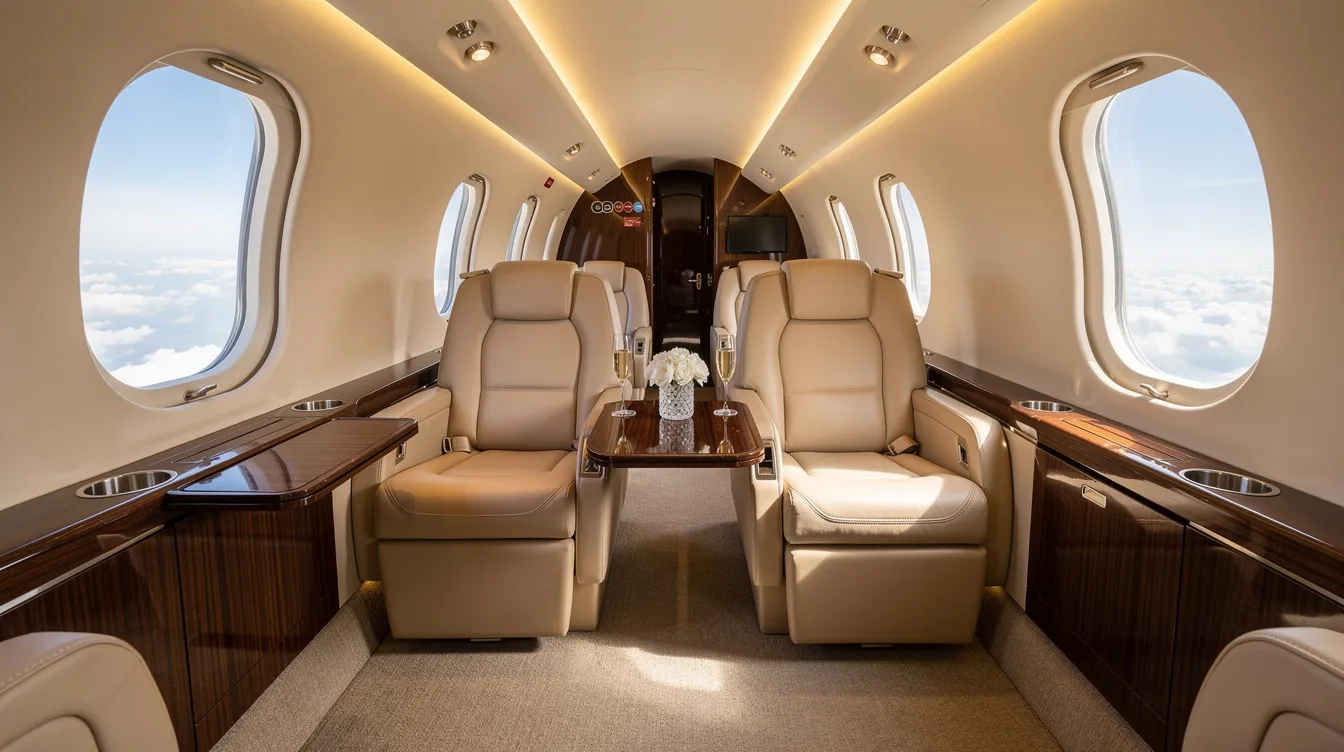
Best Midsize Jets for Fractional Ownership
Midsize jets represent the sweet spot for North American fractional ownership: capable of coast-to-coast missions with 6-8 passengers in comfort. Understanding how fractional jet ownership works can enhance personalized service, luxury amenities, and efficiency for private jet travelers. This arrangement offers significant advantages over commercial flights in terms of customization, time-saving, and flexibility.
Embraer Praetor 600: 6’3” cabin height, 85 cubic feet baggage, 4,018nm range. Ideal for transcontinental and U.S.-Caribbean missions. Outstanding for principals requiring maximum cabin headroom.
Bombardier Challenger 3500: 6’1” cabin height, 106 cubic feet baggage, 3,400nm range with Ka-band WiFi. Suits 8-10 passengers and offers exceptional cabin volume.
Cessna Citation Latitude: 6’0” cabin height, 127 cubic feet baggage, 2,700nm range. Cost-efficient for domestic midsize missions with generous luggage capacity.
Embraer Phenom 300E: Upper-light/small-midsize crossover. 5’1” cabin, 85 cubic feet baggage, 2,010nm range. Strong performer for regional missions with lower operating costs.
NetJets Fleet — Cabin Heights, Baggage, Wi-Fi
Many readers specifically search for NetJets fleet information. Key aircraft across categories:
Citation XLS+: 5’8” cabin height, 74 cubic feet baggage, 1,800nm range. Workhorse light jet for regional missions.
Citation Latitude: 6’0” flat-floor cabin, 127 cubic feet. Popular midsize choice with coast-to-coast capability.
Challenger 3500: Premium midsize with 6’1” cabin, Ka-band connectivity, exceptional passenger experience.
Global 7500: Ultra-long-range flagship. 6’5” cabin height, 195 cubic feet baggage, 7,700nm range for intercontinental missions.
NetJets has invested heavily in fleet renewal, including large Cessna Citation orders in 2023 and 2025, ensuring access to relatively young, well-equipped jets with standardized finishes. Scheduling and aircraft access are coordinated among other owners in the program to ensure availability.
Flexjet Fleet Comparison
Flexjet positions as the second-largest global fractional provider, known for design-forward interiors and Red Label service.
LXi Cabin Collection: Highly customized cabins with residential-style finishes — leather, walnut, bespoke lighting — creating a distinct “my jet” feeling even in a fractional context.
Key aircraft: Praetor 600 (6’3” cabin), Challenger 3500, Gulfstream G650 (6’5” cabin, 7,000nm range). Red Label assigns dedicated crews to specific aircraft, delivering near-family relationships with crew for other fractional owners who prioritize continuity.
Design-conscious families, principals who prioritize cabin ambience, and executives appreciating boutique brands often gravitate toward Flexjet, and many evaluate Flexjet jet card costs alongside its fractional offerings. However, it's important to note that fully owned aircraft tend to retain more value over time compared to fractional shares, making them more desirable for long-term value retention and resale market stability.
PlaneSense: PC-12 vs PC-24 — the Experience Difference
PlaneSense operates a distinct model focused on Pilatus aircraft and regional missions, particularly in the Northeast, Southeast, and Mountain West.
PC-12: Single-engine turboprop, typically 6-8 passengers, 4’10” cabin height, but with a large cargo door and generous baggage. Excellent short-runway performance (2,485ft takeoff) for remote strips. Slower cruise (around 285 knots) but high efficiency and access to airports that jets cannot reach.
PC-24: Twin-engine light jet, “Super Versatile Jet” capable of shorter runways than most jets. 5’11” cabin height with level floor, faster cruise around 440 knots, upgraded comfort, and strong baggage capacity.
Who fits each: PC-12 for cost-efficient access to short fields and leisure homes. PC-24 for those wanting turboprop flexibility with jet speed and a more premium experience. The PlaneSense fractional model offers a cost-effective and flexible alternative to outright ownership, allowing you to share usage rights and expenses without the full commitment and responsibilities of owning an entire aircraft, and it often appears alongside other budget-friendly private aircraft options in value-focused analyses.
Pets on Fractional Jets — Policies by Provider
Pet-friendly private jets matter significantly for many families.
NetJets: Generally pet-friendly with advance notice. Requirements for carriers or restraints based on size. Cleaning surcharges if necessary.
Flexjet: Pet-friendly cabins with guidelines for seating/lying areas. Potential limits on the number or size of animals.
PlaneSense/Airshare: Specific rules for certain aircraft models. PC-12’s cargo door accommodates larger kennels. International flights require additional documentation.
Practical advice: Always disclose pets at booking. Confirm breed or size restrictions. Full aircraft ownership allows for complete control over pet policies, but comes with higher operational responsibilities. Ensure vaccinations and paperwork for international travel.
BlackJet works with pet-friendly operators across its BlackJet Certified network; clients specify requirements via the booking team.
Executive-Level Aircraft Specs Table
Aircraft | Typical Operator | Cabin Height | Baggage Volume (cf) | Max Range (nm) | Wi-Fi | Pet Policy |
|---|
Pilatus PC-12 | PlaneSense | 4’10” | 47 | 1,765 | Yes | Allowed w/conditions |
Pilatus PC-24 | PlaneSense | 5’11” | 90 | 2,000 | Yes | Allowed |
Phenom 300E | NetJets/Airshare | 5’1” | 85 | 2,010 | Yes | Conditions apply |
Citation Latitude | NetJets/Flexjet | 6’0” | 127 | 2,700 | Yes | Allowed |
Praetor 600 | Flexjet | 6’3” | 85 | 4,018 | Yes | Conditions apply |
Challenger 3500 | Flexjet/Airshare | 6’1” | 106 | 3,400 | Ka-band | Allowed |
Gulfstream G650 | Flexjet | 6’5” | 195 | 7,000 | Ka-band | Conditions apply |
Global 7500 | NetJets | 6’5” | 195 | 7,700 | Ka-band | Allowed |
Use this table to evaluate: cabin height for stand-up comfort, baggage space for skis/golf/equipment, Wi-Fi for in-flight work, and pet policy for family travel. While fractional jet ownership offers flexibility and shared costs, full ownership provides complete control over aircraft customization and scheduling, but comes with significantly higher costs and operational responsibilities.
How to Start — Contacting Providers and Working with a Consultant
Once you believe fractional ownership might be worth it, engage providers and consider a neutral fractional jet consultant.
Contacting providers: NetJets, Flexjet, PlaneSense, and Airshare all accept inquiries via website forms, dedicated phone lines, or referrals. Most assign a sales executive quickly.
Request in proposals: Aircraft model options, share sizes, assumed flight patterns, detailed monthly management fee schedule, occupied hourly rates, peak-day rules, and exit/resale assumptions. You should also clarify whether and how fractional owners can sell their shares, including any restrictions, fees, or market considerations that may affect the resale process.
Independent consultants: Family-office advisory firms and aviation consultants can normalize competing proposals, compare assumptions, and surface hidden cost drivers (interchange multipliers, fuel escalators, international fees).
Due diligence: Review safety ratings (ARGUS, Wyvern, IS-BAO), maintenance standards, incident history, crew training, and provider financial health.
Speak with existing fractional owners — ideally not hand-picked references — about real-world peak-day availability and service recovery.
Even if you ultimately choose BlackJet, many of these questions about safety oversight and contractual clarity apply, and they mirror the due diligence frameworks in many guides to the best jet cards for frequent flyers.

Before You Sign: Why Some Discerning Buyers Choose BlackJet Instead
Fractional ownership may be the right answer for some readers. Others discover they primarily want the ownership experience rather than the asset itself.
Before committing to a fractional share, it is worth understanding what the BlackJet card delivers across the same dimensions: BlackJet Certified aircraft (ARGUS Platinum + Wyvern + proprietary vetting), 24/7 client management, 100% carbon-neutral flights at no extra cost, non-expiring hours with no capital at risk, and lifestyle partner benefits unavailable through fractional programmes, especially in the context of a 50 hour jet card comparison. BlackJet allows clients to enjoy private jet travel without the complexities and costs of owning their own aircraft. For buyers whose primary goal is the fractional experience — not the asset — BlackJet is worth a conversation before you sign.
Consistent access: BlackJet’s guaranteed-access expectations mirror fractional programmes without ownership structure.
Equivalent aircraft: Access to multiple aircraft categories without interchange complexity.
Financial structure: No upfront equity, no depreciation calculations, no residual-value exposure.
Brand identity: BlackJet Certified represents a curated standard distinct from any particular aircraft model.
Curated service: 24/7 flight support teams, 95% of bookings confirmed within 4 hours' notice.
BlackJet hours do not expire, avoiding use-it-or-lose-it pressure. There is no capital at risk. Carbon-neutral flights come standard at no additional cost, aligning with ESG goals.
Sophisticated buyers typically review one or two leading fractional proposals and a premium jet card solution like BlackJet side-by-side before making a multi-year commitment.
Frequently Asked Questions
Is fractional jet ownership worth it?
Fractional jet ownership is worth it for buyers flying 75-100+ hours consistently, valuing aircraft and service continuity, and positioned to use depreciation benefits effectively. In contrast, private jet ownership requires significantly higher upfront investment, ongoing operational management, and full responsibility for costs, while fractional ownership spreads these among several owners, reducing commitment and complexity. Others can achieve similar experiential outcomes via jet cards like BlackJet without asset risk or multi-year capital commitments, including more compact 25-hour jet card options for lower utilization.
How many hours per year do you need for fractional to make sense?
Most advisors see fractional becoming plausible around 50 hours and more compelling from 75-100 hours upward. Travel pattern predictability, tax situation, and desire for ownership identity matter equally to raw hour counts. For those flying within this recommended hour range, fractional jet ownership can deliver significant savings compared to full ownership, thanks to lower expenses and operational efficiencies.
What is the best midsize jet for fractional ownership?
Leading candidates include Citation Latitude for domestic efficiency, Praetor 600 for transcontinental range, and Challenger 3500 for maximum cabin volume. The best aircraft depends on your missions: range needs, passenger count, field performance, and cabin preferences. The upfront cost of acquiring a share in these jets varies significantly based on the model and the size of the share you purchase.
Can I take pets on a fractional jet?
Most major fractional providers are pet-friendly with advance notice. Typical restrictions include carrier requirements, size limits, and cleaning fees. Confirm specific policies and international documentation requirements before travel.
How do I contact NetJets sales?
Prospects can reach NetJets sales through their official website inquiry form or dedicated phone lines. Request a detailed proposal tailored to actual travel patterns, then compare with alternatives like BlackJet before committing.
How does BlackJet compare to fractional ownership?
Fractional jet ownership offers equity, depreciation benefits, and brand identity with multi-year commitments and capital at risk. BlackJet delivers a similar premium private aircraft experience — BlackJet Certified operators, guaranteed-access expectations, carbon-neutral flights, non-expiring hours — without ownership complexity or residual-value exposure.
Conclusion
Fractional jet ownership offers a compelling blend of operational consistency, brand prestige, and financial benefits for discerning buyers who value the ownership experience alongside private aviation convenience. It is particularly well-suited for those flying 50 to 200 hours annually with predictable travel patterns, a willingness to commit capital, and a desire for guaranteed aircraft access and deeply curated service relationships.
However, fractional ownership is not universally optimal. Buyers who fly fewer hours, prioritize flexibility over continuity, or seek to avoid capital lockup may find premium jet card programs like BlackJet provide many of the same experiential benefits without the complexities and risks of ownership. BlackJet’s model delivers guaranteed access, curated aircraft quality, carbon-neutral flights, and non-expiring hours without depreciating assets or management overhead.
Ultimately, the decision hinges on what you truly value: the ownership structure itself or the seamless private aviation experience it enables. This guide aims to clarify that distinction, empowering you to allocate capital strategically and select the path that aligns with your lifestyle, operational preferences, and financial goals. Thoughtful evaluation and consultation with aviation specialists will ensure your private aviation solution is both sophisticated and tailored to your unique needs.


 Sign up with google
 Sign up with Apple


