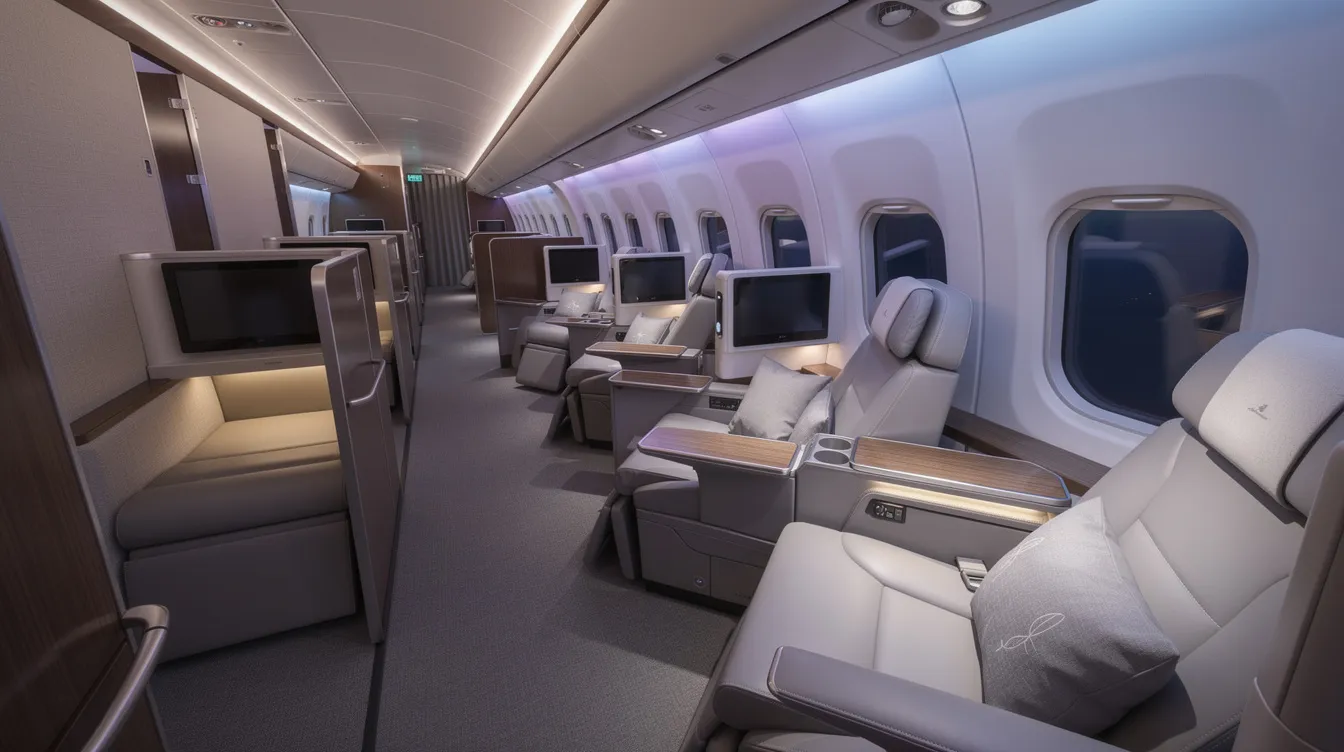
For travelers who routinely sit at the pointy end of the plane, the cost of air travel in the United States has become harder to ignore. The most expensive US airlines now charge nearly double per seat mile compared to their budget counterparts, and peak-season domestic flights can rival the price of a private jet charter. Here's where the money actually goes, and when it stops making sense.
Quick Answer: Which US Airlines Are the Most Expensive in 2025?
When we say "most expensive," we're measuring passenger revenue per available seat mile (PRASM), the standard metric for comparing what airlines earn across every mile of capacity they offer. Based on 2023 full-year data and Department of Transportation statistics, the major airlines that consistently cost the most are legacy carriers with premium cabins, hub airport dominance, and global route networks.
Here's how they rank by estimated PRASM:
Delta Air Lines - ~$0.178 per seat mile (highest among US carriers)
American Airlines - ~$0.172 per seat mile
United Airlines - ~$0.167 per seat mile
Alaska Airlines - ~$0.146 per seat mile
JetBlue - ~$0.131 per seat mile
Hawaiian Airlines - ~$0.12 per seat mile
These figures put them well above the cheapest airlines like Frontier and Spirit, which typically operate at $0.095–$0.11 per seat mile. Delta Air Lines ranks as the best US airline in 2025 across multiple rankings, but that distinction comes with a price tag to match.
Many of these expensive flights aren't even in business class or first class. Peak-season economy seats on resort and holiday routes routinely cost more than flexible fares did a decade ago. For frequent premium-cabin travelers, understanding the broader private jet price list and access models is essential, and a jet card program like BlackJet's 25-hour or 50-hour options or even unlimited private jet flight memberships can be cost-competitive with repeatedly buying last-minute commercial premium tickets.
How US Airfare Got So Expensive: Domestic Flight Pricing Trends and Average Ticket Prices
Average domestic airfare increased from roughly $245 in mid-2020 to $397 by early 2022, a jump exceeding 60% in under two years. The post-pandemic surge was driven by pent-up demand crashing into constrained capacity, and average ticket prices have since stabilized in the mid-$360s as of 2024. The U.S. DOT reported the inflation-adjusted average domestic itinerary fare at about $384 in 2024.
Paradoxically, airfares are 40% lower today than in the early 2000s when adjusted for inflation. But that average obscures what premium and peak-demand travelers actually pay. On high-demand routes and dates, economy average prices now rival what business class cost historically.
Key Factors Behind Rising Costs
Fuel Volatility
Constrained Capacity
Consolidation
Ancillary Fees
Bags, seat selection, and change fees are a significant revenue source, layered on top of rising base fares.
For executive travelers who consistently pay for flexible or premium tickets, the pricing strategies of airlines—which adjust based on demand and customer booking patterns—erode the assumption that commercial is always cheaper than structured private jet access, especially when even the cheapest personal plane options can be paired with on-demand jet services for longer missions.
Most Expensive US Airlines by Cost per Mile
PRASM (passenger revenue per available seat mile) is the clearest proxy for how expensive an airline is overall. It captures not just what one passenger pays, but the average revenue the carrier extracts across every seat on every route.
Here's the 2023 cost-per-mile breakdown for the most expensive US airlines:
Airline | PRASM (per seat mile) | Key Premium Product |
|---|
Delta Air Lines | ~$0.178 | Delta One suites |
American Airlines | ~$0.172 | Flagship First & Business |
United Airlines | ~$0.167 | Polaris business class |
Alaska Airlines | ~$0.146 | Premium Class / First |
JetBlue | ~$0.131 | Mint suites (select routes) |
Hawaiian Airlines | ~$0.12 | Extra Comfort / First |
Delta Airlines has the highest revenue per seat mile at $0.178. American Airlines ranks as the second most expensive at $0.172 per seat mile. United Airlines has a revenue per seat mile of $0.167.
Legacy carriers dominate these rankings because they operate broader networks with more hub airport infrastructure, maintain higher staffing and lounge costs, and offer lie-flat seating in business class and first class on long-haul flights. Airlines increasingly expand premium seating to boost profitability and ticket prices—a trend that shows no sign of reversing, and one that has helped fuel the growth of top private jet charter companies in the USA as alternatives for premium travelers.
Compared to ultra-low-cost carriers, the gap is dramatic. Airlines utilize sophisticated algorithms for revenue management to set fares dynamically, and high demand for business and premium class travel supports elevated ticket prices across the board.
Most Expensive Domestic Routes: Where Commercial Prices Hit Private-Level Costs
Certain domestic flights in the U.S. are disproportionately expensive due to monopoly routes, resort demand, and severely limited capacity at small-city airports. On these routes, one-way fares in economy can approach what a light jet charter or even a 12-seater private jet charter costs.
Peak-Season Route Examples
Based on 2023–2024 BTS data and third-party analysis, the most expensive domestic routes include:
Aspen (ASE) to West Palm Beach (PBI): Aspen to West Palm Beach is the most expensive flight at $770 one-way during peak ski season, up roughly 25% year-over-year.
New York (JFK) or Denver to Jackson Hole (JAC): Winter resort demand pushes fares into the $600–$750 range each way.
Los Angeles or San Francisco to Nantucket (ACK): Seasonal summer flights where scarcity meets wealth, with fares well above $500 one-way.
Resort corridors to Sun Valley and other mountain destinations across the country see similar seasonal spikes.
For context, flights under 1,000 miles typically cost around $200 or less each way, while long-distance flights over 2,000 miles average around $346. A $770 fare over roughly 1,300 miles translates to nearly $0.60 per mile—approaching what many travelers pay for first class on longer routes.
A family flying peak-season Aspen to West Palm Beach in first class can easily spend $3,000–$5,000 round-trip, a budget that in some cases rivals the cost of chartering private jets for 15 passengers or similarly sized aircraft. On the same day, a one-way light jet charter on the same route—with no security lines, no connections, and departure from a private terminal—can cost a comparable amount, especially when booked through a prepaid jet card.
Most Expensive US Airlines for Business Class and First Class
Beyond economy, the premium cabins on the most expensive US airlines carry price tags that put them squarely in private aviation territory for frequent flyers.
Premium Cabin Offerings
Here's what the major airlines offer at the top of the cabin:
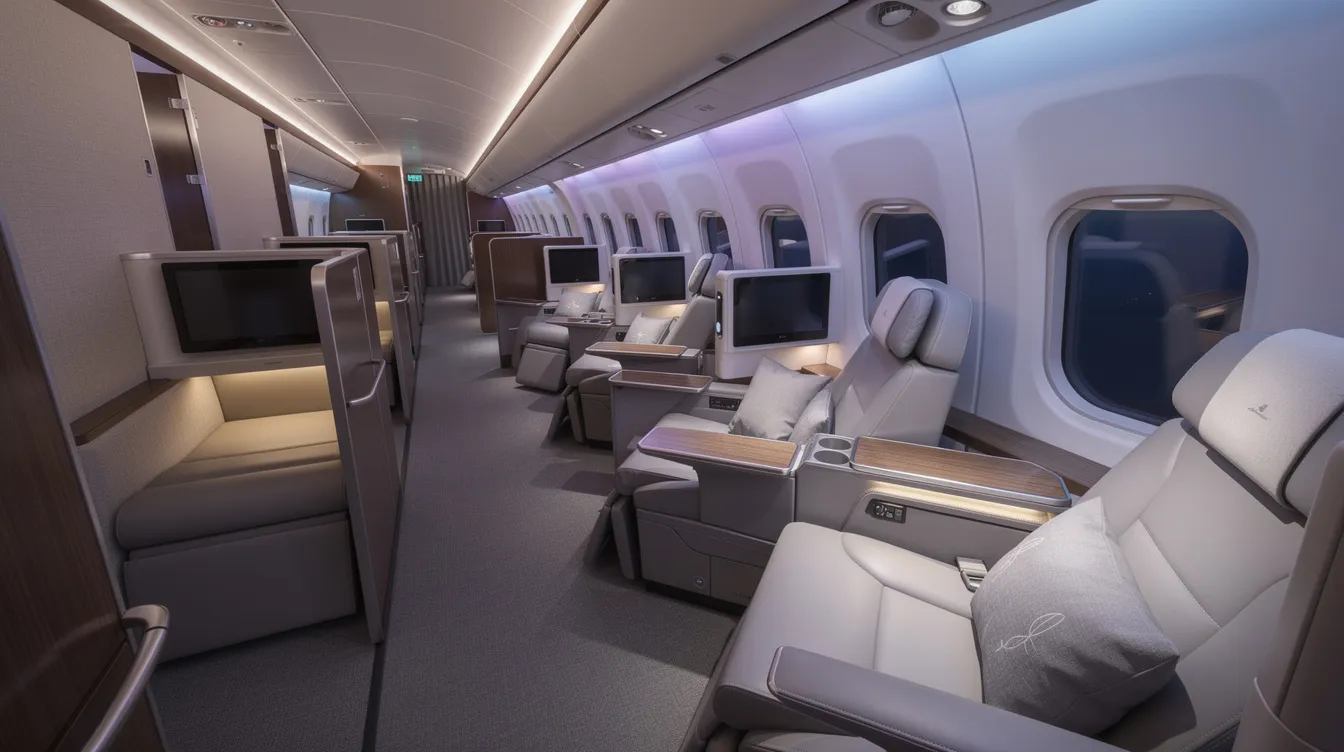
Delta: Delta offers Delta One suites with full-height walls on A350 and A330-900 aircraft, available on key transcontinental and international routes. Delta operates four Delta One Lounges in major U.S. airports, and Delta's lounges include full-service dining and wellness areas. The onboard service earns high marks in industry surveys.
United Airlines: Polaris business class features 1-2-1 pods on widebodies with lie-flat seating on premium domestic transcon routes. United's Polaris lounges are rated five stars by Skytrax, a distinction no other airline lounge in the country holds.
American Airlines: American Airlines offers both Flagship First Class and Business Class on select international and transcon flights such as JFK–LAX and JFK–SFO. American Airlines has Flagship First Class with fewer than eight seats, creating genuine exclusivity. Airlines that invest in premium services often charge higher fares for these added amenities.
Typical Costs for These Premium Cabins
Long-haul international round-trip in business or first class: $5,000–$9,000+
Premium domestic transcon round-trip: $1,500–$3,000 during peak periods
Last-minute New York to California one-way in a premium cabin: $1,800–$2,500
Carriers like Alaska Airlines and JetBlue offer premium but often non-lie-flat domestic first class (except JetBlue Mint on specific routes), making them somewhat cheaper but still significantly above economy, particularly when compared with some types of smaller private jets that can offer lie-flat comfort on equivalent routes.
For a traveler who books 15–20 premium round-trips per year, the annual commercial spend can reach $75,000–$150,000—similar to the carry costs on certain private jets for under 10 million when spread over regular use. For these frequent flyers, comparing the best jet cards for regular private travelers becomes critical. At that threshold, a 50-hour BlackJet Jet Card delivers comparable or better service with schedule control that no other airline can match.
Why Are Some Airlines More Expensive Than the Cheapest Airlines and Budget Airlines?
The spread between full-service legacy carriers and budget airlines comes down to fundamentally different business models. People who love southwest for its no-frills approach or fly Frontier for bare-minimum fares are buying a different product entirely than someone booking domestic Delta flights in first class.
Key drivers of the cost gap—and reasons some travelers upgrade to larger cabins after understanding private jet sizes and categories—include:
Network reach: American Airlines serves 365 destinations across 60 countries, and United Airlines has a route network covering over 350 cities, including international destinations across Latin America, Europe, and Asia. Budget carriers typically operate point-to-point domestic flights between a handful of cities.
Product: Premium cabins, airport lounges, and more generous baggage policies on higher fares all cost money to deliver.
Labor: Labor expenses are a major operational cost for airlines, and legacy carriers employ large, unionized workforces at every hub airport.
Hub dominance: Hub dominance allows airlines to maintain higher base fares due to reduced competition on captive routes.
Revenue management: Ancillary fees are a significant revenue source for airlines in addition to ticket sales. Competition levels on specific routes also affect airline pricing strategies, with monopoly routes commanding the steepest premiums.
Loyalty programs: Co-branded credit cards and mileage programs incentivize customers to pay more, creating a self-reinforcing cycle.
A simple example makes this concrete: a last-minute New York to Los Angeles business class seat on a legacy carrier might run $2,500 one-way, while a basic economy seat on a budget carrier booked months ahead might cost $180—a spread that can also be compared to the hourly economics of long-range private jets for sale when flown efficiently. The spread can exceed $2,000 on the same route, same day.
For travelers consistently choosing flexible, premium tickets, the next logical step isn't finding a deal on a cheaper carrier. It's evaluating whether structured private jet access from a provider like BlackJet’s premium private jet card programs delivers better value for the money already being spent.
Commercial First Class vs Private Jet: Where the Value Shifts
First class on the most expensive US airlines offers genuine comfort. What it doesn't offer is control—over your schedule, your security, or who sits in the seat next to you. Understanding how much it costs to rent a private jet or even what a 12-seater private jet typically runs reveals how private aviation inverts this value proposition entirely.
Here's how a typical trip compares:
Time: Arriving 20–30 minutes before departure at a private terminal versus 90–120 minutes at a major airport saves 2–4 hours door-to-door on every trip. Flying higher and on more direct routings than the airlines, as outlined in How High Private Jets Fly Compared to Commercial Flights, amplifies those time savings. Delta had 829 customer complaints in the first half of 2025 alone, a reminder that even the best commercial experience carries friction.
Flexibility: Private departures adjust when meetings run long or plans change. Commercial schedules are fixed, and last-minute changes carry steep penalties.
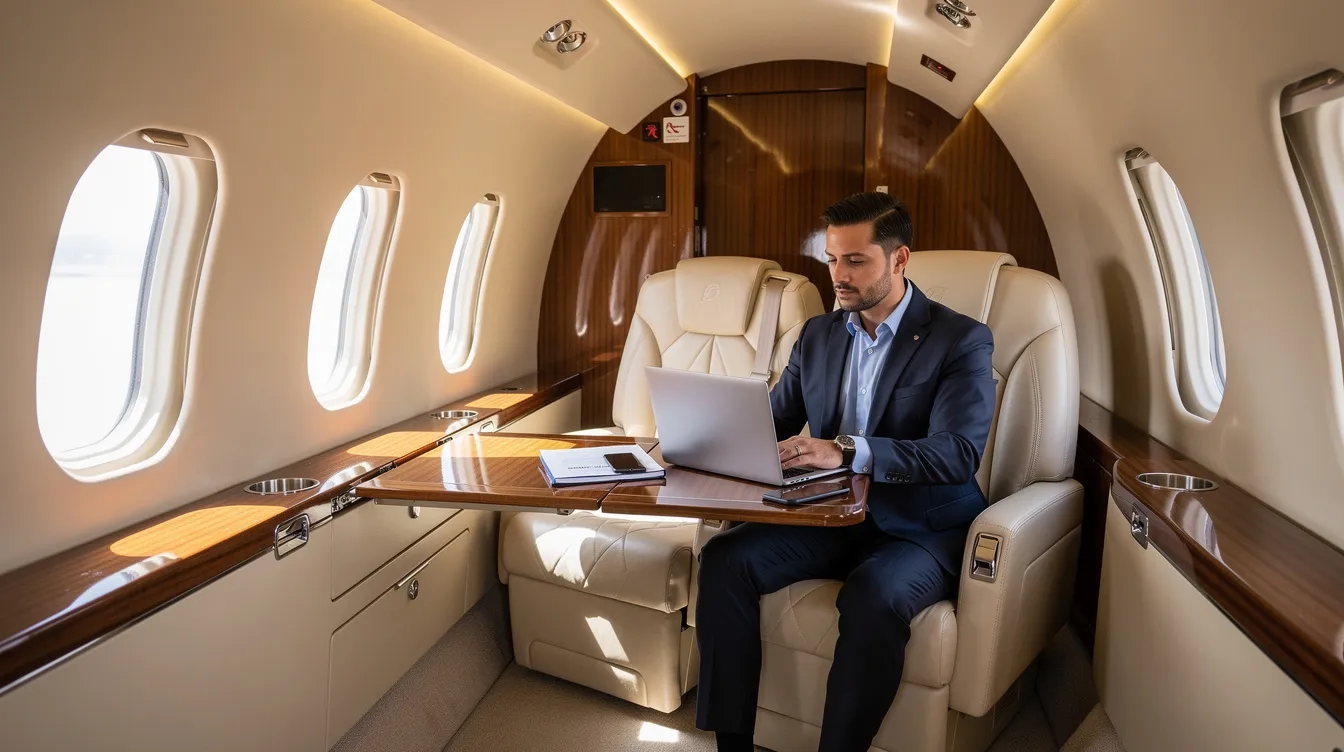
Privacy: The entire aircraft is yours. Frequent business and leisure travelers value privacy and luxury that no shared cabin can replicate—critical for deal-making or traveling with family, even when simply buying a seat on a private jet rather than chartering the whole aircraft outright.
Route access: Fly directly into smaller airports closer to your final destination. White Plains instead of JFK. Van Nuys instead of LAX. Directly into Aspen instead of connecting through Denver—especially helpful when you’re moving a larger group on a 16-seat private jet or similar large-cabin aircraft.
Consider a New York executive traveling domestically to a board meeting in Aspen. Commercial first class requires a connection, potentially an overnight, and ground transportation from a distant airport. A BlackJet 25-hour Jet Card holder flies direct, departs on their schedule, and arrives rested. Real-time flight support enhances the customer experience throughout, particularly on long missions where some travelers might otherwise consider the largest private jets for sale or charter.
For travelers regularly buying premium cabins, private aviation stops being a pure luxury upgrade. It becomes a strategic tool for productivity and security.
How BlackJet Jet Cards Compete with the Most Expensive Airlines
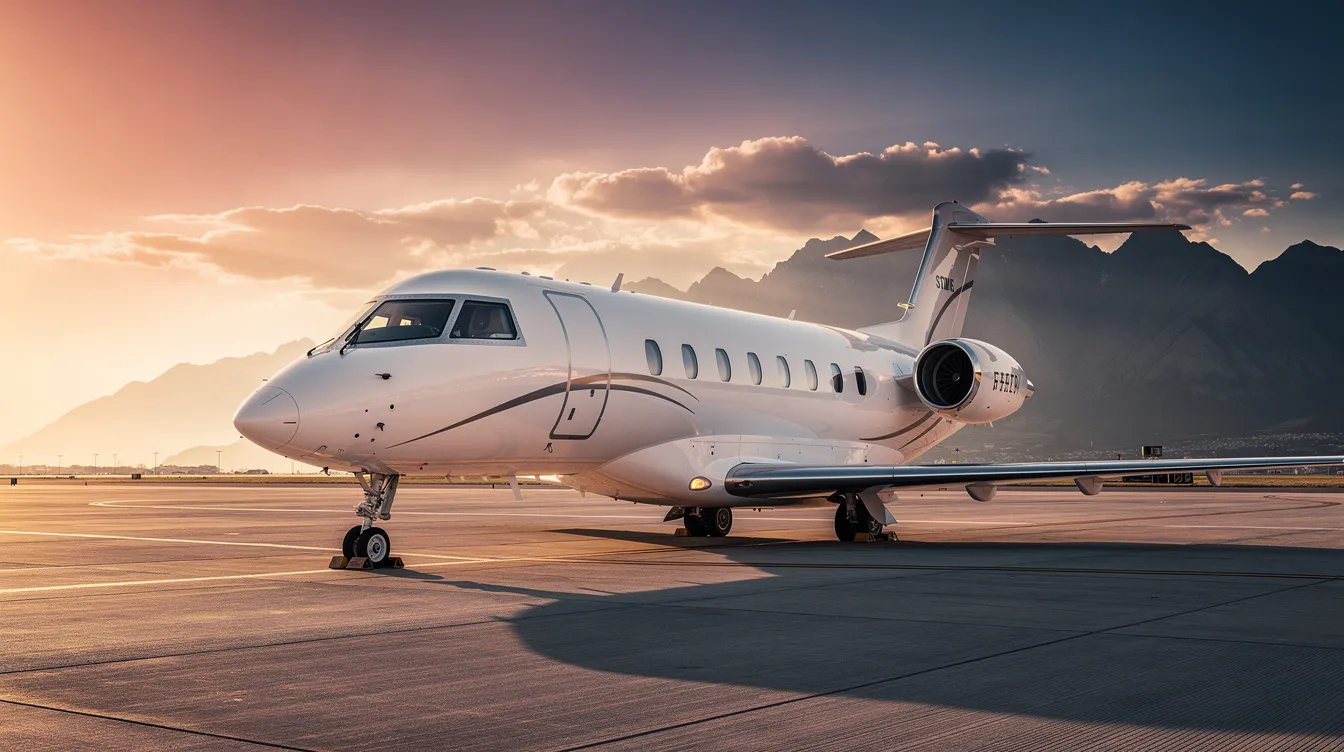
BlackJet is a private aviation company offering Jet Card programs that provide prepaid access to multiple aircraft categories—light, midsize, super-midsize, and large cabin—without the overhead of owning a plane.
Here's how Jet Cards stack up against repeatedly paying top commercial fares, particularly in programs like the BlackJet 25+ Hour Jet Card:
Fixed hourly rates by cabin class, so clients know their effective cost per flight before booking. No surge pricing, no last-minute fare spikes.
24/7 digital booking and real-time flight support for rapid schedule changes and short-notice departures.
Safety: BlackJet-certified operators undergo rigorous third-party audits (ARG/US, Wyvern) with strict crew qualification and maintenance standards.
Sustainability: Every BlackJet flight is carbon neutral via verified offsets and, where available, Sustainable Aviation Fuel participation. Carbon offset initiatives are becoming important in the private aviation industry, and BlackJet builds this into every trip at no extra cost.
No ownership burden: No crew salaries, no hangar fees, no depreciation. Jet card programs offer prepaid access to private jets, enhancing flexibility for travelers without capital risk, and can pair well with the cheapest private aircraft options or other affordable planes for every budget for those exploring more budget-conscious private flying.
A practical example: a corporate travel manager who spent $140,000 annually on last-minute business class and first class tickets with Delta or American—covering 18 premium round-trips—transitioned to a 50-hour BlackJet Jet Card. The result: comparable annual spend, dramatically better schedule control, and zero hours lost to airport queues.
BlackJet isn't a budget alternative to commercial air travel. It's a premium, predictable replacement for those already paying the highest commercial fares, while still aligning with many of the strategies outlined for flying private more cheaply and in guides to cheap light aircraft for budget flying.
When Paying for the Most Expensive US Airlines Still Makes Sense
Legacy carriers remain the right choice in several scenarios, even for the most discerning travelers:
Ultra-long-haul routes to destinations across Asia or Africa where private jet range limitations, fuel stops, and crew rest requirements make commercial flights more practical. These expected itineraries are simply better served by widebody aircraft.
Occasional leisure trips where only one or two premium tickets are needed per year—perhaps a vacation to Hawaii or a flight to explore world destinations—make a full Jet Card less compelling, though entry-level private jet options can still make sense for special occasions.
Corporate travel policies that mandate scheduled airlines for compliance, duty-of-care, or cost-control reasons across the company, even when large private jets for 20 passengers might better suit executive team movements.
Elite status benefits included mileage accrual, upgrades, companion tickets, and co-branded credit card perks that meaningfully offset higher fares. Many customers account for these benefits when choosing to fly commercially.
The smartest approach is often a hybrid strategy: use commercial business class or first class for high-density, long-haul routes, and rely on BlackJet Jet Cards for regional, multi-city, or time-sensitive itineraries. Heavy users may ultimately evaluate a 100-hour jet card cost comparison as their flying increases, especially when their spend begins to rival that of the most expensive private jet options on a per-hour basis. The right mix depends on how often you fly, your cabin preference, and the implicit cost of your time.
How to Decide: Expensive Airline Ticket vs Private Jet with BlackJet
For travelers regularly choosing among premium commercial options and private aviation, the decision often comes down to frequency, route type, and how much you value control.
A simple decision framework:
If you fly domestically 10+ times per year in business class or first class—especially on short-haul, time-sensitive routes—evaluate a 25-hour Jet Card and compare it with competitors by reviewing Flexjet jet card pricing and options and other top private jet companies.
If your travel involves regional airports or resort towns like Aspen, Jackson Hole, Nantucket, or Sun Valley, or requires multiple stops in a single day, private jets offer outsized time savings compared to commercial.
If you primarily take one or two long-haul vacations in premium cabins each year, commercial first class on United, Delta, or American may remain more efficient.
Factor in intangibles: Privacy for deal-making. Security for prominent individuals. The value of arriving rested versus stressed after navigating a crowded hub. These don't show up in a fare analysis but matter enormously.
The rest is simple math against your current annual spend. Explore BlackJet Jet Card options or speak with our team to benchmark your commercial spend against private jet access—no obligation, just clarity.
FAQ: Expensive US Airlines, Premium Cabins, and Private Jet Alternatives
Which US airline is the most expensive overall? Based on 2023 data, Delta Air Lines leads with the highest PRASM at ~$0.178 per seat mile. American Airlines follows at ~$0.172, and United Airlines at ~$0.167. For specific routes, any of the three can be the priciest depending on cabin class and demand. As the New York Times and other outlets have noted, these carriers consistently top the price rankings for domestic and international service, which is why many travelers also research competitors like NetJets jet card pricing and even the top private jets in the world when comparing premium options.
Are budget airlines always cheaper than legacy carriers? Not always. While base fares on budget airlines are typically lower, add-on fees for bags, seat selection, and changes can erode savings significantly. On high-demand routes, economy fares on legacy carriers booked early can actually be cheaper than last-minute budget airline tickets with all fees included.
Is first class worth it on domestic flights? Domestic first class offers better seats, priority boarding, and improved onboard service, but limited time savings versus economy on the same plane. For short trips, the premium often buys comfort rather than productivity. Exploring small private jet options and configurations like private jets for 15 passengers shows how private aviation closes that gap by eliminating airport time entirely.
When does a jet card make more sense than business class? When your annual spend on premium commercial tickets exceeds $50,000–$75,000, or when you frequently need last-minute flexibility on time-sensitive routes. Understanding overall private jet rental costs and the economics of long-range private jets helps frame that decision. At that threshold, BlackJet's Jet Card programs deliver comparable cost with dramatically better control.
How safe is private jet travel compared to major US airlines? Commercial airlines in the U.S. maintain exceptional safety records. Well-run private aviation programs approach similar standards through rigorous operator vetting, third-party audits by organizations like ARG/US and Wyvern, and strict maintenance protocols, as detailed in this guide on private jet safety and risk realities and broader overviews of types of private jets. BlackJet's safety certification process ensures every operator meets or exceeds industry benchmarks.
Can private jets be carbon neutral? Yes. BlackJet ensures every flight is carbon neutral through verified carbon offsets and participates in Sustainable Aviation Fuel programs where available. While per-seat emissions on a private aircraft remain higher than on a full commercial plane, offset programs and SAF adoption are narrowing that gap meaningfully, and emerging models like private plane rideshare options further improve efficiency by filling more seats per flight, especially on larger aircraft such as 30-passenger private jets and 50-passenger private jets.
Conclusion
The most expensive US airlines reflect a blend of extensive networks, premium services, and strategic pricing that caters to travelers seeking comfort and convenience. However, for frequent flyers and executives, the high cosfirst- commercial first and business-class tickets often approaches or exceeds private jet charter rates—and in some cases rivals the annualized cost of owning assets like 10 million dollar private jets, 15 million dollar private jets, or even 20 million dollar private jets, as well as more accessible private jets under 10 million. BlackJet’s Jet Card programs offer a compelling alternative by delivering unmatched flexibility, safety, and carbon-neutral luxury without the unpredictability of commercial fares. Whether navigating the busy hubs of Florida or jetting between resort destinations, discerning travelers can elevate their experience by choosing private aviation as a strategic advantage rather than a mere indulgence. Explore BlackJet’s premium jet access to redefine how you travel with confidence, control, and style.


 Sign up with google
 Sign up with Apple