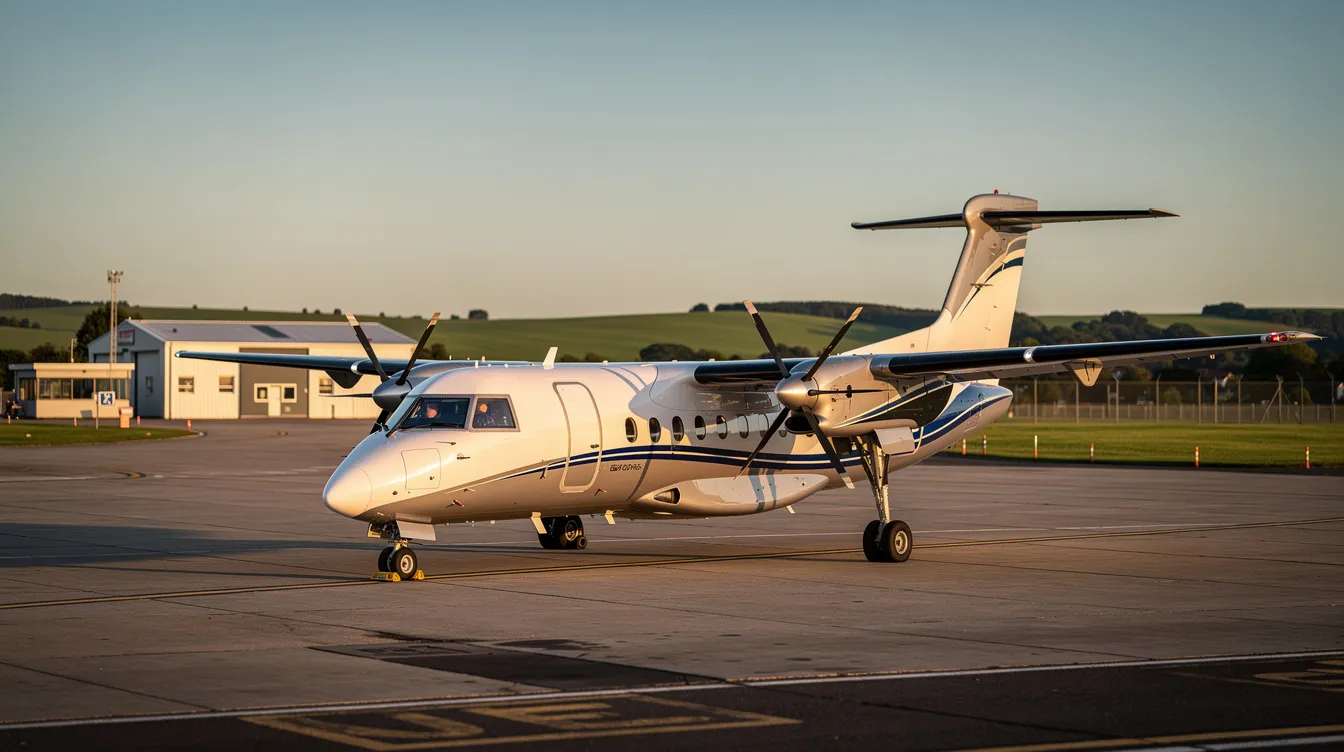
Consider two versions of the same Tuesday. In one, you wake at 4:30 a.m. to clear security at a congested hub, endure a connection, and arrive at your meeting city by early afternoon. In the other, you drive fifteen minutes to a regional airport, board a light jet at 7:45 a.m., and sit down with your client by 10:00 a.m. - same city, half the day reclaimed. Small airplane flights offer time efficiency and personalized service that commercial flights simply cannot match. Travelers can arrive just 15–20 minutes before departure, and small planes allow passengers to skip long security lines entirely.
When we say "small airplane flights" in this article, we are not talking about weekend hobby pilots circling a grass strip. We mean private aviation on turboprops, very light jets, and light jets - the professionally crewed, Part 135–certified aircraft that business travelers and discerning leisure travelers use to move between cities on their own schedule. These aircraft access over 5,000 public-use airports across the United States, compared with roughly 500 served by scheduled commercial airlines.
Picture this: a managing director based in New York needs a same-day round trip to a regional city like Nashville or Richmond. On a commercial airline, that trip likely requires an overnight stay, a predawn departure, and a late return. On a small private aircraft, she departs Teterboro at 8:00 a.m., lands at a quiet fixed-base operator near downtown Nashville by 10:30 a.m., finishes her meetings, and is home before her kids go to bed.
At BlackJet, we build our Jet Card memberships around exactly this kind of mission - providing access to modern small and midsize aircraft without the burden of aircraft ownership. Members pre-purchase 25 or 50 hours at fixed hourly rates and fly when they need to, across multiple cabin classes. The sections ahead will answer the practical questions first - how much, how far, and which aircraft - before going deeper into cost models, safety standards, and sustainability.
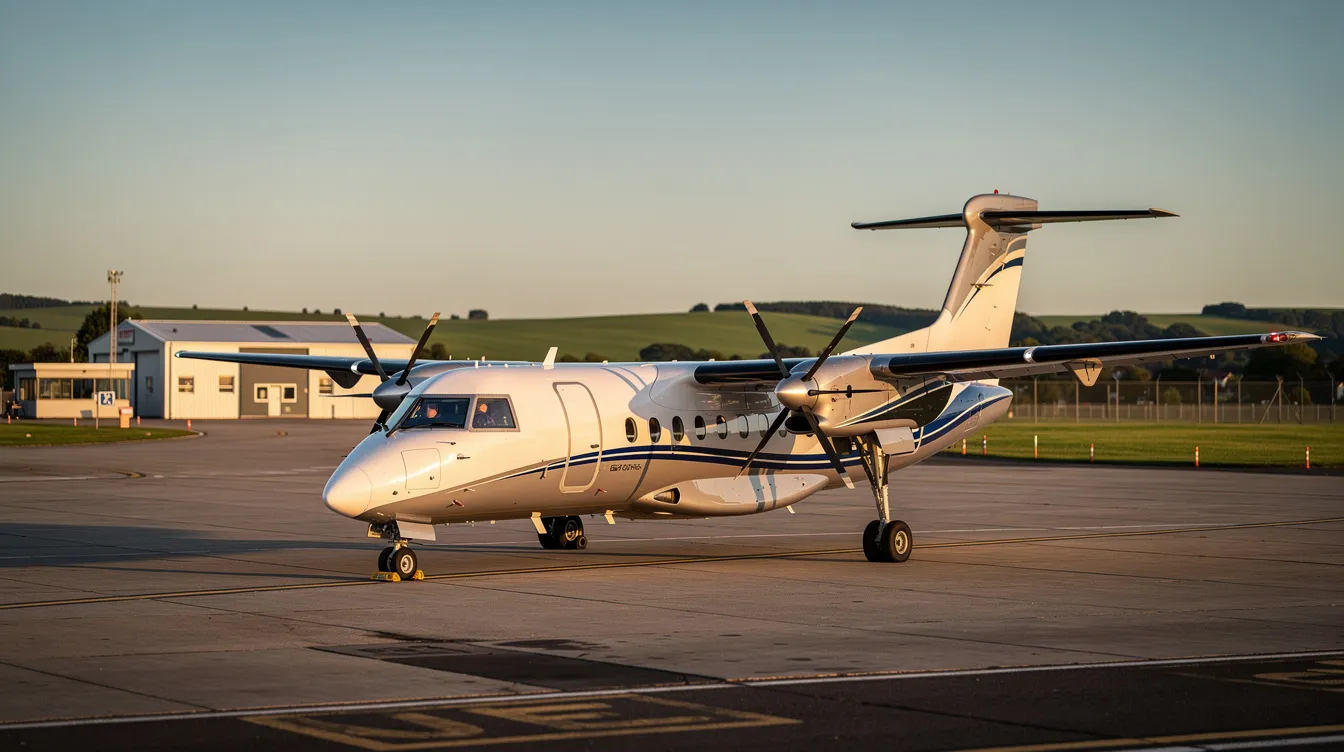
Small Airplane Flights vs. Commercial Flights: Time, Access, and Experience
The real advantage of small airplane flights is not the leather seat or the champagne - it is the math. When you add up door-to-door travel time, private charter flights on small aircraft routinely cut two to four hours off a regional trip.
Here is how the comparison breaks down on actual routes:
New York to Boston (~190 nm): A light jet or turboprop covers this in 35–50 minutes of flight time. Add 15 minutes at the private terminal and perhaps 20 minutes of ground transit from Teterboro. Total door-to-door: roughly 90 minutes. On a commercial airline - even a shuttle like Delta Air Lines - factor in 60–90 minutes of preflight dwell time at LaGuardia or JFK, the flight itself, and a taxi from Logan. Total: closer to four hours.
Los Angeles to Las Vegas (~236 nm): Los Angeles to Las Vegas flights access smaller airports like Henderson Executive or North Las Vegas, putting you minutes from the Strip. From Van Nuys rather than LAX, you skip the crush of congested airports entirely. Flight time: about 40 minutes in a very light jet. Small aircraft can access smaller and more convenient airports that commercial carriers never touch.
New York to Miami (~1,090 nm): New York to Miami flights take about 2 hours in a light jet. Direct flights from Teterboro to Opa-locka or Fort Lauderdale Executive save another hour of ground time on each end versus flying into MIA or FLL on a commercial carrier.
Small planes avoid large airport congestion, and that single advantage compounds across every trip. Using smaller airports like Teterboro instead of JFK in New York, or Van Nuys instead of LAX in Los Angeles, can cut ground transportation time by 30–60 minutes each way. Passengers can avoid long security lines at private terminals, and travelers can choose departure times based on personal preferences rather than airline schedules.
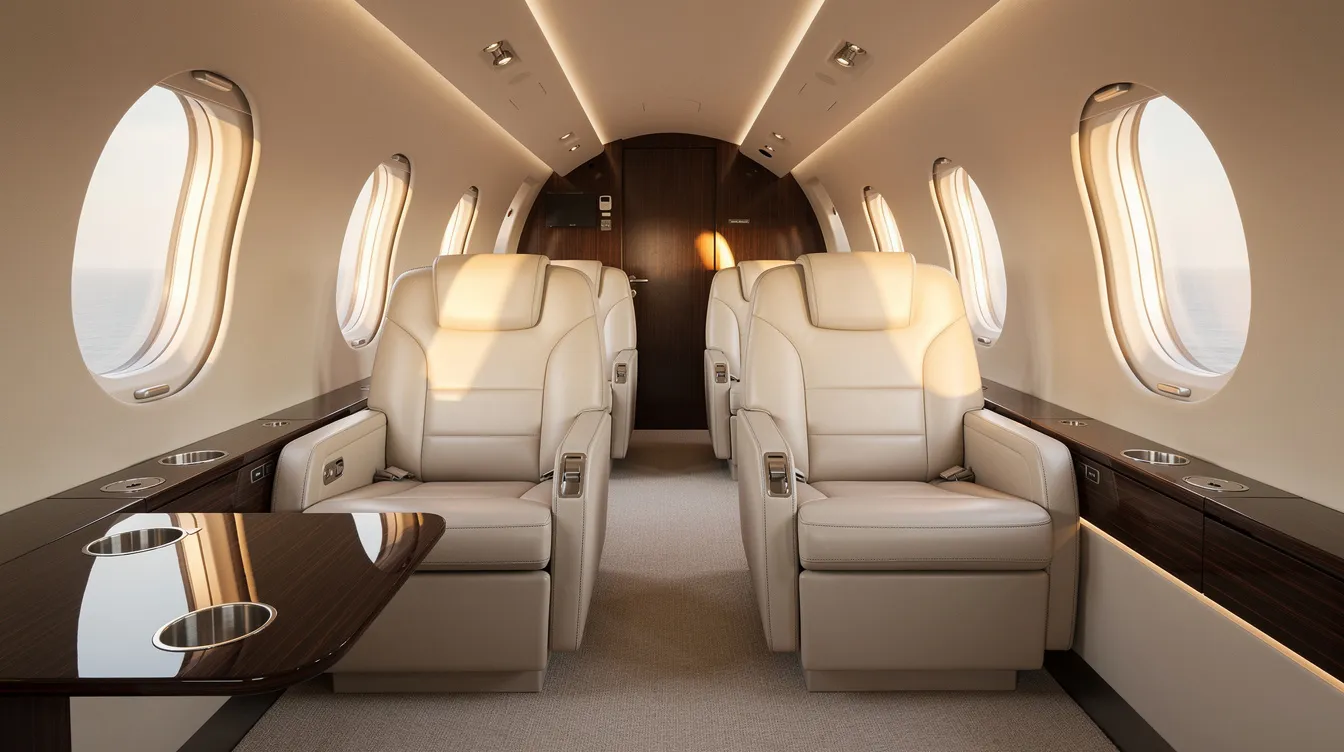
The cabin experience is a different world. On a small private jet, you step into a quiet cabin with no overhead-bin wars, no middle seats, and no announcements interrupting your call. Catering is tailored to your preferences, and your colleagues can speak freely about the deal you are flying to close. Small planes reduce travel time on regional routes, and small jets serve routes not well-served by major airlines - think Aspen, Nantucket, Jackson Hole, or Hilton Head.
When does this become cost-competitive with commercial travel? For a solo traveler, rarely. But for four to eight executives sharing a light jet on a route like New York to Chicago, the per-person cost of a two-hour private charter can rival or beat four business-class fares - especially once you factor in the avoided hotel night and the productive hours regained.
BlackJet Jet Cards sit in the middle ground between buying a jet and scrambling for an ad-hoc charter. Members enjoy the same speed and convenience of private flights, but with prepaid hours and predictable pricing - no surprises when the invoice arrives. Our premium private jet card programs combine flexibility, safety, and carbon-conscious operations for frequent travelers.
Small Airplane Flight Comparison Table
Route | Aircraft Type | Flight Distance (nm) | Flight Time (minutes) | Total Door-to-Door Time (Private Jet) | Total Door-to-Door Time (Commercial) | Key Advantages of Small Airplane Flights |
|---|
New York to Boston | Light Jet / Turboprop | ~190 | 35–50 | ~90 minutes | ~4 hours | Faster boarding, smaller airports, and less ground transit |
Los Angeles to Las Vegas | Very Light Jet | ~236 | ~40 | ~90 minutes | ~3.5 hours | Access to smaller airports near the destination, with less congestion |
New York to Miami | Light Jet | ~1,090 | ~120 | ~3.5 hours | ~5 hours | Direct flights to convenient airports, reduced ground time |
Types of Small Aircraft Used in Private Aviation
Not all small aircraft are created equal. The category you fly determines your cruise speed, range, cabin space, passenger count, and cost per flight hour. Here is a concise breakdown of the four primary categories, with real aircraft examples and the aircraft features that matter most.
Piston Aircraft (e.g., Cessna 172, Piper PA-28)
Single-engine planes like the Cessna 172 and Piper PA-28 are the workhorses of flight training and personal recreation. Piston-powered aircraft are used for shorter regional flights - weekend trips, aerial tours, and building hours toward advanced ratings. They typically cruise at 110–140 knots, carry two to four passengers, and lack pressurized cabins. Small aircraft typically lack onboard lavatories and flight attendants at this level. These aircraft are almost never used for Part 135 charter in the corporate or high-net-worth travel market.
Turboprops (e.g., Pilatus PC-12, King Air 200/250)
Turboprops occupy a sweet spot for short regional trips and efficient short-haul travel. The Pilatus PC-12 carries up to nine passengers, cruises around 260–285 knots, and reaches a service ceiling near 30,000 feet. The King Air 250 seats six to nine and cruises at roughly 280–310 knots. Turboprops are efficient for regional flights under 1,500 kilometers and are a common private jet charter option for travelers who want premium regional service, excelling on missions of 200–800 nautical miles, particularly into shorter runways that jets cannot use. Semi-private flights often use smaller aircraft like turboprops for their combination of economy and capability.
Very Light Jets / VLJs (e.g., HondaJet, Citation M2)
Very Light Jets (VLJs) are designed for short-range personal travel and serve as an accessible entry point into private jet travel. Very light jets seat 3–4 passengers, cruise faster than turboprops (around 350–420 knots), and handle missions from 300 to 800 nautical miles efficiently. They offer pressurized cabins and jet-level climb performance at lower operating costs than larger jets.
Light Jets (e.g., Citation CJ3+, Phenom 300, Learjet 45)
Light jets can accommodate 4–6 passengers in a spacious cabin and are among the best small private aircraft for regional and medium-range routes. The Phenom 300 cruises at roughly 450 knots with a range of 2,000 nautical miles under optimal conditions. The Citation CJ3+ delivers about 1,800 nautical miles of range. These are popular for short-haul flights and regional routes alike - routes such as New York to Miami, Los Angeles to Seattle, or Dallas to Denver.
For reference, midsize jets typically seat 7–9 passengers and bridge the gap between light jets and large cabin jets, while small aircraft typically accommodate 4–8 passengers across the categories above.
BlackJet Jet Card members typically fly on modern turboprops, VLJs, and light jets for regional travel. When routes or group sizes demand more, members can step up to midsize and super midsize jets within the same program - selecting the right aircraft for each mission rather than being locked into a single aircraft type. Travelers who understand private jet sizes and categories can better match aircraft type to comfort, range, and budget.
How Far Can Small Airplanes Fly? Flight Distance and Mission Profiles
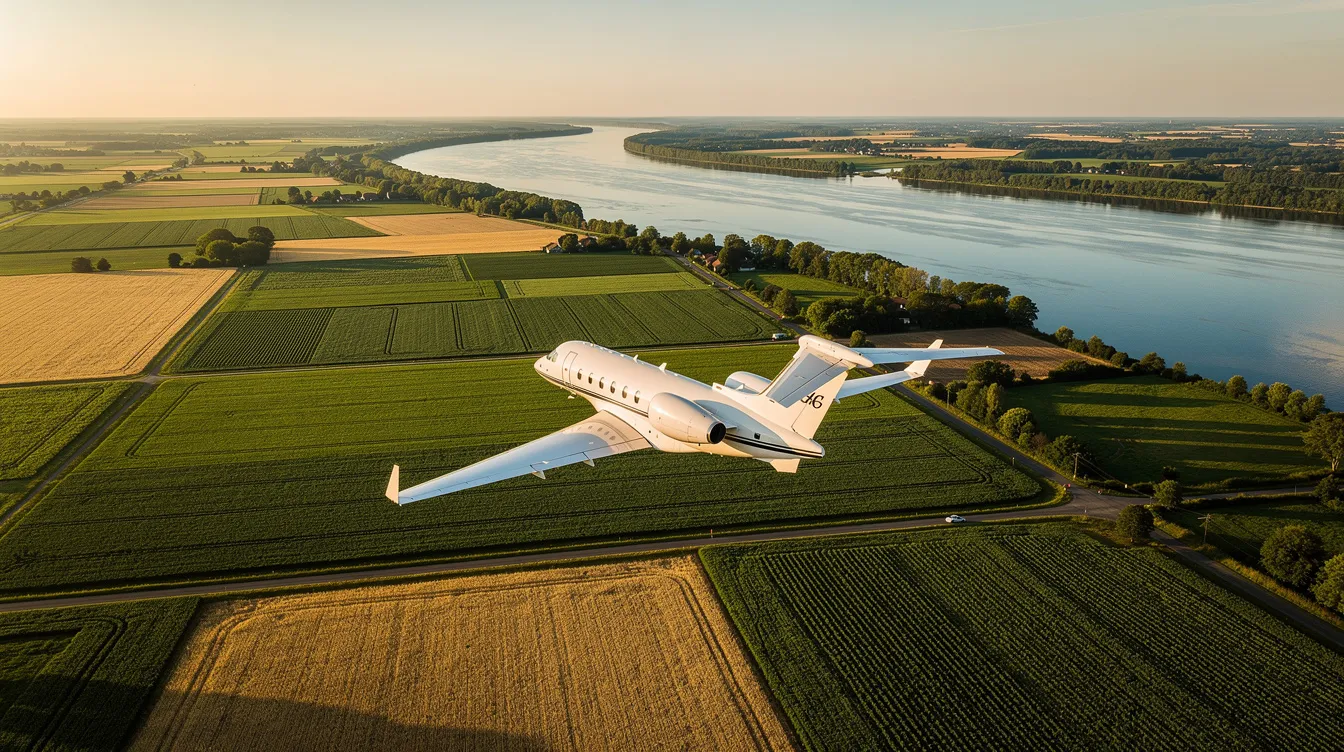
Flight distance in small aviation depends on more than the published maximum range in a brochure. Passenger count, baggage weight, headwinds, and mandatory fuel reserves all reduce the practical distance an aircraft can cover on a single leg.
Here are realistic ranges under standard conditions:
Pilatus PC-12: approximately 1,500 nautical miles with a typical passenger load
Embraer Phenom 300: about 1,900–2,000 nautical miles with favorable winds and moderate payload
Cessna Citation CJ3+: roughly 1,800 nautical miles under standard fuel reserves
To put those numbers on a map, consider these route examples:
Short-haul (under 400 nm): Los Angeles to Las Vegas (236 nm), New York to Boston (190 nm), Miami to Nassau (185 nm). Turboprops and VLJs handle these effortlessly. Small jets are efficient for regional trips under 1,500 miles, and these short hops are where the time savings over commercial airlines are most dramatic.
Medium regional (400–1,000 nm): New York to Nashville (650 nm), Los Angeles to Denver (850 nm), Chicago to Dallas (800 nm). Light jets excel here with nonstop capability and cruise speeds above 400 knots. Popular routes include New York to Miami and Los Angeles to Aspen, both falling within this band.
Longer small-jet segments (1,000–2,000 nm): New York to Miami (1,090 nm), New York to Denver (1,620 nm), Los Angeles to Honolulu (with limitations). A Phenom 300 can reach these distances nonstop in many conditions, though small planes often require intermediate fuel stops for long flights at the upper end of their range, especially into headwinds.
For international travel beyond the reach of light jets - think New York to London, where London to Paris flights offer enhanced privacy and flexibility on private aircraft - travelers step up to larger aircraft. Heavy jets are designed for long-haul international journeys and carry the fuel and cabin amenities for transcontinental routes. Within a BlackJet program, this scaling is seamless: the same membership covers a turboprop to Nantucket and a heavy jet to London.
Jet Card models make flight distance planning simple. Instead of wrestling with per-mile formulas, repositioning estimates, and fuel surcharges, members pay fixed hourly rates by cabin class and can compare Jet Card cost per hour against charter or ownership alternatives - a two-hour light jet leg costs the same whether you fly north or south.
Cost of Small Airplane Flights: Fuel, Ownership, and On-Demand Charter
Cost is the question that moves every private aviation decision forward - or stalls it. For many travelers, understanding the full cost of chartering a small plane is the starting point. Let us break the numbers into three perspectives: owning a small plane, chartering one, and prepaying through a Jet Card.
Ownership Costs
At the entry level, a used Cessna 150 can cost around $30,000, but the purchase price is only the beginning. Fuel costs for small planes can reach $2,500 to $5,000 annually for a piston aircraft flown 50–100 hours per year. Insurance, hangar rent, and annual inspections add thousands more. Annual maintenance costs can range from 10% to 45% of total operating expenses, depending on the aircraft's age and complexity.
For a more capable small plane - say a used King Air B200 at $2–4 million, or a pre-owned light jet at $3–8 million - the economics shift dramatically. Light jet ownership for approximately 200 hours per year can run $360,000 to $640,000 annually when you include fuel costs, aircraft maintenance, insurance, crew salaries, and hangar fees. Fuel alone for a light jet burning 150–180 gallons per hour at $6–$8 per gallon adds up fast. Exploring the cheapest private aircraft options highlights how budget-friendly models and smart access structures can soften these ownership economics. Ownership costs make sense only for those consistently flying 200–300+ hours per year.
Charter Pricing
Private jet charter pricing varies by aircraft category and demand:
Turboprop hourly rates average between $1,500 and $3,000. Chartering a turboprop costs between $1,500 and $3,000 per hour, making it the most accessible tier. A deeper look at turboprop charter rates reveals how mission length and booking window affect final cost.
Hourly rates for light jets range from $2,500 to $4,500. Light jets typically charge $2,500 to $4,500 per flight hour, depending on aircraft model and route demand.
Heavy jets can cost $8,500 to $15,000 per hour. Heavy jets can cost $8,500 to $15,000 per hour to charter, reflecting their long-range capability and spacious cabin.
On top of base rates, the Federal Excise Tax adds 7.5% to domestic charter flights. Airport fees and landing fees at busy FBOs can add several hundred dollars per stop. Repositioning legs - when the aircraft must fly empty to reach your departure city - can effectively double a short trip's cost, which is why many travelers look for the cheapest private jet options and smart routing strategies to keep budgets under control.
One bright spot for flexible travelers: empty leg flights can save up to 75% on charter costs when you can match your schedule to an aircraft already repositioning on your route. These are irregular and time-sensitive, but for those with schedule flexibility, they represent a meaningful discount.
Jet Card Economics
Jet Card memberships address the unpredictability of charter and the capital burden of ownership. BlackJet members pre-purchase 25 or 50 hours across cabin classes at fixed hourly rates. There are no hidden fees for fuel surcharges or repositioning on standard routes, and operating costs are locked in at the time of purchase, making overall Jet Card membership pricing far more predictable than ad-hoc charter.
For flyers using 25–75 hours per year, Jet Cards typically beat full ownership on total annual cost, especially once depreciation, financing, and crew overhead are considered. They also beat ad-hoc charter on price predictability and guaranteed availability during peak periods, particularly when you choose from the best Jet Card programs for frequent flyers.
Are Small Airplane Charter Services Common? Regulations and Market Reality
Not every small plane sitting on a ramp can legally carry paying passengers. The distinction between a private hobby flight and a legitimate charter operation comes down to one critical certification: FAA Part 135.
Part 135 is the federal standard for on-demand air charter operations. It mandates specific crew training requirements, maintenance schedules, operational control procedures, and insurance minimums. If a pilot is not operating under Part 135, they cannot legally sell charter flights at market rates. Period. This is not a technicality - it is a safety and liability boundary that protects passengers.
Very small airplanes like two-seat Cessna 150s rarely operate as formal charter aircraft. The economics and certification burden do not justify it. Certified charter fleets in the U.S. typically start with larger pistons and turboprops - aircraft like the Cessna 402, Pilatus PC-12, and King Air 90/200 - and quickly move up to light jets. Most charter services that cater to business travelers and high-net-worth clients operate jets.
There are niche markets where smaller charter operations thrive. Small planes can reach regional and local airfields in Alaska for bush flying, island hops in the Caribbean, or local air taxis in New England and the Pacific Northwest. Booking a semi-private flight typically takes 3–6 hours of lead time in these markets. Semi-private jets provide direct flights to exclusive destinations that larger aircraft cannot reach due to runway limitations.
A reputable charter company will always be able to show its Part 135 certificate and insurance documentation. BlackJet does not broker informal cost-sharing flights. Every aircraft accessed through our Jet Cards flies under fully certified Part 135 or Part 91K operators, vetted through rigorous third-party safety auditing. Charter operations under our network meet standards that go well beyond the regulatory minimum.
Private Aviation Models for Small Airplane Flights: On-Demand, Fractional, and Jet Cards
The same trip - say, Los Angeles to Sun Valley for a long weekend, or New York to Nantucket for a board retreat - can be accessed through several distinct private aviation models. The one that makes sense depends on how often you fly, how much capital you want to commit, and how much variability you can tolerate in pricing and availability.
On-Demand Charter
On-demand charter services let you book a private plane for a single trip with no long-term commitments. You contact a charter broker or operator, request quotes, compare aircraft, and book.
Pros: Maximum flexibility. No prepayment or membership. Access to a wide range of aircraft. Cons: Variable pricing that shifts with demand, fuel prices, and positioning. Holiday surcharges can spike costs by 30–50%. Limited guarantee of aircraft availability on popular routes. Semi-private flights offer lower prices than traditional private jets in some on-demand markets, but availability is unpredictable.
Fractional Ownership
Fractional ownership means purchasing a share - commonly 1/16th or 1/8th - of a specific aircraft. You receive a guaranteed number of annual flight hours proportional to your share, but you also need to understand fractional jet ownership depreciation and how it affects the long-term economics of your investment.
Pros: Equity position in an asset. Consistent access to a known aircraft type. Cons: High upfront capital (often $500,000–$2 million+ for a light jet share). Monthly management fees. Multi-year contracts. Depreciation risk. While there can be meaningful tax benefits to fractional jet ownership, for travelers seeking fewer than 100 hours per year, the math rarely works.
Full Ownership
Owning an entire aircraft makes financial sense primarily above 200–300 annual flight hours. Below that threshold, ownership costs - crew, insurance, hangar, maintenance, and depreciation - outweigh the per-hour savings of having your own small plane on call.
Jet Card Memberships
Jet Card memberships occupy the intelligent middle ground. Members pre-purchase blocks of hours (e.g., 25 or 50) at fixed hourly rates within specific cabin classes. There is no aircraft to depreciate, no crew to employ, and no hangar to lease. Transparent pricing means the rate you see when you buy is the rate you pay when you fly, and many travelers start with a 25-hour Jet Card program to test how well the model fits their needs.
For someone flying 30–80 hours per year, a Jet Card is almost always the cost-effective option compared with fractional ownership or full ownership. It is also more predictable than on-demand charter, with guaranteed availability windows on core routes. Comparing options such as a 50-hour Jet Card and its costs can help you fine-tune how many hours to commit upfront. Semi-private flights accommodate fewer passengers for enhanced privacy, and passengers can book individual seats or the entire aircraft, depending on the program. Passengers can enjoy amenities similar to private jets - tailored catering, quiet cabins, and flexible scheduling - without the overhead of ownership.
BlackJet's Jet Cards specifically optimize small airplane flights: guaranteed light jet or turboprop access with as little as 24–48 hours' notice on popular routes such as New York to Toronto, Los Angeles to Jackson Hole, and Miami to Nassau. Frequent travelers and frequent flyers benefit from locked-in rates that insulate them from seasonal demand spikes. Semi-private flights provide access to smaller airports, reducing travel time versus competitors like Surf Air or other per-seat models, while BlackJet's approach gives members the privacy and control of chartering the full cabin.
For context, services such as Wheels Up, Sentient Jet, and NetJets each structure their programs differently, but the Jet Card model - prepaid hours, multiple cabin classes, no equity required - consistently emerges as a cost-effective alternative for the 25–100 hour-per-year flyer. Frequent travelers considering even larger commitments can evaluate a 100-hour Jet Card cost guide to understand how pricing scales with usage.
Safety in Small Airplane Flights: Certification, Crews, and Weather
Safety is the concern that surfaces most often when travelers consider stepping from a 737 onto a turboprop or light jet. The concern is understandable - and the answer is reassuring, provided you fly with the right operator.
There is a critical difference between riding along with a friend in a privately owned Cessna and flying on a professionally crewed, Part 135–operated private aircraft. The former is recreational general aviation with minimal regulatory oversight. The latter is a commercial operation subject to the same category of federal scrutiny as regional airlines.
Key safety layers in professional small airplane flights include, especially when you are flying on small private jets for luxury travel, that balance comfort and performance:
Twin-pilot crews for all jet flights, ensuring redundancy in decision-making and workload management. Even single-pilot turboprops under Part 135 are flown by commercially rated, instrument-proficient pilots.
Recurrent simulator training every 6–12 months, including emergency procedures, instrument approaches, and crew resource management.
Stringent aircraft maintenance schedules that exceed basic regulatory minimums - including hot-section engine inspections, avionics upgrades, and phase inspections tracked to the flight hour.
Third-party safety audits through organizations like ARGUS, Wyvern, and IS-BAO, which evaluate operator safety management systems, pilot training records, and maintenance programs. BlackJet only partners with operators that meet or exceed these benchmarks. For a deeper look, explore our guide to the safest private jets.
Small planes are more sensitive to weather conditions than larger commercial aircraft - that is a fact of physics. Smaller wings, lighter airframes, and lower service ceilings mean turbulence, icing, and low visibility require more conservative dispatch decisions. Professional operators manage this through performance margins, required alternate airports, de-icing support, and strict go/no-go criteria.
BlackJet provides 24/7 operations support: real-time flight monitoring, contingency planning for diversions or delays, and proactive communications to passengers. If the weather closes your destination, our team is already identifying alternatives before you know there is a problem, much like the operational standards upheld by top private jet companies worldwide.
Sustainability and Fuel Costs: Flying Small, Flying Smarter
Fuel plays a dual role in small airplane flights: it is the largest variable operating cost and the primary driver of carbon emissions. Understanding both sides helps travelers make informed decisions.
Smaller aircraft burn less fuel per hour than heavy jets - a light jet consumes roughly 120–180 gallons per hour versus 250–400+ for a large cabin jet. But fuel efficiency per seat can suffer if you fly a six-seat jet with only one passenger. Thoughtful aircraft selection matters: matching group size to cabin size is one of the simplest ways to improve both economics and environmental performance for any private air travel mission.
Sustainable Aviation Fuel (SAF) is increasingly available at major private aviation hubs in Los Angeles, New York, and select European airports. Sustainable Aviation Fuel (SAF) is increasingly accessible at major private aviation hubs such as Los Angeles, New York, and select European airports. Blending SAF at concentrations of 10–50% with conventional Jet A fuel significantly reduces lifecycle carbon emissions compared to traditional fuels, all without requiring any modifications to the aircraft.
BlackJet's commitment goes further. Every flight booked through our Jet Card program is carbon neutral - automatically offset through verified projects under recognized standards such as VCS or Gold Standard, at no additional cost to members. Here is a practical example: a 2-hour light jet trip from New York to Toronto (approximately 500 nautical miles) might burn around 300–350 gallons of Jet A, producing roughly 3,000–3,500 pounds of CO₂. BlackJet calculates and purchases verified offsets for that footprint as part of the membership.
Using efficient small jets and turboprops for regional routes, combined with verified carbon offsets, is one of the most responsible ways to access private air travel today. For very frequent travelers, exploring unlimited private jet flight memberships can further align travel patterns with predictable costs and sustainability commitments. It does not eliminate the environmental impact of flying, but it addresses it transparently - which is more than most alternatives offer.
Technology and Service: How BlackJet Makes Small Airplane Flights Effortless
Private aviation has moved well beyond the days of calling a broker, waiting for callbacks, and hoping the quoted price holds. Digital booking and real-time operational support have modernized the experience - and BlackJet has built its platform around that transformation.
BlackJet members can request a light jet from Los Angeles to Aspen or a turboprop from New York to Nantucket in minutes via app or website. Booking can be done through apps or websites of operators, with confirmed itineraries and transparent pricing returned promptly. No back-and-forth negotiation. No ambiguity about what is included.
Behind every booking, an operations team tracks flights in real time, coordinates FBO arrivals at regional airports, and arranges ground transportation or last-minute catering changes. Automated checks verify crew duty time, aircraft currency, and weather briefings before every small airplane flight - technology and safety working in concert.
The service tone is equally deliberate: discreet, precise, white-glove assistance for executives, families, and high-net-worth travelers who value privacy over flash. Whether you are departing from New York, Los Angeles, Miami, Dallas, or Chicago, BlackJet's global network of vetted operators ensures consistent quality and personalized service across the country and beyond. For business travelers managing complex itineraries, or leisure travelers coordinating a family trip to a mountain resort, the experience is designed to feel effortless from first click to final destination.

Frequently Asked Questions About Small Airplane Flights
How much does it cost to charter a small plane for a 2-hour flight?
For a turboprop, expect roughly $3,000–$6,000 total for a 2-hour domestic flight, based on charter rates of $1,500–$3,000 per hour. A light jet on the same mission runs approximately $5,000–$9,000, given rates of $2,500–$4,500 per flight hour. Add 7.5% Federal Excise Tax on domestic legs. Private airplane charter prices vary with route demand, booking lead time, and time of year.
Can small private aircraft fly internationally?
Yes, within range limitations. Light jets comfortably handle international flights like Boston to Halifax, Miami to Nassau, or New York to Toronto. For longer international travel - New York to London or Los Angeles to Tokyo - travelers need to step up to super midsize jets or heavy jets with transatlantic range. Within a BlackJet Jet Card, this scaling happens within the same membership.
Is it safer to fly on a jet than on a small prop plane?
Both jets and turboprops can be very safe when operated under Part 135 by professionally trained crews with rigorous aircraft maintenance programs. The aircraft type matters less than the operator's safety culture, training standards, and maintenance discipline. Weather and mission profile often dictate the best choice of aircraft. BlackJet partners exclusively with operators holding top-tier safety certifications from ARGUS, Wyvern, or IS-BAO.
What is fractional ownership, and is it better than a Jet Card?
Fractional ownership involves purchasing a share of a specific aircraft, typically requiring a multi-year contract, significant upfront capital ($500,000+), and monthly management fees. It suits travelers who consistently fly 100–200+ hours per year. If you are comparing major providers, understanding NetJets Jet Card costs can clarify how a leading fractional brand structures its membership products. For those flying fewer than 100 hours annually, a Jet Card program offers more flexibility, lower capital commitment, and access to multiple aircraft categories - making it the preferred option for most flexible travelers.
How much notice do I need to book a small jet with BlackJet?
On core routes, Jet Card members can typically secure a light jet or turboprop with 24–48 hours' notice. Peak holiday periods (Thanksgiving, Christmas, major events) may require more lead time. Guaranteed availability windows are built into the Jet Card program, giving members priority access that on-demand charter cannot match.
Can I bring pets or children on small airplane flights?
Yes. BlackJet coordinates pet-friendly operators and appropriate seating configurations for families. Most light jets and turboprops accommodate pets in the cabin (not cargo), and there are no breed restrictions typical of commercial airlines. Children fly onboard with amenities and cabin comfort comparable to what adults enjoy - minus the crowded gate experience.
Conclusion: Choosing the Right Small Airplane Solution with BlackJet
Small airplane flights deliver advantages that compound with every trip: hours reclaimed from airport queues, access to more airports closer to your actual destination, privacy for sensitive conversations, and complete control over your schedule. For frequent flyers traveling regional routes - New York to Florida, Los Angeles to the Mountain West, or anywhere in between - these benefits are not luxuries. They are strategic. Learn more about the types of private jets to find the aircraft that best suits your travel needs.
The decision comes down to how often you fly each year, your typical group size, the routes you travel most, and your appetite for ownership costs versus membership simplicity. Full ownership demands 200+ annual hours to justify. On-demand charter works for occasional trips but offers no price certainty. Fractional ownership ties up capital for years.
BlackJet Jet Cards are the intelligent middle ground: prepaid hours across multiple cabin classes, fixed rates that absorb fuel and demand volatility, safety standards verified by the industry's most respected auditors, and carbon-neutral flights on every leg at no extra cost.
Discover how a 25- or 50-hour BlackJet Jet Card can redefine your regional and international private travel - on your terms, on your timeline. Learn more about private jet charter costs and explore types of private jets to find the perfect aircraft for your next trip.


 Sign up with google
 Sign up with Apple