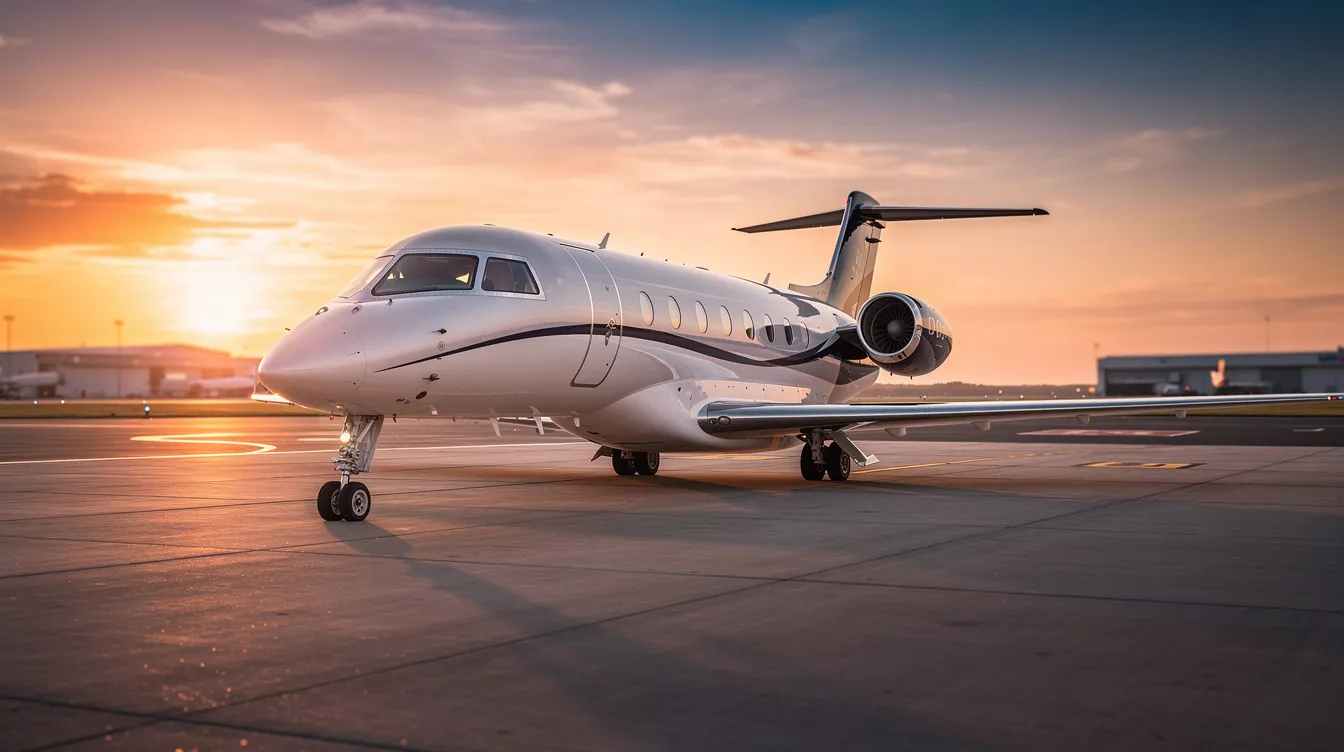
For the discerning traveler comparing private aviation to commercial alternatives, understanding cruise speed isn't just a technical curiosity—it's a strategic advantage. Mach 0.8 sits at the center of modern aviation performance, representing the speed at which most business and commercial aircraft operate. This guide breaks down what Mach 0.8 actually means, why it matters aerodynamically, and how it shapes every private jet mission from departure to arrival.
Quick Answer: How Fast Is Mach 0.8?
Mach 0.8 represents 80% of the speed of sound. In practical terms for trip planning, that translates to roughly 950–980 km/h (590–610 mph) at typical cruise altitudes between 35,000 and 39,000 feet under standard atmospheric conditions. At standard sea level, Mach 0.8 is about 609 mph—though at altitude, where air temperature drops significantly, the number shifts lower.
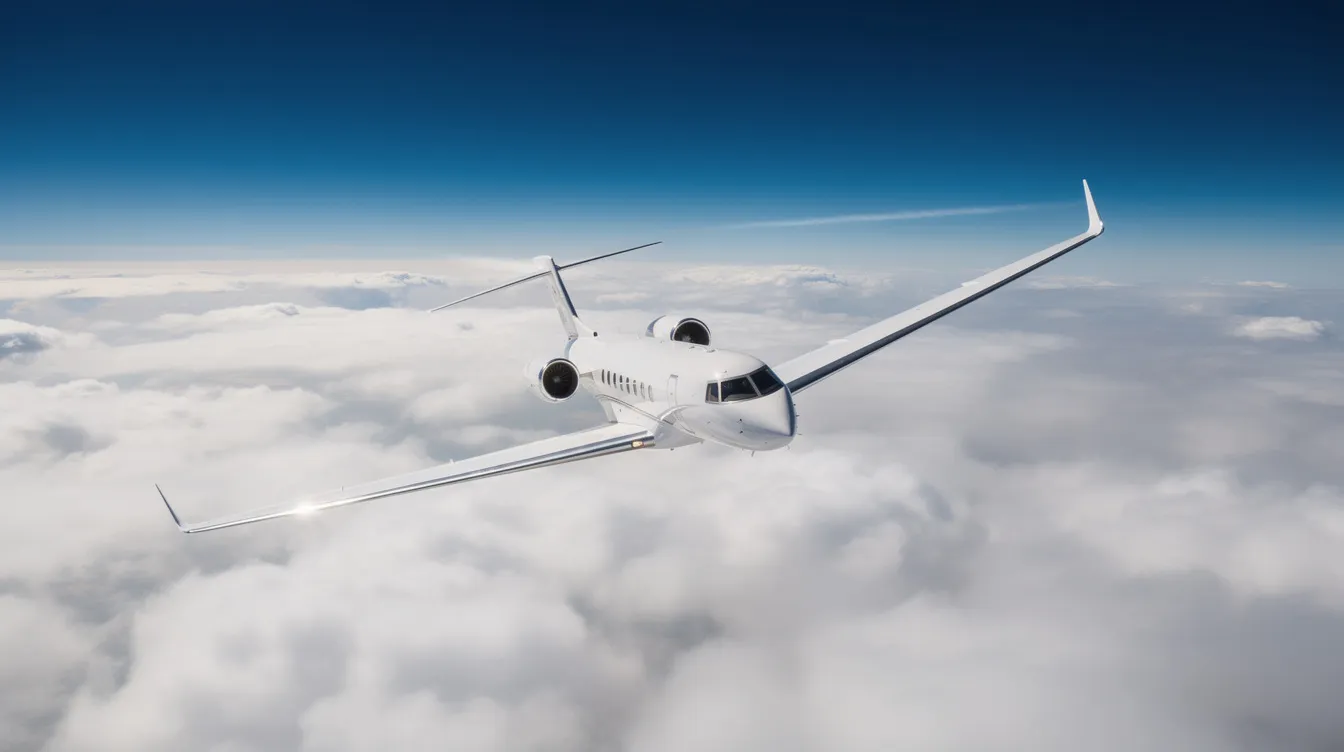
Here's how it compares across aircraft you're likely to encounter. A typical Airbus A320 cruises around Mach 0.78–0.79. A Boeing 787 Dreamliner pushes closer to Mach 0.84–0.85. A Gulfstream G650, one of the premier large-cabin private jets, can sustain high-speed cruise at Mach 0.90. Mach 0.8 is in the high subsonic regime for commercial aircraft and sits right at the operational sweet spot where speed and fuel efficiency align.
The Mach number is the ratio of true airspeed to the local speed of sound, and since the speed of sound varies with air temperature and altitude, Mach 0.8 isn't a fixed mph value. For a practical example: a flight from New York (JFK) to Miami (MIA) — roughly 1,100 nautical miles — takes approximately 2 hours 50 minutes to 3 hours at Mach 0.78–0.80. Flying at Mach 0.8 balances speed and fuel efficiency for airlines and private operators alike, making it the benchmark for most missions.
Mach Number Basics and the Speed of Sound
The concept of the Mach number traces back to Austrian physicist Ernst Mach, whose late-19th-century research on how objects interact with airflow at high speed laid the foundation for modern aerodynamics. In simple terms, Mach number is the ratio of an aircraft's true airspeed to the speed of sound in the surrounding air. Mach 1 is the speed of sound at any given condition. Mach 0.8 means the aircraft moves at 80% of that value. The number is dimensionless and independent of speed units—it works equally whether you think in knots, mph, or km/h.
How fast sound travels depends mainly on absolute temperature. Using the relation a = √(γRT), the speed of sound in dry air at sea level (15 °C) is approximately 340.3 m/s, or about 661 knots. At 36,000 feet, where air temperature drops to roughly –56.5 °C, Mach 1 is approximately 573 knots—significantly lower. This is why Mach 0.8 at cruise altitude corresponds to about 460–470 knots true airspeed (~530–540 mph), rather than the 609 mph you'd calculate at sea level.
Sound speed matters because pilots and avionics switch from indicated airspeed to constant Mach references above roughly FL280–FL320. This helps manage compressibility effects, structural limits, and shock formation that become increasingly relevant as the Mach number increases.
Flight Regimes: Where Mach 0.8 Fits
Aviation organizes speed into distinct flight regimes defined by Mach number. Understanding where Mach 0.8 fits explains why it's so central to aircraft designed for both commercial and private service.
Subsonic flight occurs below Mach 0.8, where compressibility effects and shock waves remain minimal for most airframes.
Transonic flight ranges from Mach 0.8 to 1.2—the zone where airflow over portions of the wing can reach or exceed the speed of sound even though the aircraft itself hasn't broken the sound barrier. Transonic flight begins near Mach 0.8, marking the onset of transonic effects.
Supersonic flight is above Mach 1.2, where the entire airflow around the aircraft exceeds sound speed and a sonic boom is generated. Military aircraft and the retired Concorde operated here.
Hypersonic speeds begin above Mach 5, relevant only to space reentry vehicles and experimental platforms requiring extensive thermal protection and aerodynamic heating management.
Mach 0.8 is near the onset of transonic effects in flight, which is precisely why modern commercial aircraft and long-range private jets are optimized to cruise just below the drag rise region—typically in the Mach 0.78–0.85 range. This transonic range is where engineering, efficiency, and safety intersect.
Critical Mach Number and Why Mach 0.8 Matters Aerodynamically
The critical Mach number (Mcrit) is the lowest free-stream Mach at which local airflow first reaches Mach 1 somewhere on the aircraft—usually over the upper surface of the wing where airflow accelerates past the leading edge and thickness peaks. For most swept-wing commercial and business jets, the critical Mach number is around 0.78 to 0.82.
This means that at Mach 0.8, localized shockwaves can form on aircraft wings even though the aircraft overall remains subsonic. The air flowing over the wing's upper surface accelerates beyond the free-stream speed; when that local speed hits Mach 1, a weak shock wave appears and, as Mach rises, can migrate aft toward the trailing edge. This is why Mach 0.8 is significant for aerodynamic design due to compressibility effects—it's the threshold where aerodynamic behavior changes fundamentally.
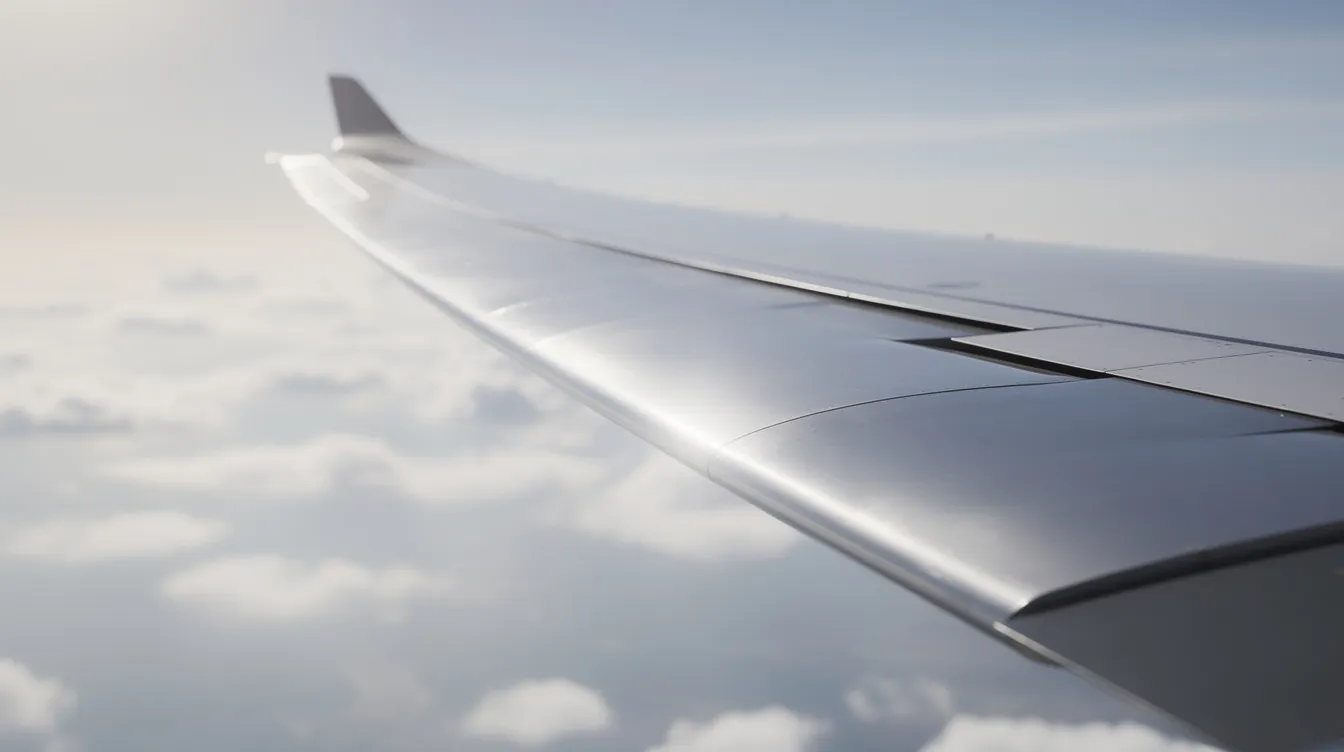
Designers counter this with two primary strategies. Swept wings help delay shockwave formation at Mach 0.8 by reducing the effective chordwise component of airflow. Supercritical airfoils redirect shock waves further aft on wings, flattening pressure peaks and delaying drag divergence. Together, these features allow modern jets to cruise at high subsonic Mach numbers without excessive drag or control degradation—a direct reason why aircraft typically cruise at Mach 0.78 to 0.85 for efficiency.
Compressibility Effects, Dynamic Pressure, and Shock Waves at Mach 0.8
At subsonic speeds well below Mach 0.8, air behaves almost as an incompressible fluid. But as the Mach number climbs into the transonic regime, air density and air pressure change significantly through the flow field, and classical low-speed aerodynamics no longer suffice.
Dynamic pressure in compressible flow scales with Mach: q = ½ γ p M², where p is static pressure. At Mach 0.8, even a low speed increase—say from Mach 0.75 to Mach 0.80 at 39,000 feet—produces roughly a 9% jump in dynamic pressure. That translates to disproportionately higher aerodynamic loads, greater structural stress, and increased fuel burn. Mach number influences drag and fuel efficiency in aircraft design precisely because of this nonlinear relationship.
As speed increases toward Mach 0.8, pockets of supersonic flow form on the wing, terminated by weak shock waves. These shocks disturb the boundary layer, increase the drag coefficient, and can trigger flow separation. This phenomenon—called drag divergence—means drag rises sharply with small Mach increments near the critical Mach. Wave drag increases significantly as speed approaches Mach 1, which is why pushing beyond the optimum cruise Mach carries steep penalties. Compressibility effects become significant near Mach 1, and shock waves form when airflow reaches Mach 1 locally, even during what appears to be high-speed subsonic cruise. Shock waves first appear in the transonic regime, making this boundary the defining challenge of modern aircraft aerodynamics.
Mach Tuck, Control, and Safety Margins Around Mach 0.8
Mach tuck is a nose-down pitching tendency that emerges when shock waves shift aft across the wing at transonic speeds. Mach tuck occurs due to shock-induced lift loss: as the center of pressure migrates rearward, the aircraft's nose drops, potentially leading to an uncontrollable dive if uncorrected.
Near and above Mach 0.8 on conventional swept-wing aircraft, tailplane effectiveness can be compromised by disturbed airflow. Transonic aircraft have features to manage shock waves and maintain pitch authority—modern jets use flying tailplanes, Mach compensators, and automatic trim systems that counteract tuck tendencies in real time. Aircraft designed for Mach 0.8 require high-thrust engines not only for propulsion but also for the energy margin to recover from any exceedance.
Every certified commercial and business jet carries a Maximum Mach Operating (MMO) limit—for example, the Gulfstream G650ER has an MMO of Mach 0.925. Cruise speeds are set well below MMO to preserve generous safety margins. Operators like BlackJet select aircraft that have been rigorously flight-tested around these limits, ensuring passengers experience smooth, controlled flight even at high mach cruise settings.
Subsonic vs Transonic Flight: Where Private Jets and Commercial Aircraft Cruise
The distinction between subsonic and transonic matters most when comparing the aircraft you might fly on, especially if you're considering BlackJet's premium private jet cards and programs instead of sticking solely with commercial options. Most narrow-body airliners—Boeing 737-800, Airbus A320-cruise at Mach 0.78–0.80. Larger long-haul widebodies like the Boeing 777 and 787 push to Mach 0.84–0.85. Top-end business jets such as the Gulfstream G650 and Bombardier Global 7500 can reach Mach 0.90–0.925 at high-speed cruise.
Mach 0.8 lies right in the middle of this band, making it a useful benchmark for comparing performance and block times. While the flow over portions of the wing may already be transonic, these aircraft are still classified as subsonic aircraft operating close to the transonic boundary. For travelers comparing access models, understanding how these performance bands tie into overall jet card cost structures helps frame whether subsonic private jet cruising aligns with their budget and usage. Aircraft designed for supersonic speeds-like the retired Concorde or certain military aircraft—feature sharp noses and sharp edges to manage supersonic airflow and minimize wave drag, design elements unnecessary at Mach 0.8.
The trade-off between two speeds is instructive: flying at Mach 0.80 instead of Mach 0.85 on a 2–3 hour sector adds perhaps 5–10 minutes but reduces fuel burn substantially. On a transatlantic route, a Boeing 787 at Mach 0.85 might complete the crossing faster than a long-range private jet cruising at Mach 0.80—but the private jet offers departure flexibility, privacy, and the ability to fly direct routes that make up the difference and more, especially when paired with a transparent jet card cost per hour structure that lets you price out different cruise strategies.
Mach 0.8 in Modern Commercial Aviation
Since the 1990s, most commercial aircraft in service have been designed with cruise speeds in the Mach 0.78–0.85 window. In daily operations, airlines often target Mach 0.79–0.81 for fuel economy on medium-haul sectors, while private operators can pair similar speeds with top affordable private planes and light jets that make high-subsonic travel more accessible.
Concrete examples illustrate the pattern for typical narrow-body and widebody airliners, while larger group missions might instead use private jets for up to 50 passengers operating at comparable high subsonic Mach numbers:
Airbus A320 family: typical cruise Mach 0.78–0.79
Boeing 737-800: approximately Mach 0.785
Boeing 777-300ER: around Mach 0.84
Boeing 787-9: commonly scheduled at Mach 0.85
Airlines balance schedule commitments with fuel cost-sometimes slowing from Mach 0.82 toward Mach 0.80 on longer sectors to save thousands of kilograms of fuel per flight. Operating around Mach 0.8 minimizes excess fuel consumption for time savings. Air traffic flows in cruise corridors often cluster aircraft at similar Mach numbers to minimize overtake conflicts, making Mach 0.8 a kind of standard pace for many high-altitude flows—a reference point when comparing these jets with the best small private aircraft for specific missions.
Compare this to legacy supersonic travel: Concorde cruised at Mach 2.02–2.04, producing a sonic boom, burning fuel at roughly four times the rate per passenger-mile, and facing severe regulatory constraints. Modern commercial fleets remain firmly at high subsonic speeds because the economics, noise profile, and structural demands of supersonic flight remain prohibitive. Twice the speed of sound sounds impressive, but it comes at a cost no commercial operator can sustain today.
Mach 0.8 and Private Jets: Performance, Comfort, and Strategy
Many of the jets available through BlackJet's Jet Card programs, including the BlackJet 25+ Hour Jet Card, cruise between Mach 0.76 and Mach 0.85, placing Mach 0.8 at the heart of real-world private aviation. The ratio of speed gained to fuel burned reaches its optimum in this band.
Aircraft category examples reveal the range:
Light jets (e.g., Embraer Phenom 300): cruise near Mach 0.78
Super-midsize (e.g., Citation X+): capable of Mach 0.935 but often flown around Mach 0.82–0.84 for efficiency
Large-cabin (e.g., Gulfstream G450): comfortable long-range cruise around Mach 0.80
A business executive flying New York to Dallas or London to Geneva might choose a BlackJet flight at Mach 0.8 for the optimal blend of fuel efficiency, cabin comfort, and schedule precision, especially when they understand when chartering a private jet is worth it compared to premium commercial options. The marginal time difference versus maximum Mach—perhaps 5–8 minutes on a 3-hour sector-is negligible compared to the savings in fuel cost and reduced cabin fatigue.
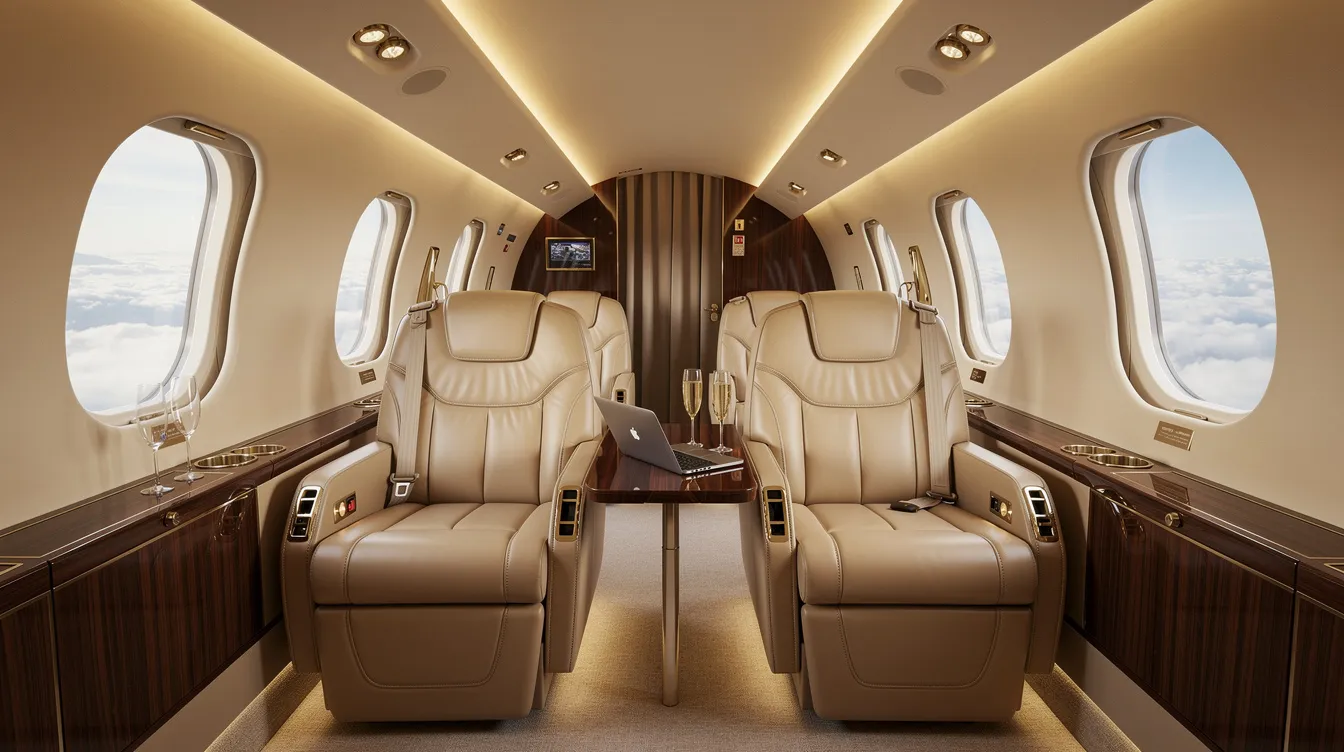
Flying slightly below maximum Mach reduces dynamic loads and shock-related buffet, contributing to smoother rides. Passengers working or resting onboard notice the difference, and many evaluate these comfort and performance gains alongside a broader private jet price list of costs and access options. BlackJet's real-time flight support and flight time planning tools model winds aloft, optimum cruise Mach, and fuel burn to recommend the most efficient profile—often near Mach 0.8 for each mission.
Instrumentation and Measuring Mach 0.8 in the Cockpit
Modern aircraft display Mach number through an integrated Air Data Computer that derives it from pitot-static pressure measurements. The supersonic pitot equation and subsonic variants calculate speed from the ratio of total pressure to static pressure, without needing direct speed sensing. The system doesn't require temperature input to display Mach itself, though temperature corrections refine true airspeed calculations—a level of precision that even operators of cheapest private aircraft and entry-level jets must maintain to meet safety and performance standards.
Standard procedures in both airline and business jet operations follow a consistent pattern: pilots climb at constant indicated airspeed (IAS) until around FL280–FL320, then transition to a constant Mach climb—perhaps Mach 0.78—before stabilizing at cruise. A jet at FL390 cruising at Mach 0.80 might show roughly 260–280 KIAS on the airspeed indicator while true airspeed reads 460–470 KTAS. That gap between indicated and true airspeed illustrates how thin air at altitude dramatically reduces pressure-based readings even as the aircraft passes through space at over 500 mph ground speed, a consideration that also shapes the performance expectations of a typical 5 million dollar private jet.
Pilots monitor both IAS and Mach continuously, respecting the aircraft's MMO to stay clear of adverse high-speed flows, structural limits, and control anomalies—constraints that also inform how programs like Flexjet jet card offerings are structured and priced around specific aircraft types and performance envelopes.
Temperature and Pressure Effects: Why Mach 0.8 Is Not a Fixed mph
A common misconception: Mach 0.8 equals a fixed speed in mph. It doesn't. Because the speed of sound depends on temperature, and sound varies with atmospheric conditions, Mach 0.8 translates to different ground speeds at different altitudes and on different days—a nuance that also feeds into how operators design jet card pricing across aircraft and missions.
The relationship is straightforward. Sound speed scales with the square root of absolute temperature. In warm air at sea level (15 °C), Mach 0.8 corresponds to roughly 529 knots or about 609 mph. At 36,000 feet, where temperature drops to –56.5 °C, Mach 0.8 falls to approximately 460–470 knots or 530–540 mph. The aircraft flies at the same Mach but covers less distance per hour in the colder, thinner air—a key detail for frequent flyers weighing whether a 100-hour jet card cost structure makes sense given their typical routes and cruise speeds.
For private jet travelers, this means constant Mach cruise implies different ground speeds depending on conditions. Pressure effects on instruments matter too: pitot-static systems measure air pressure differentials, and modern Air Data Computers resolve these inputs against temperature data to produce accurate Mach readouts meeting stringent certification standards. Dispatch teams account for all these variables—including winds aloft, which can add or subtract 100+ knots of ground speed—when building schedules and coordinating slots, while owners and companies may also consider how these utilization patterns affect potential jet card tax deductions and operating write-offs. Sound depends on conditions, not assumptions, and every flight plan reflects that reality.
BlackJet Perspective: Using Mach 0.8 for Smarter, Safer, and Greener Travel
At BlackJet, high subsonic cruise speeds like Mach 0.8 aren't just a technical specification—they're a strategic lever. By operating in this optimal band, BlackJet delivers meaningful time savings over commercial schedules while maintaining tailored departure windows and direct routings that eliminate connections entirely, especially for travelers using the best jet cards for frequent flyers to lock in predictable access.
Jet Card members benefit from aircraft selection matched to each mission. Different cabin classes and performance profiles—from light jets on regional hops to ultra-long-range aircraft for intercontinental travel—let BlackJet's operations team choose jets whose optimum cruise Mach aligns with the mission's priorities, whether that's speed, cost, range, or lift capacity, whether the traveler is starting with a flexible 25-hour jet card program or scaling to larger commitments.
Safety remains paramount. BlackJet partners exclusively with operators meeting top-tier third-party safety ratings under Part 135 certification. Pilots are trained in managing Mach effects—including Mach tuck tendencies, buffeting thresholds, and MMO observance. Rigorous maintenance standards ensure flight instrumentation, control surfaces, and jet turbine efficiency perform reliably even near the upper performance envelope, a level of professionalism that underpins any serious evaluation of 50-hour jet card cost and value.
Sustainability amplifies the advantage. Cruising at efficient Mach numbers reduces fuel burn per flight hour, and BlackJet's carbon-neutral flight policy ensures every journey offsets its environmental impact—at no additional cost to you. On routes like New York–Los Angeles, London–Milan, or Dubai–Geneva, the difference between Mach 0.80 and Mach 0.85 can mean hundreds of kilograms less fuel burned, lower emissions, and a smoother, quieter cabin experience—advantages that align closely with the most affordable and efficient private jet options entering the market.
Mach 0.8 is where performance, comfort, and responsibility converge. It's precisely where BlackJet operates—and where your next journey begins, whether you're comparing providers like NetJets jet card programs and costs or exploring BlackJet's own solutions.
Explore BlackJet's Jet Card programs and discover how optimized cruise planning can reshape the way you fly. Speak with a BlackJet advisor for tailored route and aircraft recommendations built around your schedule, not an airline's.


 Sign up with google
 Sign up with Apple