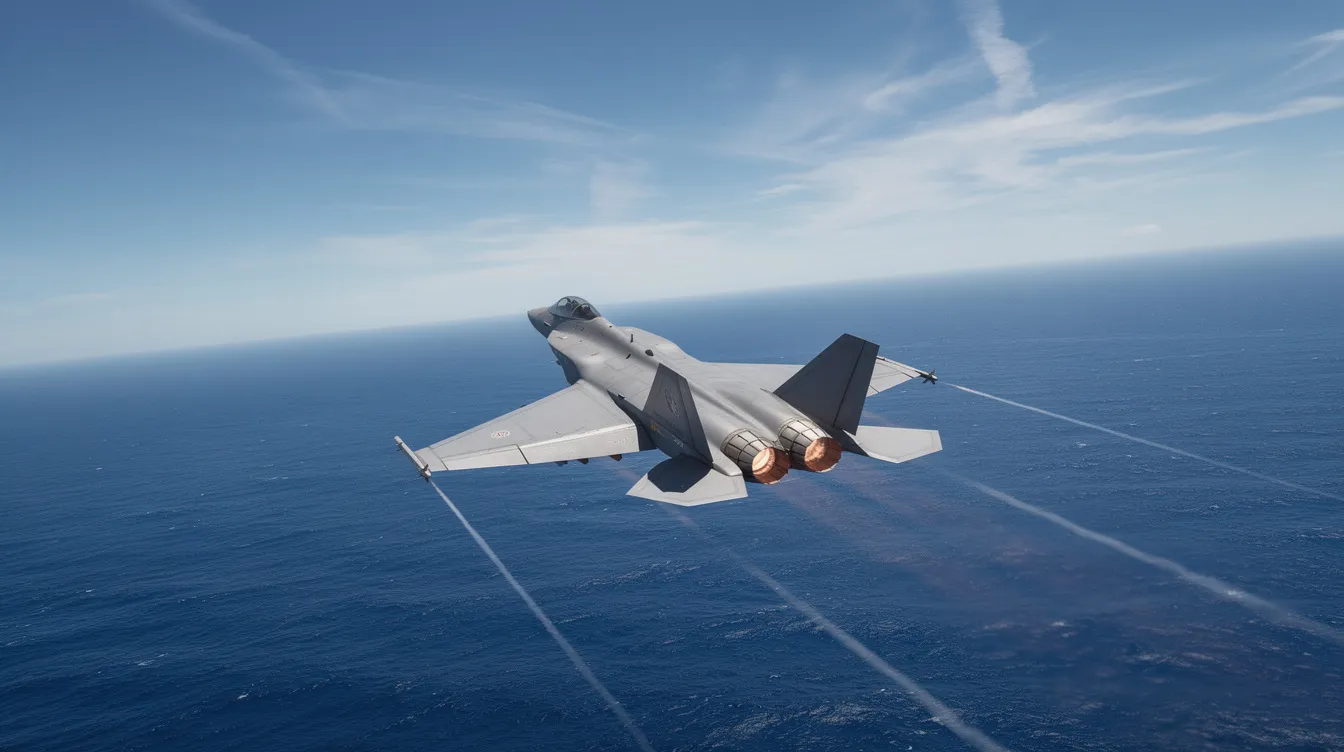
Longest Range Fighter Jets: How Far Modern Air Superiority Can Really Fly
The ability to fly farther, fight longer, and return home safely has shaped every generation of fighter jet ever built. Whether a nation fields stealth aircraft over contested waters or dispatches deep strikes against distant targets, range is the invisible currency of air power. This guide breaks down the longest-range fighter jets in service today, compares their capabilities across nations, and connects those lessons to the world of private aviation.
Immediate Answer: Which Fighter Jets Have The Longest Range?
When pilots and defense analysts talk about the longest-range fighter jet, they usually mean ferry range - the maximum distance an aircraft can fly with full fuel, external tanks, and minimal weapons. This number represents repositioning capability, not combat performance. Combat radius, by contrast, is the maximum distance an aircraft can fly to conduct a mission and return, accounting for weapons load, maneuvering, and fuel reserves. The maximum ferry range often exceeds the combat radius due to mission requirements, making the distinction between the two crucial for comparing aircraft.
Here are the fighters with the most impressive range figures currently published:
Aircraft | Ferry Range | Combat Radius | Notes |
|---|
F-111 Aardvark | ≈ 5,940 km (3,690 mi) | ≈ 2,140 km | Fighter-bomber / deep strike (retired) |
F-15 Eagle / F-15E Strike Eagle | 3,450 mi | 690 nm (F-15E) | Multirole, air superiority |
Su-57 Felon | 2,796 mi (≈4,500 km with outboard tanks) | ≈1,250 km | Fifth-gen, Russian stealth |
J-20 Mighty Dragon | 2,113 mi | ≈ 1,300–2,000 km | Fifth-gen, Chinese stealth (figures debated) |
Dassault Rafale | 2,300 mi (with three drop tanks) | ≈1,056 km | Multirole, French |
F-35A Lightning II | ≈2,200+ km | 670 nm | Fifth-gen, stealth multirole |
F-22 Raptor | ≈2,960 km (with external tanks) | 590 nm | Fifth-gen, stealth air superiority |
F-111 Aardvark
F-15 Eagle / F-15E Strike Eagle
Su-57 Felon
J-20 Mighty Dragon
Dassault Rafale
F-35A Lightning II
F-22 Raptor
American designs like the F-15E and F-22 sit alongside Russian platforms such as the Su-27/35 and Su-57, and China's J-20 in the top tier. Each reflects different doctrines: the United States Air Force leans on tankers for global reach, Russia builds large airframes with generous internal fuel, and China engineers range to project power across the Western Pacific. The sections below break down definitions, generational evolution from first-generation jets to fifth and emerging sixth, and detailed profiles of each aircraft.
Why Range Matters: Power Projection, Air Superiority, And Strategy
Range is the foundation of power projection. A fighter jet that can operate hundreds or thousands of miles from its home base gives its air force strategic flexibility that shorter-legged planes simply cannot match. For nations defending vast territory - or threatening adversaries across oceans - long-range fighters reduce dependence on forward bases and tankers, both of which are vulnerable in combat.
An air superiority fighter like the Su-27 was designed to patrol enormous Russian frontiers without refueling, maintaining air dominance over remote Siberian and Arctic airspace. During the 1991 Gulf War, the F-15E Strike Eagle flew deep strikes into Iraqi territory on missions lasting hours, demonstrating how range translates directly into battlefield role effectiveness. Aircraft size contributes to fuel capacity and range capabilities, which is why heavy multirole fighters and interceptors typically have superior range performance compared to lighter, more agile platforms.
Key operational benefits of long range include:
Fewer forward bases required, reducing logistical exposure
Extended air patrols over contested skies without tanker dependence
Flexible basing options across allied nations
Strategic surprise through the ability to attack targets at unexpected distances
Sustained presence during prolonged combat operations
Flight Range vs Combat Radius: Key Definitions
Fighter jet range is calculated by fuel load and speed. In simplified terms, flight range equals ground speed multiplied by maximum flight time at a given throttle and altitude setting. Ferry range is the maximum distance an aircraft can fly without a combat payload - think full fuel, external tanks, and cruise-optimized altitude, but no bombs or missiles weighing it down.
Combat radius is fundamentally different. It accounts for flying to a target area, conducting the mission (which may include supersonic maneuvering and weapons employment), and returning to base with mandated fuel reserves. A fighter with a 3,500 km total ferry range might only deliver a tactical combat radius of roughly 1,300 km - less than half. Ground speed affects a fighter jet's effective range significantly; headwinds at altitude can shave hundreds of kilometers off published numbers, while tailwinds extend them.
Payload and cruising altitude influence fighter jet range as well. Fuel consumption is affected by engine design, altitude, speed, and throttle setting. Flying higher generally burns less fuel per kilometer, but carrying heavy weapons or external drop tanks increases drag, raising consumption. Aircraft range is often measured under optimal conditions, differing substantially from combat scenarios where pilots maneuver aggressively and operate at varying altitudes. Payload weight impacts the range of an aircraft during missions, which is why ferry ranges can exceed combat radius due to mission and operational constraints.
Tanker aircraft can dramatically extend operational distance, but they do not change the aircraft's published maximum range specification - they simply allow the jet to reset its fuel clock mid-flight.
Generations Of Jet Fighters And How Range Evolved
First generation (1940s–1950s): Subsonic jets like the Me 262 and MiG-15 with limited fuel and endurance, originally intended for point defense.
Second generation (1950s–1960s): Supersonic designs with early air-to-air missiles; afterburning turbojets prioritized speed over fuel economy.
Third generation (1960s–1970s): More maneuverable multirole aircraft with increased fuel capacity and mission flexibility.
Fourth generation (1970s–1990s): Fighters like the F-16 and F-15 applied energy-maneuverability theory plus lightweight composite structures to fly farther and fight longer. Aerodynamic efficiency improved markedly.
Fifth generation (2000s–present): The F-22, F-35, and Su-57 emphasize stealth and sensor fusion. Modern high-bypass turbofan engines provide better fuel efficiency during cruise, but stealth shapes and internal weapons bays limit total fuel volume.
Emerging sixth generation: Concepts focus on very long range, adaptive engines, networking with drone wingmen, and dispersed basing.
Early jets had poor range - a MiG-15 could barely manage 750 miles. The F-4 Phantom II stretched that past 1,500 miles with tanks. The F-111 pushed beyond 3,600 miles. Today's fifth-generation stealth aircraft face constraints balancing fuel volume and radar evasion, which is why modern air forces often assume routine tanker support in mission planning.
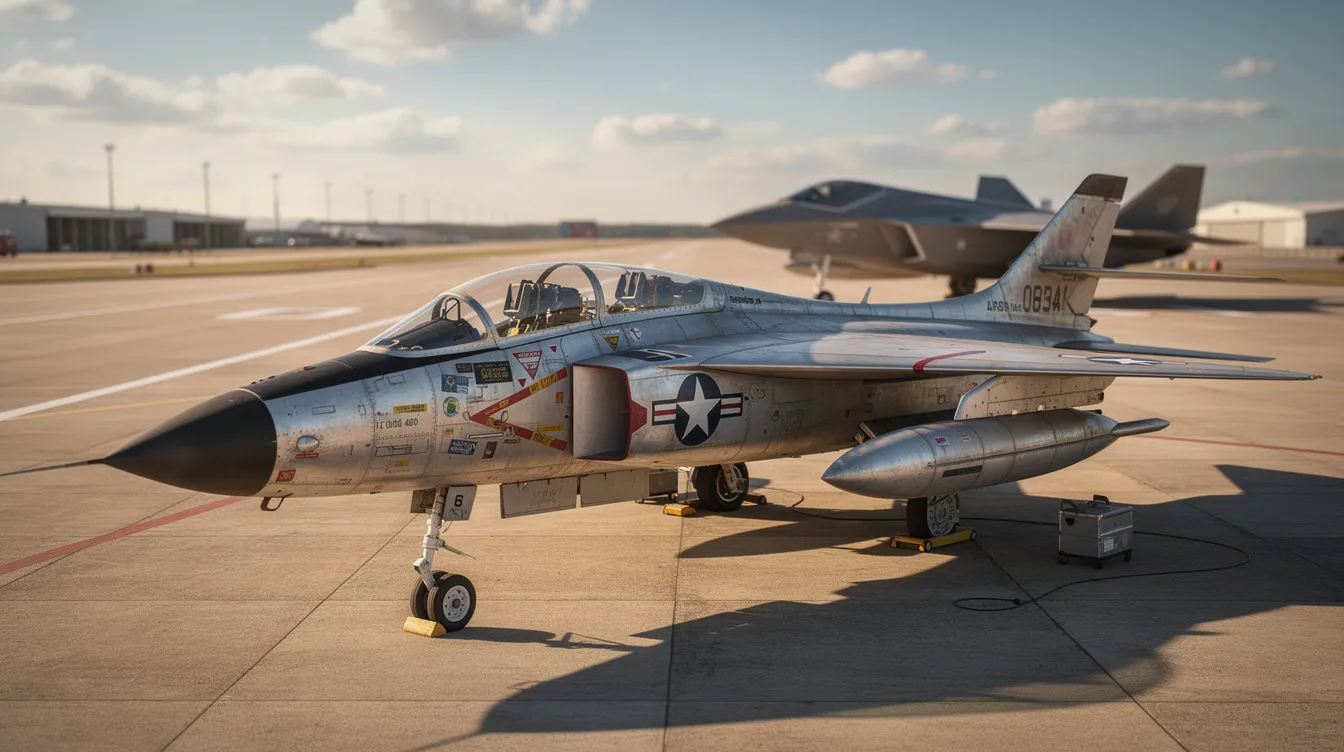
American Long-Range Fighter Jets
The United States Air Force has long pursued global reach as a core doctrine. From the massive F-111 to the versatile F-15E, American fighters were aircraft designed to operate far from home. Western air forces rely heavily on aerial refueling to extend fighter range, which shapes how engineers allocate internal fuel volume versus weapons bays and avionics.
F-111 Aardvark
F-15E Strike Eagle
F-15EX Eagle II
F/A-18E/F Super Hornet
F-22 Raptor
F-35A Lightning II
F-16 Fighting Falcon
Conformal fuel tanks increase an aircraft's fuel volume with minimal drag - a technology perfected on the F-15 platform. External drop tanks increase ferry range but add drag, creating a trade-off pilots and planners weigh on every mission. The U.S. tanker fleet (KC-135, KC-46) enables F-22 and F-35 operations despite their shorter internal range compared to some Russian or Chinese designs.
The upcoming Boeing F-47 is expected to have a combat radius over 1,000 nautical miles, signaling that the next generation of American fighters will address the range gap head-on.
Russian Long-Range Fighter Jets
Russian air doctrine emphasizes larger internal fuel loads and long-range independent operations. With vast geography spanning eleven time zones and relatively fewer tankers compared to the USAF, Eastern military doctrines prioritize high internal fuel capacities for long-range capabilities.
Su-27 Flanker Family
The Su-27 Flanker entered service in the 1980s as a direct counter to the F-15, and its family - including the Su-30 and Su-35 - remains among the world's most capable long-range air superiority platforms. The Su-27's ferry range sits between 2,200 and 2,700+ miles, with a combat radius around 700 nautical miles in clean air superiority configuration. These fighters operate over Siberia, the Arctic, and maritime approaches where forward bases are sparse.
Su-34 Fullback
The Sukhoi Su-34 is designed for long-range strike missions with high fuel capacity, filling the fighter-bomber niche once held by the Su-24.
Su-57 Felon
The Sukhoi Su-57 has a ferry range of 2,796 miles (approximately 4,500 km with outboard tanks), placing it among the longest-legged fifth-generation fighters. Its combat radius varies depending on speed - subsonic cruise extends it significantly compared to supersonic dash profiles.
Russia's need to cover enormous borders and distant theaters without extensive tanker fleets drives the emphasis on range built into the airframe itself, using powerful engines and generous internal fuel volume.
Chinese Long-Range Fighter Jets
China's People's Liberation Army Air Force has invested heavily in fighters that can reach deep into the Western Pacific from mainland bases.
J-20 Mighty Dragon
The Chengdu J-20 Mighty Dragon, operational since the late 2010s, serves as China's premier stealth air superiority fighter. The Chengdu J-20 has an operational range of 2,113 miles, with a combat radius that various sources place between 700 and 1,100 nautical miles depending on load and mission profile.
J-11 Family
Other Chinese platforms include the J-11 (a Su-27 derivative), the J-16 multirole fighter, and the JH-7 fighter-bomber - many developed or selected specifically for extended range to compensate for limited tanker assets. These long-range fighters are intended to threaten carrier groups, bases like Guam, and long-distance maritime approaches.
Adapting Russian designs accelerated China's path to fielding capable long-range fighters. The Su-27 technology transfer that produced the J-11, combined with indigenous avionics development, allowed the PLAAF to build a fleet capable of challenging air and naval forces across the first and second island chains.
European Long-Range Multirole Fighters
European air forces emphasize flexibility and modularity, balancing range, agility, and multirole capability across varied operational demands. Rather than building the absolute longest-range platforms, European designs optimize for versatility.
Dassault Rafale
The Dassault Rafale carries a ferry range of 2,300 miles with three drop tanks and roughly half that in combat configuration. It serves French air defense, nuclear deterrence, and strike missions - a true multirole workhorse.
Eurofighter Typhoon
The Eurofighter Typhoon offers comparable ferry ranges exceeding 3,700 km with external tanks and a tactical radius around 1,390 km, excelling in air superiority roles across allied nations.
Saab JAS-39 Gripen E
The Saab JAS-39 Gripen E provides a lighter, efficient option optimized for dispersed Nordic operations, proving that not every nation needs the largest airframe to operate effectively. European fighters typically rely on NATO tanker fleets for strategic range extension, similar to how stealth U.S. fighters operate in expeditionary scenarios.
Profile: F-15E Strike Eagle – America's Long-Range Workhorse
Range and Fuel Tanks
The F-15E Strike Eagle has a combat radius of 690 nautical miles. Its maximum ferry range reaches approximately 3,900–4,400 km with external and conformal fuel tanks. The F-15 uses conformal and external fuel tanks for enhanced range - the conformal tanks hug the fuselage, adding substantial fuel with minimal aerodynamic penalty.
Operational History
During Operation Desert Storm, F-15E crews flew long-duration deep strikes into Iraq, demonstrating the aircraft's ability to carry heavy bomb loads over vast distances and return.
Role and Capabilities
Its mission set spans deep strike, suppression of enemy air defenses, and maintaining air superiority - a true dual-role platform armed with both bombs and air-to-air missiles. The F-15EX Eagle II continues this lineage, maintaining the same 690 nautical mile combat radius while dramatically increasing weapons capacity and integrating modern sensors and electronic warfare systems. Its service life is projected to extend well into the 2040s.
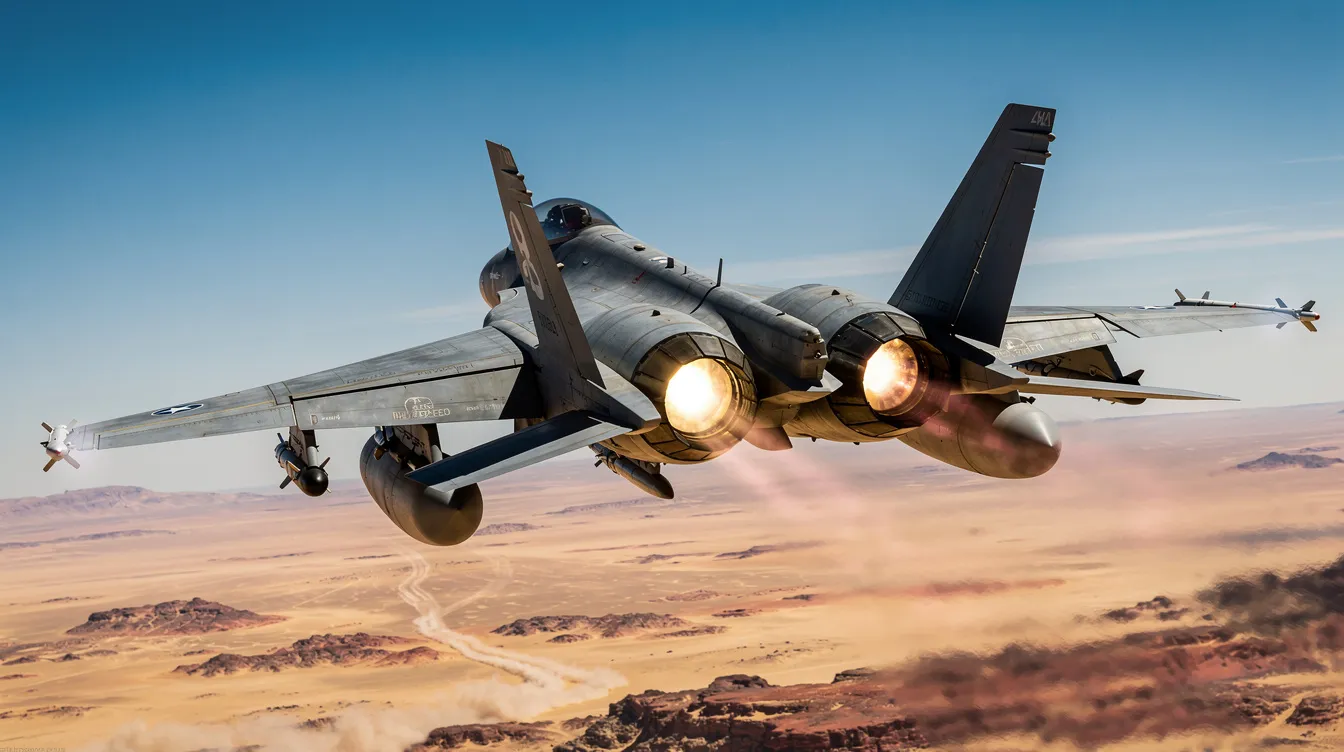
Profile: F-22 Raptor – Air Superiority With Moderate Range
Range and Fuel Tanks
The F-22 Raptor has a combat radius of 590 nautical miles. Its ferry range reaches approximately 2,960 km (1,840 miles) with two 600-gallon external tanks. Stealth designs can limit a fighter jet's fuel capacity, and the F-22 exemplifies this trade-off - its internal weapons bays and radar-absorbing structures consume volume that might otherwise hold fuel.
Operational History
Development of low-observable external tanks could push the combat radius toward or beyond 900 nautical miles in future configurations. For now, the USAF uses its tanker fleet extensively to offset the F-22's range limits, allowing it to project air superiority far from home bases.
Role and Capabilities
Internal fuel capacity significantly influences an aircraft's range, and the F-22's designers deliberately accepted that constraint in favor of unmatched lethality in the fight.
Profile: F-35 Lightning II – Global Multirole Reach
Range and Fuel Tanks
The F-35A has a combat radius of 670 nautical miles on internal fuel, making it a capable multirole platform that balances stealth, sensors, and reasonable range. The F-35 family - A (conventional), B (STOVL), and C (carrier) variants - serves across the United States Air Force, Navy, Marine Corps, and numerous allied nations worldwide.
Operational History
The F-35C carries slightly more internal fuel for maritime operations, extending its reach for carrier-based missions. Planned Block 4 upgrades and external tank concepts (460–600 gallon configurations) aim to boost range without dramatically reducing stealth performance.
Role and Capabilities
Fifth-generation stealth aircraft face constraints balancing fuel volume and radar evasion, and every design decision on the F-35 reflects that tension. The F-35 was developed from the outset to operate hand-in-hand with tankers and networked assets. Its advanced technology - fused sensors, electronic warfare, data links - means that raw maximum range is less critical than sustained presence and connectivity. Pilots flying the F-35 carry fewer weapons externally in stealth mode, preserving the low radar cross-section that keeps them alive over hostile ground.
Profile: F-16 Fighting Falcon And KF-16 – Lightweight, Surprisingly Long Legs
Range and Fuel Tanks
The F-16 Fighting Falcon first flew in the 1970s as a lightweight, agile fourth-generation multirole fighter. Despite its compact size, the F-16 Fighting Falcon has a ferry range of over 2,002 miles with drop tanks - an impressive figure for an aircraft originally intended as a nimble dogfighter rather than a long-range platform.
Operational History
Combat radius typically runs 550–750 nautical miles depending on loadout and mission type. The ferry range configuration assumes minimal weapons, multiple external tanks, and cruise-optimized profiles - useful for repositioning between theaters or deploying across oceans.
Role and Capabilities
The South Korean KAI KF-16, an upgraded variant with improved avionics and radar, pushes ferry ranges even further toward 2,600 miles. While the F-16 is not the absolute longest-range fighter in any air force inventory, its lightweight, efficient design allows impressive distances for its size and generation. The platform continues to operate with air forces around the world, proving that smart engineering can stretch range without requiring a massive airframe.
Profile: Su-27 Flanker And Su-57 Felon – Russian Long-Range Specialists
Range and Fuel Tanks
The Su-27 Flanker was developed to counter other aircraft like the F-15, with designers prioritizing range, agility, and heavy weapons load. Its large airframe carries substantial internal fuel - enough to patrol vast Russian airspace without tanker dependence. The Su-27's ferry range falls between 2,200 and 2,700+ miles, with a combat radius around 700 nautical miles in air superiority roles. Derivative models like the Su-30 and Su-35 further optimized range and avionics, solidifying the Flanker family as premier long-range air superiority and multirole platforms that can carry a formidable array of missiles.
Operational History
The Sukhoi Su-57 has a ferry range of 2,796 miles (approximately 4,500 km with outboard tanks), placing it among the longest-legged fifth-generation fighters. Its combat radius varies depending on speed - subsonic cruise extends it significantly compared to supersonic dash profiles.
Role and Capabilities
The Su-57 reflects Russia's emphasis on independent long-range operations from relatively few, distant bases with limited aerial refueling infrastructure.
Profile: J-20 Mighty Dragon – China's Long-Range Stealth Fighter
Range and Fuel Tanks
The J-20 first flew in 2011 and entered operational service in the late 2010s as China's first indigenous fifth-generation stealth air superiority fighter. Its large delta-canard layout provides substantial internal fuel volume - a deliberate design choice supporting long-distance interception and maritime strike missions.
Operational History
The Chengdu J-20 has an operational range of 2,113 miles, with combat radius estimates varying between 700 and 1,100 nautical miles depending on source and assumed weapons load. Exact figures remain classified, and many published numbers are debated among defense analysts.
Role and Capabilities
The aircraft was designed to challenge U.S. air and naval forces in the Western Pacific, where the ability to fly long distances from mainland bases without tanker support is a key factor. Ongoing engine development programs - particularly indigenous high-performance turbofans to replace interim measure Russian-sourced engines - aim to improve fuel efficiency and enable supercruise, which would further extend the J-20's effective range and combat persistence compared to current performance.
Historic Champion: F-111 Aardvark And Other Extreme-Range "Fighters"
The F-111 Aardvark entered service in the late 1960s as a swing-wing, long-range strike aircraft. Despite carrying the "F" fighter designation, it functioned primarily as a bomber and interdiction platform with a crew of two and a heavy bomb load.
Its maximum range of approximately 5,940 km (3,690 miles) with external drop tanks makes it the longest-range fighter-designated aircraft ever built. That figure dwarfs nearly every other aircraft on this list. In strike configuration, its combat radius dropped to roughly 2,140 km - still extraordinary by any standard.
Many experts place the F-111 in a separate category from classic air superiority fighters despite its official designation. Its battlefield role centered on strategic strike and deep interdiction, not dogfighting. Other platforms like the Su-24 Fencer and the F-4 Phantom II with tanks similarly blur the line between fighters and bombers when range is maximized. Modern air forces now tend to use dedicated bombers or multirole fighters supported by tankers rather than ultra-long-range fighter-bombers like the F-111.
Air Superiority Fighter vs Multirole: How Role Shapes Range
A pure air superiority fighter like the F-22 or Su-27 is optimized to dominate the skies - clearing enemy planes from contested airspace. These aircraft often accept larger airframes and more internal fuel to loiter and fight far from base. Multirole fighters like the F-35 or Rafale balance air-to-air and air-to-ground capabilities, distributing internal volume among weapons bays, sensor packages, and fuel.
The contrast between the F-15C (air superiority) and F-15E (strike) illustrates this well. The F-15E added conformal fuel tanks and bomb-carrying capability, gaining range and ground attack at the cost of some air combat agility. Similarly, the Rafale trades absolute top speed for versatility across nuclear deterrence, strike, and fleet defense.
How role influences design priorities:
Internal fuel volume - Air superiority fighters prioritize fuel for extended patrols; multiroles split volume with weapons bays
External tank compatibility - Strike platforms routinely carry drop tanks; stealth fighters avoid them in combat
Engine efficiency - Long-range patrol demands fuel-sipping cruise; interceptors need raw speed from powerful engines
Structural weight limits - Heavier armed multiroles accept lower maneuverability for payload flexibility
Long-range air superiority matters most for large nations like the United States, Russia, and China. Smaller nations often favor compact fighters supported by tankers and dense basing networks.
From First Generation To Fifth: How Technology Extended Fighter Range
First generation jet fighters like the Me 262 and early subsonic planes could barely fly 500 miles. Their engines were fuel-hungry and aerodynamically inefficient. By the second generation, afterburning turbojets enabled supersonic speeds but often sacrificed fuel economy for raw performance - pilots could fly faster, but not necessarily farther.
Third-generation fighters increased fuel capacity and mission flexibility. Fourth-generation aircraft like the F-16 and F-15 applied lightweight composite structures, refined wing designs, and energy-maneuverability principles to go farther and fight longer. Aerodynamic efficiency improved fuel consumption and range substantially across this era.
Fifth-generation fighters regained some range through efficient turbofan engines and internal fuel optimization, but their stealth shapes and weapons bays limit total fuel volume, reinforcing the importance of tankers. The airborne advantage of these platforms comes from survivability and sensor fusion rather than brute endurance.
Early sixth-generation concepts - including programs like the U.S. Next Generation Air Dominance initiative - emphasize very long range, adaptive cycle engines, networking with loyal wingman drones, and operating from dispersed bases. Future air superiority will be even more range-driven as contested environments push tankers farther from the front lines.
How Mid-Air Refueling Changes The Meaning Of "Longest Range"
In practical combat operations, aerial refueling often matters more than static maximum range numbers. Fighter jets often require tanker support for extended missions, and this reality shapes how modern air forces plan campaigns. Aerial refueling extends the operational range of fighter jets beyond any published specification.
The U.S. tanker fleet enables F-22s, F-35s, and F-15Es to fly transcontinental or transoceanic sorties by topping up multiple times en route. A formation of F-22s can deploy from Virginia to Japan with tanker support - a feat impossible on internal fuel alone. This capability gives the United States Air Force unmatched global reach despite fielding stealth fighters with moderate internal range.
Russian and Chinese doctrines historically relied less on tankers, pushing designers to build fighters with inherently longer operational range. However, tanker vulnerability in contested airspace is now pushing all nations toward fighters and loyal wingman drones with combat radii exceeding 1,000 nautical miles, directly influencing next-generation designs like the F-47.
While refueling does not change the official ferry range of any aircraft, it effectively removes hard distance limits in peacetime and permissive-environment missions. For defense planners, the combination of built-in range and tanker access determines true strategic reach.
Lessons For Civil And Private Aviation: Range, Comfort, And Safety
The same physics that govern fighter jet range - fuel load, drag, engine efficiency, and altitude - apply to private aviation. The difference lies in priorities. Where a fighter like the F-15E optimizes for survivability and weapons delivery, a long-range private jet or one of the best private jets in the world optimizes for cabin comfort, reliability, and passenger experience.
Long-range business jets crossing ten or more hours nonstop use advanced aerodynamics and efficient engines, similar in principle to fighters stretching range. Modern private jet operations rely on careful route planning, understanding a detailed private jet price list, and fuel efficiency management, much like air forces plan long-range sorties with alternates and reserves.
Fighter Jet | Private Jet |
|---|
Speed vs comfort | Fighters chase supersonic performance |
Stealth vs cabin volume | Internal weapons bays |
Short-turn tactical missions vs multi-city corporate itineraries | Combat sorties |
Survival systems vs redundancy | Countermeasures |
Weapons load vs passenger payload | Missiles |
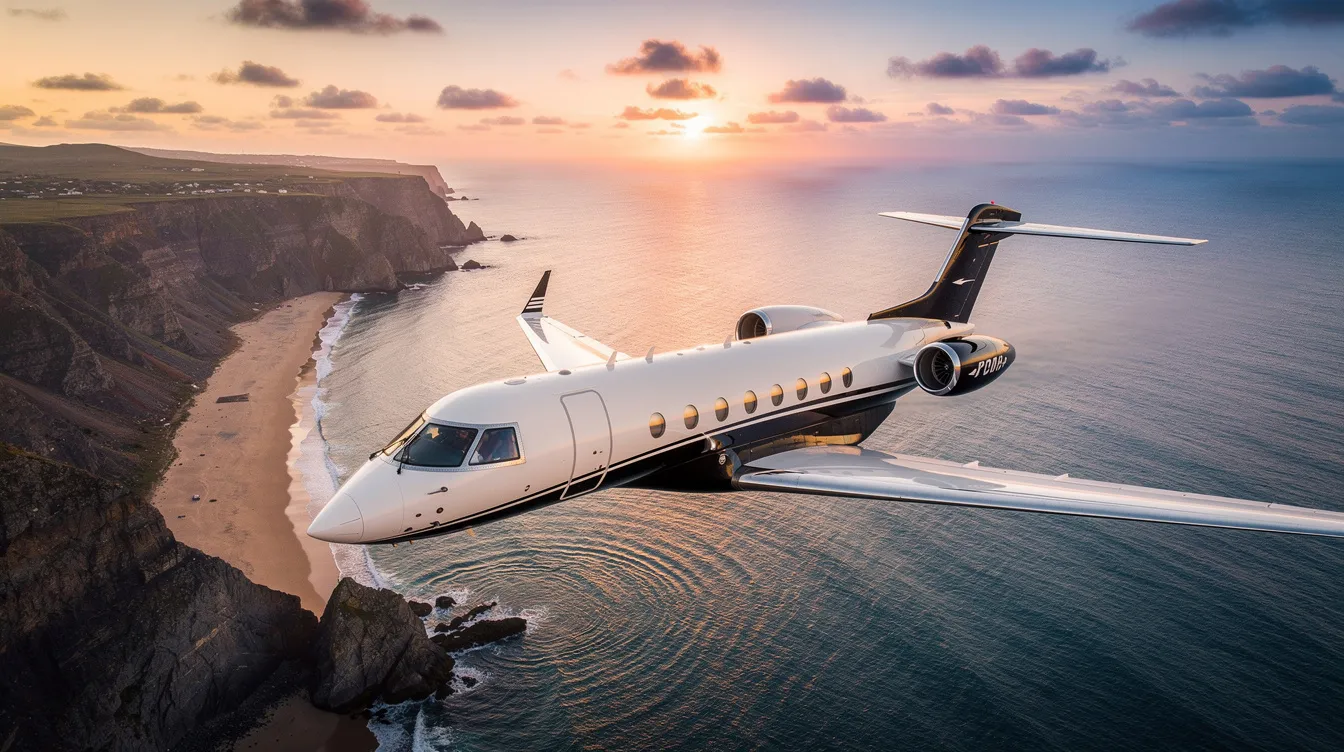
BlackJet Perspective: Turning Fighter-Level Reach Into Seamless Private Travel
The same principles that make long-range fighter jets strategically valuable - reaching the right place at the right time with reliability - define what BlackJet delivers to its members. Strategic advantage in business travel is not about flying the farthest; it is about arriving precisely when and where opportunity demands.
BlackJet's Jet Card programs - available in 25-hour and 50-hour configurations - give clients prepaid access to private jets across multiple cabin classes. Each class offers a specific range profile tailored to typical missions: light jets for regional hops like New York to Miami, midsize for coast-to-coast, and ultra-long-range private jets and other types of private jets for routes like New York to London or Los Angeles to Tokyo.
Unlike fighter jets, BlackJet's aircraft are optimized for quiet cabins, productivity, and rest - yet they still offer air superiority in a business sense: more direct routes, access to secondary airports, and significant time savings over commercial first class. BlackJet ensures every journey meets rigorous safety standards, includes carbon-neutral flights as standard, and provides a mobile booking platform that functions like a mission planning cell for high-net-worth travelers and executives.
Consider a member using a Jet Card to fly nonstop from New York to London on a long-range jet - arriving rested, bypassing terminal congestion, and landing at a convenient secondary airport. Or routing multi-leg trips across Europe without backtracking through major hubs. This is operational range translated into personal advantage.
Choosing The Right Range: From Air Forces To Jet Card Members
Whether designing an air superiority fighter or choosing a private aircraft category for regular routes such as private jet charters in Karachi, understanding range is central to mission success. Air forces evaluate range against stealth, payload, and threat environment. Private travelers weigh nonstop capability against cabin size, cost, and schedule.
In private aviation, the longest range is not always best. What matters is the right range for typical missions - domestic business travel versus transatlantic trips - similar to how militaries balance the F-35, F-15E, and tanker assets rather than fielding only one type. Understanding Jet Card cost per hour is part of that equation. BlackJet advisors help members interpret range charts, compare options such as NetJets Jet Card cost, and match them with real-world itineraries, considering payload, weather, and airport options.
Just as the best air forces engineer for strategic reach without over-investing in any single platform, BlackJet engineers each trip for maximum efficiency, safety, and comfort.
Frequently Asked Questions About Fighter Jet Range And Private Jet Travel
Which fighter jet has the longest range ever built?
The F-111 Aardvark holds the record among fighter-designated aircraft with a ferry range of approximately 5,940 km (3,690 miles) using external tanks. It was more of a strike bomber than a traditional fighter, but its "F" designation gives it the title.
What is the difference between ferry range and combat radius?
Ferry range is the maximum distance an aircraft can fly without a combat payload under optimal conditions.
Combat radius is the distance it can fly to a target, conduct a mission, and return with reserves.
Ferry ranges typically far exceed combat radii.
How far can an F-15E fly without refueling?
The F-15E Strike Eagle can fly approximately 3,900–4,400 km on ferry with conformal and external fuel tanks.
Its combat radius is 690 nautical miles under typical strike loading.
How far can an F-22 or F-35 fly without refueling?
The F-22 Raptor has a combat radius of 590 nautical miles and a ferry range of roughly 2,960 km with external tanks.
The F-35A has a combat radius of 670 nautical miles on internal fuel, with a ferry range exceeding 2,200 km.
Are first-generation jets shorter range than modern fighters?
Yes, dramatically so. First-generation jets rarely exceeded 500–750 miles of range.
Modern fifth-generation fighters routinely achieve ferry ranges of 2,000–3,500+ miles through better engines, aerodynamics, and materials.
How far can a typical private jet fly nonstop?
Light jets cover 1,000–1,500 miles.
Midsize jets:s 2,000–3,000 miles
Long-range private jets can exceed 6,000–7,500 miles nonstop, comfortably surpassing even the longest-range fighter jets.
How does BlackJet select aircraft for long-range missions?
BlackJet matches each member's route, passenger count, and schedule requirements with the optimal aircraft class, ensuring the jet's range covers the mission nonstop whenever possible.
What does carbon-neutral private flight actually mean?
What mission profile is right for me?
Just as air forces match fighters to missions, private travelers should match aircraft range and cabin class to their most frequent routes.
A BlackJet advisor can help translate your typical itinerary into the right Jet Card structure.
Next Steps: Extending Your Own Range With BlackJet
The principle behind every long-range fighter jet ever built - being in the right place, at the right time, with the right capability - is exactly what defines effective private travel. BlackJet's Jet Card membership delivers prepaid access to multiple aircraft categories, 24/7 mobile booking, real-time flight support, safety-led operations, and carbon-neutral flights on every leg.
Think of BlackJet as your operations center, handling logistics the way a professional air force manages long-range sorties, so you can focus entirely on business or leisure.
Discover how BlackJet can extend your personal flight range - across continents, with precision timing and uncompromising safety. Explore our Jet Card programs and speak with our team about tailoring private jet access to your most frequent routes.
Fighter jets define range in nautical miles and combat radii. BlackJet defines range in opportunities opened and time returned to you.


 Sign up with google
 Sign up with Apple